
 Have a question? +971 56 404 0503




Tech News
London Business School Hosts MENA Leaders to Discuss AI, Investment, and the Digital Economy

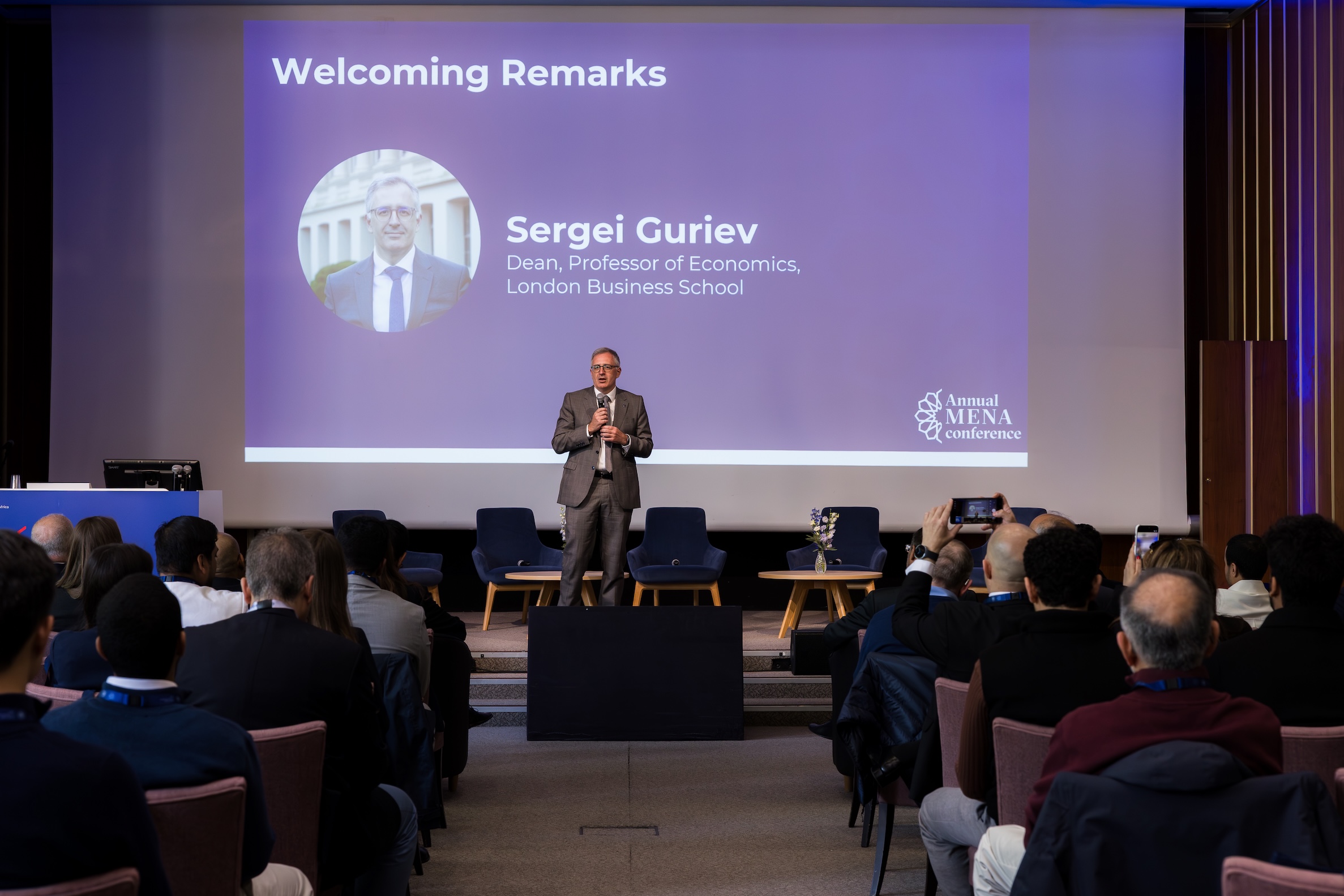
London Business School (LBS) hosted its 23rd Annual MENA Conference at its London campus, bringing together policymakers, investors, entrepreneurs, academics, and industry leaders to discuss the forces reshaping the Middle East and North Africa’s economic future.
Over the years, the conference has evolved into one of the region’s most recognised platforms for discussions around innovation, entrepreneurship, investment, and economic transformation. This year’s edition focused heavily on the intersection of technology, capital, sustainability, and policy, reflecting the region’s growing role within the global digital economy.
“This year’s MENA Conference highlights how the region is positioning itself at the intersection of capital, innovation, and global economic transformation,” said Florin Vasvari, Executive Dean of Executive Education, Middle East, at London Business School.
The agenda explored themes including global capital flows, fintech, climate resilience, artificial intelligence, and the financing landscape surrounding the region’s technology ecosystem. Discussions also examined how regional markets are evolving to support stronger startup ecosystems, deeper capital markets, and long-term economic competitiveness.
Artificial intelligence emerged as one of the defining themes of the conference, with speakers discussing how regional organisations can build sustainable AI capabilities through investments in infrastructure, talent, data, and capital. Conversations also explored how fintech is reshaping financial infrastructure and improving access to digital financial services across the region.
Throughout the event, senior executives, policymakers, founders, and investors shared perspectives on the MENA region’s evolving role within global markets, as governments and businesses increasingly position technology and innovation at the centre of long-term economic diversification strategies.
The conference also highlighted London Business School’s growing regional engagement, following the opening of its executive office in Riyadh alongside its longstanding Dubai campus, strengthening its support for leadership development and executive education across the GCC.











Tech News
greytHR expands agentic AI-powered HR execution across Middle East region with greytHR NAVOS
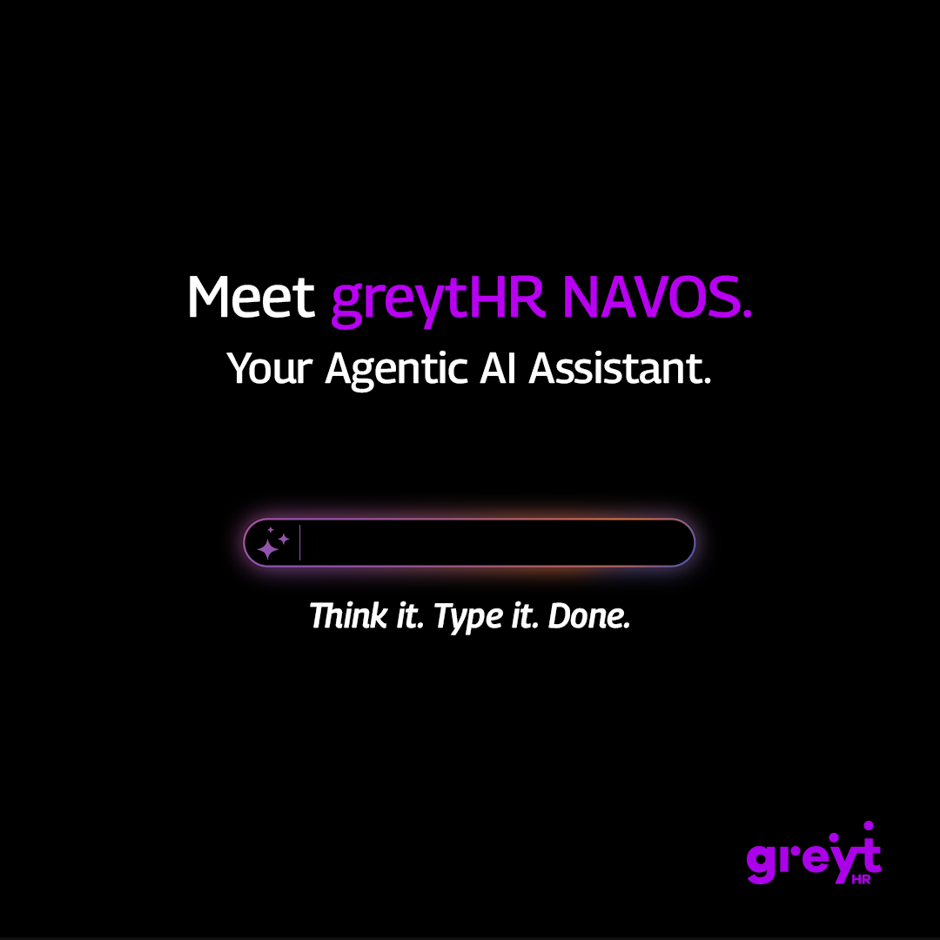
greytHR, a leading full-suite Human Resource Management System (HRMS) platform, launched greytHR NAVOS across the Middle East region, bringing agentic AI competencies directly into its platform. The new capability enables HR teams to find information, navigate workflows, while completing authorised HR activities through simple, natural-language commands.
The Middle East rollout comes as agentic AI begins to reshape HR functions globally. According to McKinsey’s August 2026 research on the agentic era of HR, roughly two-thirds of today’s HR activities, including recruitment, payroll, onboarding and benefits administration, could be largely automated by 2030.
Unlike conventional AI assistants that primarily focus on answering questions, greytHR NAVOS follows an execution-first approach, helping users move from finding information to initiating and completing supported HR actions. Its three core functions – Navigate, Operate, and Support – enable information and workflow discovery, authorised action execution and contextual guidance.
Girish Rowjee, Co-founder & CEO of greytHR, said: “We have evolved from a system that you work on, to a platform that works with you. As a full-suite HRMS, greytHR already connects the entire hire-to-retire lifecycle across key HR operations. With the launch of greytHR NAVOS, we are adding an agentic AI layer across this connected ecosystem, enabling users to manage everyday HR activities through conversational commands rather than searching through multiple menus or disconnected tools. Furthermore, greytHR NAVOS works within each organisation’s existing security and access controls, reducing administrative friction and accelerating everyday HR execution.”
greytHR NAVOS supports a wide range of workflows across core HR, leave and attendance, workforce management, performance management, recruitment, platform navigation and support. HR teams can use the capability to update employee information, generate and publish letters, access attendance records, manage leave and regularisations, support performance reviews, search for job openings and candidates, handle recruitment approvals and generate hiring content.
Based on early greytHR NAVOS usage in comparable markets, HR administrators have reported productivity savings of approximately five hours per week by replacing repetitive manual workflows with conversational requests. In one practical example, an attendance-muster export that previously required around five separate steps can be completed through a natural-language prompt in approximately 10 seconds. By simplifying routine processes and reducing time spent on software interfaces, greytHR NAVOS enables HR professionals to devote more time to employee engagement, workforce planning and strategic decision-making.
greytHR NAVOS operates within each organisation’s existing role-based access control (RBAC) system, ensuring that access to employee information and platform actions remains aligned with individual user roles and permissions. Moreover, sensitive or irreversible actions require explicit human confirmation before execution. The platform also maintains a traceable audit record of AI-assisted activity, including the initiating user, timestamp, prompt and action details. Meanwhile, greytHR’s established privacy, security, and governance framework extends to greytHR NAVOS, including alignment with SOC 2 Type II, ISO 27001:2022, and GDPR frameworks, supported by human oversight.
The new capability is available across all paid greytHR plans, including essential, growth, and premium, with no per-seat AI fees, usage caps or separate purchase required.
The launch showcases the evolution of HRMS platforms from traditional systems of record towards systems of action, where technology can understand user intent, identify the relevant workflow and support the execution of the next authorised step.
greytHR currently supports over 34,000 organisations and 3.5 million users across over 30 countries, providing a strong foundation for expanding its agentic AI capabilities across the Middle East region. With greytHR NAVOS, the company is helping regional businesses simplify HR administration and narrow the gap between intent and execution.

Delinea, the identity security platform that governs what humans, machines and AI agents do once they have access, today announced its participation at GISEC Global 2026. Under the theme, “From Access to Action: Governing AI at Runtime,” the company will spotlight the growing need for organisations to govern the actions autonomous AI agents take after access has been granted.
Following its release of new runtime authorisation capabilities for AI agents this summer, Delinea will use GISEC to advance the conversation around runtime authorisation, an approach designed to enforce policy on an agent’s actions within a session, at the time those actions are executed.
As AI agents take on increasingly autonomous roles across databases, cloud environments, infrastructure and business systems, the security challenge is shifting beyond authentication. While an agent may have legitimate access to a system, it can still take an action that exceeds its intended task or creates operational risk. Delinea’s runtime authorisation capabilities enable organisations to apply policy at the point of action — allowing, blocking or escalating activity before it executes.
“AI adoption is moving the identity-security conversation beyond the moment of authentication,” said Mortada Ayad, VP Sales at Delinea. “The question for organisations is no longer simply whether an AI agent can access a critical system. It is whether they can govern what that agent does once it is inside. At GISEC, we want to put that challenge, and the need for runtime control, at the centre of the regional conversation.”
Delinea has strategically adopted a channel-led presence at this year’s show, reflecting its focus on bringing these capabilities to market through the regional partners enterprises rely on to deploy, manage and operationalise complex security programmes. Through its presence at the stands of regional distributor, Shifra, and integrator partner, Defa3, the company will deepen engagement with existing partners, recruit new partners and build the specialist capabilities needed to support secure AI adoption across the region.
The approach builds on the Delinea Partner Advantage Program, launched in July 2026. The program provides partners with clearer rules of engagement, deal protection, tiered incentives and AI-driven enablement, helping them build profitable identity-security practices, while delivering stronger outcomes for customers. It is designed to support selling partners today, with expanding roles planned for managed service providers, global systems integrators, advisory partners and technology partners.
“For a capability this consequential, technology alone is not enough,” Ayad added. “Customers need partners who understand their environment, their risk and how to translate security policy into practical control. Our focus at GISEC is to equip and grow that ecosystem, so organisations can move forward with AI, knowing that authorised access does not become unchecked action.”
Delinea’s runtime authorisation for AI agents enables organisations to govern activity across the systems agents use, including databases, SSH hosts, Kubernetes clusters and cloud consoles. Through just-in-time, task-scoped access, and real-time policy enforcement, organisations can reduce reliance on standing credentials, while maintaining a defensible record of AI-driven activity.
Tech News
Tech First Gulf Strengthens its presence in Africa with the appointment of Mustapha Rafiki as General Manager – Maghreb & Francophone Africa
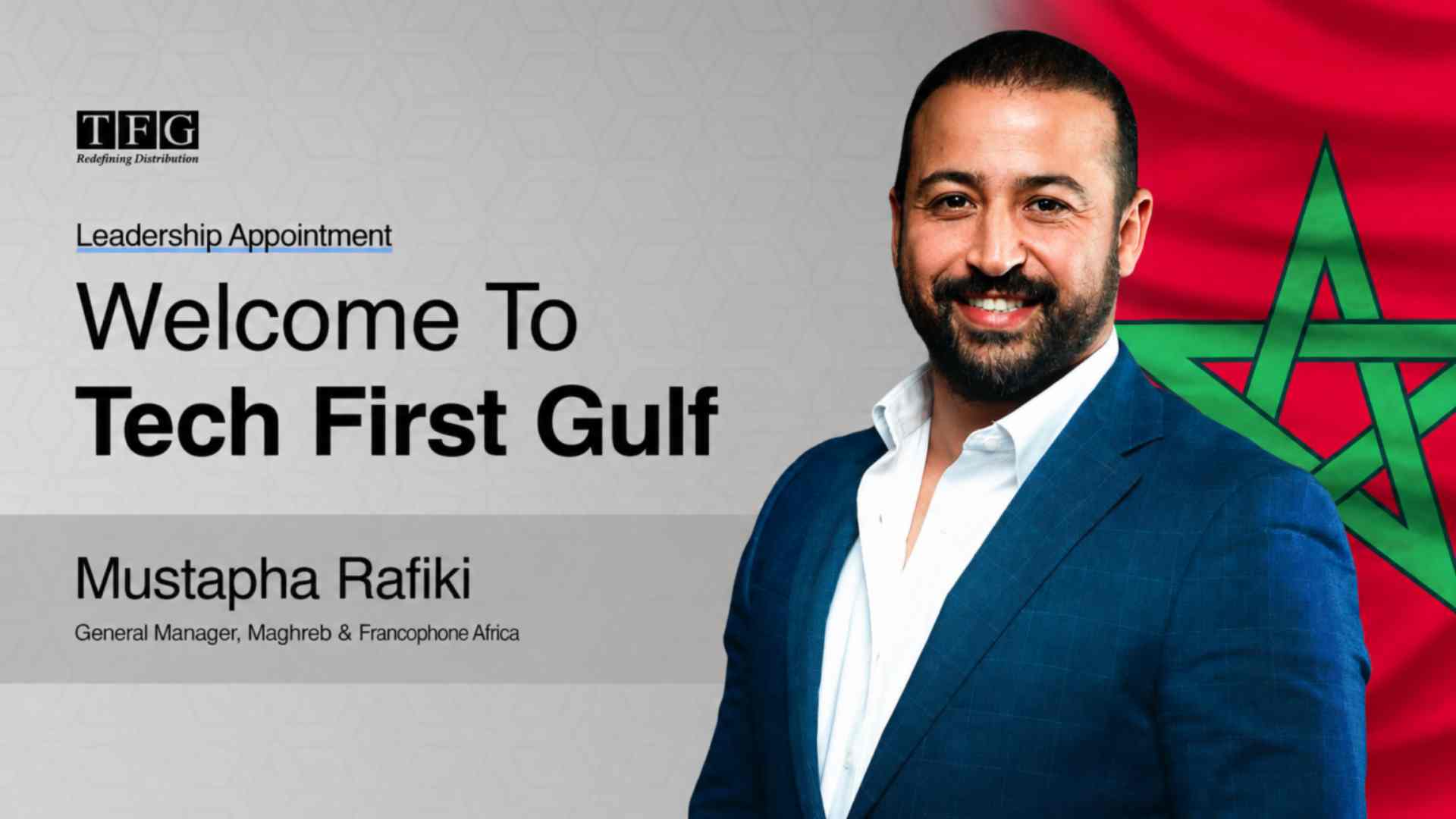
Tech First Gulf (TFG), a leading value-added technology distributor across the Middle East and Africa, is pleased to announce the appointment of Mustapha Rafiki as General Manager – Maghreb & Francophone Africa. This strategic appointment marks another significant milestone in TFG’s continued regional expansion and reinforces the company’s commitment to strengthening its footprint across Africa.
With over 19 years of experience in the information technology industry, Mustapha brings extensive expertise in business development, channel management, sales leadership, and operational excellence. Throughout his career, he has successfully built and managed high-performing partner ecosystems while driving sustainable business growth across North, West, East, and Central Africa.
Before joining Tech First Gulf, Mustapha served as Head of B2B Africa at Logitech, where he led business operations across multiple African markets, developing strategic go-to-market initiatives and strengthening channel partnerships. Prior to Logitech, he held the position of Country Manager at Canon, where he played a pivotal role in expanding the company’s presence, developing strategic alliances, and accelerating growth across key enterprise and commercial segments.
As TFG continues to expand its operations throughout Africa, Mustapha’s appointment reflects the company’s vision of investing in experienced leadership to unlock new opportunities, deepen vendor and partner relationships, and deliver greater value to customers across the markets.
Under his leadership, TFG aims to accelerate regional growth by strengthening its distribution network, expanding strategic technology alliances, enabling channel partners, and introducing innovative solutions that address the evolving needs of enterprises and public sector organizations across the region. His deep understanding of African markets, combined with his proven leadership, will play a vital role in driving TFG’s next phase of growth.
“We are pleased to welcome Mustapha to Tech First Gulf as we continue our expansion across the region. The markets under his leadership offer tremendous opportunities for growth and innovation, and we remain committed to investing in their future through strong leadership and long-term partnerships. Mustapha’s proven track record, strategic vision, and extensive regional expertise make him the ideal leader to accelerate our growth, strengthen our market presence, and deliver lasting value to our partners and customers,” said Mr. Akashdeep (Sky), Chief Strategy Officer, Tech First Gulf
Commenting on his appointment, Mustapha Rafiki said:
“I am excited to join Tech First Gulf at such an important stage of its growth journey. TFG has built a strong reputation for delivering innovative technology solutions and empowering its partner ecosystem. I look forward to working closely with our vendors, partners, and customers to accelerate growth, expand our market presence, and create lasting value across the region.”
As Tech First Gulf continues its regional expansion strategy, the company remains focused on empowering businesses through world-class technology solutions, strengthening strategic partnerships, and building a future-ready digital ecosystem across India, Middle East and Africa.

Standard Chartered becomes first Global Systemically Important Bank (G-SIB) to launch Institutional Bitcoin and Ether spot trading in the UAE
greytHR expands agentic AI-powered HR execution across Middle East region with greytHR NAVOS
Role of Digital Citizenship in Countering Misinformation and Protecting Social Cohesion in UAE



-
News11 years ago
SENDQUICK (TALARIAX) INTRODUCES SQOOPE – THE BREAKTHROUGH IN MOBILE MESSAGING
-

 Trending10 months ago
OPPO A6 Pro 5G Review: Reliable Daily Driver
-

 Tech News2 years ago
Denodo Bolsters Executive Team by Hiring Christophe Culine as its Chief Revenue Officer
-
 VAR1 year ago
Microsoft Launches New Surface Copilot+ PCs for Business
-

 Automotive2 years ago
AGMC Launches the RIDDARA RD6 High Performance Fully Electric 4×4 Pickup
-
Tech Interviews2 years ago
Navigating the Cybersecurity Landscape in Hybrid Work Environments
-

 Tech News1 year ago
Nothing Launches flagship Nothing Phone (3) and Headphone (1) in theme with the Iconic Museum of the Future in Dubai
-

 VAR2 years ago
Samsung Galaxy Z Fold6 vs Google Pixel 9 Pro Fold: Clash Of The Folding Phenoms