
 Have a question? +971 56 404 0503




Tech Interviews
Thinking outside the Box


By Editor
With today’s premium corporate mobile devices, it makes economic and practical sense to protect the gadgets, and the data they carry, from accidental damage. Enter OtterBox, one of the most highly regarded enterprise mobile protective solutions. Andrew Pepperell, Otterbox MEA Representative, discusses how the company’s strategy for the Middle East
As enterprises evolve their mobile strategy, why do you feel OtterBox cases are the ideal protective solution for company-issued devices?
At OtterBox we understand that reliable, accessible and secure technology is crucial to a thriving business. Businesses supply employees with smartphones and tablets to allow them to be accessible at all times and do their jobs more efficiently. This cannot happen if there is a risk of breakage and more inconveniently, loss of data. It is often not the expense of a broken device but the issue of a breakage interrupting a working day. OtterBox allows companies to issue devices to employees safe in the knowledge that they will be protected in rough environments. OtterBox also provides customised enterprise solutions for businesses individual needs. From field work to dusty job sites, busy hospitals and schools, OtterBox is the brand of choice for companies who need to protect their mobile assets and protect employees from experiencing downtime.
Why the focus on cases only when your competitors have a whole range of accessory products in their portfolio
OtterBox offers a wide range of protective solutions, screen protectors and device enhancing accessories for a broad range of devices. Our focus is on protection and providing the best protective solutions for businessess and end-users . We offer a variety of levels of protection designed to suit various enterprise and consummer needs .
Discuss the technology and materials in use with OtterBox cases
OtterBox focuses on attention to detail and quality with every product and doesn’t cut corners. Each case is engineered to ensure full functionality of the device using premium materials. The combination of materials used varies depending on the series in question . All OtterBox cases are tested rigorously in-house and by an independent third-party facility to ensure correct form, fit and function.This level of testing demonstrates OtterBox’s commitment to protection, quality and innovation. We never release a case until it has met the most demanding standards.
How do you strike the sometimes delicate balance between utility and style for OtterBox products?
OtterBox has always listened to customer needs to provide new and innovative solutions.
We recently launched the Symmetry Series case which answered the need for a highly protective case without sacrificing style. Symmetry Series is certified to military-rated drop protection (810G-516.6) for drops up to 4ft, and also comes in a range of different wraparound colours and patterns. Symmetry Series means consumers no longer have to choose between a protective case and a stylish one. Our Defender Series cases offer premium multi-layered protection. The precision design of the Defender Series is tailored to fit the device exactly so that the case retains the device style while maintaining optimum rugged protection.
Discuss your retail/resale strategy and partnerships in the region
We work with a number of distribution and resale partners so that we can tailor our solution to the reseller or enterprise partner’s needs .Mobile technology tools are rapidly changing the enterprise landscape in the region and how business is done. The OtterBox team in the region work with our global enterprise team to ensure a dedicated focus towards bespoke product options, designed to complement a company or resellers needs. Our local team works very closely with our regional distributors in developing all channels with particular focus on Consumer Electronics Retail, Corporate/B2B as well as the Independent Retail Channels. The OtterBox, LifeProof and Clearly Protected brands can be found in leading retailers across the GCC.
Discuss the performance of OtterBox in the regional market and opportunities for future growth
We expect the current upward trend to continue throughout 2015 driven predominantly by new device releases, organisations leaning towards implementing device solutions for staff as well as the introduction of new product solutions from OtterBox as we look to further diversify our product offering. The LifeProof range of waterproof products coupled with the introduction of universal accessories and complimentary products will be a key driver throughout the region. On the corporate side growth in the region will come from our strong focus on specific industries such as Aviation, Education and Healthcare
Are cases stand-alone products or is cross-selling your major sales strategy
The protection of any device whether smartphone or tablet within a multitude of scenarios and environments naturally presents OtterBox with the opportunity to cross sell an array of products. With the various solutions available within the portfolio, OtterBox can cater to an array of device protection requirements which positions us to become a valuable partner to resellers and businesses.
Discuss OtterBox’s partnerships, if any, with the major mobile brands.
Strong partner relationships are important to the company and something we place great emphasis on building .OtterBox works closely with major OEM brands across the globe and we have developed close partnerships with many mobile brands. We are proud to be a member of Samsung’s Mobile Accessories Partnership Programme (SMAPP). We also partner with Motorola to have products certified “Made for Motorola”. OtterBox has also participated in Blackberry’s Build for Blackberry initiative as well as with HTC’S “Made for HTC”. The company has also recently aligned closely with Lenovo on a “Partner Advantage Program.” These important initiatives position us to be at the cutting edge of the accessory market


In our conversation with Ismail Ibrahim, General Manager, CEMEA at SUSE, we seek to understand the concept better along with his understanding of the industry and how enterprises in the UAE and Saudi Arabia can retain control in a rapidly evolving technology landscape.
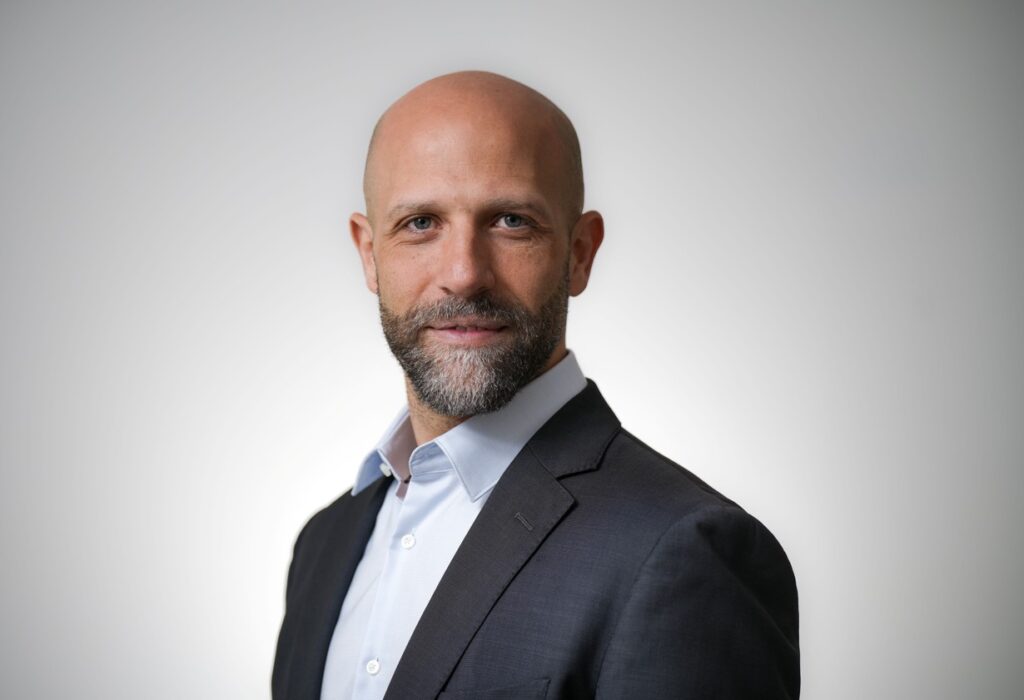
What does “digital sovereignty” actually mean for an enterprise today, not in theory, but in day-to-day operations?
From an enterprise perspective, digital sovereignty becomes real the moment it changes what you do on a Monday morning. In practice, it means three things become operational requirements, not policy statements.
First, control over data. Not just where data is stored, but where it is processed, who can access it, and how you prove that in an audit. For many organizations in the UAE and Saudi Arabia, that is increasingly tied to sector rules, procurement requirements, and customer expectations.
You need the ability to keep sensitive workloads within national borders when required, but also to enable controlled data flows when innovation demands it. The important point is that sovereignty is not “ringfencing everything”. It is being deliberate about which data, which workloads and which dependencies must remain under your control.
Second, control over operations. Day-to-day, that looks like resilience and predictability: how quickly you can patch, how confidently you can recover, how consistently you can enforce policy across clusters, clouds and edge sites. This is where many enterprises discover that sovereignty is inseparable from operational excellence. If you cannot reliably manage your environments, you do not really control them.
Third, control over technology choices. This is where open source becomes practical, not ideological. When you build on open, enterprise-supported platforms, you are reducing dependency on opaque codebases and constraining the risk of being forced into a single vendor’s roadmap. Sovereignty is “choice by design”, because choice is what allows you to meet local requirements today and change course tomorrow.
That is why at SUSE we often frame sovereignty around pillars like control, choice and resilience, with autonomy as the long-term outcome. For enterprises, those pillars translate into everyday decisions: architecture, procurement, governance, patching, incident response and lifecycle management.
In the next three years, which will hurt enterprises more: security breaches, or being locked into the wrong technology stack?
It is not an either-or, because the two risks are increasingly connected.
A security breach is immediate and visible. It impacts customers, regulators, operations and reputation. But lock-in to the wrong stack can quietly increase breach risk over time, because it limits your ability to respond. If your architecture makes it hard to patch quickly, to segment workloads properly, to implement new controls, or to move sensitive workloads to a compliant environment, you have turned security into a dependency problem.
Over the next three years, I would say the most damaging scenario for many enterprises is not “breach versus lock-in”, but breach plus lock-in, where an organisation is under pressure and finds it cannot adapt fast enough.
This is exactly why sovereignty has moved into the C-suite and boardroom. Leaders are recognizing that digital sovereignty sits alongside cybersecurity and operational resilience as a strategic requirement. You need a risk-based approach to your data, workloads and support model, and you need the flexibility to change course.
Practically, in the UAE and Saudi Arabia, many CIOs are already building mixed environments across on-prem, sovereign cloud, hyperscalers and edge. The goal is not to avoid the cloud. The goal is to avoid a situation where strategic choices are dictated by a single vendor’s constraints. Open, enterprise-grade platforms help you keep the option to move, modernize or localize when needed, without rewriting everything from scratch.
As AI becomes embedded into infrastructure itself, do you believe enterprises are prepared to trust machines with operational decisions, or are we moving faster than governance allows?
In many cases, we are moving faster than governance, but that does not mean enterprises should slow down. It means they should modernize governance at the same pace as adoption.
The key is to separate hype from reality. “Trusting machines” does not mean handing over full autonomy overnight. For most enterprises, AI enters operations in stages.
Stage one is assistive intelligence, where AI helps surface insights, detect anomalies, recommend actions and reduce manual effort. This is where many organizations see quick operational value, especially in areas like observability, incident triage, capacity planning and security monitoring.
Stage two is bounded autonomy, where AI can execute actions within defined guardrails, such as automated scaling, routing, remediation playbooks, or policy-driven security responses. The governance requirement here is clear accountability: what is automated, under what conditions, with what approvals, and what audit trail.
Stage three is agentic operations, where more complex systems handle multi-step tasks across environments. This is the phase where governance must be mature, because the risk is not simply “wrong output”, it is unintended consequences across interconnected systems.
For the UAE and Saudi Arabia, readiness often depends on whether organisations have already done the foundations: standardised platforms, consistent policy enforcement, clean identity and access controls, and modern lifecycle management. If the foundation is fragmented, AI simply accelerates fragmentation.
This is why we are seeing strong interest in approaches that support governance by design, including the ability to run AI solutions in more controlled environments. In many regulated sectors, that includes air-gapped or restricted environments, where organizations want to adopt AI while keeping strict control of data movement and operational boundaries.
My view is that enterprises can absolutely trust AI in operations, but only when they treat trust as an engineering outcome: transparent systems, auditable controls, clear guardrails, and the ability to override. Governance is not a blocker. Governance is what makes adoption sustainable.
By 2030, will enterprises still control their infrastructure choices, or will hyperscalers and AI vendors effectively decide that for them?
Enterprises will control their choices if they design for control now. If they do not, the market will make the decision for them.
By 2030, the default buying motion will push organizations toward managed services, vertically integrated AI stacks, and increasingly opinionated platforms. That can deliver speed, but it can also compress choice, especially if your applications, data pipelines, security controls and operational tooling are tightly coupled to one vendor.
So the question is really about architecture and leverage. Enterprises that prioritise portability, standardization and open platforms will keep leverage. They can choose the right environment for each workload, based on performance, compliance, cost, and risk. Enterprises that ignore portability will find that “choice” exists on paper, but not in practice.
This is where digital sovereignty is often misunderstood. Sovereignty does not mean rejecting global technology. It means retaining the ability to make deliberate decisions about where workloads run and who controls the critical layers. Many leaders now talk about “glocal” strategies: using global innovation while maintaining local control and compliance where it matters.
At SUSE, our positioning has been consistent: open source supports sovereignty because it promotes transparency, portability and freedom from lock-in. That is not a slogan, it is a practical roadmap for keeping infrastructure choices in the hands of enterprises, not vendors.
If you had to offer one piece of advice to CIOs and policymakers in the UAE and Saudi Arabia navigating rapid digital transformation, what would it be?
My one piece of advice is this: treat sovereignty as an enabler of innovation, not a constraint, and build it into your operating model early.
For CIOs, that means starting with a clear map of your critical workloads and dependencies. Decide what must remain under national control, what can run on hyperscalers, what needs sovereign cloud options, and what requires special governance. Then standardize your foundations so you can enforce policy consistently. When sovereignty is engineered into the platform layer, transformation becomes faster, because you are not negotiating compliance from scratch every time you modernize an application.
For policymakers, it means continuing to create frameworks that encourage both innovation and trust. The UAE has taken a pragmatic approach in showing that openness and sovereignty do not have to conflict. When the policy environment supports clear requirements and predictable compliance expectations, enterprises can innovate with confidence.
And for both, there is a shared point: invest in skills and ecosystem capability. Sovereign outcomes are not delivered by policy alone, they are delivered by people, platforms, and partnerships. When you develop local talent, strengthen the partner ecosystem, and support enterprise-grade open source, you build resilience and long-term autonomy without slowing innovation.
Exclusive interview with Mark Turner, President EMEA, Rezolve Ai

What made Shoptalk Luxe Abu Dhabi a priority platform for Rezolve Ai this year?
For Rezolve Ai, Shoptalk Luxe Abu Dhabi brings together the right audience at the right moment. Luxury retailers in the region are no longer exploring ideas, they are making decisions and investing. It is a practical forum to exchange views with brands that are actively shaping their customer engagement and commerce strategies, and to have grounded conversations about what is working in real retail environments. Abu Dhabi also reflects how influential the region has become in global luxury thinking.
How is AI changing the way luxury retailers think about customer engagement today?
Luxury retailers are becoming far more intentional about how and when they engage customers. AI is helping them move away from broad personalisation toward more contextual, timely interactions that respect the brand experience. The focus is on supporting customers at key moments, whether online or in store, and ensuring engagement feels consistent and considered rather than automated or intrusive.
What distinguishes meaningful AI adoption in retail from short-term experimentation?
Retailers that see lasting value from AI are those that embed it into day-to-day operations rather than treating it as a standalone initiative. Meaningful adoption is driven by clear commercial goals, fast implementation, and solutions that work within existing systems and teams. Short-term experimentation tends to stall when it lacks ownership, scale, or a clear link to performance outcomes.
Why is the Middle East, and the UAE in particular, becoming increasingly important for luxury retail innovation?
The Middle East, and the UAE in particular, has created an environment where luxury retail innovation can move quickly. Consumers are digitally confident, infrastructure is strong, and there is a clear push at a national level to adopt advanced technologies. This combination allows retailers to implement and test new models at scale, which is why the region is increasingly influencing global luxury strategies.
Looking ahead, where do you see AI delivering the most value for luxury brands over the next few years?
The greatest value will come from AI that directly supports growth while reinforcing operational discipline. For luxury brands, that means more relevant engagement that improves conversion and loyalty, alongside better forecasting and inventory decisions that protect margins. The priority will be practical use of AI that enhances the customer experience without compromising brand integrity.


Exclusive Interview with Fadi Costantine, Sales Manager – Business Communication, Middle East at Sennheiser

Sennheiser has leveraged its role in shaping professional audio to build strong hybrid communication products for use across business and education environments. We caught up with Fadi Costantine, Sales Manager – Business Communication, Middle East at Sennheiser, to discuss the brand’s presence at the show, its integrated product ecosystem, and the growing importance of software-driven audio solutions.
What are your most innovative products currently serving the business and education sectors?
Sennheiser operates across several business units, with Business Communication being one of our most important. This unit is entirely dedicated to the installation market, where many of our most dynamic and innovative solutions are positioned.
Professional audio is at the core of Sennheiser’s brand identity. Through our ownership of renowned brands such as Neumann and Merging Technologies, we have established ourselves as a global leader in audio communications. We leverage this expertise to develop advanced meeting and conferencing solutions that enhance business performance.
Crucially, our products are not designed to operate in isolation. They are engineered to work together as a unified ecosystem, enabling seamless communication across devices and platforms. This ecosystem approach allows system integrators and end users to design complete, end-to-end audio solutions tailored to a wide range of applications and project requirements.
Which industry verticals are currently driving demand for these solutions in the region?
While we are active across multiple verticals in the region, we have a clear strategic commitment to deliver innovative, scalable, and future‑ready audio solutions tailored specifically for the needs of higher education and the modern corporate environment.
In corporate environments, our microphone solutions are widely deployed in meeting rooms to support modern collaboration and video conferencing scenarios. In the education sector, our technologies are extensively used in lecture halls and hybrid learning environments, including classrooms and auditoriums designed to accommodate both in-person and remote participants.
A strong example is our ceiling microphone solutions. These are frequently used not only in traditional meeting rooms but also in lecture halls for audio capture, video conferencing, and recording. They are also ideal for voice-lift applications, enabling students to hear the lecturer clearly without the need for wearable microphones. This creates a more natural, seamless teaching experience while minimizing complexity for the user.
Software and integration are critical in these environments. How does Sennheiser support this alongside its hardware solutions?
Workflow optimization has always been central to our product strategy and will remain a key focus going forward.
Introducing a new era in AV Management, at ISE 2026, Sennheiser will officially launch DeviceHub, a secure, cloud-based platform designed for IT and AV managers, as well as system integrators. DeviceHub centralizes device visibility and remote management, streamlining workflows across enterprise, education, and corporate settings.
DeviceHub provides real-time insights, simplified setup, and unified control, supporting organizations in creating better spaces for communication, learning, and teamwork. Following a successful private beta, ISE marks the transition to public availability. Visitors can explore DeviceHub’s capabilities and speak directly with product experts about how it can transform their AV and IT operations.

A SEASON OF RADIANT HOSPITALITY: NATUZZI ITALIA CELEBRATES MOTHER’S DAY AND THE SPIRIT OF EID WITH MASTERPIECES OF ITALIAN COMFORT
CASA MILANO EXPANDS UAE FOOTPRINT WITH 7TH SHOWROOM LAUNCH IN AL AIN AMID MARKET UNCERTAINTY
TRENDS IN AI COMPLIANCE INFLUENCING HOW GCC COMPANIES OPERATE



-
News10 years ago
SENDQUICK (TALARIAX) INTRODUCES SQOOPE – THE BREAKTHROUGH IN MOBILE MESSAGING
-

 Tech News2 years ago
Denodo Bolsters Executive Team by Hiring Christophe Culine as its Chief Revenue Officer
-
 VAR11 months ago
Microsoft Launches New Surface Copilot+ PCs for Business
-

 Tech Interviews2 years ago
Navigating the Cybersecurity Landscape in Hybrid Work Environments
-

 Tech News8 months ago
Nothing Launches flagship Nothing Phone (3) and Headphone (1) in theme with the Iconic Museum of the Future in Dubai
-

 Automotive1 year ago
AGMC Launches the RIDDARA RD6 High Performance Fully Electric 4×4 Pickup
-

 VAR2 years ago
Samsung Galaxy Z Fold6 vs Google Pixel 9 Pro Fold: Clash Of The Folding Phenoms
-

 Trending5 months ago
OPPO A6 Pro 5G Review: Reliable Daily Driver