
 Have a question? +971 56 404 0503




Technology
UNLOCK Blockchain Forum attracts over 500 attendees

The UNLOCK Blockchain Forum which commenced today at the Ritz Carlton Hotel DIFC and which will continue until January 15th 2018 has proven once again that Dubai is a vanguard when it comes to attracting innovative experts, blockchain start-ups, and forward looking attendees.
Al-Iktissad-Wal-Aamal, the organizers of UNLOCK Blockchain forum were not surprised to receive more than 60 blockchain start-ups from more than 39 countries, as well as more than 40 prominent expert speakers, and more than 500 participants.
HE Dr. Aisha Bint Buti Bin Bisher, Director General of Smart Dubai, the office driving Dubai’s city-wide transformation delivered her keynote speech at the opening. HE stated, “Guided by the example of our nation’s leadership, we have learned to continually look to the horizon to start creating the future today. And while others were still debating the prospects of this new technology, we got to work. We are making Dubai the blockchain capital of the world, we have 20 public sector Blockchain use cases and it’s only the beginning”.
“Dubai took the forward-thinking approach and broke ground on the bold Dubai Blockchain Strategy, and by supporting events such as the UNLOCK Blockchain Forum, we are building a platform to share our learnings and prepare Dubai, and the world, for the future of Blockchain.” HE added.
Walid Abou Zaki, executive director, Al-Iktissad-Wal-Aamal stated, “When I first heard the word blockchain I knew it was a game changer, and we at Iktissad Wal Aamal endeavour to learn and understand our topics in-depth because we see ourselves as more than just event organizers. We are proud today to say that our efforts have met with success not only in terms of quantity but the quality of participation and the content being discussed. We believe that the next step in the right direction will entail creating the right regulations for Initial Crowd Funding ICOs as this will attract serious blockchain start-ups as well as position Dubai uniquely.”
The first session of UNLOCK took a close look into blockchain on the eve of its 9th anniversary. Renowned speakers such as Oliver Bussmann, CEO of Bussmann Advisory, James Wallis, VP Blockchain IBM, Dr. Abdulla Kablan Blockchain Advisor to the government of Malta discussed together which platforms would prevail, what forms of blockchain would take precedence over others and how the future of blockchain platforms would evolve.
The second panel at UNLOCK delved into the topic of how to create successful blockchain implementations. Zeina Al Kaissi, Head of Emerging Technology and Global partnerships, Smart Dubai, Andrea Tinianow Director of Global Delaware, Founding Director of Delaware Blockchain initiative, Vincent Wang Chief Innovation officer Wanxiang holdings China and other prominent speakers discussed examples of real hands on blockchain implementation projects and how those projects differed from traditional implementations. They also offered key learning’s and advice for those who endeavour to implement blockchain in the near future.
Ramez Dandan, National Technology Officer, Microsoft Gulf stated, “Investment in blockchain, across the GCC and beyond, is ramping up at an impressive rate, as organisations recognise it for the disruptive digital transformation technology that it is. Microsoft’s participation in UNLOCK follows its commitment in Feb 2016 to the Dubai Future Foundation’s Global Blockchain Council because we strongly believe in the technology’s immense potential for enterprises of all scales and industries. It allows them to share business processes with suppliers, customers and partners, leading to new opportunities for multi-party collaboration and, eventually, exciting new business models.”
Hon Silvio Schembri, Parliament Secretary for financial services and digital Economy and Innovation, Prime Minister Office Malta, provided a keynote on what Malta has accomplished so far with Blockchain. Security expert from DarkMatter Mr. Jason Cooper, Blockchain Specialist delivered a keynote on how using Blockchain can streamline government and cities securely.
The afternoon sessions at UNLOCK saw two tracks. Panel discussions centered on Blockchain and the utilities sector. Mr. Mahmoud Abu Fadda, Senior specialist Innovation and Future at DEWA talked about DEWA’s future plans to create electric vehicles charging using Blockchain. The session also included speakers from Sun Exchange and Ambrosus.
The panel session Dubai the next Blockchain startup valley, witnessed an announcement by Ralf Glabischnig, Managing Partner, Inacta; Partner, Lakeside Partners; Co- Founder of Crypto Valley Labs, Switzerland for the intention to open Crypo Valley labs for Blockchain start-ups and entrepeneurs in Dubai.
In parallel sessions, startups were showcasing how they successfully built Blockchain solutions to solve the problems facing our societies and economies of today. Blockchain startups ranging from Malaysia, UK, Russia, and even Estonia were among speakers in these sessions. Some prominent startups included Naked Technologies, Credits, threefold, Acorn Collective and Echarge. Other startups sessions centered on what Blockchain was doing for healthcare sector. Curecoin, medicalchain, and Etheal were some of the startups presenting.
Day One ended with Mr. Bussmann keynote speech that stressed on how one can stay ahead of the Digital disruption curve. As he stated, “The central business logic of today is being replace by Smart Contracts. First Blockchain movers are focusing on selective & existing cases into production with the highest benefit impact. The convergence of emerging technologies will blur the lines between industries in a highly connected real-time world.” He also gave many examples of what Blockchain startups are doing in the realm of trade, finance, and food supply.
The second day of UNLOCK Blockchain will see interesting panels on Banking, real-estate, smart city Blockchain implementations as well as more startup sessions.

Dr Ryad Soobhany, Deputy Academic Head of School of Mathematical & Computer Sciences, Heriot-Watt University Dubai

Camera systems, such as CCTV, are mainly used for video surveillance within organisations. Passive video surveillance has been part of the security ecosystem for years, providing organisations with the ability to monitor different areas simultaneously, while recorded footage can be inspected after an event occurs.
The evolution of computer chips and increased processing power has led to improved image quality, including better performance in low-light conditions, particularly at night. The advent of edge computing, with processing performed on edge devices within a network, has made object and scene recognition more readily accessible. This evolution has led to more active video surveillance through video analytics, where events can be identified and addressed in real time. Examples include number plate recognition systems and facial recognition for access control.
With the combination of AI and video data, computer vision can be integrated with business analytics to transform video surveillance from a security infrastructure into a business intelligence tool. Video surveillance is moving from passively recording events to sensing what is happening in the environment. This helps to answer questions such as which areas are congested, how customers are moving, how long they dwell in particular areas, and whether unusual events are occurring. Businesses can use this data to optimise their operations, such as improving the customer checkout process, monitoring asset or staff movement, and managing crowds or traffic flows. Organisations can also incorporate contextual business information to enhance the analytics by combining behavioural data with CRM or IoT data, providing additional context and insights for decision-making and improving the customer or visitor experience.
Video surveillance can be used to optimise operations, improve customer experiences, and support strategic decision-making across industries. Video itself does not create business intelligence; rather, its value increases when visual information is combined with other operational and contextual data, while computer vision is used to understand and enhance business operations. The pipeline from video to business intelligence can be represented as obtaining data from video sources such as fixed cameras, IoT-enabled cameras, or robots. Computer vision is then applied to the video to detect or track people, objects of interest, or activities. Behavioural data are taken into account, such as customer dwell time in particular product areas, occupancy of rooms or halls, movement of people across a building, and anomalies in behaviour. At this stage, operational data are also considered. The final stage is the business intelligence stage, where trends are identified and insights are inferred. At this stage, data visualisation plays an important role, with dashboards and data storytelling displaying correlations, predictions, and infographics that provide more than simple visual summaries of surveillance data. The camera becomes an operational sensor for the organisation. The important transformation occurs when visual data are combined with business data, such as sales, operational, and IoT data, to convert visual observations into business knowledge that informs operational, tactical, and strategic decision-making within an organisation.
The levels of business intelligence can be viewed as three analytical capabilities: descriptive intelligence, diagnostic intelligence, and combined predictive and prescriptive intelligence. Descriptive intelligence usually addresses what is happening. Visual analytics can identify footfall, occupancy, queue length, waiting time, dwell time, traffic flow, movement patterns, and detected events. Visualisation dashboards can present these indicators in real time or over historical periods, allowing managers to understand the current state of an operation. For example, a museum dashboard can show heat maps of visitor numbers, dwell time, and movement across different exhibition areas, while analysing visitor behaviour and providing insights into the optimal placement of exhibitions. An airport dashboard could display passenger volumes and queue lengths across terminals.

As artificial intelligence becomes embedded in higher education, universities face a growing challenge: ensuring that students develop independent thinking rather than simply producing polished AI-assisted work. From rethinking assessments to preserving the value of intellectual effort, the conversation is shifting towards what Turnitin calls learning integrity.
In this interview with Amal Dimashki – Regional Director, MENAT & Pakistan, Turnitin explores how institutions can balance AI adoption with critical thinking, meaningful assessment and the development of essential learning skills.

Students are becoming increasingly comfortable prompting AI, but how can universities ensure they are still developing independent reasoning and critical thinking rather than simply producing better AI-assisted answers?
Prompting is becoming an important skill, but being able to write a sophisticated prompt is not the same as being able to think critically.
AI can be a very effective learning partner. It can help students brainstorm, explore different perspectives, challenge an argument or receive feedback on something they have written. But students still need to do the cognitive heavy lifting. If they simply prompt AI for an answer and then refine that answer until it looks better, we may improve the quality of the output without necessarily developing the student’s thinking.
This is why AI literacy needs to go beyond teaching students how to prompt. Students need to learn how to critically evaluate AI-generated content, verify information and sources, question what they are given and make their own judgments about the output. Turnitin’s guidance on responsible prompting encourages students to engage with AI iteratively and interrogate its responses rather than simply accepting what it produces.
We want students to use AI as a learning partner while remaining actively engaged in the learning process and taking ownership of the work they produce. Turnitin’s guidance to students reinforces this by encouraging them to ensure that the majority of their work remains their original thinking.
Universities therefore need to develop AI literacy alongside critical thinking and independent judgment, so that becoming better at using AI does not come at the expense of developing the skills students are there to learn.
What should a modern assessment look like if institutions want to measure a student’s actual understanding rather than just the quality of the final submitted work?
In an AI-enabled environment, assessing only the final product gives us a limited view of whether learning actually took place. A polished final submission does not necessarily tell us how the student arrived there.
This is where a process-based approach to assessment becomes increasingly important. Educators can build meaningful checkpoints into the learning journey through outlines, drafts, formative feedback, revisions and reflection. This allows them to see how the student’s thinking developed, how they responded to feedback and where they may need additional support. Turnitin’s multipart assignments, for example, are designed around structured checkpoints for guidance and reflection throughout the writing process.
At Turnitin, we refer to the broader framework behind this as learning integrity. It expands traditional academic integrity by placing greater emphasis on the integrity of the learning process and ensuring that students are doing the work necessary to learn and develop.
It brings us back to a familiar principle: “show your work.” Greater visibility into drafts, revisions and the development of ideas gives educators richer evidence of how a student approached the assignment rather than relying on a single snapshot at the end. Turnitin Clarity, for example, provides visibility into how students develop their work from ideation through to final submission.
This does not mean making every assessment more complicated. It means designing assessment around the learning objective and creating opportunities for students to demonstrate that they have developed the skills being assessed.
The final submission will continue to matter, but it can be considered alongside evidence of the learning process that produced it.
AI makes it possible to get answers, summaries and explanations almost instantly. Do you worry that this could reduce students’ ability to sustain attention, read deeply and work through difficult material without immediate assistance?
There is certainly a risk, and students themselves recognise it. Turnitin’s research found that 64% of students are concerned that the use of AI in education may be shortcutting their learning.
Learning should not become a completely frictionless process. Researching a subject, developing a point of view, articulating ideas with evidence, editing and working through something difficult all require effort, and some of that effort is where learning happens.
Turnitin refers to this through the concept of “productive struggle.” Cognitive growth and long-term retention require students to engage with difficulty rather than having every challenge immediately removed for them.
That does not mean students should struggle without support. AI can provide guidance and feedback throughout the learning process. Turnitin Clarity’s AI Assistant, for example, is designed to prompt reflection and support students throughout their writing without generating the full response for them.
As AI becomes more capable, preserving productive struggle will become increasingly important. We want students to benefit from the support AI can provide without removing the effort involved in developing knowledge and skills.
4. Looking ahead, how do you see the role of academic integrity evolving as AI becomes embedded in writing, research and learning, and what will universities need to change over the next few years?
Academic integrity will remain fundamental, but its role is expanding as AI becomes embedded in learning.
At Turnitin, we describe this evolution through learning integrity, a proactive expansion of traditional academic integrity that places greater emphasis on the integrity of the learning process. It reflects the need to understand how students are developing their work and ensure they are developing the skills their education is intended to build.
Over the next few years, universities will need to translate this into practice. AI governance needs to provide educators with clear guidance, while recognising that responsible AI use will not look the same across every subject or assessment. Turnitin’s learning integrity framework recognises a spectrum ranging from no AI in some contexts to defined AI use cases and more open use in others.
Educators will also need greater agency over how AI is introduced into teaching and assessment. Turnitin’s latest Learning Integrity Insights found that AI decision-making is moving closer to faculty and teaching and learning leaders, while educators are asking for education-specific AI that is flexible enough to reflect how they actually teach and design assignments.
Technology therefore needs to adapt to pedagogy, rather than pedagogy adapting to the technology. This is the principle behind Turnitin Clarity’s configurable AI settings, which allow educators to determine the level and type of AI support appropriate for an individual assignment.
Over the next few years, universities will need to bring these pieces together: clear AI governance, greater educator agency, assessment practices that support learning integrity, and technology designed around the needs of teaching and learning.
Tech News
ALEC Partners with Environment Agency – Abu Dhabi to Launch Hydrological Mangrove Restoration Project in Abu Dhabi

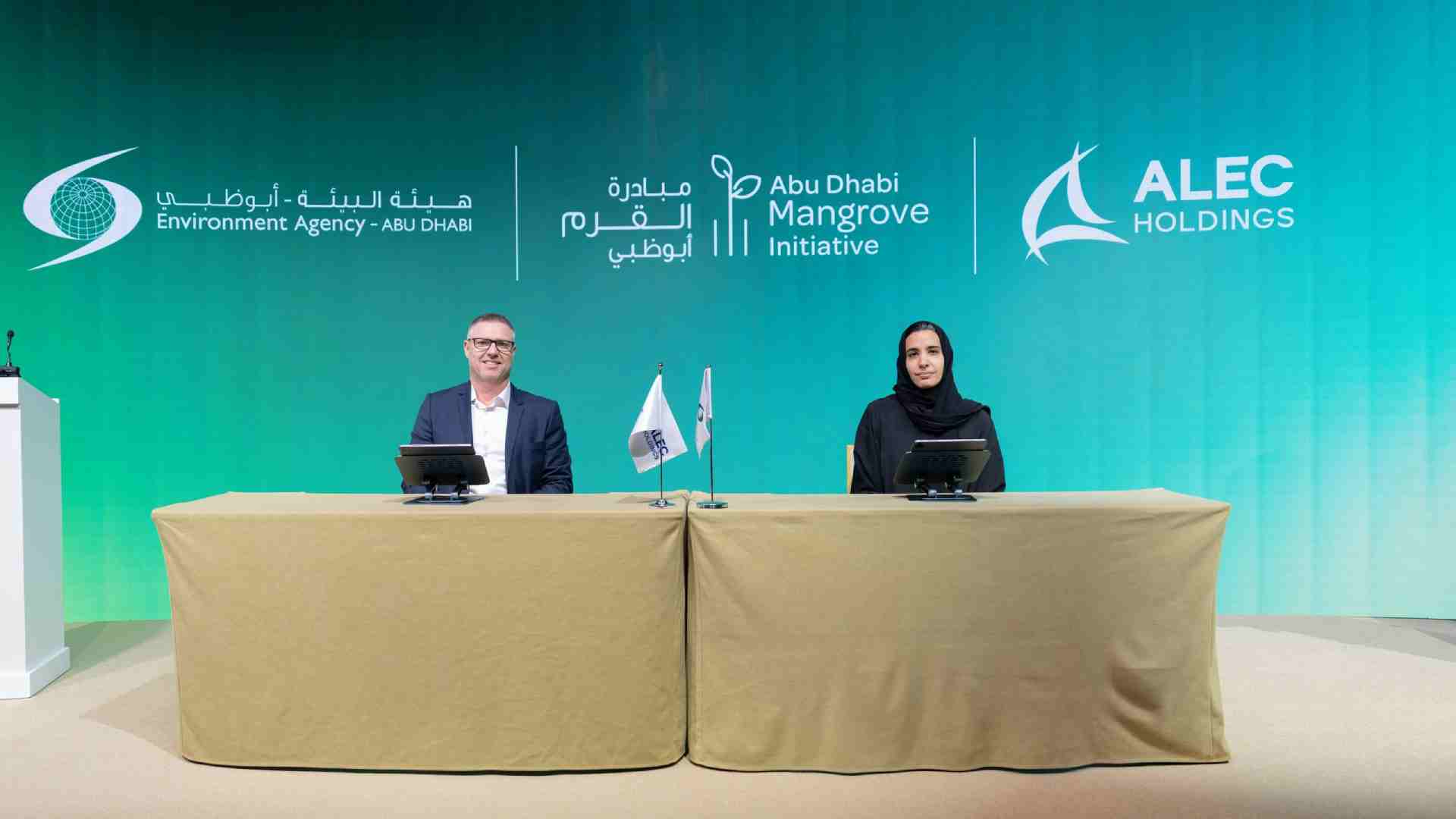
ALEC Engineering and Contracting LLC – SPC (ALEC), part of ALEC Holdings PJSC (ALEC Holdings) has signed an agreement with the Environment Agency – Abu Dhabi (EAD) to support a first-of-its-kind mangrove hydrological restoration pilot in the Emirate of Abu Dhabi.
The three-year project will explore whether restoring the natural hydrological conditions of a mangrove area in need of restoration can help the ecosystem return to long-term ecological health. In doing so, the initiative will examine the underlying conditions required to secure the future health and resilience of Abu Dhabi’s mangrove habitats.
EAD will lead the scientific planning and implementation of the project, including site selection, ecological and hydrological assessments, identification of the required restoration interventions, and the monitoring and reporting of project outcomes.
The pilot will establish baseline information for the selected site and track progress against defined restoration and biodiversity indicators. Its findings are expected to strengthen scientific understanding of mangrove hydrology in Abu Dhabi and help inform the planning of future ecosystem restoration initiatives.
The project supports the science-led restoration objectives of the Abu Dhabi Mangrove Initiative and complements the UAE’s national climate and biodiversity targets. By examining the conditions needed for mangrove habitats to recover and thrive, it will contribute to a broader understanding of how protection, hydrological restoration and long-term monitoring can work together to deliver durable ecological outcomes.
Earlier in 2026, ALEC signed the Abu Dhabi Mangrove Initiative Partners Pledge, committing to support the conservation and restoration of mangroves and other blue carbon ecosystems, advance science-based restoration, and reduce its impact on nature.
This partnership marks ALEC’s first flagship nature restoration investment with measurable biodiversity outcomes and forms part of ALEC’s broader commitment to integrating biodiversity considerations into its sustainability strategy and contributing to nature-positive outcomes in the regions where it operates.
Maitha Mohamed Al Hameli, Acting Executive Director, Terrestrial and Marine Biodiversity of the Environment Agency – Abu Dhabi, said, “We welcome ALEC’s support for this pilot, which reflects the kind of long-term, science-based commitment the Abu Dhabi Mangrove Initiative was established to encourage. The findings will strengthen our understanding of how mangrove sites respond to restored hydrological conditions and will inform how we plan future restoration in the emirate. Through this pilot, we aim to build the scientific evidence needed for long-term solutions that safeguard Abu Dhabi’s mangroves, a defining feature of the emirate’s natural heritage.”
Sean McQue, Managing Director – ALEC, said, “Abu Dhabi is a capital defined by extraordinary ambition, creating next-generation cultural and visitor experiences while protecting the natural heritage that gives the emirate its identity. For ALEC, this partnership is an important step in turning our commitment to nature into tangible action. As our first biodiversity restoration investment, the project enables us to contribute directly to the protection and restoration of Abu Dhabi’s mangrove ecosystems, while supporting a science-led approach that will generate measurable biodiversity outcomes. Through this pilot, we are supporting the development of the knowledge, evidence and practical understanding needed to help these vital ecosystems recover and thrive. In doing so, we are proud to support Abu Dhabi’s ambition to protect its natural heritage and contribute to a more resilient future for the emirate.”
As a company whose activities interact with land, water and ecosystems across the built environment value chain, ALEC recognises the importance of supporting the protection and enhancement of natural habitats. Through this partnership, the company will support the collection of ecological baseline data, monitoring of biodiversity indicators and conservation of a priority coastal ecosystem.
The collaboration will also create opportunities for employees across the ALEC Holdings group to participate in environmental awareness, education and structured volunteering activities associated with the project. These are expected to include citizen-science monitoring and other forms of community engagement.
The signing follows the fourth annual Abu Dhabi Mangrove Initiative Partners Meeting, which took place on 8 October 2026 at Rixos Saadiyat Hotel in Abu Dhabi. ALEC participated in the meeting, which brought partners together to review their collective impact and consider future opportunities to support the health and resilience of the emirate’s mangroves.
-Ends-
Photo Caption: (R) Maitha Mohammed Al Hameli, Acting Executive Director – Terrestrial & Marine Biodiversity at Environment Agency Abu Dhabi and (L) Sean McQue, Managing Director at ALEC
About the Environment Agency – Abu Dhabi
About Environment Agency – Abu Dhabi (EAD)
Established in 1996, the Environment Agency – Abu Dhabi (EAD) is committed to protecting and enhancing air quality, groundwater as well as the biodiversity of our desert and marine ecosystem. By partnering with other government entities, the private sector, NGOs and global environmental agencies, we embrace international best practice, innovation and hard work to institute effective policy measures. We seek to raise environmental awareness, facilitate sustainable development and ensure environmental issues remain one of the top priorities of our national agenda.
About ALEC Holdings PJSC
ALEC Holdings PJSC (“ALEC Holdings”), part of the Investment Corporation of Dubai, is a leading diversified engineering and construction group operating in the UAE and KSA. The Company builds and provides construction solutions that set industry benchmarks for innovation, quality, reliability and operational excellence.
ALEC Holdings offers its clients complete turnkey solutions in construction, MEP, fitout, marine, oil & gas, modular construction, energy efficiency and solar projects, heavy equipment rental, technology systems and asset maintenance. With these capabilities, the Company successfully serves a diverse range of sectors including airports, data centers, retail, hotels & resorts, high-rise buildings, and themed projects.
For more information, please visit https://alec.ae/.

Archi Unveils Next Phase of USD 770 Million Grand Avenue Development in Tbilisi

Beyond the camera: Why video surveillance is becoming a business intelligence tool

The AI Learning Dilemma: Better Answers, But Better Thinkers?



-

 Trending12 months ago
OPPO A6 Pro 5G Review: Reliable Daily Driver
-

 Tech News2 years ago
Denodo Bolsters Executive Team by Hiring Christophe Culine as its Chief Revenue Officer
-
 VAR2 years ago
Microsoft Launches New Surface Copilot+ PCs for Business
-

 Automotive2 years ago
AGMC Launches the RIDDARA RD6 High Performance Fully Electric 4×4 Pickup
-
Tech Interviews3 years ago
Navigating the Cybersecurity Landscape in Hybrid Work Environments
-

 Hospitality2 years ago
Gulfood 2025 30th Edition Kicks Off Today, Setting New Benchmarks in F&B Growth and Innovation
-

 VAR10 months ago
Huawei Nova 14 Pro Review: Where Camera Excellence Meets Ecosystem Evolution
-

 Tech News1 year ago
Nothing Launches flagship Nothing Phone (3) and Headphone (1) in theme with the Iconic Museum of the Future in Dubai