
 Have a question? +971 56 404 0503




Financial
RAKBANK SME Confidence Index Launched in Collaboration with RFI Global

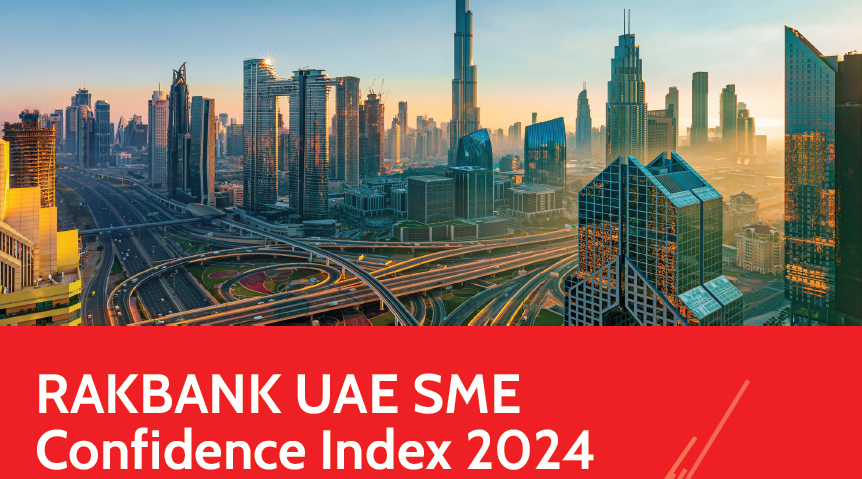
RAKBANK today launched its inaugural SME Confidence Index report in collaboration with independent research company RFI Global.
Among the headline findings of the report is that the Small & Medium Enterprise (SME) sector in the United Arab Emirates has successfully moved from a stage of resilience to prosperity after the Covid-19 pandemic, with two in three SMEs expressing a positive view of the future business environment in the country.
The report found an overall confidence index score of 61 among UAE SMEs – a number based on RFI Global’s analysis of macroeconomic indicators in the UAE, as well as survey responses from over 1,000 SMEs in the country collected between November-December 2023, all of which contributed to the final Index.
With most of the industries in the report topping the index base score of 50, it is clear that SMEs across the board are experiencing a period of robust growth, propelled by notable increases in revenue over the past two years, especially within key sectors such as Construction & Manufacturing and Public Services.

Commenting on the launch of the RAKBANK SME Confidence Index, Raheel Ahmed, Chief Executive Officer at RAKBANK said: “Small and Medium Enterprises are the backbone of every healthy economy, and this is especially true in the UAE, where SMEs make up 94% of companies and contribute over 50% to the country’s GDP. That is why we centred this inaugural report around the SME sector, in line with our priority of supporting this flourishing segment through actionable insights to assist in their decision-making, towards greater business growth and success.”
Overview of findings
The report refers a strong economic forecast for the UAE, with non-oil GDP expected to grow by over 4% in 2024, and overall GDP projected to grow by 5.70% this year. The RAKBANK SME Confidence Index also highlight steady recovery in factors such as hotel occupancy rates close to pre-pandemic levels, which signals a rebound in the tourism sector that is contributing to the general positive outlook among SMEs about their future revenue prospects and the business landscape in the next 12 months.
However, the report also talks about the challenges faced by SMEs, including rising labour, operational and other business costs; the impending introduction of corporate tax; and the cost of capital/credit. To navigate these challenges, SMEs need continued support and attention from financial institutions, in addition to the initiatives we are already seeing from government entities, particularly the UAE.
Drawing from a wealth of macroeconomic data and business sentiment analysis, the report suggests that the issuance of new business licenses in Dubai, in particular, also reflects a strong business environment. Despite challenges posed by fluctuations in Brent oil futures, the overall macroeconomic indicators suggest a fertile ground for SME growth and development.
While SMEs are proactively embracing innovation and expansion, showing a strong trend towards launching new products/services and bullishness towards customer demand and pricing of products/services, they also displayed one common thread – the critical role of banking support. The need for tailored financial solutions and advisory services is evident in the SME sector. In fact, one of the report’s standout findings is the high level of satisfaction with banking support among almost all the SME sectors.
The RAKBANK SME Confidence Index also offers an in-depth analysis of business sentiment across various industries, with a special focus on Construction & Manufacturing, Transport, Trading, Public Services, Professional Services, and Consumer & Retail Services, with all the sectors again demonstrating strong confidence.
The Construction & Manufacturing sector, has a confidence index score of 62, has seen the highest revenue increase over the last two years compared to other industries. Transport-dependent SMEs, with an index score of 60, show a cautiously measured optimism due to pricing adjustments, but a clear intention to explore new operational channels.
Public Services SMEs and Professional Services SMEs also stand out with a confidence index score of 62, thanks to significant revenue growth. Meanwhile, Consumer & Retail Services SMEs and Trading SMEs saw a more subdued trend, reflected in a lower but still significant confidence index score of 59 among the businesses surveyed in these industries.

Dhiraj Kunwar, Managing Director, Business Banking at RAKBANK added: “RAKBANK has a rich legacy of supporting SMEs, and the launch of our Index in partnership with RFI Global builds upon this legacy, as the UAE’s first SME-specific confidence survey. We trust that this report will bring genuine value to small and medium enterprises who are seeking out credible content and data points to align their business strategy.”


At a time when global markets are still navigating uncertainty, the UAE is taking a steady, pre-emptive approach rather than waiting for pressure to build.
At its latest board meeting, chaired by Sheikh Mansour bin Zayed Al Nahyan, the Central Bank of the UAE (CBUAE) made it clear that the country’s financial system remains on solid ground. More importantly, it is choosing to reinforce that position now, while conditions are stable, through a newly approved Financial Institution Resilience Package.
The message is straightforward: the UAE is not reacting to a crisis, it is preparing for one.

A system that’s holding firm
According to the CBUAE, the UAE’s banking sector has so far absorbed global and regional pressures without any meaningful disruption. That’s not entirely surprising given the underlying numbers.
The country’s banking sector stands at Dh5.4 trillion, supported by foreign exchange reserves of over Dh1 trillion. Liquidity levels are equally strong, with around Dh920 billion held at the central bank and more than Dh400 billion in reserve balances.
In simple terms, banks in the UAE are well-capitalised, liquid, and operating from a position of strength.
Why act now?
So why introduce a support package at this stage?
The answer lies in maintaining momentum. Rather than tightening conditions or waiting for external shocks to filter through, the central bank is giving financial institutions more room to operate, ensuring they can continue lending, supporting businesses, and financing growth.
The package itself is built around five key areas. It gives banks greater access to liquidity, eases some funding and capital requirements temporarily, and allows flexibility in how certain loans are classified, particularly for customers affected by current market conditions.
It also enables banks to tap into up to 30% of their reserve requirements and access liquidity in both dirhams and US dollars, which could prove important if global funding conditions tighten.
A confidence signal as much as a policy move
Beyond the mechanics, this is also about signalling.
In uncertain environments, confidence plays a major role in how markets behave. By stepping in early and backing the move with strong reserves, the UAE is reinforcing trust across investors, businesses, and financial institutions.
Armin Moradi, Founder and CEO of Qashio, sees it as a reflection of long-term thinking rather than short-term reaction. He said, “This is a highly commendable initiative by the UAE Central Bank and a clear demonstration of forward-looking economic leadership.
The proactive resilience package reflects a strong level of preparedness and disciplined planning, reinforcing confidence in the UAE’s financial system at a time when global uncertainty remains a key consideration. Backed by substantial reserves, it sends a powerful signal of stability and prudent oversight.
What is particularly notable is the strength of the top-down support—ensuring that financial institutions are not only protected but also empowered to continue supporting businesses and the wider economy. This approach safeguards the momentum of growth while reinforcing trust across investors, partners, and the broader business community.
Ultimately, this initiative further strengthens the UAE’s position as a resilient and highly trusted economic hub, building on an already robust and dynamic business environment that continues to thrive.”
What it means for the real economy
While this is a financial sector move on paper, its impact will be felt more broadly, especially in areas like real estate, where access to credit is critical.
With more flexibility on capital buffers and funding ratios, banks are expected to have greater capacity to lend, particularly in the mortgage space.
Abdulla Lahej, Chairman of Amaal, points to a likely knock-on effect in the property market. He said, “The recent measures by the Central Bank of the UAE signal a clear commitment to sustaining liquidity and credit flow across the economy. With over AED 920 billion in available liquidity and reserves exceeding AED 400 billion, banks are well-positioned to expand mortgage lending. Easing capital buffers and funding ratios will directly support homebuyers through improved loan accessibility and pricing. For the real estate sector, this will translate into stronger mortgage uptake, increased transaction volumes, and renewed investor confidence. Overall, these steps will reinforce market stability while creating favourable conditions for sustained property demand and long-term sector growth.”
Staying ahead, not catching up
What stands out in this move is timing. The UAE isn’t waiting for stress to appear in the system. Instead, it is creating additional buffers while conditions are still favourable. That approach has become a defining feature of its financial strategy, intervening early, but in a measured way.
The central bank has also made it clear that it is ready to introduce further measures if needed, suggesting this is part of a broader, ongoing effort rather than a one-off step. For businesses and investors, that consistency matters. It provides a level of predictability that is often missing in more volatile markets.
In a global environment where many economies are still adjusting to shifting financial conditions, the UAE’s approach is relatively simple: protect stability, keep credit flowing, and avoid disruption before it starts.

The UAE Ministry of Finance has issued Ministerial Decision No. 24 of 2026, setting out the detailed implementation rules for the country’s first-ever Research and Development (R&D) Tax Credit regime under the Corporate Tax framework. Effective for Tax Periods commencing on or after 1 January 2026, the decision establishes a progressive, tiered credit structure with rates of 15%, 35% and 50%, linked to both the level of qualifying R&D expenditure and the number of R&D staff employed. The maximum qualifying expenditure is capped at AED 5 million per entity or Tax Group per year.
“The R&D Tax Credit is a landmark development, but it is not a simple year-end adjustment. The dual-threshold design means this is as much a workforce planning exercise as a tax planning one. Businesses need to understand that pre-approval from the Council is mandatory before any credit can be claimed – this is a precondition, not an administrative formality. Companies that begin mapping their R&D activities against the Frascati Manual criteria, quantifying qualifying expenditure and building their documentation framework now will be in the strongest position when it comes time to file,” said Nimish Goel, Leader Middle East, Dhruva, Ryan LLC Affiliate.
The move represents one of the clearest signals yet that the UAE intends its tax framework to actively incentivise innovation, influence capital allocation and support the country’s long-term economic diversification going well beyond revenue collection and international alignment. For businesses operating in manufacturing, technology, engineering, healthcare, food and beverage, agriculture, and other innovation-led sectors, the key consideration is whether internal systems are equipped to capture the benefit.
The credit operates on a dual-threshold basis that is unlike most international R&D incentive regimes. To access each tier, a business must satisfy both a minimum qualifying expenditure level and a minimum average R&D headcount. The first AED 1 million of qualifying spend attracts a 15% credit, requiring at least two R&D staff. The portion between AED 1 to 2 million qualifies at 35%, requiring at least six staff. Spend between AED 2 to 5 million qualifies at 50%, requiring at least fourteen staff. If the headcount threshold is not met, the credit rate drops to the highest tier where both conditions are satisfied, creating material cliff-edge effects that make workforce planning an integral part of tax planning for the first time in the UAE.
Qualifying R&D activities must meet five criteria drawn from the OECD Frascati Manual; they must be novel, creative, uncertain in outcome, systematic, and transferable or reproducible. Activities in social sciences, humanities and the arts are excluded, and only R&D conducted within the UAE qualifies. Qualifying expenditure falls into three categories: staff costs (which receive a 30% overhead uplift), consumable costs, and subcontracting fees paid to UAE-based contractors. Intra-group transactions are consistently excluded from qualifying expenditure, a design choice that will require groups with centralised R&D functions to review their cost allocation and transfer pricing arrangements carefully.
The decision also introduces a mandatory pre-approval process administered by the Council, ongoing compliance reporting obligations, and a seven-year record-keeping requirement for technical documentation covering R&D objectives, methodologies, experiments and findings. These requirements signal that the UAE authorities expect robust, contemporaneous evidence of qualifying activities, not retrospective assembly at the time of filing.
Commenting on the development, Justin Arnesen, Principal, Practice Leader, Europe & Asia Pacific Innovation Funding, Ryan, said, “Ryan’s global experience in R&D tax credits shows that the difference between a policy announcement and a commercial outcome lies in the rigour of eligibility analysis, documentation and claims management. We have helped UK businesses receive over AED 2.5 billion in innovation funding through R&D Tax credits. These outcomes were driven by disciplined processes, not just the existence of a credit. This initiative not only aligns with global best practices but also sends a clear signal to multinational organisations and emerging enterprises that the UAE is serious about fostering a knowledge and innovation-based economy.”
Implications for Multinational Groups under Pillar Two
For multinational groups within the scope of the UAE’s Domestic Minimum Top-up Tax (DMTT), the R&D Tax Credit adds an important layer to Effective Tax Rate (ETR) modelling. Because the credit is non-refundable, it is likely to be treated as a reduction of covered taxes under the Global Anti-Base Erosion (GloBE) rules rather than as a Qualified Refundable Tax Credit, a distinction that can lower the jurisdictional ETR rather than improve it. For groups operating at or near the 15% minimum rate, this means the credit could paradoxically increase Top-up Tax exposure even as it reduces Corporate Tax liability.
However, the decision provides a mechanism for unutilised credits to offset top-up tax directly through the Domestic Group structure, which partially mitigates this effect. Multinationals should model the net impact across both Corporate Tax and top-up tax before claiming, and factor in the five-year claw-back provision that applies if the entity’s status changes – including becoming a qualifying free zone person or redomiciling outside the UAE.
For businesses with cross-border operations, the commercial value of the R&D Tax Credit extends beyond the direct tax saving. The credit’s treatment in the group’s wider international tax profile, including its classification under tax treaties, its interaction with Pillar Two ETR calculations, and its impact on transfer pricing for cost contribution arrangements will require integrated advisory across multiple disciplines. Groups conducting joint R&D through cost contribution arrangements should note that only the arm’s length share of contributions attributable to UAE-based R&D qualifies, adding a transfer pricing dimension to credit planning. The Ministerial Decision applies to Tax Periods and Fiscal Years commencing on or after 1st January 2026.
“The UAE has built a thoughtful, well-structured framework with clear international lineage – the Frascati Manual criteria, the tiered incentive design, the Pillar Two integration. Early investment in activity mapping, expenditure tracking and documentation is likely to determine the extent to which businesses can access and sustain benefits under the regime,” concluded Nimish.
Qashio Applauds Uae Central Bank’s Forward‑Looking Resilience Measures
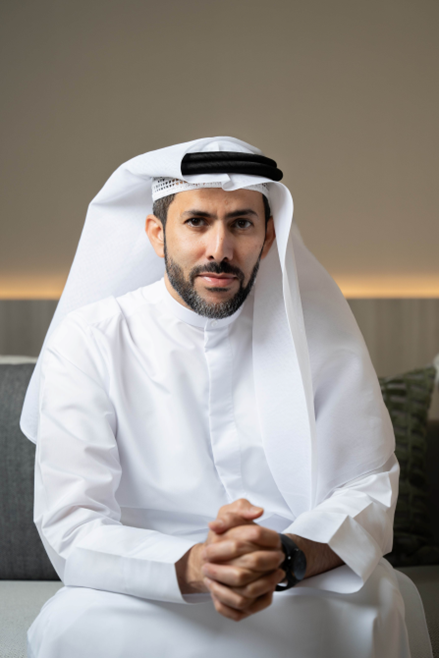

Spokesperson: Armin Moradi, Founder and CEO, Qashio
This is a highly commendable initiative by the UAE Central Bank and a clear demonstration of forward-looking economic leadership.
The proactive resilience package reflects a strong level of preparedness and disciplined planning, reinforcing confidence in the UAE’s financial system at a time when global uncertainty remains a key consideration. Backed by substantial reserves, it sends a powerful signal of stability and prudent oversight.
What is particularly notable is the strength of the top-down support—ensuring that financial institutions are not only protected but also empowered to continue supporting businesses and the wider economy. This approach safeguards the momentum of growth while reinforcing trust across investors, partners, and the broader business community.
Ultimately, this initiative further strengthens the UAE’s position as a resilient and highly trusted economic hub, building on an already robust and dynamic business environment that continues to thrive.
Spokesperson: Abdulla Lahej, Chairman, Amaal
The recent measures by the Central Bank of the UAE signal a clear commitment to sustaining liquidity and credit flow across the economy. With over AED 920 billion in available liquidity and reserves exceeding AED 400 billion, banks are well-positioned to expand mortgage lending. Easing capital buffers and funding ratios will directly support homebuyers through improved loan accessibility and pricing. For the real estate sector, this will translate into stronger mortgage uptake, increased transaction volumes, and renewed investor confidence. Overall, these steps will reinforce market stability while creating favourable conditions for sustained property demand and long-term sector growth.


2027 Chevrolet Corvette Grand Sport, Grand Sport X debut with new 6.7L V8
MAXION REPORTS 399% USER GROWTH AMID RISING DEMAND FOR REAL-WORLD CONNECTION PLATFORMS
SOBHA REALTY’S CREST GRANDE RECEIVES BUILDING COMPLETION CERTIFICATE; HANDOVER TO COMMENCE WITHIN RERA TIMELINE



-
News10 years ago
SENDQUICK (TALARIAX) INTRODUCES SQOOPE – THE BREAKTHROUGH IN MOBILE MESSAGING
-

 Tech News2 years ago
Denodo Bolsters Executive Team by Hiring Christophe Culine as its Chief Revenue Officer
-
 VAR12 months ago
Microsoft Launches New Surface Copilot+ PCs for Business
-

 Tech Interviews2 years ago
Navigating the Cybersecurity Landscape in Hybrid Work Environments
-

 Trending5 months ago
OPPO A6 Pro 5G Review: Reliable Daily Driver
-

 Tech News9 months ago
Nothing Launches flagship Nothing Phone (3) and Headphone (1) in theme with the Iconic Museum of the Future in Dubai
-

 Automotive1 year ago
AGMC Launches the RIDDARA RD6 High Performance Fully Electric 4×4 Pickup
-

 VAR2 years ago
Samsung Galaxy Z Fold6 vs Google Pixel 9 Pro Fold: Clash Of The Folding Phenoms