
 Have a question? +971 56 404 0503




Tech News
Designed to speed up the future of computing experiences


ASBIS introduces AMD EPYC demo marketing server, offering high performance, scalability, and efficiency for data center applications, cloud computing, virtualization, and enterprise tasks
Recently ASBIS has unveiled the demo marketing server stack, which features the latest AMD EPYC 9454P processors in the Middle East, bringing cutting-edge computing capabilities to the region. This server stack is tailored to meet the demands of enterprise IT environments, offering remarkable performance, storage capacity, and scalability for critical applications, databases, and virtualized workloads. Its high-density storage capabilities and scalable architecture make it a perfect fit for scale-out NAS deployments and AI-accelerated workloads.
Let’s delve deeper into the main components and benefits of the AMD EPYC demo marketing server
Main components:
1. AMD Genoa 9454P CPU: Each Supermicro node is powered by an AMD Genoa 9454P 48-core CPU, which provides exceptional processing power and efficiency for diverse workloads.
2. Supermicro Single Socket Nodes: Our server stack includes three Supermicro single socket nodes, offering a flexible and cost-effective solution for various deployment scenarios.
3. 512 GB DDR5 Memory: With 512 GB of DDR5 memory per node, our server stack ensures ample memory capacity to support demanding applications and workloads, enabling seamless multitasking and data processing.
4. 6 TB NVMe Storage per Node: Each node is equipped with 6 TB of NVMe storage, harnessing the speed and performance of NVMe technology to provide high-throughput storage solutions for rapid data access and processing.
Key benefits:
Performance Optimization. The AMD Genoa 9454P CPUs utilize AMD Infinity Architecture to seamlessly connect CPU cores, memory, and I/O resources. This enhances overall system performance, scalability, and efficiency, optimizing resource utilization for diverse workloads.
Data Protection. The server stack is equipped with InfiniGuard integration, which utilizes advanced data protection and recovery capabilities to enhance data integrity and availability. InfiniGuard strengthens backup and disaster recovery processes, providing additional safeguarding for critical data assets against loss or corruption.
Enhanced Efficiency. The server stack offers support for hyperconverged, virtualized, and software-defined storage solutions, delivering the flexibility and scalability needed to adapt to changing IT needs. Whether it’s for deploying enterprise IT infrastructure, scale-out NAS environments, or AI-accelerated workloads, our server stack ensures top-notch performance and efficiency.
The AMD demo marketing server stack is a groundbreaking technology that is certain to have a positive impact on your business. Prepare to enhance your enterprise IT infrastructure with this powerful and versatile solution!










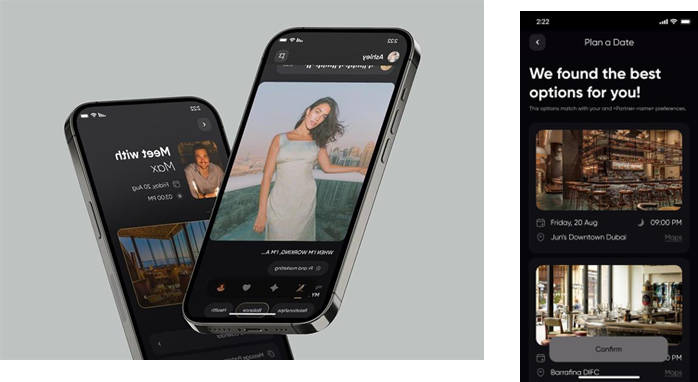
MAXION, a UAE-based platform empowering social connections, has reported 399% year-on-year growth in its user base in 2025 following the introduction of an AI-powered infrastructure designed to prioritise real-world interaction. The growth reflects strong adoption of the platform’s technology-driven approach to facilitating meaningful relationships. Over the same period, the company reached a 406% increase in annual recurring revenue.
MAXION operates as a hybrid SaaS and marketplace platform built on an AI-powered system that processes behavioural, scheduling, and conversion data across the full lifecycle of an interaction. The system analyses availability alignment, time to meeting, attendance confirmation, repeat meeting patterns, and structured feedback following in-person meetings, helping members move from introduction to real-world conversation more efficiently. To support the continued development of these capabilities, MAXION has secured $900,000 in early-stage funding, which has been allocated toward AI integration, infrastructure development, senior product hires, and operational expansion.
The UAE’s international population provides a strong environment for MAXION’s growth, with Dubai alone home to a rapidly expanding base of ultra-high-net-worth individuals (UHNWIs). At the same time, the UAE online relationship services market is anticipated to grow by more than 9.21% by 2031, highlighting sustained demand for platforms that help individuals form meaningful connections in fast-moving urban environments.
To date, more than 40,000 individuals have applied to join MAXION, with approximately 7,000 active members accepted into the curated community. Through a selective onboarding process, the platform maintains a gender balance close to 50:50, compared with traditional platforms where participation averages approximately 70:30 male to female. The community primarily consists of high-performing professionals aged 25 to 45 working across finance, consulting, technology, entrepreneurship, and senior corporate leadership roles.
Christiana Maxion, Founder and CEO of MAXION, said: “Our long-term vision is to restore real-world connection in a fast-moving world. Technology should help people meet sooner rather than spend months behind a screen. We use data to make it easier for people to meet at the right time, allowing members to focus on getting to know each other rather than spending weeks in digital conversation. MAXION is designed to move people from introduction to real conversation quickly, where interactions feel more natural, and intentions become clearer. Over time, we want to build a platform that supports strong partnerships and lasting communities.”
In the past six months alone, MAXION has facilitated more than 2,000 in-person meetings between members. The platform measures success by the relationships formed between members, with users typically returning every three months and continuing to engage with the app over periods of up to two years. MAXION has also established strategic partnerships with brands to reduce logistical friction surrounding real-world meetings and create a smoother experience for members.
Adoption is currently concentrated in Dubai, with growing traction in Abu Dhabi. The company plans to deepen its presence across the UAE while preparing for expansion into international professional hubs such as Singapore, London, and New York, where dense expatriate populations and fast-paced professional environments create similar demand for intentional connection.
Over time, MAXION aims to support members beyond the first stage of connection by creating value for couples as their relationships develop. The long-term vision is to help build urban communities where meaningful relationships remain central to modern professional life.

Yango Tech, B2B technology solutions provider by Yango Group, launches a new business practice focused on developing and deploying autonomous industrial AI agents. These AI agents are designed to execute real operational tasks across customer service, analytics, compliance, and decision-making, serving industries such as fintech, medtech, e-commerce, logistics, smart cities, and the public sector. Yango Tech offers both ready-to-deploy solutions and a customizable platform for building AI agents tailored to the specific needs of each business. This new business direction addresses the rapidly growing demand across the Middle East for scalable AI systems that deliver measurable business impact, as the region accelerates toward a projected $320 billion AI economy by 2030.
AI Agents connect directly to enterprise applications and data sources, including CRM, HR and finance systems, allowing AI to act like digital employees with memory, execution capabilities and built-in security. For governments and enterprises building digital workforces and smart cities, Yango Tech deploys AI employees across customer support, sales, recruitment and debt recovery, delivering 95% first-contact resolution, faster hiring and up to $100K in monthly operational savings. Its Smart City stack enables digital twins, emergency navigation, mobility optimization and real-time urban analytics, helping municipalities accelerate decision-making, improve traffic flow, and reduce energy and operational costs through AI-powered city modelling and dispatch optimization.
In the medical world, Yango Tech reduces physician admin workloads through appointment transcription, smart search across electronic medical records, imaging analysis and AI and BI command centres. The solutions automate documentation, surface unified patient data in seconds, improve diagnostic accuracy and enable clinicians to treat more patients. In financial services, AI functions support front-, middle- and back-office transformation through AI-powered chatbots, smart search, credit scoring, anti-fraud analytics and workflow automation.
Commenting on the launch, Vladimir Razuvaev, Chief Executive at Yango Tech, said: “Enterprises today are under pressure to turn AI into practical outcomes. Our AI Agents were built to help organizations deploy autonomous digital employees that integrate securely into existing systems and deliver measurable productivity gains. With around 84% of GCC organisations adopting AI, the opportunity now lies in execution. Our vision is to help healthcare providers, banks, private firms and cities scale AI responsibly while strengthening performance, transparency and service quality.”
The launch reinforces Yango Tech’s alignment with the UAE’s national innovation agenda and broader regional ambitions for AI-led economic growth, smart infrastructure and digital government. By enabling sovereign deployments, local data control and enterprise-grade security, the platform supports the UAE’s vision for future-ready public services and knowledge-driven economies while helping organizations move faster from strategy to implementation.
TO LEAD FROM DUBAI
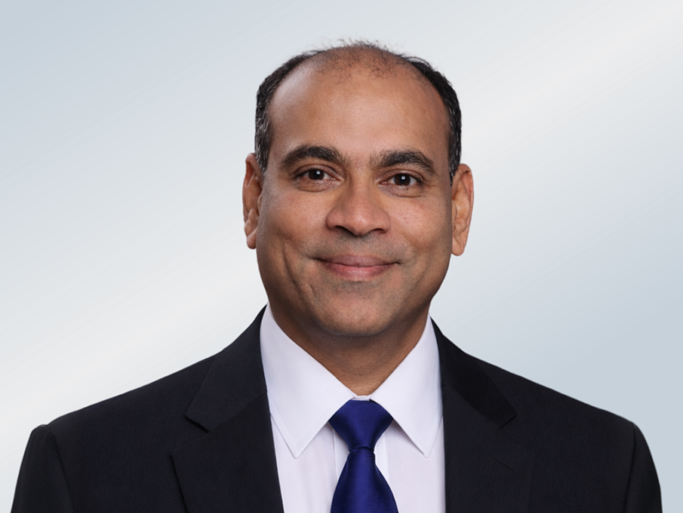
QBurst, a design-led digital engineering company powered by High AI-Q™, has appointed Shivkumar Subramaniam as Regional Head, Middle East, based in Dubai, UAE. The appointment underscores QBurst’s strategic commitment to building a locally-rooted presence in the Middle East and strengthening its ability to serve enterprises and governments across the region.
The Middle East represents one of the most significant growth opportunities in the global technology services market. According to Deloitte & MBZUAI, State of AI in the Middle East 2025 report, over 80% of organizations in the region feel intense pressure to adopt AI, yet nearly half lack the talent and technology capabilities to scale it successfully, and a third report no returns from their AI initiatives. Closing that gap between AI adoption and AI value is the opportunity QBurst is positioned to capture.
Shivkumar is a global technology business leader with over three decades of experience building and scaling digital and technology services businesses across the Middle East, Asia Pacific, and India. He has led multi-country P&L portfolios and driven large-scale digital transformation initiatives for enterprises and governments across industries.
“The velocity of digital and AI transformation in the Middle East is remarkable. What’s truly compelling is the complexity and scale of the projects being undertaken—from smart governments to intelligent enterprises. This is where QBurst provides a decisive advantage, bringing a world-class engineering pedigree and practical AI experience. Our main focus is on embedding QBurst into the fabric of the region’s innovation ecosystem, building a team that co-creates solutions and ensures we are the trusted, long-term partner for our clients’ success,” said Shivkumar Subramaniam, Regional Head, Middle East, QBurst.
QBurst CEO Arun ‘Rak’ Ramchandran added, “The Middle East is a strategic market for us with long-term growth potential. Governments across the region – from the UAE’s AI Strategy to Saudi Arabia’s Vision 2030 – are building the foundation for an AI-driven future, and that is creating demand for partners who can genuinely deliver at scale. Building an on-ground team despite the ongoing geopolitical developments is our clearest statement of commitment and conviction in the region. Shivkumar brings proven depth of regional experience and leadership QBurst needs, to accelerate that growth and support our clients in building intelligent, future-ready digital platforms.”
Before joining QBurst, Shivkumar held senior leadership roles at Siemens, Satyam Computer Services, Mindtree, and Larsen & Toubro Infotech, where he helped expand regional technology businesses and led large digital transformation programs for clients across the Middle East and Asia Pacific.
A year since Multiples Alternate Asset Management, India’s leading alternate asset management firm, acquired a controlling stake in QBurst in a ~USD 200 million transaction, the company has moved decisively to scale its international footprint, strengthen its leadership team and bolster its offerings. The Middle East expansion marks one of the most significant steps in that growth journey, with QBurst bringing deep experience in delivering AI-driven solutions across Realty, Hospitality, Retail, Manufacturing, and Healthcare – industries that sit at the heart of the region’s economy.


2027 Chevrolet Corvette Grand Sport, Grand Sport X debut with new 6.7L V8
MAXION REPORTS 399% USER GROWTH AMID RISING DEMAND FOR REAL-WORLD CONNECTION PLATFORMS
SOBHA REALTY’S CREST GRANDE RECEIVES BUILDING COMPLETION CERTIFICATE; HANDOVER TO COMMENCE WITHIN RERA TIMELINE

-
News10 years ago
SENDQUICK (TALARIAX) INTRODUCES SQOOPE – THE BREAKTHROUGH IN MOBILE MESSAGING
-

 Tech News2 years ago
Denodo Bolsters Executive Team by Hiring Christophe Culine as its Chief Revenue Officer
-
 VAR12 months ago
Microsoft Launches New Surface Copilot+ PCs for Business
-

 Tech Interviews2 years ago
Navigating the Cybersecurity Landscape in Hybrid Work Environments
-

 Trending5 months ago
OPPO A6 Pro 5G Review: Reliable Daily Driver
-

 Tech News9 months ago
Nothing Launches flagship Nothing Phone (3) and Headphone (1) in theme with the Iconic Museum of the Future in Dubai
-

 Automotive1 year ago
AGMC Launches the RIDDARA RD6 High Performance Fully Electric 4×4 Pickup
-

 VAR2 years ago
Samsung Galaxy Z Fold6 vs Google Pixel 9 Pro Fold: Clash Of The Folding Phenoms