
 Have a question? +971 56 404 0503




Automotive
New Vantage Roadster: Engineered for Real Drivers, Designed for Open Air Thrills


Aston Martin has introduced the new Vantage Roadster, a convertible stablemate of the world-beating Vantage Coupe. Launched in 2024, the new Vantage continued the marque’s shift in sector defining luxury and dynamic credentials, far exceeding the capabilities and engagement of any Vantage before. Now, Vantage Roadster arrives to enhance the real driving experience even further.
Powered by the Aston Martin 4.0-litre V8 twin-turbo engine delivering 665PS/800Nm, Vantage Roadster brings all the class leading performance, dynamic sensations and visual excitement of the coupe, with an additional dimension of top-down freedom and thrills for those addicted to open air motoring. Vantage Roadster brings a new level of emotion to the already unforgettable driving experience, broadening still the phenomenal appeal of this quintessential, yet state-of-the-art British sports car.
New Vantage Roadster has been designed to offer all the style, sense of freedom and adventure for which convertibles are known, but without the limitations traditionally inherent in their design. As beautiful as its hard top companion, with minimal weight increase and the fastest operating fully automatic roof on the market, Vantage Roadster is a convertible without compromise and a worthy new member of the Vantage family.
It continues a tradition of open top Aston Martin Vantage models that date back 75 years to the launch of the Vantage engine upgrade pack for the DB2 (available both as a coupe – known as a saloon – and convertible – known as drophead coupe) in 1950, which featured larger carburettors and a higher compression ratio to raise power for the 2.6-litre twin cam engine from 105bhp to a heady 125bhp.
This year, Aston Martin is celebrating the 20th anniversary of the 2005 introduction of the V8 Vantage. The first Gaydon-built ‘modern’ Aston Martin to use the name and the first Vantage to be a distinct model in its own right, rather than a derivative, with its own Roadster version arriving just one year later.
Aston Martin Chief Executive Officer, Adrian Hallmark, said: “The technical and dynamic capability of New Vantage delivered outstanding performance; far beyond any other preceding Vantage and it is now seen as a true class leading sports car. Vantage Roadster was no different feat in that it is a fully reinvented experience, with all the benefits of the Coupe and no compromise to refinement or performance through meticulous work by our engineering and dynamics teams. Vantage Roadster delivers a world-class roof-down driving experience like no other.”

Engineering
Key to Vantage Roadster’s ability to retain the crucial dynamic attributes of Vantage Coupe is that both cars were designed and engineered in parallel rather than in sequence, the Roadster therefore being a fully developed model in its own right, allowing the team to implement features and attributes that result in zero compromises to performance, ride and handling and excessive additional weight.
Compared to the previous Vantage Roadster, Aston Martin’s bespoke 4.0-litre V8 twin-turbo engine has seen power and torque rise by an unprecedented 155PS and 115Nm thanks to larger turbochargers, revised camshaft profiles and an optimised compression ratio. With a total of 665PS and an incredible 800Nm of torque running through an eight-speed paddle-shift transmission to an electronically controlled limited slip differential driving the rear wheels alone, Vantage Roadster combines explosive performance (0-60mph in 3.5seconds, top speed 202mph) and state-of-the-art technology within the classic, front engine, rear-wheel drive configuration adored by those who simply love to drive. With thanks to a retractable roof, even more of the inimitable V8 thunder can be heard by occupants, emanating from under Vantage’s dramatically sloping bonnet and exhaust tail pipes.
Thanks to its ultra-stiff yet lightweight aluminium structure, composite body panels and 49:51 front to rear weight distribution, Vantage Roadster provides the ideal platform for the suspension to act upon. Featuring race-inspired unequal length double wishbones at the front, a multi-link rear axle, coil springs and Bilstein DTX adaptive dampers (with a bespoke tune), along with a non-isolated steering column, Vantage Roadster provides the precision, balance, poise and, above all, the confidence that are the unmistakable hallmarks of the truly great high performance driver’s car.

Brake discs measuring 410mm at the front (with carbon ceramic brakes) clamped by six piston monoblock calipers ensure Vantage Roadster can shed speed even more rapidly than it is gained – and do so repeatedly. The necessary grip is provided by bespoke Michelin Pilot Sport S 5 tyres, specially developed by Michelin and tuned by Aston Martin with a compound tailored to the specific requirements of the Vantage. These provide not just superlative grip in both dry and wet conditions but also outstanding steering feel and progressive breakaway characteristics.
All of this hardware is supported by an electronic architecture using six axis sensors, capable of creating an astonishingly detailed overview of precisely how the car is behaving, allowing the ESP system to adopt optimal settings both for the road conditions and the style in which the car is being driven. In addition, Vantage Roadster carries over the innovative Advanced Traction Control system from the Vantage Coupe, allowing the driver to choose one of eight settings for the traction control; the default setting of five is optimised for achieving the fastest, cleanest laps. The lower the number the greater the level of intervention, providing an additional level of reassurance and safety in, for example, adverse weather conditions, while drivers wishing to hone their skills most likely on track have the option to turn traction control off and experience the car free of any electronic influence.
From the outset several measures were designed into the structure of Vantage Roadster to ensure the Vantage spirit, astonishing ability and love of the open road were passed across from Coupe to Roadster in undiluted form. To do this, two primary goals, traditionally seen as diametrically opposed objectives, were given top priority from the start. These were to keep the Roadster as light as possible relative to the Coupe and to maintain structural rigidity at an outstandingly high level for a convertible car.
These include identifying the load paths through the structure and body and modifying the way the body is attached at the back of the car to add additional stiffness relative to the Coupe. In addition, weight-optimised shear panels have been added in strategic positions to laterally stiffen the structure further even than the Coupe in order to offset the reduction in rigidity inherent in any convertible car.
The roof itself comes in ‘Z-fold’ configuration, which is both faster and lighter than a traditional ‘K-fold’ roof and removes the requirement for a tonneau cover, further saving weight and lowering the centre of gravity. The roof on Vantage Roadster can be opened or closed at any speed up to 31mph (50km/h) with the entire roof fold operation (open or closed) taking just 6.8sec – the fastest fully automatic deployable roof mechanism on the market today. Additionally, this slick operation can be performed when seated in the car or remotely via the key, so long as the operator is within a two-metre radius of the car.

Despite the extraordinary speed of the roof operation and its lightweight design, no sacrifice to refinement has been made. The roof comprises no fewer than eight levels of insulation ensuring that cabin sound levels with the roof up are comparable to those of Vantage coupe.
The Z-fold action results in a simpler and therefore lighter roof, leading to Vantage Roadster delivering an overall weight increase of just 60kg, an outstanding achievement – and class leading – for a car in this category.
Even the roll-over structure has been carefully optimised to be both as strong and lightweight as possible. The aluminium Roll-Over and Protection System (ROPS) is formed using a process called ‘Castrusion’ for the way it combines optimal elements from both casting and extrusion to create a system that is robust, light and simple to package.
Finally, attention has also been paid to the suspension system to account both for the change in mass and weight distribution. Minimal though these changes are, the fact that Vantage Roadster has recalibrated software for its rear dampers and retuned mountings for its rear mounted gearbox just shows the lengths Aston Martin engineers go to in order to ensure a full measure of the legendary Vantage handling prowess is carried over from Coupe to Roadster.
Simon Newton, Director of Vehicle Performance, said “Vantage made headlines last year for the huge increases in power and torque over the outgoing model, and the vivid way in which it deployed such immense performance completely seduced enthusiasts and purists alike. Developing both Vantage Coupe and Roadster simultaneously meant we were able to retain the outrageous dynamic capabilities and agile sporting character of Vantage with no compromise upon removal of the roof, allowing drivers to revel at the limit with the added exposure to the elements. This has been achieved from meticulous optimisations in the body structure combined with Roadster specific chassis tuning carried out by our skilled dynamics team and is the perfect stablemate to its Coupe cohort.”

Design
It was essential that all of the visceral impact and beauty of Vantage Coupe was retained for Vantage Roadster, and that it should retain its stunning lines whether the roof is in its raised or lowered position. So successfully has this been achieved that when the roof is stowed Vantage Roadster looks like it was never designed to be anything else. The dramatically angled windscreen joins with the car’s high waistline to create a proportionally perfect thoroughbred sports car profile.
The roof stows seamlessly behind the seats with no need for a bulky and heavy tonneau cover while the bootlid deck slopes gently downwards until it meets the dramatic upkick of the distinctive rear spoiler. The widened stance introduced on the coupe is retained on Roadster, as is the increased aperture of the signature Aston Martin grille; an object lesson in how to combine beauty with function, with the large grille increasing air flow the powerful engine by almost 30 per cent.
With a spectacular canvas to create a sporting masterpiece, three new paint colours – Iridescent Sapphire, Satin Iridescent Sapphire and Bronze Flare have been added to the paint palette, while the Vantage Roadster’s roof can be specified in Black, Red, Blue or Black and Silver. To enhance the cars sporting character further still, a selection of painted liveries can also be applied in a choice of 21 complementary colours. There are four 21” wheel styles, available in a range of finishes, behind which can be seen one of seven different colour choices of brake calipers.
Marek Reichman, Aston Martin Chief Creative Officer, said: “This new Vantage Roadster is a sculptural masterpiece. The resonant roar of its engine brings its simple yet refined surface design to life, creating a connection that’s impossible to ignore. Its form exudes beauty, its athletic stance conveys predatory intent, and its sound delivers a visceral, sensory experience. Created as both art and performance, the engine’s sound amplifies this balance, turning the auditory experience into an essential part of the journey. With the roof down, the soundscape becomes as dynamic as the design, blending simplicity, power, and a visceral connection that transcends driving into an unmatched sensory experience.”
Like all Aston Martin models, Vantage customers can explore endless bespoke and customisation possibilities via the Q by Aston Martin personalisation service. Enlisting the skills of Q’s designers and crafts people, customers take an unforgettable personal commissioning journey that can encompass everything from a single small distinguishing detail to full-scale engineering and production of entirely bespoke components to create a true one-off.

Vantage Roadster, like its Coupe counterpart, is the latest model to feature Aston Martin’s next-generation infotainment. Created in-house and first introduced on DB12, it is entirely bespoke and developed in-house from scratch. The system combines a fully integrated multi-screen system with full online connectivity, featuring 10.25” Pure Black touchscreen technology with full capacitive single and multi-finger gesture control. Touchscreen commands remain balanced with the tactility of physical switches, with buttons retained for the key mechanical operations of gear selection, drive selection, heating and ventilation. There are also control switches for Chassis, ESP and Exhaust, Active Safety System settings and Park Distance Control, ensuring the most used controls can be operated intuitively and without the need to take your eyes off the road. Supplemented by a new Aston Martin customer connectivity app which supports iOS and Android devices, it allows interaction, control and feedback to and from the customer’s Vantage via their personal device.
Vantage Roaster is fitted as standard with the Aston Martin 390w 11 speaker audio system. Developed utilising advanced hardware, this system features a Surround sound mode with QuantumLogic® surround sound processing for an immersive soundscape. However, if a musical soundtrack to the drive is deemed truly significant, some customers will delight in the optional system developed with Aston Martin’s audio partner, Bowers & Wilkins. Acoustically engineered to the Vantage Roadster’s interior volume and shape, this exceptional system uses technologies and innovations found in Bowers & Wilkins’ acclaimed world-class loudspeakers.
Vantage Roadster deliveries will commence in Q2 2025. It joins its Coupe sibling, the DB12 and DB12 Volante, the stunning new Vanquish and, of course the Supercar of SUVs, DBX707 as well as the forthcoming Valhalla supercar to form unquestionably the most capable, comprehensive and desirable product line up in the 112-year history of the Aston Martin marque.











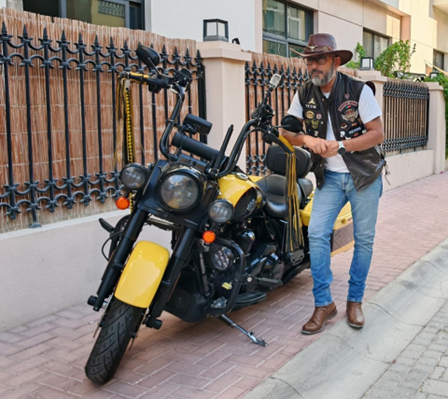
Exclusive interview with Victor King, Founder of World of Bikers
Long-distance riding is gaining tremendous traction in the Middle East. What factors are driving riders here to attempt endurance certifications like CLDR, and how is it changing the riding culture?
Long-distance riding certifications are a pure test of discipline, resilience, and planning. They’re a badge of honour earned through willpower and help form an unbreakable bond with fellow riders.
The manual documentation process, which was tedious for both riders and principals, has now been digitalized with The World of Bikers app. This has led to instant gratification for riders, who can now receive LDR certification in 90% less time after completing the ride than before, sparking powerful motivation to earn this globally recognized accomplishment.
What gaps in the UAE’s biking ecosystem are you trying to solve with this platform, and how do riders benefit from it on a day-to-day basis?
The World of Bikers (WoB) aims to create a unified, digital ecosystem with the core objective of building a global community where riders can SAIL together—Support, Advise, Inspire, and Learn from each other.
On a day-to-day basis, the platform extends these benefits further. Riders gain immediate access to the LDR Certification module, which digitalizes endurance documentation. Additionally, an integrated chat module connects riders instantly for planning rides or seeking advice, which directly supports our “Support” and “Advise” pillars.
Looking ahead, these benefits will be amplified by upcoming features like Who’s Riding, Marketplace, Rentals, Service, and Cafe. These additions will bring the community even closer together and give riders access to key services under one roof—services that are usually scattered. This evolution transforms riding from a mere activity into a connected, supported, and continuously enriching lifestyle. Ultimately, this directly fulfills our mission to unite riders and strengthen the bonds within our community.
The UAE attracts riders from over 150 nationalities. How does such diversity influence the riding community’s culture, safety practices, and the way group rides are organized?
Diversity is the greatest strength of the motorcycle riding culture and a direct reflection of the UAE’s national vision of tolerance and inclusion. For example, it is common to see riders from countries such as India, Germany, and South Africa sharing different safety practices and ride leadership traditions within the same group. The World of Bikers community creates a unique global melting pot culture on two wheels, where riding stories and traditions from every continent blend and merge.
The UAE’s motorcycling scene has evolved rapidly over the last decade. From your vantage point, what are the biggest cultural and behavioural shifts you’re seeing among riders in the region today?
A decade ago, Motorcycle riding was a hobby of a few, given the extremely hot climate and high-speed expressways of the region, which kept even enthusiasts away from motorcycles. And then came the era of delivery motorcycle riders, seen all over the road in summer and winter alike.
This rise in visible riding activity has, in turn, inspired many old- and new-generation riders to get on two wheels. Culturally, this increased presence of motorcyclists on the road has fostered a sense of community, encouraging social interaction, mentorship, and the exchange of riding traditions among diverse groups. Beyond these internal community effects, there has also been a broader societal impact: the normalization of motorcycling has contributed to greater acceptance of riders and their lifestyle across the general population. Public perceptions have gradually shifted, with motorcycles increasingly viewed as viable modes of transport and recreation rather than niche or risky pursuits. This shift has encouraged additional investment in rider-friendly infrastructure and collaboration between authorities and biking communities to promote road safety and awareness. With the region’s infrastructure, regulatory, and safety systems among the best in the world, riders can now enjoy their passion securely and confidently, further solidifying motorcycling as a respected and integral aspect of the region’s contemporary lifestyle.
Early-morning weekend rides have become a signature part of UAE biking culture. What draws hundreds of riders out at 3 or 4 AM every season, and what does that say about community behaviour here?
The pre-dawn ride is a brilliant cultural adaptation to the region’s unique environment and demographics. First, it’s a necessary adaptation to the extreme heat, offering the only safe, comfortable window for group rides year-round.
More importantly, this practice reveals the community’s maturity and conscientiousness. Given that the UAE has a largely expatriate population juggling work and family life, the early morning start is a disciplined and practical choice. It lets riders pursue their passion, return at the start of the day, and preserve precious weekend time for family.
Many enthusiasts say the UAE is where riders truly discover “group discipline.” From your experience, what makes structured group riding so central to the community’s identity?
Structured group discipline is the pillar of our identity. It’s a visible sign of respect for the law, an uncompromising safety-first practice that protects every rider, and the very foundation of our brotherhood on two wheels. By riding as one unit, we build trust, ensure harmony, and turn a group of individuals into a single, safe, and resilient community.
The UAE has seen an influx of first-time or returning riders post-pandemic. What advice do seasoned riders in the community typically share with newcomers joining the scene?
First, safety is not negotiable. Gear up, get trained, and know your limits. Second, respect the law—it protects us all. Above all, trust the brotherhood. Listen, learn, and lean on the group’s experience. Come ready to make friends and share the road. This is how we protect each other and ensure everyone can enjoy riding for years to come—and together, we uphold the spirit and unity that define our community.
Automotive
GWM Marks Ramadan in the Middle East with a Brand Film Celebrating Togetherness and the Joy of Coming Together

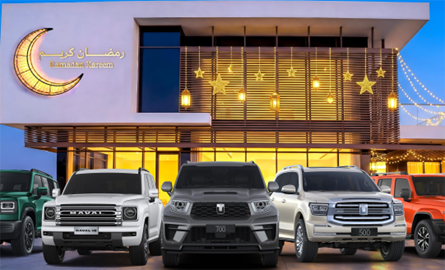
This Ramadan, GWM Middle East unveils a new brand-led campaign that celebrates one of the most meaningful moments of the Holy Month: coming together for iftar. Anchored by a regional social film, the campaign reflects the shared values of family, connection and presence, while subtly showcasing GWM’s growing vehicle range, including the newly launched TANK 700 and HAVAL V7.
The film follows different members of the same family as they make their way through the city toward a shared destination, a restaurant where they will break their fast together. Each journey unfolds independently, yet with a shared sense of purpose, capturing the anticipation, comedy, warmth and quiet reflection that define the moments leading up to iftar.
Many Journeys. One Table.
Set against familiar Middle Eastern urban backdrops, the film portrays everyday Ramadan realities, last-minute arrivals, and the unspoken understanding of being exactly where you need to be. Each family member arrives in a different GWM vehicle, collectively representing the brand’s diverse portfolio and how it fits seamlessly into different lifestyles.
The TANK 700 appears as a confident, commanding presence, reflecting strength and assurance on the road, while the HAVAL V7 is positioned as a refined and versatile companion for daily city driving. Meanwhile, the HAVAL H9 is born for families, delivering space, comfort, and reliability for every journey together.
Together with other models from the GWM range, the vehicles act not as the focus, but as enablers, quietly supporting moments that truly matter.
Rooted in Regional Values
Rather than focusing on performance alone, the Ramadan film emphasizes GWM’s belief that mobility plays a role in human connection. The story mirrors the rhythm of Ramadan in the Middle East, where schedules slow, priorities shift, and togetherness takes center stage.
Through natural, relatable storytelling, the campaign reinforces GWM’s commitment to the region, offering vehicles designed for comfort, safety and reliability, built to support everyday life during the most meaningful times of the year.
A Message of Togetherness
Speaking of the campaign, Sunny Bhat, Sales & Marketing Director, GWM Middle East said, “Ramadan is a reminder that no matter how different our journeys may be, what matters most is where we end up, together. This film reflects our belief that vehicles are not just about getting from one place to another, but about enabling moments of connection. We are proud to see our growing range, including the TANK 700 and HAVAL V7, be part of these everyday Ramadan stories.”
Automotive
Arabian Automobiles Introduces Choice-Led Nissan Ramadan Offers Reflecting the Spirit of the Holy Month
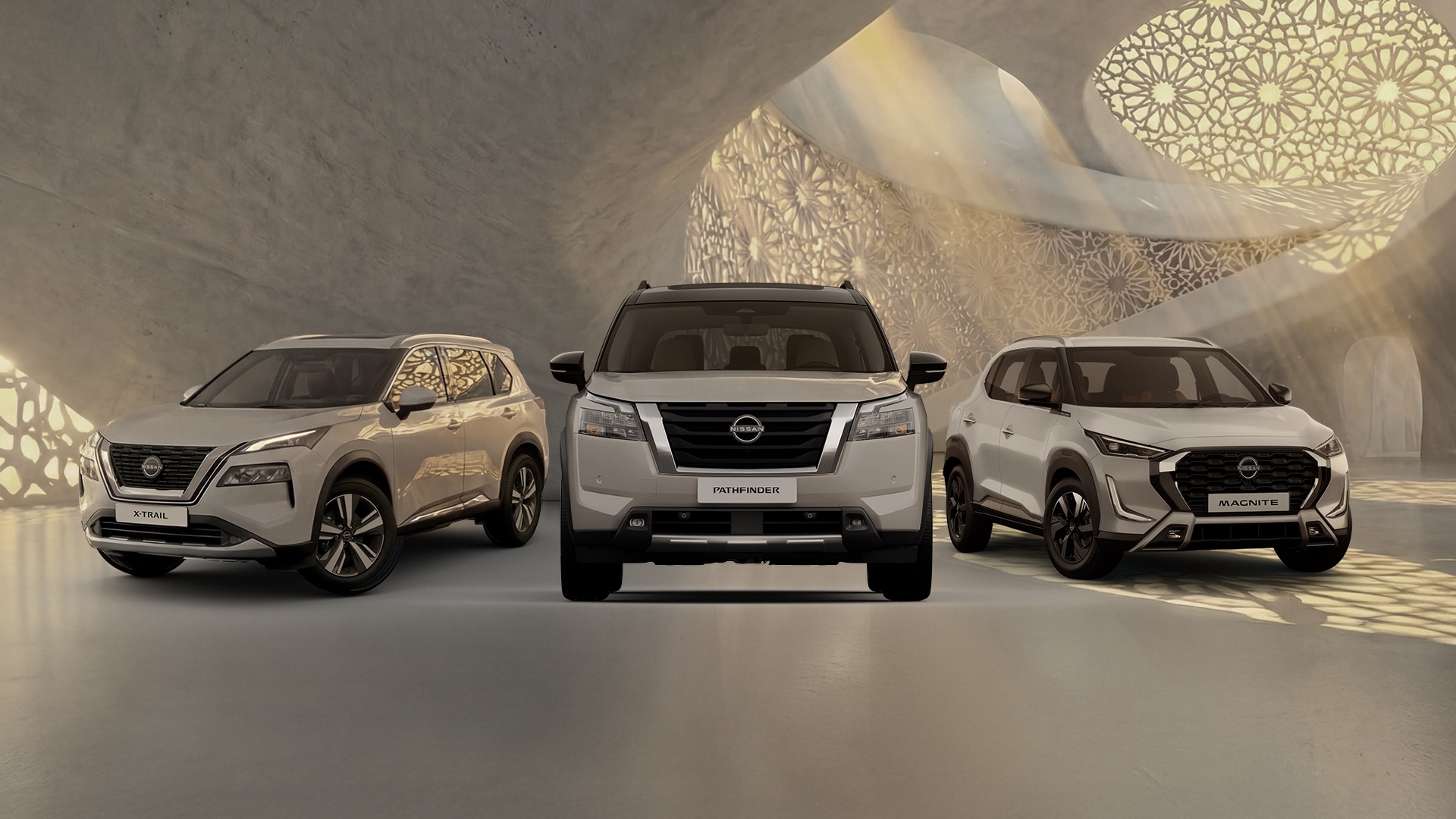
Arabian Automobiles Company (AAC), the flagship automotive company of AW Rostamani Group and the exclusive dealer for Nissan in Dubai, Sharjah, and the Northern Emirates, has launched its Nissan Ramadan offers across selected models. Aligned with the spirit of generosity associated with the Holy Month, the campaign is structured around flexibility and choice.
Customers can select one of three ownership options based on their priorities, whether that is added reassurance through complimentary insurance and service, greater ease in monthly planning with 0% interest rate over three to five years, or a savings option across selected models. Businesses, fleet owners and logistics operators can also benefit from these Ramadan offers, with value-led advantages such as 5-year warranty, 5-year service, and 5-year roadside assistance extending the same spirit of flexibility to commercial needs.
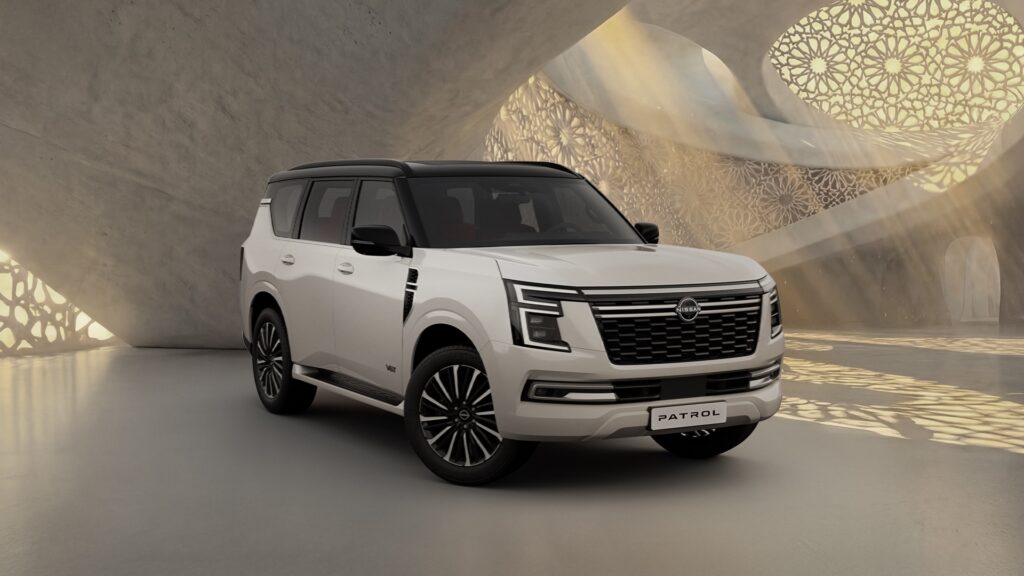
This approach reflects AAC’s considered interpretation of value, recognising that customer needs and circumstances differ, and that choice plays a central role in how value is defined during Ramadan.
The offers span a broad lineup, including Altima, Kicks, Magnite, Pathfinder, Patrol, X-TERRA, and X-TRAIL, with savings ranging from AED 6,000 up to AED 25,000. For those seeking a more performance-led experience, the Nissan Z is also included, also with savings of up to AED 50,000.

That same spirit of care continues beyond the showroom, with seasonal after-sales advantages. Customers coming in for an interval service or a free inspection will be eligible for a one-year, 24/7 roadside assistance membership covering Dubai, Sharjah, and the Northern Emirates.
Keeping convenience in mind, Arabian Automobiles is offering a buy-four-get-one promotion on maintenance contracts to make long-term upkeep more manageable, alongside up to 65% off parts for additional repairs. Flexible payment options are available through Tabby and selected credit card plans, and a gift is included with any Nissan accessory purchase. Customers are invited to explore the Ramadan campaign at their nearest Nissan of Arabian Automobiles showroom.

THE RETURN OF BROWN: A NEW NEUTRAL FOR INTERIORS WITH MINOTTI
CORAL BEACH RESORT SHARJAH SETS UAE HOSPITALITY BENCHMARK AS FIRST SIGNATORY OF GLASGOW DECLARATION ON CLIMATE ACTION
ALERIA TO DEPLOY NVIDIA BLACKWELL ULTRA AND NVIDIA DGX VERA RUBIN NVL72 TO POWER SOVEREIGN AI INFRASTRUCTURE WITH DDN

-
News10 years ago
SENDQUICK (TALARIAX) INTRODUCES SQOOPE – THE BREAKTHROUGH IN MOBILE MESSAGING
-

 Tech News2 years ago
Denodo Bolsters Executive Team by Hiring Christophe Culine as its Chief Revenue Officer
-
 VAR11 months ago
Microsoft Launches New Surface Copilot+ PCs for Business
-

 Tech Interviews2 years ago
Navigating the Cybersecurity Landscape in Hybrid Work Environments
-

 Tech News8 months ago
Nothing Launches flagship Nothing Phone (3) and Headphone (1) in theme with the Iconic Museum of the Future in Dubai
-

 Automotive1 year ago
AGMC Launches the RIDDARA RD6 High Performance Fully Electric 4×4 Pickup
-

 Trending5 months ago
OPPO A6 Pro 5G Review: Reliable Daily Driver
-

 VAR2 years ago
Samsung Galaxy Z Fold6 vs Google Pixel 9 Pro Fold: Clash Of The Folding Phenoms