
 Have a question? +971 56 404 0503




Home Feature
EMIRATI WOMEN’S 2025: LEADERS SHAPING DESIGN, ENTREPRENEURSHIP, AND TECHNOLOGY


The UAE has steadily positioned itself as a global leader in advancing gender equality, ensuring Emirati women are drivers of progress as entrepreneurs, scientists, designers and businesswomen. With women making up over 54% of the labour force, holding two-thirds of public sector jobs, and representing the majority of university graduates, the country’s policies and initiatives are building a future where female leadership is both expected and celebrated.
A national framework for empowerment
The UAE is embedding female leadership at the highest levels of governance and ensuring that women influence the country’s strategic direction. The National Policy for Empowerment of Emirati Women 2023–2031 and the work of the Gender Balance Council have set clear priorities to increase women’s representation in leadership and ensure equal opportunities in technical and academic fields. Today, women occupy 30% of leadership roles in the public sector, and initiatives such as mandatory board representation in listed companies have cemented women’s presence in decision-making spaces.
This national support translates into real impact across industries. Noor Al Muhaideb, Founding Partner of Opaal Interiors, explains how it shaped her career: “The UAE’s encouragement of creativity and entrepreneurship has been a real turning point for me. Thanks to programs like design incubators and creative economy initiatives, I had the confidence and support to launch Opaal interiors and develop projects that bring contemporary design into dialogue with the UAE’s culture.’’
This national support translates into real impact across industries. In government, women now make up over a quarter of the cabinet, with nine female ministers overseeing key portfolios from advanced technology to international cooperation. Initiatives have also focused on creating leadership training programs and mentorship platforms within government, ensuring women are prepared to take on senior roles.
Entrepreneurial ecosystems
Emirati women today own and operate 23,000 businesses valued at more than AED 50 billion, proof of the UAE’s efforts to provide access to funding, training, and global networks. The nation ranked second in 2024 on Forbes’ 100 Most Powerful Arab Businesswomen list, with 14 Emirati women featured.
For Amna Al Falasi, Manager of WrkBay and Huom Culinary Canvas, this environment enabled her to grow a small community initiative into a thriving platform. “The UAE’s commitment to gender equality has been pivotal in my journey. Access to mentorship and funding opportunities gave us the foundation to expand and create meaningful programs for families, professionals, and seniors,” she says. Amna’s trajectory mirrors the wider push to create female-led enterprises that add both economic and social value.
Driving innovation in technology
The UAE’s investments in AI, advanced technology, and education are creating space for women to thrive in future industries. With 56% of STEM graduates now women, the pipeline for female leadership in innovation is stronger than ever. Institutions like the Mohamed bin Zayed University of Artificial Intelligence and national strategies dedicated to AI and digital transformation provide world-class platforms for Emirati talent.
Moza Al Falasi, a data analyst working on machine learning applications, emphasises the opportunity: “The UAE’s focus on innovation gave me the platform to pursue projects like EcoSort AI and accessibility solutions for the hearing-impaired. Women here are not just part of the conversation in technology, they’re leading it.” Her work reflects the country’s aim to merge technological progress with social impact.
Looking ahead
The UAE’s progress is evident in the World Economic Forum’s 2024 Global Gender Gap Report, which ranks the country as a leading nation in gender equality in the region. Sustained public and private sector initiatives have strengthened women’s presence in business, government, and STEM fields. Emirati women are now shaping industries from design studios to boardrooms and AI labs, supported by legislation that secures equal pay and mandates for female voices in leadership. In 2025, they are setting new benchmarks for leadership, showing how the UAE’s long-term vision turns empowerment into measurable progress.

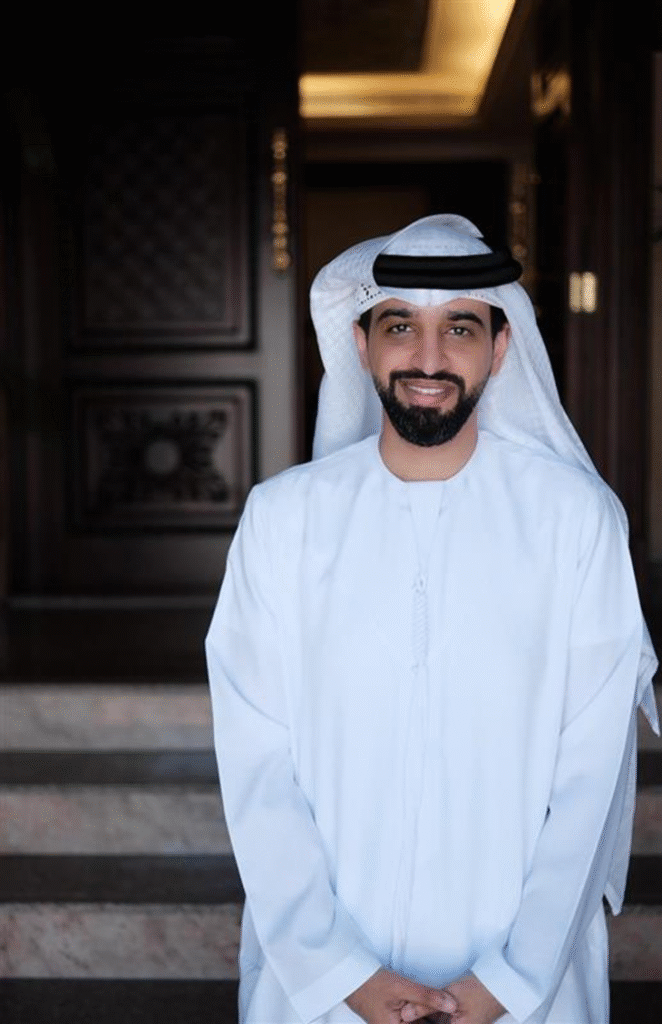
By Rashed Hareb, CEO & Co-Founder, Rentify
UAE’s rental market is undergoing a quiet but profound shift. For decades, landlords operated within a relatively predictable system—annual or post-dated cheques, fixed payment schedules, and a sense of financial certainty that allowed for planning and stability. Today, that system is evolving. Tenants are increasingly seeking flexibility, with monthly payment models becoming not just a preference, but an expectation.
While this shift is undeniably tenant-friendly, it raises an important question for landlords: how do you embrace flexibility without compromising financial certainty? The answer lies not in resisting change, but in rethinking the infrastructure that underpins rent itself.
The Rise of Monthly Rent: Convenience Meets Complexity
Monthly rent is often framed as a simple upgrade—more manageable payments for tenants, improved accessibility, and alignment with modern financial behavior. But from a landlord’s perspective, the implications are far more nuanced.
A shift from annual or quarterly payments to monthly inflows introduces:
- Cash flow fragmentation
- Increased risk of missed or delayed payments
- Higher administrative overhead
- Reduced predictability in income cycles
What was once a straightforward transaction becomes a recurring operational process.
For individual landlords, this can quickly become overwhelming. For institutional landlords or property managers, it scales into a systemic inefficiency. The real challenge, therefore, isn’t monthly rent itself—it’s the lack of infrastructure designed to support it.
Certainty Is the Real Currency
At its core, the landlord’s priority has never changed: certainty.
Certainty of income. Certainty of timing. Certainty of compliance.
Traditional rent systems delivered this through rigid structures—bulk payments, cheque guarantees, and legal enforceability. But these mechanisms are increasingly misaligned with how tenants want to pay.
This creates a tension between flexibility and control. To resolve this, landlords need a system where flexibility for tenants does not translate into volatility for owners. In other words, the experience can evolve—but the outcome must remain predictable.
From Payment Collection to Payment Infrastructure
Historically, rent collection has been treated as a transactional function. But in a monthly rent environment, it must evolve into a fully integrated financial layer.
This means moving from:
- Manual tracking → Automated reconciliation
- Reactive follow-ups → Proactive risk assessment
- Tenant-dependent payments → System-backed assurance
A rent-native infrastructure fundamentally changes the equation. It ensures that while tenants may pay in smaller, more frequent instalments, landlords continue to receive payments with the same consistency as before.
This is where technology—particularly AI—plays a critical role.
Reducing Administrative Burden at Scale
One of the most overlooked challenges in the shift to monthly rent is operational load.
Every additional payment cycle introduces:
- Payment tracking
- Reminder management
- Reconciliation
- Exception handling
Multiply this across multiple tenants and properties, and the administrative burden grows exponentially.
For landlords managing portfolios, this isn’t just inefficient—it’s unsustainable.
Modern rental infrastructure removes this friction by automating the entire lifecycle:
- Smart payment scheduling aligned with lease terms
- Automated collections and confirmations
- Real-time dashboards for visibility
- Integrated reporting for financial clarity
The result is not just convenience—it’s operational transformation.
Landlords are no longer in the business of chasing payments; they are enabled to focus on asset performance and portfolio growth.
De-Risking the Monthly Model
A key concern for landlords is risk.
Monthly payments inherently introduce more points of failure. A single missed payment is no longer an isolated event—it becomes part of a recurring pattern that can quickly escalate.
This is where intelligent systems can shift the paradigm.
By leveraging AI-driven underwriting and behavioral insights, modern rent platforms can:
- Assess tenant reliability before onboarding
- Monitor payment patterns in real time
- Flag potential risks early
- Enable proactive intervention
This transforms rent collection from a reactive process into a predictive one.
For landlords, this means fewer surprises—and greater control.
Strengthening Landlord-Tenant Relationships
Interestingly, the right infrastructure doesn’t just protect landlords—it also improves relationships with tenants.
When systems are transparent, payments are seamless, and expectations are clearly defined, friction reduces significantly.
Tenants benefit from:
- Flexible payment options
- Clear visibility into dues and schedules
- Reward-linked payment behaviors
Landlords benefit from:
- Timely payments
- Reduced disputes
- Greater tenant retention
In a market like the UAE, where tenant mobility is high, this alignment becomes a strategic advantage.
Market Overview: Rethinking Rent in the UAE
The UAE stands at a pivotal moment in its rental evolution.
As tenant expectations shift toward flexibility and digital-first experiences, the industry must respond with systems that match this pace. An AI-powered rental layer has the potential to redefine the ecosystem—bringing certainty to landlords, transparency to tenants, and confidence to every lease.
By embedding intelligence into the rental process, the market can move beyond outdated trade-offs and toward a model that is both flexible and secure.
The Future: Invisible Infrastructure, Visible Impact
The most effective infrastructure is often the least visible.
In the future, landlords shouldn’t have to think about how rent is collected, tracked, or reconciled. It should simply work—reliably, consistently, and intelligently.
Monthly rent is not a passing trend; it is the direction the market is heading. But its success depends on the systems that support it.
For landlords, the opportunity is clear:
- Embrace flexibility without sacrificing certainty
- Reduce operational complexity without losing control
- Leverage technology to turn risk into predictability
The shift is not just about how rent is paid—it’s about how rent works. And those who invest in the right infrastructure today will define the standards of tomorrow.
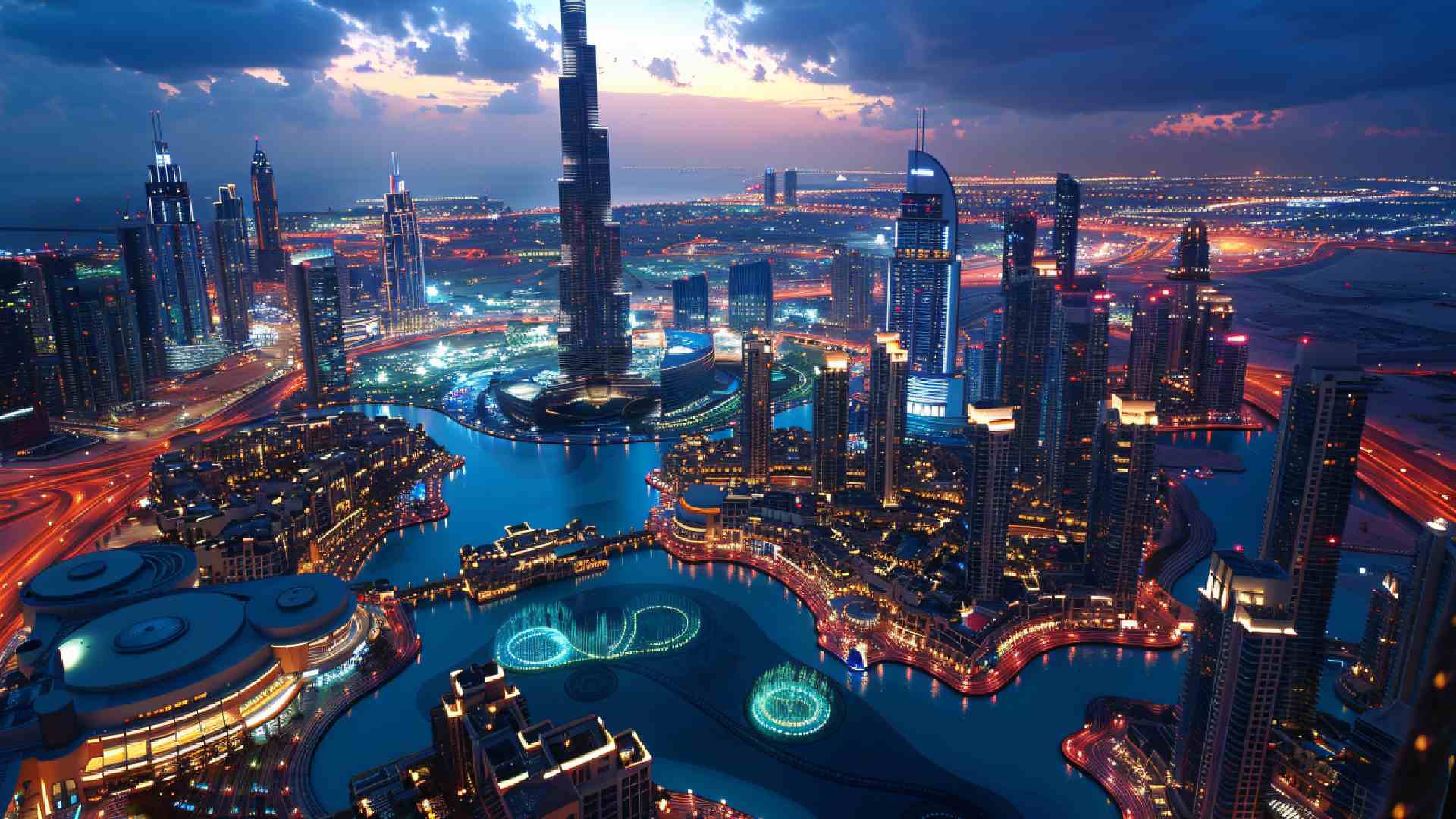
By Twinkle Aswani, editorial division, Integrator Media
Every time global headlines turn uncertain, the same question quietly returns to the real estate conversation, will the market slow down?
In many parts of the world, the answer is often yes. Investor sentiment can shift quickly, projects pause, and transactions begin to reflect caution. Yet the UAE, has consistently demonstrated that its property market behaves differently. What we are seeing today is not a market reacting to short-term events, but one operating on a longer, more confident trajectory.
The numbers alone tell an important story. Dubai recorded more than 270,000 real estate transactions worth AED917 billion in 2025, marking its strongest year on record. But beyond the headline figures lies something more significant — a market built on structural confidence rather than speculative momentum.
“The UAE real estate market is staying resilient because it is built on strong fundamentals, clear regulation, and long-term confidence rather than short-term sentiment,” explains Ibrahim Imam, Co-CEO of PlanRadar. “In Dubai alone, the market recorded more than 270,000 transactions worth AED917 billion in 2025, its strongest performance to date, which shows the depth of investor confidence entering this period.”
Those fundamentals are hard to overlook. The UAE has spent years building a real estate ecosystem that prioritises transparency, investor protection, and strategic urban planning. It’s a framework that allows the market to continue moving forward even when external factors shift.

Another reason the sector remains steady is the way developments are planned. Unlike speculative markets that rely heavily on rapid cycles, major projects in the UAE are typically structured years in advance, both financially and operationally.
“Dubai’s real estate market continues to demonstrate resilience, supported by strong economic stability, investor-friendly regulations, and long-term development planning,” says Michael Belton, CEO of MERED. “Most large-scale projects are financed and scheduled years in advance, allowing construction and delivery timelines to proceed regardless of short-term regional developments. The emirate also benefits from a highly international investor base, which helps diversify demand across different geographies and economic cycles. While some investors may temporarily adopt a wait-and-see approach, particularly during seasonal travel periods, long-term confidence in Dubai remains strong. Design-led developments with strong investment horizons continue to attract globally diversified buyers focused on stability and long-term value.”
This long-term outlook has created a development environment where momentum rarely depends on immediate sentiment. Even when some investors adopt a temporary wait-and-see approach, often influenced by travel seasons or global headlines, the broader market remains active.
Equally important is the diversity of buyers entering the UAE market. Investors today come from a wide range of international markets, which naturally spreads demand across different economic cycles. That global mix has helped the sector maintain stability in moments where other property markets might experience sharper fluctuations.
At the same time, the conversation around real estate in the UAE is no longer limited to transactions and investment returns. Increasingly, it is also about the evolution of design, sustainability, and how people want to live in rapidly growing cities.
“The UAE’s architecture and design sector remains resilient and continues to prosper,” notes Nataliia Melnyk, Founder of NKEY Architects. “Ongoing projects across the country reflect the industry’s stability and commitment to innovation.”
Architects are increasingly integrating sustainable materials, smart technologies, and more thoughtful spatial planning into developments across the region. Melnyk points out that this momentum is reflected in the firm’s own growth, with more than 200 projects currently underway in the UAE as part of a global portfolio of over 500.
For many international firms, Dubai has become more than just a market — it has become a strategic base for long-term regional expansion.

All of this points to a larger shift in how the UAE real estate sector is evolving. The market is no longer defined by cycles of rapid booms and corrections. Instead, it is gradually maturing into a globally integrated property ecosystem shaped by infrastructure investment, population growth, and a steady pipeline of design-led developments.
Resilience, here, is not just about weathering uncertainty. It is about continuing to build and rise above it. From progressive policy frameworks to sustained infrastructure investment and strong investor confidence, the country has cultivated a stability that reassures markets and encourages long-term commitment.
And perhaps that is why the UAE’s property sector continues to stand apart during moments when other markets hesitate. The foundations supporting it – strong regulation, global investors, and a clear long-term vision were designed precisely for times like these.
Attributed by Nataliia Melnyk, Founder of NKEY Architects
Homes today carry far greater responsibility than they did even a decade ago. The modern residence must support productivity, restoration, creativity, and social life within a single environment. Hybrid work models, constant digital connectivity, and a stronger focus on personal wellbeing have reshaped how people live inside their homes and what they expect from residential architecture. Clients want homes that actively support their lifestyle rather than simply accommodate it. A well-designed environment influences attention span, emotional balance, and even decision-making. Homes that lack structure often create subtle tension and distraction, while thoughtfully organised environments help people concentrate, relax, and move through daily routines with greater clarity.

This shift supports the broader global architecture services market, which is projected to exceed $605 billion by 2033. Designing such environments requires a deeper understanding of how spatial planning, materials, lighting, acoustics, and technology interact to shape everyday experience.
When these elements are carefully integrated, the home evolves from a collection of rooms into a lifestyle ecosystem that supports how people work, rest, and connect.
Designing for Human Experience
Home architecture shapes daily lives in subtle but powerful ways. Traditional spatial philosophies such as Feng Shui have long recognised the emotional influence of the built environment. Through elements such as sound, light, texture, and atmosphere, home spaces influence how people perceive and respond to their surroundings.
Residential space also functions as a behavioural environment. When spatial hierarchy, visual depth, and circulation are carefully considered, the environment naturally guides how people move, focus, and interact within the home. Poorly structured interiors often create cognitive noise, while clear spatial organisation allows the mind to settle and engage more deliberately with everyday activities.
Homes host several activities at once, and each function requires different spatial qualities. Acoustic planning allows them to coexist within a cohesive home. A workspace may sit close to a family living area, used for conversation or entertainment. Materials that absorb sound, such as textured wall finishes, acoustic panels, upholstered furniture, and layered fabrics, help reduce noise transfer. Without proper acoustic control, persistent background noise can increase stress levels and make it harder to focus, according to the World Health Organization.
Lighting also shapes how a home shapes the home experience. Natural daylight regulates circadian rhythms, which influence sleep quality, mood, and productivity. Generous windows, skylights, and reflective surfaces allow daylight to reach deeper into interior spaces. Artificial lighting should support these patterns, with adjustable systems shifting from cooler tones during working hours to warmer ambient light in the evening.
Clear axes, balanced proportions, and defined centres of gravity create a sense of orientation and stability within the interior. When a space offers visual direction and spatial order, it becomes easier for occupants to feel physically grounded in their surroundings. Higher ceilings tend to encourage expansive thinking and creativity, while lower, more intimate spaces support concentration and detail-oriented tasks.
Materials and textures also shape how comfortable a home feels. Natural materials such as wood, stone, clay, and linen create spaces that feel grounded and tactile. Their subtle variation adds visual depth that many synthetic finishes lack while strengthening the connection between indoor environments and nature.
Thoughtfully composed colour palettes help the rhythm of life in each zone, especially in luxury projects. Cooler contrasts can stimulate alertness and support focus in workspaces, while deeper, warmer tones often create a sense of comfort, optimism and psychological security in shared spaces.
Spaces for Everyday Living
Many residential projects now approach the home as a lifestyle ecosystem where architecture supports multiple aspects of daily life. As global interest in health continues to grow, the wellness economy is projected to reach $8.5 trillion by 2027. In residential design, this translates into spaces such as meditation rooms, home gyms, spa-style bathrooms, and quiet reading areas. Natural ventilation, calming colour palettes, and visual connections to greenery further enhance these environments.
Spatial zoning can also influence household relationships. When homes provide areas for both shared activity and individual retreat, they reduce friction that can arise from constant proximity. Clearly defined personal territories and well-organised communal spaces support healthier interaction and allow different members of the household to maintain their own routines. Acoustic separation, ergonomic layouts, and visual calmness help support this.
When layouts are overly complex or visually disorienting, occupants often experience subtle stress responses such as irritation or avoidance of certain areas. Logical spatial organisation helps reduce this cognitive strain by allowing residents to move through the home effortlessly.
Open kitchens, entertainment rooms, and outdoor terraces provide spaces for interaction and relaxation. Outdoor living areas are particularly valuable because they extend the home’s usable space while strengthening the connection to nature. Gardens, shaded patios, and terraces offer informal settings for gathering and social activity.
When wellness, work, and leisure zones are thoughtfully integrated, the home becomes a dynamic environment that adapts to different rhythms throughout the day.
Adaptive Home Technology
Smart home automation is also shaping how interiors respond to everyday life. Lighting, temperature, and ventilation can now adjust automatically throughout the day, creating comfortable environments without constant manual control.
These systems can connect to AI assistants that act as a central interface for the home. With a simple voice command, residents can dim lights, adjust the home climate, or activate evening settings across multiple rooms. Over time, many systems learn household routines and preferences, with lighting, music, and temperature adapting automatically to daily patterns. When integrated thoughtfully, the technology remains discreet. Instead of dominating the space, automation works quietly in the background, helping the home feel more intuitive, responsive, and comfortable to live in.
Four Ways to Create a Calm, Functional Home
Research shows that homes with thoughtful spatial balance support personal discipline and long-term goals. When environments reinforce productive habits and healthy rest, they become anchors for personal development.
Daylight should be allowed to move freely through the interior, which can be achieved through generous glazing, skylights, and surfaces that reflect light deeper into the space. Interiors also benefit from clear circulation and visual order, where furniture and layout allow people to move through the space easily. Surfaces with natural character, such as timber, stone, or woven textiles, introduce warmth and sensory richness, making spaces feel more inviting. It is also helpful to establish subtle boundaries between areas dedicated to focused work and those intended for rest or social interaction. Even modest spatial cues can help the home shift smoothly between different moments of daily life.
The modern home has evolved into an environment that supports many dimensions of daily life. For architects, the challenge is to design homes that function as complete ecosystems. When architecture engages both functionality and the human senses, the home becomes a place that actively enhances the way people live.

DUBAI GETS ITS FIRST HONESTY BASED BREAD COUNTER AS NOBLE SOURDOUGH LAUNCHES IN THE UAE
MAKI AND RAMEN IS TURNING SUSHI INTO A GAME – AND RAMEN INTO A CHALLENGE THIS APRIL
MAGNA AI AND CORVIT NETWORKS FORGE STRATEGIC ALLIANCE TO ACCELERATE PAKISTAN’S NATIONAL AI DEVELOPMENT



-
News10 years ago
SENDQUICK (TALARIAX) INTRODUCES SQOOPE – THE BREAKTHROUGH IN MOBILE MESSAGING
-

 Tech News2 years ago
Denodo Bolsters Executive Team by Hiring Christophe Culine as its Chief Revenue Officer
-
 VAR12 months ago
Microsoft Launches New Surface Copilot+ PCs for Business
-

 Trending6 months ago
OPPO A6 Pro 5G Review: Reliable Daily Driver
-

 Tech Interviews2 years ago
Navigating the Cybersecurity Landscape in Hybrid Work Environments
-

 Tech News9 months ago
Nothing Launches flagship Nothing Phone (3) and Headphone (1) in theme with the Iconic Museum of the Future in Dubai
-

 Automotive2 years ago
AGMC Launches the RIDDARA RD6 High Performance Fully Electric 4×4 Pickup
-

 VAR2 years ago
Samsung Galaxy Z Fold6 vs Google Pixel 9 Pro Fold: Clash Of The Folding Phenoms