
 Have a question? +971 56 404 0503




Financial
Reimagining Banking: Unlocking Endless Potential and Unlimited Growth in the Middle East


By Keith Redding, Chief Revenue Officer, Universal Banking at Finastra

Reimagining banking in the Middle East is redefining how financial institutions grow, engage, and innovate. As digital transformation accelerates, banks must evolve to deliver seamless, secure, and personalized experiences that meet rising customer expectations.
Across the UAE and Saudi Arabia, adoption of digital banking continues to surge. According to Capco’s “Bank of the Future” survey, 89% of UAE customers have become more confident using mobile banking services, while 83% now access them primarily via mobile apps. Similarly, Saudi Arabia expects online banking penetration to grow by over 16 percentage points between 2024 and 2029, underscoring the region’s momentum toward smarter, connected financial ecosystems.
Reimagining Banking Middle East with Data and Analytics
Data has become the new cornerstone of success. Through AI, analytics, and machine learning, banks can decode customer behaviour and anticipate needs more precisely than ever. As a result, they can personalize offerings, boost retention, and reduce friction across the customer journey.
A clear example of this transformation is Riyad Bank’s Centre of Intelligence (COI) — Saudi Arabia’s first AI-focused banking hub — which enhances operational efficiency while driving innovation in customer engagement.
By reimagining banking in the Middle East with data-driven strategies, institutions can align financial products with real-time insights and deliver experiences that feel intuitive, predictive, and human.
Hyper-Personalization and Omnichannel Growth
Customers today interact through multiple touchpoints — mobile apps, websites, and physical branches — expecting consistent, personalized service. Therefore, delivering a seamless omnichannel experience has become the foundation of loyalty.
In the UAE, 70% of consumers are willing to share personal data for tailored experiences, while in Saudi Arabia, the number climbs to 71%. This readiness empowers banks to use analytics ethically and transparently, transforming everyday banking into relationship-driven engagement.
Digital Sales Outreach and New Engagement Models
Digital outreach is not an option — it’s essential. Mobile-first strategies, social media engagement, and AI-driven marketing are now central to how banks connect with customers.
Take D360 Bank, one of Saudi Arabia’s first digital-only institutions. It attracted over 600,000 customers within two months of launch, proving that mobile-first banking can scale fast when powered by user-centric design.
Ecosystem Collaboration: Powering Innovation in the Middle East
Another major force reimagining banking in the Middle East is ecosystem collaboration. By partnering with fintechs, big tech firms, and infrastructure providers, banks can expand capabilities faster than ever before.
Globally, fintech startups have surged from 12,000 in 2020 to nearly 30,000 in 2024. The Dubai International Financial Centre (DIFC) now hosts over 1,000 fintech firms, while Saudi Arabia’s fintech ecosystem has more than doubled within a year. This growth underscores the importance of collaboration as a driver of agility and innovation.
Such partnerships empower banks to deploy advanced solutions like AI-powered risk scoring, embedded finance, and real-time payments — all while ensuring compliance with regional and global standards.
Looking Ahead: Building a Future-Ready Financial Ecosystem
The future of reimagining banking in the Middle East lies in intelligent, insight-led operations. Automated recommendations, predictive support, and AI-driven decision-making will soon define how banks engage customers.
Forward-thinking institutions in the UAE are already adopting AI-assisted frameworks that streamline service and elevate the customer experience. In Saudi Arabia, agile innovation models like Alinma Bank’s digital factory accelerate product launches and improve customer alignment.
As the region continues to evolve, banks that combine innovation, collaboration, and customer-centric transformation will achieve sustainable growth and long-term market leadership.
Check this out UAE Crypto Regulation Sets Global Blueprint












Financial
The UAE’s Net Wealth Reaches $3.6 Trillion in 2025 and is Expected to Approach $6 Trillion by 2030, BCG Report Finds
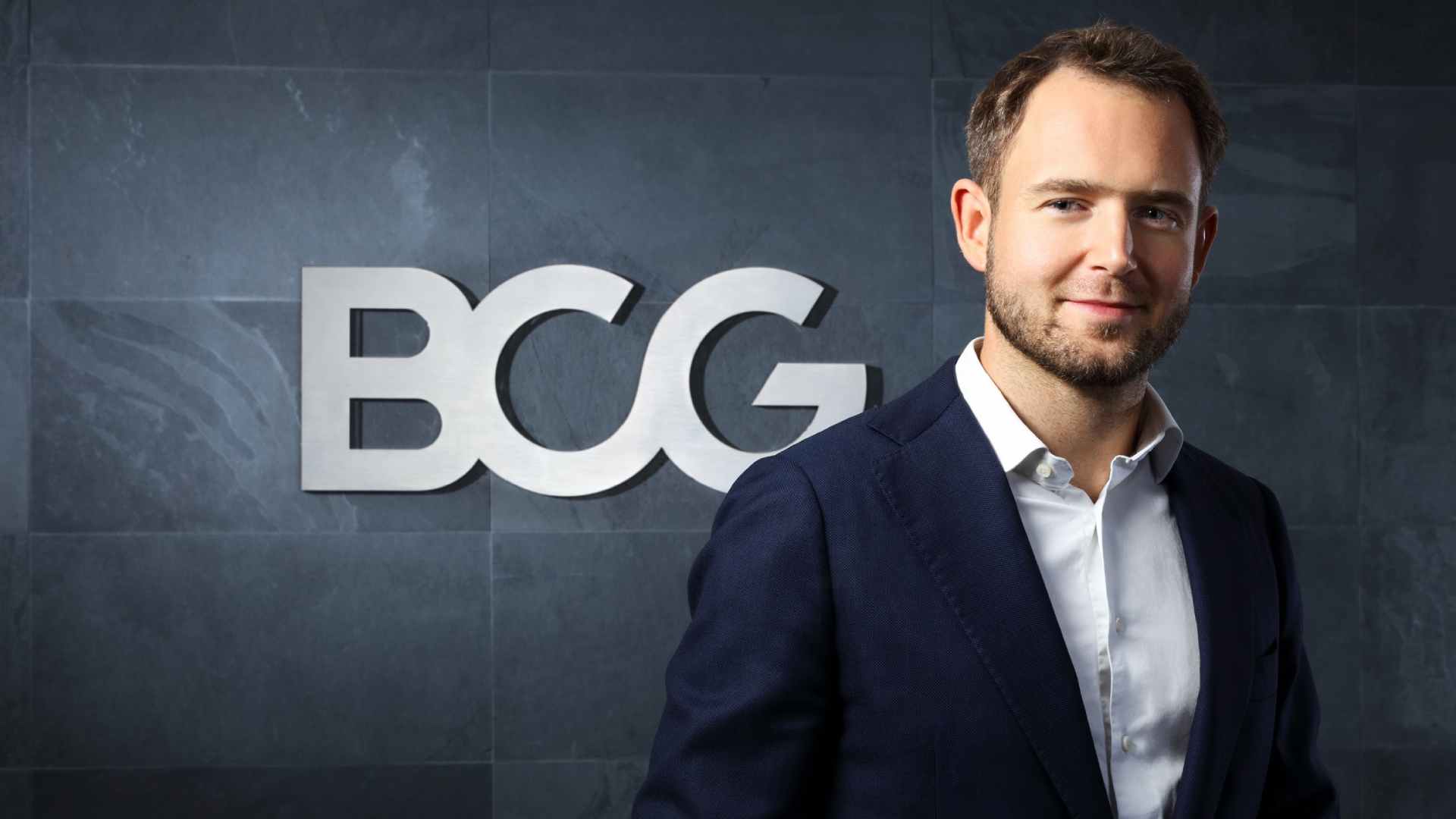
The UAE’s net wealth grew by 12.7% between 2024 and 2025, rising from $3.2 trillion to $3.6 trillion, according to Boston Consulting Group’s (BCG) Global Wealth Report 2026: The Great Reordering. Total Net wealth is forecast to reach $6 trillion by 2030, with a CAGR of 10.6%. This represents an increase of more than $2.3 trillion over the next five years. The projected growth points to the UAE’s long-term wealth creation potential.
Financial wealth, including both investable and non-investable wealth, grew by 12.3% between 2024 and 2025, rising from $1.2 trillion to $1.4 trillion and is set to rise to $2.1 trillion by 2030 at a CAGR of 8.7%. Real assets reached $2.4 trillion in 2025 from $2.2 trillion in 2024, with projected growth to $4.2 trillion by 2030.
The findings show the resilience of the UAE wealth market amid a volatile global environment and heightened geopolitical uncertainty. “The ongoing conflict has introduced short-term volatility across Middle Eastern markets, with investor sentiment shaped by geopolitical uncertainty and oil-price movements,” said Lukasz Rey, Managing Director and Partner at BCG. “However, the region’s wealth development story remains structurally resilient over the five-year projection horizon. While we anticipate slightly lower growth over the next one to two years, a rebound is expected toward the latter part of the decade, supported by sovereign wealth strength, economic diversification agendas, family-business liquidity events, and continued private capital activity. We expect wealth managers to remain cautious in the near term; however, the long-term wealth opportunity in the Middle East remains intact.”
The report identifies a broader reordering underway across the global wealth-management industry, spanning geographic shifts, emerging-market wealth creation, intergenerational succession, and AI-driven operating model transformation.
Shifting Wealth Concentration Across UAE Population Segments
According to the report, the UAE’s financial wealth remains concentrated among high-net-worth individuals, with the composition of wealth expected to evolve by 2030 as more wealth accumulates within the lower high-net-worth segment. There are approximately 500 ultra-high-net-worth (UHNW) individuals, those with more than US$100 million in assets, in 2025, and they are expected to increase to around 800 by 2030, while their share of total financial wealth rises marginally from 26.3% to 26.5%. The upper high-net-worth segment (US$20–100 million) is forecasted to grow from approximately 2.7K to 4.2K individuals, with its share of wealth broadly stable at 7.4% in 2025 to 7.6% in 2030.
In contrast, the lower high-net-worth segment (US$1–20 million), which comprises approximately 200K individuals, is expected to increase its share of financial wealth from 29.3% in 2025 to 31.5% in 2030. The affluent segment (US$0.25–1 million) is expected to expand from approximately 500K to 600K individuals in 2030, while its share of wealth declines from 15.5% to 14.6% as wealth disperses across a larger base. The mass segment (below US$0.25 million) remains the largest by population, growing from roughly 8.6M to 9M individuals, but its share of financial wealth decreases from 21.5% to 19.8%.
The key UAE findings of BCG’s proprietary analysis are:
- Financial wealth reaches $1.4 trillion in 2025, with strong projected growth to $2.1 trillion by 2030 (CAGR: 8.7%)
- Real assets rose to $2.4 trillion in 2025 and are expected to hit $4.2 trillion by 2030 (CAGR: 11.5%)
- Liabilities climbed to $220 billion in 2025 from $210 billion in 2024, with projections indicating $340 billion by 2030 (CAGR: 8.9%)
- Cross-border financial wealth belonging to UAE residents and booked outside the UAE surged by 9.4% between 2024 and 2025 in the UAE, reaching $468.4 billion. It is forecasted to grow to $678.2 billion by 2030 with a CAGR of 7.7%.
- Separately, the UAE continues to strengthen its position as a global wealth booking center, with cross-border wealth belonging to international clients and booked in the country reaching $721 billion in 2025, up 11.1% year-on-year.
- Currency & Deposits, valued at $471.8 billion in 2025, is projected to grow to $778.9 billion by 2030, with a CAGR of 10.5%
- Bonds are expected to reach $27.8 billion by 2030 from $15.9 billion in 2025, with a CAGR of 11.8%
- Equities, valued at $419.4 billion in 2025, are expected to reach $591.9 billion by 2030 at a CAGR of 7.1%
- Life Insurance & Pensions are valued at $26.6 billion in 2025 and projected to grow to $48.4 billion by 2030 (CAGR: 12.7%)
AI Is Reshaping the Economics of Wealth Management
BCG’s report finds that AI is beginning to reshape wealth-management economics and operating models. AI-powered tools are already drafting financial plans, automating compliance documentation, generating portfolio rationales, and predicting client churn. According to BCG analysis, AI-first wealth managers could unlock 25%–30% capacity gains across key workflows while increasing revenue per advisor by 15%–20%. The report argues that the industry is approaching a structural divide between firms redesigning workflows around AI agents and those layering AI tools onto legacy processes.
“The UAE’s wealth pool is set to grow by more than $2 trillion over the next five years, and the constraint on capturing that growth is advisor capacity rather than client demand,” said Mohammad Khan, Managing Director and Partner at BCG. “Firms that are redesigning their workflows around AI agents are creating the headroom to serve a larger client base without diluting the quality of advice. Those layering AI onto legacy processes are paying for the technology without changing their economics, and that gap widens the longer it is left.”
Wealth managers face a choice between adapting incrementally and committing to an AI-first future, with the report identifying the latter as the more sustainable approach. Key priorities include:
- Map value chain exposure: Identify rules-based, templatized processes most vulnerable to automation. Distinguish truly bespoke, relationship-dependent work from structured, repeatable tasks to guide investment decisions.
- Attack high-cost workflows: Scale AI now in financial planning, portfolio management, and compliance, automated drafting, AI-generated rationales, knowledge assistants.
- Rebuild the advisor experience around AI: Integrate next-best-action prompts, retention alerts, automated documentation, and personalized outreach into a unified system.
- Encode institutional knowledge into agents: Pair top practitioners with engineers to build and refine AI agents. Embed advisor judgment into today’s agents, without centralized ownership and outcome-based evaluation, differentiation erodes.
- Prepare the tech stack for agents. Introduce a decoupled data layer separating operational systems from data consumption, delivering real-time, API-accessible data while maintaining deterministic control through transaction systems and rules engines.
Financial
UAE Ranks First Globally in Citizen Satisfaction with Government Digital Services at 89%, BCG Survey Finds

The UAE ranks first globally in citizen satisfaction with government digital services, with 89% of respondents rating them highly, according to Boston Consulting Group’s (BCG) sixth annual edition of its 2026 Digital Government Citizen Survey Report, which was launched on the first day of AI Everything Abu Dhabi, titled “After a Decade of Digital Gains, AI Is Reshaping Citizens’ Expectations in the GCC[SM1] [GU2] .” The finding underscores the strength of the UAE’s digital government experience and provides a strong foundation for the next phase of AI-enabled public services.
The survey, conducted across 44 countries, also highlights the depth of the UAE’s digital engagement, with the country ranking first globally in government digital service usage at 53%. More than three-quarters (76%) of UAE respondents say their latest online government transaction delivered a better experience than their typical private-sector interaction, reinforcing the strength of the country’s digital government ecosystem.
This strong digital foundation is increasingly extending into AI adoption, where 82% of UAE respondents reported using AI weekly. High levels of usage are accompanied by relatively positive attitudes toward AI in government, with 53% of UAE respondents believing its benefits outweigh the risks, compared with 49% across the GCC and 36% globally. At the same time, greater exposure to AI is bringing a broader set of considerations into focus for citizens. While GCC citizens remain more optimistic about AI in government than their global peers, overall optimism has declined by 21% since 2024.
This evolution points toward a more hybrid model of service delivery. GCC citizens increasingly favor AI for simpler services while retaining human involvement for more complex interactions, which assures a shift that reflects greater awareness of both the opportunities and considerations associated with AI. At the same time, only around 4% of GCC respondents prefer human-only services with no AI support, compared with almost one in ten globally.
“The UAE’s strong digital government experience reflects years of investment in making public services more accessible, seamless, and responsive to citizens’ needs,” said Rami Mourtada, Partner & Director, Digital Transformation, BCG. “As AI becomes more embedded in public services, governments have an opportunity to build on this foundation with more AI-enabled experiences and process re-engineering to continue focusing on quality and convenience. This next phase will be about deploying AI where it creates clear value, while maintaining human expertise for more complex citizen needs.”
GCC Citizens Embrace the Next Generation of AI-Enabled Services
The BCG report also reveals strong appetite among GCC citizens for the next generation of AI-enabled government services. The region is the most AI-receptive globally, with 79% of citizens open to AI-centered government interactions, compared with 66% globally. Notably, three of the four most strongly supported AI applications in government are agentic use cases, signaling a healthy launchpad for governments to explore services that can move beyond providing information to supporting or completing actions on citizens’ behalf.
This openness is already evident across practical applications: 82% are comfortable with AI providing 24/7 access to information and services; 81% with AI supporting government customer-service agents; 79% with AI detecting fraud and automatically following up; and 78% with AI identifying services citizens qualify for and taking action on their behalf. [SM3] [GU4] Yet citizens are not calling for AI alone. Preference for “AI for simple services, people for complex ones” has risen nine percentage points to 50% over the past two years, reinforcing a hybrid model that combines AI-enabled speed and availability with human judgment for more complex or higher-stakes interactions.
This opportunity builds on a strong track record in digital government service quality. In 2026, the GCC remained the only surveyed region where a majority of citizens rated government digital services above those of the private sector, at 72%. However, private-sector experiences are gaining ground: the net share of GCC respondents rating government services above private-sector services declined from 75% in 2024 to 69% in 2026. The shift creates both a learning opportunity and an impetus for governments to continue innovating as citizen expectations evolve.
As governments move toward more advanced AI-enabled services, citizen AI literacy will be equally important. GCC respondents with expert-level AI proficiency are around four times more likely than those without AI experience to believe that the benefits of AI in government outweigh the risks. At the same time, greater familiarity with AI is sharpening citizens’ expectations around how it is deployed. Job loss (33%) and accuracy (28%) now rank as the leading concerns, underscoring the importance of pairing AI literacy with safeguards that are visible and relevant to citizens.
“The GCC has a strong opportunity to translate its digital leadership into the next generation of AI-enabled government services,” said Dr. Lars Littig, Managing Director & Senior Partner, BCG. “As citizens become more familiar with AI, building literacy and trust will be critical to sustained adoption. The opportunity is to move forward with AI in ways that reflect how citizens want to engage, expanding automation and agentic capabilities where they create value, while retaining human judgment and embedding responsible safeguards where they matter most.”
Six Priorities for the Next Generation of Digital Government
To build on the region’s digital progress and maximize the potential of AI in government services, BCG’s report outlines six priorities for GCC governments:
- Rethink core services with AI, redesigning them end to end rather than layering AI onto existing processes.
- Learn from private-sector innovation as digital experiences improve and citizen expectations evolve.
- Embed responsible AI through governance, testing, and safeguards that strengthen citizen trust.
- Build the hybrid model citizens want, using AI for simpler interactions while retaining human expertise for complex or high-stakes needs.
- Expand agentic AI services beyond information toward services that can support complete journeys and act on citizens’ behalf.
- Advance AI literacy to build citizen understanding, confidence, and informed adoption.
Together, these priorities can help GCC governments build on a decade of digital progress and translate citizens’ openness to AI into the next generation of public services. By combining strong digital foundations with responsible AI adoption and continued access to human expertise, the region is well positioned to deliver services that are more proactive, personalized, and responsive to citizens’ evolving needs — while sustaining the trust that will be critical to long-term adoption
To access the full BCG Digital Government Citizen Survey2026, visit the link here.

Responses attributed to Amr Kandel, GCC Country Manager and Product Director, Fimple
How is the shift towards cloud-native core banking changing the way financial institutions in the GCC approach technology modernisation?
The biggest change is that banks are moving away from the idea that modernisation has to mean replacing everything at once.
In the GCC, we’re seeing more interest in a progressive approach, introducing new products, capabilities or customer journeys while continuing to use existing systems where they still make sense. Cloud-native and composable architecture makes that much more practical.
Unlike systems that are simply moved from on-premises infrastructure into the cloud, cloud-native architectures are designed so that capabilities can be deployed, updated and scaled more independently. This allows institutions to upgrade selected areas without having to tie every change to a large transformation programme.
GCC institutions also have to consider regulatory requirements, data governance and local market needs. It is not simply about moving systems to the cloud. Banks need to decide where data and capabilities should sit, how they are governed and how the overall environment remains resilient.
What are some of the key technology limitations of legacy core banking systems that GCC banks are looking to overcome today?
There are a few challenges that come up quite consistently.
The first is speed. Many legacy platforms were designed around batch processing, so getting a current view of the customer or making decisions in real time can be difficult.
The second is fragmented data. Customer information and banking capabilities can sit across different systems for deposits, lending, payments, cards and other services. That creates complexity and makes it harder to deliver a consistent customer experience.
The third is product agility. With heavily customised and hard-coded systems, launching a new product or changing an existing one can take months.
And finally, there is integration. When every new fintech, payment provider or ecosystem partner requires another point-to-point integration, the technology environment becomes harder to manage.
For GCC institutions, the challenge is not simply to replace an old system. It is to reduce dependencies and create a more flexible foundation that makes integration, localisation and regulatory change much easier to manage.
Fimple takes an API-first approach to core banking. How does this architecture help financial institutions integrate emerging technologies and third-party services more efficiently?
In an API-first architecture, integration is part of the platform from day one rather than something added afterwards.
At Fimple, core banking capabilities such as accounts and deposits, lending, payments and limits can be accessed through APIs. That makes it much easier for financial institutions to connect channels, fintech partners, wallets, payment providers and other services.
These services are designed to be accessible and reusable. Instead of building a completely different integration every time a new partner comes in, institutions can use the same underlying architecture and governance model.
This approach is particularly relevant in the GCC because every market has its own ecosystem and local requirements. Banks need the flexibility to connect to local payment infrastructures, regulatory services and fintechs without rebuilding their core every time.
As banks increasingly adopt AI and automation, what role does a modern core banking platform play in enabling these technologies at scale?
AI is moving from something that sits around the bank to becoming part of how it operates.
Today, many institutions already use AI for functions like customer assistants, fraud detection, document processing or analytics. However, scaling AI requires a strong foundation underneath it.
AI needs access to accurate and timely data, clearly defined business rules and secure ways to interact with banking capabilities, with the right controls and human oversight.
At Fimple, we see the next step as agentic AI interacting with banking capabilities through secure APIs and controlled workflows. An AI agent could, for example, support an onboarding process, assist with servicing, or work within a lending or payment process while the bank still controls what the agent is allowed to do.
The goal is not simply to make a core banking platform AI-enabled. The real opportunity is to build a platform that is AI-ready by design.
How important is interoperability in the GCC financial ecosystem, particularly as banks, fintechs and digital financial platforms become increasingly connected?
Banks, fintechs, wallets, payment providers and digital platforms across the GCC are becoming more connected, and customers expect their experiences to work together.
For financial institutions, that means the ability to work securely with partners is becoming a business capability, not just an IT requirement.
There is also an important GCC dimension here. The GCC may be viewed as one market from a broader economic perspective, but each country has its own regulatory environment, payment infrastructure and requirements. Institutions need a common foundation that can still accommodate those differences.
This is where composable, API-led architecture can help. Institutions can connect capabilities, launch new propositions and adapt to local requirements without redesigning the entire banking platform each time.
Ultimately, interoperability gives financial institutions the flexibility to participate in the wider ecosystem rather than trying to build everything themselves.


The UAE’s Net Wealth Reaches $3.6 Trillion in 2025 and is Expected to Approach $6 Trillion by 2030, BCG Report Finds

The Specialty Coffee Shift – The Growing Sophistication of Coffee Consumers in the UAE

A LEADERSHIP PHILOSOPHY FOR MODERN HOSPITALITY



-

 Trending12 months ago
OPPO A6 Pro 5G Review: Reliable Daily Driver
-

 Tech News2 years ago
Denodo Bolsters Executive Team by Hiring Christophe Culine as its Chief Revenue Officer
-
 VAR1 year ago
Microsoft Launches New Surface Copilot+ PCs for Business
-

 Automotive2 years ago
AGMC Launches the RIDDARA RD6 High Performance Fully Electric 4×4 Pickup
-
Tech Interviews3 years ago
Navigating the Cybersecurity Landscape in Hybrid Work Environments
-

 Hospitality2 years ago
Gulfood 2025 30th Edition Kicks Off Today, Setting New Benchmarks in F&B Growth and Innovation
-

 Tech News1 year ago
Nothing Launches flagship Nothing Phone (3) and Headphone (1) in theme with the Iconic Museum of the Future in Dubai
-

 VAR2 years ago
Samsung Galaxy Z Fold6 vs Google Pixel 9 Pro Fold: Clash Of The Folding Phenoms