
 Have a question? +971 56 404 0503




Tech Interviews
INCEPTION SHOWCASES THEIR LATEST INNOVATION AT GITEX GLOBAL 2025

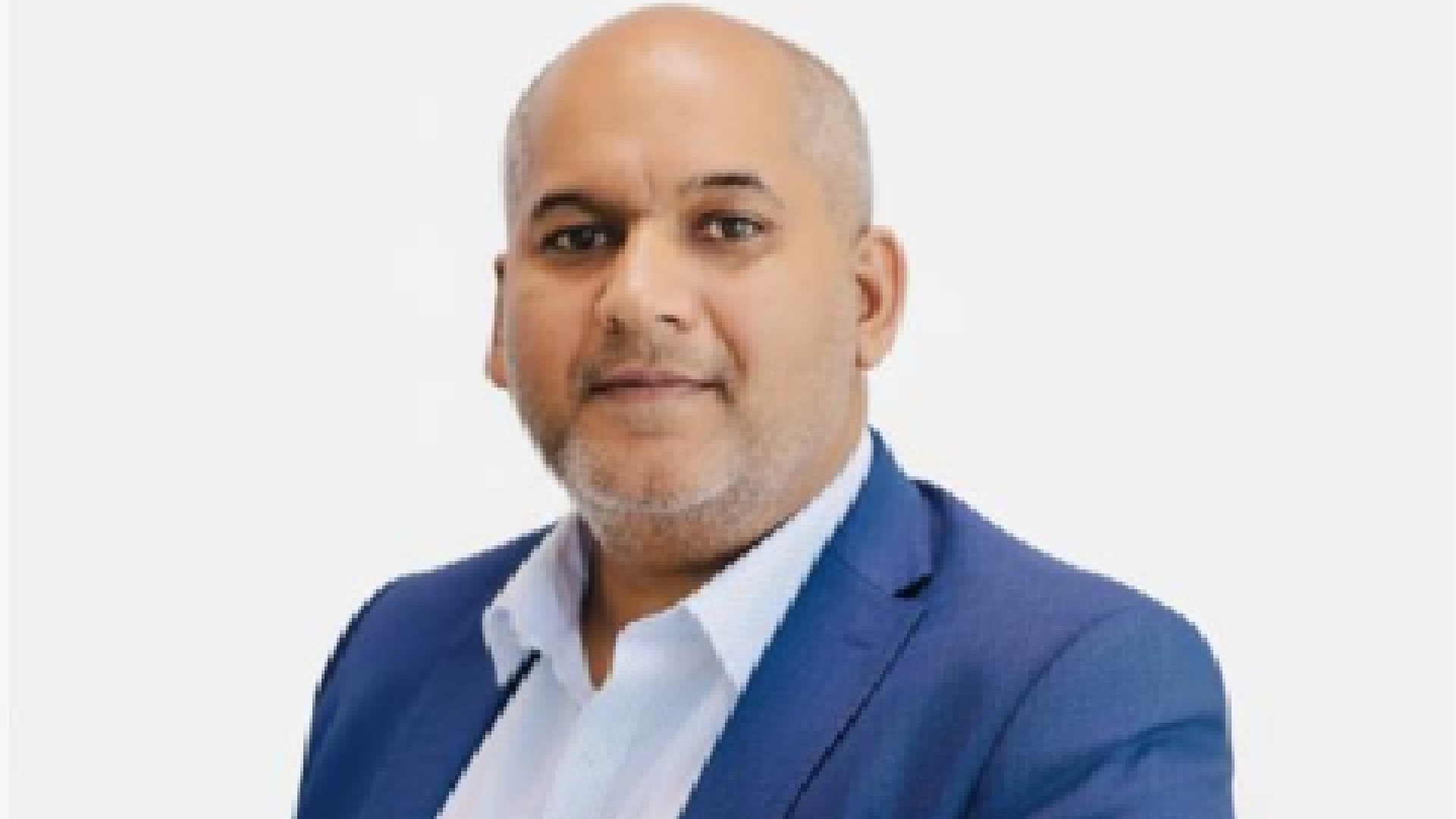
Attributed to Vishal Mishra, Director of AI and Software Engineering, Inception, a G42 company
Inception’s presence at GITEX this year focused on bringing enterprise-ready AI solutions to life. Could you walk us through the key innovations being showcased and what makes them stand out in the regional AI landscape?
At GITEX Global 2025, under the theme ‘Authentic Intelligence. Real Impact.’, we showcased our suite of domain-specific and sector-agnostic AI products that are transforming how organizations operate and make decisions. This included (In)Sight, (In)Alpha, (In)Procurement, (In)Business Human Capital, (In)Business Productivity, (In)Business Process, (In)Business Customer Experience, and (In)Media, with a selection of them being demonstrated. These products showed how Inception is helping governments and organizations accelerate transformation, improve efficiency, and generate measurable progress across sectors.
We are also announced a series of strategic partnerships to strengthen our capabilities and global reach and reflect Inception’s commitment to bringing authentic intelligence to life, driving enterprise transformation, and contributing to the UAE’s vision of becoming an AI-native nation.
What distinguishes these innovations in the regional AI landscape is their enterprise readiness and practical impact. Each product has been designed to integrate seamlessly into real operational environments, enabling businesses and government entities to automate complex processes, enhance decision-making, and drive value creation responsibly and transparently. Our focus is on delivering AI that is explainable, compliant, and aligned with national priorities for sustainable digital transformation.
Our presence and partnerships reflect Inception’s commitment to bringing authentic intelligence to life, driving enterprise transformation, and contributing to the UAE’s vision of becoming an AI-native nation.
Inception has evolved rapidly from an AI research hub to a product-first company. Can you give us an overview of your current AI-native products and how they are enabling organizations to automate complex workflows and make smarter decisions?
Inception’s transition from a research-driven institute to a product-first company reflects a clear focus on building practical, enterprise-ready AI that delivers measurable outcomes. Our current portfolio of AI-native products is designed to address specific business and leadership challenges while enabling enterprises to automate complex workflows, generate real-time insights, and make data-driven decisions with confidence.
Our suite of products spans multiple layers of enterprise operations:
- (In)Sight: An AI-powered product for top executives that transforms leadership collaboration by automating meeting workflows, surfacing real-time insights, and integrating seamlessly with Microsoft 365 to drive faster, more confident decision-making.
- (In)Genius: A sophisticated AI-powered insight generation and analysis system designed for automated business strategy research, validation, and reporting
- (In)Alpha: An AI-driven intelligence product that uncovers hidden patterns and insights from vast volumes of unstructured data, enabling more informed investment decisions while reducing biases
- (In)Procurement: An AI-powered platform that transforms supplier discovery, contract management, and sourcing processes with automated workflows and built-in regulatory checks that guarantee 100% compliance
- (In)Media: A next-generation AI media intelligence platform that detects, analyzes, and responds to harmful or misleading narratives in real time.
- (In)Business Process: A no-code AI automation platform that lets enterprises design, deploy, and orchestrate intelligent agents to streamline complex workflows, integrate with existing systems, and ensure secure, scalable process optimization
- (In)Business Productivity: A no-code platform designed to transform the way employees handle daily tasks by integrating speed, intelligence, and automation through a suite of prebuilt, AI-powered workflows that simplify and accelerate work processes
- (In)Business Customer Experience: An AI-powered platform that helps businesses deliver faster, more personalized support across chat, voice, avatar, and web channels through virtual agents and intelligent tools that empower human agents.
Each of these products represent a step toward operationalizing AI across every level of the enterprise. They embody Inception’s mission to leverage authentic intelligence to bring about real impact by enhancing quality decision, operational efficiency, and organizational agility.
Agentic AI is becoming a major theme in enterprise transformation. How does Inception define agentic AI, and what makes it different from traditional chatbots or rule-based systems?
Traditional chatbots or rule-based systems handle tasks by following instructions. They don’t have the ability to interpret, adapt, or anticipate. Instead, they rely on pre-programmed scripts to respond to isolated inputs. Agentic AI, on the other hand, solves problems. It doesn’t wait to be told what to do; it interprets intent, maintains memory across interactions, adjusts to dynamic input, and collaborates with other agents and humans to reach outcomes. It’s essentially an assistant that doesn’t just follow commands but proactively navigates the complexities of enterprise operations.
At Inception, we have a range of products that deploy Agentic AI across different business functions within an organization. (In)Procurement does more than automate contract workflows. It identifies high-performing, sustainable suppliers, accelerates sourcing-to-award cycles, ensures compliance, and drives measurable savings. Our (In)Business Productivity and (In)Business Process products empower teams to deploy no-code AI agents that coordinate workflows, surface knowledge, and make intelligent decisions often faster, more accurately, and at greater scale than human-led systems.
How do you see the adoption of technologies like Agentic AI, sovereign cloud, and domain-specific models influencing the UAE’s innovation and competitiveness over the next few years?
The UAE is entering a new phase of digital maturity where AI is no longer a supporting tool but a national capability. The convergence of Agentic AI, sovereign cloud infrastructure, and domain-specific models is accelerating that transition, creating a foundation for innovation that is secure, scalable, and deeply contextual.
Agentic AI brings autonomy and adaptability to enterprise systems, enabling them to learn and act with minimal intervention. When these systems are deployed within sovereign cloud environments, they operate with trusted national infrastructure that ensures data privacy, compliance, and resilience. Domain-specific models then take this one step further by embedding specialized knowledge that reflects the realities of that respective domain.
By combining Agentic AI capabilities with sovereign infrastructure and purpose-built models, the UAE is demonstrating how nations can build sustainable digital ecosystems that enhance competitiveness, drive productivity, and unlock new opportunities for growth. Inception’s mission is to ensure that this intelligence is not abstract but actionable, bridging the gap between research and real-world impact.


Exclusive interview with Andrew McInerney (CEO) and Ebad Abid (Head of Product), Track24
Can you introduce your company to us? What does AtlasNXT do?
AtlasNXT, from TRACK24, is a duty-of-care location services and communication system. So, it enables a business to know where its people are and relate those people to the risks and other information they might face and then enables them to make decisions and communicate about to ensure the duty-of-care of their teams.
So, what inspired the founding of AtlasNXT and how does its mission differ from other duty-of-care and operational communication platforms?
TRACK24 was formed in 2004 as a location services company in high-risk environments, principally using satellite locations and satellite communication devices. And that remains one of our key differentiators, the ability to integrate satellite communications and satellite devices from any of the competitors. Since then, the world and the technology has moved on.
And in the last five years, we at TRACK24 have integrated lots of different, divergent bits of our software into AtlasNXT as a single software offering. And that provides those location services, not just to high-risk environments, but to GSM-capable and GPS-capable devices across any environment. So, where risk moves across place and time, then any business can use this, not just those ones in high risks as well.
So, it helps with travel risk management, it helps with precision communications to people, it reduces the amount of noise compared to the amount of signal that individuals get. So, precision information to the right people at the right time.
In your view, what is the biggest misconception organizations still have about modern duty-of-care technology?
We’ve come from a high-risk environment, from the most high-risk, and bring with us that sort of ethos of protection. Many organizations have come from a travel risk management environment, and therefore that tends to be diary predictions of where your diary says you’re going to be traveling that day, rather than precision location. And so, a lot of people bring with them the expectation that they get a generic travel risk management update, rather than something precise for their own movements, which changes as their own movements change.
So, the adaptability of a live tracking system enables that. The other key differentiator is the ability to maintain privacy. I’ve done that quick demonstration of the system.
So, the individual knows when they’re able to be seen by their operation, by their operators, by their employer, and when they’re not, so they can maintain their privacy. And they only lose their privacy through consent. They press a button on the app and say, track me, or check me, overwatch me, or I’m in a panic mode, or by event, and they go inside a geofence, which their employer has put up on the map.
It might be their location, it might be a risk environment, and even then, the app tells the individual that you’re now visible to your operator. So, I think it’s key, the privacy element, and the live tracking, rather than any predictive element. Coming to the privacy part, AtlasNXT emphasizes privacy-first location-based communications.
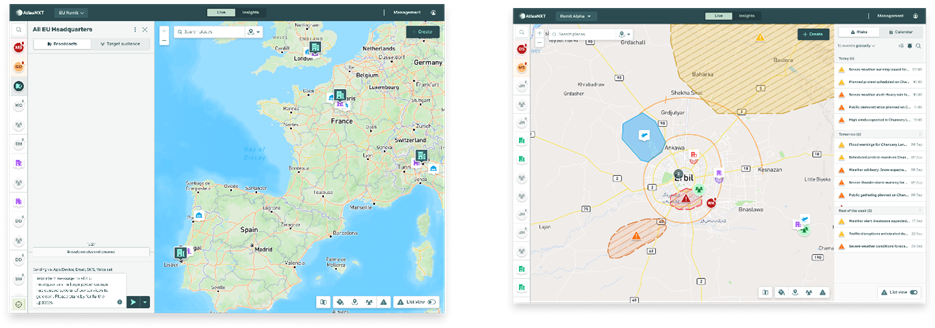
How do you balance delivering critical information with user privacy concerns?
One of the challenges is, as you have said, is if you give the user the control, you won’t be able to actually support the user, because they’ll just switch it off. So, what we do is, we allow the system to share information, but we manage privacy through the visibility of the data that’s transferred, as opposed to switching it on and off, as most people do.
Because once you switch it off, the person’s MIA, and you can’t do anything to support them. They’re not going to get any notifications; we’re not going to know where they are. But if the system is always sharing, if their device is always sharing a location, or any form of notification with our system in the background, then we’re always able to reach them in the event something goes wrong.
The way we manage privacy is we essentially make them invisible, and they become visible by consent or event. So, one of the main things in data protection laws is legitimate interest. So, you should only ever have access to somebody’s information if you actually need it.
And so, you either give consent, that you can use my location data, or there’s a legitimate interest, such as they are in a potential area where there is a risk to them. At that point, we can reveal that location, and therefore, we’re always in control.
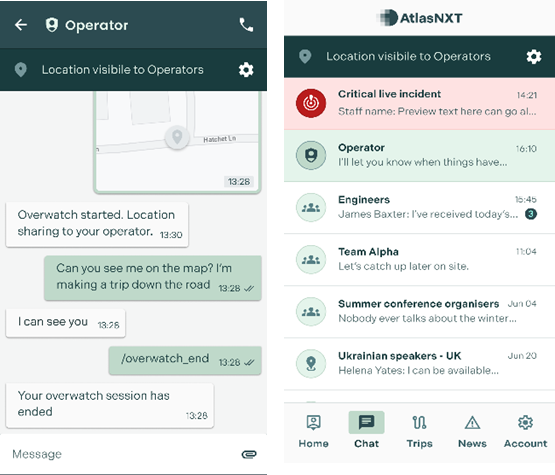
AtlasNXT integrates geofencing, precision messaging, and real-time operational intelligence. How do you see these capabilities?
Geofences themselves have evolved. First, they just used to be sort of a digital perimeter. Now, we’ve introduced smart geofences, which essentially allows you to track people coming in and out of that perimeter. What we also do is see what impacts that perimeter.
So, we have various intelligence feeds we integrate with, and you can see if a particular perimeter is impacted by that. Now, with AI, you can also then say, is that piece of intelligence relevant to the perimeter I’m monitoring? When you’re integrating with data providers, you’re probably getting a few thousand events a day. As humans, we can’t consume that much information, or if we can, we can’t comprehend what it means.
With the power of AI, we can summarize information and allow it to provide clarity. We can also use it to generate reports and deliver trend analysis.
For example, it can extrapolate that over X period of time, we’ve had X types of risk, which gives us the ability to predict future risk. So, if there is, for example, a civil conflict near a particular geofence, you’ll find that there are X amount of panic alarms pressed in the vicinity.
So, what AI will be able to do is allow us to forecast whether, you know, because of this event, we can expect this many people to be at risk. Which sends out early warnings automatically without human intervention being required.
From our engagement with customers, it’s clear that they want to maintain an operator in the decision loop. So, our approach to AI is that it does the heavy lifting, but only suggests options to the operator. This ensures a human remains in command and makes the critical decisions.
AI is powerful and can save a great deal of time, but we’re not at the point where life-and-death security decisions can be handed to a machine. It performs the groundwork while a human operator remains in control. One of its strengths is pattern recognition.
It can say to the operator, ‘we’re noticing this, do you want to take this action?’ It’s a co-pilot, not a pilot. It also improves efficiency, as AI can process large volumes of information instantly, reducing response times. The earlier an organisation can intervene, the safer its people are. AI summarises the situation, and the operator decides whether and how to act.
And how important was InterSec for you and this region, Middle East, for your company?
We’re headquartered in London with two subsidiary organizations in the Emirates and a country office in Iraq. The region is hugely important. It’s where we originated as a species and as a company. So, we started in 2004 in Baghdad, and we’ve always maintained a large presence in Iraq, Kurdistan and across the Middle East.
The world isn’t getting any easier. The world is not getting any less risky. The world is not getting any more certain. Risk is spreading and becoming quite unpredictable whether you’re the president of an independent nation or an independent nation that belongs to somebody else. Risk is coming to you around the globe.
Our services become more and more important and more relevant globally. The region of the Middle East is important because I think it’s a region that understands security in a very central way.
It was our first attendance at InterSec. We’re a software provider. From what I’ve seen so far, there’s lots of hardware providers.
And that means there’s lots of potential partners for us. We can integrate any of their systems into our system and make access control useful for decision support which is what we’re here to do.
In our conversation with Ismail Ibrahim, General Manager, CEMEA at SUSE, we seek to understand the concept better along with his understanding of the industry and how enterprises in the UAE and Saudi Arabia can retain control in a rapidly evolving technology landscape.
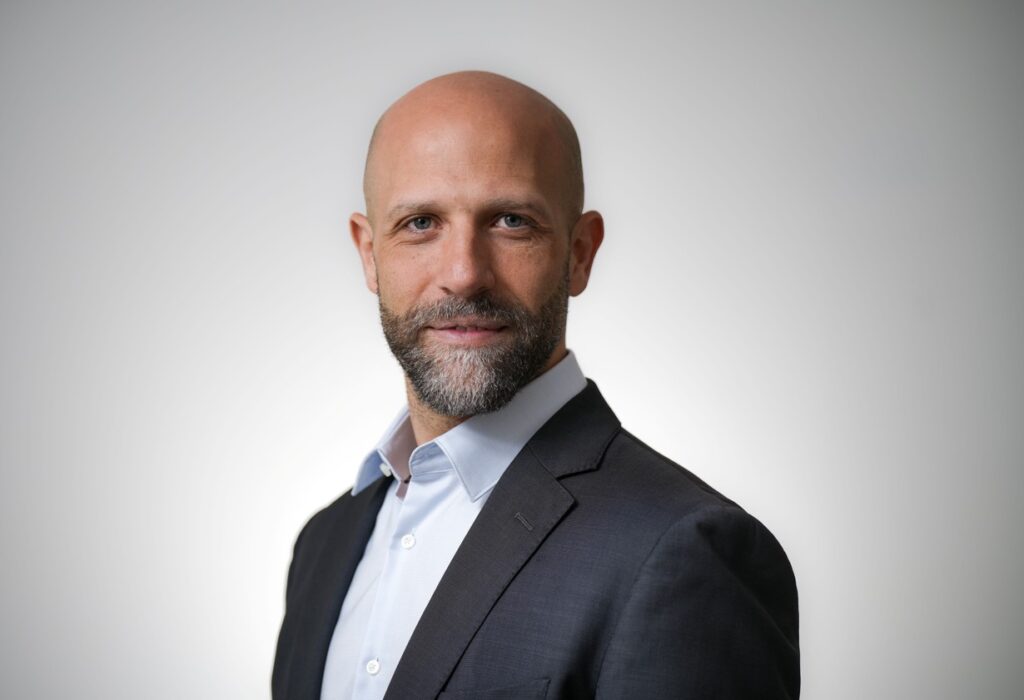
What does “digital sovereignty” actually mean for an enterprise today, not in theory, but in day-to-day operations?
From an enterprise perspective, digital sovereignty becomes real the moment it changes what you do on a Monday morning. In practice, it means three things become operational requirements, not policy statements.
First, control over data. Not just where data is stored, but where it is processed, who can access it, and how you prove that in an audit. For many organizations in the UAE and Saudi Arabia, that is increasingly tied to sector rules, procurement requirements, and customer expectations.
You need the ability to keep sensitive workloads within national borders when required, but also to enable controlled data flows when innovation demands it. The important point is that sovereignty is not “ringfencing everything”. It is being deliberate about which data, which workloads and which dependencies must remain under your control.
Second, control over operations. Day-to-day, that looks like resilience and predictability: how quickly you can patch, how confidently you can recover, how consistently you can enforce policy across clusters, clouds and edge sites. This is where many enterprises discover that sovereignty is inseparable from operational excellence. If you cannot reliably manage your environments, you do not really control them.
Third, control over technology choices. This is where open source becomes practical, not ideological. When you build on open, enterprise-supported platforms, you are reducing dependency on opaque codebases and constraining the risk of being forced into a single vendor’s roadmap. Sovereignty is “choice by design”, because choice is what allows you to meet local requirements today and change course tomorrow.
That is why at SUSE we often frame sovereignty around pillars like control, choice and resilience, with autonomy as the long-term outcome. For enterprises, those pillars translate into everyday decisions: architecture, procurement, governance, patching, incident response and lifecycle management.
In the next three years, which will hurt enterprises more: security breaches, or being locked into the wrong technology stack?
It is not an either-or, because the two risks are increasingly connected.
A security breach is immediate and visible. It impacts customers, regulators, operations and reputation. But lock-in to the wrong stack can quietly increase breach risk over time, because it limits your ability to respond. If your architecture makes it hard to patch quickly, to segment workloads properly, to implement new controls, or to move sensitive workloads to a compliant environment, you have turned security into a dependency problem.
Over the next three years, I would say the most damaging scenario for many enterprises is not “breach versus lock-in”, but breach plus lock-in, where an organisation is under pressure and finds it cannot adapt fast enough.
This is exactly why sovereignty has moved into the C-suite and boardroom. Leaders are recognizing that digital sovereignty sits alongside cybersecurity and operational resilience as a strategic requirement. You need a risk-based approach to your data, workloads and support model, and you need the flexibility to change course.
Practically, in the UAE and Saudi Arabia, many CIOs are already building mixed environments across on-prem, sovereign cloud, hyperscalers and edge. The goal is not to avoid the cloud. The goal is to avoid a situation where strategic choices are dictated by a single vendor’s constraints. Open, enterprise-grade platforms help you keep the option to move, modernize or localize when needed, without rewriting everything from scratch.
As AI becomes embedded into infrastructure itself, do you believe enterprises are prepared to trust machines with operational decisions, or are we moving faster than governance allows?
In many cases, we are moving faster than governance, but that does not mean enterprises should slow down. It means they should modernize governance at the same pace as adoption.
The key is to separate hype from reality. “Trusting machines” does not mean handing over full autonomy overnight. For most enterprises, AI enters operations in stages.
Stage one is assistive intelligence, where AI helps surface insights, detect anomalies, recommend actions and reduce manual effort. This is where many organizations see quick operational value, especially in areas like observability, incident triage, capacity planning and security monitoring.
Stage two is bounded autonomy, where AI can execute actions within defined guardrails, such as automated scaling, routing, remediation playbooks, or policy-driven security responses. The governance requirement here is clear accountability: what is automated, under what conditions, with what approvals, and what audit trail.
Stage three is agentic operations, where more complex systems handle multi-step tasks across environments. This is the phase where governance must be mature, because the risk is not simply “wrong output”, it is unintended consequences across interconnected systems.
For the UAE and Saudi Arabia, readiness often depends on whether organisations have already done the foundations: standardised platforms, consistent policy enforcement, clean identity and access controls, and modern lifecycle management. If the foundation is fragmented, AI simply accelerates fragmentation.
This is why we are seeing strong interest in approaches that support governance by design, including the ability to run AI solutions in more controlled environments. In many regulated sectors, that includes air-gapped or restricted environments, where organizations want to adopt AI while keeping strict control of data movement and operational boundaries.
My view is that enterprises can absolutely trust AI in operations, but only when they treat trust as an engineering outcome: transparent systems, auditable controls, clear guardrails, and the ability to override. Governance is not a blocker. Governance is what makes adoption sustainable.
By 2030, will enterprises still control their infrastructure choices, or will hyperscalers and AI vendors effectively decide that for them?
Enterprises will control their choices if they design for control now. If they do not, the market will make the decision for them.
By 2030, the default buying motion will push organizations toward managed services, vertically integrated AI stacks, and increasingly opinionated platforms. That can deliver speed, but it can also compress choice, especially if your applications, data pipelines, security controls and operational tooling are tightly coupled to one vendor.
So the question is really about architecture and leverage. Enterprises that prioritise portability, standardization and open platforms will keep leverage. They can choose the right environment for each workload, based on performance, compliance, cost, and risk. Enterprises that ignore portability will find that “choice” exists on paper, but not in practice.
This is where digital sovereignty is often misunderstood. Sovereignty does not mean rejecting global technology. It means retaining the ability to make deliberate decisions about where workloads run and who controls the critical layers. Many leaders now talk about “glocal” strategies: using global innovation while maintaining local control and compliance where it matters.
At SUSE, our positioning has been consistent: open source supports sovereignty because it promotes transparency, portability and freedom from lock-in. That is not a slogan, it is a practical roadmap for keeping infrastructure choices in the hands of enterprises, not vendors.
If you had to offer one piece of advice to CIOs and policymakers in the UAE and Saudi Arabia navigating rapid digital transformation, what would it be?
My one piece of advice is this: treat sovereignty as an enabler of innovation, not a constraint, and build it into your operating model early.
For CIOs, that means starting with a clear map of your critical workloads and dependencies. Decide what must remain under national control, what can run on hyperscalers, what needs sovereign cloud options, and what requires special governance. Then standardize your foundations so you can enforce policy consistently. When sovereignty is engineered into the platform layer, transformation becomes faster, because you are not negotiating compliance from scratch every time you modernize an application.
For policymakers, it means continuing to create frameworks that encourage both innovation and trust. The UAE has taken a pragmatic approach in showing that openness and sovereignty do not have to conflict. When the policy environment supports clear requirements and predictable compliance expectations, enterprises can innovate with confidence.
And for both, there is a shared point: invest in skills and ecosystem capability. Sovereign outcomes are not delivered by policy alone, they are delivered by people, platforms, and partnerships. When you develop local talent, strengthen the partner ecosystem, and support enterprise-grade open source, you build resilience and long-term autonomy without slowing innovation.
Exclusive interview with Mark Turner, President EMEA, Rezolve Ai

What made Shoptalk Luxe Abu Dhabi a priority platform for Rezolve Ai this year?
For Rezolve Ai, Shoptalk Luxe Abu Dhabi brings together the right audience at the right moment. Luxury retailers in the region are no longer exploring ideas, they are making decisions and investing. It is a practical forum to exchange views with brands that are actively shaping their customer engagement and commerce strategies, and to have grounded conversations about what is working in real retail environments. Abu Dhabi also reflects how influential the region has become in global luxury thinking.
How is AI changing the way luxury retailers think about customer engagement today?
Luxury retailers are becoming far more intentional about how and when they engage customers. AI is helping them move away from broad personalisation toward more contextual, timely interactions that respect the brand experience. The focus is on supporting customers at key moments, whether online or in store, and ensuring engagement feels consistent and considered rather than automated or intrusive.
What distinguishes meaningful AI adoption in retail from short-term experimentation?
Retailers that see lasting value from AI are those that embed it into day-to-day operations rather than treating it as a standalone initiative. Meaningful adoption is driven by clear commercial goals, fast implementation, and solutions that work within existing systems and teams. Short-term experimentation tends to stall when it lacks ownership, scale, or a clear link to performance outcomes.
Why is the Middle East, and the UAE in particular, becoming increasingly important for luxury retail innovation?
The Middle East, and the UAE in particular, has created an environment where luxury retail innovation can move quickly. Consumers are digitally confident, infrastructure is strong, and there is a clear push at a national level to adopt advanced technologies. This combination allows retailers to implement and test new models at scale, which is why the region is increasingly influencing global luxury strategies.
Looking ahead, where do you see AI delivering the most value for luxury brands over the next few years?
The greatest value will come from AI that directly supports growth while reinforcing operational discipline. For luxury brands, that means more relevant engagement that improves conversion and loyalty, alongside better forecasting and inventory decisions that protect margins. The priority will be practical use of AI that enhances the customer experience without compromising brand integrity.


2027 Chevrolet Corvette Grand Sport, Grand Sport X debut with new 6.7L V8
MAXION REPORTS 399% USER GROWTH AMID RISING DEMAND FOR REAL-WORLD CONNECTION PLATFORMS
SOBHA REALTY’S CREST GRANDE RECEIVES BUILDING COMPLETION CERTIFICATE; HANDOVER TO COMMENCE WITHIN RERA TIMELINE



-
News10 years ago
SENDQUICK (TALARIAX) INTRODUCES SQOOPE – THE BREAKTHROUGH IN MOBILE MESSAGING
-

 Tech News2 years ago
Denodo Bolsters Executive Team by Hiring Christophe Culine as its Chief Revenue Officer
-
 VAR12 months ago
Microsoft Launches New Surface Copilot+ PCs for Business
-

 Tech Interviews2 years ago
Navigating the Cybersecurity Landscape in Hybrid Work Environments
-

 Trending5 months ago
OPPO A6 Pro 5G Review: Reliable Daily Driver
-

 Tech News9 months ago
Nothing Launches flagship Nothing Phone (3) and Headphone (1) in theme with the Iconic Museum of the Future in Dubai
-

 Automotive1 year ago
AGMC Launches the RIDDARA RD6 High Performance Fully Electric 4×4 Pickup
-

 VAR2 years ago
Samsung Galaxy Z Fold6 vs Google Pixel 9 Pro Fold: Clash Of The Folding Phenoms