
 Have a question? +971 56 404 0503




Hospitality
Hospitality Is Still a People Business—Even in the Age of AI


Exclusive interview with Ayman Ezzedine, Director of Development Middle East, Egypt and Pakistan, Radisson Hotel Group.
How is FHS going so far for you?
It’s very good, actually. It’s been busy. We had some great meetings, meet some industry peers as usual, catch up.
A lot of us have been in the game for a long time. So, it’s always good to see people from the past and always meeting new ones as well.
This event, you know, we’re all in the hospitality business here. So, the hospitality from the hosts, from the organizers and even our competitors or peers, we call them. It’s very nice. And then the owners. So, it’s a great industry. And it’s about hospitality.
Ayman, you’ve been in the industry for quite a while now. Can you share what shaped your approach towards development in developing such complex markets such as Middle East, Egypt and Pakistan?
It’s interesting when you put it Middle East, Egypt, Pakistan, and there are three completely different. Even in the Middle East, you know, you have UAE, you have Saudi Arabia, you have Lebanon, the Levant. So, every country has its own set of challenges, experiences, culture. Coming from the industry, starting out in operations, traveling, meeting, we start to understand the different cultures and how to work with different people.
So that starts, becoming the base. So now when I’m in negotiations with an owner from Pakistan, I go back on my experience of first working with colleagues from these different regions and start to understand their culture. Somebody once told me that Ayman, you speak Arabic, so you’ll do well in Egypt, because Egypt is a very interesting market for us.
The difference is you have to understand the culture, not just the language. So that’s, I think, it’s just understanding culture and then you could expand to them.
In your view, what is the differentiation, when it comes to understanding between a successful hospitality development project from a mere profitable one?
It always depends. Some projects are being done by the government for a greater good. Some are by owners who want to give back to the community. They want better training for staff from their hometown.
And some are purely for financial profit. Each one has its own incentive and its own. So, you really have to understand what the owner is looking for and make sure that we are aligned together.
From my experience, what’s a successful project hotel is one that meets three, four, five of those criterias. One, give back to the community, offer the guests what they want, staying true to our brand values, you know, and making money because we are a business event.
With KSA and Dubai evolving quickly, how have you personally experienced and observed the talents and expertise migration that are shaping the competitive landscape today?
The change has been, I mean, especially KSA in the recent, the recent changes have been such an advanced pace. It was a bit shocking and even for us disbelief at the beginning, but the level of expertise that is now available, you know, in Saudi Arabia, we’ve never had a franchise. Now we already have two, just because now we believe that this expertise exists in Saudi Arabia and we can be more relaxed and approach this opportunity. So, it’s becoming more of a mature market.
UAE has always, has been mature for a while, but it’s changing and it’s also adapting to the changes around the region and working closer with the Saudi market. So, I don’t think they’re competing with each other while they’re working and they’re finding their different niches and complementing.
can you share your insights on how AI and predictive analytics are influencing a smoother guest experience?
I’m still a paper and pen kind of guy, but UAE cannot negate the role that AI is having on the hospitality industry and the future for us to use it. It’s obviously for analyzing what guests like, how we act, what would they like us to do to present to them? So, it’s a tool that we have to use, but at the end, we are a people business.
It’s about the hospitality that comes from person to person. So, we have to learn and continue to learn how we can use AI to enhance that experience. And as people change, the information is out there now. We just cannot completely depend on AI. We got to keep the people in it as well.
Hospitality
HOP INTO EASTER AT MCGETTIGAN’S WITH FAMILY ROASTS, EGG HUNTS AND CLASSIC SUNDAY FAVOURITES

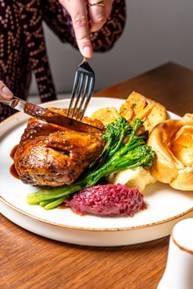
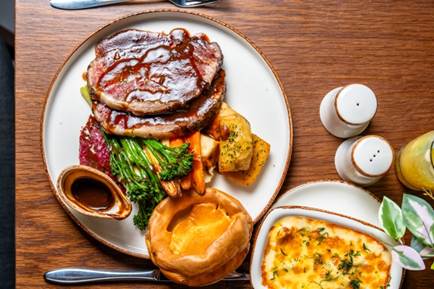
This Easter, McGettigan’s is bringing together hearty roasts, family-friendly activities, and laid-back celebrations across its venues in Dubai. From lively family days with quizzes and egg hunts to traditional Sunday roasts for a relaxed gathering, there is something for everyone this Easter Sunday.
Easter Family Roast & Quiz at McGettigan’s Ibn Battuta Gate
Expect a lively Easter Sunday packed with family-friendly entertainment, including a quiz and activities for all ages, alongside McGettigan’s signature roast. Younger guests can also enjoy an Easter egg hunt, adding to the festive atmosphere and making it a perfect day out for families.
- Who – Families and groups
- What – Easter Sunday Roast with family quiz, entertainment, and egg hunt
- Where – McGettigan’s Ibn Battuta Gate
Easter Sunday Roast with Egg Hunt at Souk Madinat Jumeirah and Expo City
For a more relaxed Easter celebration, McGettigan’s at Souk Madinat Jumeirah and Expo City will host a laid-back family roast with a light touch of festive fun, including an Easter egg hunt for younger guests. Ideal for those looking to enjoy quality time with family in a more casual setting.
- Who – Families and casual diners
- What – Easter Sunday Roast with egg hunt
- Where – McGettigan’s Souk Madinat Jumeirah and McGettigan’s Expo City
Traditional Easter Roast at McGettigan’s JLT and DWTC
For those who prefer to keep it classic, McGettigan’s JLT and DWTC will be serving up their traditional Easter Sunday roast, complete with all the hearty favourites and signature dishes the brand is known for. A perfect option for a relaxed gathering with friends or family.
- Who – Friends, couples, and groups
- What – Traditional Easter Sunday Roast
- Where – McGettigan’s JLT and McGettigan’s DWTC
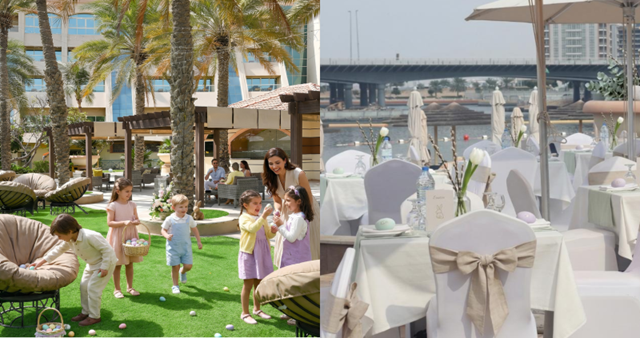
Al Raha Beach Resort & Spa invites guests to celebrate Easter with a lively beachfront brunch at La Piscine. Taking place from 1:00 PM to 4:00 PM on April 5, the Easter Brunch brings together great food, feel-good music and a vibrant, family-friendly atmosphere by the sea.
Set against La Piscine’s relaxed poolside and beachfront backdrop, the afternoon’s culinary offering features an international buffet with live stations, brought to life with a DJ and saxophonist spinning upbeat sets throughout the day. For younger guests, the experience leans into the spirit of Easter with great kids’ activities, including egg hunting, glitter face painting, and a dedicated kids’ corner.
Guests can also make the most of the long afternoon with complimentary access to the resort’s pool and beach, along with a Spa voucher, making it more than just brunch, but a full day out in the sun.
Easter Brunch Details
Location: La Piscine, Al Raha Beach Resort & Spa, Abu Dhabi
Time: 1:00 PM – 4:00 PM, April 5th
Kids Policy
Ages 5–12: 50% discount
Below 5: Complimentary
Hospitality
THE IMPACT OF AI IN THE F&B INDUSTRY: LEADING RESTAURANT TECH COMPANY HELPS RESTAURANTS STAY AHEAD WITH ITS AI-POWERED TOOLS
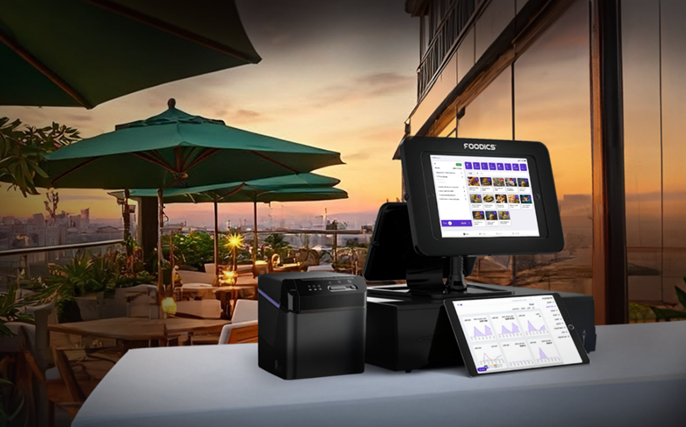
AI has been steadily transforming the F&B industry across production, distribution, food safety, supply chain and restaurant operations. Now as more restaurants are increasingly adopting AI-powered systems, these tools are becoming an active element in streamlining day-to-day operations, bringing a transformative shift within the industry. Supporting this shift is Foodics, a leading cloud-based restaurant operations and payment tech company in the MENA region through its AI-powered business intelligence solution, Foodics BI.
Numerous opportunities and challenges have been brought by AI across different sectors, particularly in the F&B and hospitality industry. Today, restaurateurs can leverage AI in various ways whether it’s improving overall operational efficiency, assisting customer-related services in front office, streamlining back-end operations, tackling food waste, forecasting demands and trends, enhancing guest journeys through personalized experiences, optimizing menus, improving marketing efforts, performance tracking and more.
By using AI, restaurant owners can operate their business with a data-driven approach. One of the significant advantages of AI-powered tools tailored for restaurants is its ability to analyze large volumes of real-time data, allowing restaurateurs to make sense of the information and transform it into insights that will help them make the right decisions. In an industry shaped by constantly evolving customer behaviour, rising operational costs, increased demand for efficiency, these tools are becoming more essential for restaurants looking to thrive and stay profitable.
At the forefront of this shift in the industry is Foodics. The Saudi-born restaurant operations and payment tech company is helping restaurateurs stay ahead in the industry by supporting them in navigating this evolving landscape through Foodics BI – their advanced AI-powered business intelligence tool that provides restaurants with real-time, data-driven insights for seamless restaurant operations and smarter decision making.
Over the past year, Foodics BI has been a gamechanger for restaurants in the region, enabling them to harness the power of their own business data to make smarter, faster and more strategic decisions that will drive operational efficiency, enhance guest experiences, increase profitability and unlock new revenue opportunities for growth.
Some of Foodics BI’s key features include revealing in-depth and real-time operational insights including sales performances and customers’ buying behaviour, AI-powered forecasting for smarter inventory planning to reduce food wastage, automated reporting and historical data analysis to identify seasonal changes and trends, all using predictive analytics. Additionally, Foodics BI enables seamless remote management, allowing operators to conveniently access and monitor restaurant data anytime and from any location.
By transforming data into meaningful and actionable insights, Foodics BI is empowering restaurants to operate efficiently, adapt to market changes and customer demands, and scale sustainably in a competitive industry.
Beyond restaurants, AI-powered systems are also transforming the wider F&B industry, such as supporting quality control and safety in food processing facilities by detecting defective and contaminated products, monitoring food production processes and ensuring product consistency, optimizing distribution routes throughout supply chains to reduce food spoilage, identifying functional ingredients, improving shelf-life predictions and more.
AI-powered tools are undeniably reshaping the food and beverage industry by offering solutions that help businesses streamline their operations efficiently, bring accuracy and innovation. As AI technologies evolve, their integration will continue to redefine and shape the F&B landscape.

ALTERYX EXPANDS REGIONAL LEADERSHIP WITH SABYA SEN TO LEAD IMEA & APAC
HOP INTO EASTER AT MCGETTIGAN’S WITH FAMILY ROASTS, EGG HUNTS AND CLASSIC SUNDAY FAVOURITES
CELEBRATE EASTER WITH A FAMILY-FRIENDLY BRUNCH AT LA PISCINE,AL RAHA BEACH RESORT & SPA



-
News10 years ago
SENDQUICK (TALARIAX) INTRODUCES SQOOPE – THE BREAKTHROUGH IN MOBILE MESSAGING
-

 Tech News2 years ago
Denodo Bolsters Executive Team by Hiring Christophe Culine as its Chief Revenue Officer
-
 VAR12 months ago
Microsoft Launches New Surface Copilot+ PCs for Business
-

 Tech Interviews2 years ago
Navigating the Cybersecurity Landscape in Hybrid Work Environments
-

 Trending5 months ago
OPPO A6 Pro 5G Review: Reliable Daily Driver
-

 Tech News9 months ago
Nothing Launches flagship Nothing Phone (3) and Headphone (1) in theme with the Iconic Museum of the Future in Dubai
-

 Automotive1 year ago
AGMC Launches the RIDDARA RD6 High Performance Fully Electric 4×4 Pickup
-

 VAR2 years ago
Samsung Galaxy Z Fold6 vs Google Pixel 9 Pro Fold: Clash Of The Folding Phenoms