
 Have a question? +971 56 404 0503




Tech Features
Localization is at the Core of Hisense’s Middle East Strategy!

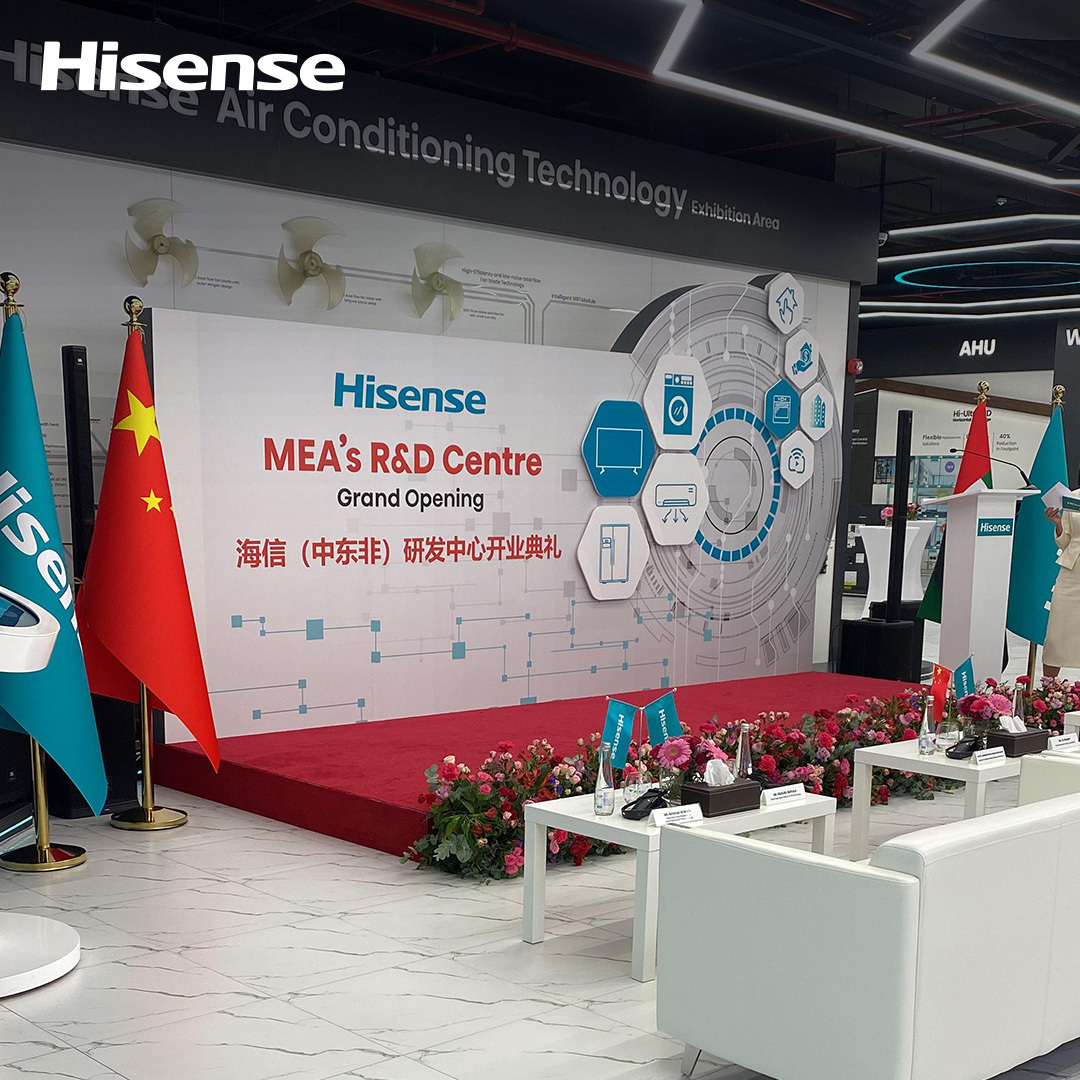

In conversation with Jason Ou, President, Hisense Middle East & Africa on regional R&D, AI-powered products, and next-generation home innovation.
Here in the interview, we take a look at the strategic role of its Dubai R&D Centre in localizing global innovation for Middle Eastern consumers, ensuring products are climate-ready, culturally relevant, and aligned with regional lifestyles.
We talk about how the company is embedding AI across TVs and home appliances to improve performance, energy efficiency, and ease of use, while reducing manual intervention.
Through Hisense we take a look at the advantages of Laser TV technology, and what Hisense is offering through its large-format, energy-efficient cinema experiences suited to our homes.
Can you start by telling us about the role of the Hisense R&D Centre in Dubai within the company’s broader innovation ecosystem?
Our Dubai R&D Centre is an essential part of how we localise global Hisense technology for the Middle East. It allows us to test products under real regional conditions, understand consumer behaviour more accurately, and adapt features or performance where needed.
The centre also helps us coordinate closely with local partners, retailers, and government entities. This ensures our innovations are not only technically strong, but also aligned with local lifestyle needs, climate demands, and regulatory standards. It strengthens the link between our international R&D network and what consumers expect from the brand here.

- Can you share examples of product tweaks or innovations that originated from local feedback? How does the R&D team ensure Hisense products meet the expectations of increasingly tech-savvy and connected households in the region?
We’ve made several practical product adjustments based on insights gathered in this market. For example, we enhanced compressor durability and airflow design to handle prolonged periods of extreme heat, dust, and humidity. We also refined our filtration systems to better suit environments where air quality can vary throughout the year. Another important highlight is our anti-mould functionality, developed specifically for this region. During the summer months, higher levels of humidity can lead to mould formation within AC units, so we engineered a cycle that keeps internal components dry and prevents mould from growing, ensuring cleaner air and improved long-term performance. Additionally, we’ve optimised cooling performance to ensure faster temperature recovery, which is a key priority for consumers in this climate.
From a smart technology perspective, we have incorporated features such as AI-enabled energy optimisation, advanced Wi-Fi controls, and more intuitive mobile app interfaces. These include smart notifications and automated modes that help users maintain healthier indoor air quality, especially during periods of high humidity. These updates came from feedback that users want greater visibility and control over energy consumption, remote access, and seamless integration with smart home systems.
To stay connected with highly tech-savvy consumers, we run continuous testing cycles and user studies. We also gather retailer feedback and analyse usage data to understand how households interact with our products. This helps us shape updates and features that are relevant, intuitive, and reliable for the region.
- How is Hisense embedding AI into its consumer products? Beyond convenience, what real benefits does AI bring to users?
We apply AI where it consistently delivers value. In TVs, AI enhances picture and audio quality by analysing content and room conditions in real time. In appliances, AI improves energy efficiency, adjusts performance based on usage patterns, and supports predictive maintenance, reducing the likelihood of breakdowns and improving overall product life. In our laundry category, AI plays an increasingly important role in recommending the ideal wash cycle based on fabric type, colour, and load size. It can even set the appropriate water temperature and spin speed, helping users to protect delicate garments while improving wash performance.
For users, the benefit is straightforward: better performance with less manual intervention. AI helps the product adapt to the user, rather than requiring the user to adapt to complex settings.
- What differentiates Laser TV from traditional LED or OLED technology, both in performance and environmental impact?
Laser TVs offer a fundamentally different viewing experience and cannot be directly compared to traditional LED or OLED panels, as they each serve different purposes. The laser TV is designed to replicate a true cinema environment; it uses ultra-short throw laser technology which is better suited for large-format screens due to consistent colour accuracy, strong contrast, and reduced eye strain. It performs especially well at sizes above 100 inches, where conventional panels become less practical, heavier, and significantly more power-intensive.

From an environmental standpoint, the laser TV uses far less energy and production materials than similarly sized LED or OLED screens. This makes it a more sustainable choice for consumers who want a big-screen experience without the high power consumption of traditional panels.
At Hisense, we are pioneering this category globally, with a current positioning as the world’s number one laser TV brand. We endeavour to continue expanding the technology to bring the big-screen cinema experience into modern homes.
- How is Hisense adapting its Laser TV lineup for Middle Eastern consumers, who often value both cinematic experience and design aesthetics?
Middle Eastern households are generally more accommodating of large, high-quality displays and interior design. While we have not developed a laser TV range exclusively for the Middle East, we are continuously enhancing our overall TV ecosystem in ways that benefit local users, particularly through our updated VIDAA operating system, which now includes more Arabic interfaces, regional apps, and local streaming platforms such as Shahid.
The region presents a strong opportunity for laser TV adoption, especially in large homes and villas where dedicated cinema rooms are becoming increasingly popular. The Hisense laser TV is ideal for this environment, offering an ultra-short throw set-up, immersive large-format viewing, and a cinema-style experience without the need for complex installation or heavy wall-mounted panels.
We continue to focus on features such as ALR (ambient light rejection) screens, enhanced sound performance, and clean, modern industrial design, all of which make laser TV a natural fit for households looking to elevate both their viewing habits and their interior spaces.
- What are the next big innovation priorities for Hisense in the Middle East?
Across the world and in the MEA region, our goal is to innovate products that simplify everyday life. We are focused on advancing our AI chips, enhancing intelligent capabilities, and expanding ConnectLife to build a fully connected home ecosystem that is smarter, more intuitive, and increasingly predictive.
We are also strengthening our core product lineup with meaningful category breakthroughs. In our laundry segment, we recently launched PureView and X-Zone Master, two products that we believe represent a new standard in performance, design, and user-centric innovation. In the display category, we’ve introduced the 116-inch RGB Mini-LED, a landmark innovation that we expect will redefine what consumers can expect from large-screen entertainment.
From a regional standpoint, we continue to develop our air-conditioning solutions to withstand extreme heat, humidity, dust, and long operational hours , priorities that are especially important for the Middle East. For home appliances, we’re building features tailored to local lifestyles, such as the Abaya wash cycle in our washing machines, ensuring cultural relevance and ease of use for consumers in this market. These initiatives reflect the growing needs of our consumers in the region: reliability, connectivity, climate-ready performance, and elevated home entertainment experiences


Banks have long been the GCC’s digital pioneers. In the UAE, Saudi Arabia and Qatar, financial institutions were among the first to embrace mobile banking apps, roll out contactless payments at scale and introduce AI-powered chatbots to handle customer queries in Arabic and English. More often than not, banks set the pace and other sectors followed.
Given this decades-long precedent, you would expect the same pattern to be playing out with artificial intelligence. After all, AI is already embedded in the daily lives of Gulf consumers. Ride-hailing, e-commerce, government, and a plethora of other services across the region have increasingly integrated AI into their systems, to effectively personalise experiences and streamline transactions.
And yet, when we look inside banks themselves, the story is more complicated. According to the latest Riverbed Global Survey, only 40% of organizations in the financial sector consider themselves ready to operationalize AI. Just 12% of AI initiatives are fully deployed enterprise-wide, while 62% remain stuck in pilot or development phases. In a sector known for digital ambition, there is a striking gap between intent and execution.
Stuck in Pilot Purgatory
In most industries, pilots fail because the idea simply does not resonate. Testing reveals a weak product-market fit, limited customer appetite, or unclear commercial value.
That is not what we are seeing in banking AI. Regional banks have successfully piloted AI models that detect fraud in real-time, reduce false positives in anti-money laundering checks, predict liquidity requirements, and power conversational assistants capable of resolving complex service requests. Relationship managers have used AI tools to surface next-best-product recommendations based on behavioral data. And operations teams have leveraged machine learning to optimize payment routing and reduce processing delays.
In controlled environments, these pilots often deliver impressive results. And yet, few ever make it past this stage. The initiative remains confined to a sandbox. Expansion is delayed. Integration becomes “phase two.” Eventually, attention shifts to the next promising experiment. So, if the feature works and the value is clear, what is holding banks back?
AI that Fails to Scale
In my experience working with CIOs across the region, two obstacles repeatedly stand in the way of AI moving from proof of concept to production. The first is operational complexity. Most financial institutions operate in highly fragmented environments. Core banking platforms run alongside decades-old legacy systems, with critical workloads split across on-premise data centers, private clouds, and multiple public cloud providers. Third-party fintech integrations also adds further layers of interdependency.
Deploying AI into this landscape is not as simple as plugging in a model. AI workloads are data-hungry and latency-sensitive. They require reliable pipelines, consistent telemetry, and predictable performance across every layer of the stack. In a hybrid, multi-cloud architecture, even minor configuration mismatches can trigger cascading issues.
The second obstacle is limited visibility. Without a unified view of applications, infrastructure, networks, and user experience, AI-driven services can behave unpredictably. A model may be performing perfectly, but a network bottleneck slows response times. An upstream data source may degrade in quality, subtly skewing outputs, and an infrastructure change in one environment may impact inference speeds elsewhere.
When visibility is fragmented, issues take longer to diagnose and resolve, and Mean Time to resolution increases. Operational risk rises, particularly when customer-facing or revenue-critical services are affected. In a heavily regulated market such as the UAE or Saudi Arabia, that risk has compliance implications as well as reputational ones.
Left unaddressed, this kind of live digital environment leaves very little room for innovation. AI cannot become the transformational force many claim it to be if it is constantly constrained by hidden friction.
Conquering Complexity
Moving AI smoothly from pilot to production requires banks to create as frictionless an operating environment as possible. One of the most effective starting points is unified observability. By consolidating telemetry from applications, infrastructure, networks and end-user devices into a single, real-time view, banks can eliminate blind spots, and decision-makers can gain clarity over performance, dependencies and risk across the entire digital estate.
With this foundation in place, AIOps capabilities can correlate signals, reduce alert noise and automate root cause analysis. Instead of firefighting incidents after customers notice them, IT teams can proactively identify performance degradation and resolve issues before they impact revenue or service continuity.
Standardising on frameworks such as OpenTelemetry can further simplify instrumentation across heterogeneous environments, ensuring consistent data collection and analysis. At the same time, investing in data quality, governance and compliance processes ensures that AI models are trained and operated within regulatory boundaries.
In practical terms, this means rethinking infrastructure as an enabler of AI rather than an afterthought. It may involve accelerating data movement between environments, modernising integration layers or rationalising overlapping monitoring tools. The goal is not perfection, but coherence: a shared, real-time understanding of how systems behave and how AI performs under real-world conditions.
From Optimism to Optimisation
The debate about whether AI belongs in banking is effectively over. Across the Middle East, regulators are publishing AI guidelines, governments are investing heavily in digital transformation, and consumers increasingly expect intelligent, seamless services.
Institutions that continue to treat AI as a series of isolated pilots risk remaining in perpetual experimentation. However, those who address operational complexity head-on will move beyond optimism to optimisation.

By Owais Mohammed, Regional Lead & Sales Director, WD – Middle East, Africa, Turkey & Indian Subcontinent
Today, organizations across the UAE are reassessing how they backup and recover data in increasingly complex environments. Organisations are managing data across cloud platforms, on-premises infrastructure, edge deployments, and increasingly, AI-driven workloads. As these environments scale, data moves across system and is reused for analytics, compliance, and performance optimisation. This increases the complexity of backup and retention requirements. When strategies do not keep pace, gaps become visible.
Where backup strategies are falling short
A common challenge is the alignment between backup design and actual workload distribution. Many backup strategies are built around primary systems. But enterprise data now lives across multiple environments with different access patterns and retention requirements. This creates inconsistencies in backup coverage across cloud services, endpoints, and shared infrastructure.
A common misconception is that platform-level redundancy is sufficient. Cloud and application are designed to provide availability, but they do not replace independent backup layers. When data is modified, deleted, or encrypted within the same environment, recovery depends on whether a separate, unaffected copy exists.
Coverage inconsistencies also become more visible as organizations scale. Backup policies often prioritise transactional systems. Logs, archived records, development environments, and datasets used for analytics or AI workflows may be retained without structured protection. These datasets can become critical during investigations, audits, or system updates.
Recovery planning is where many strategies can break down. Backup processes may be in place, but recovery requirements are not always well defined. This includes defining dependencies, sequencing recovery, and aligning recovery times with business needs.
Why data resilience is now an infrastructure requirement
Enterprise data is now used across a wider range of functions. In analytics and AI-driven environments, data is revisited over time rather than stored and left unused. Historical datasets are essential to maintain performance and consistency. This means reliable backup and access are no longer secondary consideration, but core infrastructure needs.
Compliance expectations are also evolving. Organizations are increasingly need to retain records, demonstrate traceability, and provide access to data in a verifiable format. Backup and retention policies must align with recovery capabilities.
Building a more resilient data strategy
Addressing these gaps requires a structured approach to data resilience.
Infrastructure choices affect how backup strategies can be implemented. These decisions increasingly factor in not only performance and scalability, but also long-term cost efficiency as data environments expand. Many organisations are adopting hybrid models that combine cloud platforms with localised storage systems. This allows different workloads to be supported based on their access patterns and recovery requirements. In scenarios where consistent performance and recovery predictability are required, localized storage can provide additional control.
As environments grow, automation is important in maintaining consistency. Policy-driven automation helps ensure that backup processes are applied consistently, while monitoring tools provide visibility into system performance and potential gaps.
Recovery planning needs to be integrated into these processes. Clear recovery objectives and regular testing are essential for effective backup strategies.
Data prioritization also plays a role in managing scale. Not all data requires the same level of backup. Identifying critical datasets, allows organizations to allocate resources effectively.
Managing cost as data volumes scale
Cost considerations play a central role as data volumes scale. In large environments, power consumption, cooling requirements, and infrastructure footprint all contribute to total cost of ownership (TCO), particularly as data environments scale.
This is where tiered storage architecture becomes critical. High-performance storage is essential for active workloads such as analytics and real-time processing, while high-capacity, cost-efficient storage supports large datasets, backups, and long-term retention. This helps manage growth and scaling efficiently.
Treating all data the same is no longer practical. Infrastructure decisions need to reflect how data is used, how often it is accessed, and how quickly it needs to be recovered.
Backup strategies must align closely with infrastructure design. Data resilience now means ensuring data is accessible and recoverable across systems.
Many organizations are adopting hybrid models that combine cloud platforms with localized storage systems. In data-intensive environments, the ability to recover and reuse data is directly tied to operational continuity, system performance, and the ability to scale infrastructure effectively.
Tech Features
THE CONVERGENCE OF CRISIS: HOW OVERLAPPING RISKS ARE REDEFINING WORKFORCE MOBILITY IN THE MIDDLE EAST


By Gillan McNay, Security Director Assistance – Middle East, International SOS
In today’s Middle East operating environment, mobility risk no longer arrives in isolation. Organisations are increasingly navigating multiple, overlapping disruptions that converge to affect how, when, and whether their people can move. Geopolitical tension, aviation restrictions, cyber exposure, misinformation, and workforce anxiety are no longer separate risk categories – they interact, amplify one another, and challenge traditional mobility assumptions.
This convergence is redefining what “safe movement” looks like for organisations with employees traveling, deployed, or working abroad across the region.
From Single Events to Layered Disruption
Historically, mobility planning focused on discrete scenarios, weather events, isolated security incidents, or airline strikes. Today, organisations are far more likely to face layered disruption, where one event triggers a cascade of secondary impacts.
A regional security escalation may coincide with airspace closures. Airspace closures may lead to congestion at land borders. Border congestion increases stress for travelers, which in turn heightens reliance on digital communication channels, precisely when misinformation and cyber activity surge. Each layer compounds the next.
International SOS’ Risk Outlook 2026 highlights this shift clearly: risk is now systemic and interdependent, not episodic. For mobility teams, this means plans designed for one‑dimensional threats will be insufficient.
Mobility Is Now a Strategic Exposure
Movement of people has become a strategic risk vector rather than a logistical one. When employees cannot travel as planned, the impact extends beyond delayed meetings or project timelines. It affects:
- Business continuity
- Leadership visibility
- Employee confidence and wellbeing
- Regulatory and duty‑of‑care obligations
In the Middle East, this is especially pronounced due to the region’s role as a global aviation hub and its highly international workforce. When airspace is disrupted in one country, the effects ripple across neighbouring states almost immediately.
As a result, organisations must treat mobility decisions with the same scrutiny as other strategic risks, cybersecurity, financial exposure, or supply‑chain dependency.
The New Reality: Mobility Under Uncertainty
In recent months, we have seen how quickly mobility conditions can change. Routes that were viable in the morning may be restricted by evening. Neighbouring jurisdictions may adjust entry requirements or limit transit with little notice. Information may circulate rapidly on social media before it can be verified.
The most resilient organisations recognise that movement decisions must be conditions‑based, not schedule‑based. Rather than asking “Can we move people today?”, leaders need to ask:
- What conditions would make movement unsafe tomorrow?
- What alternatives exist if a primary route closes?
- Are we prepared to shift from air to land, or to stabilise in place?
This approach requires planning optionality into every mobility decision.
Overlapping Risks Demand Integrated Decision‑Making
The convergence of crisis exposes one of the most common organisational gaps: mobility decisions are often segmented across functions. Security looks at threat levels, HR considers employee impact, travel teams focus on bookings, and IT monitors communications. In a converging‑risk environment, this fragmentation increases risk.
Mobility decisions must be informed by integrated intelligence, security assessments, aviation updates, border conditions, medical considerations and workforce sentiment. When these views are aligned into a single operating picture, organisations can act faster and with greater confidence.
This integrated approach is increasingly reflected in board‑level discussions, as highlighted in the Risk Outlook 2026, where executive oversight of crisis preparedness and workforce risk continues to rise.
The Human Layer Cannot Be Separated From Mobility
Overlapping crises do not only disrupt routes; they disrupt people. Uncertainty around travel amplifies stress, particularly for expatriates with families, employees traveling alone, or teams operating far from home support networks.
From an assistance perspective, we see that anxiety itself becomes a risk multiplier. Tired, stressed travelers are more likely to make poor decisions, rushing to airports prematurely, acting on unverified information, or attempting unsafe routing alternatives.
Mobility strategies must therefore incorporate psychological safety alongside physical safety. Clear guidance, predictable communication, and reassurance that decisions are being reviewed continuously make a material difference to outcomes.
Why “Move” Is Not Always the Right Answer
One of the most important shifts organisations are making is recognising that relocation or evacuation is not always the safest or most effective response. In converging‑risk scenarios, moving people can expose them to new uncertainties if the destination environment changes.
Stability, supported by shelter‑in‑place guidance, supply planning, and continuous monitoring, can be the safest posture while conditions clarify. Mobility planning should define three distinct postures:
- Stay and stabilise
- Relocate to a regional safe haven
- Evacuate out of the region
Each posture requires different triggers, communications, and support mechanisms. Treating them interchangeably increases risk.
Information Discipline Is a Mobility Imperative
Overlapping crises generate noise. For organisations managing mobility, information discipline becomes critical. Decisions based on rumours, unverified social media posts, or outdated aviation updates can lead to unnecessary movement, or unsafe delay.
Effective organisations establish clear information pathways:
- Who validates updates
- Which sources are trusted
- How frequently conditions are reviewed
- When decisions are escalated
This discipline supports faster pivots when conditions change and reduces the emotional load on traveling employees.
Building Adaptive Mobility for the Future
The convergence of crisis in the Middle East is not a temporary phenomenon. Geopolitical volatility, climate stress, digital disruption, and workforce expectations will continue to intersect. Mobility strategies must evolve accordingly.
Resilient organisations are already adapting by:
- Embedding workforce visibility into core systems
- Designing mobility plans with multiple fail‑safe options
- Training leaders to make people‑first decisions under pressure
- Aligning crisis planning with broader enterprise risk management
As the Risk Outlook 2026 underscores, preparedness is no longer about predicting the next event, it’s about building the capacity to adapt when events collide.
A Redefined Measure of Readiness
In this new operating reality, mobility readiness is not measured by the ability to move people quickly, but by the ability to make calm, informed, and proportionate decisions as risks converge.
Organisations that understand this will be better positioned to protect their people, maintain operational stability, and navigate periods of regional tension with confidence rather than urgency. The convergence of crisis is challenging, but with the right structures, discipline, and integration, it is manageable.

SAVOUR MEDITERRANEAN FLAVOURS AT TIMO GOURMED SATURDAY BRUNCH
SUNDAYS DONE RIGHT WITH A BAVARIAN BRUNCH AT BRUNO’S BIERGARTEN

Nothing Phone (4a) Pro Review: Mid-Range Pricing, Flagship Ambitions



-
News10 years ago
SENDQUICK (TALARIAX) INTRODUCES SQOOPE – THE BREAKTHROUGH IN MOBILE MESSAGING
-

 Tech News2 years ago
Denodo Bolsters Executive Team by Hiring Christophe Culine as its Chief Revenue Officer
-
 VAR12 months ago
Microsoft Launches New Surface Copilot+ PCs for Business
-

 Trending6 months ago
OPPO A6 Pro 5G Review: Reliable Daily Driver
-

 Tech Interviews2 years ago
Navigating the Cybersecurity Landscape in Hybrid Work Environments
-

 Tech News9 months ago
Nothing Launches flagship Nothing Phone (3) and Headphone (1) in theme with the Iconic Museum of the Future in Dubai
-

 Automotive2 years ago
AGMC Launches the RIDDARA RD6 High Performance Fully Electric 4×4 Pickup
-

 VAR2 years ago
Samsung Galaxy Z Fold6 vs Google Pixel 9 Pro Fold: Clash Of The Folding Phenoms