
 Have a question? +971 56 404 0503




Home Integrator
A FRESH PERSPECTIVE ON RESIDENTIAL DESIGN


Exclusive interview with Noor Al Muhaideb, founding partner, Opaal interiors.
Noor, you’ve been designing since your AUSD days and now lead Opaal Interiors, what was the pivotal moment when design switched from passion to purpose in your life?
Design has been an enduring passion from an early age, where I found myself drawn to patterns, spaces, and materials. This soon became a professional purpose during my formative years at the American University of Sharjah (AUSD) and subsequently throughout my tenure at Emaar Properties. At AUSD, I refined my technical skills, deepened my understanding of spatial planning, and cultivated a disciplined approach to design. This foundation allowed me to transform instinctive creativity into a structured, impactful practice.
Earlier in my career, I witnessed firsthand how interiors influence lifestyle, wellbeing, and daily experience, far beyond aesthetic considerations. Leading complex residential and hospitality projects revealed the profound effect of thoughtful planning and detailing on occupants’ quality of life. Today, I always look forward to creating environments that are emotionally resonant, where every detail contributes to a meaningful, lived experience.
As founding partner and a lead creative designer, how do you balance executive leadership with creative direction?
At Opaal, leadership and creativity are inseparable yet distinct. My role requires overseeing the strategic growth of the firm including, client engagement, project delivery and operational excellence, while simultaneously shaping the creative vision of every project.
Creativity is the core of our work, which is why nurturing talent is a priority. We encourage young designers to contribute ideas boldly, experiment within project parameters, and take ownership of their work. By fostering this sense of responsibility and creative autonomy, we maintain innovation at the core of our practice while ensuring that every project meets Opaal’s high standards of quality and refinement.
From a business perspective, launching Opaal in a competitive market demanded patience and deliberate strategy. Building a credible client base and reputation took time, particularly when established firms dominated the landscape. By emphasizing meticulous planning and team work, we gradually established trust and credibility.
Adapting to this approach is important for the industry and it is slowly aligning in this direction. For instance, in 2025, over 65 per cent of mid-sized GCC design firms reported collaborative leadership models to balance operational efficiency with creative excellence.
In our industry, this focus ensures that our company remains both a strategically robust business and a leading creative force in the region’s interiors sector.
Opaal emphasizes spaces that feel personal and emotionally grounded. How do you translate a client’s inner world into physical form without losing authenticity?
At Opaal, translating a client’s inner world begins with deep engagement and collaboration. We invest time in understanding their lifestyle and emotional priorities, refining ideas together from concept through execution. Every decision we make, whether it is layout and lighting or materials and textures, it is guided by their identity, ensuring that the space feels authentic and personal. Through this, we create interiors that are functional and refined as well as emotionally resonant, supporting wellbeing and leaving a lasting impression.
As Juan Montoya notes, “A room should never allow the eye to settle in one place. It should smile at you and create fantasy.” This mindset allows our work to remain timeless and meaningful.
Can you walk us through a design decision you made recently, maybe a material, custom joinery piece, or lighting solution, and why it was pivotal to the space’s narrative.
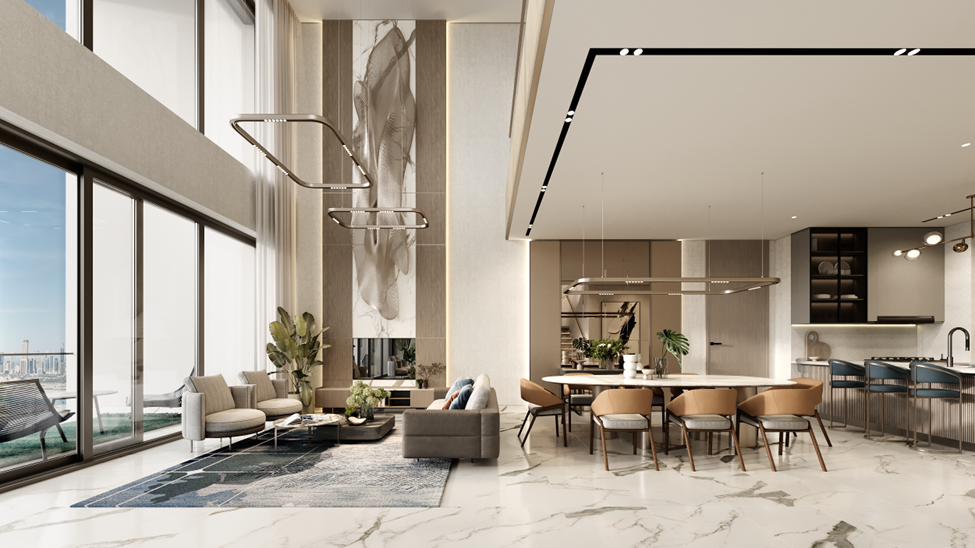
At the MANSORY Residences, we reinterpreted the precision of automotive craftsmanship within a refined residential setting. A custom chaise-like sofa, with a contoured profile inspired by grand tourer seating, anchors the living space with sculptural presence and everyday comfort. The surrounding joinery layers charcoal and graphite tones with cognac leather inlays and brushed metal detailing, balancing strength with warmth. Concealed coves and integrated lighting introduce a soft, ambient glow reminiscent of a luxury dashboard. The result is a composed, immersive environment where bold design is thoughtfully softened for daily living.
How do you balance aesthetic boldness with comfort and emotional resonance, especially in private residential spaces?
Residential design is uniquely distinctive and requires particular care because we are shaping spaces where people live, and rest. For me, bold design is always in service of the people who inhabit a space. Every material, texture, and detail is considered should be more than a visual impact and should focus on how it affects mood and daily life. We firmly believe that a striking feature is only meaningful if it makes the space feel welcoming and emotionally supportive.
We start by understanding how people interact, and experience their homes, then integrate statement elements with restrained palettes, tactile finishes, and bespoke detailing. The goal is to ensure that every home feels personal, which is bold yet restorative.
In an age of fast aesthetic trends, how do you resist momentary visual noise and maintain integrity in your designs?
Maintaining design integrity begins with a clear vision and a deep understanding of each project’s context. We ensure that every decision aligns with the story and purpose of the space, rather than short-lived trends. Moreover, we treat design as a living dialogue between people and their environment.
For example, in the MANSORY Residences by Amaal, Opaal focused on automotive-inspired luxury elements that deliver a consistent, sensory-rich experience throughout the space. The interiors combine bespoke materials, precise detailing, and a thoughtful layout that elevates the concept without resorting to superficial visual effects.
This approach is reinforced by wider industry behaviour where more than 55 per cent of interior designers report that minimalistic and purposeful design is increasingly popular among clients, reflecting a preference for authenticity and longevity over short‑lived trend cycles.
Your recent partnerships, like with MANSORY Residences by Amaal, blend iconic brand identities, how do you approach co-design with global lifestyle brands?
Collaborating with global lifestyle brands requires respecting the brand’s identity while translating it into a tangible, human-centered environment. For MANSORY Residences, our approach began with understanding the brand’s automotive-inspired luxury ethos and the expectations of its residents. We then translated those values into the interiors through bespoke materials, tailored detailing, and spatial planning that reflects both the brand and the lived experience of occupants. We are working closely with the brand, the developer, and other stakeholders to ensure that we meet their standards while keeping our timeless elegance and design elements.
By Mohamed Salah Seguen, CEO, Access Consult | Group CEO, Excellence Consortium
Across the GCC, the definition of project success has fundamentally shifted. Clients no longer evaluate performance solely through architectural expression or engineering precision. They assess speed to market, approval certainty, execution readiness, sustainability alignment, and cost predictability. In markets shaped by the Dubai 2040 Urban Master Plan, Saudi Arabia’s Vision 2030, and nationwide smart city initiatives, complexity has increased while tolerance for inefficiency has declined. In this environment, multidisciplinary collaboration has moved from a best practice to a structural necessity.
For decades, construction projects followed a fragmented sequence. Architects developed concepts, engineers refined systems, contractors priced and executed, and supervision teams monitored progress. Each discipline operated within its own perimeter, often leading to misalignment, redesign, delays, and disputes. The region’s current growth trajectory no longer supports that model. What is emerging instead is a connected delivery system built on integrated project delivery principles, where architecture, engineering, project management, and construction consultancy operate within one coordinated framework from inception to handover.
From silos to integrated delivery systems
This shift represents more than organizational restructuring. It reflects a transition from siloed thinking to a project-first mentality. Multidisciplinary teams are formed at the earliest stage, aligning objectives around collective project outcomes rather than individual scope boundaries. Early contractor involvement enhances constructability during design development, allowing concurrent workflows instead of sequential ones. Owners participate more actively in decision-making, reducing bottlenecks that traditionally stall progress. Risk and reward structures increasingly encourage collaboration rather than adversarial positioning.
Technology has enabled this transformation, but does not replace governance. Building Information Modeling is rapidly becoming standard practice, with industry forecasts indicating that by 2026, nearly 65% of projects will rely on BIM as their primary coordination environment. However, BIM alone does not guarantee integration. It must operate within structured digital design management platforms that enforce version control, approval workflows, and real-time coordination protocols. When properly governed, this environment becomes a single source of truth that connects all disciplines and reduces duplication.

Measurable impact through digital integration
The measurable impact of digital integration is increasingly evident. Projects delivered through structured multidisciplinary coordination frequently achieve 20% to 50% reductions in design development and authority approval lead times. Construction timelines improve by 20% to 30% when coordination cycles are shortened and decision pathways are clarified. These gains are not the result of faster drafting. They stem from removing systemic friction between disciplines.
Digital twin technology is further strengthening this ecosystem. During construction, a digital twin synchronizes on-site activities with virtual models, allowing early clash detection, live progress tracking, and predictive risk analysis. When integrated with drone mapping, RFID material tracking, and automated dashboards, deviations from schedule or specification become visible immediately. Global studies on Industry 4.0 technologies show reductions of up to 30% in labour productivity losses and measurable declines in downtime when digital twins are embedded into operations. In the UAE, where the construction market is projected to approach $96 billion by 2030, such efficiencies are no longer optional. They define competitive positioning.
An example of this approach is Guzel Towers in Jumeirah Village Triangle. The project involved complex high-rise residential coordination, mixed-use podium integration, and strict authority compliance within compressed timelines. Through BIM-led collaboration and unified technical governance, design issues were resolved earlier, façade intent remained intact, and construction sequencing aligned closely with execution on site, enabling faster delivery with stronger certainty.
Trends Shaping Architecture, Consultancy, and Delivery
Approval Readiness: Authorities expect submissions that demonstrate coordinated systems, code compliance, and execution feasibility from the outset. Projects that treat regulatory approval as a parallel strategic track rather than a final checkpoint secure faster clearance and stronger stakeholder confidence. Execution-aware design has therefore become a competitive differentiator. Drawings are no longer judged solely by aesthetic merit but by their constructability, clarity, and alignment with site realities.

BIM maturity and digital governance have become baseline expectations. Developers and government entities increasingly require structured reporting environments, data transparency, and auditable workflows. Automated quality assurance templates now allow site managers to generate standardized reports instantly, enabling all stakeholders to review progress and identify emerging issues. This level of transparency improves accountability and shortens corrective action cycles.
Accelerated time-to-market remains a central pressure across regional real estate development. With 390,000 residential units projected across the UAE between 2026 and 2030, delivery models must scale without proportionally increasing risk exposure. Integrated team structures support parallel processing, modular construction strategies, and industrialized fabrication methods that compress schedules while preserving quality.
Developers and government entities increasingly require structured reporting environments, data transparency, and auditable workflows. Automated quality assurance templates now allow site managers to generate standardized reports instantly, enabling all stakeholders to review progress and identify emerging issues. This level of transparency improves accountability and shortens corrective action cycles.
The evolving role of the consultant
Rather than operating solely as designers or supervisors, consultancies increasingly function as orchestrators of complex ecosystems. They align architecture, engineering, regulatory pathways, digital governance, and execution strategy within one managed framework. This orchestrator model enhances proactive risk mitigation, identifying potential geotechnical, supply chain, or compliance challenges before they escalate into financial or schedule impacts.
In today’s high-velocity environment, multidisciplinary collaboration is the operational backbone of resilient project delivery. When architecture, engineering, digital coordination, and construction consultancy operate as a unified system, projects achieve faster approvals, clearer accountability, and stronger execution outcomes. That alignment defines the consultancy model of the future and ensures that regional development ambitions are delivered with both speed and certainty.
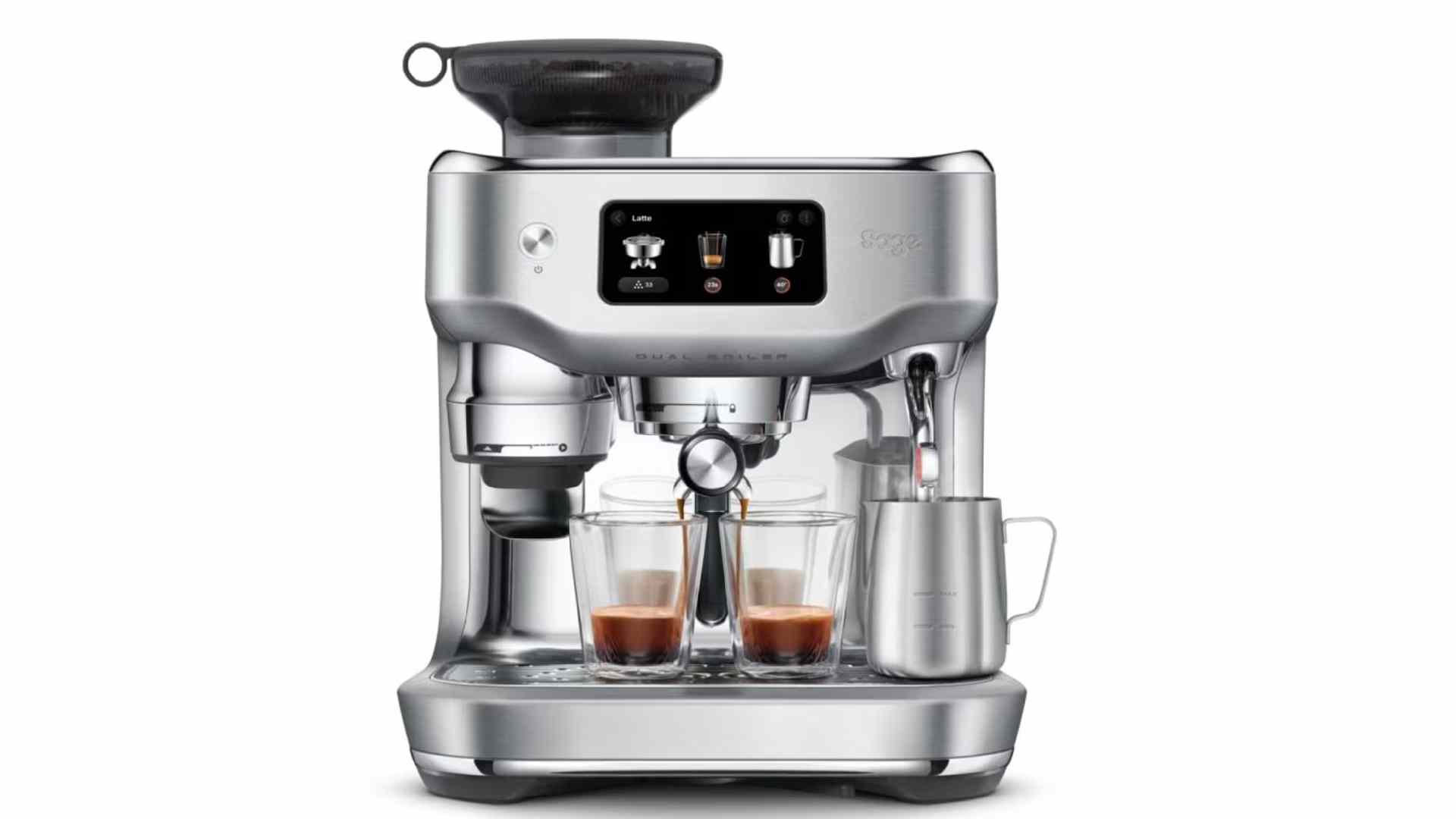
This Eid, Sage Appliances elevates gifting with high-performance coffee machines that combine precision, innovation, and refined design. Created for home hosts and coffee enthusiasts alike, each machine delivers barista-level results with ease, making it a gift that’s enjoyed well beyond the festive season.
Engineered around true duality, this machine empowers coffee lovers to seamlessly switch between intelligent automation and full manual control. Whether you prefer the ease of an automated workflow or the satisfaction of hands-on espresso craftsmanship, the Dual Boiler adapts to your style, delivering uncompromising performance, precision and flexibility in every cup.
Sage Barista Touch Impress Brass
Available in a striking limited-edition brass colourway, with limited stock available, this statement machine brings refined design to the forefront of the home coffee experience. The Barista Touch Impress blends intuitive automation with the freedom of hands-on control, making it effortless to craft café-quality favourites like flat whites, cappuccinos, and lattes with confidence and style.
This sleek, state-of-the-art machine delivers café-quality results with complete versatility from delicate pour-overs and bold filter coffee to smooth, flavour-rich cold brews. Featuring adjustable brew styles, temperature control and intuitive settings, it empowers users to take full control of their coffee, hot or cold.
Special Ramadan offer
Sage Appliance Accessories
For those who already own a Sage machine, accessories make a thoughtful gift this Eid, designed to enhance everyday use.
An automatically activated suction cup creates a rapid vacuum which quietly releases the espresso coffee puck from the portafilter in one swift action.
Thespring-loaded mechanism delivers consistent pressure between 7 kg and 10 kg, ensuring an even tamp every time. A variableforce gauge with marked indicators allows you to select your preferred tamp pressure to suit the grind. Available in 54 mm and 58 mm sizes.
The 2-in-1 distribution tool helps break up clumps and evenly spread coffee grounds. With three angled blades, it creates a level surface for consistent and precise tamping. Available in 54 mm and 58 mm.
Visually diagnose and troubleshoot your extraction to achieve the perfect pour every time with The Naked Porterfilter. Crafted from stainless steel with a walnut handle, it adds an elegant touch to your espresso setup while allowing you to monitor flow and consistency with precision. Available in both 54mm and 58mm sizes.
Handleless design and heat-resistant silicone sleeve gives full control, with a pro spout to create more precise latte art. Angled opening provides a better view when steaming milk.
Home Integrator
FROM COMPLIANCE TO COMPETITIVE EDGE: WHY DIGITAL RECORD-KEEPING IS A BUSINESS IMPERATIVE

By Ibrahim Imam, CEO and Co-founder of PlanRadar
Exploring how structured, searchable documentation is becoming a strategic advantage across industries—from legal audits to ESG reporting and C-suite decision-making.
In an increasingly regulated and fast-paced global economy, record-keeping has evolved from an administrative chore into a strategic pillar of operational resilience. Businesses across sectors are beginning to realize that digital documentation is not just about compliance; it’s about gaining a competitive edge.
From construction sites in the GCC to corporate boardrooms in Europe, the ability to capture, organize, and retrieve information quickly and accurately is driving more efficient audits, mitigating legal risks, enabling real-time ESG reporting, and enhancing stakeholder transparency. As digital-first approaches become the norm, companies lagging in structured record-keeping may find themselves exposed to unnecessary risks and lost opportunities.
The Compliance Foundation
Compliance remains the entry point for many organizations transitioning to digital record-keeping. Regulations such as ISO 9001 (quality management), ISO 45001 (occupational health and safety), and ISO 14001 (environmental management) require traceable documentation for audits and certifications. In the GCC, governments are reinforcing digital compliance standards through initiatives like Dubai Municipality’s Building Information Modelling (BIM) mandates and Saudi Arabia’s Vision 2030 digital transformation agenda.
Failure to maintain proper records can have significant consequences. A 2022 report by Deloitte found that companies without digitized compliance systems faced audit costs 30% higher on average compared to their digitized counterparts. Moreover, when documentation is scattered across emails, PDFs, and paper files, the risk of non-compliance escalates.
Legal Preparedness: Your Digital Audit Trail
Digital documentation also plays a pivotal role in legal defence. Whether it’s a dispute over construction delays, labour claims, or contractual obligations, having a time-stamped, tamper-proof digital trail can make or break a case.
According to a 2023 McKinsey analysis, organizations with centralized digital documentation systems reduced their legal exposure by up to 40%. Platforms like PlanRadar, which automatically log task changes, photos, comments, and approvals in real time, offer an auditable history of activity that reduces ambiguity and supports legal accountability.
The ESG Imperative: Transparency through Data
With Environmental, Social, and Governance (ESG) reporting becoming a global standard, businesses are under pressure to provide verifiable documentation of their sustainability practices. Investors, regulators, and customers alike demand transparency.
A 2023 PwC Global Investor Survey revealed that 79% of investors consider ESG reporting critical to investment decisions, yet 61% express concerns about data reliability. Digital documentation tools help address this gap by enabling real-time data capture for carbon emissions, energy usage, labour conditions, and waste management.
In construction and real estate, digital platforms streamline ESG tracking by integrating documentation workflows—such as material certifications, safety inspections, and water usage logs—into everyday site activity. This not only improves reporting quality but also reduces manual effort and errors.
Boardroom Clarity: Data-Driven Governance
For senior executives and board members, access to real-time, structured information is essential to sound decision-making. Static spreadsheets and outdated reports hinder visibility and strategic responsiveness.
A 2023 Gartner survey indicated that companies leveraging real-time data for board reporting experienced a 22% improvement in executive decision turnaround time. Digital documentation platforms ensure that decision-makers are not relying on anecdotal evidence or fragmented information but are guided by a clear, traceable information stream.
This is particularly valuable in sectors where delays, cost overruns, or safety breaches can have reputational and financial consequences. From investor calls to internal reviews, transparent reporting based on digital records strengthens governance and builds trust.
The Mobile Mindset: Why Stationary Workflows No Longer Work
Today’s workforce is no longer desk bound. From engineers on job sites to facility managers overseeing multiple locations, employees need access to information anytime, anywhere. Mobile-friendly digital documentation platforms are rapidly becoming essential.
In fact, a 2024 Statista report found that over 58% of enterprise software users expect mobile accessibility as a standard feature. Mobile documentation tools allow users to input data on the go, take geotagged photos, complete forms, and sync updates in real time. This reduces delays, eliminates transcription errors, and ensures data integrity.
In regions like the GCC, where large-scale projects span remote desert locations and multi-site developments, mobile documentation isn’t just a convenience—it’s a necessity.
Conclusion: A New Standard for Smart Businesses
Digital record-keeping has moved from a compliance requirement to a business essential. Whether it’s supporting legal defence, meeting ESG mandates, or empowering mobile teams, the ability to generate, manage, and search structured data is shaping the future of operational excellence.
Businesses that invest in reliable, secure, and mobile-enabled documentation platforms will gain more than regulatory peace of mind. They’ll gain agility, transparency, and a measurable advantage in an increasingly competitive market. In the race for innovation and trust, digital record-keeping is no longer optional—it’s a strategic imperative.

BALANCING INNOVATION AND TRUST IN THE FUTURE OF RETAIL TRADING PLATFORMS IN THE UAE
CELEBRATE MOTHER’S DAY & INTERNATIONAL WOMEN’S DAY WITH NEWBY TEAS

Vertiv announces Scalable, High-Capacity Double Stack Busway System that Preserves White Space for Growing AI Data Center Demands



-
News10 years ago
SENDQUICK (TALARIAX) INTRODUCES SQOOPE – THE BREAKTHROUGH IN MOBILE MESSAGING
-

 Tech News2 years ago
Denodo Bolsters Executive Team by Hiring Christophe Culine as its Chief Revenue Officer
-
 VAR11 months ago
Microsoft Launches New Surface Copilot+ PCs for Business
-

 Tech Interviews2 years ago
Navigating the Cybersecurity Landscape in Hybrid Work Environments
-

 Tech News8 months ago
Nothing Launches flagship Nothing Phone (3) and Headphone (1) in theme with the Iconic Museum of the Future in Dubai
-

 Automotive1 year ago
AGMC Launches the RIDDARA RD6 High Performance Fully Electric 4×4 Pickup
-

 VAR2 years ago
Samsung Galaxy Z Fold6 vs Google Pixel 9 Pro Fold: Clash Of The Folding Phenoms
-

 Tech News2 years ago
Brighton College Abu Dhabi and Brighton College Al Ain Donate 954 IT Devices in Support of ‘Donate Your Own Device’ Campaign