
 Have a question? +971 56 404 0503




Tech Features
WOMEN LEADING THE CHARGE IN 2026


Across the technology landscape, women continue to shape innovation with resilience, curiosity, and vision. Their diverse perspectives—shaped by unique journeys, challenges, and triumphs, remind us that progress in tech is driven not only by expertise, but by the voices that dare to redefine what’s possible. This collection of insights amplifies those voices, celebrating the power of women who lead, inspire, and transform the future of technology.
International Women’s Day Comments

Sumaiya Muhammad, Sr. Marketing Specialist at Alteryx –
“My professional journey has evolved across hardware, software, telecom, and now data automation at Alteryx. Working across these domains has strengthened my adaptability and deepened my understanding of how data drives real business value. According to Alteryx research, 48% of leaders plan to increase spending on AI infrastructure and tools, signalling how rapidly enterprise priorities are shifting and how significant it is for women to build confidence in data and AI. A challenge I have consistently faced is navigating constant change in an industry where innovation cycles move quickly. I have realised that continuous learning and investing in upskilling is crucial in this industry.
This International Women’s Day, I encourage aspiring women professionals to step forward boldly and actively shape the future of technology.”
Merhan Gaballah, Construction Technology & PropTech Consultant at PlanRadar –

Throughout my career in construction technology and PropTech, my journey has evolved from commercial roles into strategic advisory positions supporting digital transformation across the GCC.
One of the key challenges has been building credibility in traditionally male-dominated environments, where technical leadership is often predefined. Overcoming this required resilience, preparation, and consistently delivering measurable impact.
Today, I see strong momentum for women in tech. Digital transformation is redefining leadership, placing greater value on collaboration, adaptability, and data-driven thinking—areas where diverse perspectives are essential.
On International Women’s Day, I hope we move beyond recognition toward sustained inclusion, where women are not highlighted as exceptions, but empowered as equal contributors shaping the future of technology.
Alexandra Gartrell, VP and EMEA Legal Lead at Cloudera –

“This year’s International Women’s Day theme, Give to Gain, is a reminder that investing in women’s advancement at work delivers returns for everyone. Diverse teams broaden talent pipelines, improve decision-making, and build workplaces where people are more engaged and more likely to stay.
AI systems inherit the assumptions of the environments that build them. When development teams skew toward a single demographic, bias doesn’t only show up in datasets. It can also appear in which problems are prioritised, how success is defined, which edge cases are tested, and what risks are accepted. In the agentic era, autonomy raises the stakes: small weaknesses in data, design, or oversight can be amplified once decisions are made at scale.
As AI becomes embedded across core business functions, coding ability is no longer the sole marker of technical contribution. Engineers need business acumen, communication skills, and the ability to collaborate across functions because responsible AI depends on context and judgment, not just models.
True inclusion means having diverse voices shape product direction and decision rights and not just representation in organisational charts. Practically, this means auditing datasets for representation gaps, testing models for unequal outcomes, stress-testing edge cases, and involving a diverse panel of human reviewers throughout the AI lifecycle.
According to Cloudera’s WLIT 2025 report, 91% of women leaders in the Middle East remain optimistic that gender equality in AI leadership will improve within five years. When women are given resources, opportunities, and authority in AI development, organisations gain better AI systems that work for everyone. In the agentic era, diversity in leadership and oversight should be treated as part of AI risk management.
Organizations that formalize cross-functional approaches, create transition pathways, and recognize emotional intelligence as a technical capability will build better AI and advance gender equity.”
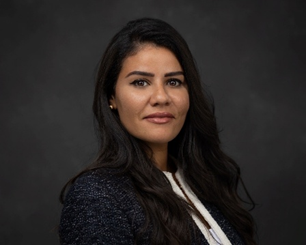
Fatma Al Naggar, Senior Relationship Manager, Saxo Bank MENA –
“In times of uncertainty, women have consistently proven to be natural problem-solvers and stabilisers, leading their homes, workplaces, and communities with empathy, adaptability, and a profound sense of responsibility.
While women naturally take on the role of emotional anchors due to their deep attunement to the needs of others, it is crucial that providing this support never comes at the expense of their own well-being. Sustainable resilience requires setting boundaries, prioritizing self-care, and establishing personal rituals that help maintain a positive mindset and focus on what can be controlled amidst the external noise of today’s fast-paced digital world.
As women progress in their careers and redefine leadership across industries, they are bringing a more collaborative, empathetic, and purpose-driven approach that prioritizes transparency and inclusivity over traditional authority. In highly competitive fields, particularly male-dominated sectors like finance and technology, technical expertise may open doors, but it is the mastery of soft skills such as emotional intelligence, relationship building, and strategic thinking that sustains advancement and leadership credibility.
Furthermore, living and working in a multicultural environment like the UAE significantly amplifies this professional growth. The country’s strong emphasis on safety, opportunity, and diversity provides an unparalleled space where women from all backgrounds can pursue their ambitions with confidence, learn from diverse perspectives, and foster inclusive, globally minded innovation.
Yet, achieving true gender equity demands ongoing progress to ensure equal access to leadership roles, mentorship, and career development, while continually challenging outdated perceptions about women’s roles. An ideal workplace must actively promote equality, respect, equal pay, and flexible work options, empowering every woman to reach her full potential.
On this International Women’s Day, my message to all women, especially young girls carving their own paths, is to believe in your abilities, embrace curiosity, and never hesitate to pursue challenging opportunities. By recognizing our inherent strength, owning our expertise with authenticity, and leading with resilience, we can collectively shape a more inclusive and high-performing future for our communities and industries.”
Laura Heisman, CMO, Dynatrace –

The rise of AI isn’t just a call for women to adapt, it’s an opportunity for women to lead. With an estimated 85% of the jobs that will exist in 2030 yet to be created, AI is not only reshaping roles, but entire career journeys. Traditional paths are breaking down, opening doors for women to step into emerging opportunities – and redefining what’s possible for soon-to-be graduates and school-aged girls alike.
This is our moment to help define the future of work and pave the way for generations to come. But progress isn’t automatic. Without intentional action and human connection, women risk being sidelined in this transformation. Learning, experimenting, and getting comfortable with AI isn’t optional. It’s how we remain active participants in shaping what comes next.
The future will be shaped by what and who we invest in today. When we support women and future generations through mentorship, intentional recruiting, training, and shared learning, we don’t just advance opportunity – we build better technology, stronger businesses, and a more inclusive future. It starts with choosing to learn, experiment, and grow with AI. That is the spirit of this year’s International Women’s Day focus, where we “give to gain.”
Tech Features
SUPPORTING EMPLOYEES ABROAD OR RELOCATING AMID REGIONAL TENSIONS: A STRATEGIC ADVISORY FOR ORGANISATIONS


By Gillan McNay, Security Director Assistance – Middle East, International SOS
Periods of regional tension place organisations under intense pressure to protect their people while sustaining operations. For UAE‑based companies with employees working from abroad, traveling frequently, or facing potential relocation, uncertainty can escalate quickly. Routes change, borders tighten, information moves faster than it can be verified, and employees look to their organisation for clarity and reassurance. In this environment, support must be strategic, deliberate, and people‑first.
Shift From Reaction to Preparedness
The most resilient organisations are those that move beyond reacting to events and instead operate with a preparedness mindset. This starts with acknowledging that uncertainty is not an exception but a condition organisations must continuously manage. Strategy, therefore, should anticipate disruption and define how the organisation will respond before decisions are forced by urgency.
Preparedness does not mean planning for every possible outcome. It means establishing decision frameworks that allow leaders to act confidently as conditions evolve, whether that results in continued remote work, relocation to a safe haven, or shelter‑in‑place with enhanced support.
Establish Workforce Visibility as a Strategic Capability
Supporting employees abroad begins with accurate, real‑time visibility. Leaders must know where their people are, their travel status, and whether they are working remotely, stationed overseas, or in transit with dependents. Visibility should extend beyond employees to include contractors and accompanying family members where duty‑of‑care obligations apply.
This visibility is strategic because it underpins all subsequent decisions. Without it, organisations risk delayed responses, fragmented communication, and uneven support. With it, they can act proportionately, supporting those most exposed while avoiding unnecessary disruption for others.
Differentiate Between Relocation, Evacuation, and Stability
One of the most common strategic mistakes during regional tensions is treating all movement decisions as evacuations. In reality, organisations need three clearly defined postures:
- Stability: Supporting employees to remain where they are with guidance, wellbeing checks, and secure working arrangements.
- Relocation: Moving employees to a safer location, often within the region, as a preventive measure.
- Evacuation: Executing time‑bound movement out of an area due to elevated risk.
Clear definitions allow leaders to choose the least disruptive option that still protects people. Often, relocation or stability with structured support is safer and more sustainable than rapid evacuation.
Prepare Employees Before Movement Is Required
Relocation becomes significantly smoother when employees are prepared before they are asked to move. Strategy should include guidance on documentation readiness, passport validity, visa requirements for neighbouring countries, preferred relocation countries and expectations around timelines and flexibility.
Employees working abroad need to understand not only what may happen, but how decisions will be made. When organisations explain decision triggers, what would prompt relocation, what would not, employees feel informed rather than anxious. This transparency builds trust and reduces panic-driven movement.
Integrate the Human Dimension into Planning
Strategic support must address the human impact of uncertainty. Employees working from abroad or facing relocation are often balancing professional obligations with family concerns, schooling, medical needs, and other emotional strains. Ignoring these factors weakens any relocation or stability strategy.
Effective organisations integrate wellbeing considerations into operational plans. This includes access to medical advice, continuity of prescriptions, support for family travel, and regular wellbeing check‑ins. Leaders should be attuned to signs of fatigue or anxiety and equip managers with guidance to support teams compassionately and consistently.
Communicate With Discipline and Predictability
In uncertain times, communication is as important as movement planning. Strategy should define how, when, and by whom information is shared. Centralised, fact‑based updates delivered at a predictable cadence reduce speculation and rumor.
Employees should know where official updates will come from and which sources to trust. Communications do not need to be frequent to be effective; they need to be consistent, clear, and grounded in verified information. Saying “there is no update yet” is often more reassuring than silence.
Support Employees Who Must Remain Abroad
Not all employees can or should relocate. Many will continue working from abroad in environments affected by regional tension. Supporting these employees strategically means ensuring they have guidance on local conditions, access to support services, and clearly defined expectations around work, availability, and safety.
Stability should be treated as an active posture, not inaction. Regular check‑ins, updated guidance, and contingency planning signal to employees that their situation is being managed deliberately, not overlooked.
Plan for Relocation as a Managed Process
When relocation is required and viable, it should be executed as a controlled, end‑to‑end process. This includes manifesting all individuals, front‑loading documentation checks, coordinating transport and accommodation, and communicating each step of the journey.
Strategically, leaders must also consider what comes after relocation: access to work, schooling for children, healthcare, and communication continuity. Relocation is not just movement; it is a temporary operating model that must be sustainable.
Learn, Adapt, and Strengthen
Each period of disruption provides insight into what worked and what did not. Strategic organisations capture these lessons and feed them back into planning. This may involve refining decision thresholds, improving data accuracy, or strengthening manager training.
Preparedness evolves as operating environments change, and organisations that invest in continuous improvement are better positioned to protect both their people and their business.
A Strategy Built on Trust and Clarity
Ultimately, supporting employees abroad or relocating amid regional tensions is a test of organisational maturity. Clear visibility, disciplined planning, transparent communication, and genuine care form the foundation of resilience. When organisations operate from these principles, employees feel supported rather than vulnerable, and leaders can make decisions with confidence rather than urgency.

By Dr. Craig Cook, CEO, The Brain & Performance Centre, A DP World Company
Healthcare is entering one of the most transformative periods in its history. Artificial intelligence is accelerating diagnostics, enhancing imaging, and enabling more personalised treatment pathways than ever before. These advancements are no longer theoretical, they are already shaping how care is delivered across leading medical systems.
However, as the industry moves forward at pace, there is a risk of focusing too heavily on what technology can do, and not enough on what individuals actually need.
At its core, healthcare is not a technical transaction. It is a human experience. Within that experience, trust, communication and empathy are not optional, they are fundamental.
Strong human interaction between clinicians and clients remains one of the most important factors in delivering safe and effective care. Technology can identify patterns, process data and support decision-making, but it cannot replace the reassurance an individual feels when they are heard, understood and taken seriously. That interaction often determines whether someone follows through with treatment, shares critical information, or seeks support early rather than late.
From a safety perspective, this is critical. Individuals who feel comfortable with their clinician are far more likely to communicate openly about symptoms, concerns and uncertainties. They ask more questions, clarify instructions, and engage more actively in their own care. This level of engagement reduces the likelihood of miscommunication, improves adherence to treatment plans, and ultimately leads to better outcomes.
In contrast, when the human element is diminished, even the most advanced systems can fall short. An individual may receive accurate data but still leave uncertain about what it means. They may hesitate to disclose something important, or disengage entirely. No algorithm can compensate for that gap.
This is why meaningful communication must remain at the centre of healthcare delivery. It is not simply about explaining a diagnosis. It is about creating an environment where individuals feel safe to speak, where their concerns are acknowledged, and where complex information is translated into something clear and actionable.
As artificial intelligence continues to evolve, the role of the clinician will not diminish, it will become more important. Technology should reduce administrative burden, enhance precision, and create time. That time should be reinvested into the client relationship through greater clarity, deeper understanding and more considered care.
At The Brain & Performance Centre, A DP World Company, this balance is central to how we approach care. Advanced technologies play a critical role in our assessments and programmes, but they are always applied within a human-led framework. Every programme is personalised, every interaction is intentional, and every client journey is built on understanding the individual, not just the data.
The future of healthcare will undoubtedly be shaped by innovation. But its success will not be defined by how advanced the technology becomes. It will be defined by whether we use that technology to strengthen, rather than replace, the human connection at the centre of care. Because ultimately, the most powerful tool in healthcare is not artificial intelligence. It is trust.

Across the GCC, national development agendas increasingly position artificial intelligence as a cornerstone of economic diversification. Saudi Arabia’s Vision 2030, the UAE’s National AI Strategy 2031, and Qatar’s national innovation roadmap all highlight AI as a critical driver of future growth. According to McKinsey, AI adoption has already reached around 84 percent among organisations in the GCC, with the technology projected to generate up to $320 billion in economic value for the Middle East by 2030. As adoption accelerates across industries, regulatory compliance is becoming a key factor that determines whether AI initiatives move beyond ambition to achieve sustainable scale.
Shaffra, an AI research and applications company building autonomous AI teams for enterprises and governments, sees six clear shifts reshaping how companies operate.1. Regulation is accelerating adoption in high-stakes sectors
Government entities, financial services, telecom, aviation, and large semi-government organisations are moving fastest. These sectors operate at scale, face strict efficiency mandates, and function under constant regulatory oversight. Healthcare and energy are advancing more cautiously due to safety and data sensitivity. In many cases, the more regulated the industry, the faster AI deployment progresses. However, rapid scaling also exposes governance weaknesses, particularly where documentation, ownership, and oversight mechanisms are underdeveloped.
2. Compliance is prerequisite for scale
Over the past year, 88% of Middle East CEOs have reported generative AI uptake. Today, organisations increasingly require audit trails, explainability, clear data lineage and residency controls, defined performance thresholds, and enforceable human oversight mechanisms. With one in four Middle East consumers citing privacy as a primary concern, compliance is being treated as a post-deployment validation exercise; it is a structural requirement for scaling AI responsibly.
3. Sovereign AI and data residency are shaping architecture
AI governance in the GCC is being influenced less by standalone AI laws and more by data protection and cybersecurity frameworks. The UAE’s federal data protection law, Saudi Arabia’s PDPL under SDAIA, and Oman’s PDPL reinforce lawful processing and cross-border controls. In highly regulated sectors such as banking, healthcare, energy, and telecommunications, data residency and local control over models are strategic imperatives. Sovereign AI is evolving from a policy ambition into an operational requirement affecting infrastructure, vendor selection, and system design.
4. Human accountability is being reasserted
When organisations deploy AI without defining who owns the decision, when human escalation is required, and what the system is permitted or restricted from doing, they create either over-reliance or under-utilisation. Without clearly defined ownership and documented review controls, accountability weakens and regulatory exposure increases.
For instance, DIFC reinforces responsible AI use in personal data processing. High-impact decisions involving legal standing, fraud, employment, healthcare guidance, or public sector determinations that affect citizens need to involve human oversight, while AI handles speed, consistency, and automation of repetitive tasks. High-impact decisions should involve accountable human oversight.
5. Governance maturity slows deployment activity
Many organisations are AI-active but still developing governance maturity. Common governance gaps are structural rather than technical. Multiple pilots often run in parallel, tool adoption is fragmented, and accountability is split across IT, legal, risk, and business functions. Growing enterprises often lack a central AI governance owner, a comprehensive use-case inventory, consistent vendor and model risk assessment, and formal escalation protocols. Policies may exist at the board level, yet it is not consistently embedded into day-to-day operations. Addressing this gap requires governance to be built into workflows from the outset.
6. Continuous auditing is discipline
Studies indicate that a majority of ML models degrade over time, through model drift, hidden bias, or misuse vulnerabilities. Initial audits frequently reveal undocumented use cases, weak access segmentation, insufficient logging, and unclear review protocols. Effective governance requires compliance with international and local data residency rules, structured risk tiering, data lineage validation, access controls, bias testing, performance benchmarking, and defined incident response procedures. High-impact systems warrant quarterly reviews supported by continuous monitoring, while lower-risk applications still require periodic reassessment. Governance is increasingly measured through evidence rather than policy statements. Boards are asking for dashboards, logs, and audit artefacts — not policy PDFs.
Governance is being considered as part of AI infrastructure. Compliance frameworks are evolving into operational architecture embedded within systems, workflows, and accountability models. The organisations that will lead in the GCC are those that design governance at the same time they design capability, ensuring AI scales with discipline rather than risk.

MAXION REPORTS 399% USER GROWTH AMID RISING DEMAND FOR REAL-WORLD CONNECTION PLATFORMS
SOBHA REALTY’S CREST GRANDE RECEIVES BUILDING COMPLETION CERTIFICATE; HANDOVER TO COMMENCE WITHIN RERA TIMELINE
ICONIC RESIDENCES REACHES KEY CONSTRUCTION MILESTONES, MERED HIGHLIGHTS MARKET CONFIDENCE



-
News10 years ago
SENDQUICK (TALARIAX) INTRODUCES SQOOPE – THE BREAKTHROUGH IN MOBILE MESSAGING
-

 Tech News2 years ago
Denodo Bolsters Executive Team by Hiring Christophe Culine as its Chief Revenue Officer
-
 VAR12 months ago
Microsoft Launches New Surface Copilot+ PCs for Business
-

 Tech Interviews2 years ago
Navigating the Cybersecurity Landscape in Hybrid Work Environments
-

 Tech News8 months ago
Nothing Launches flagship Nothing Phone (3) and Headphone (1) in theme with the Iconic Museum of the Future in Dubai
-

 Trending5 months ago
OPPO A6 Pro 5G Review: Reliable Daily Driver
-

 Automotive1 year ago
AGMC Launches the RIDDARA RD6 High Performance Fully Electric 4×4 Pickup
-

 VAR2 years ago
Samsung Galaxy Z Fold6 vs Google Pixel 9 Pro Fold: Clash Of The Folding Phenoms