
 Have a question? +971 56 404 0503




Spotlight
HONOR Pad X9b Max Review: When a Tablet Starts Challenging Your Laptop

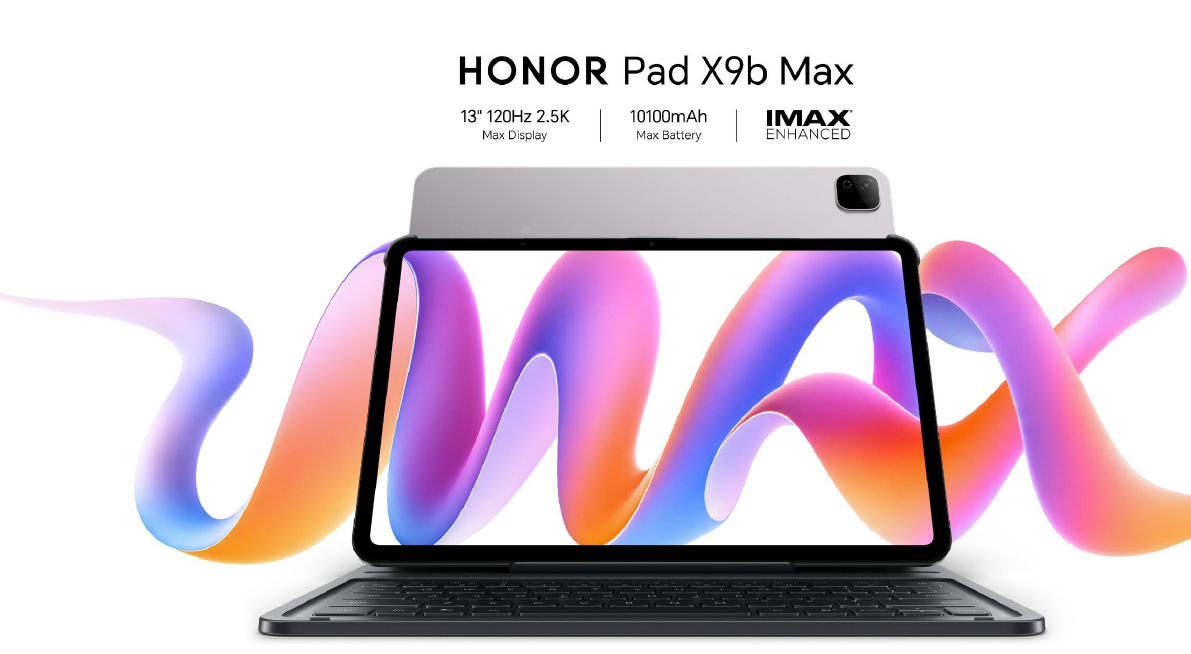

With a huge 13-inch display, a 10,100mAh battery and familiar Android productivity tools, HONOR’s Pad X9b Max makes a convincing case for going big, although its size brings compromises of its own.
BY Srijith KN, Senior Editor, Integrator Media
The HONOR Pad X9b Max makes its intentions clear almost immediately. With a 13-inch display, this is not a tablet designed primarily around compactness. It wants to give you enough screen to watch, browse, multitask and, increasingly, get some proper work done.
That became the most interesting part of my time with it.
Rather than approaching the Pad X9b Max purely as an entertainment device, I connected a Bluetooth keyboard and began using it for documents, browsing, ChatGPT and some of the everyday tasks I would normally reach for my laptop to handle.
The result is a tablet that gets surprisingly close to feeling like a lightweight workstation in the right circumstances, although whether you would actually leave the laptop behind is a slightly more complicated question.
A 13-inch display that makes a difference
The headline feature is undoubtedly that 13-inch LCD display.
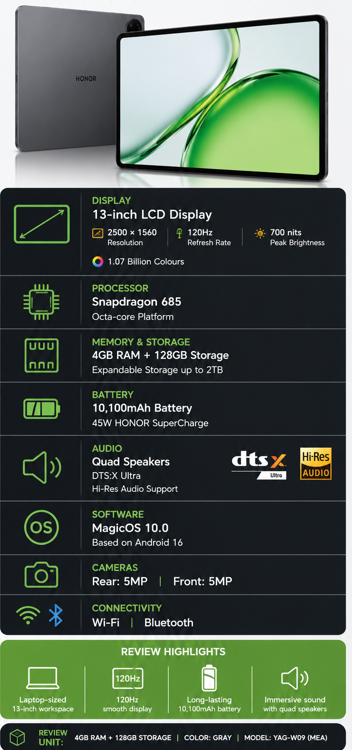
At 2500 × 1560 resolution and with a refresh rate of up to 120Hz, there is plenty of space here for websites, documents and video. But the more important point is simply how much larger everything feels when you start working on it.
I happened to have a Huawei MatePad 11.5 alongside the HONOR during testing, and putting the two next to each other made the difference immediately apparent. The Huawei feels much more like a conventional portable tablet. The Pad X9b Max begins moving into laptop territory.
Documents have more room to breathe, websites feel less constrained and working with text is particularly pleasant. I noticed this while using ChatGPT, where longer conversations almost began to resemble working inside a document rather than interacting with a mobile application.
The 120Hz refresh rate also helps keep scrolling and general navigation fluid, while the large canvas makes multitasking considerably more attractive than it is on smaller tablets.
There is, however, an obvious trade-off.
A 13-inch tablet isn’t something I would choose specifically because I wanted the smallest device possible in my bag. The size that makes the X9b Max so appealing on a desk is also what makes smaller tablets easier to carry and use casually.
That’s the fundamental compromise here: I prefer the HONOR when I’m sitting down to work; I prefer the idea of a smaller tablet when I have to carry it.
Productivity becomes part of the proposition
Pair the Pad X9b Max with a keyboard and the large display begins making considerably more sense.
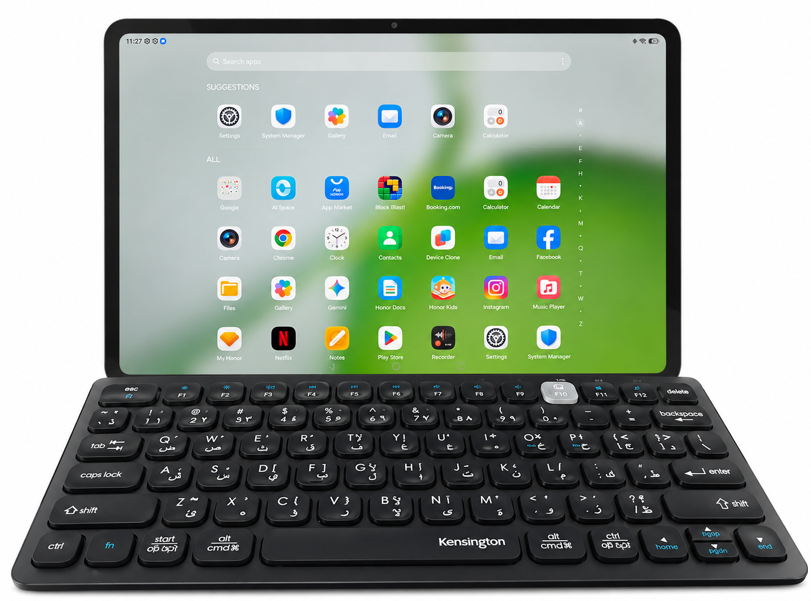
I used a Kensington Bluetooth keyboard during testing, and the combination worked well for writing, browsing and moving between applications. Microsoft Word introduced its own subscription-related complications, but that’s more a reflection of Microsoft’s software model than a limitation of HONOR’s hardware.
The wider Android ecosystem is also important. With MagicOS and access to familiar Google applications, getting my usual collection of services onto the tablet was straightforward.
My review unit comes with 4GB of RAM and 128GB of storage, so this isn’t hardware I would position as a replacement for a high-performance notebook. But for everyday productivity — web applications, writing, email, research, media and lighter multitasking — the experience makes a convincing argument for using the tablet instead of reaching for a laptop every time.
Expandable storage also gives the X9b Max additional flexibility for users carrying large collections of documents or media.
Built for entertainment too
Of course, productivity is only half the appeal of having this much screen.
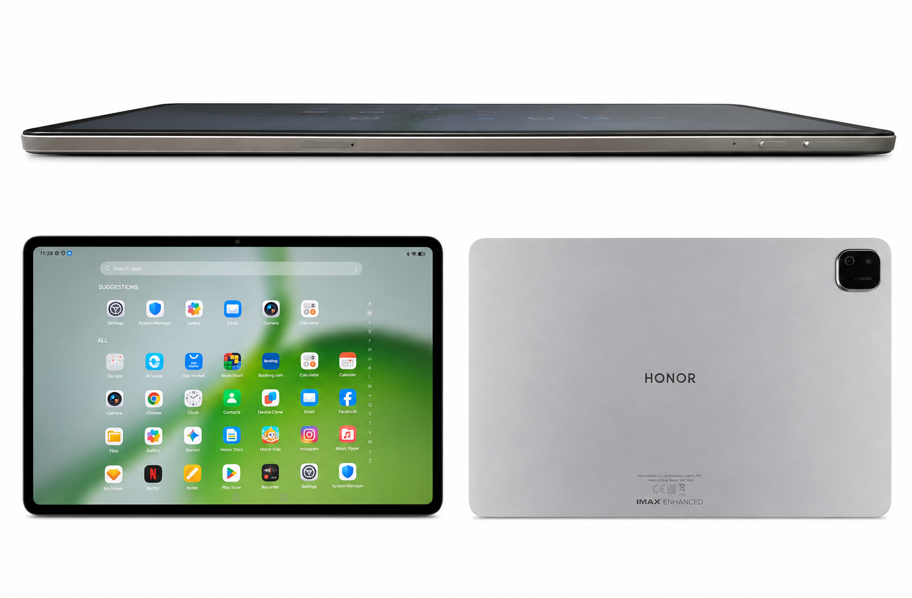
The Pad X9b Max’s size makes video one of its natural strengths. HONOR has paired the display with a quad-speaker system, DTS:X Ultra and IMAX Enhanced support, reinforcing the tablet’s entertainment credentials.
And this is where having 13 inches requires considerably less justification. Video simply benefits from the additional scale, whether you’re watching from a desk, sofa or bed.
It also means the Pad X9b Max can comfortably switch roles during the day: a document and browser screen while working, followed by a sizeable personal entertainment display once the keyboard goes away.
A battery built for the bigger canvas
Powering all of this is a 10,100mAh battery, paired with support for up to 45W HONOR SuperCharge.
The large capacity makes sense considering the size and resolution of the display. More importantly, battery life is critical for a tablet being positioned as both an entertainment device and a productivity companion. Having to constantly look for a charger would undermine much of the convenience of leaving a laptop behind.
We wouldn’t reproduce HONOR’s laboratory endurance claims as our own results here; for the VAR piece, the more relevant point is that HONOR has equipped its largest screen with an appropriately substantial battery.
Verdict
The HONOR Pad X9b Max succeeds because its 13-inch display isn’t merely a specification designed to look impressive on the box. It materially changes what the tablet is good at.
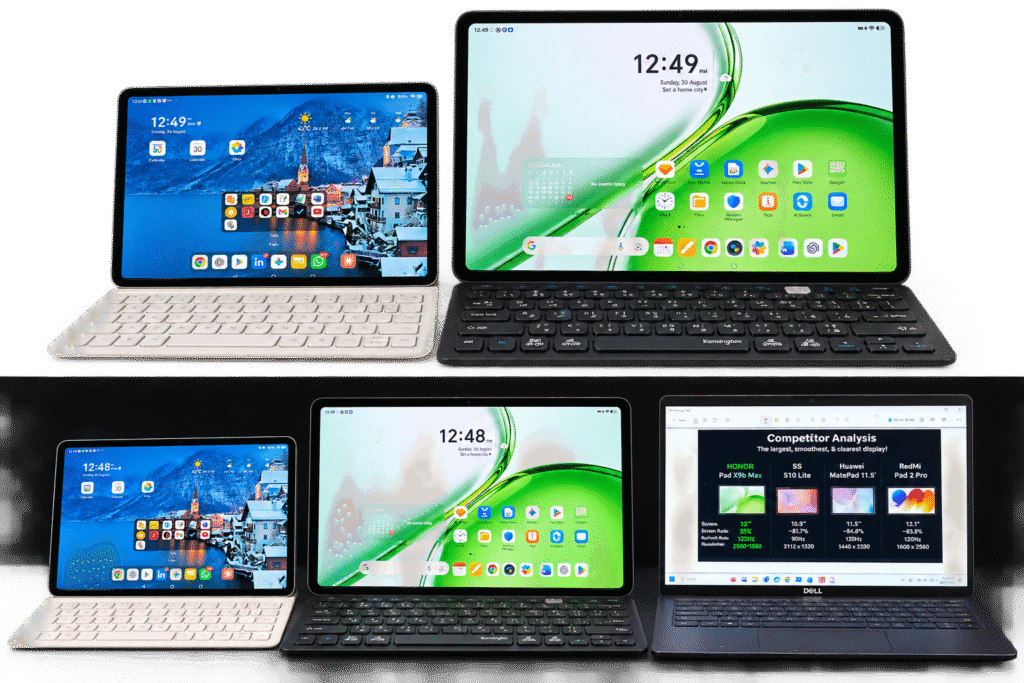
There is substantially more room for documents, browsing, multitasking and content, and adding a keyboard transforms it into a surprisingly useful desk-based productivity device.
But its greatest strength also creates its biggest compromise. At this size, the X9b Max isn’t as effortless to carry around as a smaller tablet, and once you add a keyboard, you inevitably start comparing the entire setup with taking a laptop instead.
That makes the Pad X9b Max particularly appealing for someone who wants one large-screen device capable of moving between work and entertainment, rather than someone whose priority is maximum portability.
It hasn’t made my Dell redundant.
But it has made me reach for it less often, and for a tablet this size, that’s probably the more meaningful achievement.












Enterprise AI has entered a new phase. The conversation is no longer centred on whether organisations should invest in artificial intelligence, but on how they can transform that investment into measurable business value.
By: Mohammed Hilili – General Manager, Lenovo Gulf

Across the GCC, enterprises are moving beyond experimentation. Pilot projects are giving way to enterprise-wide deployments as organisations seek to integrate AI into customer experiences, business operations, software development, cybersecurity and decision-making. Yet despite growing investment, many AI initiatives continue to struggle to deliver the outcomes leadership teams expect.
In my experience, the reason is rarely the technology itself. More often, organisations begin with the wrong conversation.
Too many AI discussions start with infrastructure specifications, GPU availability or the latest foundation models. These are undoubtedly important decisions, but they are not the first ones organisations should make.
The first question is much simpler.
What business problem are we trying to solve?
Without a clear answer, AI initiatives often remain isolated demonstrations of technical capability rather than platforms capable of delivering sustainable business value.
From AI Pilots to Enterprise Platforms
Across industries, organisations have spent the past two years experimenting with generative AI. Many have successfully launched departmental pilots that demonstrate what AI can achieve within a controlled environment. The greater challenge now lies in scaling those experiments across the enterprise.
That transition requires far more than additional computing power. It demands clear governance, high-quality data, well-defined business objectives and an architecture capable of supporting continuous growth. Successful AI adoption is increasingly becoming an organisational transformation exercise rather than simply another technology deployment.
Business Strategy Before Infrastructure
I recently worked with a leading regional financial institution looking to strengthen its research and development capabilities through AI. The ambition was clear, but many practical questions remained unanswered.
How much computing capacity would the organisation require? Which GPU architecture would support both current and future workloads? How could the environment remain scalable as AI adoption expanded across the business?
These may appear to be technology questions. In reality, they are strategic business decisions with long-term operational consequences.
Instead of beginning with hardware selection, we started by understanding the organisation’s objectives. Together with the leadership team, we assessed AI readiness, identified priority business outcomes and defined what success would look like before discussing infrastructure.
Only after establishing that foundation did we determine the appropriate compute resources, architectural approach and deployment model required to support long-term growth.
The result was not simply a successful implementation but an AI platform capable of evolving alongside the organisation’s ambitions.
AI Readiness Extends Beyond Technology
Many organisations still view AI readiness primarily through the lens of infrastructure. In reality, readiness begins much earlier.
Leadership alignment, data quality, governance frameworks, cybersecurity, skills development and measurable business outcomes all influence whether an AI initiative succeeds or stalls. Infrastructure remains essential, but it should support strategy rather than define it.
The organisations achieving the strongest results are those treating AI as a long-term business capability rather than a series of disconnected technology projects.
Building for a Hybrid AI Future
Enterprise AI environments are also becoming increasingly hybrid. Certain workloads will remain on-premises to address latency, compliance or data sovereignty requirements, while others will leverage the scalability of public cloud environments.
This makes architectural flexibility increasingly important. Organisations need infrastructure strategies capable of supporting multiple deployment models while allowing AI workloads to evolve alongside changing business priorities.
Selecting technology is therefore no longer simply about purchasing hardware. It is about building an adaptable foundation capable of supporting continuous innovation over many years.
The GCC Opportunity
The GCC is uniquely positioned to accelerate enterprise AI adoption. Governments across the region continue investing heavily in digital transformation, sovereign AI capabilities and next-generation cloud infrastructure while strengthening regulatory frameworks around data governance and cybersecurity.
These investments provide organisations with an increasingly mature environment in which to deploy AI at scale. However, long-term success will depend less on access to technology than on the ability to align AI investments with clear operational priorities and measurable business outcomes.
As AI becomes embedded within core enterprise operations, leadership decisions made today will determine competitive advantage for years to come.
Why Clarity Still Comes Before Compute
Technology will continue evolving at remarkable speed. New AI models, specialised processors and deployment approaches will continue reshaping the enterprise landscape.
What will remain constant is the importance of making the right decisions before investing.
At Lenovo, this philosophy shapes how we work with customers. We believe AI is not simply a product to deploy, but an organisational capability that develops over time. By combining advisory expertise with infrastructure, lifecycle services and long-term planning, organisations can reduce uncertainty, optimise investment and build AI platforms that continue creating value as business needs evolve.
The organisations that lead in the AI era will not necessarily be those with the largest AI budgets or the most powerful infrastructure. They will be those that begin with business clarity, build the right foundations and scale with purpose.
Because in enterprise AI, infrastructure enables transformation—but clarity makes it possible.

As Saudi Arabia moves AI from experimentation into large-scale deployment, Federico Pienovi, CEO APAC & MENA at Globant, explains why the Kingdom is emerging as a proving ground for agentic AI, AI-native business models and a new generation of connected experiences spanning sports, tourism, financial services and giga-projects.
Saudi Arabia is investing heavily in AI infrastructure and adoption. What is the Kingdom doing differently that could make it a global blueprint for moving AI from experimentation into large-scale business deployment?
What distinguishes Saudi Arabia’s approach is the alignment between national ambition and institutional execution. The Kingdom is embedding AI directly into the infrastructure of its giga-projects, financial institutions, and national sports ecosystems from day one. When you look at projects like Qiddiya, Red Sea Global, Diriyah, and New Murabba, these are greenfield developments where AI-native technology can be architected into the foundation rather than bolted on afterward.
Saudi Arabia is simultaneously transforming multiple sectors, tourism, sports, aviation, entertainment, real estate, and financial services, which creates a unique ecosystem effect. For instance, the world’s first Agent-to-Agent Tourism Corridor, connecting Red Sea Global and AlUla through sovereign AI destination agents, demonstrates how different entities can share AI infrastructure while maintaining data sovereignty. The Kingdom has also created conditions where global technology partners want to establish a deep local presence. Our own experience establishing a regional headquarters in Riyadh as a Center of Excellence for AI, creativity, and digital solutions reflects this pull, serious institutions want serious partners embedded alongside them, working on problems that matter at national scale.
Agentic AI is quickly becoming the next major enterprise conversation. Where are you already seeing organisations move beyond copilots towards AI agents that can independently execute tasks and make operational decisions?
The shift from copilots to autonomous agents is happening fastest where the business case is clearest and the tolerance for transformation is highest. In the Middle East, we’re seeing three sectors lead this transition: tourism and hospitality, financial services, and real estate development.
In tourism, the Agentic Tourism Corridor we’re launching at LEAP represents what we believe is the world’s first live Agent-to-Agent network, sovereign AI destination agents for Red Sea Global and AlUla that can communicate with each other to orchestrate guest journeys across multiple destinations. These are agents that can independently execute booking decisions, coordinate logistics, and personalize experiences based on real-time behavioral data.
Financial services institutions in the region, including banks like FAB, Emirates NBD, and Commercial Bank of Dubai, are deploying agentic AI that goes beyond customer service automation. We’re talking about agents that can independently manage risk assessment workflows, execute compliance checks, detect fraud patterns, and personalize customer journeys without human intervention at each step. Globant Financial Services AI Studio is specifically designed to refactor operations through agentic AI, not just add conversational interfaces.

In real estate, our PropTech ecosystem demonstrates the full agentic potential: AI agents handling lead qualification, property discovery through AR/VR, construction progress tracking via digital twins, and automated booking, payments, and service management. For giga-projects like Diriyah and New Murabba, is operational necessity given the scale and timeline ambitions.
The proof that this model works at global scale came in August 2026 when FIFA selected us to build their continuous, year-round fan experience ecosystem using AI Pods. Initial pilots showed a 20% efficiency increase in throughput generation while maintaining or improving quality. FIFA specifically described their move as embracing an AI-native, consumption-based model, a signal that major global institutions are ready to move past experimentation.
Many companies have spent years on digital transformation, yet AI is now forcing them to rethink entire operating models. What separates an organisation that simply adds AI to existing processes from one that genuinely reinvents the business around AI?
The difference lies in whether an organization treats AI as a feature or as an operating system. Adding AI to existing processes means layering chatbots onto customer service, adding predictive analytics to existing dashboards, or automating discrete tasks within unchanged workflows. Reinventing AI means changing the unit of delivery, the commercial model, and the fundamental process of how work gets done, all at once.
Technology services have moved through three eras. Traditional IT services sold labor, hours and full-time equivalents, delivered through projects, scaled by hiring more people. Digital-native services sold expertise and delivery, agile squads, human-built software with automation layered in. What we call AI-native technology services represents a third era, where the resource is people plus AI agents, delivery is agent-orchestrated, and the commercial model shifts from hours to outcomes, capacity, and tokens.
When FIFA engaged us to build their fan experience ecosystem, they didn’t ask for AI features added to their existing platforms. They embraced an AI-native, consumption-based model where they pay for outcomes rather than hours, where AI agents execute while human experts orchestrate, and where all institutional knowledge generated is secured in a proprietary token vault that FIFA owns. That’s reinvention, the entire relationship between client and technology partner has changed. Organizations that genuinely reinvent share several characteristics: they architect for AI from the beginning rather than retrofit, they measure success in business outcomes rather than technology deployment; they’re willing to change commercial relationships, not just internal processes, and critically, they maintain human expertise in an orchestration role rather than simply automating humans out of the equation. Expert supervision remains essential, anyone can prompt an AI tool, but shipping results to production requires governance, quality validation, and domain knowledge that only human experts can provide.
Saudi Arabia is simultaneously transforming sectors such as tourism, sports, aviation and entertainment through major projects. Which of these sectors do you believe could become the strongest showcase for AI-driven experiences, and what might those experiences look like over the next three to five years?
Sports has the strongest potential to become Saudi Arabia’s defining showcase for AI-driven experiences, and the evidence is already emerging. The Kingdom’s sports transformation, through the Saudi Pro League, preparations for the 2034 FIFA World Cup, and purpose-built sports infrastructure within giga-projects, creates a unique convergence of factors: massive capital investment, greenfield venues, a young and digitally native fan base, and explicit ambition to leapfrog existing global benchmarks.
What makes sports particularly powerful as a showcase is that fan experiences are inherently measurable and emotionally resonant. Through Sportian, we’ve built a single operating system that connects fan identity, behavioral data, content, venue operations, and performance intelligence. This platform already powers LALIGA clubs, the Belgian Pro League, and the U.S. Men’s National Soccer Team under Mauricio Pochettino. The Saudi Pro League represents an opportunity to deploy this at scale in venues designed from the ground up for AI integration.
Over the next three to five years, the experience could look like this: a fan’s journey begins before they leave home, with AI agents curating personalized content, managing ticket purchases, and coordinating travel logistics. In-venue, their identity travels seamlessly across every digital touchpoint, concessions, merchandise, interactive experiences, creating a continuous relationship rather than discrete transactions. Real-time performance data informs on-screen content that adapts to what individual fans care about. Post-match, that relationship continues through personalized content and engagement that keeps fans connected year-round, not just on match days.
Globant has established its regional headquarters in Riyadh and worked across several Vision 2030-linked sectors. After three years in the Middle East, what have you learned about the region that has changed Globant’s strategy, and where do you see the biggest opportunity for the company over the next phase of growth?
What we’ve learned has shaped how we operate here and influenced our global thinking. The first lesson was the speed of ambition. The timeline expectations in Saudi Arabia compress what would be multi-year transformation programs elsewhere into months. This has pushed us to evolve our delivery models, the subscription-based This has pushed us to deploy our most advanced delivery models here from the outset. The subscription-based AI Pods approach, where clients can unlock modular teams of AI agents supervised by human experts from day one, reflects where the entire technology services industry is heading globally. The region’s pace and ambition mean that clients here are among the earliest and most demanding adopters of that model, making the Middle East a natural proving ground for AI-native delivery at scale.
The second lesson was the seriousness of partnership expectations. Our client roster in the region, Qiddiya, Red Sea Global, the Saudi Pro League, represents institutions that aren’t looking for vendors. They’re looking for partners willing to stake their own reputation on joint outcomes. Every flagship client represents an institution betting its own transformation on us.
The third lesson was about talent. The Kingdom’s investment in developing local technology talent aligned with our decision to position Riyadh as a Center of Excellence for AI, creativity, and digital solutions. This isn’t a satellite office supporting work done elsewhere, it’s a hub where innovation happens.
Looking ahead, the biggest opportunity lies in the interconnection between sectors. Saudi Arabia isn’t transforming tourism, sports, entertainment, aviation, and finance as separate initiatives, these are interlocking systems that will increasingly need to share data, coordinate experiences, and operate as a unified ecosystem. The technology partner that can operate across all these sectors, understanding both the vertical depth and horizontal connections, will be positioned to support the Kingdom’s next phase of growth.

The Reno series has become an important part of OPPO’s smartphone portfolio, sitting between the increasingly competitive mid-range segment and the company’s more premium offerings. With the Reno16 5G, OPPO isn’t attempting to completely reinvent that formula. Instead, it has focused on improving the overall package across design, photography, battery life, software and AI.
Having previously used the Reno14 as one of my primary phones, I was particularly interested in whether the Reno16 felt like a meaningful progression or simply another annual refresh.
After spending time with the device, there is plenty here that feels better refined, although its AED 2,499 UAE price also raises some questions about performance and overall value.
BY SRIJITH KN, SENIOR EDITOR, VAR
A more polished Reno!
My review unit arrived in Twilight Violet, and the Reno16 makes a strong first impression. The aluminium frame, slim symmetrical bezels and overall finish give the device a noticeably premium character.
The 6.32-inch display is also excellent for everyday use. Content looks sharp, the interface feels fluid and the screen is more than capable for browsing, video, social media and photography. The buttons feel solid too, while the haptic feedback deserves particular mention. It is one of those smaller details that contributes considerably to how polished a phone feels in everyday use.
Overall, OPPO has done a good job of making the Reno16 look and feel like a device worthy of its position in the Reno portfolio.
The camera remains a Reno strength
Camera performance was one area where I expected the Reno16 to prove itself, and it largely did.

Images generally came out with natural-looking colours and balanced exposure, without leaving me waiting for noticeable processing after pressing the shutter. There can still be a slightly punchy character to some photographs, but nothing that particularly bothered me.
During testing, I photographed a building opposite me where part of the upper floor had previously suffered fire damage. Zooming into the scene, I was impressed by how closely the camera reproduced the smoke-stained and burnt areas compared with what I could see with my own eyes.
The front camera also performed well. Selfies retained good detail and produced results that I was quite happy to share without much additional editing.
That perhaps sums up the Reno16 camera experience best. It is designed for someone who wants to take the phone out, capture the moment and quickly have an attractive, shareable image.
Performance is good, but the price changes expectations
The Reno16 5G is powered by Qualcomm’s Snapdragon 7 Gen 4, and for everyday smartphone use, I have few complaints.
Messaging, email, browsing, photography, social media, content consumption and moving between applications all feel responsive. I didn’t encounter anything during normal use that made the Reno16 feel particularly slow.
But this is also where the AED 2,499 price becomes important.
The Snapdragon 7 Gen 4 is a capable processor, but buyers spending this amount can reasonably expect considerable performance headroom. Users interested primarily in everyday smartphone tasks are unlikely to have an issue, but demanding gamers and those running heavier workloads may find more powerful alternatives at this price.
The Reno16 therefore gets everyday performance right. I simply would have liked OPPO to push the performance envelope further.
Battery and charging strengthen the package
One specification that certainly stands out is the 6,700mAh battery, particularly when combined with 80W SUPERVOOC charging.
Battery capacity has become an increasingly important battleground among smartphone manufacturers, and OPPO has managed to package a substantial battery without making the Reno16 feel unnecessarily cumbersome.
Fast charging also remains one of those features whose usefulness becomes obvious very quickly. Rather than leaving a phone connected for extended periods, being able to add significant charge during a relatively short stop is genuinely practical.
AI is here, but practicality matters more!
Unsurprisingly for a smartphone arriving in 2026, AI plays a significant role in OPPO’s software proposition.
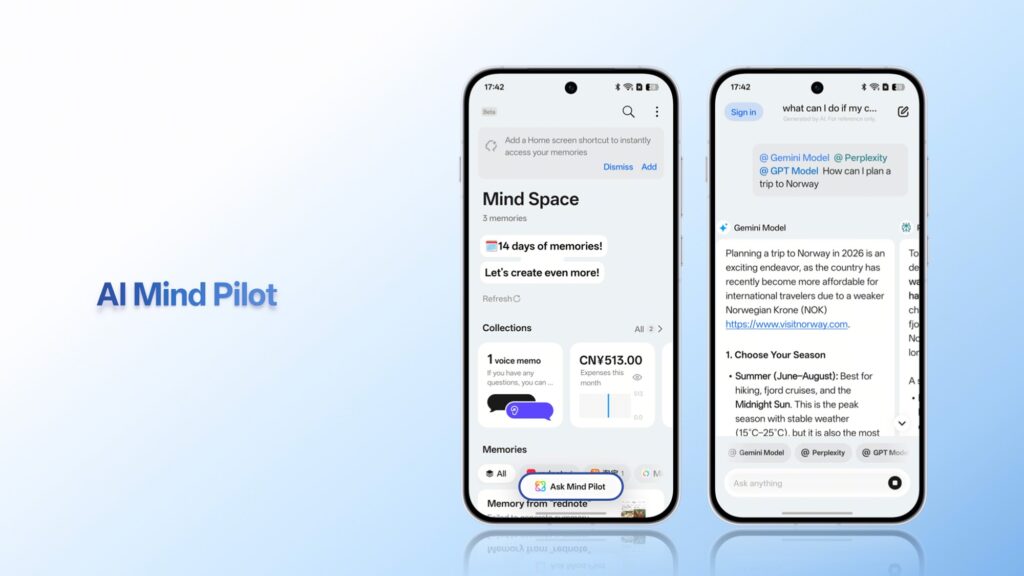
The Reno16 includes the AI Snap Key, which can provide quick access to features such as AI Mind Space. But what I appreciate more is that OPPO allows the physical key to be customised for other functions.
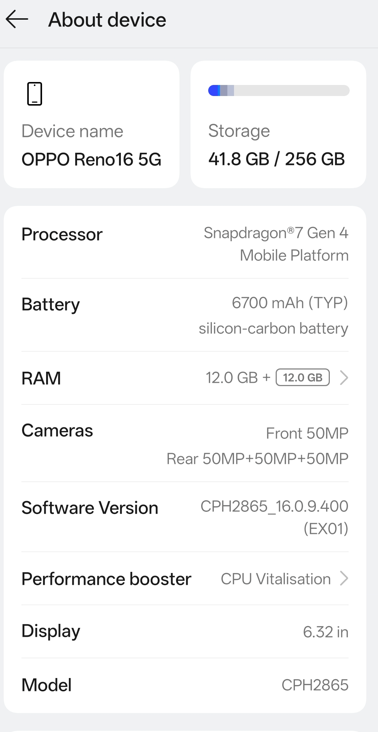
I configured mine to switch between Ring, Vibrate and Silent, and found myself appreciating that simple functionality more than another dedicated AI shortcut.
That flexibility is important. AI capabilities will continue evolving rapidly, but consumers still interact with their smartphones through dozens of simple actions every day. Sometimes improving those actions creates more immediate value than adding another headline AI feature.
ColorOS is fast, although I still want more customisation
ColorOS runs smoothly on the Reno16, and there is no noticeable lag during ordinary use. As mentioned earlier, the haptics are particularly good.
I am less convinced by some of the interface aesthetics. The pre-installed applications and certain default visual elements aren’t necessarily to my taste, and I would like greater freedom around icon customisation and the Quick Settings interface.
These are largely subjective complaints, however. For someone primarily using the Reno16 for messaging, email, photography, browsing, social media and entertainment, ColorOS gets the fundamentals right.
The AED 2,499 question?

The Reno16 5G is ultimately a polished smartphone with very few obvious weaknesses. The camera is dependable, the construction feels premium, the battery capacity is impressive, 80W charging is genuinely useful and everyday performance is smooth.
What prevents it from becoming an automatic recommendation is not something the Reno16 does particularly badly. It is simply how competitive the market becomes once a smartphone reaches AED 2,499.
The Snapdragon 7 Gen 4 is perfectly capable, but at this price I would have liked more performance headroom.
For Reno14 users, however, the improvements across design, camera, battery and the overall experience make the Reno16 feel like a meaningful progression. If you already own a Reno15, the argument for upgrading immediately is considerably harder to make.
The Reno16 gets most of the fundamentals right. The question buyers ultimately need to answer is whether that polished overall experience is enough to justify its price.
Srijith kn


HONOR Pad X9b Max Review: When a Tablet Starts Challenging Your Laptop
Home Centre celebrates Emirati Women’s Day with Made By Her, a campaign spotlighting homegrown talent
Delinea Brings Runtime Control for AI Agents to GISEC Global 2026



-
News11 years ago
SENDQUICK (TALARIAX) INTRODUCES SQOOPE – THE BREAKTHROUGH IN MOBILE MESSAGING
-

 Trending10 months ago
OPPO A6 Pro 5G Review: Reliable Daily Driver
-

 Tech News2 years ago
Denodo Bolsters Executive Team by Hiring Christophe Culine as its Chief Revenue Officer
-
 VAR1 year ago
Microsoft Launches New Surface Copilot+ PCs for Business
-

 Automotive2 years ago
AGMC Launches the RIDDARA RD6 High Performance Fully Electric 4×4 Pickup
-
Tech Interviews2 years ago
Navigating the Cybersecurity Landscape in Hybrid Work Environments
-

 Tech News1 year ago
Nothing Launches flagship Nothing Phone (3) and Headphone (1) in theme with the Iconic Museum of the Future in Dubai
-

 VAR2 years ago
Samsung Galaxy Z Fold6 vs Google Pixel 9 Pro Fold: Clash Of The Folding Phenoms