
 Have a question? +971 56 404 0503




Hospitality
Aleph Hospitality signs nine hotels with over 1,300 keys year to date New agreements across six countries take Aleph Hospitality closer to its target of managing 100 hotels by 2029

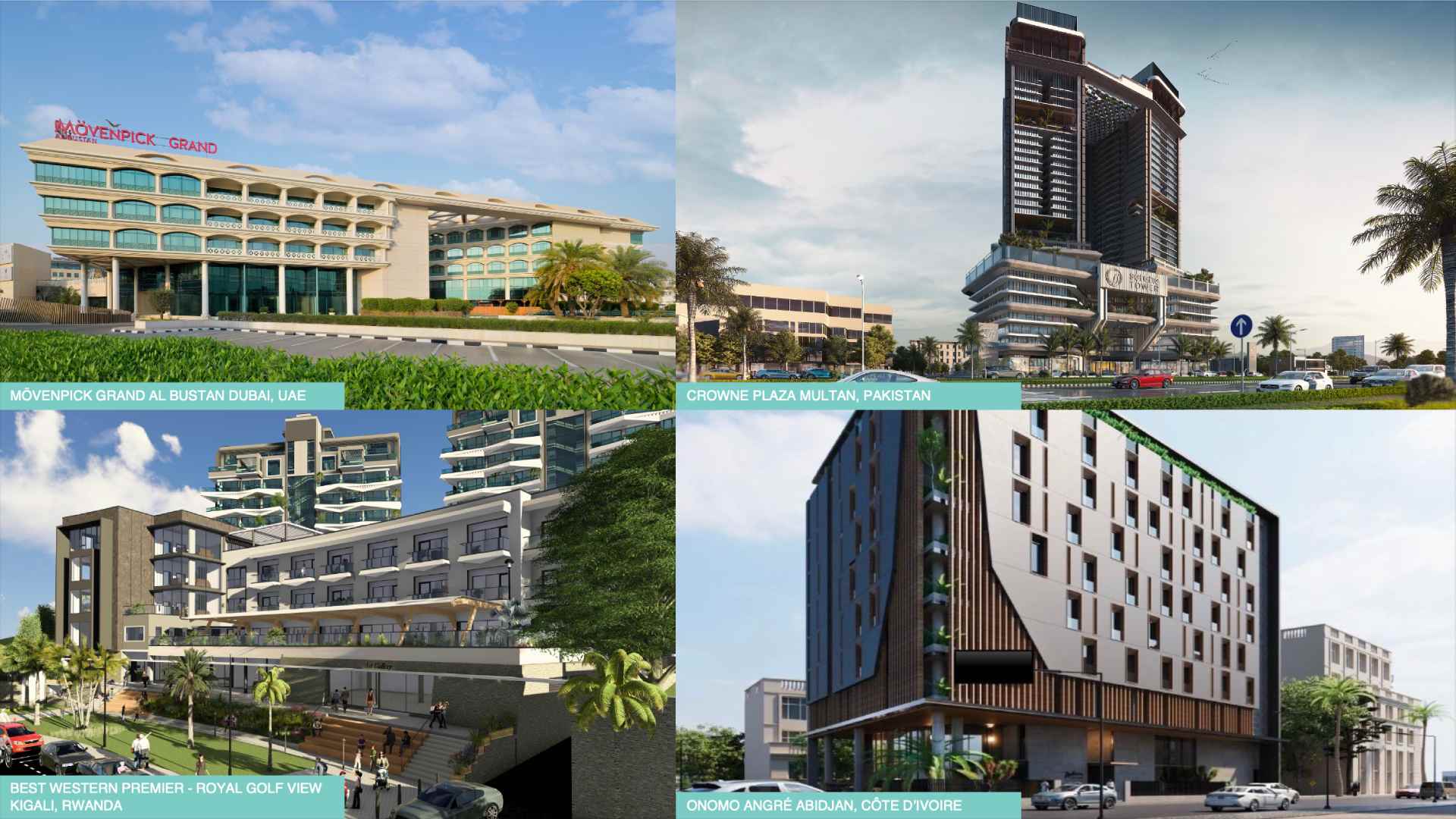
Aleph Hospitality, the largest independent hotel management company in the Middle East and Africa, has secured 1,330 keys so far this year, across nine properties in six countries.
With a portfolio of more than 50 hotels in 38 cities across 24 countries, representing over 7,000 keys, Aleph Hospitality is on track to reach its target of managing 100 hotels by the end of 2029.
In Nigeria, Aleph Hospitality signed management agreements with the Akwa Ibom State Government for the Ibom Hotel and Golf Resort, the Arise Palm Resort and the Ibom International Hotel and Convention Centre, 483 keys in total. In July it signed the 200-key Crowne Plaza Multan, its first hotel in Pakistan, due to open in 2028. Also in July, the company took over the 279-key Mövenpick Grand Al Bustan in Dubai, its third property for West F5 Investments, and in January the company signed the 101-key Best Western Premier Royal Golf View in Kigali, its third hotel in Rwanda. Three further agreements were signed during the year: the 118-key Wimby Resort, a 5* resort in Tanzania, and two additions to the Onomo portfolio in Ivory Coast, the 96-key Onomo Angre in Abidjan and the 53-key Onomo Allure Koa Lodge, both signed on top of the 26-hotel agreement concluded with African Hotel Development in 2025.
Aleph Hospitality attributes the year’s activity to entering markets ahead of wider operator interest, a flexible and tailored-to-fit management as well as strengthened decision-making in the regions. The growth in Africa also marks a change in deal structure: more owners are pairing an international brand franchise agreement with a credible, independent operator running day-to-day operations, in place of a management agreement under which the chain runs the hotel.
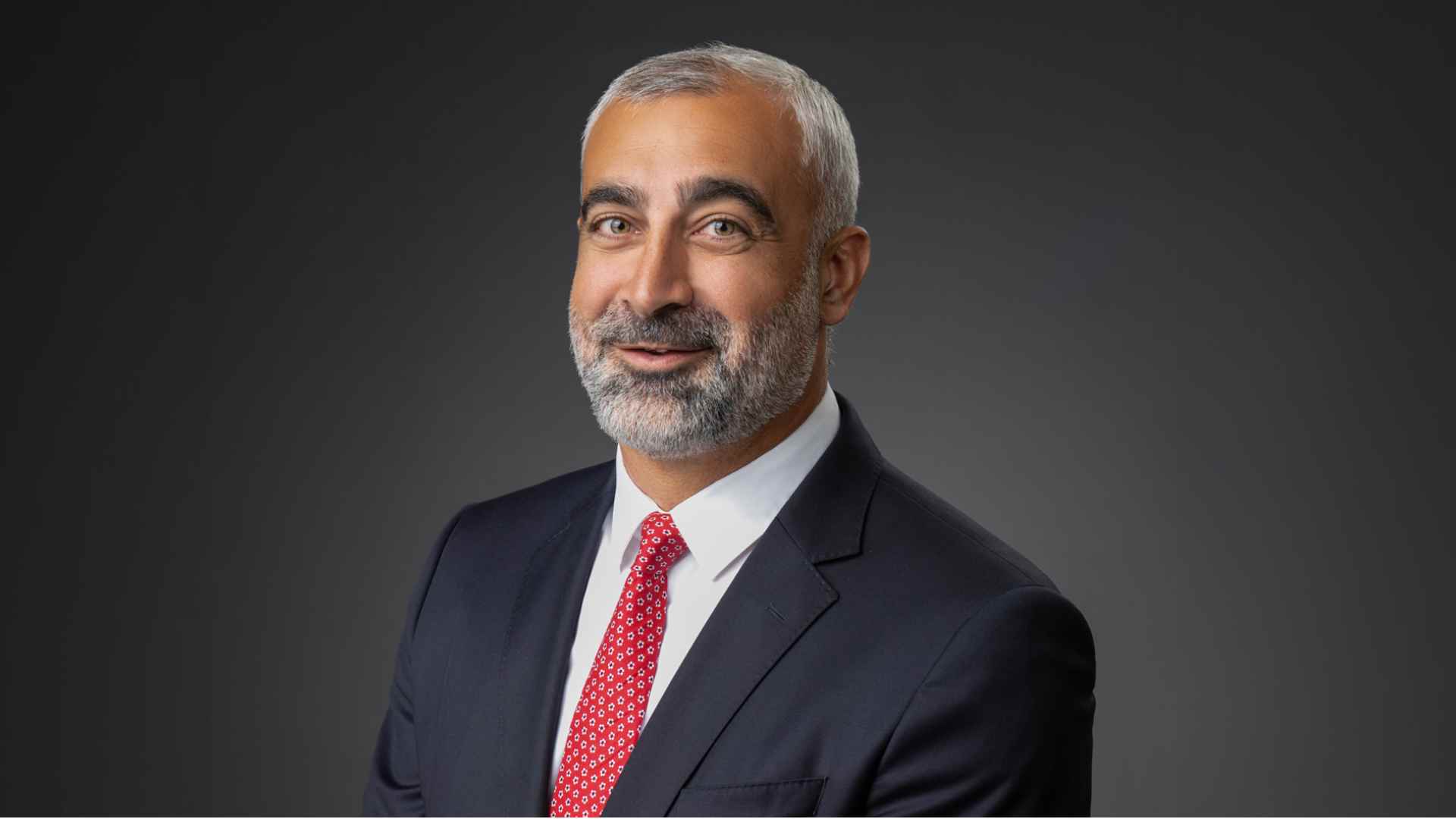
Neil George, Partner and Co-CEO of Aleph Hospitality, said: “More than 1,300 keys in nine months is the visible part. Underneath it is a management model which adjusts to owners’ assets, whether it is a repositioning, a transition or a pre-opening, and regional teams who know the market inside out. We have also seen a structural shift in African hotel contracting, and our forthcoming report with W Hospitality Group quantifies how franchised projects in the African pipeline have risen from 40 in 2020 to 146 this year.”
The executive team has grown with the portfolio. Abdellah Essonni joined in April as Regional Vice President, North Africa, based in Casablanca, and Rob Kucera was appointed Regional Vice President, East & South Africa, in August, based in Cape Town. At the head office in Dubai, Aline Barhouche joined as Chief HR Officer and Marc Matar as Vice President, Food & Beverage, with Estelle Chambost promoted to Vice President, Learning & Development.

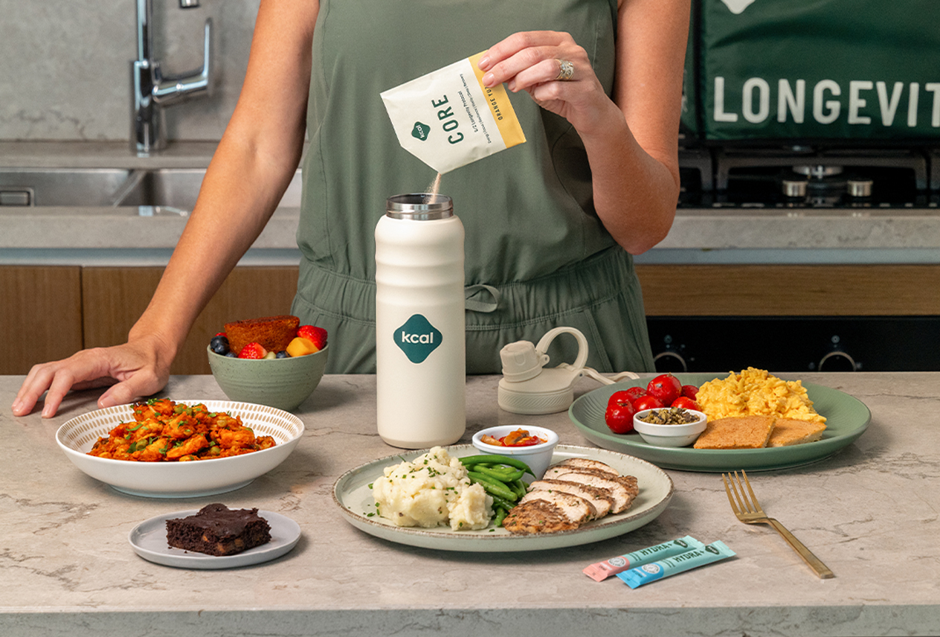
Kcal has launched the world’s first 360 longevity programme, bringing together nutrition, hydration, supplementation and before-and-after biomarker testing within one structured 12-week programme. While each of these elements exists independently, Kcal is the first to bring all four together within a single programme. The launch marks the latest step in Kcal’s evolution. Sixteen years after launching in Dubai, the business is continuing to look firmly ahead, continuing to explore how nutrition and everyday health can become more personalised, connected and measurable Each client begins with a 26-marker blood panel, taken at home or in the office and processed by European diagnostics group Unilabs.
This establishes their baseline before beginning the programme. At Week 12, the panel is repeated, allowing clients to compare their results with where they started. The first intake is limited to 50 clients, allowing the Kcal team to work closely with each client throughout the 12 week. Andreas Borgmann, Founder & CEO of Kcal, said: “Food has always been where Kcal starts, but it isn’t where health ends.
What we eat, how we hydrate and the nutrients we give our bodies all work together. Too often, these things are looked at separately. “For me, the important part is being able to measure it. We can all say something is good for you, but I would rather look at the data. That’s why the programme starts with blood work and finishes with blood work. You have a baseline, you follow the programme for 12 weeks, and then you can see what actually changed.”
How the 360 longevity programme works
The programme runs Monday to Friday across 12 weeks, giving clients 60 delivery days within a structured 5-on/2-off cycle. It is built around four connected areas: biology, nutrition, hydration and supplementation.
1. Biology
The programme begins with a 26-marker blood panel powered by Unilabs, covering metabolism and blood sugar, cholesterol and cardiovascular health, liver function, vitamins and hormones. Results are reviewed with a dedicated Kcal nutritionist and help inform the client’s programme. At Week 12, the blood panel is repeated under the same conditions, giving clients a direct comparison with their starting results.
2. Nutrition
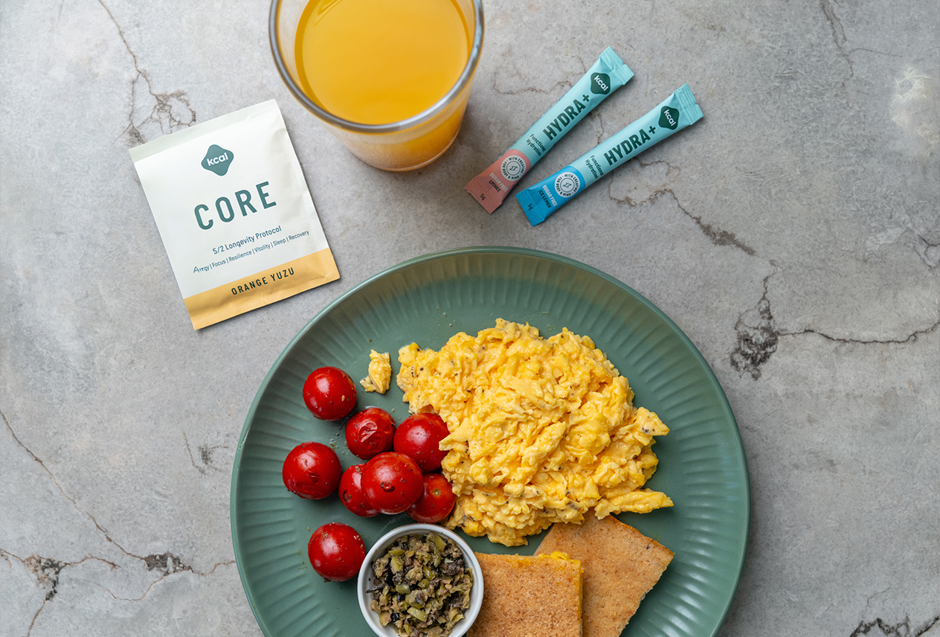
Clients receive three meals and two snacks daily, built around the Kcal plate: half greens, a quarter protein, with the remaining quarter split between healthy fats and complex carbohydrates. Meals are prepared with olive oil only and contain no additives, preservatives, seed oils or processed ingredients. The men’s programme averages 1,900 kcal and 150g of protein per day. The women’s programme averages 1,500 kcal and 120g of protein per day.
3. Hydration
Kcal Hydra+ provides two sugar-free electrolyte sachets daily, each containing 2g of creatine monohydrate, as part of the programme’s approach to daily hydration.
4. Supplementation
Each 23g sachet contains 38 active ingredients, including NMN, Calcium AKG, spermidine, creatine, Lion’s Mane and collagen, among others. The formula is third-party lab verified and contains no proprietary blends, with every ingredient and every dose listed on the label.
Made for real life
The 360 longevity programme follows a 5-on/2-off structure. Meals, Core and Hydra+ are delivered Monday through Friday, while weekends sit outside the structured programme. During weekends, clients are encouraged to continue the habits that sit behind the programme, including balanced meals, hydration, quality sleep and daily movement.
What clients can expect
A nurse draws the baseline panel at the client’s home or office. Meals begin three days later, informed by the client’s baseline metabolic markers. The full results are reviewed with a dedicated Kcal nutritionist. At Week 12, the process repeats under the same conditions: same panel, same lab, same protocol. Clients then receive a direct comparison against where they started.
Pricing and availability
The women’s programme is AED 233 per day and the men’s programme is AED 250 per day, across 60 days of food over 12 weeks. Payment splits are available through Tabby. Applications for the first 50 places are now open at kcallife.com/longevity.
Hospitality
Radisson Blu Hotel & Convention Centre, Riyadh Minhal Celebrates Saudi National Day Through Community & Inclusion
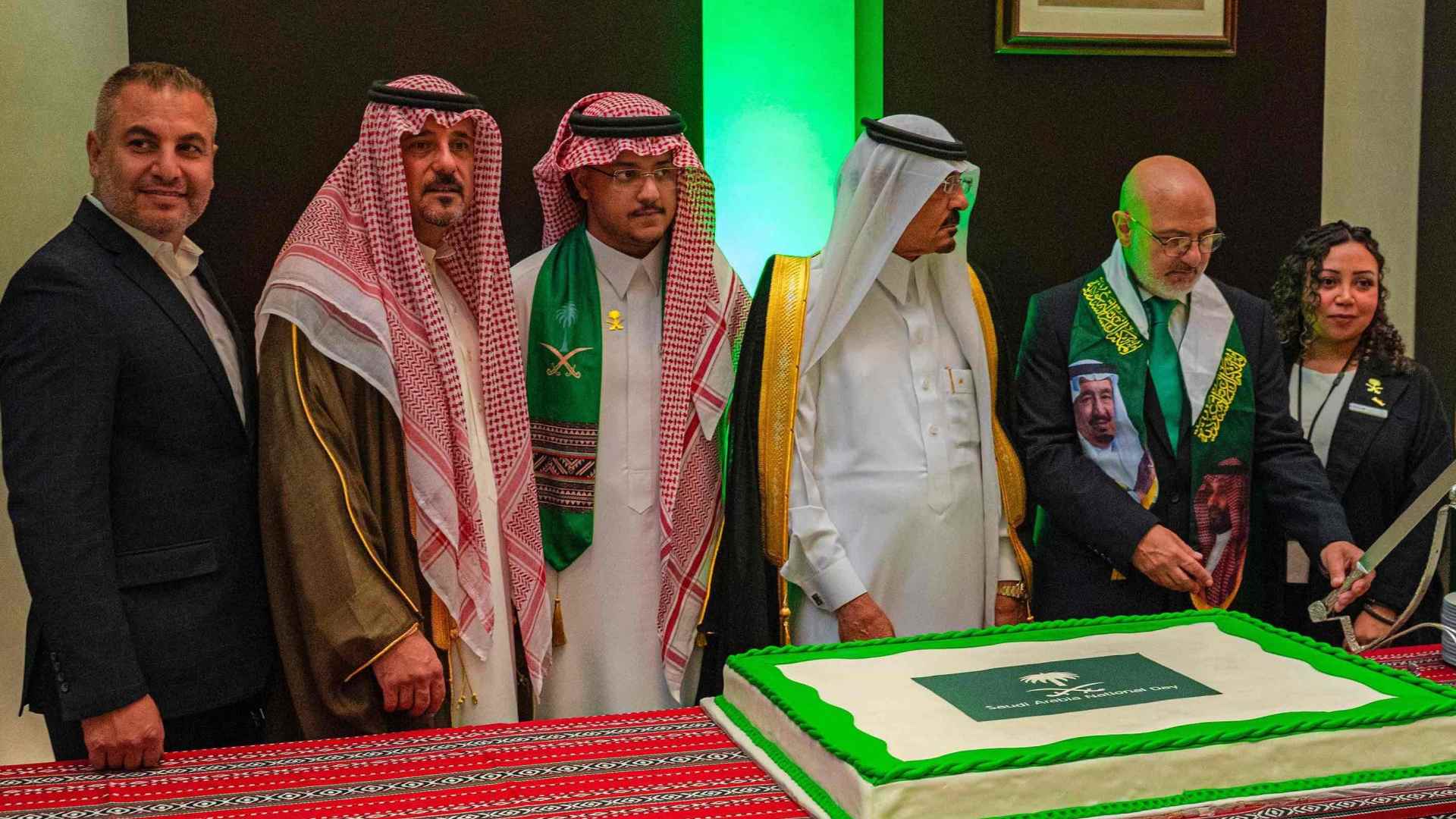
Radisson Blu Hotel & Convention Centre, Riyadh Minhal, marked the Kingdom’s Saudi National Day with a celebration built around community, inclusion and national pride.
This year, the hotel joined hands with Nutq Association for Speech and Language Disorders, (جمعية ذوي اضطرابات النطق واللغة – نطق) welcoming members of the association to take part in the National Day celebration and share the joy of the occasion. The collaboration created a meaningful opportunity for participation, connection, and greater awareness, while giving the association’s members a platform to be part of the celebration in their own way.
Nutq is the first association in the Kingdom dedicated to treating children with speech and language disorders. It works to rehabilitate these children and improve their quality of life through specialised programmes, with a focus on families with limited income who cannot afford the cost of therapy sessions.
As part of the festivities, representatives from Nutq Association took part in special activities, bringing their presence and talents into the heart of the celebration.
“At Radisson Blu Minhal, we believe that a celebration becomes more meaningful when everyone has a place in it,” said André Adel Saadé, General Manager of Radisson Blu Hotel & Convention Centre, Riyadh Minhal. “This Saudi National Day, we wanted to honour this remarkable country, a welcoming home to people from countless nationalities and backgrounds, by recognising the people who make our community what it is. Our collaboration with Nutq Association gave us the opportunity to share this special occasion together, create a moment of genuine connection, and celebrate the talents and individuality of its members.”
The collaboration reflects Radisson Hotel Group’s “Think People, Think Community, and Think Planet” philosophy, with community engagement forming an important part of the Group’s approach to hospitality. For Radisson Blu Riyadh Minhal, the initiative also builds on its role as a longstanding destination in the capital, extending the meaning of hospitality beyond the hotel itself and into the wider community.
Through its National Day celebration, Radisson Blu Riyadh Minhal honoured not only the Kingdom’s achievements and the pride of its people, but also the values of inclusion, participation and togetherness that continue to shape Saudi Arabia’s future.
Hospitality
Student accommodation and senior living among key assets shaping GCC’s future real estate market – Cavendish Maxwell
Student accommodation and senior living concepts are key to shaping the GCC’s real estate sector over the next decade, according to leading real estate advisory and property consultancy, Cavendish Maxwell.
These and other concepts like serviced living, co-living, private clubs, shared ownership and other professionally managed residential developments represent some of the region’s biggest future investment opportunities, as traditional lines between where people live, stay, work and socialise are becoming increasingly difficult to define, the company said.
Branded residences – a sector in which the Middle East is leading the way in terms existing and pipeline projects – will remain an important market component, but the next chapter is set to become much broader, according to Cavendish Maxwell experts.
Zacky Sajjad MRICS, Director of Business Development and Client Relations, Cavendish Maxwell, said: “For much of the past decade, the GCC’s residential and hospitality story has been dominated by luxury, with branded residences, five-star hotels and increasingly ambitious mixed use developments helping cities like Dubai, Abu Dhabi and Riyadh stake their claim on the global investment map. The next 10 years are likely to see a shift towards co-living across several concepts, with market fundamentals underscoring the demand.
“Governments across the region want to attract new international talent, grow tourism, expand universities, increase home ownership and diversify their economies. At the same time, populations are growing and becoming more internationally diverse, while the expectations of residents are changing. Increasingly, people are not simply buying or renting four walls; they want convenience, flexibility, community, services and experiences.
“This changes the conversation for developers and investors. It is no longer a question of whether to build residential or hospitality: it’s about understanding who will live there, how they want to live, what services they value and what they are prepared to pay for them. The GCC continues to demonstrate an extraordinary ability to deliver high-quality real estate at scale and, with the economic and demographic changes taking place across the region and strengthening the case for new concepts, there is a real opportunity for investors and developers to apply that capability to a wide and diverse range of alternative living concepts that will further enhance the strength of the property sector,” he added.
While not every international model will translate directly into a GCC context, they will work if adapted appropriately. Co-living in London, student accommodation in Manchester or senior living in the United States cannot simply be replicated in Dubai or Riyadh without considering local demographics, cultural expectations, affordability, regulation and family structures.
“Take senior living as an example,” said Zacky Sajjad. “With the rising cost of living, accommodation and care in countries such as the UK, the UAE is potentially an attractive alternative for internationally mobile retirees seeking a high quality of life, safety, connectivity, year-round sunshine and access to high-quality healthcare and hospitality led services. Rather than replicating the traditional retirement home model there is an opportunity to rethink senior living altogether combining independent living, hospitality, wellness, healthcare and community.
“The same argument can be made for purpose-built student accommodation. The UAE’s higher education sector has expanded considerably with a growing university ecosystem and ambitions to attract more students from across the Middle East, Africa, Asia and further afield. As that population grows and becomes increasingly international there is a logical opportunity for professionally managed accommodation designed specifically around student needs, incorporating community, security, amenities, technology and study facilities,” he added.
Cavendish Maxwell also believes that co-living also deserves greater attention, particularly in Dubai. Although they are now starting to moderate after sharp rises since the pandemic, residential rents can be unaffordable for some residents, particularly young professionals and those newly arriving in the city. A professionally managed co-living model could provide a more flexible and accessible entry point while offering something traditional house sharing often does not, purpose designed communal areas, services, amenities and a genuine sense of community.
Zacky Sajjad continued: “These examples demonstrate why alternative living sectors should not simply be viewed as concepts imported from mature international markets. The GCC has a golden opportunity to create its own versions, drawing on one of the region’s greatest strengths – hospitality. The result could be a new generation of hospitality-led living concepts sitting somewhere between traditional residential and hotel accommodation and responding to how people increasingly want and need to live.
“Data and market intelligence is critical in identifying genuine gaps in demand rather than following the latest property trends. The next stage of the GCC property market will not only be about building more homes or hotels, but more about creating more sophisticated choices for living and delivering the next chapter in the region’s real estate success story.”


Kcal launches world-first 360 longevity programme The new 12-week programme

Radisson Blu Hotel & Convention Centre, Riyadh Minhal Celebrates Saudi National Day Through Community & Inclusion

Inside the Strategy Shaping the Future of Premium Mobility



-
News11 years ago
SENDQUICK (TALARIAX) INTRODUCES SQOOPE – THE BREAKTHROUGH IN MOBILE MESSAGING
-

 Trending11 months ago
OPPO A6 Pro 5G Review: Reliable Daily Driver
-

 Tech News2 years ago
Denodo Bolsters Executive Team by Hiring Christophe Culine as its Chief Revenue Officer
-
 VAR1 year ago
Microsoft Launches New Surface Copilot+ PCs for Business
-

 Automotive2 years ago
AGMC Launches the RIDDARA RD6 High Performance Fully Electric 4×4 Pickup
-
Tech Interviews3 years ago
Navigating the Cybersecurity Landscape in Hybrid Work Environments
-
 Tech News2 years ago
Toshiba Announces MG10-D Series of Enterprise HDDs with Capacities up to 10TB
-

 Tech News1 year ago
Nothing Launches flagship Nothing Phone (3) and Headphone (1) in theme with the Iconic Museum of the Future in Dubai