
 Have a question? +971 56 404 0503




Technology
CommScope’s Touchstone DOCSIS 3.1 Cable Gateways Improve Users Internet Performance


CommScope, a leader in home network solutions, expands its Wi-Fi 6 home network gateway portfolio with the release of its new Touchstone TG644x DOCSIS 3.1 cable gateways. With the use of online gaming, video conferencing, AR/VR, and other delay-sensitive applications on the rise, the opportunity has never been greater to bring low latency broadband services to market. The TG644x gateway supports CommScope’s end-to-end Low Latency DOCSIS (LLD) solution, which establishes a fast lane for delay-sensitive traffic from the home to the headend and back, and the enhanced capabilities of Wi-Fi 6 reduces latency and jitter in communications to the end device.
The gateways support a high split with a switched diplexer for flexible deployment capabilities to meet the demand for increased upstream capacity, such as using video conferencing for working and learning from home.
“By deploying the new TG644x gateways, service providers are providing subscribers with the confidence they will not drop a video call or miss an online lesson,” said Ken Haase, Vice President, Product Management, CommScope. “Gamers will be able to take advantage of lower latency, thus giving them the competitive edge by reducing lag or buffering.”
The TG644x gateways allow service providers to deliver multi-gigabit data rates to and around the home and small business and enable reliable ultra-HD videos over Wi-Fi. These innovative Wi-Fi CERTIFIED 6 gateways are intended to serve as the hub of a subscriber’s network and connect all IP-capable devices (i.e., internet, data, voice, and video) throughout the customer’s premises.
If additional coverage is required to light up dead spots, the gateways may be supplemented with CommScope’s X5 Wi-Fi 6 extender to deliver high-performance and managed Wi-Fi coverage throughout the home. The gateways can also be managed with CommScope’s HomeAssure Managed Wi-Fi solutions, providing optimized, high-performance Wi-Fi coverage throughout the home. Furthermore, the TG644x gateways also support SNMP and TR-069 remote management protocols for reducing service providers’ costs and can be managed with CommScope’s ECO Service Management solutions. It provides service providers visibility into the home network, and the ability to automate and control subscriber devices and experiences.
Touchstone Cable Gateways:
- act as fast lanes for delay-sensitive traffic
- support high split with a switched diplexer for flexible deployment
- deliver multi-gigabit data rates to and around the home and small business
- enables reliable ultra-HD videos over Wi-Fi
- serve as the hub of a subscriber’s network and connect all IP capable devices such as internet, data, voice, and video
Tech Features
THE CONVERGENCE OF CRISIS: HOW OVERLAPPING RISKS ARE REDEFINING WORKFORCE MOBILITY IN THE MIDDLE EAST


By Gillan McNay, Security Director Assistance – Middle East, International SOS
In today’s Middle East operating environment, mobility risk no longer arrives in isolation. Organisations are increasingly navigating multiple, overlapping disruptions that converge to affect how, when, and whether their people can move. Geopolitical tension, aviation restrictions, cyber exposure, misinformation, and workforce anxiety are no longer separate risk categories – they interact, amplify one another, and challenge traditional mobility assumptions.
This convergence is redefining what “safe movement” looks like for organisations with employees traveling, deployed, or working abroad across the region.
From Single Events to Layered Disruption
Historically, mobility planning focused on discrete scenarios, weather events, isolated security incidents, or airline strikes. Today, organisations are far more likely to face layered disruption, where one event triggers a cascade of secondary impacts.
A regional security escalation may coincide with airspace closures. Airspace closures may lead to congestion at land borders. Border congestion increases stress for travelers, which in turn heightens reliance on digital communication channels, precisely when misinformation and cyber activity surge. Each layer compounds the next.
International SOS’ Risk Outlook 2026 highlights this shift clearly: risk is now systemic and interdependent, not episodic. For mobility teams, this means plans designed for one‑dimensional threats will be insufficient.
Mobility Is Now a Strategic Exposure
Movement of people has become a strategic risk vector rather than a logistical one. When employees cannot travel as planned, the impact extends beyond delayed meetings or project timelines. It affects:
- Business continuity
- Leadership visibility
- Employee confidence and wellbeing
- Regulatory and duty‑of‑care obligations
In the Middle East, this is especially pronounced due to the region’s role as a global aviation hub and its highly international workforce. When airspace is disrupted in one country, the effects ripple across neighbouring states almost immediately.
As a result, organisations must treat mobility decisions with the same scrutiny as other strategic risks, cybersecurity, financial exposure, or supply‑chain dependency.
The New Reality: Mobility Under Uncertainty
In recent months, we have seen how quickly mobility conditions can change. Routes that were viable in the morning may be restricted by evening. Neighbouring jurisdictions may adjust entry requirements or limit transit with little notice. Information may circulate rapidly on social media before it can be verified.
The most resilient organisations recognise that movement decisions must be conditions‑based, not schedule‑based. Rather than asking “Can we move people today?”, leaders need to ask:
- What conditions would make movement unsafe tomorrow?
- What alternatives exist if a primary route closes?
- Are we prepared to shift from air to land, or to stabilise in place?
This approach requires planning optionality into every mobility decision.
Overlapping Risks Demand Integrated Decision‑Making
The convergence of crisis exposes one of the most common organisational gaps: mobility decisions are often segmented across functions. Security looks at threat levels, HR considers employee impact, travel teams focus on bookings, and IT monitors communications. In a converging‑risk environment, this fragmentation increases risk.
Mobility decisions must be informed by integrated intelligence, security assessments, aviation updates, border conditions, medical considerations and workforce sentiment. When these views are aligned into a single operating picture, organisations can act faster and with greater confidence.
This integrated approach is increasingly reflected in board‑level discussions, as highlighted in the Risk Outlook 2026, where executive oversight of crisis preparedness and workforce risk continues to rise.
The Human Layer Cannot Be Separated From Mobility
Overlapping crises do not only disrupt routes; they disrupt people. Uncertainty around travel amplifies stress, particularly for expatriates with families, employees traveling alone, or teams operating far from home support networks.
From an assistance perspective, we see that anxiety itself becomes a risk multiplier. Tired, stressed travelers are more likely to make poor decisions, rushing to airports prematurely, acting on unverified information, or attempting unsafe routing alternatives.
Mobility strategies must therefore incorporate psychological safety alongside physical safety. Clear guidance, predictable communication, and reassurance that decisions are being reviewed continuously make a material difference to outcomes.
Why “Move” Is Not Always the Right Answer
One of the most important shifts organisations are making is recognising that relocation or evacuation is not always the safest or most effective response. In converging‑risk scenarios, moving people can expose them to new uncertainties if the destination environment changes.
Stability, supported by shelter‑in‑place guidance, supply planning, and continuous monitoring, can be the safest posture while conditions clarify. Mobility planning should define three distinct postures:
- Stay and stabilise
- Relocate to a regional safe haven
- Evacuate out of the region
Each posture requires different triggers, communications, and support mechanisms. Treating them interchangeably increases risk.
Information Discipline Is a Mobility Imperative
Overlapping crises generate noise. For organisations managing mobility, information discipline becomes critical. Decisions based on rumours, unverified social media posts, or outdated aviation updates can lead to unnecessary movement, or unsafe delay.
Effective organisations establish clear information pathways:
- Who validates updates
- Which sources are trusted
- How frequently conditions are reviewed
- When decisions are escalated
This discipline supports faster pivots when conditions change and reduces the emotional load on traveling employees.
Building Adaptive Mobility for the Future
The convergence of crisis in the Middle East is not a temporary phenomenon. Geopolitical volatility, climate stress, digital disruption, and workforce expectations will continue to intersect. Mobility strategies must evolve accordingly.
Resilient organisations are already adapting by:
- Embedding workforce visibility into core systems
- Designing mobility plans with multiple fail‑safe options
- Training leaders to make people‑first decisions under pressure
- Aligning crisis planning with broader enterprise risk management
As the Risk Outlook 2026 underscores, preparedness is no longer about predicting the next event, it’s about building the capacity to adapt when events collide.
A Redefined Measure of Readiness
In this new operating reality, mobility readiness is not measured by the ability to move people quickly, but by the ability to make calm, informed, and proportionate decisions as risks converge.
Organisations that understand this will be better positioned to protect their people, maintain operational stability, and navigate periods of regional tension with confidence rather than urgency. The convergence of crisis is challenging, but with the right structures, discipline, and integration, it is manageable.
Tech News
VERTIV EXPANDS THERMAL PORTFOLIO WITH NEW WALL-MOUNT COOLING SYSTEM FOR EDGE AND SMALL DATA ROOMS IN EMEA
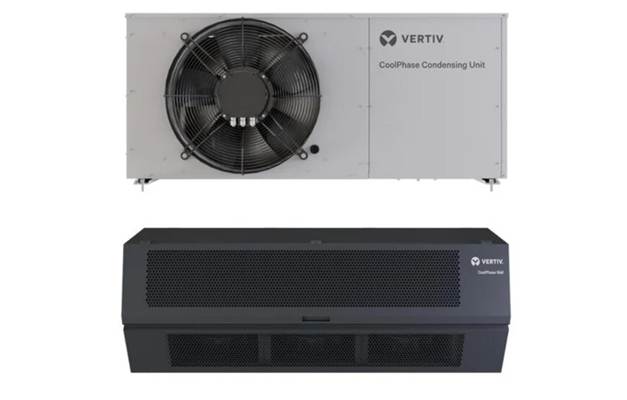
Vertiv (NYSE: VRT), a global leader in critical digital infrastructure, today announced the launch of the Vertiv™ CoolPhase Wall, a space-saving, wall-mount cooling system designed for small IT spaces and edge environments. The system is designed for the needs of IT equipment, removing heat and enabling continuous operation while taking up zero floor space. Vertiv CoolPhase Wall is available now across Europe, Middle East and Africa (EMEA).
As distributed computing becomes more critical to business operations, compact IT environments need high-quality thermal control designed for sensitive electronic systems. However, many are still using comfort cooling systems designed for human comfort rather than addressing the high sensible heat ratio (SHR) and higher airflow requirements of IT equipment. Vertiv CoolPhase Wall addresses this gap with a purpose-built system that provides the required SHR along with integrated monitoring and control capabilities to protect equipment and enable24/7 operational continuity.
Built for installation flexibility, the Vertiv CoolPhase Wall features a split system with an indoor wall-mounted cooling unit. The system delivers up to 60% greater airflow than standard comfort cooling systems and leverages variable-speed compressors and variable speed fans to modulate to meet heat load demand and improve energy efficiency to enable operational cost reductions.
Designed to handle thermal loads up to 11 kW, the Vertiv CoolPhase Wall is engineered to operate reliably in outdoor ambient temperatures ranging from -35 to 48℃. The system features the Vertiv™ Liebert® iCOM™ operational control, which enables local configuration and supervision of key operating parameters. For extended visibility and remote access, the Vertiv CoolPhase Wall includes onboard remote communication capability to provide real-time alerts and operational status through a secure web interface.
The Vertiv™ CoolPhase Wall utilizes R-32 refrigerant, a low-global warming potential (GWP) alternative that reduces environmental impact while maintaining thermal performance. This positions Vertiv ahead of evolving regulatory requirements, including the European Union’s F-Gas regulations that restrict the use of high-GWP refrigerants. While many comfort cooling systems are still transitioning to lower-GWP options, Vertiv is applying these standards to IT-focused cooling, giving organizations confidence that their deployments are aligned with future environmental expectations.
“As IT continues to expand into areas that were not originally intended for high-density electronics, the demand for adaptable and energy-efficient cooling solutions is increasing across EMEA,” said Sam Bainborough, vice president, EMEA thermal business at Vertiv. “The Vertiv CoolPhase Wall is engineered to support continuous operations, enabling customers to maintain reliable, efficient thermal performance in small IT rooms and edge sites year-round.”
Vertiv CoolPhase Wall expands the company’s comprehensive thermal management portfolio, which includes precision cooling system for edge deployments, enterprise data centers, and high-density AI environments, ranging from room-based cooling to direct-to-chip liquid cooling and rear door exchangers.
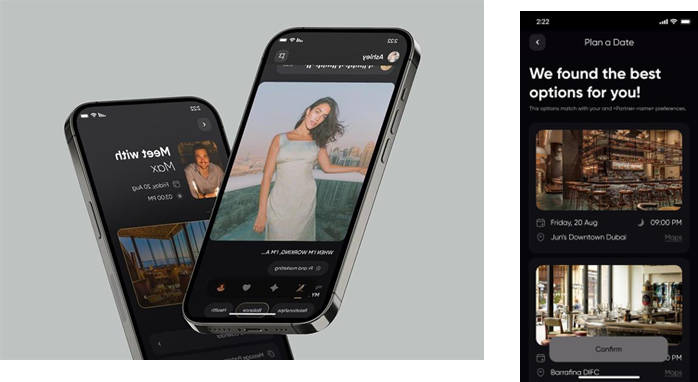
MAXION, a UAE-based platform empowering social connections, has reported 399% year-on-year growth in its user base in 2025 following the introduction of an AI-powered infrastructure designed to prioritise real-world interaction. The growth reflects strong adoption of the platform’s technology-driven approach to facilitating meaningful relationships. Over the same period, the company reached a 406% increase in annual recurring revenue.
MAXION operates as a hybrid SaaS and marketplace platform built on an AI-powered system that processes behavioural, scheduling, and conversion data across the full lifecycle of an interaction. The system analyses availability alignment, time to meeting, attendance confirmation, repeat meeting patterns, and structured feedback following in-person meetings, helping members move from introduction to real-world conversation more efficiently. To support the continued development of these capabilities, MAXION has secured $900,000 in early-stage funding, which has been allocated toward AI integration, infrastructure development, senior product hires, and operational expansion.
The UAE’s international population provides a strong environment for MAXION’s growth, with Dubai alone home to a rapidly expanding base of ultra-high-net-worth individuals (UHNWIs). At the same time, the UAE online relationship services market is anticipated to grow by more than 9.21% by 2031, highlighting sustained demand for platforms that help individuals form meaningful connections in fast-moving urban environments.
To date, more than 40,000 individuals have applied to join MAXION, with approximately 7,000 active members accepted into the curated community. Through a selective onboarding process, the platform maintains a gender balance close to 50:50, compared with traditional platforms where participation averages approximately 70:30 male to female. The community primarily consists of high-performing professionals aged 25 to 45 working across finance, consulting, technology, entrepreneurship, and senior corporate leadership roles.
Christiana Maxion, Founder and CEO of MAXION, said: “Our long-term vision is to restore real-world connection in a fast-moving world. Technology should help people meet sooner rather than spend months behind a screen. We use data to make it easier for people to meet at the right time, allowing members to focus on getting to know each other rather than spending weeks in digital conversation. MAXION is designed to move people from introduction to real conversation quickly, where interactions feel more natural, and intentions become clearer. Over time, we want to build a platform that supports strong partnerships and lasting communities.”
In the past six months alone, MAXION has facilitated more than 2,000 in-person meetings between members. The platform measures success by the relationships formed between members, with users typically returning every three months and continuing to engage with the app over periods of up to two years. MAXION has also established strategic partnerships with brands to reduce logistical friction surrounding real-world meetings and create a smoother experience for members.
Adoption is currently concentrated in Dubai, with growing traction in Abu Dhabi. The company plans to deepen its presence across the UAE while preparing for expansion into international professional hubs such as Singapore, London, and New York, where dense expatriate populations and fast-paced professional environments create similar demand for intentional connection.
Over time, MAXION aims to support members beyond the first stage of connection by creating value for couples as their relationships develop. The long-term vision is to help build urban communities where meaningful relationships remain central to modern professional life.

HOP INTO EASTER AT MCGETTIGAN’S WITH FAMILY ROASTS, EGG HUNTS AND CLASSIC SUNDAY FAVOURITES
CELEBRATE EASTER WITH A FAMILY-FRIENDLY BRUNCH AT LA PISCINE,AL RAHA BEACH RESORT & SPA
WHOOP RAISES $575 MILLION AT $10.1 BILLION VALUATION TO ADVANCE GLOBAL HEALTH PLATFORM AND FURTHER GCC EXPANSION



-
News10 years ago
SENDQUICK (TALARIAX) INTRODUCES SQOOPE – THE BREAKTHROUGH IN MOBILE MESSAGING
-

 Tech News2 years ago
Denodo Bolsters Executive Team by Hiring Christophe Culine as its Chief Revenue Officer
-
 VAR12 months ago
Microsoft Launches New Surface Copilot+ PCs for Business
-

 Tech Interviews2 years ago
Navigating the Cybersecurity Landscape in Hybrid Work Environments
-

 Trending5 months ago
OPPO A6 Pro 5G Review: Reliable Daily Driver
-

 Tech News9 months ago
Nothing Launches flagship Nothing Phone (3) and Headphone (1) in theme with the Iconic Museum of the Future in Dubai
-

 Automotive1 year ago
AGMC Launches the RIDDARA RD6 High Performance Fully Electric 4×4 Pickup
-

 VAR2 years ago
Samsung Galaxy Z Fold6 vs Google Pixel 9 Pro Fold: Clash Of The Folding Phenoms