
 Have a question? +971 56 404 0503




Technology
Huawei Unveils Innovations in Digital Infrastructure, Creating More Value for Customers and Partners

Huawei unveiled breakthrough innovations in several different domains, providing a first look at its comprehensive digital infrastructure range. Several of these innovations are completely new, and have never been seen before outside of Huawei’s labs. The release highlighted how these products and solutions are set to shape digital infrastructure for the next decade. Huawei is one of the world’s leading creators of digital infrastructure, and is dedicated to building a fully connected, intelligent world.
During the event, Huawei Executive Director and President of ICT Products & Solutions David Wang delivered a keynote speech titled Leading Innovation in Digital Infrastructure. In the speech, he noted, “Infrastructure has been vital to every stage of human development. The intelligent world is fast approaching and digital infrastructure is the key to building this intelligent world. The world now faces unprecedented challenges and so Huawei will remain customer-centric and committed to innovation. We are dedicated to breakthroughs to serve major application scenarios such as digital offices, smart manufacturing, wide area network (WAN), and data centers, and accelerate the development of the global digital infrastructure.”
He went on to explain how digital infrastructure of the future would need to be hyper secure, reliable, and deterministic, and need more efficient data circulation and computing power as the world dives into digital. This speech started with the ideas Wang introduced recently at the release event for Huawei’s Intelligent World 2030 report. The report itself finds that, by 2030, global connections will top 200 billion; monthly data per cellular user will grow 40 times to 600 gigabytes; worldwide general computing volume will grow 10 times over; and data generated will increase by 23 times, reaching one yottabyte for the first time. All of this creates a picture of new challenges and opportunities for the digital infrastructure sector over the next 10 years.
The main focus of his speech today, however, was seven specific innovations Huawei has launched or is about to launch onto the market.
Digital Meeting Rooms: Powered by Intelligent “Office Twins” and Bridging the World With Ubiquitous Gigabit and Seamless Collaboration
The newest “Office Twins” from Huawei are the AirEngine 6761 and IdeaHub. AirEngine 6761 is the industry’s highest-performance Wi-Fi 6E product that delivers an experience-centric, all-wireless network for businesses, with instant and secure user access, interaction latency down to 10 milliseconds, and ultra-fast file transfer at 1,000 Mbps. As part of the next generation of smart office tools, the 6-in-1 design of IdeaHub allows it to function as a projector, whiteboard, computer, conference endpoint, speaker, and microphone, enabling “frictionless collaboration” across different locations.
Huawei Optixsense: Accelerating Pipeline Inspection
The Huawei OptiXsense EF3000 is the company’s first product under the OpiXsense family, and is currently the most accurate optical sensor of the industry. Coming packed with Huawei’s leading optical technologies, the OptiXsense uses a unique optical digital signal processor (oDSP) and a new vibration ripple analysis engine for automatic incident identification. The OptiXsense achieves 97% accuracy, compared with the industry average of 60%–80%. It is designed to streamline oil and gas pipeline inspections, and will ultimately enable intelligent, unmanned pipeline inspections. Going forward, OptiXsense products will also support other domains, monitoring temperature, stress, and water quality.
The Industry’s First Deterministic IP Network Solution: Making Lights-Out Digital Factories a Reality
Industrial control systems demand extremely low levels of network latency and jitter. Conventional IP networks cannot deliver these standards, but today Huawei unveiled the industry’s first deterministic IP network solution, providing end-to-end guaranteed network performance to support industrial controls. This solution uses CloudEngine S6730-H-V2 switches and NetEngine 8000 M8 routers. Huawei’s innovations in IP system engineering and algorithms deliver microsecond-level single-hop latency and keep jitter within 30 microseconds from end to end, regardless of the number of hops. The solution supports multi-hop networking of tens of thousands of nodes, so it can deliver deterministic IP network performance for a workshop, a factory, or even multiple factories. It can even support centralized remote control of production lines located thousands of kilometers away.
H-OTN: Leading A Revolution in Secure Production Networks
H-OTN, the industry’s first converged optical device that supports hard pipe technologies, introduces an innovative Point-to-Multipoint (P2MP) OTN architecture for access networks. For the first time, Huawei enables an end-to-end hard pipe, from the access network to WAN, using a redefined product architecture and converged protocols. This not only guarantees 100% security, but also reduces latency by at least 60%. Huawei H-OTN will provide highly reliable communications networks, with ultra-low latency and simplified O&M, to support digital transformation across industries such as electric power and transportation.
An Industry-Leading IP Network Solution: Enabling Cross-Region Computing Resource Scheduling
Huawei’s newest IP network solution delivers industry-leading performance to help customers build vast, unified networks for cross-region computing. This solution combines Huawei’s CloudEngine 16800 data center switches and NetEngine 8000 F8 WAN routers. Thanks to intelligent & lossless algorithm 2.0 and intelligent cloud graph algorithm, this Huawei solution is able to construct ultra-large data center networks connecting up to 270,000 servers, three times larger than the industry average. It guarantees 0 packet loss on Ethernet and lowers latency by 25%. This solution also features intelligent routing by cloud service type and cloud-network resource factor, improving transmission efficiency by 30%.
Oceanstor Pacific: Ushering in an Era of High-Performance Data Analytics (HPDA)
OceanStor Pacific is the industry’s first distributed storage for HPDA, representing huge breakthroughs in technical architecture, including data flows adaptive to large and small I/O, converged indexing for unstructured data, ultra-high-density hardware, and EC algorithms. With this solution, a single storage unit can make data analytics 30% more efficient by supporting hybrid workloads across high-performance computing (HPC), big data analytics, and AI computing, breaking through the performance, protocol, and capacity barriers that typically limit HPDA. OceanStor Pacific has already been deployed in oilfields, and is set to accelerate the digital transformation of oil and gas exploration and create digital basins and oilfields.
Huawei CC Solution: Building the Industry’s First Public Diversified Computing Service Platform
Huawei’s CC Solution helps customers roll out public platforms that provide diversified computing power. It is designed with three scenarios in mind: AI computing centers, high performance computing centers, and integrated big data centers. The solution has four advantages over traditional solutions: diversified computing, rapid rollout, efficient utilization, and on-demand service. This solution is already in use in multiple projects, powering industry clusters with computing clusters and supporting the digital transformation of countless industries.
Tech News
ALEC Partners with Environment Agency – Abu Dhabi to Launch Hydrological Mangrove Restoration Project in Abu Dhabi

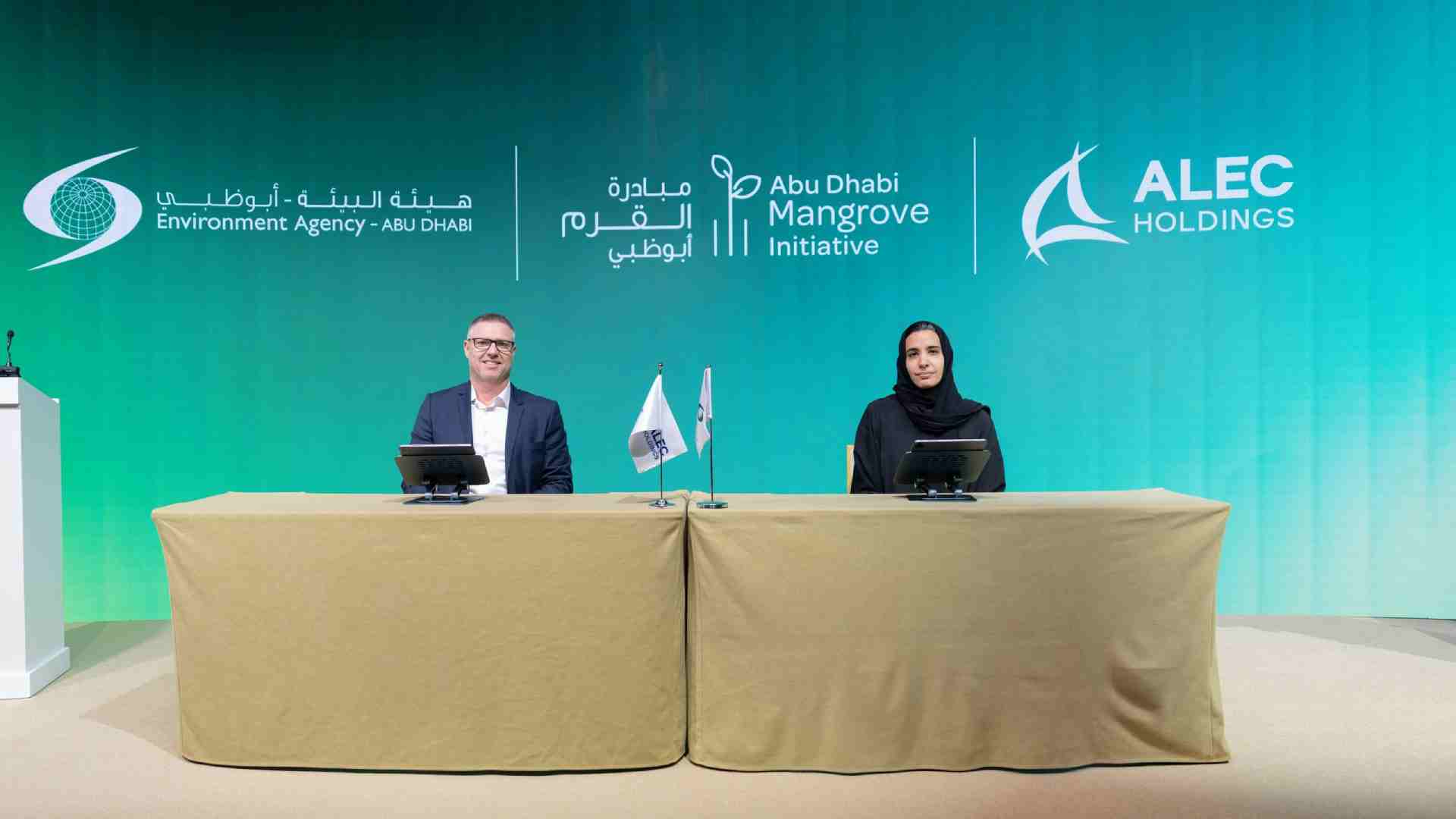
ALEC Engineering and Contracting LLC – SPC (ALEC), part of ALEC Holdings PJSC (ALEC Holdings) has signed an agreement with the Environment Agency – Abu Dhabi (EAD) to support a first-of-its-kind mangrove hydrological restoration pilot in the Emirate of Abu Dhabi.
The three-year project will explore whether restoring the natural hydrological conditions of a mangrove area in need of restoration can help the ecosystem return to long-term ecological health. In doing so, the initiative will examine the underlying conditions required to secure the future health and resilience of Abu Dhabi’s mangrove habitats.
EAD will lead the scientific planning and implementation of the project, including site selection, ecological and hydrological assessments, identification of the required restoration interventions, and the monitoring and reporting of project outcomes.
The pilot will establish baseline information for the selected site and track progress against defined restoration and biodiversity indicators. Its findings are expected to strengthen scientific understanding of mangrove hydrology in Abu Dhabi and help inform the planning of future ecosystem restoration initiatives.
The project supports the science-led restoration objectives of the Abu Dhabi Mangrove Initiative and complements the UAE’s national climate and biodiversity targets. By examining the conditions needed for mangrove habitats to recover and thrive, it will contribute to a broader understanding of how protection, hydrological restoration and long-term monitoring can work together to deliver durable ecological outcomes.
Earlier in 2026, ALEC signed the Abu Dhabi Mangrove Initiative Partners Pledge, committing to support the conservation and restoration of mangroves and other blue carbon ecosystems, advance science-based restoration, and reduce its impact on nature.
This partnership marks ALEC’s first flagship nature restoration investment with measurable biodiversity outcomes and forms part of ALEC’s broader commitment to integrating biodiversity considerations into its sustainability strategy and contributing to nature-positive outcomes in the regions where it operates.
Maitha Mohamed Al Hameli, Acting Executive Director, Terrestrial and Marine Biodiversity of the Environment Agency – Abu Dhabi, said, “We welcome ALEC’s support for this pilot, which reflects the kind of long-term, science-based commitment the Abu Dhabi Mangrove Initiative was established to encourage. The findings will strengthen our understanding of how mangrove sites respond to restored hydrological conditions and will inform how we plan future restoration in the emirate. Through this pilot, we aim to build the scientific evidence needed for long-term solutions that safeguard Abu Dhabi’s mangroves, a defining feature of the emirate’s natural heritage.”
Sean McQue, Managing Director – ALEC, said, “Abu Dhabi is a capital defined by extraordinary ambition, creating next-generation cultural and visitor experiences while protecting the natural heritage that gives the emirate its identity. For ALEC, this partnership is an important step in turning our commitment to nature into tangible action. As our first biodiversity restoration investment, the project enables us to contribute directly to the protection and restoration of Abu Dhabi’s mangrove ecosystems, while supporting a science-led approach that will generate measurable biodiversity outcomes. Through this pilot, we are supporting the development of the knowledge, evidence and practical understanding needed to help these vital ecosystems recover and thrive. In doing so, we are proud to support Abu Dhabi’s ambition to protect its natural heritage and contribute to a more resilient future for the emirate.”
As a company whose activities interact with land, water and ecosystems across the built environment value chain, ALEC recognises the importance of supporting the protection and enhancement of natural habitats. Through this partnership, the company will support the collection of ecological baseline data, monitoring of biodiversity indicators and conservation of a priority coastal ecosystem.
The collaboration will also create opportunities for employees across the ALEC Holdings group to participate in environmental awareness, education and structured volunteering activities associated with the project. These are expected to include citizen-science monitoring and other forms of community engagement.
The signing follows the fourth annual Abu Dhabi Mangrove Initiative Partners Meeting, which took place on 8 October 2026 at Rixos Saadiyat Hotel in Abu Dhabi. ALEC participated in the meeting, which brought partners together to review their collective impact and consider future opportunities to support the health and resilience of the emirate’s mangroves.
-Ends-
Photo Caption: (R) Maitha Mohammed Al Hameli, Acting Executive Director – Terrestrial & Marine Biodiversity at Environment Agency Abu Dhabi and (L) Sean McQue, Managing Director at ALEC
About the Environment Agency – Abu Dhabi
About Environment Agency – Abu Dhabi (EAD)
Established in 1996, the Environment Agency – Abu Dhabi (EAD) is committed to protecting and enhancing air quality, groundwater as well as the biodiversity of our desert and marine ecosystem. By partnering with other government entities, the private sector, NGOs and global environmental agencies, we embrace international best practice, innovation and hard work to institute effective policy measures. We seek to raise environmental awareness, facilitate sustainable development and ensure environmental issues remain one of the top priorities of our national agenda.
About ALEC Holdings PJSC
ALEC Holdings PJSC (“ALEC Holdings”), part of the Investment Corporation of Dubai, is a leading diversified engineering and construction group operating in the UAE and KSA. The Company builds and provides construction solutions that set industry benchmarks for innovation, quality, reliability and operational excellence.
ALEC Holdings offers its clients complete turnkey solutions in construction, MEP, fitout, marine, oil & gas, modular construction, energy efficiency and solar projects, heavy equipment rental, technology systems and asset maintenance. With these capabilities, the Company successfully serves a diverse range of sectors including airports, data centers, retail, hotels & resorts, high-rise buildings, and themed projects.
For more information, please visit https://alec.ae/.
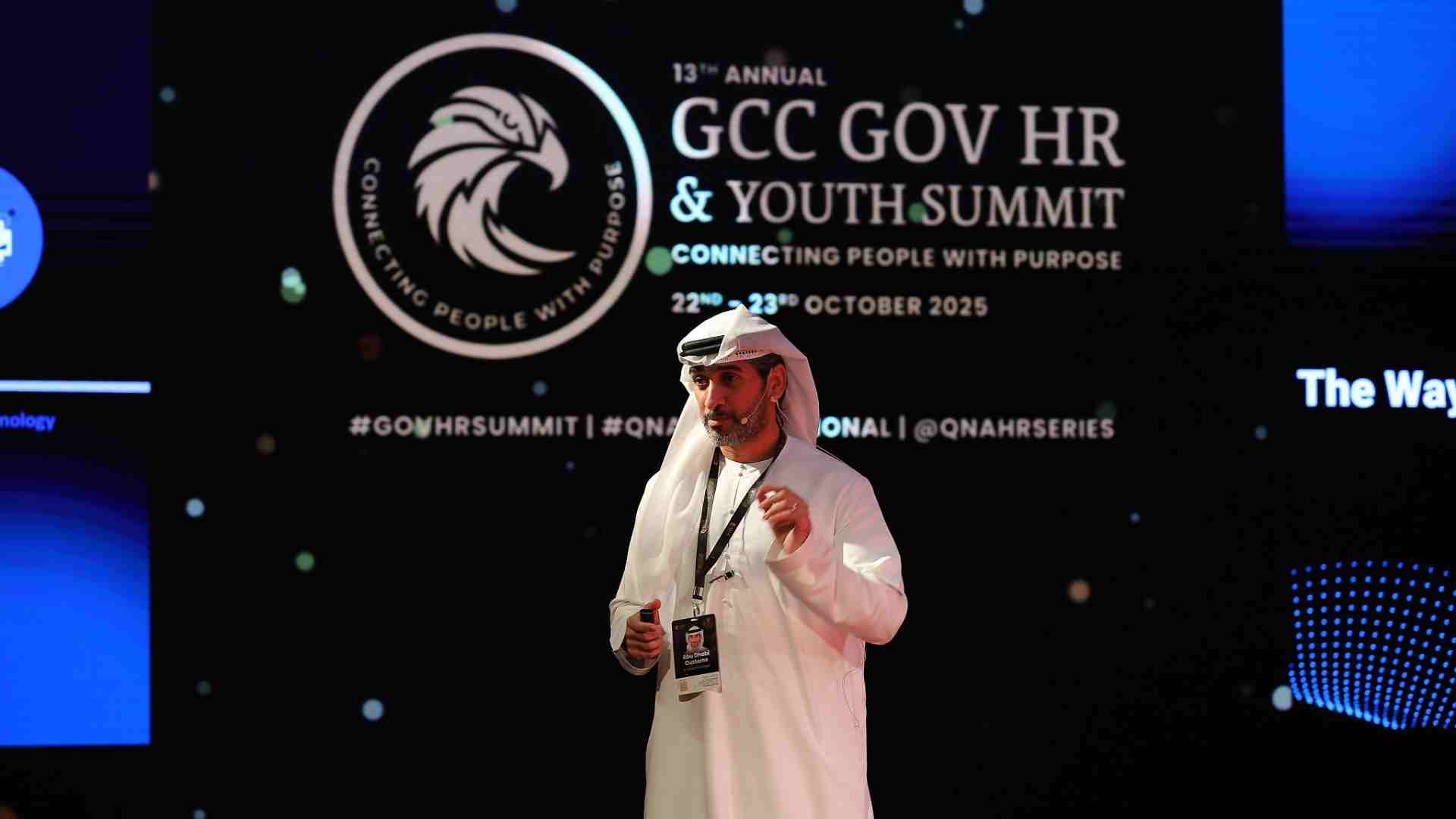
Government and public sector leaders from across the GCC will gather in Abu Dhabi on 20th and 21st October 2026 for the 14th Annual GCC GOV HR & Youth Summit and Awards, taking place at the Grand Hyatt Abu Dhabi Hotel & Residences Emirates Pearl. Organised by QNA International, the region’s most exclusive B2B public sector HR platform will bring together CHROs, People Leaders, policymakers and change agents under the theme Time of Opportunities: Uncovering the New Realities of Work.
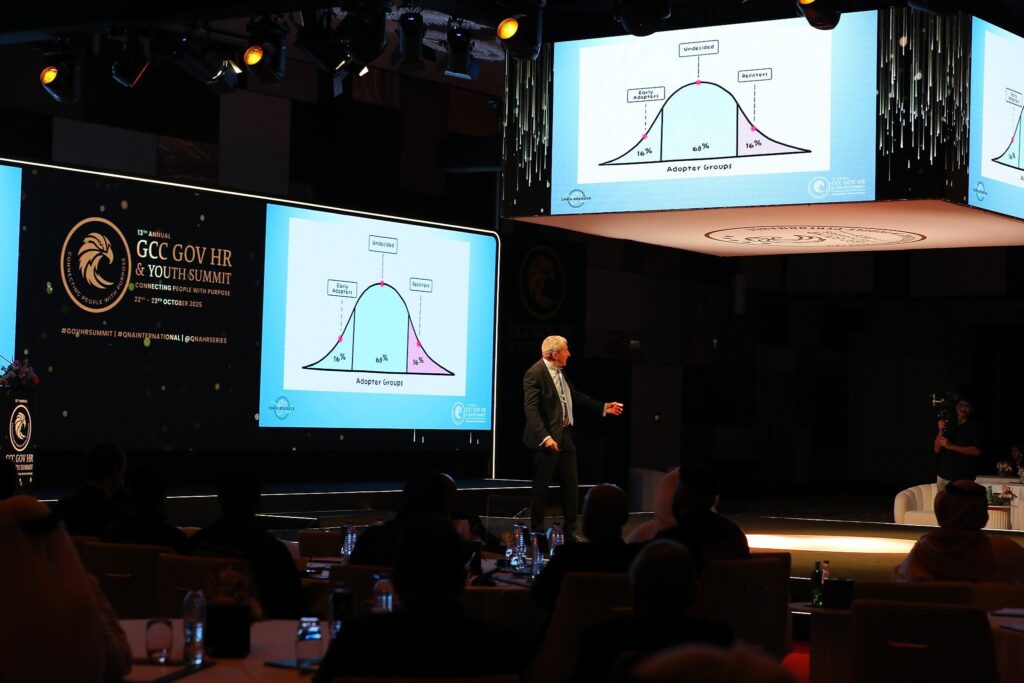
As governments across the GCC advance their national transformation agendas, the challenge is no longer simply to modernise systems or introduce new technologies, but to build institutions that can translate innovation into meaningful outcomes for people. This requires a more integrated approach to workforce transformation, one that brings together digital capability, adaptive leadership, employee experience and a culture of continuous learning.
Ahead of the event, Advisory Board Members and speakers have shared the shifts they expect to define government work across the region.
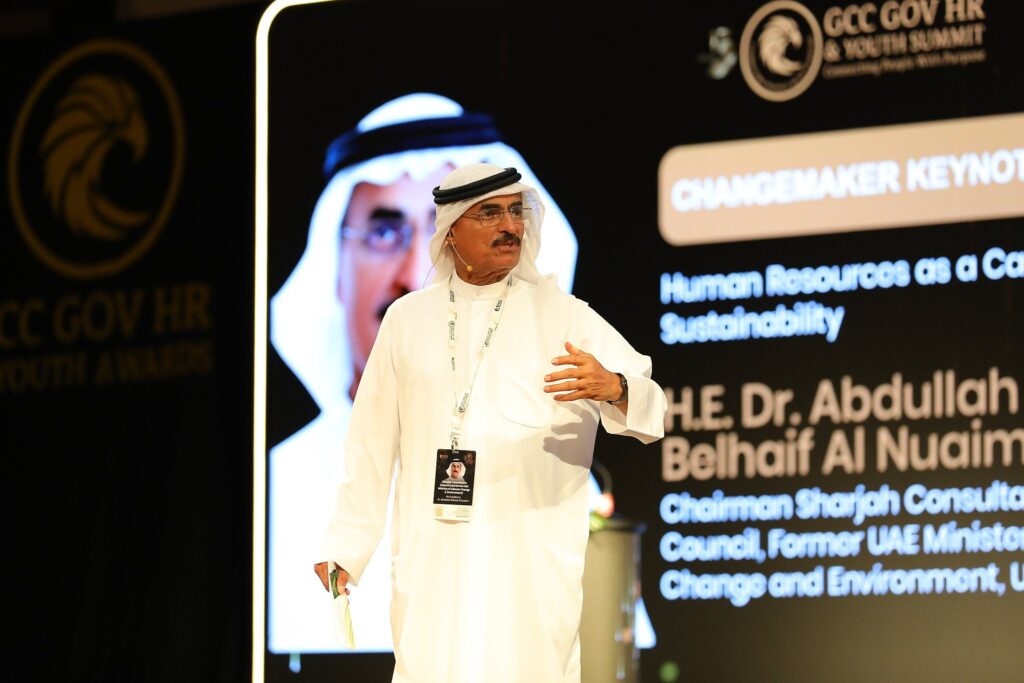
From Measuring Volume to Measuring Impact
His Highness Captain Shaikh Abdulaziz Sultan Al Nuaimi, Director of Excellence Awards Branch, Ajman Police, UAE, said: “Government excellence requires a shift from measuring the volume of achievements to measuring impact, added value, and the capacity for anticipation and adaptation.”
His Excellency Mohamed Al Marzooqi, Executive Director Of Support Services, Government Entity, UAE, added: “The future of government support services is not about doing the same things faster; it is about doing things differently and creating greater value for people.”
For HR, that means a new role. Brigadier Rashid Nasser Rashid Abdullah, Director of the General Department of Human Resources, Dubai Police, UAE, said: “The biggest shift facing government HR leaders in the GCC today is moving from managing workforces to unlocking leaders.” He added: “Our job is no longer to plan for one future, but to build institutions ready for many, and people who are trusted to learn, adapt, and take initiative.”
Dr. Ebrahim Al Khajeh, Human Resources Director, Abu Dhabi Customs, UAE, named the same turning point: “The shift from traditional HR to strategic workforce transformation.”
These themes reflect the Summit’s focus areas of Human-Centric Government and Disruptive Leadership.
AI, Accountability and Trust
His Excellency Mohamed Al Marzooqi said: “Our greatest challenge is not adopting AI; it is preparing our people and our institutions to work differently because of AI.”
Maitha A. Balfaqeeh, Senior Vice President of Shared Services, ADNOC Gas, UAE, said: “Technology and AI are fundamentally reshaping the role of shared services — moving them from primarily transactional functions to becoming more intelligent, predictive, and employee-centric.”
Iman Khalid Al Marzouqi, Group Chief Support Services Officer, Alpha Dhabi Holding, UAE, said: “HR leaders must help shape how AI is used, how decisions affecting people are made, and who remains accountable.”
These conversations connect to the Summit’s focus areas of AI-First Workforce, Agentic Intelligence, Workforce Intelligence and Trust, Talent, and Resilience.
National Talent and the Next Generation
From Saudi Arabia, Reem AlRehaili, Chief of Corporate Services, ARDARA (PIF), Saudi Arabia, said: “Vision 2030 asks us to do more than increase the number of Saudis in the workforce, it asks us to build their capability.” She added: “The most powerful thing we can offer is not a package. It is a purpose.”
Dr. Ebrahim Al Khajeh said: “Government organizations are increasingly prioritizing national talent development, digital skills, and leadership capabilities rather than simply filling vacancies.”
His Highness Captain Shaikh Abdulaziz Sultan Al Nuaimi said: “Young professionals are essential partners in shaping the future of government work, with their digital skills, capacity for innovation, and ability to adapt rapidly.”
Iman Khalid Al Marzouqi said: “We need to understand their strengths, give them meaningful responsibility, and provide mentors who are personally invested in their progress.”
Advising young professionals, Maitha Ahmed Balfaqeeh said: “Future leaders need to understand the business, not only their own function.” Reem AlRehaili’s message to young women entering the workforce was: “The door is open. What matters now is what you do once you walk through it.”
These perspectives are at the heart of the Summit’s Nationalization 2.0, Workforce 2035 and GCC Next-Gen Leaders tracks.
Why This Summit, Why Now
Brigadier Rashid Nasser Rashid Abdullah said: “This Summit matters now because change is moving faster than institutions can respond, and the UAE has chosen not to wait.”
Sidh N.C., Director of QNA International, said: “The voices ahead of this year’s Summit point in one direction: government HR in the GCC is moving from administering the workforce to leading change. Over two days in Abu Dhabi, we will bring together the leaders, the ideas and the young talent shaping the next chapter of public service across the region.”
The 14th Annual GCC GOV HR & Youth Summit and Awards 2026 will provide a platform for public sector leaders to exchange practical insights, challenge established approaches and explore how government HR can evolve from a support function into a strategic driver of institutional performance, national talent development and long-term public value.
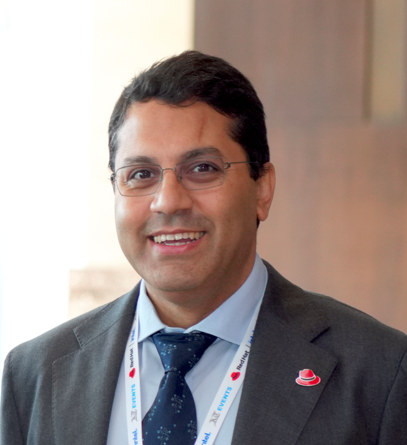
Exclusive interview with Anirban Mukherjee, Director of Solutions Architecture, Red Hat
Digital sovereignty is increasingly moving beyond data residency. What does genuine operational control look like for organisations that need to retain control over their data, applications and infrastructure?
Data residency answers where information sits. Operational control answers who can run, inspect, recover, and change the stack when it matters.
In practice, that means organisations can choose where workloads run – on premises, sovereign cloud, or public cloud – without rewriting applications every time. It means they can audit the software supply chain, keep recovery paths under their own governance, and decide which models, tools, and partners sit in their AI and application environments.
For many MENA enterprises and public-sector bodies, the test is simple: can you keep serving citizens and customers if a single vendor, region, or connectivity path is constrained? Open hybrid platforms give you that room to manoeuvre because the control plane and the open source components stay portable.
As organisations continue to rely on hyperscalers, where do you see the strongest case for combining public cloud with sovereign cloud and on-premises environments?
Hyperscalers remain excellent for elasticity, global reach, and certain managed services. The strongest case for a mixed model is when data sensitivity, latency, or regulatory expectations vary across the same organisation.
We routinely see customer data, AI inference close to the data, and regulated workloads stay in sovereign or on-premises environments, while less sensitive or bursty workloads use public cloud. The point is not to reject public cloud. It is to stop treating it as the only place innovation can happen.
An open hybrid cloud approach lets MENA organisations keep one consistent platform experience across those footprints, so teams are not rebuilding skills and tooling for every environment.
Could the growing AI infrastructure requirement actually increase technology concentration, and what can organisations do to avoid creating a new form of dependency around AI platforms?
Yes, the growing AI infrastructure requirements can actually increase technology concentration, – if every AI workload is tied to one model provider, one accelerator vendor, or one proprietary stack, concentration risk simply moves up a layer.
Organisations reduce that risk by treating AI like the rest of enterprise IT: multiple models for multiple jobs, open tooling where possible, and a platform that can run across hardware and clouds. Smaller, purpose-built open models are often a better fit for specific enterprise tasks than relying on one giant external model for everything.
In the Middle East, where national AI strategies are accelerating investment, the winners will be the ones who can innovate quickly without locking the next decade of infrastructure decisions into a single vendor path.
Open hybrid cloud is often positioned as a way to balance control with access to innovation. What does a mature open hybrid cloud strategy look like in practice?
Maturity looks like consistency. Same platform, same security and policy controls, same developer experience – whether the workload sits in a national data centre, a partner sovereign cloud, or a hyperscaler.
It also looks like deliberate placement: you put each application and AI workload where it creates the best outcome for cost, performance, and governance, and you can move it when those conditions change.
For solution architects in this region, the practical question is: can the customer ship new services without creating a parallel stack every time? If the answer is yes, the hybrid strategy is working.
Vendor dependency is difficult to eliminate entirely. How should organisations assess concentration risk and maintain credible alternatives without creating unnecessary complexity?
You will always have dependencies. The goal is to make them conscious and reversible.
Assess concentration by asking: what breaks if this vendor changes pricing, exits a market, or restricts a capability? Which workloads have no second path? Where does your data or model IP become hard to extract?
Credible alternatives do not mean running five of everything. They mean open standards, portable workloads, and a clear exit or dual-run plan for the few systems that truly matter. Complexity comes from unmanaged sprawl. Discipline comes from a shared platform and clear ownership of what must stay portable.
Red Hat’s role is to help customers keep that optionality – from infrastructure through to AI – so strategic independence is designed in, not bolted on after a crisis.


Mango Jam Studios and The SMC Group Forge Strategic Partnership to Connect Middle Eastern Brands with Global Music and Entertainment Talent

AL HABTOOR GRAND RESORT, AUTOGRAPH COLLECTION APPOINTS CHRISTOPHE DELABARRE AS HOTEL MANAGER

Majid Al Futtaim Partners with Sunset Hospitality Group to Launch Maravelle, a Flagship Wellness and Lifestyle Destination at Ghaf Woods



-

 Trending12 months ago
OPPO A6 Pro 5G Review: Reliable Daily Driver
-

 Tech News2 years ago
Denodo Bolsters Executive Team by Hiring Christophe Culine as its Chief Revenue Officer
-
 VAR2 years ago
Microsoft Launches New Surface Copilot+ PCs for Business
-

 Automotive2 years ago
AGMC Launches the RIDDARA RD6 High Performance Fully Electric 4×4 Pickup
-
Tech Interviews3 years ago
Navigating the Cybersecurity Landscape in Hybrid Work Environments
-

 Hospitality2 years ago
Gulfood 2025 30th Edition Kicks Off Today, Setting New Benchmarks in F&B Growth and Innovation
-

 Tech News1 year ago
Nothing Launches flagship Nothing Phone (3) and Headphone (1) in theme with the Iconic Museum of the Future in Dubai
-

 VAR10 months ago
Huawei Nova 14 Pro Review: Where Camera Excellence Meets Ecosystem Evolution