
 Have a question? +971 56 404 0503




Financial News
Crossing Borders with BKN301, a new Fintech for the Middle East

The editor had an interview with Mr. Stiven Muccioli, CEO and founding investor of BKN301 at Dubai Fintech Summit. BKN301 Group, through a “Banking-as-a-Service” platform and digital e-money model, enables third parties to offer financial, payment and token issuing services. The company aims to become the leading open-market and cross-border operator in the Open Banking and digital payments sector, bringing its solutions to international markets with a strong focus on fast-growing markets (Africa, Middle East and Eastern Europe). The services BKN301 Group offers are easily integrated and enable a wide range of industries such as financial institutions and fintech companies, corporate entities, telcos, utilities, retailers and web3, to offer value added services for their clients. Founded by Stiven Muccioli, Federico Zambelli Hosmer and Luca Bertozzi, and operational since March 2021, has raised a total of EUR 20 million.
Introducing Stiven Muccioli:
Stiven Muccioli is the CEO and founding investor of BKN301, a leading Banking-as-a-Service firm and of the venture capital firm SM Capital. He is a serial tech entrepreneur with extensive experience working in the fintech sector. In this role, he is responsible for overseeing all aspects of the company’s operations, including strategic planning, product development, customer acquisition, and retention. To drive growth and progress, he coordinates and works closely with his teams to explore new avenues and accomplish the company’s objectives and goals. He further ensures that innovation is valued and fostered throughout the company’s operations in order to develop more cutting-edge solutions and products that cater to the evolving financial needs of our customers as well as position BKN301 as one of the leaders in the BaaS industry.
Can you tell us about your career journey and what inspired you to create BKN301?
I started my fintech career 12 years ago with a startup focused on online eCommerce and prepaid cards. At the time, the future of financial services was linked to eCommerce and customer-centric solutions. So, with all my understanding gathered to date, I can say that with the appropriate mix of services, you can leverage and tap into people’s financial activity. So, with the requirements of people and businesses in mind, we developed a super application that connects services such as eCommerce, peer-to-peer services, cross-border services, and others for people’s financial needs.
Our goal was to create a comprehensive solution that meets the financial needs of individuals and businesses in the Middle East and North Africa region. It has around 50 per cent of unbanked population, making it one of the regions with the highest proportion of unbanked individuals in the world.
The embedded finance industry in the MENA region is projected to grow at a compound annual growth rate (CAGR) of 27.8 per cent to USD 39,820 million by 2029, from USD 10,359 million in 2022. This has also led to a remarkable progress in the fintech sector, which is witnessing adoption and utilisation of innovative technologies. We are working relentlessly to bridge the gaps and provide businesses in the region access to our ground-breaking payment solutions and services. As pioneers in introducing integrated financial technologies to the region, we take great pride in our accomplishments. Our unwavering commitment to continuous innovation drives us to enhance our services and provide an even better experience for our valued customers.
What brings you to the Middle Eastern region?
These two factors bring me here – one is the population demographics, and the other is the importance of being the remittance corridor for other parts of the world. The MENA region is among the biggest corridors for cross-border remittances, and there is also full mobile penetration in these regions.
What are some current challenges in this space, and what strategies do you have in place to address them?
We operate in the B2B business sector, and our main challenge is finding the right fintech partners to provide our services. These partners need to have a wide reach in their respective countries and a good understanding of the changing behaviours of their local populations.
The second challenge is the regulatory hurdles that corporations face in different countries. Our company’s objective is to build businesses that comply with regulatory norms in different nations. Currently, we are operating in San Marino, Georgia, Egypt, and Qatar, and our next focus will be on Saudi Arabia, Jordan, Central Asia, and South Asia. To address these challenges, we are continuously searching for the right partners and working closely with regulators to ensure compliance with local laws and regulations.
What changes do you foresee for payment gateway applications in the future?
In the future, we expect to see new ways of lending money through payment gateways. This will pose a significant challenge to the traditional banking system in the region. Additionally, banking as a service will become more open to digital services. However, the lack of interoperability between countries will remain a challenge.
How does your organization approach the aspect of data security?
At our organization, we have a cloud platform, and we work without moving data out of the country. We collaborate with local providers to maintain the highest level of data security. We take data security very seriously and have implemented various measures to protect our clients’ data from unauthorized access, disclosure, or modification.

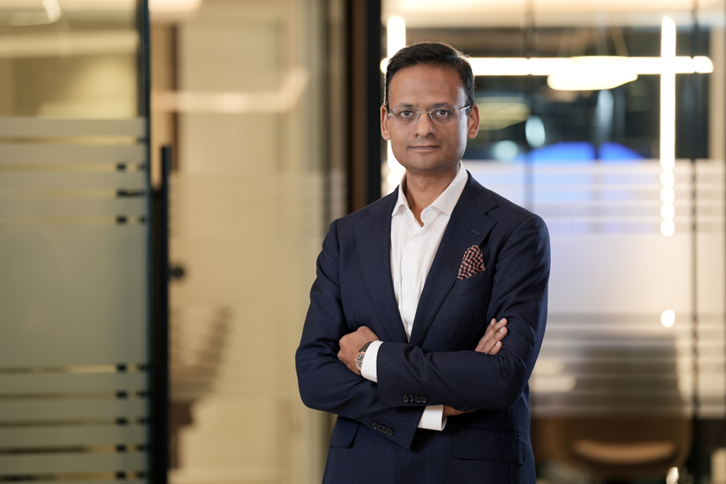
The UAE Ministry of Finance has issued Ministerial Decision No. 24 of 2026, setting out the detailed implementation rules for the country’s first-ever Research and Development (R&D) Tax Credit regime under the Corporate Tax framework. Effective for Tax Periods commencing on or after 1 January 2026, the decision establishes a progressive, tiered credit structure with rates of 15%, 35% and 50%, linked to both the level of qualifying R&D expenditure and the number of R&D staff employed. The maximum qualifying expenditure is capped at AED 5 million per entity or Tax Group per year.
“The R&D Tax Credit is a landmark development, but it is not a simple year-end adjustment. The dual-threshold design means this is as much a workforce planning exercise as a tax planning one. Businesses need to understand that pre-approval from the Council is mandatory before any credit can be claimed – this is a precondition, not an administrative formality. Companies that begin mapping their R&D activities against the Frascati Manual criteria, quantifying qualifying expenditure and building their documentation framework now will be in the strongest position when it comes time to file,” said Nimish Goel, Leader Middle East, Dhruva, Ryan LLC Affiliate.
The move represents one of the clearest signals yet that the UAE intends its tax framework to actively incentivise innovation, influence capital allocation and support the country’s long-term economic diversification going well beyond revenue collection and international alignment. For businesses operating in manufacturing, technology, engineering, healthcare, food and beverage, agriculture, and other innovation-led sectors, the key consideration is whether internal systems are equipped to capture the benefit.
The credit operates on a dual-threshold basis that is unlike most international R&D incentive regimes. To access each tier, a business must satisfy both a minimum qualifying expenditure level and a minimum average R&D headcount. The first AED 1 million of qualifying spend attracts a 15% credit, requiring at least two R&D staff. The portion between AED 1 to 2 million qualifies at 35%, requiring at least six staff. Spend between AED 2 to 5 million qualifies at 50%, requiring at least fourteen staff. If the headcount threshold is not met, the credit rate drops to the highest tier where both conditions are satisfied, creating material cliff-edge effects that make workforce planning an integral part of tax planning for the first time in the UAE.
Qualifying R&D activities must meet five criteria drawn from the OECD Frascati Manual; they must be novel, creative, uncertain in outcome, systematic, and transferable or reproducible. Activities in social sciences, humanities and the arts are excluded, and only R&D conducted within the UAE qualifies. Qualifying expenditure falls into three categories: staff costs (which receive a 30% overhead uplift), consumable costs, and subcontracting fees paid to UAE-based contractors. Intra-group transactions are consistently excluded from qualifying expenditure, a design choice that will require groups with centralised R&D functions to review their cost allocation and transfer pricing arrangements carefully.
The decision also introduces a mandatory pre-approval process administered by the Council, ongoing compliance reporting obligations, and a seven-year record-keeping requirement for technical documentation covering R&D objectives, methodologies, experiments and findings. These requirements signal that the UAE authorities expect robust, contemporaneous evidence of qualifying activities, not retrospective assembly at the time of filing.
Commenting on the development, Justin Arnesen, Principal, Practice Leader, Europe & Asia Pacific Innovation Funding, Ryan, said, “Ryan’s global experience in R&D tax credits shows that the difference between a policy announcement and a commercial outcome lies in the rigour of eligibility analysis, documentation and claims management. We have helped UK businesses receive over AED 2.5 billion in innovation funding through R&D Tax credits. These outcomes were driven by disciplined processes, not just the existence of a credit. This initiative not only aligns with global best practices but also sends a clear signal to multinational organisations and emerging enterprises that the UAE is serious about fostering a knowledge and innovation-based economy.”
Implications for Multinational Groups under Pillar Two
For multinational groups within the scope of the UAE’s Domestic Minimum Top-up Tax (DMTT), the R&D Tax Credit adds an important layer to Effective Tax Rate (ETR) modelling. Because the credit is non-refundable, it is likely to be treated as a reduction of covered taxes under the Global Anti-Base Erosion (GloBE) rules rather than as a Qualified Refundable Tax Credit, a distinction that can lower the jurisdictional ETR rather than improve it. For groups operating at or near the 15% minimum rate, this means the credit could paradoxically increase Top-up Tax exposure even as it reduces Corporate Tax liability.
However, the decision provides a mechanism for unutilised credits to offset top-up tax directly through the Domestic Group structure, which partially mitigates this effect. Multinationals should model the net impact across both Corporate Tax and top-up tax before claiming, and factor in the five-year claw-back provision that applies if the entity’s status changes – including becoming a qualifying free zone person or redomiciling outside the UAE.
For businesses with cross-border operations, the commercial value of the R&D Tax Credit extends beyond the direct tax saving. The credit’s treatment in the group’s wider international tax profile, including its classification under tax treaties, its interaction with Pillar Two ETR calculations, and its impact on transfer pricing for cost contribution arrangements will require integrated advisory across multiple disciplines. Groups conducting joint R&D through cost contribution arrangements should note that only the arm’s length share of contributions attributable to UAE-based R&D qualifies, adding a transfer pricing dimension to credit planning. The Ministerial Decision applies to Tax Periods and Fiscal Years commencing on or after 1st January 2026.
“The UAE has built a thoughtful, well-structured framework with clear international lineage – the Frascati Manual criteria, the tiered incentive design, the Pillar Two integration. Early investment in activity mapping, expenditure tracking and documentation is likely to determine the extent to which businesses can access and sustain benefits under the regime,” concluded Nimish.

Bitcoin edged higher last week, gaining 11%, yet it continues to struggle to convincingly break through the $74,000 resistance level, according to Simon Peters, crypto analyst at eToro.
US bitcoin spot ETFs recorded $763 million in net inflows over the past week, helping to push prices higher. Strategy, the largest bitcoin treasury company by total holdings, also disclosed another significant purchase of 17,994 bitcoin for approximately $1.28 billion.
Looking ahead, the Federal Reserve meeting this week could prove pivotal in determining whether bitcoin breaks above the $74,000 level or experiences a correction. While markets had previously anticipated a dovish pivot, a sudden spike in oil prices due to the ongoing conflict in the Middle East may prompt the Fed to reconsider its outlook.
“The consensus is for the Fed to hold rates on Wednesday, but if Chairman Powell signals in his press conference that the central bank is prepared to raise rates should oil prices remain elevated or continue rising, this could trigger a sell-off in cryptoasset prices,” said Peters.
The meeting will also see the release of the Federal Reserve’s latest “dot plot”, offering insights into where each Federal Open Market Committee participant believes interest rates should be by the end of the year, next year and over the longer term.
AI tokens surge amid Nvidia comments
Among the biggest movers in the crypto market over the past week were AI-related tokens TAO and FET, both rising 47% as investors rotated into the sector following bullish remarks about artificial intelligence by Nvidia CEO Jensen Huang.
Ahead of Nvidia’s GTC AI conference this week, Huang described AI as “essential infrastructure”, stating that every company and nation will build and use it.
These comments have renewed interest in on-chain, decentralised AI networks, pushing tokens such as TAO and FET higher.
Mastercard launches crypto partner program
Mastercard has launched its Mastercard Crypto Partner Program, a new global initiative bringing together more than 85 companies across the crypto ecosystem, including exchanges, stablecoin issuers and blockchain development teams.
The program aims to foster dialogue and collaboration as the crypto sector continues to mature. Participants will work with Mastercard teams to combine the speed and programmability of blockchain technology with Mastercard’s merchant network spanning more than 210 countries.
The initiative builds on Mastercard’s existing digital asset activities, including its Start Path blockchain track, Engage platform and Crypto Card program.
Bitcoin reaches 20 million supply milestone
Bitcoin reached a historic milestone last week when the 20 millionth bitcoin was mined, marking the issuance of more than 95% of the cryptocurrency’s total capped supply of 21 million coins.
The milestone was reached on 10 March at block height 931200, 17 years after the network first launched. Due to Bitcoin’s halving schedule, the remaining one million coins are expected to take approximately another 114 years to be mined, with the final bitcoin projected to enter circulation around the year 2140.
Crossing the 20 million milestone again highlights Bitcoin’s scarcity dynamics. With demand continuing to outpace the new supply issued daily by miners and many holders unwilling to sell at current prices, the market could be positioned for a significant move higher over the coming months and years.
Financial
ABA Legal Highlights UAE’s Legal Framework as Catalyst for the Next Wave of Foreign Investment


In alignment with the UAE’s ambitious vision to evolve into a global hub for business and foreign capital, ABA Legal, a boutique corporate law consultancy headquartered in Abu Dhabi, UAE, has announced its bold and strategic expansion of Legal Structure Mapping – a refined core advisory specially mentoring FDI and investors in interpreting and navigating the UAE’s investor-focused legal framework across the region. The move strengthens the firm’s positioning as one of a kind legal resource for foreign investors seeking clarity, compliance, and structured market entry within the UAE.
The United Arab Emirates has rapidly evolved into a leading destination for global business and foreign capital. According to recent government and industry reports, the UAE continues to rank among the top global destinations for foreign direct investment inflows, driven by continuous legal and regulatory modernization. ABA Legal observes that legal clarity, regulatory certainty, and structural reforms are increasingly central to investor decision-making, with businesses placing greater emphasis on well-defined legal pathways, ownership structures, and enforceability before committing capital to new markets.
Commenting on the evolving landscape, Ms. Geethalakshmi Ramachandran, Managing Counsel at ABA Legal, said “The UAE’s legal framework today is not only progressive but highly responsive to global investor expectations. The shift toward full foreign ownership, stronger dispute resolution systems, governance reforms, and IP protection has significantly enhanced legal certainty. At ABA Legal, our core service now is guiding foreign investors through these reforms with clarity and precision, ensuring they can structure, enter, and operate in the UAE market with confidence and long-term security. We aim to become the Legal Mentors for FDIs and Investors UAE interest”
A New Era of Legal Reform
The UAE has entered a new era of legal reform designed to strengthen transparency, predictability, and investor confidence across its commercial ecosystem. One of the most significant developments has been the overhaul of foreign ownership regulations. Sectors that previously required majority UAE national ownership have been widely liberalized, enabling 100% foreign ownership across a growing range of industries, including technology, manufacturing, and professional services. From a legal standpoint, this marks a structural realignment of the corporate framework, giving investors greater control over governance and operations while reducing compliance ambiguity and intermediary dependence. The reforms align the UAE with global best practices and reinforce its appeal for long-term, high-value investment.
Strengthening Contract Enforcement and Dispute Resolution
Investor confidence is closely tied to enforceability and legal certainty. The UAE has modernized commercial laws and strengthened dispute resolution mechanisms to create a secure environment for international business. Specialized courts operating under internationally recognized standards and common law principles, alongside stronger integration with global arbitration systems, ensure disputes are resolved efficiently and impartially. This protects contractual rights, lowers legal risk, and supports long-term cross-border investment strategies.
Governance, Transparency, and Investor Protection
Governance, transparency, and investor protection have also been enhanced through stricter corporate reporting, anti-money laundering, and financial compliance frameworks. These measures reduce regulatory uncertainty and strengthen market credibility by embedding internationally recognized standards into law. Investors benefit from a more stable, accountable, and transparent operating environment.
Free Zones: Tailored Legal Advantages: Free zones continue to play a central role in the UAE’s foreign investment strategy, offering tailored legal and regulatory advantages such as full foreign ownership, capital repatriation, customs exemptions, and flexible employment and residency structures. Designed around priority sectors, these zones combine flexibility with legal certainty and reduced administrative burden.
Modern Commercial Laws, Digital Economy Support, and IP Protection
Recent updates to commercial company regulations, data protection laws, and intellectual property protections further support digital economy and innovation-driven businesses. Together, these reforms create a resilient and adaptable legal ecosystem that not only attracts foreign capital but enables sustainable, knowledge-based growth; with ABA Legal supporting investors through structured legal guidance in this evolving framework.
For global investors seeking stability, transparency, and strategic opportunity, the UAE’s legal framework is more than supportive, it is a dynamic engine for capital inflow, innovation, and knowledge-based economic development, with ABA Legal serving as a strategic legal mentor in this journey.

THE INFORMATION PARADOX IN MODERN MARKETS: WHY MORE DATA DEMANDS BETTER JUDGEMENT
RIVA BEACH CLUB WELCOMES FAMILIES FOR A FUN-FILLED EASTER BY THE BEACH
EMARAT SUPPORTS HSE EXPO UNDERSCORING HEALTH, SAFETY AND ENVIRONMENTAL LEADERSHIP



-
News10 years ago
SENDQUICK (TALARIAX) INTRODUCES SQOOPE – THE BREAKTHROUGH IN MOBILE MESSAGING
-

 Tech News2 years ago
Denodo Bolsters Executive Team by Hiring Christophe Culine as its Chief Revenue Officer
-
 VAR12 months ago
Microsoft Launches New Surface Copilot+ PCs for Business
-

 Trending5 months ago
OPPO A6 Pro 5G Review: Reliable Daily Driver
-

 Tech Interviews2 years ago
Navigating the Cybersecurity Landscape in Hybrid Work Environments
-

 Tech News9 months ago
Nothing Launches flagship Nothing Phone (3) and Headphone (1) in theme with the Iconic Museum of the Future in Dubai
-

 Automotive2 years ago
AGMC Launches the RIDDARA RD6 High Performance Fully Electric 4×4 Pickup
-

 VAR2 years ago
Samsung Galaxy Z Fold6 vs Google Pixel 9 Pro Fold: Clash Of The Folding Phenoms