
 Have a question? +971 56 404 0503




Tech News
Microsoft launches new tools and features for developers to accelerate AI innovation at Build 2024; announces updates of Microsoft Copilot stack


Microsoft is empowering developer communities across the region to create and deliver the next generation of differentiated Artificial Intelligence (AI) experiences with a host of new product launches and feature updates to its portfolio of AI solutions announced at the Build 2024 conference.
New updates across Microsoft’s Azure AI Services include Azure AI Studio now being generally available as a key component of the Microsoft Copilot stack. In addition, GPT-4o, OpenAI’s latest flagship model, is now available in Azure AI Studio and as an API. This groundbreaking multimodal model integrates text, images, and audio processing to set a new standard for generative and conversational AI experiences. Also, Phi-3-vision, a new multimodal model in the Phi-3 family of AI small language models (SLMs) developed by Microsoft, is now available in preview in Azure.
Microsoft is also empowering developers to get the most of their data and make more informed decision through updates in Microsoft Fabric. Real-Time Intelligence, currently in preview, within Microsoft Fabric is designed to empower everyday analysts with simple low-code/no-code experiences, as well as pro developers with code-rich user interfaces to act on high volume, time-sensitive and highly granular data in a proactive and timely fashion. Also in preview is the Microsoft Fabric Workload Development Kit, a set of tools designed to extend applications within Fabric, creating a unified user experience for developers and independent software vendors (ISVs).
As part of Microsoft’s mission to support professionals to spend less time on mundane and repetitive tasks and instead focus on more strategic and fulfilling work, the company has also unveiled a series of updates and features to its Copilot stack, starting with Team Copilot. The solution expands Copilot for Microsoft 365 from a behind-the-scenes personal AI assistant to work on behalf of a team, greatly improving collaboration and project management. New capabilities in Microsoft Copilot Studio have also been introduced to support developers in building custom copilots that act as agents which can respond proactively to specific data and events. GitHub is also introducing the first set of GitHub Copilot extensions, developed by Microsoft and third-party partners, in private preview to allow developers to customize their GitHub Copilot experience with their preferred services like Azure, Docker, Sentry and more directly within GitHub Copilot Chat.
Frank X. Shaw, Chief Communications Officer at Microsoft, said: “Since it was first released, Copilot has emerged as a game-changer for many people and organizations across industries, empowering them to improve their efficiency, enhance customer experiences, and tackle complex tasks. Over the past year, we’ve built Microsoft Copilot and released more than 150 updates to it, and we’ve developed the Copilot stack, which takes everything we’ve learned so far and lets developers build their own copilots. And now, as we enter a new phase of innovation where Copilot begins to take more action on behalf of individuals and teams, we are introducing a number of expansions and capabilities to further empower developers to create highly intelligent Copilots that are tailored to their unique and individual needs.”
To ensure that developers are able to run demanding AI and high-performance computing (HPC) workloads like Azure OpenAI Service, a new Cobalt 100 Arm-based virtual machine (VM), based on Microsoft’s custom silicon series announced in November 2023, is now in preview, and the new Azure ND MI300X v5 VM is now generally available. These announcements build on Microsoft’s earlier launch of Copilot+ PCs, a new category of intelligent Windows PCs designed exclusively for AI. With powerful new silicon capable of 40+ trillion operations per second (TOPS), all–day battery life, and access to the large language models (LLMs) running in Microsoft Azure Cloud in concert with small language models (SLMs), Copilot+ PCs are able to achieve a level of performance never seen before.
Copilot+ PCs also unlock a new set of experiences for users such as instantly finding what they have seen or done on their PC with Recall, generating and refining AI images in near real-time directly on the device using Cocreator, bridging language barriers with Live Captions, and translating audio from 40+ languages into English. These experiences come to life on a set of thin and light devices from Microsoft Surface and our OEM partners Acer, ASUS, Dell, HP, Lenovo and Samsung. Pre-orders for the devices, which start from $999, are open, with general availability starting on June 18, 2024. Together with the latest features announced at Build 2024, the devices will be at the forefront of making Windows the most open platform for AI and the best place for developers.











Tech News
Intersec Global 2027 and EACOH partner to advance safer, healthier and more inclusive workplaces
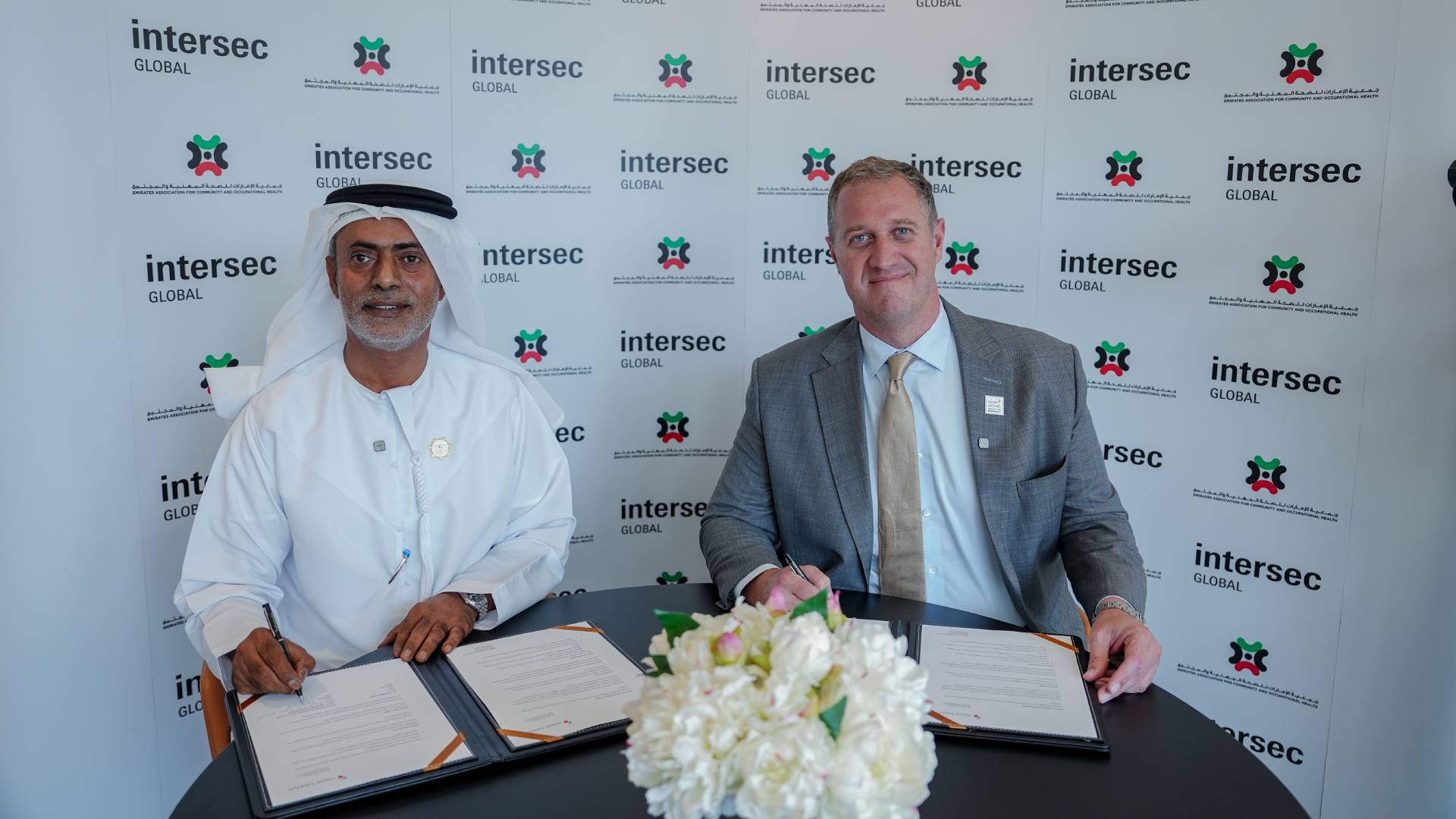
Intersec Global 2027, the leading international exhibition for safety, security and resilience, has signed a Memorandum of Understanding (MoU) with the Emirates Association for Occupational Health (EACOH) to strengthen collaboration on workplace health and safety, wellbeing, and inclusion.
The agreement was signed today in Dubai, marking the start of a strategic partnership ahead of the 2027 edition, which takes place from 12 to 14 January 2027 at Dubai World Trade Centre and will bring together government officials, regulators, industry leaders, innovators, and buyers to drive commercial growth and set industry benchmarks.
Under the agreement, EACOH will lead the new Workforce Safety, Resilience & Inclusion Hub on the final day of Intersec Global, anchoring the event’s dedicated Safety & Wellbeing domain. The partnership reflects Intersec’s broader remit beyond traditional fire and security into organisational resilience, business continuity and occupational health. In turn, the dedicated show-floor feature provides EACOH with a direct platform to connect its expertise in workforce wellbeing and preventive health with an international audience of cross-sector leaders.
The Hub’s live and interactive format will showcase innovations in workforce safety, human performance and inclusive workplace design, including rapid-fire demonstrations, a Human Performance Challenge and an interactive critical infrastructure incident scenario.
Moving beyond conventional conference content, the Hub will offer hands-on, practical engagement while bringing together adaptive technologies, smart personal protective equipment (PPE), AI-driven monitoring and solutions that empower People of Determination. “Intersec Global continues to evolve in line with the changing needs of the industries it serves,” said Nathan Waugh, Portfolio Director, Security, Technology, Production at Messe Frankfurt Middle East, the organiser of Intersec Global 2027. “Safety, security and resilience are no longer separate conversations. They are intrinsically linked. Our partnership with EACOH and the launch of the Workforce Safety, Resilience & Inclusion Hub reflect our commitment to creating innovative, highly interactive experiences that connect stakeholders, showcase emerging solutions and help shape more resilient organisations and communities worldwide.”
Professor Dr Nahyan Helal MD, MSc, PhD, President of EACOH, added: “Workforce health, safety and wellbeing are fundamental to economic resilience and sustainable development. Across the UAE and the wider region, organisations are placing greater emphasis on preventive health, occupational safety and inclusive workplace practices. Through this partnership with Intersec Global, we have a valuable opportunity to share expertise, highlight regional priorities and engage an international audience in advancing safer, healthier and more resilient workplaces for the future.”
Tech News
From 350+ Applications to One Champion: School of Cyber Defense Final Stage at GISEC GLOBAL 2026
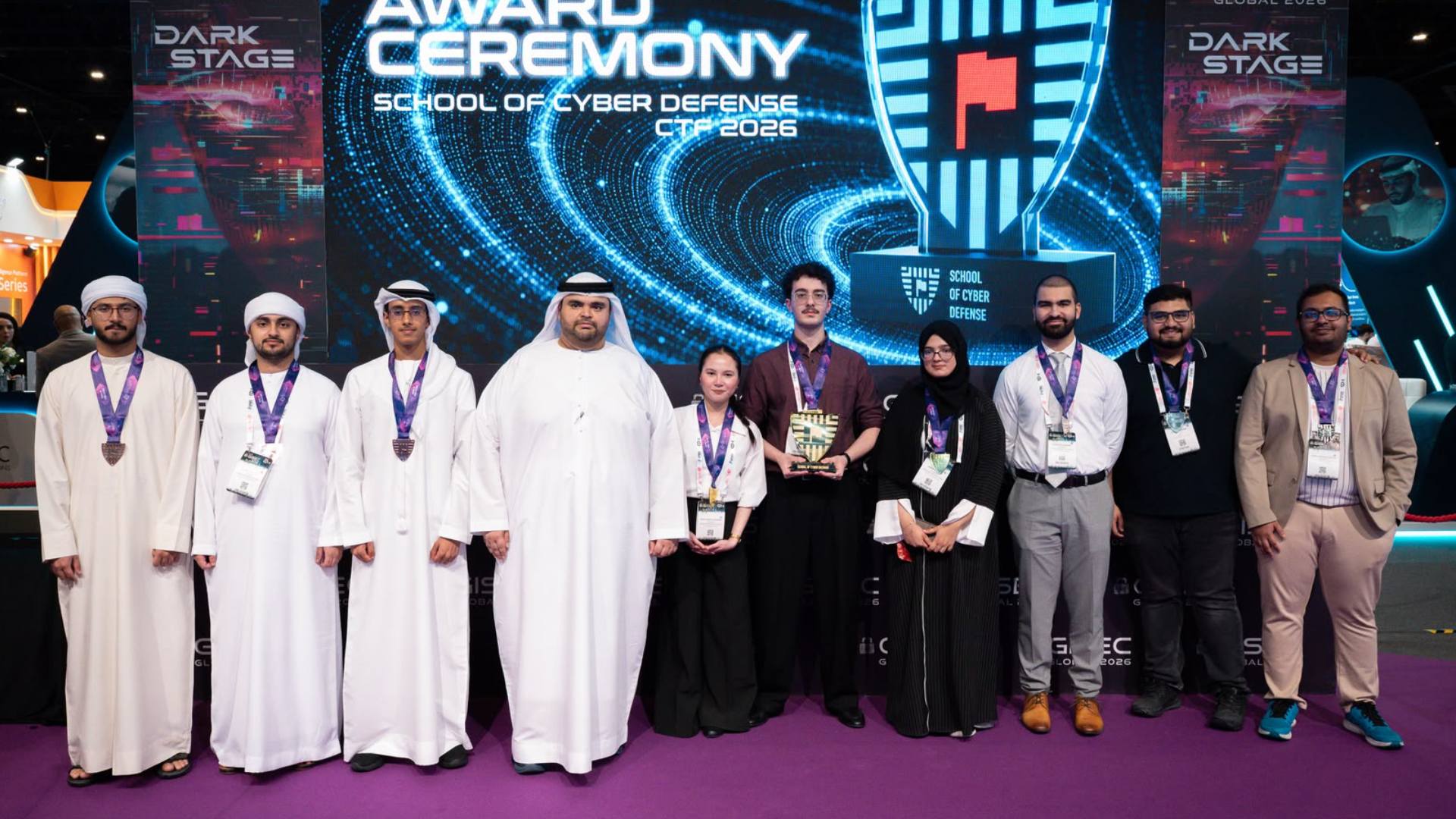
The second edition of the School of Cyber Defense competition reached its final at GISEC GLOBAL 2026, bringing the strongest student cybersecurity teams in the UAE to Dubai Exhibition Centre, Expo City. Building on its 2025 debut, the competition came back larger in scale and tougher in format: this year, participants had to do more than defend systems. They had to design working solutions to real industry challenges.
The competition was hosted by the Dubai Electronic Security Center (DESC) and organized by Techfirm. It drew more than 350 applications from students at more than 30 universities across the country. The road to the final ran through three stages:
Qualification. More than 300 participants from over 90 teams completed an automated, scenario-based qualification round. Over 90% of active teams scored above the 70% threshold needed to advance.
Case challenge. More than 70 teams submitted solutions to one of 15 official challenge briefs. An expert jury assessed each submission on fit to the brief, relevance, a working prototype, technical depth and innovation.
Live final. Only the seven highest-scoring teams reached the GISEC stage, fewer than one in ten of the teams that submitted a case. Finalists presented and defended their solutions live in front of the jury. The finalists represented BITS Pilani Dubai, American University of Sharjah, Al Ain University, Middlesex University Dubai, University of Wollongong in Dubai, University of Dubai and Abu Dhabi Polytechnic.
Winners of the School of Cyber Defense 2026:
- 1st Place: Unlisted (Middlesex University Dubai)
- 2nd Place: AUSec (American University of Sharjah)
- 3rd Place: ADPoly CyberGuard (Abu Dhabi Polytechnic)
The competition featured a prize pool worth AED 55,000, shared among the winning teams.
The competition was made possible by partners committed to developing young talent and strengthening the region’s cybersecurity workforce. The Competition Industry Partners include AMD, Dahua Technology, Kaspersky, KERNO and M1 Global Infrastructure. The Competition Gold Partners are Anker Innovations, Circularo, HPE, Huawei, KnowBe4, RAS Infotech and Spire Solutions. Secureway is the Competition Silver Partner.
Now in its second year, the School of Cyber Defense has become a recurring platform where the UAE’s future cybersecurity professionals test their skills against the demands of the real industry.
Tech News
Nemetschek Arabia Showcases Connected Technologies for Smarter Facilities Management at SFMA EXPO 2026
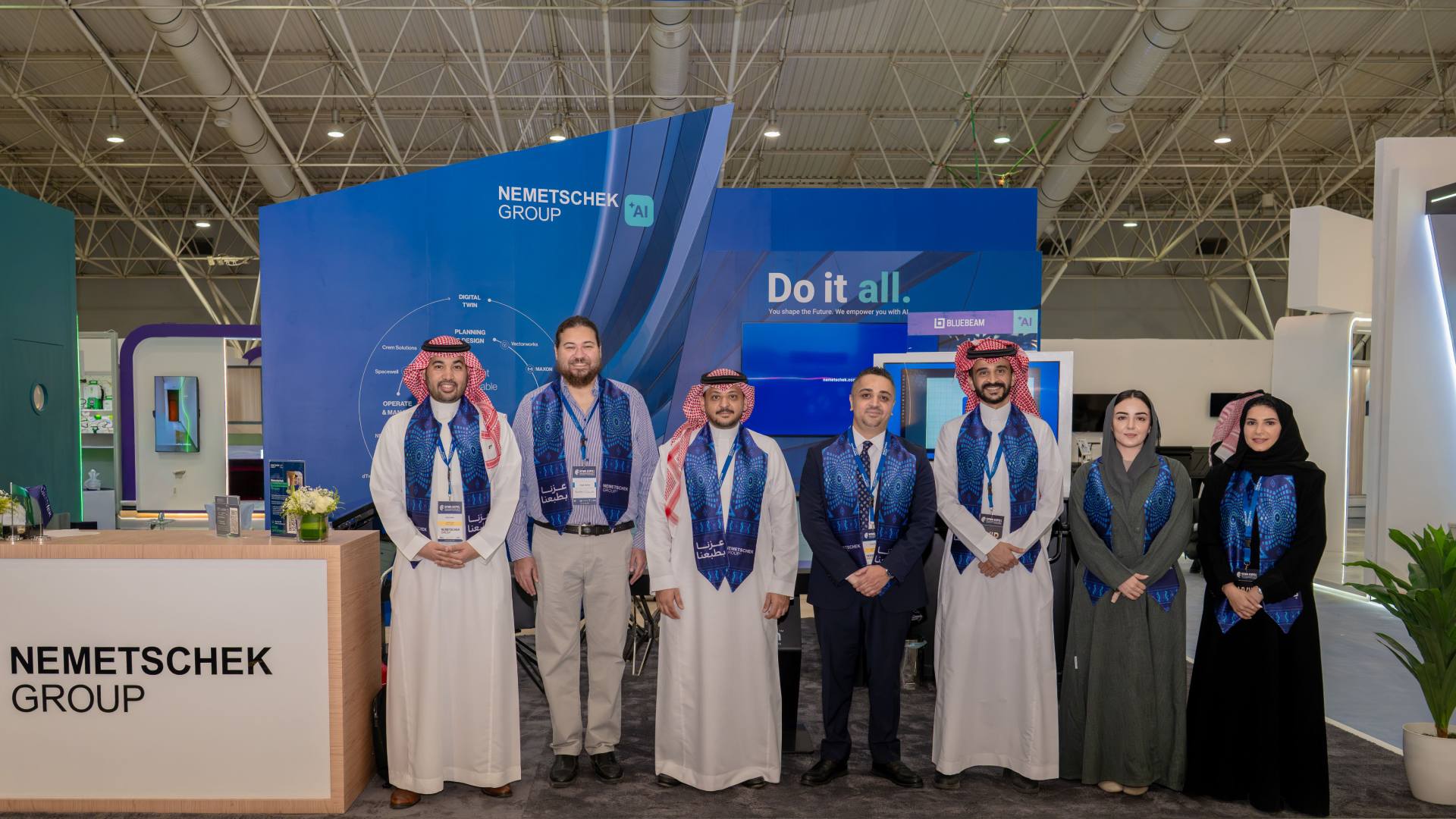
Nemetschek Arabia, part of the Nemetschek Group, one of the world’s leading software providers for the Architecture, Engineering, Construction and Operations (AEC/O) industry, is showcasing its vision for the future of facilities management at SFMA EXPO 2026, which is taking place at the Riyadh International Convention & Exhibition Center (RICEC).
Participating as a Golden Sponsor, Nemetschek Arabia is demonstrating how connected digital technologies can help organizations improve operational efficiency, enhance asset performance, and support more sustainable outcomes across the entire facility lifecycle. Visitors to Booth G02 at the event will have the opportunity to explore solutions from Bluebeam, Spacewell, GoCanvas, and Nemetschek dTwin, each designed to help facility owners and operators connect people, processes and data through integrated digital workflows.
“Facilities management is becoming increasingly strategic as organizations seek new ways to maximize asset performance, improve sustainability, and deliver better experiences for occupants and stakeholders,” said Eng. Muayad Simbawa, Managing Director of Nemetschek Arabia. “The future of the sector will be defined by connected ecosystems where people, data and technologies work together seamlessly. Through our participation at SFMA EXPO 2026, we are demonstrating how digital twins, smart workplace solutions, connected workflows and real-time operational intelligence can help organizations unlock greater value from their facilities while supporting the Kingdom’s Vision 2030 ambitions.”
Empowering organizations to build smarter facilities
At the exhibition, visitors can experience how Bluebeam enables seamless collaboration across project and operations teams, helping stakeholders work more efficiently with accurate and accessible information. Meanwhile, Spacewell empowers smarter workplace and facility management through data-driven insights and intelligent operations, while GoCanvas streamlines field processes through digital forms and real-time data capture. And Nemetschek dTwin showcases the power of digital twins in transforming facility operations through real-time asset visibility, predictive maintenance and performance optimization.
As part of its participation, Nemetschek Arabia experts will also contribute to the event’s thought leadership program. Muayad Simbawa will participate in a panel discussion titled “Enhancing Organizational Performance: Hybrid Work Models, Data Analytics, and Advanced Management Technologies,” exploring how organizations can leverage emerging technologies and data-driven insights to adapt to a rapidly evolving business landscape. In addition, Ahmad Hisham Khairat, Regional Presales Engineer, and Ahmad Al Zaben, Technical Consultant, will share their perspectives on the role of BIM, digital twins and integrated digital ecosystems in transforming facility operations and management.
Further reinforcing its commitment to advancing the facilities management sector, Nemetschek Arabia is building on its strategic collaboration with the Saudi Facility Management Association (SFMA) announced earlier this year. The partnership focuses on accelerating digital transformation, knowledge exchange, workforce development and the adoption of innovative technologies that support smarter and more sustainable facilities across the Kingdom.
SFMA EXPO 2026 brings together facility management leaders, technology providers and industry experts from across the region to explore the trends, innovations and strategies shaping the future of the sector. Visitors can learn more about Nemetschek Arabia’s solutions at Booth G02 throughout the event.


Europe’s Data Centres Are Evolving From Power Consumers to Energy Partners

Fimple adds five GCC financial institutions in first year, targets doubling regional customer base

New Initiative ‘Longevity Starts From Childhood’ Connects the Early Years With Lifelong Wellbeing



-
News11 years ago
SENDQUICK (TALARIAX) INTRODUCES SQOOPE – THE BREAKTHROUGH IN MOBILE MESSAGING
-

 Trending11 months ago
OPPO A6 Pro 5G Review: Reliable Daily Driver
-

 Tech News2 years ago
Denodo Bolsters Executive Team by Hiring Christophe Culine as its Chief Revenue Officer
-
 VAR1 year ago
Microsoft Launches New Surface Copilot+ PCs for Business
-

 Automotive2 years ago
AGMC Launches the RIDDARA RD6 High Performance Fully Electric 4×4 Pickup
-
Tech Interviews3 years ago
Navigating the Cybersecurity Landscape in Hybrid Work Environments
-
 Tech News2 years ago
Toshiba Announces MG10-D Series of Enterprise HDDs with Capacities up to 10TB
-

 Tech News1 year ago
Nothing Launches flagship Nothing Phone (3) and Headphone (1) in theme with the Iconic Museum of the Future in Dubai