
 Have a question? +971 56 404 0503





Tech News
Qualys launches AI-powered Web Application Scanning (WAS) with API security


Qualys has announced the launch of its API security platform that leverages AI-powered scanning and deep learning-based web malware detection to secure web apps and APIs across the entire attack surface, including on-premises web servers, databases, hybrid, multi-cloud environments, API gateways, containerized architectures, and microservices.
APIs are integral to digital transformation initiatives across industries. The latest data indicates that over 83% of web traffic now comprises API traffic, highlighting their critical role in modern web applications using microservices, cloud, and hybrid environments. However, this also underscores the vulnerabilities that accompany their widespread adoption.
“Many organizations use a variety of security tools, such as SAST, DAST, SCA, or point solutions for API security that often operate in isolation, without a unified platform to integrate their findings. Moreover, the absence of integration between these tools leads to a fragmented view of the application security posture and results in uncoordinated efforts and gaps in security coverage. Similarly, SAST & DAST tools offer limited coverage for API-specific issues and focus predominantly on code vulnerabilities,” commented Kunal Modasiya, Vice President, Product Management, CyberSecurity Asset Management, Qualys. “Mainly, these solutions fail to extend their assessment to the runtime or environmental threats where APIs operate and provide visibility into the vulnerabilities of the underlying infrastructure hosting these APIs, leaving significant security gaps at the network and host levels.”
Qualys API security addresses and allows organizations to:
- Measure API risks across all attack surfaces with a unified view of API security by discovering & monitoring every API asset across diverse environments, enabling better decision-making and faster response times.
- Communicate API risks like OWASP API Top 10 vulnerabilities & drift from OpenAPI specs with real-time threat detection and response, minimizing the risk window and enhancing overall security.
- Eliminate API risks with integrated workflows supporting Shift-Left & Shift-Right practices, bridging the gap between IT and security teams, promoting seamless collaboration, and improving operational efficiency.
Key features of Qualys API
1. Comprehensive API discovery and inventory management
Qualys WAS with API Security automatically identifies and catalogs all APIs within an organization’s network, including internal, external, undocumented, rogue, and shadow APIs. Whether APIs are deployed in multi-cloud environments (AWS, Azure), containerized architectures (Kubernetes), or API gateways (Apigee, Mulesoft), Qualys’ continuous discovery ensures an updated inventory across all platforms, preventing unauthorized access points and shadow APIs.
2. API vulnerability testing & AI-powered scanning
Qualys provides comprehensive API vulnerability testing using 200+ prebuilt signatures to detect API-specific security vulnerabilities, including those listed in the OWASP API Top 10, such as rate limiting, authentication & authorization issues, PII collection, and sensitive data exposure. Moreover, for large applications, Qualys combines the power of deep learning and AI-assisted clustering to perform efficient vulnerability scans. This smart clustering mechanism targets critical areas, achieving a 96% detection rate with an 80% reduction in scan time.
3. API compliance monitoring
Qualys performs both active and passive compliance monitoring to identify and address any drift or inconsistencies in API implementation and documentation in adherence to the OpenAPI Specification (OAS v3). Clear, standardized API documentation, in adherence to OAS, ensures that shared documentation is easily understood by recipients, simplifies security assessments and enforcement, and enhances the accuracy of code, benefiting both automated tools and human developers. Qualys also continuously monitors APIs for compliance with industry standards such as PCI-DSS, GDPR, and HIPAA to ensure that APIs remain compliant with evolving regulations, avoiding potential fines and enhancing data protection.
4. API risk prioritization with TruRisk
Qualys leverages its proprietary TruRisk scoring system, which integrates multiple factors such as severity, exploitability, business context, and asset criticality to prioritize risks based on overall business impact, ensuring that the most critical vulnerabilities are addressed first. It also categorizes risks based on the OWASP API Top 10, helping organizations focus on the most prevalent and severe API security threats.
5. Seamless integration with Shift-Left and Shift-Right workflows
Qualys integrates seamlessly with existing CI/CD tools (e.g., Bamboo, TeamCity, Github, Jenkins, Azure DevOps) and IT ticketing systems (e.g., Jira, ServiceNow), supporting both shift-left and shift-right security practices. This facilitates automated security testing and real-time threat detection and response without disrupting development workflows. By bridging the gaps between IT and security teams, Qualys ensures smoother operational transitions, improving API security practices and reducing the risk window.









Tech News
Data Center World Middle East to focus on the industry collaboration critical to Abu Dhabi’s AI ambitions

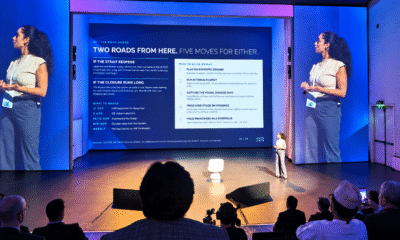
Abu Dhabi’s data center industry is entering a critical phase in which hyperscalers and organisations building and running its capacity must work as one with government to create the foundations needed to build AI infrastructure at scale. How the industry moves from individual projects to a unified approach will be high on the agenda at Data Center World Middle East, the premier global event for data center, IT infrastructure and innovation for more than four decades, which makes its Middle East debut in Abu Dhabi next week.
Abu Dhabi is already the Middle East’s largest data center market, with 374MW of IT capacity, according to the EMEA Mid-Year Data Center Report 2026 from JLL, the global commercial real estate and investment management firm. The Department of Energy expects AI infrastructure to need around 2GW of power in a first phase, rising to 5GW, and is thus investing AED 250 billion in energy and water infrastructure between 2025 and 2035. Mehdi Paryavi, Chairman and CEO, International Data Center Authority (IDCA), who speaks on the opening panel, “AI, Power & Sovereign Demand,” said: “The biggest gap in making Gulf data centers AI-ready is the lack of a coordinated approach to scale. The region needs adaptable standards, a skilled workforce, long-term regional planning, reliable energy at the scale AI requires, and greater stability. Developers must look beyond individual facilities and work with governments, utilities, and industry partners to build an ecosystem that can support sustainable, large-scale AI infrastructure.”

For the companies running Gulf capacity, that work starts long before a facility opens. Khazna Data Centers, one of the world’s fastest-growing hyperscale data center platforms, with 30 data centers in operation and 673MW of capacity, is central to the UAE’s ambitions.
Morten Tidemand, Senior Director of Operations, Khazna Data Centers, who speaks in the fireside chat “Ambition vs Availability: Supply Chain Realities,” said: “The biggest adjustment for operations teams as AI workloads become more demanding is recognising that operational readiness cannot begin at handover. Higher densities require us to rethink cooling strategies, maintenance regimes and emergency procedures well before new capacity goes live. Equally important is ensuring our teams understand how these systems work together, not in isolation.”
Data Center World Middle East organised by inD – an Informa/DWTC company – runs on 17–18 November at Dusit Thani Abu Dhabi and is built around those delivery questions. Technical sessions will cover liquid cooling at the limit and mixed-density halls running racks from 10kW to 100kW+ and delegates will hear from the UAE Ministry of Energy and Infrastructure and the UAE Ministry of Investment, alongside hyperscalers AWS, Google, Microsoft and Oracle.
Tara Gibb, Senior Event Director, Data Center World said: “Data Center World Middle East is where the people who build, power, finance and regulate the region’s AI infrastructure meet to make decisions. Abu Dhabi has made the commitments. Turning them into capacity that runs reliably at 50°C depends on everyone working from the same plan, and that is the conversation this event is built for.”
Tabreed, the National Central Cooling Company, whose district cooling networks have 1.58 million refrigeration tonnes of connected capacity, will be represented by its CEO, Dr Yousif Al Hammadi, and Chief Operating Officer, Antonio Di Cecca. Other confirmed speakers include Sameer Cassim, Senior Vice President, Business Development, BDx Data Centers; Khaled El Bedri, Director of Cloud Solutions Architecture, Microsoft; Magide Sebtioui, Director, Global Strategic Accounts & Growth, Honeywell; Abdulrahman Khalid Almazroa, Director of Cybersecurity, Johns Hopkins Aramco Healthcare; Aida Elbouanani, Business Development Director MEA, Liquid Cooling, Castrol; and Dr Umaima Haider, Principal Analyst, Omdia.
Delinea, the identity security platform that continuously controls what AI agents, humans and machines can do and for how long, today announced its participation at GITEX GLOBAL 2026. Under the theme “From Access to Action: Governing AI at Runtime”, the company will demonstrate how organisations can put enforceable controls behind their AI ambitions, reducing the risk of rogue actions, while giving businesses the confidence to deploy autonomous agents across critical systems.
In recent research, 98% of UAE respondents admitted that their organisations had experienced confirmed or suspected instances in which an AI tool accessed sensitive data beyond what its task required. Concerningly, only 16% said they could immediately revoke an AI tool’s credentials and terminate its session, highlighting the gap between granting access and retaining control. These findings come as regional frameworks, including Saudi Arabia’s National Cybersecurity Authority Essential Cybersecurity Controls (NCA ECC) and UAE government cybersecurity standards, reinforce the need for effective, auditable access controls. Through its participation, Delinea will show how runtime authorisation can help organisations apply these principles to autonomous agents by enforcing policy at the moment of action.
“This year has challenged regional organisations to build resilience against unexpected disruption while responding to AI-enabled threats and the shift from conversational AI to agents that act across business systems,” said Mortada Ayad, VP – META, Delinea. “These monumental shifts create opportunities to automate more complex work, but also make control over autonomous actions essential. GITEX’s December timing gives leaders the opportunity to reflect on these pressures and decide what they need to move forward. Identity security and runtime authorisation give them a foundation for that transition by empowering them to know who or what is acting, limit actions to the task, and retain the ability to intervene.”
Runtime authorisation will be at the centre of Delinea’s product demonstrations, showing how the Delinea Platform brings together enterprise privileged access management and just-in-time controls for cloud-native and DevOps environments. At dedicated demo stations, visitors will explore Secret Server, privileged access management and identity threat detection, to understand how to discover identities, assess their access and reduce reliance on standing credentials. The platform’s Cedar-based policy engine enforces least privilege throughout the session, translating access policies into controls that limit what an identity can do and for how long.
Building on these capabilities, the demonstrations will show how runtime authorisation extends control to AI agents working across databases, SSH hosts, Kubernetes clusters and cloud consoles. Visitors will see how task-scoped access and real-time policy enforcement can allow, block or escalate an action before it executes, helping address the excessive access identified in Delinea’s research. The focus of these product showcases will be on helping teams govern agent activity, as it happens, alongside the credential and session controls needed to intervene when access must end.
“As CISOs and IT decision makers shape their 2027 budgets, GITEX is an opportunity to translate the year’s lessons into practical conversations with security partners such as Delinea. It’s not just an exercise in defence, but an opportunity to explore how security can enable the next growth stage of the business. If leaders are being asked to deliver agentic AI outcomes, they need to understand how to give agents enough freedom to do useful work while retaining the ability to govern their actions. We look forward to welcoming visitors to our stand and helping them turn those ambitions into a practical plan for secure AI adoption,” said Ayad.
Tech News
Denodo Signs Strategic Collaboration Agreement with AWS to Accelerate Trusted Data Access for Agentic AI

Denodo, the AI data layer company, announced that it has signed a multi-year strategic collaboration agreement (SCA) with Amazon Web Services (AWS). The agreement is focused on helping enterprises develop and scale agentic AI on a foundation of real-time, governed data across hybrid and multi-cloud environments.
The SCA builds on the existing relationship between AWS and Denodo and marks a new phase of investment to accelerate adoption of the Denodo Platform on AWS worldwide. Key initiatives include:
- Workshops to help customers identify high-value agentic AI use cases and design solutions grounded in their enterprise data
- Co-marketing events and campaigns to educate customers about the Denodo Platform on AWS and generate demand
- Field alignment and co-selling to help customers evaluate, deploy, and scale agentic AI
- Commercial incentives to support customer technical evaluations and AWS Marketplace purchases
- Solution offerings with systems integrators for agentic business processes, such as fraud prevention in banking, claims processing in insurance, and predictive maintenance in manufacturing
“Agentic AI can transform how enterprises operate, but the data that powers it remains highly fragmented, and traditional architectures were never designed for the real-time demands of autonomous agents,” said Ángel Viña, CEO of Denodo. “Together with AWS, we give joint customers a unified AI data layer so that agents can access live, governed data and active context across every enterprise source, without moving or replicating it. This expanded collaboration helps our customers move from pilot to production in days rather than months, and scale with confidence.”
“AI agents are increasingly making decisions and taking actions autonomously, making it critical for organizations to establish the right data foundation to support their AI systems,” said Allison Johnson, Director of Americas Technology Partners at AWS. “Our collaboration with Denodo helps customers extend the value of their AWS AI investments across their entire data estate, connecting AWS model hosting, agent orchestration, and monitoring services with current, operational data and context wherever it resides. This helps organizations get more from AWS AI services while grounding agents in trusted context for accurate decisions and reliable actions.”
With Denodo’s SaaS or self-managed solutions, joint customers can get more value from their AWS AI and analytics investments by extending Amazon Bedrock AgentCore, Amazon Quick, Amazon SageMaker, and other AWS services to enterprise data that resides across on-premises, SaaS, sovereign, and multi-cloud environments. With zero-copy delivery, organizations can give AI agents and analytics access to trusted, governed business context without waiting for every dataset to be migrated or replicated through new integration pipelines. Rather than building a new data access path for each agent or use case, teams can reuse the same governed data products, semantic definitions, and access policies across multiple agents and applications, helping them move faster from individual AI initiatives to enterprise-wide adoption.
“At Bayer Crop Science, Latin America, we use Denodo and AWS to gain real-time, governed access to distributed data and unified semantics across our cloud and on-premises systems. This has enabled our business to gain insights faster, support mission-critical workloads, and reduce data replication costs,” said Eric Carvalho, Data Architecture Manager at Bayer. “We reduced the time our teams spent searching for data by 80% using AWS solutions, powered by trusted context from Denodo’s AI data layer. We now have autonomous customer service and tracking agents in production.”
Denodo is an AWS ISV Accelerate Partner with a SaaS co-sell eligible solution and holds multiple AWS competencies, including the AWS Data Software Competency and the AWS Financial Services Technology Competency, reflecting deep technical expertise and proven customer outcomes. Denodo is available as a fully managed cloud service (Agora) or for deployment in the customer’s own AWS account. With Denodo in AWS Marketplace, customers can streamline procurement and consolidate billing.
This strategic collaboration agreement underscores the value Denodo, an AWS Partner, brings to organizations seeking flexibility and greater business value from their data across industries. For more information, please visit: denodo.com/aws
About Denodo
Denodo is the AI data layer company. The award-winning Denodo Platform powers trustworthy agents and applications, transforming enterprise data into reliable insights for analytics and self-service. Organizations worldwide deploy Denodo alongside their data lakehouses to deliver AI-ready, business-ready data in a fraction of the time — achieving up to 4x faster time to insight, 345% ROI, and 10x better performance.

PEAQ Brings a New Era of Social Wellness to Dubai

2026 in Review: Is AI Becoming More of a Management Problem Than a Technology Problem?

MidChains and Standard Chartered establish strategic banking partnership

OPPO A6 Pro 5G Review: Reliable Daily Driver

Denodo Bolsters Executive Team by Hiring Christophe Culine as its Chief Revenue Officer

Microsoft Launches New Surface Copilot+ PCs for Business
2026 in Review: Is AI Becoming More of a Management Problem Than a Technology Problem?

Inside XPENG Brand Night: AI Mobility Lands Centre Stage in Dubai

Chinese Cars Are Reshaping the GCC Market, but Resale Value Could Be the Next Battleground

-
 Trending1 year ago
OPPO A6 Pro 5G Review: Reliable Daily Driver
-
 Tech News2 years ago
Denodo Bolsters Executive Team by Hiring Christophe Culine as its Chief Revenue Officer
-
VAR2 years ago
Microsoft Launches New Surface Copilot+ PCs for Business
-

 Automotive2 years ago
AGMC Launches the RIDDARA RD6 High Performance Fully Electric 4×4 Pickup
-

 VAR11 months ago
Huawei Nova 14 Pro Review: Where Camera Excellence Meets Ecosystem Evolution
-
Tech Interviews3 years ago
Navigating the Cybersecurity Landscape in Hybrid Work Environments
-

 Hospitality2 years ago
Gulfood 2025 30th Edition Kicks Off Today, Setting New Benchmarks in F&B Growth and Innovation
-

 Tech News1 year ago
Nothing Launches flagship Nothing Phone (3) and Headphone (1) in theme with the Iconic Museum of the Future in Dubai