
 Have a question? +971 56 404 0503




Automotive
World’s Oldest Bentley T-Series Returns Home


The world’s oldest Bentley T-Series, a standard saloon in Shell Grey, has returned to Crewe after 59 years. Sensitively recommissioned and retaining much of its original componentry and running gear, it takes its place in the Bentley Heritage Collection of road- and race-cars that together describe all 105 years of Bentley’s history.
T-Series chassis number SBH1001 was used as a company trials car and featured in the original press coverage following the model launch at the 1965 Paris Salon de l’Auto. When found under a cover in storage, the car had not run for decades and was missing several key areas – including its entire interior. The car’s significance as the first T-Series – or equivalent Rolls Royce Silver Shadow – off the production line prompted the decision to recommission it, preserving as much of the original car as possible.
Mike Sayer, Head of the Bentley Heritage Collection, explains: “The T-Series is one of the final two pieces of the puzzle to complete our rejuvenated Heritage Collection. Our Chief Communications Officer, Wayne Bruce and I quite literally found it under a tarpaulin in the back of a warehouse, and given it was the first-of-line chassis we knew we had to save it. Together with our T-Series Mulliner Coupe, this revitalised sedan completes the Bentley heritage story of the 1960s and 1970s, and is now an outstanding example of the model, which was the first Bentley to use a unitary monocoque construction.”
After a group of Bentley apprentices started the process of dismantling and assessing the car, the recommissioning of the T-Series was entrusted to the expert team at P&A Wood, specialists in the preservation and restoration of classic Bentleys and the company’s partner for Heritage Collection projects. Louise Wood, daughter of co-founder Andrew Wood, led the project, supported by Coachwork manager Dave Lowe – a P&A Wood veteran of 23 years.

Restored to Prime Condition
Taking stock of the T-Series Bentley, key elements of the drivetrain proved to be in surprisingly good condition. The engine burst into life after a 15-year silence, needing only a thorough service, and the gearbox simply required minor adjustment. The rear axle too was in a good state and only needed new seals.
Major challenges for the team included a missing dashboard, no interior trim, a wiring loom in pieces without a detailed diagram, corrosion around the rear subframe and previous poor-quality crash repairs. With few replacement parts available off-the shelf, the team sourced a donor vehicle that was at the end of its life. As the specification of the T-Series evolved over the years, it was important that the donor should also be an early model. Every detail was discussed and pored over, right down to the correct (Rolls-Royce) logo on the seat belt buckles and the lack of wing mirrors.
The T Series featured innovative vibration-deadening Vibrashock mounts and a two-circuit hydro-pneumatic ride height control, all of which were thoroughly overhauled. All hydraulic hoses were replaced, and unique components like the brake distribution valves were restored to full working condition. Rewiring and fitting the dashboard proved a major undertaking, requiring huge amounts of time and perseverance.
Meanwhile the paintwork was stripped, revealing poorly executed accident repair work and inconsistent panel gaps. One rear wing was corroded and had to be replaced, after which the entire vehicle was given multiple coats of 2k high build primer, each coat being carefully sanded down once dry. ‘We spent a lot of time softening the panel edges, so they don’t look carved out of filler,’ Dave Lowe explains. ‘And though we’re using modern two-pack finishes, we tried to do everything in the old Crewe way.’ That included a final sand down with 8000 grit abrasive followed by machine polishing. Brightwork and bumpers were cleaned and polished, but not re-chromed – preserving the original patina.
That story now begins a new chapter, as the T-Series is reunited with its former press office registration number of 1900 TU as the latest addition to the Heritage Collection. Along with the 45 other cars in the Collection, the T-Series will live on Bentley’s campus in Crewe, England, on permanent display and kept in running, road legal condition to enable driving when needed.

The Bentley T-Series
In 1958, work began on designing the first monocoque Bentley and Rolls-Royce, destined to replace coachbuilt bodies underpinned by a separate chassis. The result was the car sold by Bentley as the T-Series and by Rolls-Royce as the Silver Shadow. By 1962, John Blatchley – famous for styling the R-Type Continental – had completed a new exterior design for a steel and aluminium monocoque body. The design improved on the passenger space of the preceding S3, but with the overall car now seven inches shorter, five inches lower and three and a half inches narrower.
Using the freshly developed 225 bhp, 6.23-litre V8 engine, seven prototypes undertook significant testing including endurance runs of over 100,000 miles. At the time the engine achieved the highest specific output by weight of any production car in the world of 2.7 lb/hp (1.2 kg/hp). Design innovations included separate sub frames to carry the engine and transmission, suspension, steering and rear axle assemblies, with ‘Vibrashock’ rubber sub frame mounts developed to isolate road noise and vibration.
The Bentley T-Series was hailed as a clear example of revolutionary engineering given it was the first Bentley to move away from a separate chassis build, and its relatively lightweight construction gave impressive performance for a four-sedan in 1965, with a maximum speed of 115 mph and 0-62 mph achieved in 10.9 seconds. 1,868 examples of the first-generation T-Series were produced, with a pre-tax list price of £5,425 and the majority being standard four-door saloons.








Automotive
GWM Marks Ramadan in the Middle East with a Brand Film Celebrating Togetherness and the Joy of Coming Together

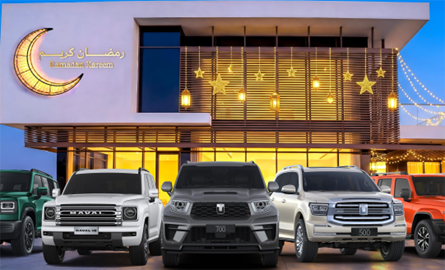
This Ramadan, GWM Middle East unveils a new brand-led campaign that celebrates one of the most meaningful moments of the Holy Month: coming together for iftar. Anchored by a regional social film, the campaign reflects the shared values of family, connection and presence, while subtly showcasing GWM’s growing vehicle range, including the newly launched TANK 700 and HAVAL V7.
The film follows different members of the same family as they make their way through the city toward a shared destination, a restaurant where they will break their fast together. Each journey unfolds independently, yet with a shared sense of purpose, capturing the anticipation, comedy, warmth and quiet reflection that define the moments leading up to iftar.
Many Journeys. One Table.
Set against familiar Middle Eastern urban backdrops, the film portrays everyday Ramadan realities, last-minute arrivals, and the unspoken understanding of being exactly where you need to be. Each family member arrives in a different GWM vehicle, collectively representing the brand’s diverse portfolio and how it fits seamlessly into different lifestyles.
The TANK 700 appears as a confident, commanding presence, reflecting strength and assurance on the road, while the HAVAL V7 is positioned as a refined and versatile companion for daily city driving. Meanwhile, the HAVAL H9 is born for families, delivering space, comfort, and reliability for every journey together.
Together with other models from the GWM range, the vehicles act not as the focus, but as enablers, quietly supporting moments that truly matter.
Rooted in Regional Values
Rather than focusing on performance alone, the Ramadan film emphasizes GWM’s belief that mobility plays a role in human connection. The story mirrors the rhythm of Ramadan in the Middle East, where schedules slow, priorities shift, and togetherness takes center stage.
Through natural, relatable storytelling, the campaign reinforces GWM’s commitment to the region, offering vehicles designed for comfort, safety and reliability, built to support everyday life during the most meaningful times of the year.
A Message of Togetherness
Speaking of the campaign, Sunny Bhat, Sales & Marketing Director, GWM Middle East said, “Ramadan is a reminder that no matter how different our journeys may be, what matters most is where we end up, together. This film reflects our belief that vehicles are not just about getting from one place to another, but about enabling moments of connection. We are proud to see our growing range, including the TANK 700 and HAVAL V7, be part of these everyday Ramadan stories.”
Automotive
Arabian Automobiles Introduces Choice-Led Nissan Ramadan Offers Reflecting the Spirit of the Holy Month
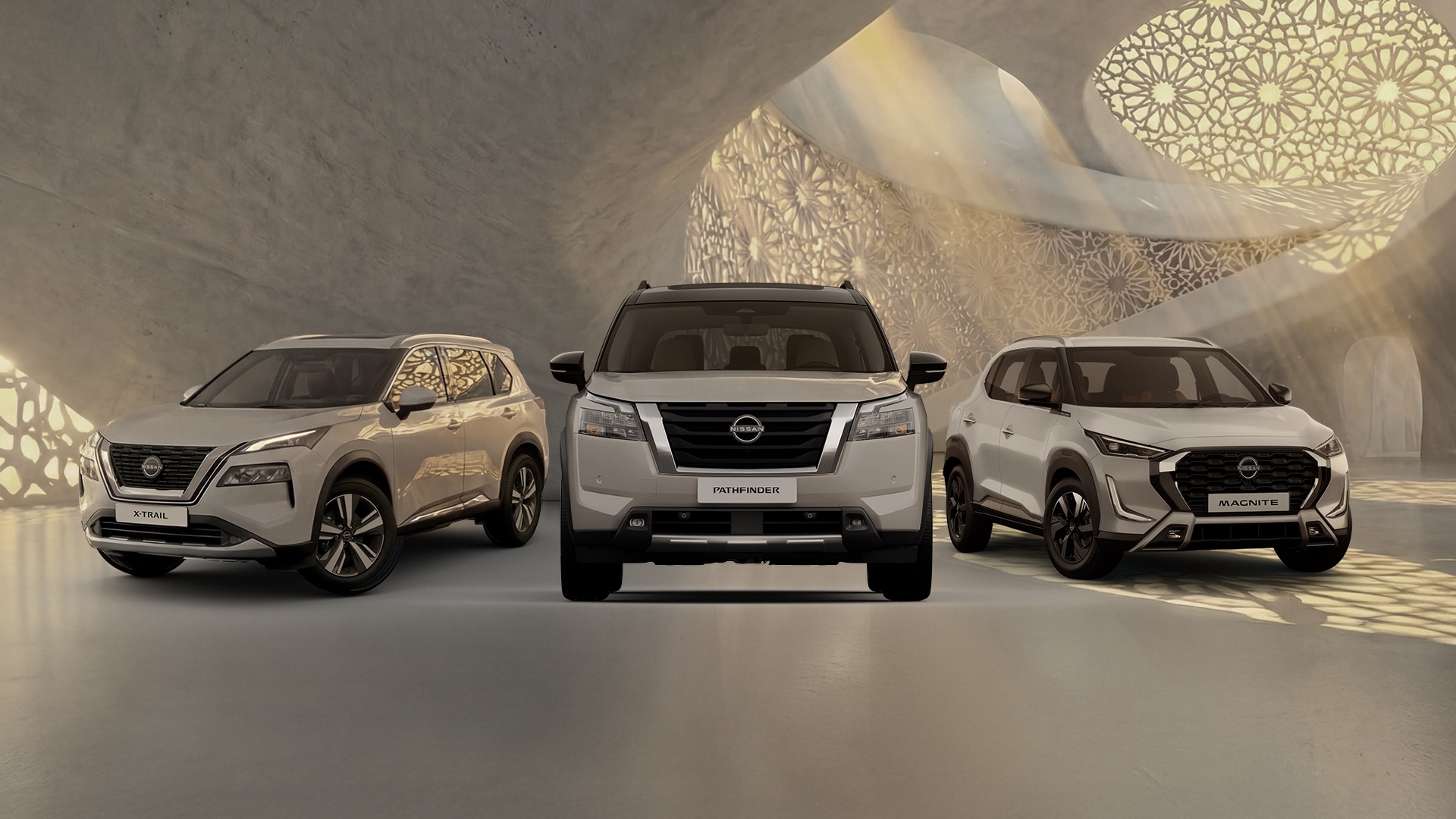
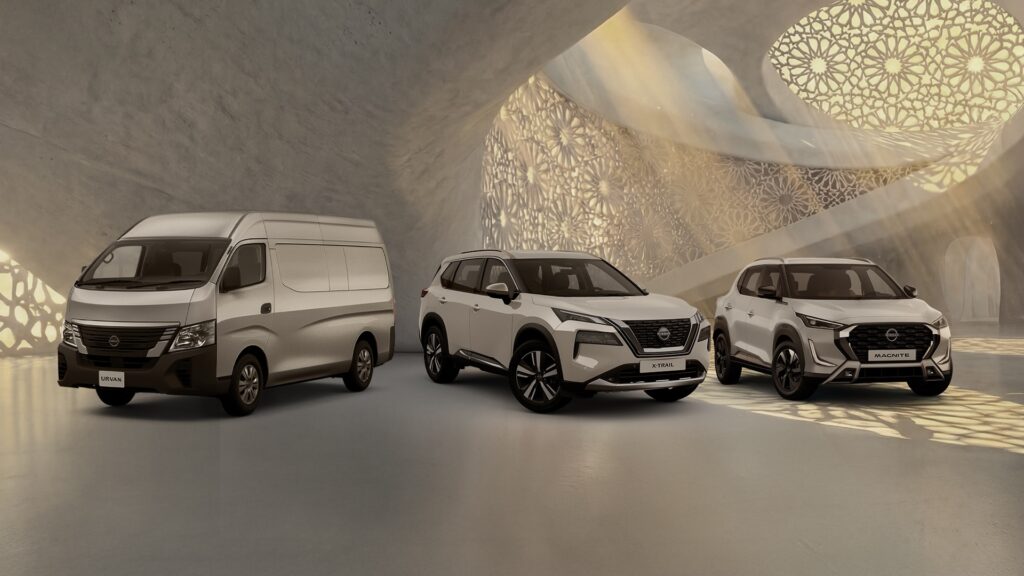
Arabian Automobiles Company (AAC), the flagship automotive company of AW Rostamani Group and the exclusive dealer for Nissan in Dubai, Sharjah, and the Northern Emirates, has launched its Nissan Ramadan offers across selected models. Aligned with the spirit of generosity associated with the Holy Month, the campaign is structured around flexibility and choice.
Customers can select one of three ownership options based on their priorities, whether that is added reassurance through complimentary insurance and service, greater ease in monthly planning with 0% interest rate over three to five years, or a savings option across selected models. Businesses, fleet owners and logistics operators can also benefit from these Ramadan offers, with value-led advantages such as 5-year warranty, 5-year service, and 5-year roadside assistance extending the same spirit of flexibility to commercial needs.
This approach reflects AAC’s considered interpretation of value, recognising that customer needs and circumstances differ, and that choice plays a central role in how value is defined during Ramadan.
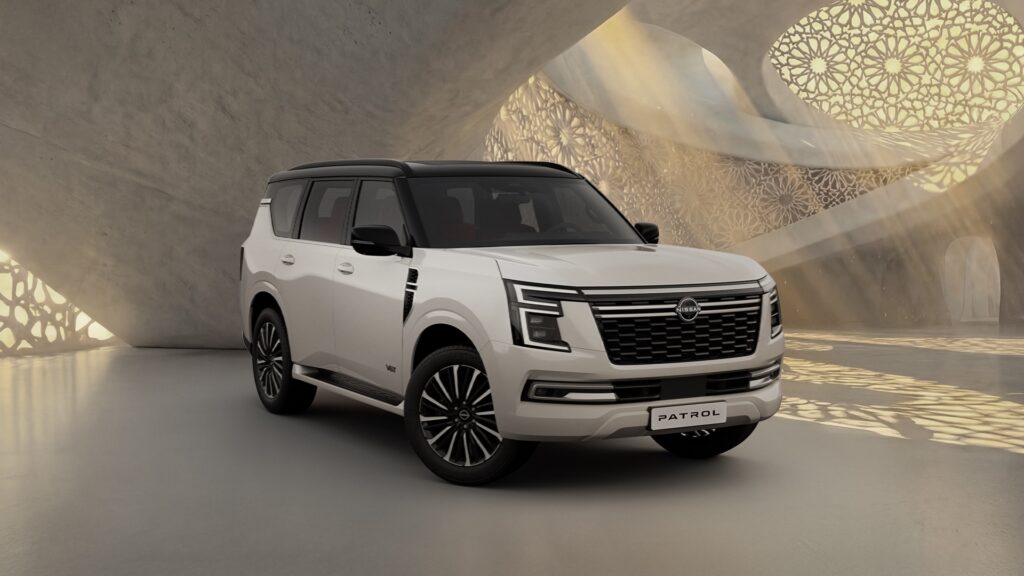
The offers span a broad lineup, including Altima, Kicks, Magnite, Pathfinder, Patrol, X-TERRA, and X-TRAIL, with savings ranging from AED 6,000 up to AED 25,000. For those seeking a more performance-led experience, the Nissan Z is also included, also with savings of up to AED 50,000.
That same spirit of care continues beyond the showroom, with seasonal after-sales advantages. Customers coming in for an interval service or a free inspection will be eligible for a one-year, 24/7 roadside assistance membership covering Dubai, Sharjah, and the Northern Emirates.
Keeping convenience in mind, Arabian Automobiles is offering a buy-four-get-one promotion on maintenance contracts to make long-term upkeep more manageable, alongside up to 65% off parts for additional repairs. Flexible payment options are available through Tabby and selected credit card plans, and a gift is included with any Nissan accessory purchase. Customers are invited to explore the Ramadan campaign at their nearest Nissan of Arabian Automobiles showroom.
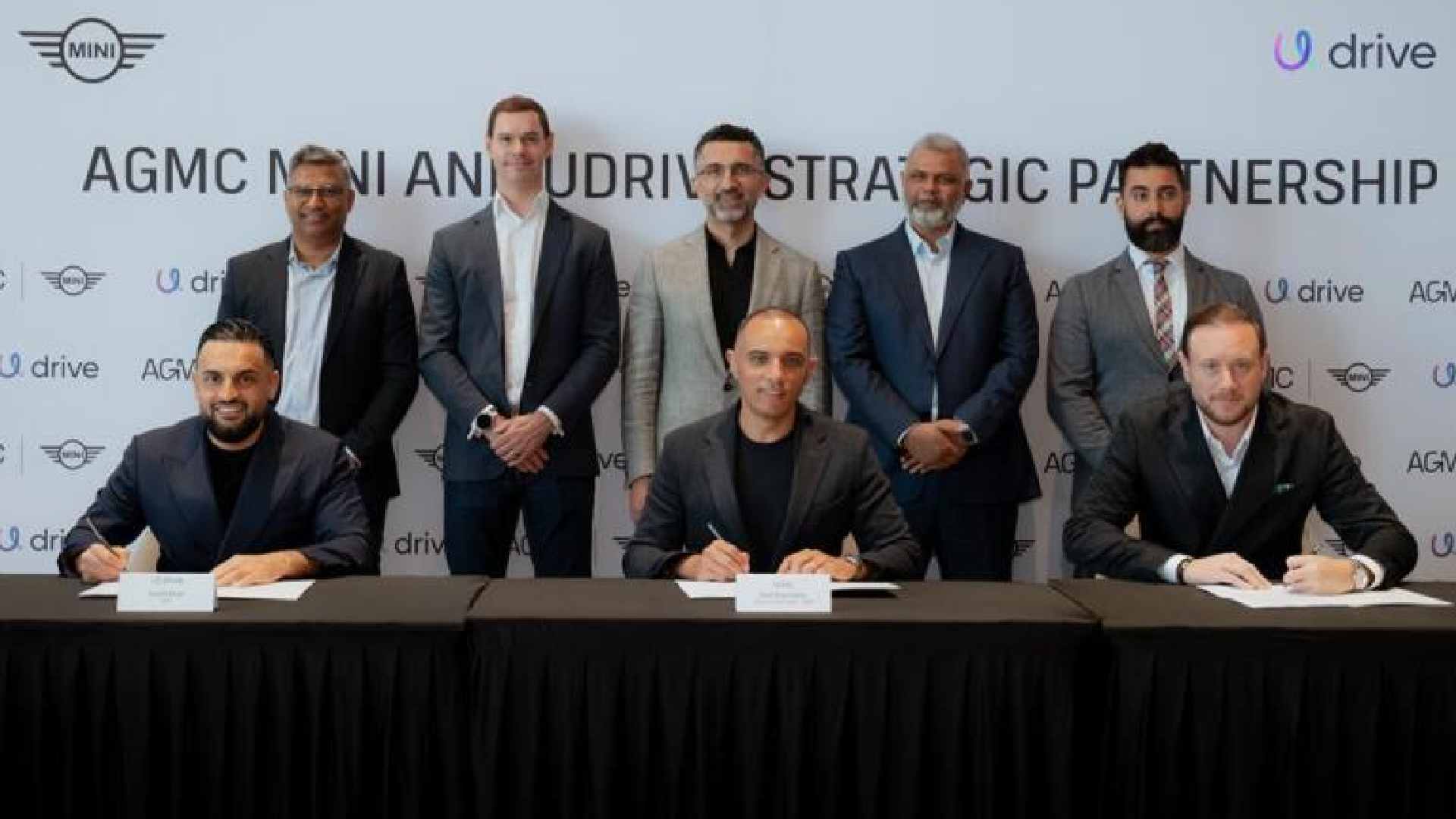
Udrive, the UAE’s leading car-sharing platform, has signed a strategic partnership with AGMC, the official importer of MINI in Dubai, Sharjah and the Northern Emirates, to introduce MINI vehicles to Udrive’s shared mobility fleet in the UAE. The collaboration was formalised through a Memorandum of Understanding (MoU) between Udrive and AGMC and brings the MINI brand — the iconic British-heritage premium automotive brand within the BMW Group, renowned for its distinctive design and engaging driving experience — into the car-sharing space, supporting a shared ambition to expand access to premium urban mobility solutions across the country.
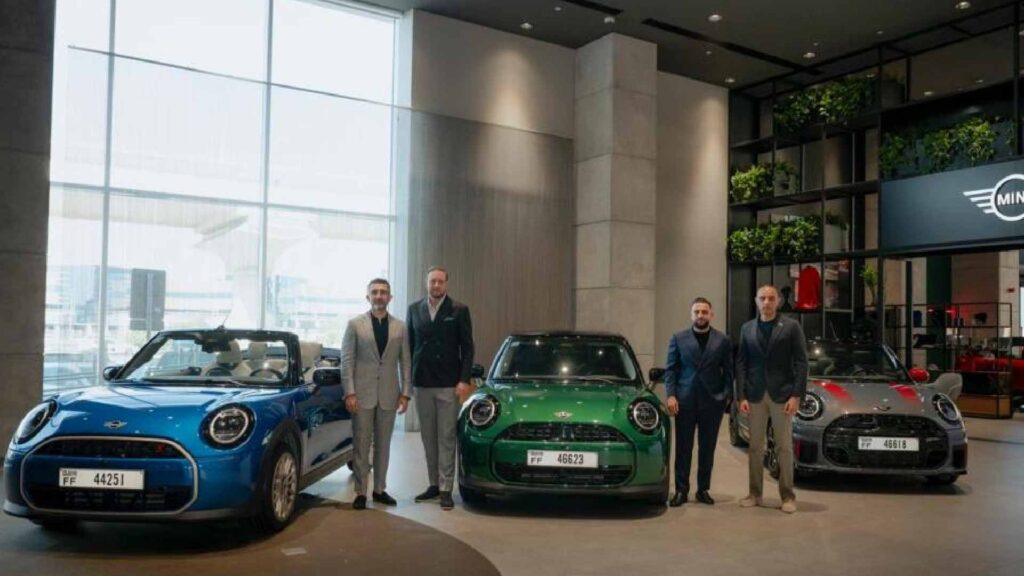
The partnership will see a total of 100 MINI vehicles progressively introduced to the Udrive platform, with an initial fleet already available to customers across the UAE. The lineup will include MINI Convertibles, bringing the experience of open-top driving into the car-sharing space, alongside other MINI models well-suited to urban mobility and everyday city use. Through the Udrive platform, customers benefit from an all-inclusive car-sharing experience, with fuel and parking covered as part of the service.
By expanding flexible access to premium mobility, the partnership supports the UAE’s broader ambitions for smarter, more connected cities, in line with the vision outlined in the Dubai Master Urban Plan 2040. The collaboration reflects a growing shift toward agile, shared and experience-led mobility solutions, complementing evolving urban lifestyles and mobility needs.
Hasib Khan, Founder and CEO of Udrive, said: “At Udrive, innovation is about giving customers real choice and flexibility. Our platform is designed to adapt to how people live, whether that means enjoying a convertible over the weekend or choosing a practical vehicle during the week. Partnering with AGMC MINI allows us to bring distinctive premium vehicles to more customers and support the UAE’s vision for flexible and efficient urban mobility.”
Ziad Boghdady, Head of AGMC MINI, said: “Our collaboration with Udrive introduces a new way for customers to experience the MINI brand. Integrating MINI models into a car-sharing platform reflects changing preferences in the UAE, where access and flexibility are increasingly valued alongside design and performance, complementing MINI’s distinctive design and engaging driving experience. The partnership demonstrates AGMC MINI’s commitment to supporting modern mobility solutions that fit the needs of today’s urban lifestyles.”
Through the MoU, users will gain access to a range of MINI models via the Udrive platform, including Cooper S and John Cooper Works variants, as well as MINI Convertibles. Introducing convertibles into the car-sharing space expands the scope of shared mobility experiences, offering customers the opportunity to enjoy open-top driving on a flexible, on-demand basis.
Udrive enables customers to locate, book, and unlock vehicles through its mobile app, with flexible by-the-minute or by-the-day rentals. The service includes free fuel, free parking, and no deposit, removing common barriers associated with traditional car rentals. Udrive now operates a fleet of 2,000+ cars and has completed over three million rentals to date. In 2025 alone, the platform recorded over 554,000 trips and more than 45 million kilometres driven, reflecting growing demand for flexible mobility across the UAE.
Udrive continues to differentiate itself through exclusive partnerships, first-to-market initiatives, and value-led offerings that expand customer choice. Promoting car sharing as an alternative to private car ownership helps optimise vehicle usage, reduce congestion, and lower the overall environmental footprint by encouraging shared access over individual ownership.


Eid Weekend Getaway: We Got You Covered with Xiaomi’s Latest!
MIDDLE EAST CONFLICT DRIVING A SURGE IN SCAMS, DEEPFAKES, AND GOVERNMENT IMPERSONATION
WHY SECURITY MUST EVOLVE FOR THE HYBRID HUMAN-AI WORKFORCE


-
News10 years ago
SENDQUICK (TALARIAX) INTRODUCES SQOOPE – THE BREAKTHROUGH IN MOBILE MESSAGING
-

 Tech News2 years ago
Denodo Bolsters Executive Team by Hiring Christophe Culine as its Chief Revenue Officer
-
 VAR11 months ago
Microsoft Launches New Surface Copilot+ PCs for Business
-

 Tech Interviews2 years ago
Navigating the Cybersecurity Landscape in Hybrid Work Environments
-

 Tech News8 months ago
Nothing Launches flagship Nothing Phone (3) and Headphone (1) in theme with the Iconic Museum of the Future in Dubai
-

 Automotive1 year ago
AGMC Launches the RIDDARA RD6 High Performance Fully Electric 4×4 Pickup
-

 VAR2 years ago
Samsung Galaxy Z Fold6 vs Google Pixel 9 Pro Fold: Clash Of The Folding Phenoms
-

 Tech News2 years ago
Brighton College Abu Dhabi and Brighton College Al Ain Donate 954 IT Devices in Support of ‘Donate Your Own Device’ Campaign