
 Have a question? +971 56 404 0503




Tech News
China Unicom Will Bring 5G-Advanced to Over 300 Cities in 2025


China Unicom Releases 5G-Advanced Action Plan During Asian Winter Games
China Unicom officially unveiled its 5G-Advanced Action Plan at the Powering the Asian Winter Games with 10 Gbps Connectivity Press Conference in Harbin, which brought together many industry, academia, and media representatives. China Unicom is the official communications and cloud service partner of the 9th Asian Winter Games, and this action plan represents a key step for the carrier on their 5G evolution journey, as part of their broader efforts to bring better network experiences to users and facilitate the digital transformation of various industries.
According to the action plan, China Unicom will launch 5G-Advanced services in the central areas of 39 key cities and key locations in over 300 other cities by the end of 2025. It will launch the 5G-Advanced Xinghuo Program and the 5G-Advanced Baichuan Program, which are aimed at promoting industry-specific applications and AI applications, respectively. China Unicom will also lead the establishment of a device ecosystem alliance for converged innovation in order to deepen collaboration with upstream and downstream partners and jointly build up the 5G-Advanced industry ecosystem. Currently, China Unicom runs more than 2 million 5G base stations, which account for over 40% of the total 5G base stations worldwide, to serve 290 million users.
Wang Limin, China Unicom’s Deputy General Manager, said, “China Unicom is using 5G-Advanced and F5G-Advanced technologies to provide high-speed, intelligent, and secure 10 Gbps communications services for the Asian Winter Games. Based on the action plan just released, China Unicom will work with various partners to build up the 5G-Advanced industry ecosystem and contribute more to a digital China.”
Cao Ming, Vice President of Huawei and President of Huawei Wireless Solutions, stated that, since the mobile AI era has begun, the continued integration of 5G-Advanced and AI will transform traditional mobile businesses and create huge opportunities for the mobile industry, shaping new experiences, applications, and services. Huawei will continue to innovate, integrate 5G-Advanced and AI, and work on both Networks for AI and AI for Networks. Regarding Networks for AI, Huawei will optimally utilize spectrum resources, and improve network performance and user experiences, while reducing network cost per bit. As for AI for Networks, Huawei plans to use digital sites and wireless AI agents to help carriers build Level 4 Autonomous Networks with higher quality and efficiency. “Huawei and China Unicom will work and innovate together to support the development of 5G-Advanced and AI.”
As the official partner of the 9th Asian Winter Games, China Unicom is applying a wide range of industry-leading technologies to deliver high-speed, stable, and reliable networks for the event with the support of a 1,000-member network assurance team. China Unicom provides 10 Gbps 5G-Advanced networks for key venues to ensure high-speed and stable network experiences for all athletes, staff, and audiences. This also comprehensively improves the event’s broadcast services by enabling a number of innovative services, such as multi-channel HD live streaming by the media and KOLs, on-demand HD videos, and VR broadcasting.
This press conference marks a key milestone in China Unicom’s 5G-Advanced R&D and application journey. China Unicom will continue to leverage new advanced technologies to support the success of the 9th Asian Winter Games, and accelerate the digital and intelligent transformation of various industries for an intelligent future.
Through their strategic partnership, China Unicom and Huawei have extensively worked on technological innovation, network construction, and application development to support the development of the 5G-Advanced industry.
In November 2024, China Unicom Beijing and Huawei officially launched the world’s first large-scale integrated 5G-Advanced intelligent network, which is an ultra-large-scale commercial 5G-Advanced three component carrier (3CC) network. The network covers Beijing’s central area, the Workers’ Stadium, and the Great Wall scenic area, and supports a range of innovative applications, such as immersive video, UHD shallow compression, and low-altitude tourism. Showcases of the self-provisioning and self-optimization functions of 5G-Advanced sites have also been built in these areas. This shows how 5G-Advanced can become a reality and light the way forward for a bright future.










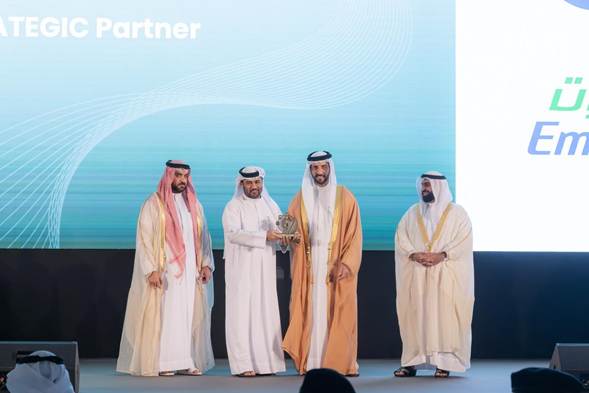
Emirates Petroleum Company PJSC (Emarat), a pioneer in the UAE’s oil and gas industry, is participating as Official Partner of HSE-Expo 2026, taking place on 1 and 2 April 2026 at Al Jawaher Reception and Convention Centre in Sharjah.
Organised by Sharjah National Oil Corporation and held under the patronage of His Highness Sheikh Sultan bin Ahmad Al Qasimi, Deputy Ruler of Sharjah, Chairman of the Petroleum Department and President of Sharjah National Oil Corporation, the event brings together industry leaders, specialists, researchers, and stakeholders to advance dialogue around health, safety and environmental priorities across the region.
Emarat’s participation reflects the company’s continued focus on strengthening workplace safety, supporting responsible environmental practices, and aligning its operations with recognised regional and international standards. It also reinforces the company’s view that health, safety, and environmental performance is integral to operational excellence, long term resilience and responsible growth across the energy value chain.
Burhan Al Hashemi, Chief Executive Officer of Emarat, said: “At Emarat, health, safety and environment is a leadership priority embedded across every level of the organization. It shapes how we operate, how we invest and how we build a culture of accountability and care. Across our fuel, aviation fuel, lubricants, LPG, and natural gas businesses, HSE is fundamental to operational discipline, business continuity and the trust our customers and partners place in us. Our participation in HSE Expo 2026 reflects our commitment to raising standards, supporting responsible industry practices, and contributing to a safer and more sustainable operating environment.”
Emarat applies health, safety, and environmental discipline across its operations as part of its broader commitment to operational excellence and responsible growth. From frontline safety practices and process discipline to environmental stewardship and continuous improvement, the company views HSE as a business imperative that supports resilience, strengthens trust, and underpins performance across its fuel, aviation fuel, lubricants, LPG and natural gas businesses.
Furthermore, HSE standards are central to every product category Emarat operates in, including LPG. As a provider of composite LPG cylinders, Emarat adheres to global HSE industry standards in this product category among all others, underscoring the company’s commitment to safety and environmental responsibility across all aspects of its business.
Ali AlAstad Alhammadi, Vice President, Health, Safety, Environment and Quality, Emarat, said: “HSE Expo provides an important platform for industry stakeholders to exchange practical insight, share best practice and strengthen collaboration around issues that are central to workforce safety and environmental stewardship. For Emarat, this is an opportunity to engage with the wider HSE community and support continued progress in standards, awareness, and performance across the sector. We are grateful to SNOC for organizing this important platform and we look forward to continued collaboration and future participation”
HSE Expo 2026 serves as an important regional platform for advancing dialogue on workplace safety, environmental responsibility, and industry best practice. By bringing together energy leaders, technical specialists, researchers and stakeholders, the event supports knowledge exchange around the standards and innovations shaping safer and more sustainable operations across the region.

Alteryx Inc., a leading AI-ready data and analytics company, today announced the appointment of Sabya Sen as Vice President, IMEA & APAC, to lead its business across India, the Middle East, Africa, and Asia-Pacific (IMEA & APAC). In this role, Sen will focus on accelerating customer outcomes and scaling adoption of the Alteryx One platform across some of the world’s fastest-growing markets for AI and data innovation.
Sen brings deep regional expertise and a strong track record of execution to this role. Most recently, he served as Vice President, Head of UKI & Emerging Markets Europe at Alteryx, where he drove consistent growth, built high-performing teams, and strengthened customer relationships across global markets.
The appointment comes at a critical phase for AI adoption globally and across IMEA and APAC, where governments and enterprises are increasing investments in digital transformation. In the Middle East, national strategies like Saudi Arabia’s Vision 2030 and UAE’s We the UAE 2031 are accelerating innovation agendas. The region’s AI market is projected to reach $320 billion USD, while globally, 89% of leaders plan to maintain or increase AI budgets in 2026. Despite this momentum, many organizations remain in pilot phases, underscoring the need for scalable, governed analytics solutions that can support enterprise-wide AI adoption.
“It is my priority to continue delivering meaningful outcomes for our customers and community,” said Sabya Sen, Vice President, IMEA & APAC. “Across the Middle East, India, and Asia-Pacific, we are seeing unprecedented momentum driven by ambitious national transformation agendas. These efforts are accelerating economic diversification, advancing digital innovation, and firmly positioning these regions as global hubs for data and AI-led growth.”
Prior to joining Alteryx, Sen spent 11 years at Salesforce in a variety of leadership roles, supporting customers across the insurance, financial services, and healthcare industries, where he helped organizations leverage data and technology to transform their operations. In his new role, Sen will focus on helping organizations move beyond experimentation to enterprise-scale AI adoption by delivering trusted, AI-ready data and analytics through the Alteryx One platform.
“Over the past few years, Sabya has had a tremendous impact on Alteryx and has demonstrated a remarkable level of focus, discipline, and strong commercial execution,” said Jason Janicke, Senior Vice President, EMEA & APJ at Alteryx. “He has delivered results, built a strong team culture, and consistently raised the bar. We can’t wait to see the impact that Sabya has in this next role.”
Tech News
VERTIV EXPANDS THERMAL PORTFOLIO WITH NEW WALL-MOUNT COOLING SYSTEM FOR EDGE AND SMALL DATA ROOMS IN EMEA

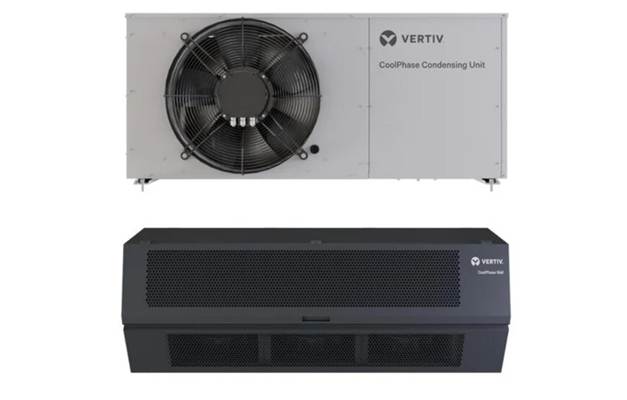
Vertiv (NYSE: VRT), a global leader in critical digital infrastructure, today announced the launch of the Vertiv™ CoolPhase Wall, a space-saving, wall-mount cooling system designed for small IT spaces and edge environments. The system is designed for the needs of IT equipment, removing heat and enabling continuous operation while taking up zero floor space. Vertiv CoolPhase Wall is available now across Europe, Middle East and Africa (EMEA).
As distributed computing becomes more critical to business operations, compact IT environments need high-quality thermal control designed for sensitive electronic systems. However, many are still using comfort cooling systems designed for human comfort rather than addressing the high sensible heat ratio (SHR) and higher airflow requirements of IT equipment. Vertiv CoolPhase Wall addresses this gap with a purpose-built system that provides the required SHR along with integrated monitoring and control capabilities to protect equipment and enable24/7 operational continuity.
Built for installation flexibility, the Vertiv CoolPhase Wall features a split system with an indoor wall-mounted cooling unit. The system delivers up to 60% greater airflow than standard comfort cooling systems and leverages variable-speed compressors and variable speed fans to modulate to meet heat load demand and improve energy efficiency to enable operational cost reductions.
Designed to handle thermal loads up to 11 kW, the Vertiv CoolPhase Wall is engineered to operate reliably in outdoor ambient temperatures ranging from -35 to 48℃. The system features the Vertiv™ Liebert® iCOM™ operational control, which enables local configuration and supervision of key operating parameters. For extended visibility and remote access, the Vertiv CoolPhase Wall includes onboard remote communication capability to provide real-time alerts and operational status through a secure web interface.
The Vertiv™ CoolPhase Wall utilizes R-32 refrigerant, a low-global warming potential (GWP) alternative that reduces environmental impact while maintaining thermal performance. This positions Vertiv ahead of evolving regulatory requirements, including the European Union’s F-Gas regulations that restrict the use of high-GWP refrigerants. While many comfort cooling systems are still transitioning to lower-GWP options, Vertiv is applying these standards to IT-focused cooling, giving organizations confidence that their deployments are aligned with future environmental expectations.
“As IT continues to expand into areas that were not originally intended for high-density electronics, the demand for adaptable and energy-efficient cooling solutions is increasing across EMEA,” said Sam Bainborough, vice president, EMEA thermal business at Vertiv. “The Vertiv CoolPhase Wall is engineered to support continuous operations, enabling customers to maintain reliable, efficient thermal performance in small IT rooms and edge sites year-round.”
Vertiv CoolPhase Wall expands the company’s comprehensive thermal management portfolio, which includes precision cooling system for edge deployments, enterprise data centers, and high-density AI environments, ranging from room-based cooling to direct-to-chip liquid cooling and rear door exchangers.

EMARAT SUPPORTS HSE EXPO UNDERSCORING HEALTH, SAFETY AND ENVIRONMENTAL LEADERSHIP
STARKEY OMEGA AI – ONE OF THE MOST POWERFUL AND ADVANCED HEARING TECHNOLOGY TO EVER REACH MEA PATIENTS
DIGITIZATION-LED DISRUPTION SET TO RESHAPE GCC AUTO COMMERCE ECOSYSTEM

-
News10 years ago
SENDQUICK (TALARIAX) INTRODUCES SQOOPE – THE BREAKTHROUGH IN MOBILE MESSAGING
-

 Tech News2 years ago
Denodo Bolsters Executive Team by Hiring Christophe Culine as its Chief Revenue Officer
-
 VAR12 months ago
Microsoft Launches New Surface Copilot+ PCs for Business
-

 Trending5 months ago
OPPO A6 Pro 5G Review: Reliable Daily Driver
-

 Tech Interviews2 years ago
Navigating the Cybersecurity Landscape in Hybrid Work Environments
-

 Tech News9 months ago
Nothing Launches flagship Nothing Phone (3) and Headphone (1) in theme with the Iconic Museum of the Future in Dubai
-

 Automotive1 year ago
AGMC Launches the RIDDARA RD6 High Performance Fully Electric 4×4 Pickup
-

 VAR2 years ago
Samsung Galaxy Z Fold6 vs Google Pixel 9 Pro Fold: Clash Of The Folding Phenoms