
 Have a question? +971 56 404 0503




Tech News
AI claims automation: Tokio Marine UAE cuts wait times

Tokio Marine Insurance UAE has turned a stressful moment into a smoother one. Thanks to AI claims automation, the insurer now registers and routes claims far faster—cutting processing time by 90% and getting back to customers in hours instead of days. The initiative, delivered with Kodak Alaris and powered by Microsoft Document AI, doesn’t just speed things up; it restores calm when people need it most.
Why AI claims automation matters now
In the UAE, claim volumes can rise suddenly—especially after large-scale events. Following the 2024 floods, insurers faced an unprecedented spike. For Tokio Marine Insurance UAE, the surge confirmed what leaders already suspected: manual intake and data entry would not scale. Customers needed answers quickly, and teams needed tools that supported both speed and accuracy. Therefore, the company leaned into AI claims automation to protect service levels while reducing the human bottlenecks that caused delays.
From paper shuffle to data you can use
Until recently, hundreds of daily submissions—particularly motor claims—arrived via email with police reports, Emirates ID, driver’s licenses, and vehicle registration documents attached. Each file contained dozens of fields that staff had to key in manually. Consequently, small errors crept in, and queues built up. By contrast, the new approach utilizes Kodak Alaris’ Info Input platform in conjunction with Microsoft Document AI to identify document types, extract relevant fields, validate entries, and push clean data into core systems. As a result, exception handling has dropped by roughly 60%, while daily throughput has tripled.
Designed around real work, not a one-size-fits-all
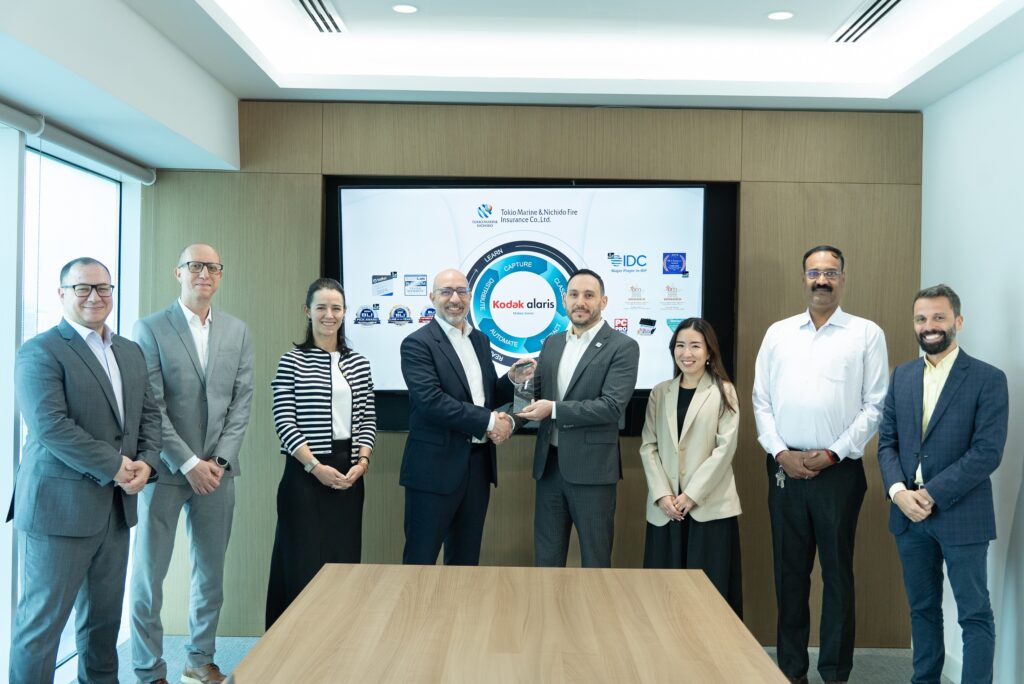
Rather than force a generic template, Kodak Alaris began with discovery sessions focused on Tokio Marine Insurance UAE’s actual workload. The teams mapped document varieties, edge cases, and downstream system rules. Then they ran a targeted proof of concept to prove accuracy before scaling. Because the models learned from live materials, the rollout felt practical, not theoretical. Moreover, the platform’s validation steps were tuned to local documents, which reduced manual rework and strengthened audit trails.
Faster for customers, better for teams
Speed is only half the story. With AI claims automation handling repetitive capture, the claims team can focus on conversations that require judgment—calling a customer, clarifying an edge case, or fast-tracking complex scenarios. Staff move from typing to problem-solving, which improves both morale and outcomes. Meanwhile, customers get earlier updates, fewer follow-ups, and clearer timelines. In short, trust goes up because wait times go down.
Better data, smarter decisions
Automation also increases the depth of data captured per submission. Additional fields that were once skipped to save time now flow into the insurer’s systems automatically. Consequently, compliance evidence improves, forecasting becomes more grounded, and pricing models get richer inputs. Over time, that granular view helps identify trends, anticipate workloads, and tailor products to what UAE drivers need.
Built to scale under pressure
Crucially, the new workflow is resilient. When volumes spike—after storms, holidays, or peak travel—the platform scales with the load. Triage rules prioritize urgent cases, while validation catches mismatches before they create downstream issues. Therefore, leaders gain operational visibility, and teams gain breathing room. And because the system is modular, Tokio Marine Insurance UAE can extend automation to other lines without reinventing the stack.
Technology that amplifies empathy
Insurance is a promise delivered by people. The point of AI here isn’t to replace them; it’s to remove the drag so they can show up where judgment matters. With Kodak Alaris and Microsoft Document AI, Tokio Marine Insurance UAE has built a claims pathway that’s faster, clearer, and more human. Ultimately, that combination—operational excellence with empathy—is what turns a difficult day into a manageable one for every policyholder.
Make sure to check out our previous Huawei Pura 80 Ultra review by DXOMARK











Tech News
Forcepoint and BeyondTrust Connect Identity Risk to Data Exposure, Letting Customers Revoke Risky Access with Precision
Global AI data security leader Forcepoint and BeyondTrust, the global leader in privilege-centric identity security protecting Paths to Privilege™, today announced the new integration of Forcepoint’s AI-native data discovery and classification with BeyondTrust Identity Security Insights®. The integration is available now and debuts today at BeyondTrust’s Go Beyond Chicago customer conference.
When BeyondTrust detects risk across a human, machine or AI identity based on behavior, privilege or compromised credentials, Forcepoint pinpoints the sensitive information that identity can reach and where exposure is greatest as risk changes. Customers can then use Forcepoint controls to immediately cut off that identity’s access to the specific records involved, without affecting anyone else’s access or work.
“With AI agents now doing real work inside the business, blocking autonomous tools isn’t an option, and neither is guessing,” said Bakshi Kohli, Chief Technology Officer of Forcepoint. “When BeyondTrust tells us an identity looks risky, we already know what data it can get to. Teams can take that one identity’s access away and nothing more. That’s the precision agentic enterprises ask for today.”
Security teams often get an identity alert in one console and have to open another to understand the full risk. The flagged identity could be a forgotten test login or an account that can read the customer database, and telling the two apart means checking both systems by hand, one alert at a time. Every minute of manual review is another minute an overprivileged identity or AI agent keeps acting.
Turning Identity Alerts into AI Data Security Action
Customers now get the data context behind each identity risk, along with the controls to act on it. BeyondTrust Identity Security Insights® surfaces risky identities based on behavior, privilege, compromised credentials and relationships among them. Forcepoint Data Security Posture Management (DSPM), part of the company’s AI data security solutions, maps that risk to the confidential information within its permissions and provides controls to restrict that access.
Compromised identities. A stolen identity is only as dangerous as the access it provides and the data that access puts in reach. When BeyondTrust detects a compromised identity or entitlement, the True Privilege™ graph maps the real blast radius: every path that identity can take to privilege, not just the permissions on paper. Forcepoint shows which sensitive records sit at the end of those paths, from personal data to financial records and trade secrets, and lets teams block that credential’s access.
Service accounts and AI agents with too much access. Machine and AI identities outnumber human users 144-to-1, according to 2026 research from the Cloud Security Alliance, and many carry permissions that haven’t been reviewed since they were granted. If BeyondTrust detects risky behavior or excessive privilege associated with a service account or AI agent, teams can use Forcepoint to revoke its access to the sensitive data at risk in one step. The account keeps doing the rest of its job.
Too many alerts, too little context. Instead of cross-checking two consoles, customers work from one Forcepoint dashboard that ranks each risky identity by the value of accessible data and shows why that identity was deemed risky. With a clear line of sight from identity and privilege risk to sensitive data, teams investigate faster, focus on critical vulnerabilities and remove or restrict access with targeted precision.
“The strongest technology alliances bring together complementary capabilities to solve problems neither side should have to solve in isolation,” said David Manks, Vice President of Global Strategic Alliances at BeyondTrust. “Forcepoint’s understanding of sensitive data and BeyondTrust’s identity and privilege intelligence provide two critical dimensions of risk. Bringing them together helps customers see where risky access creates meaningful exposure and take precise action to protect what matters.”
Tech News
Abu Dhabi Projects and Infrastructure Centre and PATRIZIA sign strategic partnership to support infrastructure investment and development
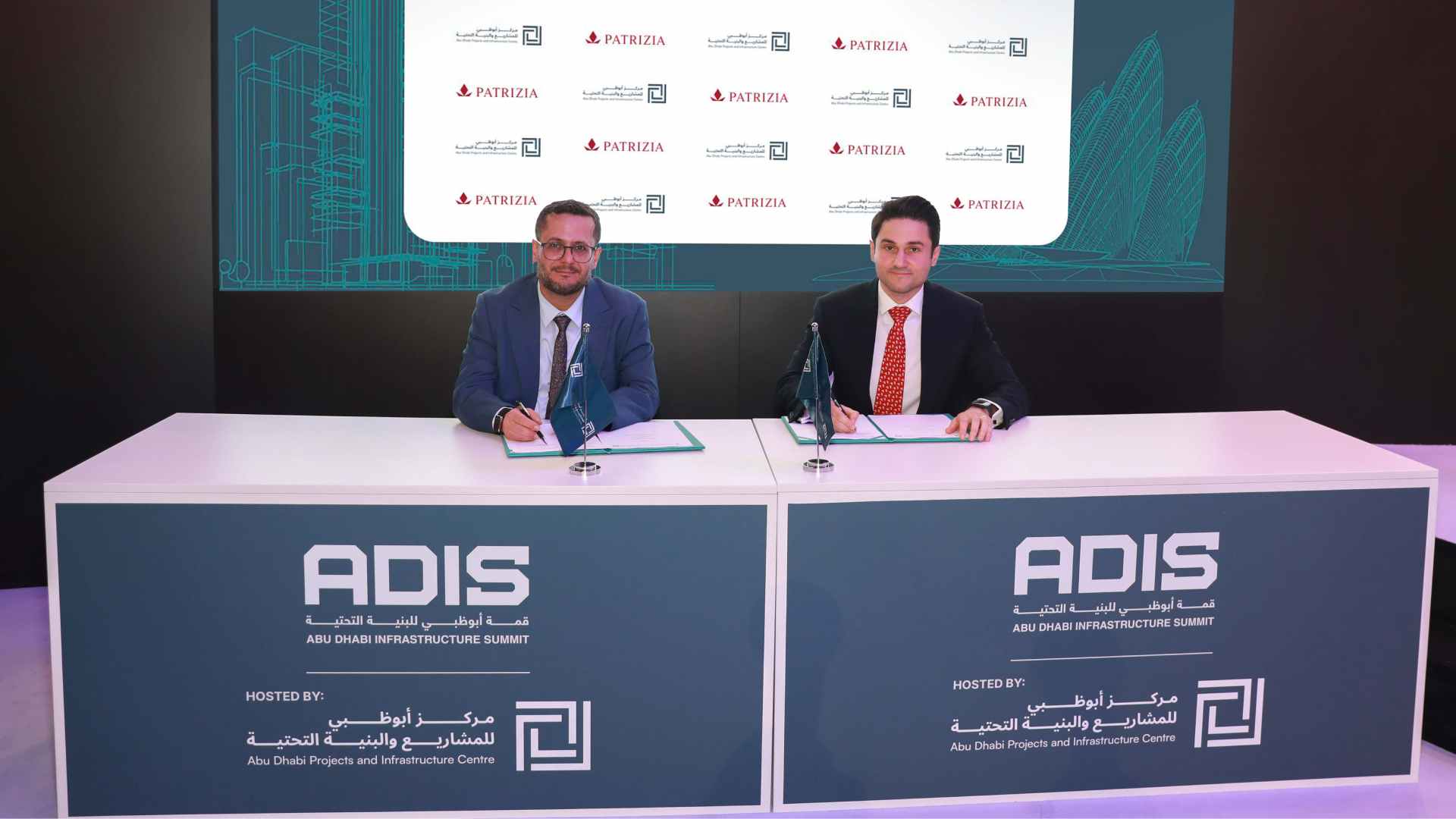
The Abu Dhabi Projects and Infrastructure Centre (ADPIC)and PATRIZIA, an investment manager in real assets, have signed a strategic partnership to deepen cooperation around infrastructure investment and project delivery in the Emirate of Abu Dhabi, drawing on PATRIZIA’s wider real assets expertise.
The strategic partnership was signed during the Abu Dhabi Infrastructure Summit (ADIS) International Roadshow at EXPO REAL 2026 in Munich by His Excellency Eng Maysarah Mahmoud Salim Eid, Director General of ADPIC and Hassan Awada, Senior Executive Officer, MENA at PATRIZIA.
ADPIC sits at the centre of Abu Dhabi’s capital-project programme, coordinating planning, governance, and delivery across approximately 500 projects valued at more than AED 200bn, equivalent to more than USD 56bn. The programme spans housing, transport, culture, education, social infrastructure, and the wider urban systems supporting Abu Dhabi’s long-term growth, livability, and economic competitiveness.
The agreement also reflects the wider objective of the ADIS International Roadshow by connecting Abu Dhabi’s infrastructure ecosystem with international partners that bring specialist expertise and long-term capability, while deepening engagement with Germany and Europe. The partnership establishes a framework for PATRIZIA and ADPIC to exchange international expertise and explore areas where private-sector participation can strengthen project delivery and long-term value creation. This includes dialogue around public-private partnership structures, sharing international best practice in infrastructure financing and delivery, and exploring potential investment and co-investment opportunities arising from Abu Dhabi’s capital projects programme.
The two organisations will also cooperate on market insight, benchmarking and technical studies relevant to infrastructure investment and project delivery, while exploring ways to support greater international participation, knowledge exchange, and access to specialist capability across Abu Dhabi’s ecosystem.
H.E. Eng. Maysarah Mahmoud Salim Eid, Director General of ADPIC, said: “Abu Dhabi’s infrastructure programme requires partners that bring proven international capability, market insight, and a long-term commitment. Through this partnership with PATRIZIA, we will explore how that experience can support private-sector participation, strengthen project delivery, and create long-term value. This is exactly the type of practical international cooperation the ADIS International Roadshow is designed to advance.”
PATRIZIA has worked with institutional investors and partners in Abu Dhabi for 15 years, building long-term relationships across the Emirate. The recent establishment of a permanent presence in the Abu Dhabi Global Market (ADGM) marked a further step in that commitment, strengthening PATRIZIA’s ability to work with regional investors and partners and connect them with its international real assets platform.
Asoka Wöhrmann, CEO of PATRIZIA, said: “Abu Dhabi has established itself as an important centre for long-term investment and infrastructure development. Our teams have worked with clients and partners in the Emirate for the past 15 years, and our decision to establish a permanent presence in Abu Dhabi reflects the importance we attach to that relationship. We have seen first-hand the scale of its ambition and the increasingly important role that international expertise and private capital can play. This partnership creates a framework through which PATRIZIA can contribute its experience across real assets while deepening our longstanding relationships in Abu Dhabi.”
Hassan Awada, Senior Executive Officer, MENA at PATRIZIA, said: “Abu Dhabi is developing into a significant market for infrastructure and real assets investment, supported by major infrastructure pipeline and a clear focus on attracting international investment and expertise. Our partnership with ADPIC gives us an opportunity to closely support on delivering these priorities and to explore where PATRIZIA’s international investment capabilities can support the Emirate’s long-term ambitions.”
The agreement reflects PATRIZIA’s wider strategy of combining its established global real assets platform with selective international growth in markets where it has longstanding client relationships and relevant investment expertise.
Tech News
NetApp to Showcase AI-Ready Data Infrastructure as CEO George Kurian Takes the Stage at Ai Everything Abu Dhabi 2026
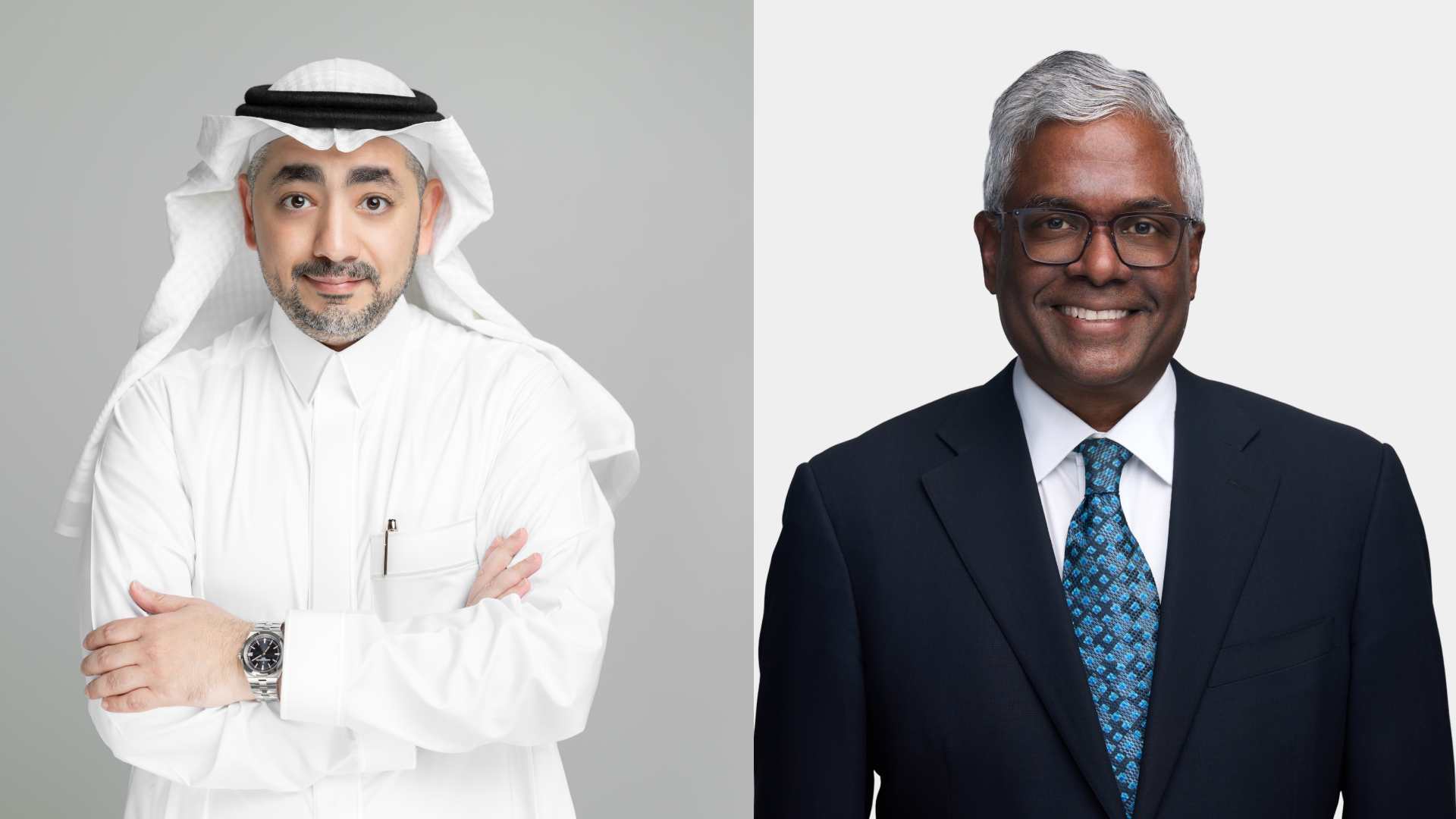
NetApp® (NASDAQ: NTAP), the Intelligent Data Infrastructure company, will exhibit at Ai Everything Abu Dhabi 2026, taking place on October 6 and 7 at ADNEC Centre in Abu Dhabi. The event will also feature George Kurian, Chief Executive Officer of NetApp, who will take part in a fireside chat on the Summit Stage titled, “Can AI Be Trusted? The New Architecture of Sovereign, Secure and Safe AI.” As AI moves from generating answers to taking action across the enterprise, Kurian will explore why trust must extend beyond the model to the data, infrastructure and systems AI can access, as well as the growing importance of security, data sovereignty and governance.
At the centre of NetApp’s presence will be the NetApp Platform, designed to provide enterprises an intelligent, connected, governed foundation that delivers zero-copy access to their data. Customers can quickly and confidently access, manage, and activate their data and be confident it is AI-ready and secure so they can take on the most demanding tasks and solve the most complex problems. In addition to being available on-premises, the NetApp Platform is natively embedded in the world’s largest public clouds. As organizations move AI initiatives from experimentation into production, having data that is accessible, governed and protected becomes increasingly important to scaling AI securely and efficiently.
“Abu Dhabi’s ambition to become an AI-native government reflects a broader shift we are seeing across the Middle East, where AI is rapidly moving from experimentation to large-scale deployment. But scaling AI is ultimately a data challenge. Organizations need trusted, secure and accessible data wherever it resides. The NetApp Platform provides the foundation customers need to build Intelligent Data Infrastructure that enables them to move from AI ambition to real business outcomes, securely and at scale.” said Suhail Hasanain, Senior Director and General Manager, MEA at NetApp
During the two-day event, NetApp’s regional and global experts will engage with industry leaders, partners and customers on building AI-ready infrastructure and addressing the data and infrastructure challenges that can prevent AI projects from progressing into production.
Visitors will have an opportunity to hear the latest developments from NetApp INSIGHT 2026 in Las Vegas, one of the company’s key events focused on tackling today’s biggest AI and technology challenges with intelligent data infrastructure.


A LEADERSHIP PHILOSOPHY FOR MODERN HOSPITALITY
A Little Boo with Your Brunch: Halloween Takes Over Nalu

Deyaar builds on its 2026 handover momentum with 711 new homes at Tria in Dubai Silicon Oasis



-

 Trending12 months ago
OPPO A6 Pro 5G Review: Reliable Daily Driver
-

 Tech News2 years ago
Denodo Bolsters Executive Team by Hiring Christophe Culine as its Chief Revenue Officer
-
 VAR1 year ago
Microsoft Launches New Surface Copilot+ PCs for Business
-

 Automotive2 years ago
AGMC Launches the RIDDARA RD6 High Performance Fully Electric 4×4 Pickup
-
Tech Interviews3 years ago
Navigating the Cybersecurity Landscape in Hybrid Work Environments
-

 Hospitality2 years ago
Gulfood 2025 30th Edition Kicks Off Today, Setting New Benchmarks in F&B Growth and Innovation
-

 Tech News1 year ago
Nothing Launches flagship Nothing Phone (3) and Headphone (1) in theme with the Iconic Museum of the Future in Dubai
-

 VAR2 years ago
Samsung Galaxy Z Fold6 vs Google Pixel 9 Pro Fold: Clash Of The Folding Phenoms