
 Have a question? +971 56 404 0503




Financial
Lebanon fintech investment: Whish Money Q&A

Lebanon’s financial system has faced extraordinary pressure in recent years. Yet within these challenges lies an unexpected opportunity: the rise of Lebanon fintech investment as a driver of inclusion and growth. Among the companies leading this shift is Whish Money, a digital-first platform serving more than 1.3 million users in 110 countries. In this exclusive Q&A, Toufic Koussa, Co-Founder and CEO, explains how Lebanon can position itself as a hub for fintech despite ongoing uncertainty.
Lebanon fintech investment appeal for global investors
Q: In Lebanon’s current economic climate, what factors can attract local and foreign fintech investment, and how is Whish Money positioned to benefit?
Toufic Koussa: Lebanon’s economy has created a surge in demand for secure, accessible, and compliant financial solutions. Investors now search for opportunities where technology fills urgent gaps. They want platforms that streamline payments, enable quick transfers, and promote financial literacy. Whish Money’s 1.3 million users across 110 countries show that fintech can scale locally and globally. Our commitment to trust and inclusivity makes us an attractive partner for Lebanon fintech investment.
Strategies sustaining Lebanon fintech investment growth
Q: What investment strategies and operational efficiencies have been key to sustaining Whish Money’s growth in an uncertain regulatory and economic environment?
Toufic Koussa: Growth in Lebanon could not depend on costly infrastructure. Instead, we focused on agility and smart resource allocation. Scalable digital rails and strong compliance frameworks gave us a solid base. We relied on strategic partnerships rather than trying to build everything in-house. This approach kept us flexible and efficient. At the same time, we co-created our roadmap with users. Services such as instant transfers and QR payments solved real problems. Each decision translated into adoption and sustainable growth—strengthening Lebanon’s fintech investment landscape.
Partnerships powering Lebanon’s fintech investment ecosystem
Q: How do partnerships with Visa, Mastercard, and TerraPay boost investor confidence and accelerate market expansion locally and abroad?
Toufic Koussa: Partnerships are central to our expansion. When Visa and Mastercard integrate with Whish, it confirms that our platform meets global standards. It also proves our ability to connect seamlessly with international ecosystems. TerraPay and Ria extend our reach to Lebanon’s diaspora, making remittances faster and safer. These alliances inspire confidence, increase scalability, and highlight Lebanon as an emerging fintech investment hub.
How Lebanon fintech investment empowers communities
Q: How can fintech—especially digital payments—drive economic empowerment in Lebanon, and what investment in infrastructure or regulation is needed to maximize this impact?
Toufic Koussa: Digital payments empower people and businesses alike. Workers who receive wages digitally enter the formal economy and gain access to vital protections. Merchants who accept QR payments reach more customers and reduce dependence on cash. Families who rely on remittances benefit from transparent and instant transfers that improve stability. To maximize these gains, Lebanon must invest in infrastructure and adopt forward-looking regulation. The Central Bank of Lebanon licenses Whish Money, but progress depends on broader collaboration. Regulators, telecom providers, and fintech innovators must work together to unlock the full promise of Lebanon fintech investment.
Lessons shaping Lebanon’s fintech investment future
Q: From serving over 1M users in 110+ countries, what lessons can you apply to Lebanon’s fintech scene, and how do you position the country as attractive for fintech investors?
Toufic Koussa: Our journey shows that agility and customer focus drive scale. We built a culture that listens to communities and responds with transparent solutions. This approach ensures innovation is tied to real needs, not abstract ideas. Internally, we promote continuous learning, which allows us to adapt to changing conditions.
For Lebanon to draw investors, it must embrace entrepreneurship, encourage collaboration, and support startups with impact-driven missions. Above all, the ecosystem should build trust and prioritize transparency. With these values in place, Lebanon can emerge as a hub where innovation and inclusion converge. That vision makes Lebanon fintech investment a story of resilience and opportunity.
Check out this previous post on British International School Riyadh Board Governance Excellence











By Mayada Baydas, Ph.D., Vice President – Financial Inclusion, botim
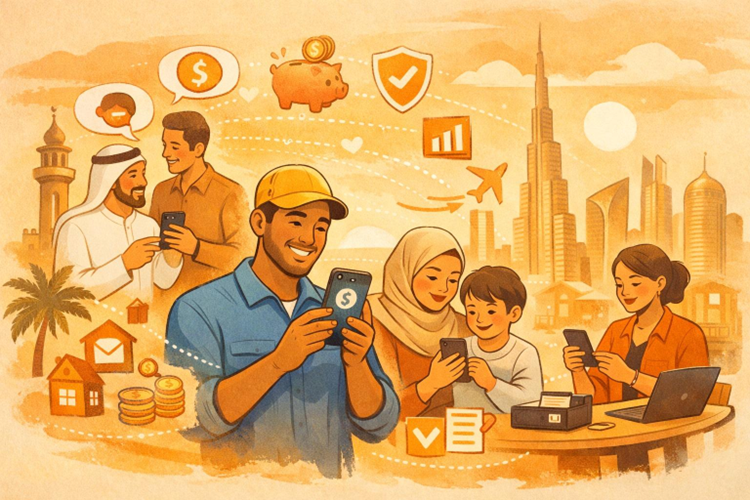
For years, the story of fintech in MENA has been told through product launches: faster payments, cheaper remittances, advanced interfaces, enhanced experiences, micro-savings, and instant credit. But the next unlock for the region may not lie in new features or enhancements at all. It lies in something more foundational and far more powerful: Digital financial literacy (DFL).
Today, access is not the challenge. While over 68% of the world population is online, and the number of fintechs globally is rising, 1.3 billion adults remained unbanked globally in 2024. The picture in MENA is no different. The region hosts more than 1000 fintechs, and internet penetration is over 100%, yet 64% of adults remained unbanked in 2024. In other words, the ecosystem is rich with solutions, but the real gap lies in knowledge and ability.
This is where DFL becomes transformative. It equips users with the understanding and confidence to navigate digital financial tools in ways that genuinely serve their needs, whether that’s sending money home, paying bills, setting small budgets, investing, or avoiding scams. And while this capability may seem subtle, its impact is anything but. DFL is quickly becoming the most efficient route to building trust, increasing usage, and driving long-term adoption in a region where smartphone penetration is nearly universal, yet digital confidence remains uneven.
The GCC Leading Financial Inclusion
Let’s zoom into the GCC, the region leading the charge in MENA. It sits at the heart of one of the world’s largest remittance ecosystems. Migrant and low-income workers send millions of dollars home every year. In 2024, remittances to low-and middle-income countries reached $685 billion, surpassing both foreign direct investment and global aid.
Recognizing this strategic position, regulators and fintechs are working together to turn access into meaningful participation. In the UAE, the Central Bank (CBUAE) collaborates closely with fintechs through initiatives such as the FinTech Regulatory Laboratory and the National Financial Literacy Strategy. These frameworks expand access while guiding fintechs to design safe, inclusive, and user-friendly services. In Saudi Arabia, the Financial Sector Development Program (FSDP) and the Saudi Payments ecosystem combine access with behavioral frameworks that foster trust, responsible usage, and long-term adoption.
Regulators set the standards, provide oversight, and create the frameworks for safe and responsible digital finance. Fintechs take these frameworks and translate them into innovative products and services that meet real user needs. Together, they are shaping an environment where financial inclusion is not just a policy goal but a lived reality.
Digital financial literacy is the bridge between infrastructure and participation. Without it, the region risks building highways that millions do not feel safe enough to drive on.
From Access to Ability: What We Learned at botim
When I joined Botim, our hypothesis was simple: If an app can connect people, it can also build their financial capability. A year later, more than 2 million users on Botim are fully KYC-verified, and many are now using our financial features, from remittances to small lines of credit. But their adoption has never been the result of features alone. It has been the result of trust, clarity, and understanding.
Botim is a simple, familiar tool used daily by millions to stay connected. Its reach, especially among communities often overlooked by traditional financial systems, offered a unique opportunity. By unifying remittances, payments, salary tools, credit, savings, and multi-currency accounts under Botim Money, we created a single ecosystem that lets users manage their finances seamlessly within a platform they already trust.
As the platform transformed, one insight became clear: with its communications foundation, Botim is not just a tool for access but a vehicle to educate and empower users. By raising awareness about digital financial services and embedding knowledge and know-how, we enhance our users’ capability to make financial decisions and take actions, thereby increasing their confidence and resilience along their journey towards financial health.
Digital financial literacy is central to our mission. With our scale and reach, we are integrating technology responsibly to deliver a positive impact along the user financial journey.
DFL must be embedded, not added
People do not build financial capability by reading manuals; they learn by doing, seeing results, and repeating them. Behavioral science, from Fogg (2019) to Kolb (1984), shows that meaningful change comes from action, not theory. This is why digital financial literacy cannot sit outside the experience. It needs to be part of the user journey itself. Short, contextual prompts at the right moment can clarify a first remittance, flag a potential scam, explain fees, or help someone set a simple savings goal. GSMA findings show that these in-journey cues improve digital-task completion by 30 to 40 percent compared to passive instruction, proving that micro-moments matter.
Looking ahead, many platforms are extending this approach across core areas such as secure account practices, understanding fees, responsible borrowing, cross-border transfer basics, and fraud or scam awareness. These prompts work because they appear where decisions are made, helping users avoid mistakes, recognize risk, and understand the steps they are taking.
As digital finance continues to grow across the region, strengthening these practical, real-time touchpoints will be essential to making participation safer and more accessible.

At a time when global markets are still navigating uncertainty, the UAE is taking a steady, pre-emptive approach rather than waiting for pressure to build.
At its latest board meeting, chaired by Sheikh Mansour bin Zayed Al Nahyan, the Central Bank of the UAE (CBUAE) made it clear that the country’s financial system remains on solid ground. More importantly, it is choosing to reinforce that position now, while conditions are stable, through a newly approved Financial Institution Resilience Package.
The message is straightforward: the UAE is not reacting to a crisis, it is preparing for one.
A system that’s holding firm
According to the CBUAE, the UAE’s banking sector has so far absorbed global and regional pressures without any meaningful disruption. That’s not entirely surprising given the underlying numbers.
The country’s banking sector stands at Dh5.4 trillion, supported by foreign exchange reserves of over Dh1 trillion. Liquidity levels are equally strong, with around Dh920 billion held at the central bank and more than Dh400 billion in reserve balances.
In simple terms, banks in the UAE are well-capitalised, liquid, and operating from a position of strength.
Why act now?
So why introduce a support package at this stage?
The answer lies in maintaining momentum. Rather than tightening conditions or waiting for external shocks to filter through, the central bank is giving financial institutions more room to operate, ensuring they can continue lending, supporting businesses, and financing growth.
The package itself is built around five key areas. It gives banks greater access to liquidity, eases some funding and capital requirements temporarily, and allows flexibility in how certain loans are classified, particularly for customers affected by current market conditions.
It also enables banks to tap into up to 30% of their reserve requirements and access liquidity in both dirhams and US dollars, which could prove important if global funding conditions tighten.
A confidence signal as much as a policy move
Beyond the mechanics, this is also about signalling.
In uncertain environments, confidence plays a major role in how markets behave. By stepping in early and backing the move with strong reserves, the UAE is reinforcing trust across investors, businesses, and financial institutions.
Armin Moradi, Founder and CEO of Qashio, sees it as a reflection of long-term thinking rather than short-term reaction. He said, “This is a highly commendable initiative by the UAE Central Bank and a clear demonstration of forward-looking economic leadership.
The proactive resilience package reflects a strong level of preparedness and disciplined planning, reinforcing confidence in the UAE’s financial system at a time when global uncertainty remains a key consideration. Backed by substantial reserves, it sends a powerful signal of stability and prudent oversight.
What is particularly notable is the strength of the top-down support—ensuring that financial institutions are not only protected but also empowered to continue supporting businesses and the wider economy. This approach safeguards the momentum of growth while reinforcing trust across investors, partners, and the broader business community.
Ultimately, this initiative further strengthens the UAE’s position as a resilient and highly trusted economic hub, building on an already robust and dynamic business environment that continues to thrive.”
What it means for the real economy
While this is a financial sector move on paper, its impact will be felt more broadly, especially in areas like real estate, where access to credit is critical.
With more flexibility on capital buffers and funding ratios, banks are expected to have greater capacity to lend, particularly in the mortgage space.
Abdulla Lahej, Chairman of Amaal, points to a likely knock-on effect in the property market. He said, “The recent measures by the Central Bank of the UAE signal a clear commitment to sustaining liquidity and credit flow across the economy. With over AED 920 billion in available liquidity and reserves exceeding AED 400 billion, banks are well-positioned to expand mortgage lending. Easing capital buffers and funding ratios will directly support homebuyers through improved loan accessibility and pricing. For the real estate sector, this will translate into stronger mortgage uptake, increased transaction volumes, and renewed investor confidence. Overall, these steps will reinforce market stability while creating favourable conditions for sustained property demand and long-term sector growth.”
Staying ahead, not catching up
What stands out in this move is timing. The UAE isn’t waiting for stress to appear in the system. Instead, it is creating additional buffers while conditions are still favourable. That approach has become a defining feature of its financial strategy, intervening early, but in a measured way.
The central bank has also made it clear that it is ready to introduce further measures if needed, suggesting this is part of a broader, ongoing effort rather than a one-off step. For businesses and investors, that consistency matters. It provides a level of predictability that is often missing in more volatile markets.
In a global environment where many economies are still adjusting to shifting financial conditions, the UAE’s approach is relatively simple: protect stability, keep credit flowing, and avoid disruption before it starts.
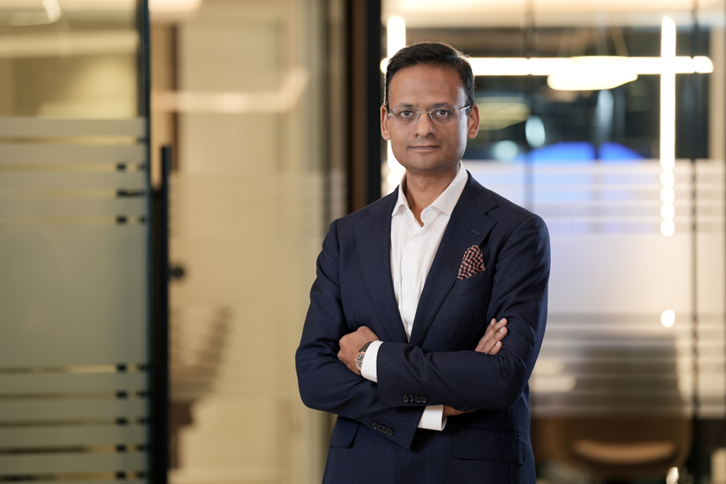
The UAE Ministry of Finance has issued Ministerial Decision No. 24 of 2026, setting out the detailed implementation rules for the country’s first-ever Research and Development (R&D) Tax Credit regime under the Corporate Tax framework. Effective for Tax Periods commencing on or after 1 January 2026, the decision establishes a progressive, tiered credit structure with rates of 15%, 35% and 50%, linked to both the level of qualifying R&D expenditure and the number of R&D staff employed. The maximum qualifying expenditure is capped at AED 5 million per entity or Tax Group per year.
“The R&D Tax Credit is a landmark development, but it is not a simple year-end adjustment. The dual-threshold design means this is as much a workforce planning exercise as a tax planning one. Businesses need to understand that pre-approval from the Council is mandatory before any credit can be claimed – this is a precondition, not an administrative formality. Companies that begin mapping their R&D activities against the Frascati Manual criteria, quantifying qualifying expenditure and building their documentation framework now will be in the strongest position when it comes time to file,” said Nimish Goel, Leader Middle East, Dhruva, Ryan LLC Affiliate.
The move represents one of the clearest signals yet that the UAE intends its tax framework to actively incentivise innovation, influence capital allocation and support the country’s long-term economic diversification going well beyond revenue collection and international alignment. For businesses operating in manufacturing, technology, engineering, healthcare, food and beverage, agriculture, and other innovation-led sectors, the key consideration is whether internal systems are equipped to capture the benefit.
The credit operates on a dual-threshold basis that is unlike most international R&D incentive regimes. To access each tier, a business must satisfy both a minimum qualifying expenditure level and a minimum average R&D headcount. The first AED 1 million of qualifying spend attracts a 15% credit, requiring at least two R&D staff. The portion between AED 1 to 2 million qualifies at 35%, requiring at least six staff. Spend between AED 2 to 5 million qualifies at 50%, requiring at least fourteen staff. If the headcount threshold is not met, the credit rate drops to the highest tier where both conditions are satisfied, creating material cliff-edge effects that make workforce planning an integral part of tax planning for the first time in the UAE.
Qualifying R&D activities must meet five criteria drawn from the OECD Frascati Manual; they must be novel, creative, uncertain in outcome, systematic, and transferable or reproducible. Activities in social sciences, humanities and the arts are excluded, and only R&D conducted within the UAE qualifies. Qualifying expenditure falls into three categories: staff costs (which receive a 30% overhead uplift), consumable costs, and subcontracting fees paid to UAE-based contractors. Intra-group transactions are consistently excluded from qualifying expenditure, a design choice that will require groups with centralised R&D functions to review their cost allocation and transfer pricing arrangements carefully.
The decision also introduces a mandatory pre-approval process administered by the Council, ongoing compliance reporting obligations, and a seven-year record-keeping requirement for technical documentation covering R&D objectives, methodologies, experiments and findings. These requirements signal that the UAE authorities expect robust, contemporaneous evidence of qualifying activities, not retrospective assembly at the time of filing.
Commenting on the development, Justin Arnesen, Principal, Practice Leader, Europe & Asia Pacific Innovation Funding, Ryan, said, “Ryan’s global experience in R&D tax credits shows that the difference between a policy announcement and a commercial outcome lies in the rigour of eligibility analysis, documentation and claims management. We have helped UK businesses receive over AED 2.5 billion in innovation funding through R&D Tax credits. These outcomes were driven by disciplined processes, not just the existence of a credit. This initiative not only aligns with global best practices but also sends a clear signal to multinational organisations and emerging enterprises that the UAE is serious about fostering a knowledge and innovation-based economy.”
Implications for Multinational Groups under Pillar Two
For multinational groups within the scope of the UAE’s Domestic Minimum Top-up Tax (DMTT), the R&D Tax Credit adds an important layer to Effective Tax Rate (ETR) modelling. Because the credit is non-refundable, it is likely to be treated as a reduction of covered taxes under the Global Anti-Base Erosion (GloBE) rules rather than as a Qualified Refundable Tax Credit, a distinction that can lower the jurisdictional ETR rather than improve it. For groups operating at or near the 15% minimum rate, this means the credit could paradoxically increase Top-up Tax exposure even as it reduces Corporate Tax liability.
However, the decision provides a mechanism for unutilised credits to offset top-up tax directly through the Domestic Group structure, which partially mitigates this effect. Multinationals should model the net impact across both Corporate Tax and top-up tax before claiming, and factor in the five-year claw-back provision that applies if the entity’s status changes – including becoming a qualifying free zone person or redomiciling outside the UAE.
For businesses with cross-border operations, the commercial value of the R&D Tax Credit extends beyond the direct tax saving. The credit’s treatment in the group’s wider international tax profile, including its classification under tax treaties, its interaction with Pillar Two ETR calculations, and its impact on transfer pricing for cost contribution arrangements will require integrated advisory across multiple disciplines. Groups conducting joint R&D through cost contribution arrangements should note that only the arm’s length share of contributions attributable to UAE-based R&D qualifies, adding a transfer pricing dimension to credit planning. The Ministerial Decision applies to Tax Periods and Fiscal Years commencing on or after 1st January 2026.
“The UAE has built a thoughtful, well-structured framework with clear international lineage – the Frascati Manual criteria, the tiered incentive design, the Pillar Two integration. Early investment in activity mapping, expenditure tracking and documentation is likely to determine the extent to which businesses can access and sustain benefits under the regime,” concluded Nimish.

EMARAT SUPPORTS HSE EXPO UNDERSCORING HEALTH, SAFETY AND ENVIRONMENTAL LEADERSHIP
STARKEY OMEGA AI – ONE OF THE MOST POWERFUL AND ADVANCED HEARING TECHNOLOGY TO EVER REACH MEA PATIENTS
DIGITIZATION-LED DISRUPTION SET TO RESHAPE GCC AUTO COMMERCE ECOSYSTEM

-
News10 years ago
SENDQUICK (TALARIAX) INTRODUCES SQOOPE – THE BREAKTHROUGH IN MOBILE MESSAGING
-

 Tech News2 years ago
Denodo Bolsters Executive Team by Hiring Christophe Culine as its Chief Revenue Officer
-
 VAR12 months ago
Microsoft Launches New Surface Copilot+ PCs for Business
-

 Tech Interviews2 years ago
Navigating the Cybersecurity Landscape in Hybrid Work Environments
-

 Trending5 months ago
OPPO A6 Pro 5G Review: Reliable Daily Driver
-

 Tech News9 months ago
Nothing Launches flagship Nothing Phone (3) and Headphone (1) in theme with the Iconic Museum of the Future in Dubai
-

 Automotive1 year ago
AGMC Launches the RIDDARA RD6 High Performance Fully Electric 4×4 Pickup
-

 VAR2 years ago
Samsung Galaxy Z Fold6 vs Google Pixel 9 Pro Fold: Clash Of The Folding Phenoms