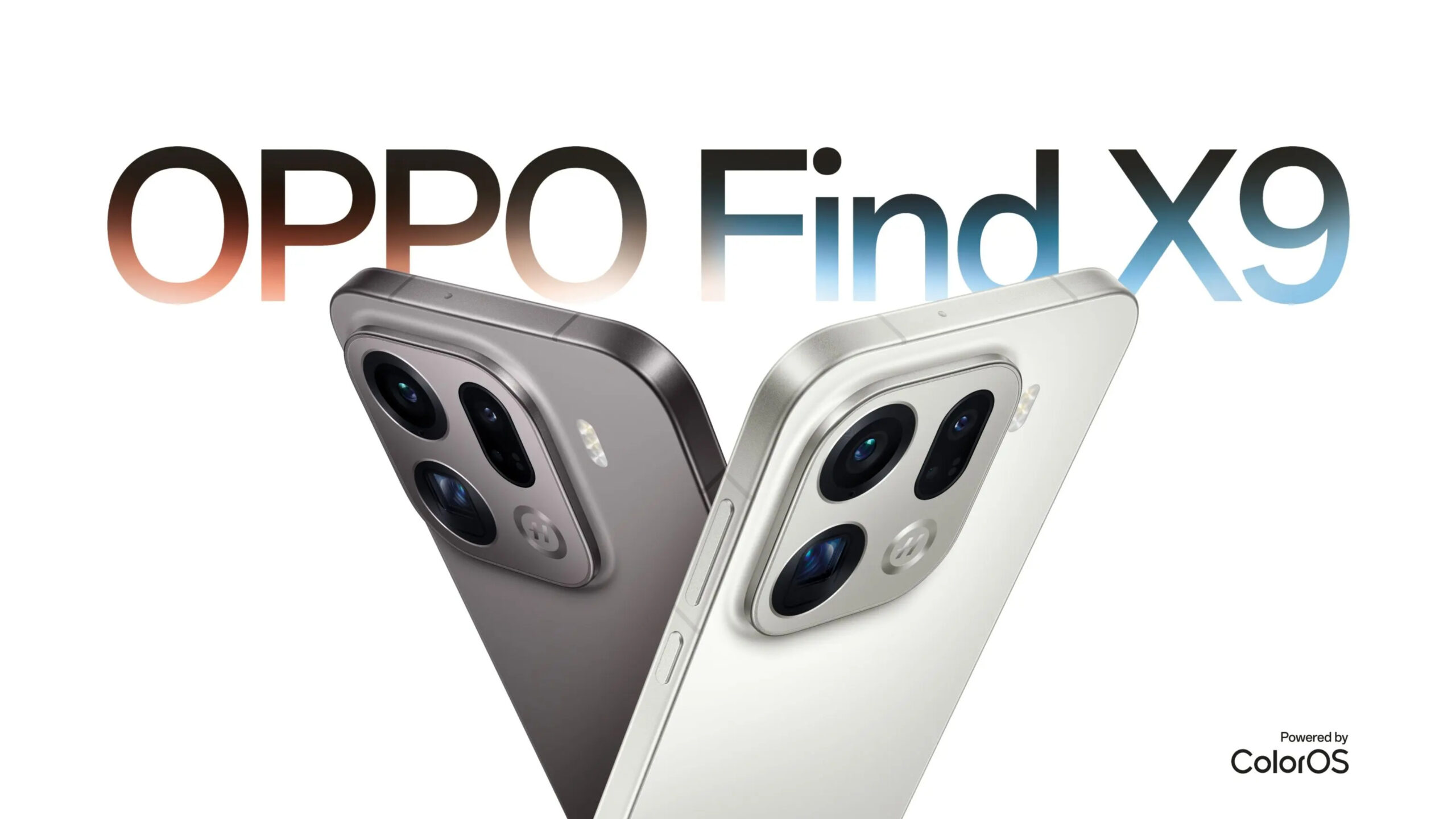
I find (no pun lost here) the new Find X9 Pro to be OPPO’s most accomplished flagship yet. This isn’t just another incremental upgrade. The Find X9 Pro represents a genuine leap forward in battery life and mobile photography, backed by hardware and software that actually deliver on their promises.
What immediately struck me right after I unboxed the device is how OPPO has managed the impossible: fitting a massive 7500mAh battery into a remarkably slim profile. This is undoubtedly a two-day battery phone. But the highlight is that it still feels like a sleek flagship, not a bulky power bank.
The build quality is exceptional throughout. Every physical element, from the precisely engineered buttons to the refined camera housing, screams premium craftsmanship and efficient engineering. This is a phone that focuses on excellence in imaging while refusing to compromise on the essentials: battery life, display quality, and day-to-day performance.
Premium & Purposeful Design Language
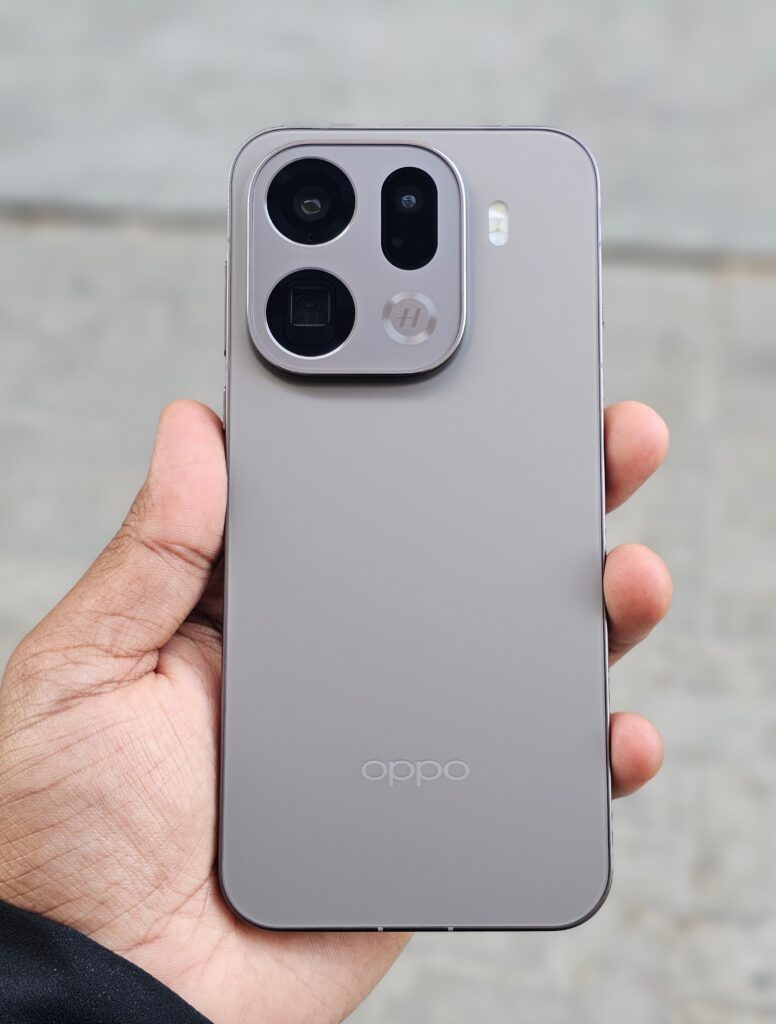
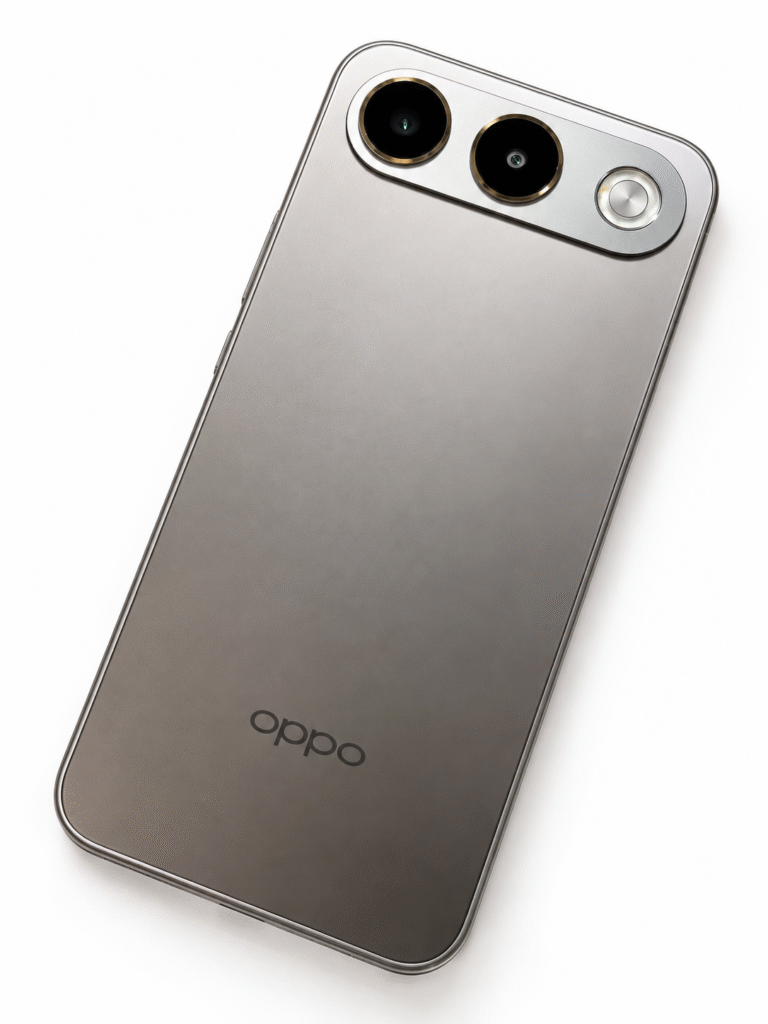
The Find X9 Pro introduces a refined design language characterized by neatly rounded corners and a balanced form. I’ve been using the Titanium Charcoal variant, which features a deep, muted tone with a non-reflective matte texture. It conveys both durability and modern elegance while resisting fingerprints effectively. The flat-edged aesthetic with subtle frame contours ensures a secure and comfortable grip. At 8.25mm thin and 224g, it strikes a perfect harmony between sophisticated elegance and everyday functionality. Even encased in the included case, the phone doesn’t feel hefty or uncomfortable to hold.
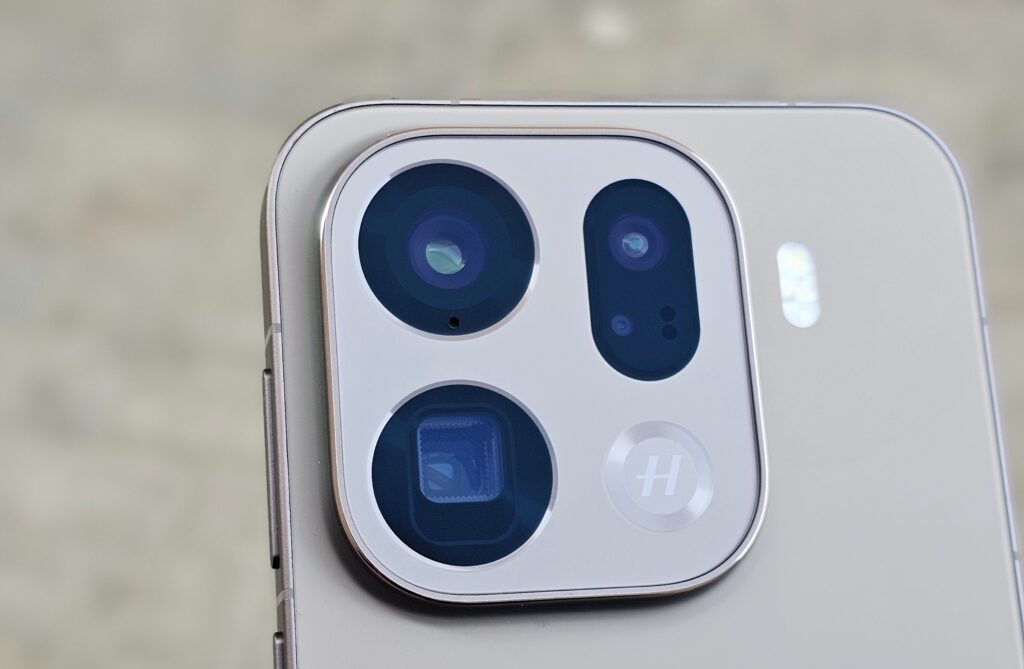
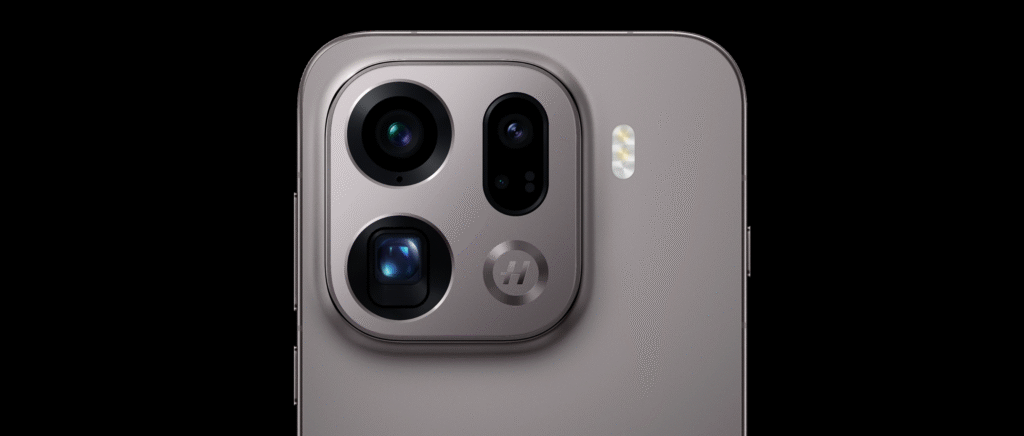
The build quality is exceptional throughout. Every physical element feels thoughtfully crafted. The buttons have a satisfying, precise click with no wobble or mushiness. The rear camera module, positioned in the top-left corner, aligns perfectly with the frame. This thoughtful engineering translates to superior ergonomics: when holding the phone vertically my index finger naturally avoids the lenses, and grip remains clear for landscape gaming or media.
These details might seem minor, but they collectively create a device that becomes invisible in the best way possible. Not because you forget it’s there, but because it integrates so naturally into your life that using it feels effortless, always ready for whatever you need without demanding attention.
Two New Physical Buttons
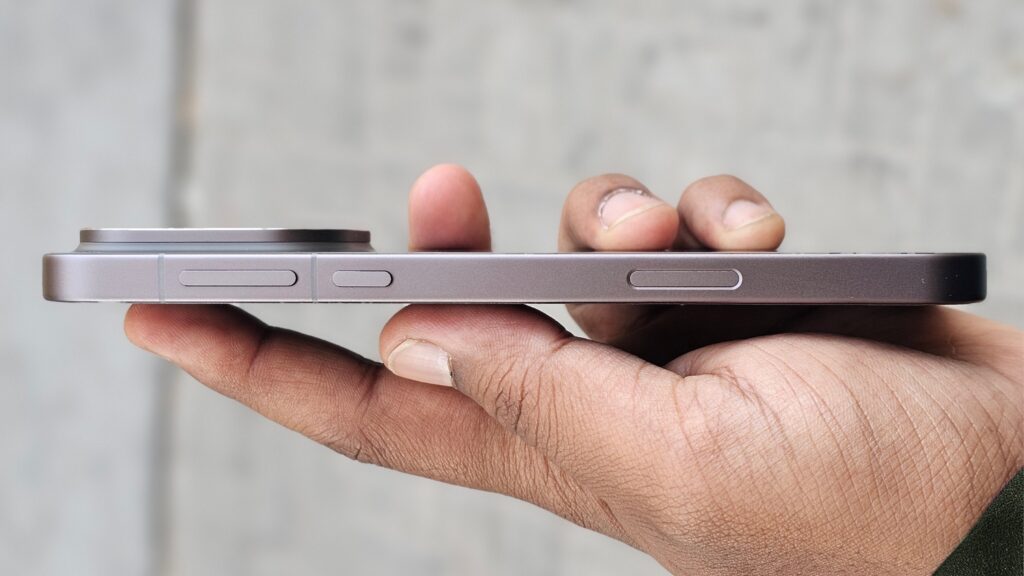
The Find X9 Pro introduces two new physical buttons that enhance functionality, and both are evidently super-high-quality in their execution:
Snap Key: Integrated into the left frame, this customizable button allows you to assign functions like switching sound profiles, toggling the flashlight, launching voice recorder, activating translation, or taking screenshots. By default, it’s linked to the AI Mind Space feature: short-press captures screen content, long-press adds a voice note, double-press opens Mind Space directly. The tactile feedback is excellent, with a definitive click that feels premium.I’ve customized mine to quickly toggle between silent, vibrate, and ring modes, a feature I’ve genuinely missed since physical alert sliders fell out of fashion.
Quick Button: On the right side, OPPO has added a Quick Button, which I initially mistook for a physical fingerprint scanner. However, it is a quick-toggle/physical zoom control for the camera. Double-tap opens the camera, press to take a photo, long-press for continuous shooting. In landscape orientation, you can swipe on the button to zoom in and out. The button has a satisfying half-press for focus (like a DSLR shutter button) and a full press for capture. This is genuinely useful for quick camera access and adds tactile control that feels more intuitive than the on-screen zooming-wheel.
IP69: Built to Last
The Find X9 Pro provides comprehensive protection with IP66, IP68, and IP69 certifications. The IP68 certification, which is normal for current flagships, guarantees proven protection against dust and prolonged water submersion (up to 1.5 meters for 30 minutes). However, on top of that, the Find X9 Pro gets an IP69 rating which provides defense against high-pressure, high-temperature water jets (up to 85°C), ensuring the device can withstand more extreme conditions.
I’ve used the phone by the pool, in the kitchen and in similar splash-prone environments without any hesitation. The peace of mind that comes with this level of protection is invaluable.
A Display That Demands Attention
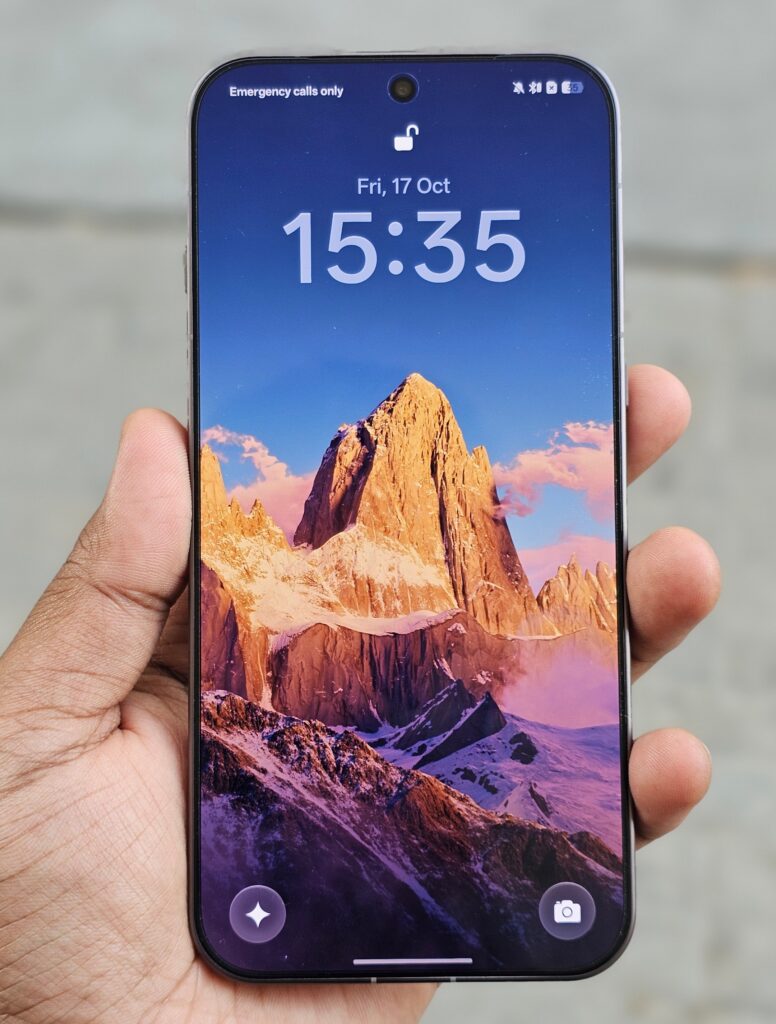
The 6.78-inch AMOLED display is surrounded by ultra-narrow bezels measuring just 1.15mm on all four sides. This is the thinnest bezel on any OPPO phone, creating a truly seamless viewing experience that minimizes visual interruptions.
The display’s peak outdoor brightness of 3600 nits is seriously impressive. “Nits” measure screen brightness, and 3600 is among the brightest available. In Dubai’s harsh sunlight, I can read the screen comfortably without any strain or need to cup my hand over it. The 1-120Hz LTPO refresh rate means the screen intelligently adjusts its update frequency based on content, delivering buttery-smooth scrolling when needed while conserving battery when displaying static content.
Super-Comfortable for Afterdark Usage
Traditional displays flicker rapidly to control brightness, and this flicker, while invisible to most people, can cause eye fatigue over time. The Find X9 Pro’s 2160Hz PWM dimming flickers so rapidly (2,160 times per second) that it essentially eliminates perceptible flicker, making it genuinely comfortable for extended nighttime use. I frequently use my phone in bed, and the combination of ultra-low brightness and flicker reduction makes a noticeable difference in eye comfort.
Possibly The Fastest Fingerprint Unlock I’ve Ever Experienced
Optical vs Ultrasonic Fingerprint Scanners Here’s the difference: optical fingerprint scanners (found on most phones) work by shining light on your finger and taking a photograph. They create a 2D image of your fingerprint, which can be fooled by high-resolution photos and struggles with wet or oily fingers.
Ultrasonic scanners use high-frequency sound waves (like sonar or bat echolocation) to map the 3D ridges and valleys of your fingerprint. The scanner emits ultrasonic pulses, which bounce off your fingerprint’s unique topography. By measuring the reflected waves, it creates a highly accurate three-dimensional map of your fingerprint.
The 3D ultrasonic fingerprint scanner of the Find X9 Pro deserves special recognition because it’s genuinely the fastest and most reliable biometric unlock I’ve experienced on any smartphone. Not just among optical sensors, but even when compared to the pioneering ultrasonic implementations from competitors. The recognition is instantaneous. There’s virtually no perceptible delay between touching the sensor and the phone unlocking. It feels less like authentication and more like the phone simply recognizing your existence.
What’s equally impressive is the registration process. Most phones require you to tap your finger multiple times in the same position, slowly building up a complete fingerprint map. The Find X9 Pro’s approach is far more elegant: one press, then simply move your finger around naturally to register all parts. The sensor captures your entire fingerprint topology in one fluid motion. The whole process takes seconds rather than the tedious minute-plus routine I’ve experienced with other devices.
ColorOS 16: Refined Software Experience
Running ColorOS 16 based on Android 16, the software experience is polished and feature-rich. every interaction now feels instantaneous and perfectly connected. The transitions from Always-On Display to lock screen to home screen flow in one continuous, graceful motion. The wallpaper doesn’t just appear, it elegantly transforms through each stage. I’ve found myself unlocking the phone just to watch this seamless transition. It’s the kind of refined detail that elevates the entire experience from functional to genuinely delightful.
OPPO’s Luminous Rendering Engine powers all of this visual magic. It renders all visual components in parallel, eliminating jarring transitions and ensuring the OS stays perfectly smooth no matter how much is happening on screen.
Beyond the visual flourishes, ColorOS 16 brings genuinely useful features. The Flux Home Screen allows you to resize app icons and folders dynamically, with the surrounding layout adapting fluidly. The result is a system that feels responsive and fluid throughout extended use.
A Camera System That Actually Earns Its Hasselblad Badge
Let’s address the elephant in the room: smartphone marketing loves to throw around buzzwords. But the Find X9 Pro’s Hasselblad Master Camera System isn’t just branding, it’s a legitimately engineered imaging system that genuinely makes use of the extent of what’s possible with a smartphone camera.
Flagship Performance in Any Light
The all-new Ultra XDR Main Camera, consists of a large 1/1.28-inch custom Sony LYT-828 sensor. For me, sensor size matters over the megapixel count, because larger sensors capture more light, resulting in brighter, clearer images, especially in challenging conditions.
Dynamic range is essentially the camera’s ability to capture detail in both the darkest shadows and brightest highlights simultaneously. The Find X9 Pro’s 17 stops actually surpass dedicated 1-inch sensors found in some compact cameras. In practical terms, this means when you’re photographing a sunset, you can see detail in both the bright sky and the darker foreground. No more choosing between an overexposed sky or an underexposed subject.
I’ve tested this extensively in Dubai’s harsh lighting conditions: bright midday sun, deep shadows under buildings, sunset shots with extreme contrast. The main camera consistently delivers balanced, natural-looking photos with detail preserved throughout the entire frame.
The 50MP ultra-wide camera (15mm equivalent) is far more capable than the typical afterthought ultra-wide modules found on many flagships. The Samsung ISOCELL JN5 sensor delivers genuinely impressive image quality across the frame, with minimal distortion at the edges and excellent detail retention even in the corners.
What sets this ultra-wide apart is the autofocus capability with a minimum focal distance of just 3.5cm. This transforms it into a capable macro camera for extreme close-ups of small subjects like flowers, insects, or intricate details. The 50MP resolution means you can crop in significantly while maintaining sharpness, giving you additional framing flexibility.
200MP 120x Telephoto Shooter
Another standout star here is the 200MP Hasselblad Telephoto camera. Now, 200 megapixels sounds like a spec-sheet flex, but here’s why it actually matters: this isn’t just about capturing massive files. It’s about maintaining exceptional clarity at zoom ranges that would reduce most phone cameras to a mushy mess.
Think of it this way: the Find X9 Pro’s 200MP sensor is like having an ultra-high-resolution master file. When you zoom to 3x (70mm), you’re using the full optical system. At 6x, you’re still getting a native 50MP image by cropping from that massive sensor. Even at 13.2x, the phone delivers a lossless zoom, maintaining detail that rivals dedicated cameras.
I’ve tested this extensively at concerts, sporting events, and even photographing birds from my balcony (yes, I’ve become that person). The clarity at 6x and 10x zoom is genuinely impressive. Details that would be lost on other phones remain sharp and usable.
The True Color Camera: Accurate Colors in Any Lighting
Most smartphone cameras struggle with color accuracy in mixed or unusual lighting. Ever noticed how photos taken in warm cafe lighting look overly orange, or how neon signs at night never quite look right? That’s because traditional cameras make educated guesses about color temperature based on limited information. This is the issue the Find X9 Pro’s True Color Camera solves. This isn’t a camera you shoot with directly. Instead, it’s a dedicated 8-channel spectral sensor with 2 million spectral pixels that acts as a “color consultant” for the entire camera system.
In my testing, this makes a noticeable difference in portraits and in any situation with complex lighting scenarios. Skin tones, in particular, look more natural and consistent across different lighting conditions. I’ve taken portraits in everything from harsh sunlight to dim restaurant lighting, and the color accuracy remains impressive throughout.
Exceptional Night Photography: When Darkness Becomes Your Canvas
The Find X9 Pro’s low-light photography deserves its own spotlight because it genuinely excels where most smartphones struggle. Night photography has always been the great separator between good and exceptional camera systems, and the Find X9 Pro firmly plants itself in the latter category.
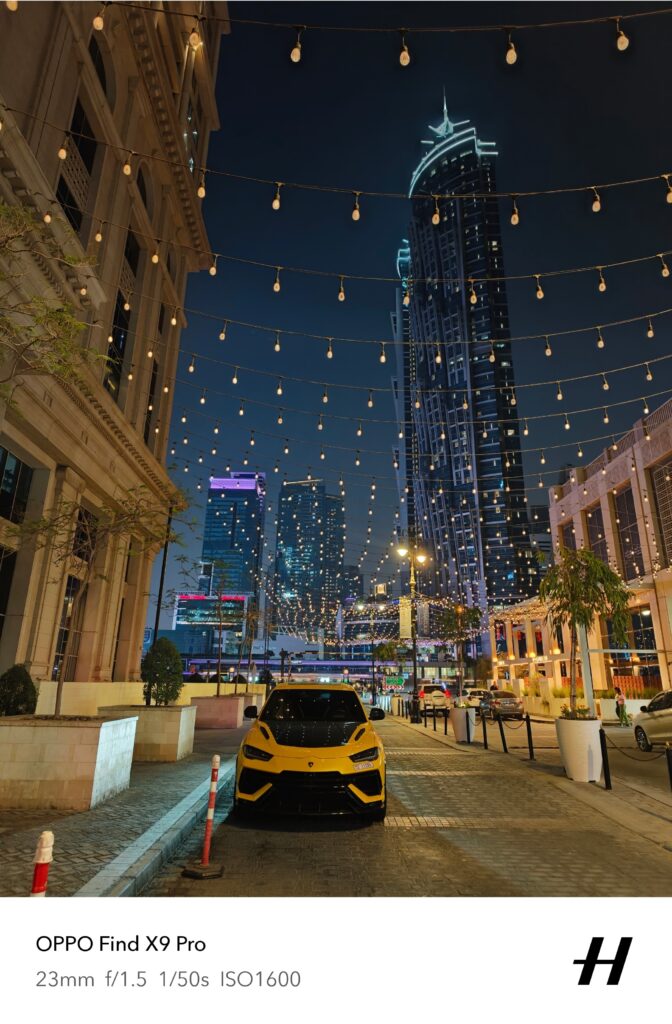
The combination of the large main sensor, f/1.5 aperture, and Real-Time Triple Exposure technology delivers exceptional low-light performance. That f/1.5 aperture captures 30% more light than the previous generation, which translates to noticeably brighter and clearer night shots with significantly less noise.
I’ve extensively tested night photography across Dubai’s diverse evening landscapes: dimly lit alleyways, neon-soaked streets, and the challenging mixed lighting of outdoor cafes and restaurants. The results consistently impress. Where other phones would produce grainy, muddy images or over-process scenes into unnatural HDR nightmares, the Find X9 Pro maintains natural texture and color while pulling out impressive detail from shadows and highlights.
The True Color Camera’s contribution becomes especially evident at night. Under mixed neon lighting or warm street lamps, most phones struggle with color accuracy, often rendering scenes with unnatural orange or green casts. The Find X9 Pro’s spectral analysis ensures colors remain true to life, even in these challenging scenarios. Skin tones in night portraits look natural and flattering rather than artificially processed.
Perhaps most impressively, the Find X9 Pro manages all this without falling into the trap of making night look like day. Night photos retain their atmosphere and mood while being perfectly usable, which is exactly what exceptional night photography should achieve.
Pro Video Tools for Serious Creators
All cameras, including the front-facing and three rear cameras, support 4K 60fps recording in Dolby Vision HDR. OPPO has fully optimized the imaging pipeline, resulting in enhanced stabilization, more consistent autofocus and auto white balance, and smoother transitions when switching between lenses during recording.
For professional creators, the Find X9 Pro offers true PRO Video mode with full LOG recording capabilities. LOG captures flat, data-rich files ideal for post-production color grading and maximum creative control. The integrated LUT Preview allows you to visualize a final color grade in real-time while still recording with the highest possible dynamic range.
With the main camera and telephoto camera, the Find X9 Pro further supports 4K video at 120fps in Dolby Vision. This is achieved without compromising stabilization, allowing you to shoot high-quality slow-motion footage with exceptional stability. The LOG profile is ACES-certified (the global standard for motion picture color management), meaning the footage will integrate seamlessly into professional workflows.
Two-Day Battery Champ
The Find X9 Pro takes a major leap in battery capacity with a massive 7500mAh cell. This is significantly larger than the Find X8 Pro’s already large 5910mAh. Remarkably, this substantial increase comes with no change in thickness, maintaining a sleek 8.25mm profile. Let me emphasize this: it’s genuinely remarkable how slim this phone feels despite housing what is essentially a powerbank.
Silicon-Carbon Battery Technology Explained
This achievement is made possible by OPPO’s third-generation silicon-carbon battery technology, a tech that has become the new normal in the latest-gen smartphones. Traditional lithium-ion batteries use graphite anodes (the negative electrode). Silicon, however, can hold far more lithium ions than graphite. Silicon has a charge capacity that’s about 13% higher than graphite’s theoretical maximum. Hence it delivers a higher-capacity cell without the added heft.
The massive 7500mAh capacity, paired with the efficient Dimensity 9500 chipset and OPPO’s precise software tuning, enables the Find X9 Pro to deliver an average of two days of typical usage on a single charge. This is undoubtedly a two-day battery phone. I’m a heavy user (extensive photography, video recording, social media, streaming, video calls / virtual meetings) and I consistently get a full day with 30-40% remaining. Moderate users will easily achieve two full days without breaking a sweat.
More importantly, the battery is engineered for long-term durability. The Find X9 Pro is designed to retain up to 80% of its original capacity even after five years of typical use, ensuring consistent performance year after year. You can also set the charging limit anywhere from 80% to 100% based on your needs to further slow battery aging.
With 80W SUPERVOOC wired charging, you can get hours of use in just minutes. And the fact that you get an 80-watt charger in the box is just the cherry on top of this already sweet deal.
Flagship Power, Flagship Efficiency
The Find X9 Pro is among the first smartphones featuring the latest MediaTek Dimensity 9500 chipset. Built on TSMC’s advanced 3nm process (smaller manufacturing process means better efficiency and performance), this flagship chip features a third-generation All Big Core CPU design.
This means instead of having slow, efficient cores for basic tasks and fast cores for demanding tasks, all eight cores are performance-oriented. The chipset delivers up to 32% faster CPU performance and 55% more efficiency compared to the previous generation. GPU performance is up to 33% faster with 42% better efficiency. The ninth-generation MediaTek NPU 990 (the AI processor) is 111% faster with 56% improved efficiency.
In real-world use, this translated to the phone being incredibly snappy. Apps launch instantly, multitasking is seamless, and even the most demanding games run flawlessly. I’ve played PUBG Mobile, and Genshin Impact at maximum settings, and the performance is consistently smooth with no lag or stuttering.
The Find X9 Pro features an upgraded vapor chamber for thermal management which has been completely redesigned with an ultra-fine 0.025mm stainless steel mesh. This reduces its thickness while significantly improving thermal conductivity for more efficient heat transfer.
The vapor chamber works like an advanced heat pipe: when the phone heats up, liquid inside evaporates and moves to cooler areas, then condenses back into liquid and releases the heat. It’s a continuous cooling cycle that spreads heat evenly instead of creating hot spots.
In my month of testing, even during extended 4K video recording sessions or intensive gaming marathons, the phone gets warm but never uncomfortably hot. The cooling system ensures consistent performance without thermal throttling.
AI LinkBoost Ensures All-Time Seamless Connectivity
OPPO’s AI LinkBoost incorporates OPPO’s self-developed RF chip that boosts uplink power by over 30% in key frequency bands. With advanced 360-degree surround antenna architecture, it significantly enhances signal stability and anti-interference capability.
In practical terms, the phone maintains strong connectivity even in traditionally weak-signal environments like elevators, underground garages, and during high-speed transit. I’ve noticed consistently better signal reception compared to other flagships, particularly in Dubai’s numerous underground parking garages where signal typically drops.
The Verdict
The OPPO Find X9 Pro is a new-generation camera flagship, crafted for the remarkable.
After over a month of real-world use, the Find X9 Pro has exceeded my expectations in virtually every category. This is a phone that delivers on its promises. The 200MP Hasselblad Telephoto isn’t just a spec-sheet flex; it genuinely transforms mobile photography, particularly for zoom, landscape and portrait capture. The main camera delivers flagship-quality images in any lighting condition. The industry-first features like 50MP default shooting aren’t gimmicks; they’re genuinely useful capabilities that enhance the photography experience.
Beyond the camera excellence, the Find X9 Pro refuses to compromise elsewhere. The 7500mAh silicon-carbon battery delivers genuine two-day battery life in a remarkably slim form factor. The Dimensity 9500 delivers flagship performance with excellent efficiency. The advanced cooling keeps everything running smoothly even under sustained load.
The thoughtful additions like the customizable physical buttons, and superfast 3D ultrasonic fingerprint scanner show OPPO’s attention to the complete user experience, not just headline features.
For users who prioritize exceptional imaging capabilities backed by genuine flagship performance, exceptional battery life, endurance, and build quality, the Find X9 Pro delivers comprehensively. This is OPPO at its best: pushing boundaries in mobile photography while delivering a complete, refined flagship experience.
If you’re serious about mobile photography or simply want a no-compromise flagship that excels across the board, the Find X9 Pro deserves serious consideration.
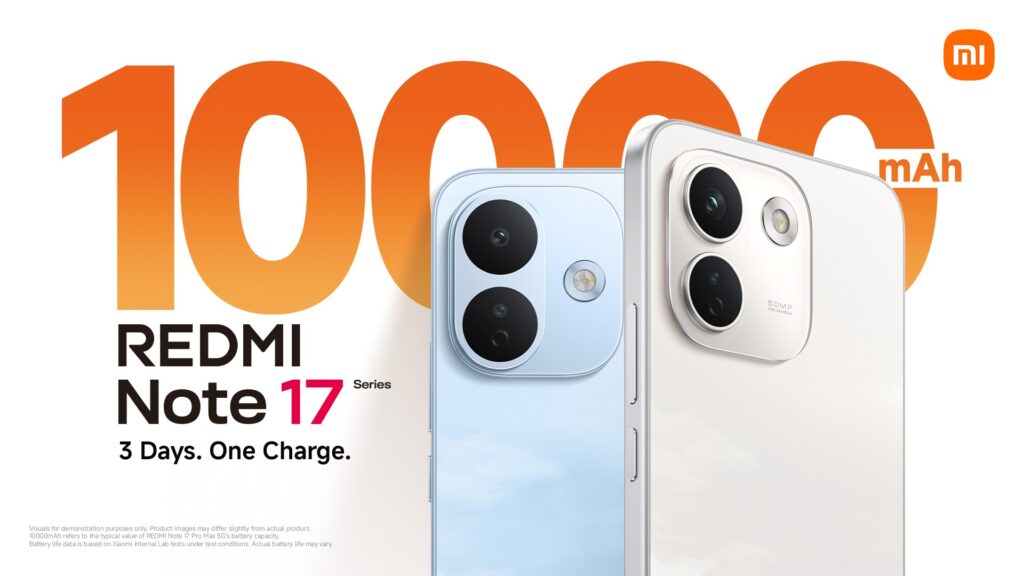
Xiaomi’s latest REDMI puts an 8,340mAh battery at the centre of its proposition, but its first surprise is how little that capacity dictates the overall design.
There is no shortage of smartphones competing on camera specifications, AI features and processing performance. With the REDMI Note 17 Pro 5G, however, one number immediately demands attention: 8,340mAh.
SRIJITH KN
This is also my first proper experience with a Xiaomi smartphone, which means I’m approaching the Note 17 Pro 5G without years of familiarity with REDMI or HyperOS.
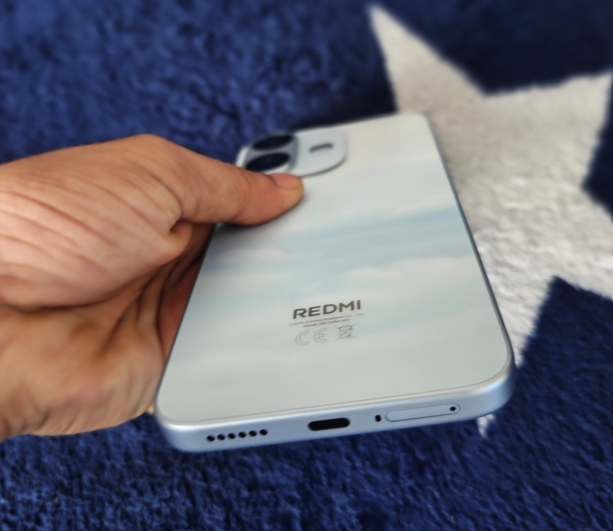
My first instinct was therefore to put it alongside something I know very well: my Nothing Phone (3). The comparison is surprisingly revealing. Both devices occupy similar territory in terms of overall thickness, with the REDMI appearing marginally slimmer from certain angles, while the Nothing feels slightly heavier in the hand. Considering the 8,340mAh battery inside the REDMI, that’s an impressive piece of packaging.
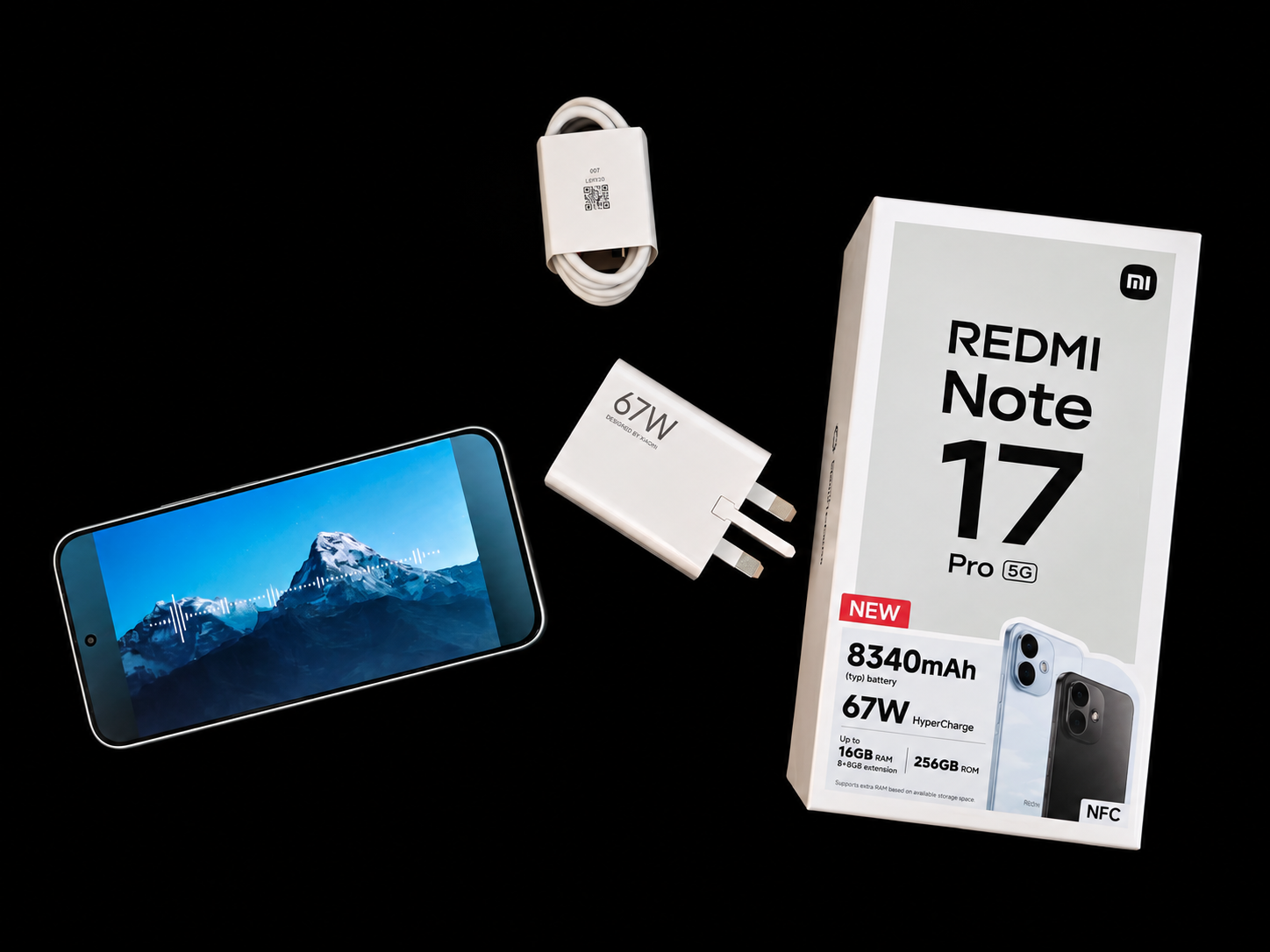
An 8,000mAh-plus battery still sounds like something that should require an obvious compromise in size and weight. And Phone is paired with 67W HyperCharge, which is a very welcome sight.
In the short time I’ve spent with the Note 17 Pro 5G, that compromise isn’t immediately apparent.
More than its battery
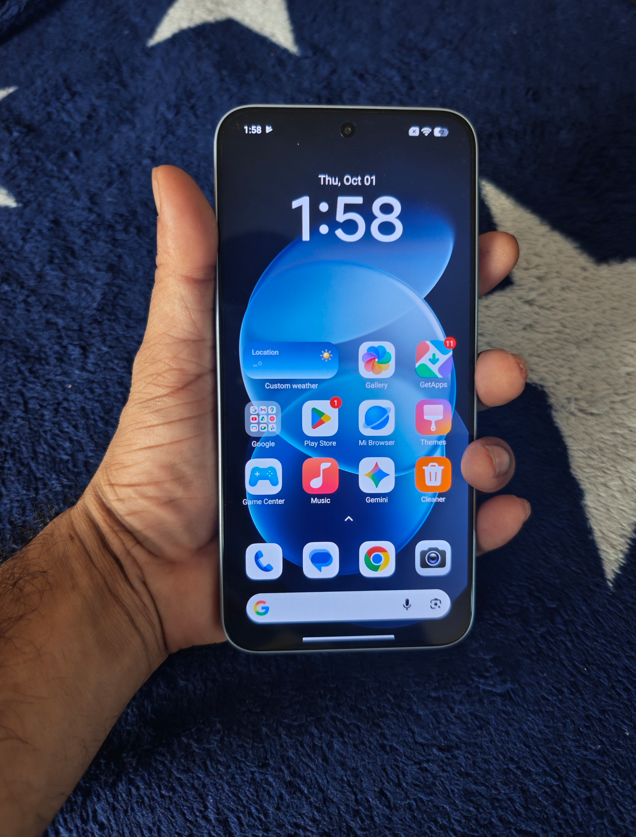
The design helps. Flat sides give the device a contemporary appearance, while the Sky Blue finish of our review unit is understated rather than attention-seeking. The rear camera module is also relatively restrained. It’s unquestionably a large smartphone, but it doesn’t feel like a specialist endurance device built around its battery.
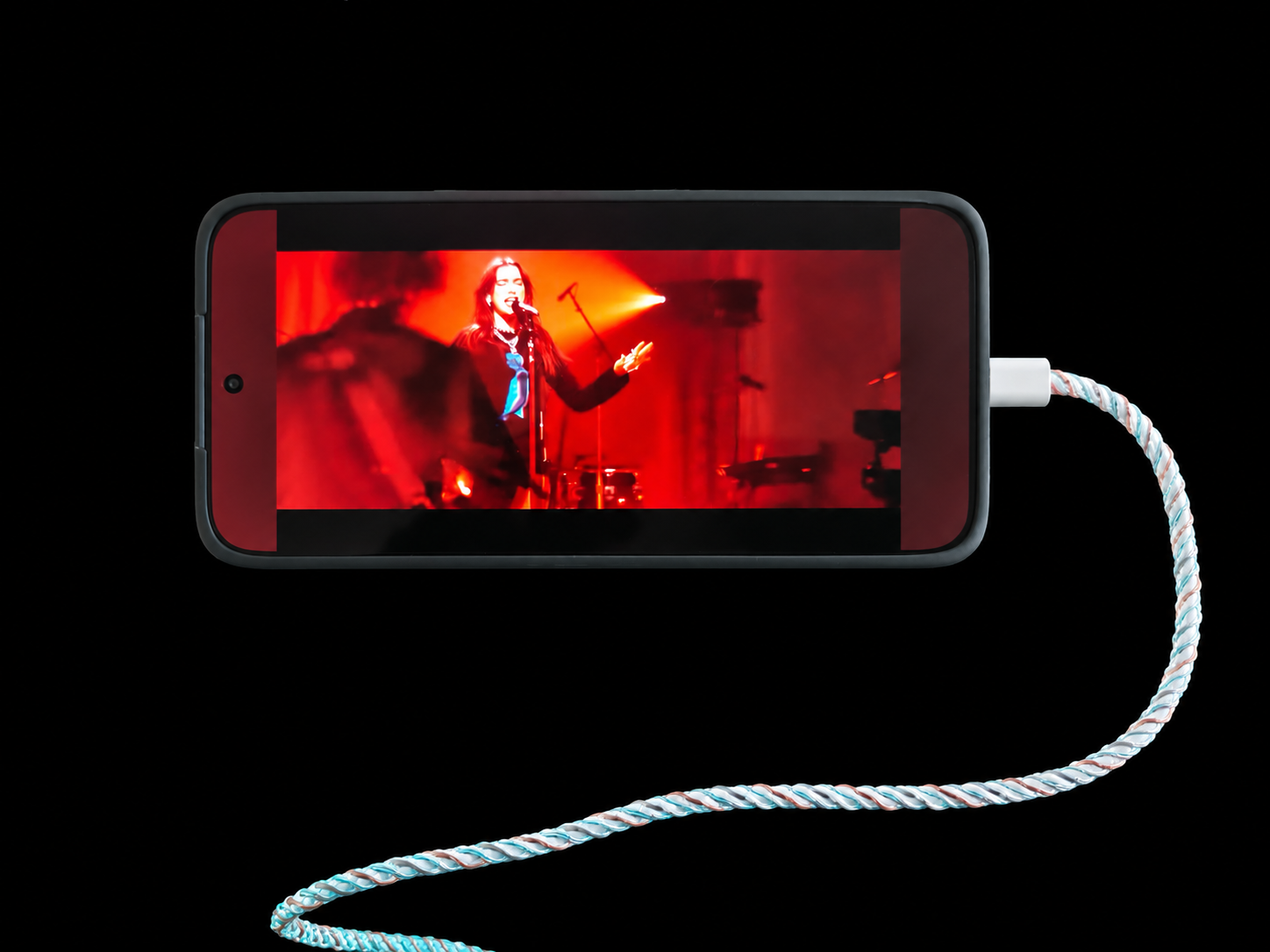
The display reinforces that impression. Initial video streaming has produced punchy colours and an enjoyable viewing experience, although outdoor visibility and extended media consumption will require further testing.
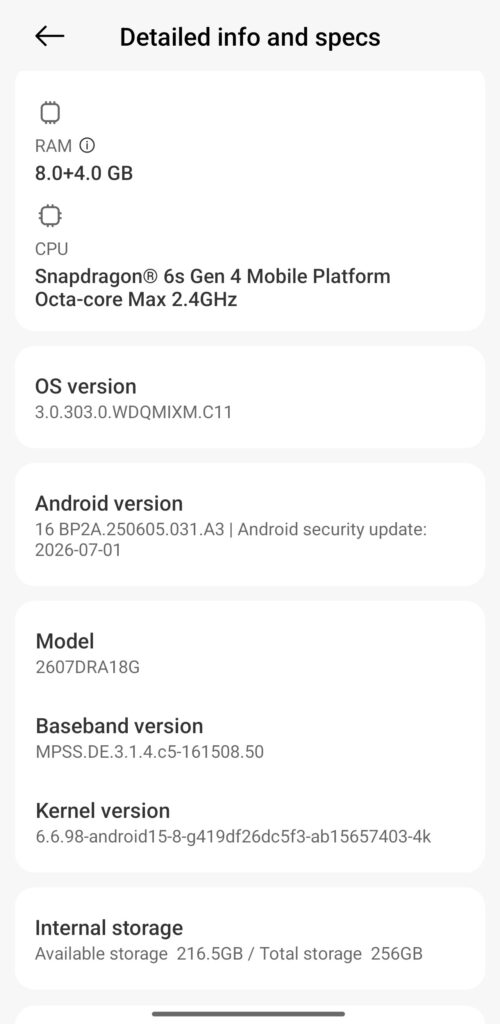
Inside, the Note 17 Pro 5G combines the Snapdragon 6s Gen 4 with 8GB of RAM on our review unit, which isn’t actually that impressive, supplemented by 4GB of memory extension. There is 256GB of internal storage.
During initial setup, browsing, app switching, video streaming and camera use, performance has felt fluid. Those observations remain just that, however — initial impressions rather than conclusions about sustained performance.
The speakers sound decent too, although the tuning seems to favour the treble slightly more than the bass. Vocals and higher frequencies come through clearly, but I’d have liked a little more low-end weight.
A first encounter with HyperOS
HyperOS is equally new territory for me.
Coming to the platform without established MIUI or HyperOS habits makes the experience interesting. Navigation has been straightforward and the software has so far stayed out of the way.
It hasn’t immediately won me over, but neither has it presented anything significant enough to put me off. Longer use will be needed before reaching conclusions about the software experience.
The same restraint applies to the cameras. I’ve begun taking photographs with the phone, but a small collection of daylight images isn’t enough to judge camera consistency. The next few days should provide a better mixture of subjects and lighting conditions.
8,340mAh meets the real world
Battery endurance is naturally the bigger question.
The software is already presenting some ambitious remaining-use estimates, but figures generated during the first hours of a newly configured smartphone don’t tell us much about real-world endurance.
A more useful test happens next.
I’m travelling to India, which means the REDMI will face exactly the sort of mixed workload that makes a large battery relevant: airport use, photography, navigation, messaging, mobile connectivity, streaming and extended periods away from a charger.
Perhaps the most important first impression, then, isn’t how large the battery is. It’s how successfully Xiaomi has prevented that battery from dominating the experience of using the device.
Cameras
The REDMI Note 17 Pro 5G keeps its camera hardware relatively straightforward. At the rear is a 50MP main camera with an f/1.8 aperture, 5P lens and optical image stabilisation (OIS), accompanied by an 8MP ultra-wide camera with an f/2.2 aperture. Up front, Xiaomi uses a 16MP selfie camera with an f/2.4 aperture.
There is a decent selection of shooting modes, including HDR, Portrait, Ultra HD, Panorama, Pro mode and Live Moment, while an Underwater mode is also supported, with availability through an OTA update. Xiaomi also offers Dual Video, allowing the front and rear cameras to record simultaneously.
Video specifications are more modest: both the rear and front cameras top out at 1080p at 30fps, rather than offering 4K recording. For my first impressions, however, I’m more interested in seeing how that 50MP OIS camera handles everyday photography, particularly during my upcoming travel.
Price completes the proposition
The REDMI Note 17 Pro 5G is priced at AED 1,499 for the 8GB + 256GB configuration, rising to AED 1,749 for 8GB + 512GB. It will be offered in Sky Blue, Satin Orange, Purple and Black.
At AED 1,499, an 8,340mAh battery certainly gives Xiaomi an obvious headline specification. The more important question is whether the display, cameras, performance and software combine to make the Note 17 Pro 5G more than simply a phone with a very large battery.
That’s something only more time with the device will answer.
For now, though, Xiaomi’s first achievement is surprisingly simple: 8,340mAh doesn’t feel like 8,340mAh.
Lenovo recently expanded its vision for Personal AI with its latest consumer portfolio of laptops, desktops, and smarter experiences. Together, the distinctive IdeaPad Vibe series and IdeaCentre AIO desktops give consumers a broader range of devices designed to reflect different lifestyles and everyday needs.
“The expectations people have for their PCs are changing,” said Jun Ouyang, Senior Vice President & General Manager, Consumer Segment, Lenovo Intelligent Devices Group. “Consumers want technology that fits into their lives, whether they prioritize performance, entertainment, or a device that suits their individual style. Our latest Idea portfolio brings together AI-powered experiences, distinctive design, and greater choice without the premium price.”
Smarter AI Experiences with Lenovo Qira
Among the AI-powered experiences available across select configurations of the new Idea portfolio is Lenovo Qira1, Lenovo’s personal AI experience, designed to deliver more seamless, contextual assistance across supported PCs, mobile devices, tablets, and wearables.
Lenovo Qira features Workato-powered connections such as email, calendar, and collaboration services, helping users find relevant information and move from intent to action through natural-language requests with less app switching. This capability creates a more connected experience across the devices, applications, and services people use throughout the day.
AI PCs Built for Self-Expression – The IdeaPad Vibe
Today’s laptops do more than support productivity. They’re also an extension of personal style. Lenovo’s new IdeaPad Vibe series gives everyday consumers, including students and families the opportunity to showcase their personality through bold colors, thoughtful design, and intelligent experiences that don’t compromise performance.
Powered by Snapdragon® X processors and Copilot+ PC capabilities, IdeaPad Vibe delivers fast, responsive performance and smooth everyday multitasking for a new generation of AI PC experiences. Available in both 14” and 15” configurations, IdeaPad Vibe combines all-day battery life2 and lightweight portability in a metal chassis starting at 1.3kg, making it easy to carry throughout the day. Developed in consultation with Pantone Institute, users can find the color that resonates with them, with seven fresh color options to choose from:
Dreamy Violet – a muted violet shade layered with inviting depth that inspires serenity, bringing a sense of comfort wherever it goes.
Spicy Gold – a rich golden yellow that blends warmth and energy, creating a confident, welcoming feeling.
Zen Green – a nature inspired green hue that evokes a sense of balance, harmony, and encourages a slower pace.
Chill Blue – an icy blue with a crisp modern vibe that stimulates refreshing clarity and an effortless fresh start energy.
Radiant Coral – warm and uplifting with an optimistic orange boost that brings friendliness and positivity wherever it goes.
Moody Blue – expressing credibility and confidence, a deep blue hue conveying refined elegance.
Lowkey Grey – a timeless grey projecting strength, stability, and understated sophistication.
Elemental by design, these colors are inspired by the world we live in with individuality in mind. Lenovo and Pantone Institute drew inspiration from colors people encounter every day and shades that capture how they aspire, learn, create, and live. To further extend personalization options, customizable keycaps will be available to add an extra touch of color (available for purchase and swapping).3
“Color is the most personal design decision people make when choosing a device,” said Brian Leonard, VP of Design Innovation for Intelligent Devices Group at Lenovo. “Now available in seven expressive new colors, IdeaPad Vibe gives people the ability to choose technology that showcases a piece of their personality while delivering the AI experiences and performance they expect daily.”
IdeaPad Vibe wasn’t created for one type of user. It was designed to adapt to different lifestyles, creative ambitions, and personal preferences. Whether someone values mobility, immersive visuals, or a device that represents their style, the IdeaPad Vibe series offers consumers the freedom to make the experience of using the laptop their own.
Select models offer up to 24GB4 of memory, delivering exceptional battery life, responsive performance, and powerful on-device AI capabilities. AI-enhanced productivity features include real-time translation, intelligent video conferencing effects, faster content creation, and enhanced privacy, all while maintaining a cool, quiet, and energy-efficient operation.
OLED configurations available in Lowkey Grey and Moody Blue deliver richer colors, deeper contrast, and up to 100% DCI-P3 color coverage, where supported5. IPS display options provide smooth 120Hz visuals where available6 and up to 100% sRGB coverage for daily viewing.
Upgradable dual SSD slots, multiple USB Type-A and Type-C® ports, HDMI®, MicroSD® card reader, audio jack, and TÜV Low Blue Light Certification provide the connectivity, expandability, and visual comfort expected from a modern AI laptop.
IdeaPad Vibe is also available with up to AMD Ryzen™ AI 400 Series processors, offering additional configuration flexibility such as dual-slot memory upgradeability up to 32GB4, and SSD expansion up to 1 TB4. Configurations are available with either a full metal build or metal plus polymer two tone ripple on the bottom cover, with optional 50Whr or 65Whr batteries7. Windows Hello Support is available across the lineup (Qualcomm and AMD).
From vibrant colors choices and personalized options to AI-powered productivity and all-day portability, IdeaPad Vibe proves that consumers no longer have to choose between performance and personality. It is an AI PC that is ready to perform and designed to stand out, no matter what a person’s vibe is.
Additional configurations powered by Intel® processors will be available at a later date.
An AIO Desktop for Everyday Life—The IdeaCentre AIO i
From busy mornings to family movie nights and late-night studying, the new IdeaCentre AIO i intelligently adjusts throughout the day to support consumers’ changing needs.
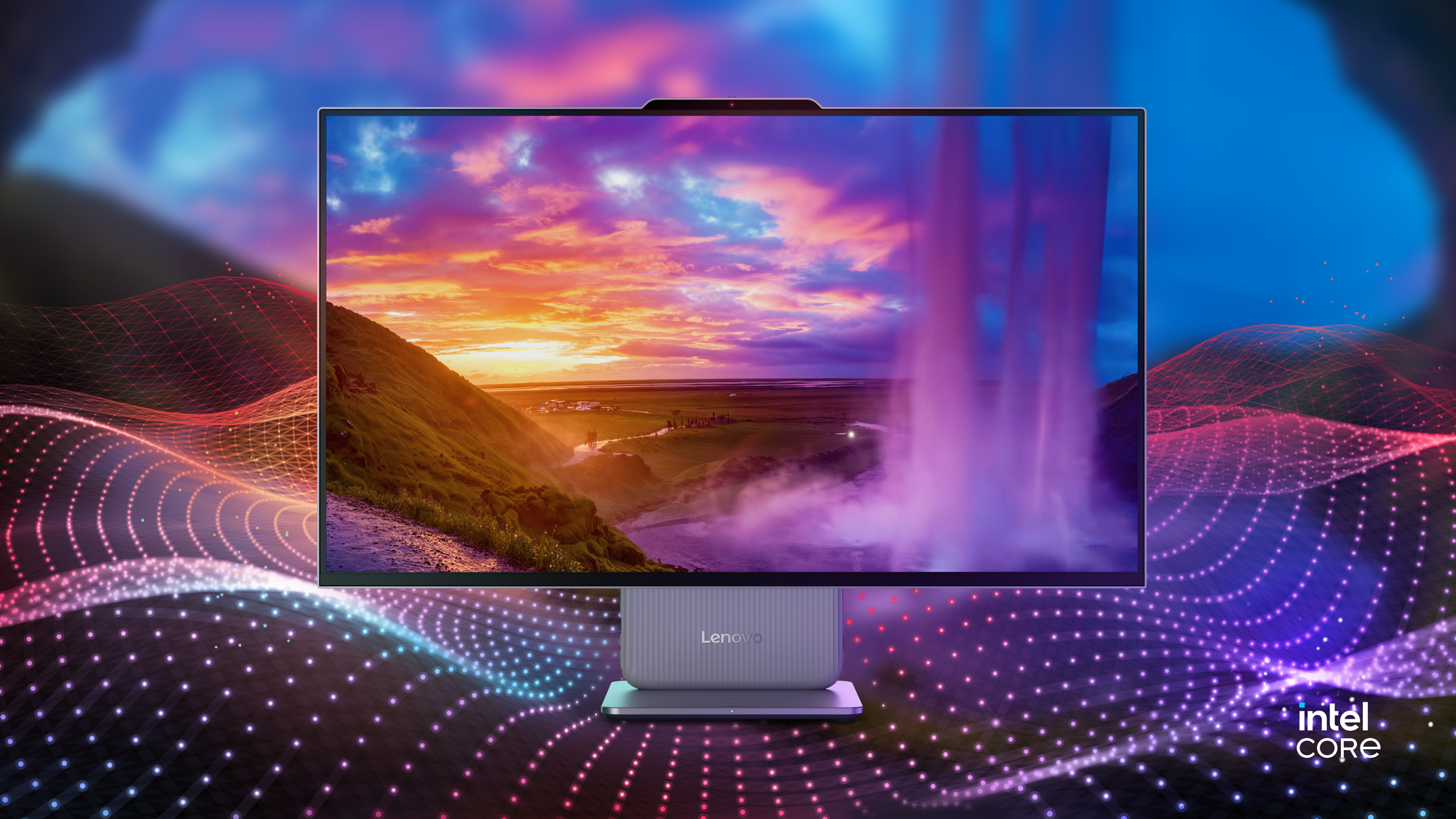
Built on Intel® Core™ Series 3 processors with up to 40 platform TOPS of AI performance, the latest generation combines a slimmer design, intelligent AI experiences, and thoughtful ergonomics to create a workspace that feels more comfortable, responsive, and personal.
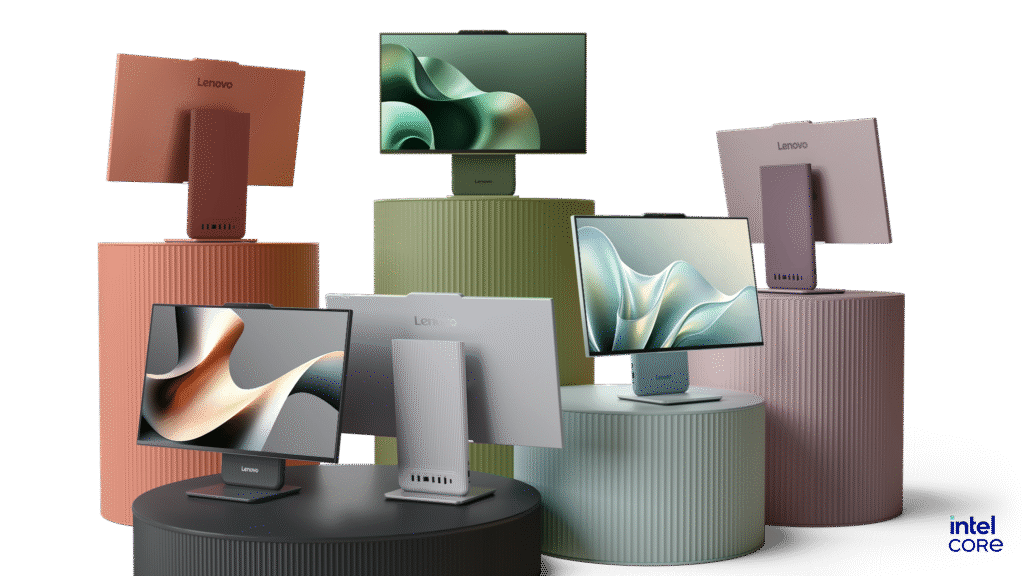
Available for the first time in multiple colors, including Dreamy Violet, Radiant Coral, Zen Green, Chill Blue, Luna Grey, and Cloud Grey, the IdeaCentre AIO i extends Lenovo’s vision of more personalized technology beyond the laptop. Its color options draw from research conducted in consultation with Pantone Color Institute, while the color-matched Lenovo Essential Wireless Combo Gen 3 Keyboard & Mouse completes the setup8 with a cohesive workspace aesthetic.
The redesigned middle-box-free architecture removes the bulky computing section traditionally found behind the display, creating a cleaner, more streamlined all-in-one appearance. 23.8” and 27” full HD display options feature up to a 120Hz refresh rate6, 350 nits peak brightness, support for up to 32G LPDDR5x memory9, and dual SSD slots.
At the center of the experience is the Lenovo AI Turbo Engine, an intelligent hub that brings together performance optimization, multimedia enhancements, and AI-powered Adaptive Lighting10. One of the IdeaCentre AIO i’s signature innovations, Adaptive Lighting introduces Boot-up, Default, and Music Lighting modes, creating a more engaging desktop experience while enabling users to personalize lighting effects and colors10.
The All-in-One desktop also features an ergonomic stand with30mm of vertical height adjustment up and down and a -5° to 15° tilt range, making it easy to find a comfortable viewing position whether joining a virtual meeting, helping children with homework, sharing family photos, or enjoying content with family and friends. E-book mode helps reduce blue light and eye strain for a more comfortable reading experience, while audio by Harman® delivers rich, dynamic sound for work and entertainment.
For clearer, more natural collaboration, the IdeaCentre AIO i is available with an optional up to 5MP IR camera that combines hardware and software enhancements to improve video calls. A physical camera shutter provides added privacy when the camera isn’t in use. Six USB ports with up to USB 3.0 support, an HDMI-in and HDMI-out combo port, a conveniently positioned headphone and microphone combo jack, optional wireless charging, and an optional touch display provide the flexibility to connect and work the way users prefer.
From supporting productivity to entertainment and family life, IdeaCentre AIO i delivers smart performance in a design built around the needs of modern households.
Lenovo’s latest consumer portfolio empowers people to choose technology that works the way they do. By combining intelligent innovation with thoughtful design and meaningful personalization, Lenovo continues to create devices that are inspired by the people who use them.
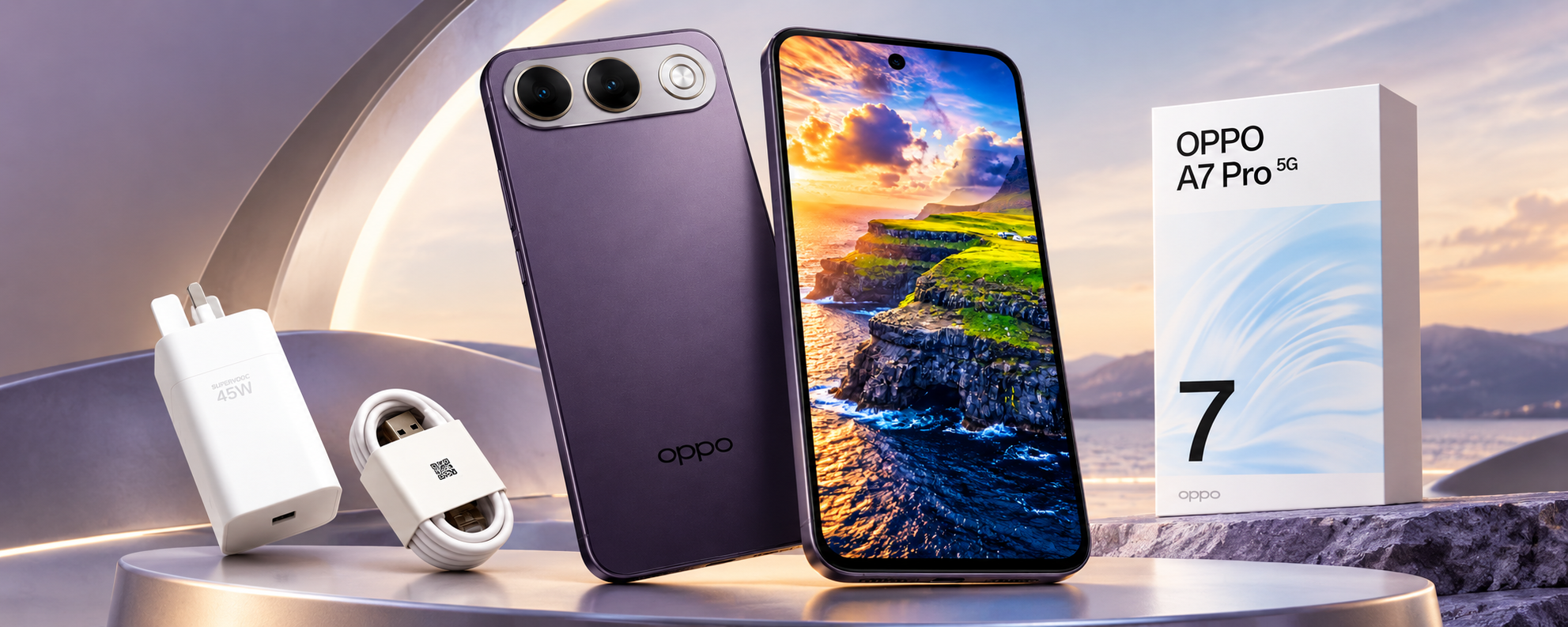
OPPO A7 Pro 5G puts longevity at the centre of the smartphone experience!
With an 8,000mAh battery, dual 50MP cameras, IP69K protection and a five-year smoothness promise, OPPO’s latest A Series smartphone makes a strong case for devices designed around longer-term ownership.
Smartphone launches have traditionally revolved around faster processors, increasingly sophisticated cameras and, more recently, AI. With the A7 Pro 5G, OPPO is putting another consideration firmly into the conversation: how well a smartphone can hold up over time.
At the centre of that proposition is an enormous 8,000mAh battery. Large-capacity batteries are becoming increasingly common, but what is interesting about the A7 Pro 5G is how little the battery dictates the physical character of the phone.
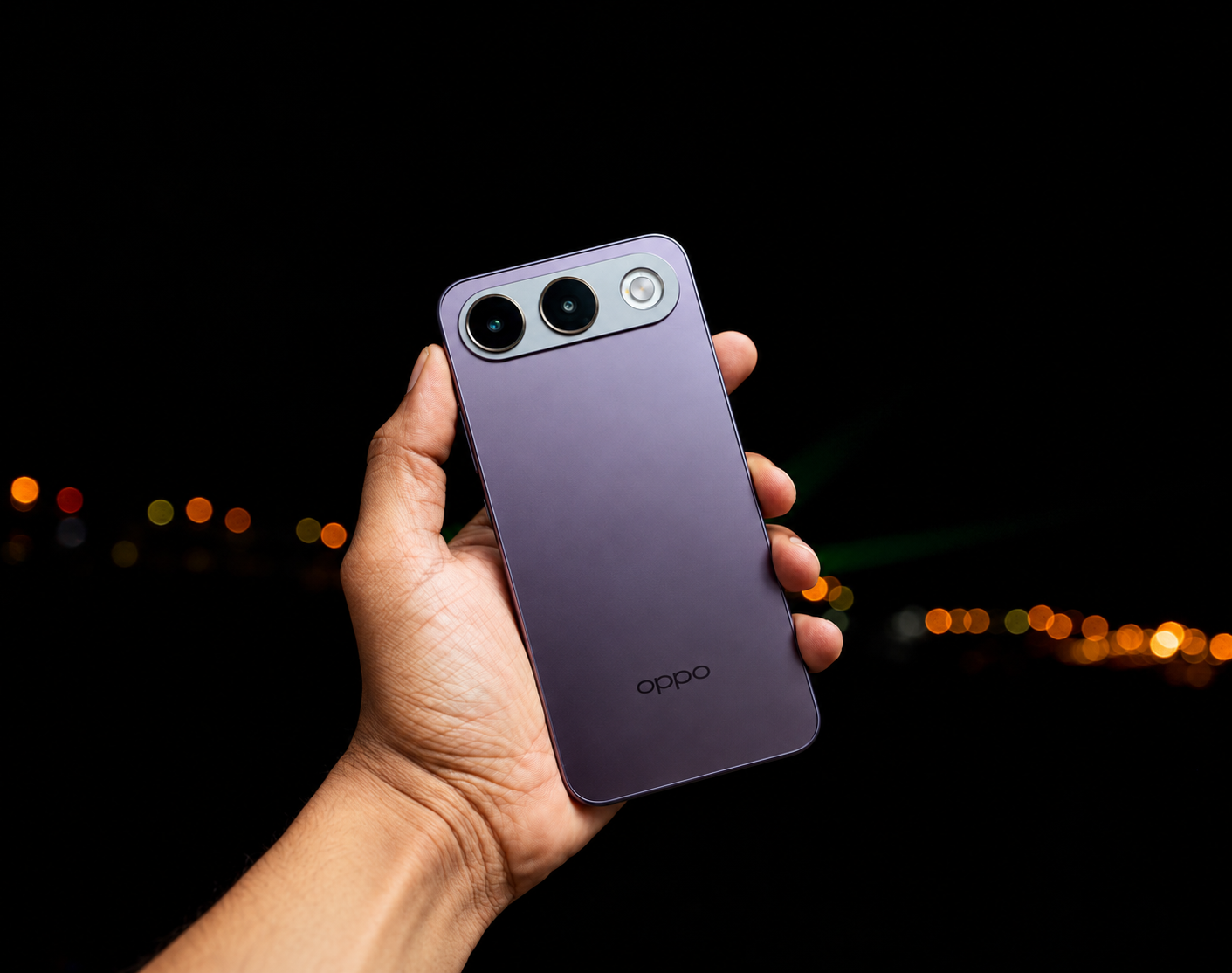
Despite the capacity, the device does not immediately look or feel like a rugged smartphone. The Shine Titanium review unit has an understated finish, while the alternative Surfing Blue introduces a more distinctive Dynamic 3D Wave Texture.
That relatively conventional appearance hides some serious durability credentials.
Built for longer ownership
The A7 Pro 5G carries IP69K dust and water resistance alongside military-grade shock resistance. Rainstorm Touch is designed to keep the display responsive even when used in heavy rain.
The longevity argument extends to the battery itself. OPPO says it can retain more than 80% of its rated capacity after 2,000 complete charging cycles, underpinning the company’s six-year battery durability proposition.
This matters because battery degradation remains one of the most noticeable compromises as smartphones age. Increasing capacity solves part of that equation; maintaining useful capacity several years into ownership potentially solves another.
Reverse wired charging also allows the A7 Pro 5G to supply power to another connected device, adding some practical value to that substantial battery reserve.
Selfies get the 50MP treatment
OPPO has also placed considerable emphasis on the front-facing camera.
The 50MP Ultra-Wide AI Zoom Selfie Camera offers a 100-degree field of view and can automatically move between 1x and 0.6x framing when additional people enter the shot.
It is a useful approach for group photographs, travel and increasingly video-led social content, where a wider front camera can make considerably more sense than simply increasing resolution. Ultra-steady video has also been included to improve handheld recording.
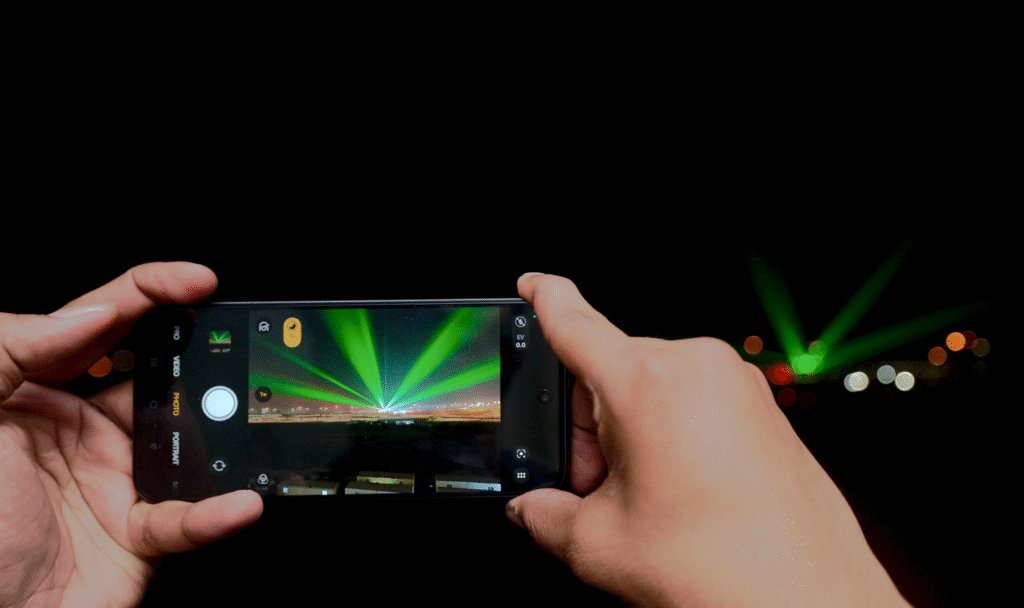
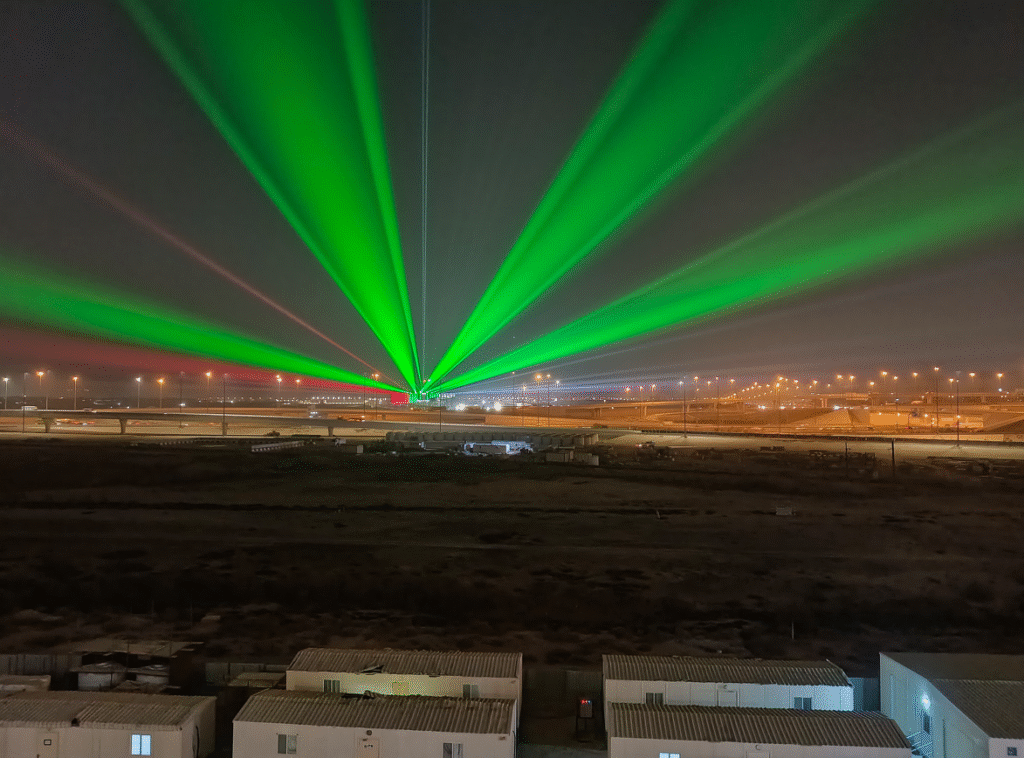
At the rear is another 50MP camera, using a larger 1/2-inch sensor that OPPO says captures 70% more light than its predecessor.
AI Portrait Glow, AI Popout and AI Remix Collage bring the increasingly familiar layer of computational editing into the camera experience, allowing users to manipulate images without moving immediately to third-party applications.
Five years of smoothness?
Underneath, the A7 Pro 5G is powered by the MediaTek Dimensity 6360 MAX, accompanied by OPPO’s NetworkBoost Chip S1 and AI LinkBoost 4.0.
A 4,300mm² Glacier VC Vapor Chamber handles cooling, while software-based resource and memory management is designed to maintain responsiveness as workloads increase.
Perhaps more interesting than outright performance figures is OPPO’s 5-Year Smoothness Protection. The company says the device has passed its five-year smoothness testing, reflecting a wider attempt to position performance around consistency rather than simply launch-day speed.
Naturally, five-year performance cannot be established during a conventional review period, but the emphasis itself is notable. Smartphone replacement cycles are lengthening, making sustained performance, battery health and software optimisation increasingly relevant purchasing considerations.
AMOLED keeps the experience contemporary
The front houses a 6.57-inch FHD+ AMOLED display with a 120Hz refresh rate, up to 1,400 nits of brightness and a 92.8% screen-to-body ratio.
The combination provides the fluid scrolling and vibrant presentation expected from a contemporary AMOLED smartphone, while complementing a device otherwise heavily focused on practical considerations.
Warranty coverage also extends across the GCC, Pakistan, India and Bangladesh, potentially useful for users who regularly travel between these markets.
The 8,000mAh battery will inevitably attract most of the initial attention, but the A7 Pro 5G becomes more interesting when viewed as a complete package. OPPO is combining battery capacity with physical durability, thermal management, connectivity enhancements and longer-term performance optimisation. At the same time, it has avoided turning the device into something that visually resembles a specialist rugged phone.
BY: SRIJITH KN
A different definition of smartphone performance that may ultimately be the A7 Pro 5G’s more relevant proposition. Rather than asking how much faster a smartphone can become every year, OPPO is increasingly asking another question: how much longer can it remain useful?

 Have a question? +971 56 404 0503



























 Trending12 months ago
 Tech News2 years ago

 Automotive2 years ago
 Hospitality2 years ago
 Tech News1 year ago
 VAR10 months ago