
 Have a question? +971 56 404 0503




Financial
YUBI GROUP DEBUTS MORTGAGE IN THE UAE, TRANSFORMING HOW CONSUMERS SECURE MORTGAGES WITH UNPRECEDENTED SIMPLICITY


Yubi, the world’s only technology company powering the end-to-end debt lifecycle, has announced the launch of Yubi Mortgage in the UAE. This marks the company’s first B2C product in the region and introduces a new digital pathway for residents, citizens, and non-residents to explore and secure mortgages with confidence and clarity. The launch positions Yubi as a new force in the UAE’s mortgage ecosystem and sets a fresh benchmark for transparency, accessibility, and customer experience.
Yubi Mortgage has been established to address the long-standing challenges faced by homebuyers across the UAE property market. These include limited access to lenders, high process complexity, unclear pricing, repetitive documentation, and limited transparency into application status. These issues often lead to delays, uncertainty, and unnecessary stress for mortgage seekers. Yubi Mortgage eliminates these barriers by providing a single digital platform that connects users to all major lenders in the country.
Yubi MENA has already partnered with 25+ lenders across Retail, SME, and Corporate financing. These partnerships strengthen accessibility for financing across the entire continuum and support the UAE’s broader digital transformation goals.
Home financing seekers can submit a single digital application to access a broad range of retail, Islamic, commercial, private, and digital banks. The platform employs AI and machine learning to classify documents, verify information, assess eligibility, and assist lenders in making quicker decisions. A business rule engine matches borrowers with the most appropriate lenders, helping them avoid costly mistakes from approaching the wrong lender and having to restart the process. Their real-time application tracking keeps users informed at every stage.
For mortgage seekers, the experience becomes simpler, more transparent, and considerably more efficient. For lenders, the platform enhances operational discipline by reducing non-converting applications and optimizing utilization of existing processing capacity. Yubi Mortgage fosters a more balanced and productive mortgage ecosystem for both sides of the market.
Speaking at the launch, Mr. Sivakumar Rajakkannu, Chief Business Officer, Yubi MENA, said: “This is a defining moment for us as we bring Yubi Mortgage to the UAE. Home ownership is one of the most important decisions people make, and our goal is to make the journey as simple and transparent as possible. We want every mortgage seeker to have access to all prominent lenders and to feel fully supported from the first step to the final approval. Yubi Mortgage reflects our commitment to financial inclusion and showcases how technology, AI, and ML can help people make smarter and more confident decisions.”
Yubi’s entry into the mortgage segment builds on its established presence in the UAE, where it has been helping financial institutions and enterprises optimise journeys across the debt and customer lifecycle. Founded in 2020 by CEO Gaurav Kumar, Yubi powers more than $36 Billion in total debt volumes and supports over 17,000 enterprises and 6,200 lenders worldwide. Valued at USD 1.5 Billion, Yubi is backed by globally recognised investors including Peak XV, Lightspeed, Lightrock, TVS Capital, B Capital Group, Dragoneer Investment Group, and Insight Partners. Their support reflects strong confidence in Yubi’s mission to deepen debt markets and democratise access to capital.
Yubi was recently recognised as Fintech Startup of the Year at the Global Fintech Fest 2025. This recognition highlights Yubi’s innovation and leadership across the global financial landscape. The launch of Yubi Mortgage in the UAE further strengthens its mission to simplify, streamline, and modernize the lending ecosystem for both consumers and financial institutions.
Financial
ABA Legal Highlights UAE’s Legal Framework as Catalyst for the Next Wave of Foreign Investment

In alignment with the UAE’s ambitious vision to evolve into a global hub for business and foreign capital, ABA Legal, a boutique corporate law consultancy headquartered in Abu Dhabi, UAE, has announced its bold and strategic expansion of Legal Structure Mapping – a refined core advisory specially mentoring FDI and investors in interpreting and navigating the UAE’s investor-focused legal framework across the region. The move strengthens the firm’s positioning as one of a kind legal resource for foreign investors seeking clarity, compliance, and structured market entry within the UAE.
The United Arab Emirates has rapidly evolved into a leading destination for global business and foreign capital. According to recent government and industry reports, the UAE continues to rank among the top global destinations for foreign direct investment inflows, driven by continuous legal and regulatory modernization. ABA Legal observes that legal clarity, regulatory certainty, and structural reforms are increasingly central to investor decision-making, with businesses placing greater emphasis on well-defined legal pathways, ownership structures, and enforceability before committing capital to new markets.
Commenting on the evolving landscape, Ms. Geethalakshmi Ramachandran, Managing Counsel at ABA Legal, said “The UAE’s legal framework today is not only progressive but highly responsive to global investor expectations. The shift toward full foreign ownership, stronger dispute resolution systems, governance reforms, and IP protection has significantly enhanced legal certainty. At ABA Legal, our core service now is guiding foreign investors through these reforms with clarity and precision, ensuring they can structure, enter, and operate in the UAE market with confidence and long-term security. We aim to become the Legal Mentors for FDIs and Investors UAE interest”
A New Era of Legal Reform
The UAE has entered a new era of legal reform designed to strengthen transparency, predictability, and investor confidence across its commercial ecosystem. One of the most significant developments has been the overhaul of foreign ownership regulations. Sectors that previously required majority UAE national ownership have been widely liberalized, enabling 100% foreign ownership across a growing range of industries, including technology, manufacturing, and professional services. From a legal standpoint, this marks a structural realignment of the corporate framework, giving investors greater control over governance and operations while reducing compliance ambiguity and intermediary dependence. The reforms align the UAE with global best practices and reinforce its appeal for long-term, high-value investment.
Strengthening Contract Enforcement and Dispute Resolution
Investor confidence is closely tied to enforceability and legal certainty. The UAE has modernized commercial laws and strengthened dispute resolution mechanisms to create a secure environment for international business. Specialized courts operating under internationally recognized standards and common law principles, alongside stronger integration with global arbitration systems, ensure disputes are resolved efficiently and impartially. This protects contractual rights, lowers legal risk, and supports long-term cross-border investment strategies.
Governance, Transparency, and Investor Protection
Governance, transparency, and investor protection have also been enhanced through stricter corporate reporting, anti-money laundering, and financial compliance frameworks. These measures reduce regulatory uncertainty and strengthen market credibility by embedding internationally recognized standards into law. Investors benefit from a more stable, accountable, and transparent operating environment.
Free Zones: Tailored Legal Advantages: Free zones continue to play a central role in the UAE’s foreign investment strategy, offering tailored legal and regulatory advantages such as full foreign ownership, capital repatriation, customs exemptions, and flexible employment and residency structures. Designed around priority sectors, these zones combine flexibility with legal certainty and reduced administrative burden.
Modern Commercial Laws, Digital Economy Support, and IP Protection
Recent updates to commercial company regulations, data protection laws, and intellectual property protections further support digital economy and innovation-driven businesses. Together, these reforms create a resilient and adaptable legal ecosystem that not only attracts foreign capital but enables sustainable, knowledge-based growth; with ABA Legal supporting investors through structured legal guidance in this evolving framework.
For global investors seeking stability, transparency, and strategic opportunity, the UAE’s legal framework is more than supportive, it is a dynamic engine for capital inflow, innovation, and knowledge-based economic development, with ABA Legal serving as a strategic legal mentor in this journey.
By Fraser Nelson, Head of Global Business Development, Scope Markets

The UAE stands at the forefront of a digital financial revolution, where innovation in retail trading platforms is rapidly reshaping how individuals’ access and participate in financial markets. New technologies are enabling broader market access, deeper analytics, and personalised experiences for investors across demographics. Yet with these advancements comes the critical need to balance innovation with trust, ensuring that technological progress enhances investor confidence and long-term market participation, not just speed and convenience.
Expanding Access Through Technological Innovation
Recent developments in the UAE capital markets illustrate how digital innovation is transforming investor access. For example, the Abu Dhabi Securities Exchange (ADX) welcomed Thndr as its first remote retail trading member, enabling millions of users to trade securities and exchange-traded funds directly via a fully digital platform without physical presence in the UAE. This milestone broadens participation and underscores the role of technology in reducing barriers to entry for retail investors.
Similarly, market infrastructure upgrades including new order types and enhanced trading systems are designed to make price discovery and execution more efficient for both institutional and retail participants. These enhancements reflect a broader strategy to deepen market reach and usability.
Regulatory Frameworks as Anchors of Trust
As platforms evolve, regulators in the UAE continue to play a central role in safeguarding investor interests while fostering innovation. The UAE Securities and Commodities Authority (SCA) has introduced federal licensing for robo-advisory services, aiming to enhance transparency, risk disclosure, and operational governance for platforms that deliver automated investment advice. This regulatory clarity helps ensure that digital advice tools serve investors with appropriate protection and predictable standards.
Across financial centres such as the Dubai International Financial Centre (DIFC) and the Abu Dhabi Global Market (ADGM), regulators are also modernising authorisation and engagement processes. For example, the DFSA’s new digital portal is designed to streamline compliance workflows and better support firms seeking licencing; a move that signals regulatory commitment to both innovation and oversight.
These regulatory efforts strengthen trust by providing clear expectations and oversight mechanisms, which in turn encourage responsible innovation by market participants.
Investor Adoption and Experience in a Digital Age
Technology isn’t only reshaping how markets operate, it’s influencing how individuals make decisions. Surveys indicate that a significant portion of UAE retail investors use artificial intelligence tools, such as recommendation engines or AI-driven research assistants, to shape their portfolios. This engagement with technology reflects a growing comfort with digital decision-making but also highlights the importance of education and digital literacy in using these tools wisely.
Platforms that offer intuitive interfaces and data-driven insights can enhance investor experience, but they must also provide clear explanations of risks, fees, and realistic performance expectations. This transparency builds trust and prevents misconceptions that can arise from overreliance on algorithmic signals or social media sentiment.
The Trust Imperative: Security, Transparency, and Education
Innovation without trust is unsustainable. In financial services, trust stems from robust cybersecurity, transparent pricing and disclosures, and investor education. Safe digital environments require ongoing investments in secure systems, data protection, and customer-centric design not only to protect assets but also to reinforce confidence in digital channels.
Platforms and regulators alike must prioritise straightforward communication about how tools work, what risks they entail, and how investors can make informed decisions. Equally, investors benefit from continuously improving their understanding of market mechanics, regulation, and technology through credible educational resources.
Conclusion: A Balanced Path Forward
The future of retail trading platforms in the UAE is shaped by a dynamic interplay between technological innovation and regulatory safeguards. The integration of digital access, advanced analytics, and automated services offers unprecedented opportunities for individual investors. At the same time, trust anchored in transparent practices, strong oversight, and investor empowerment will determine whether these innovations translate into sustainable market engagement.
As the UAE’s financial ecosystem matures, success will belong to platforms and participants that prioritise innovation with responsibility. By embracing both cutting-edge technology and enduring principles of trust, the market can offer inclusive, efficient, and secure avenues for wealth creation that stand the test of time.
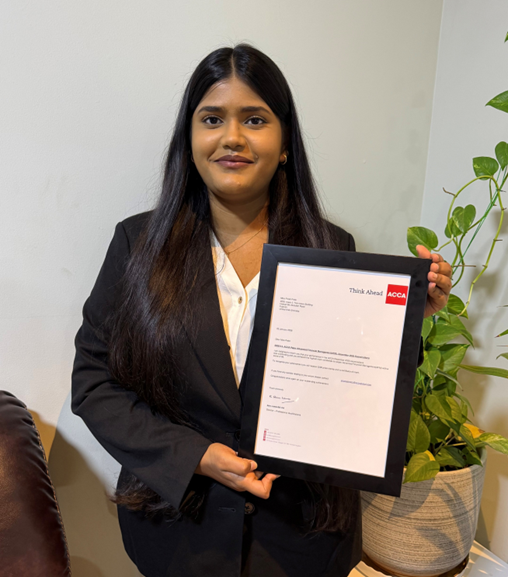
Preeti Peter, student – BCom ACCA – MAHE Dubai
Advanced Financial Management is a paper that separates theoretical knowledge from applied thinking. It tests your ability to make strategic decisions under uncertainty, weighs competing risks in real time, and defends your reasoning when there is not one right answer. The pass rates reflect that difficulty. When I sat for the exam, World Rank 1 was never the target, surviving the paper with credibility was. I scored 96 out of 100. But the number, on its own, tells you very little. What matters is what the journey demanded: a complete rewiring of how I approached preparation, pressure, and failure.
Treating preparation like a financial model
Early on, I made a decision that changed everything: I would stop following a generic study plan. Instead, I approached my preparation the way an analyst might approach a sensitivity analysis. I tested variables by studying at different times of the day, experimenting with visual mapping versus deep reading. Each iteration helped me identify what produced the best results for my learning style.
This was about precision, not volume. In finance, we talk about capital allocation, where you deploy resources matters more than the sheer amount available. I applied the same logic to my time. High-yield areas got the most attention. Weak spots got targeted effort. Comfortable topics got less.
Strategy is not a luxury reserved for boardrooms. It belongs in every decision you make.
The negative cash flow phase
There is a phase in every long-term project, financial or otherwise, where the output does not match the input. In corporate finance, we call this negative cash flow. You are investing, and the returns have not materialised yet.
My first few weeks of AFM preparation felt exactly like that. I was putting in the hours, but comprehension was patchy. It would have been easy to panic or abandon ship for a different approach.
Instead, I recognised the phase for what it was: temporary. Every business that reaches breakeven has survived this stage first. I leaned into discomfort, trusted the process, and kept showing up. Slowly, the fog lifted.
That early patience was critical. If I had changed course every time results lagged behind effort, I would never have built the understanding that carried me through the exam.
Discipline over motivation
There is a popular idea that success comes from being motivated. I found the opposite to be true. Motivation is unreliable, it fluctuates with your mood, your energy, a difficult question that throws you off balance.
What carried me was routine. I built a daily structure that operated regardless of how I felt on any given morning. Good days and bad days received the same treatment: sit down, open the material, work through the plan.
During my time at Manipal Academy of Higher Education Dubai, I learned to value consistency over intensity. Resilience, I realised, is not about gritting your teeth and pushing through pain. It is about designing a process robust enough to function even when you are running on empty.
Confronting discomfort deliberately
One of the more counterintuitive lessons AFM taught me was about comfort zones. When preparing for a high-stakes exam, there is a strong temptation to practise what you already understand. You move through questions quickly, confidence builds, and the work feels rewarding.
But that feeling is misleading. The topics I avoided, the ones that made me uneasy, the questions I got wrong repeatedly were precisely where the growth was. I started restructuring my study sessions to front-load the most difficult material. If a topic made me uncomfortable, it went to the top of the list.
Over time, those uncomfortable sessions became the foundation of my exam performance. The questions that would have caught me off guard were the ones I was most prepared for.
Managing pressure, not just content
I remember finishing a mock exam and feeling genuinely defeated. The time pressure had overwhelmed me. I knew the material but knowing the material and performing under timed conditions are two very different skills.
That experience changed my approach. I began treating exam technique as its own discipline, separate from subject knowledge. I practised under strict time limits and developed a method for approaching unfamiliar questions: pause, outline, then write.
On exam day, there were moments where questions looked unfamiliar at first glance. Instead of panicking, I paused, outlined a structure, and worked through each part methodically. I finished on time, with every question addressed.
The real lesson: stress does not disappear because you have prepared well. You simply get better at functioning within it.
Feedback as fuel
A score of 96 percent might suggest a clean, linear path to the top. The reality was messier. Mock results were humbling. Feedback on practice answers was sometimes blunt.
But I made a conscious decision early on, I would treat every piece of critical feedback as information, not as judgement. If a mock answer missed the mark, I wanted to understand why so, to close the gap between where I was and where I needed to be.
That openness to correction was, I believe, one of the most important factors in my result. The students who improve fastest are rarely the most talented. They are the ones willing to be told they are wrong and to adjust accordingly.
Beyond the exam
World Rank 1 was a rewarding outcome. But the rank is a snapshot, a single data point from a single day.
Structured thinking. Disciplined preparation. The ability to remain calm when the stakes are high. A willingness to sit with discomfort rather than avoid it. These are not exam skills. They are life skills.
AFM taught me that risk is not something to fear. It is something to understand, to price, and to manage. That principle holds whether you are valuing a derivative or deciding how to spend your next hour. The same applies to every challenge worth pursuing.


Eid Weekend Getaway: We Got You Covered with Xiaomi’s Latest!
MIDDLE EAST CONFLICT DRIVING A SURGE IN SCAMS, DEEPFAKES, AND GOVERNMENT IMPERSONATION
WHY SECURITY MUST EVOLVE FOR THE HYBRID HUMAN-AI WORKFORCE



-
News10 years ago
SENDQUICK (TALARIAX) INTRODUCES SQOOPE – THE BREAKTHROUGH IN MOBILE MESSAGING
-

 Tech News2 years ago
Denodo Bolsters Executive Team by Hiring Christophe Culine as its Chief Revenue Officer
-
 VAR11 months ago
Microsoft Launches New Surface Copilot+ PCs for Business
-

 Tech Interviews2 years ago
Navigating the Cybersecurity Landscape in Hybrid Work Environments
-

 Tech News8 months ago
Nothing Launches flagship Nothing Phone (3) and Headphone (1) in theme with the Iconic Museum of the Future in Dubai
-

 Automotive1 year ago
AGMC Launches the RIDDARA RD6 High Performance Fully Electric 4×4 Pickup
-

 VAR2 years ago
Samsung Galaxy Z Fold6 vs Google Pixel 9 Pro Fold: Clash Of The Folding Phenoms
-

 Tech News2 years ago
Brighton College Abu Dhabi and Brighton College Al Ain Donate 954 IT Devices in Support of ‘Donate Your Own Device’ Campaign