
 Have a question? +971 56 404 0503




Tech News
Dell Technologies Helps Organizations in the UAE Create a Modern Workplace with New AI Experiences


Dell Technologies is making significant strides in the realm of AI with the introduction of the most comprehensive portfolio of AI PCs and workstations in the market.
Setting a new benchmark for battery life, productivity, security, and performance, the PCs are tailored to meet the evolving needs of businesses, prioritizing customer choice and flexibility, and equipping them for a future powered by AI. The innovative solutions mark a significant step forward in Dell’s broader AI strategy, which aims to use its AI portfolio to support businesses from the desktop to the data center to the cloud.
“From running complex AI workloads on workstations to using day-to-day AI-powered applications on laptops, the AI PC will be an important investment that pays dividends in productivity and paves the way to a smarter, more efficient future. Dell’s advantage starts with offering more AI PCs across the commercial portfolio from day one, catering to customers’ unique needs and giving them the ability to start future proofing for AI today,” said Haidi Nossair, Sr. Director – Client Solutions Group – META, Dell Technologies.
AI PCs for hybrid work
The neural processing unit (NPU)–equipped AI PC will grow from nearly 50 million units in 2024 to more than 167 million in 2027, representing nearly 60% of all PC shipments worldwide. The NPU adds an AI acceleration engine that can take on more dedicated AI tasks, freeing up the CPU and GPU to do other things. This creates a more responsive experience and enhances performance, security, battery life and productivity.
Dell provides the world’s most intelligent, manageable and secure commercial PCs. With a new line-up of Latitude laptops and Precision mobile workstations, Dell will offer customers the broadest portfolio of commercial AI laptops and mobile workstations, from entry-level to ultra-premium laptops and workstation options. Powered by Intel Core Ultra processors with Intel vPro, Dell commercial PCs drive AI workloads and unlock new levels of productivity and efficiencies. For example, employees can now:
- Collaborate more effectively. Combining the benefits of the NPU to offload capabilities like auto-framing, background blur and eye-tracking with the power efficiency of Intel Core Ultra processors, gives workers up to 38% more battery life and valuable working time in a day packed with Zoom calls.
- Create content faster. By distributing AI processing across the CPU, GPU and now NPU, users can create generative AI images over five times faster with Stable Diffusion, a text-to-image model.
- Work more securely in a hybrid work environment. More ISVs will continue to build applications for the AI PC. For example, Dell is working with CrowdStrike and Intel to offload security functions onto the device via the NPU. This provides more comprehensive threat detection, helping customers swiftly detect malicious sites and security vulnerabilities with reduced latency compared to cloud-based solutions.
- Stay in the flow of work. The portfolio features Windows 11 and a Copilot key to make it even easier to get things done and stay in the flow of work. With the press of a key, you can have faster access to your everyday AI companion.
AI-powered, automated services
Building on years of industry leadership in proactive, predictive automation as well as expert advice and managed services, new Dell Services capabilities help customers:
- Maximize PC uptime and improve productivity with new self-healing capabilities through the ProSupport Suite for PCs. Customers who connect to Dell’s SupportAssist technology can leverage telemetry and AI to fix PC issues without human intervention. This lets IT activate Dell-authored scripts to autonomously correct blue screen errors, thermal issues and more across their entire fleet of PCs.
- Keep PC fleet refreshes on track and on budget with Dell’s managed services. When customers need new AI devices, Dell provides detailed planning, forecasting and supply chain management to enable timely, targeted multi-vendor device rollouts.
- Adopt and maximize GenAI investments with Digital Employee Experience Services for Gen AI. These services equip employees with the tools and technology tailored for their diverse roles.
Product spotlights
- Dell’s most intelligent headset portfolio in its class includes five new headsets. The Dell Premier Wireless ANC Headset (WL7024) features AI-based noise canceling microphones that distinguishes human speech signals from background noises from both the user and their audience and adjusts the level of noise cancellation based on the user’s environment. The advanced smart sensor intelligently performs tasks like mute/unmute, pause/play as long as earcup is lifted, while intuitive touch controls tailor the audio experience.
- The fully refreshed Latitude portfolio features updates across 5000, 7000 and 9000 series. Latitude 5000 is Dell’s mainstream series of devices, offering flexibility, scalability, and security. The series is sustainable by design with materials ranging from recycled plastics to reclaimed carbon fiber, renewable materials and ocean bound plastics.
- The Latitude 7350/7450 Ultralights are the world’s lightest 13.3” and 14” premium commercial laptops. The Latitude 7455 is a premium AI laptop up to 21 hours of battery life stacked with a stunning 14-inch QHD+ touch display, quad speakers with AI noise reduction, Qualcomm FastConnect Wi-Fi 7 and optional 5G for greater connectivity and collaboration. As Dell’s thinnest Latitude laptop ever, team members have the mobile form factor they need for productivity at the desk or on-the-go.
- Designed for executives, salespeople and consultants, the Latitude 9450 2-in-1 provides a peek into the future of work from anywhere focused on ultra-premium design, collaboration & productivity. It boasts a haptic collaboration touchpad with support for Microsoft Teams and Zoom, a stunning QHD+ Infinity Edge display, top-firing speakers and a new HDR webcam. As new WiFi-7 capability rolls out throughout 2024, the Wi-Fi 7 capable wireless card on Latitude 9450 will expand throughput and connect us to our peers even faster. These enhancements paired with the ability to utilize AI to improve collaboration will deliver a premium new experience to end users.
- Now featuring Intel Core Ultra processors Series 2, Dell’s thinnest XPS provides more power and efficiency to effortlessly tackle the most demanding tasks. This includes a dedicated NPU capable of up to 48 TOPS, enabling advanced AI capabilities such as text and image creation and faster photo or video editing. XPS 13 is the first laptop in the world to offer a tandem OLED display, allowing for higher brightness than a traditional OLED display and 26 hours of battery life while streaming on an FHD+ display.
- Dell has also introduced new video conferencing monitors with upgraded convenience, a better camera and next level multitasking features. These monitors are the world’s first 23.8-inch, 27-inch and 34-inch video conferencing monitors certified for both Microsoft Teams and Zoom7. These monitors include an integrated camera, speakers, and microphones to allow for a clean desk setup.








Tech News
From 350+ Applications to One Champion: School of Cyber Defense Final Stage at GISEC GLOBAL 2026
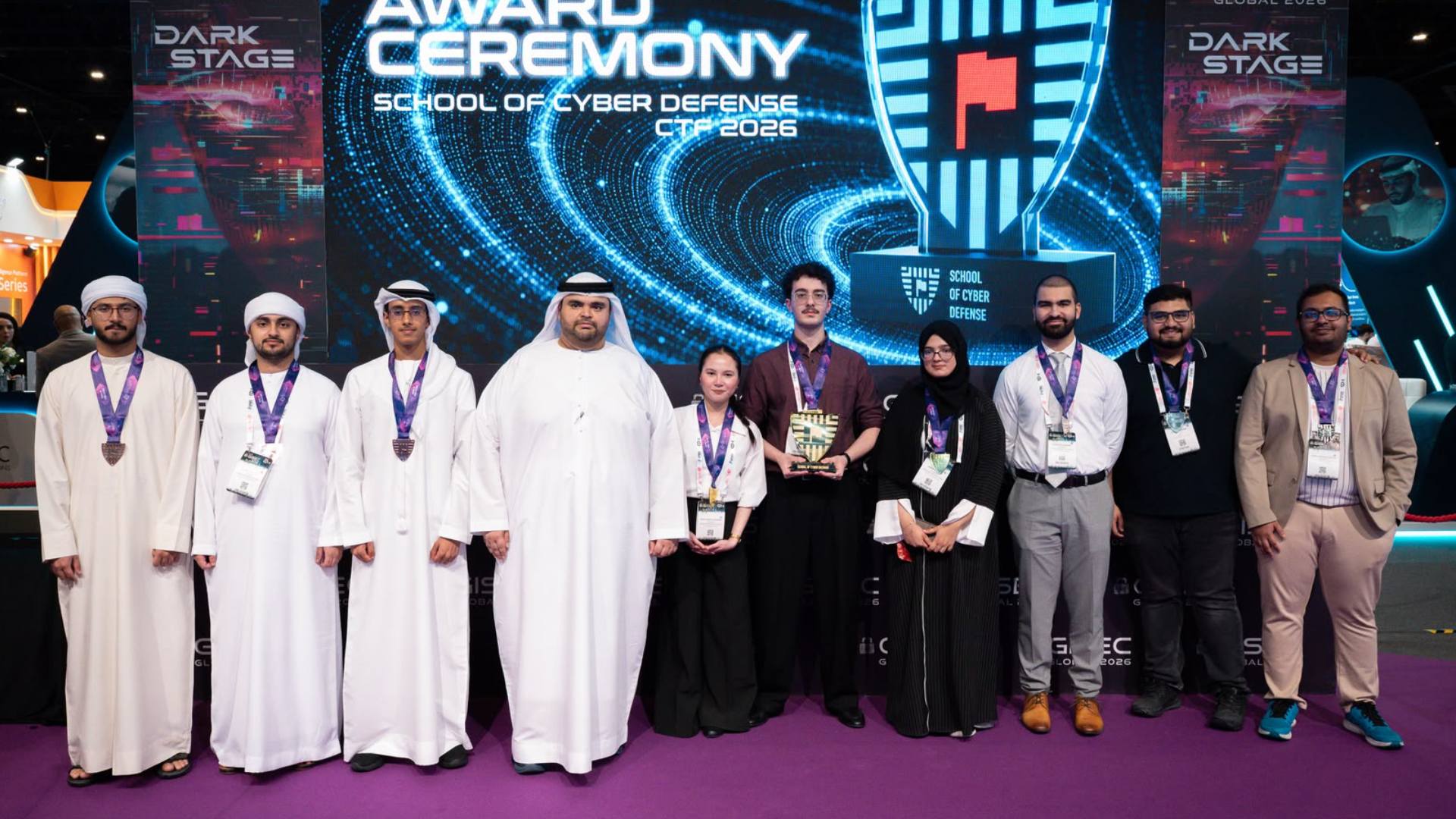
The second edition of the School of Cyber Defense competition reached its final at GISEC GLOBAL 2026, bringing the strongest student cybersecurity teams in the UAE to Dubai Exhibition Centre, Expo City. Building on its 2025 debut, the competition came back larger in scale and tougher in format: this year, participants had to do more than defend systems. They had to design working solutions to real industry challenges.
The competition was hosted by the Dubai Electronic Security Center (DESC) and organized by Techfirm. It drew more than 350 applications from students at more than 30 universities across the country. The road to the final ran through three stages:
Qualification. More than 300 participants from over 90 teams completed an automated, scenario-based qualification round. Over 90% of active teams scored above the 70% threshold needed to advance.
Case challenge. More than 70 teams submitted solutions to one of 15 official challenge briefs. An expert jury assessed each submission on fit to the brief, relevance, a working prototype, technical depth and innovation.
Live final. Only the seven highest-scoring teams reached the GISEC stage, fewer than one in ten of the teams that submitted a case. Finalists presented and defended their solutions live in front of the jury. The finalists represented BITS Pilani Dubai, American University of Sharjah, Al Ain University, Middlesex University Dubai, University of Wollongong in Dubai, University of Dubai and Abu Dhabi Polytechnic.
Winners of the School of Cyber Defense 2026:
- 1st Place: Unlisted (Middlesex University Dubai)
- 2nd Place: AUSec (American University of Sharjah)
- 3rd Place: ADPoly CyberGuard (Abu Dhabi Polytechnic)
The competition featured a prize pool worth AED 55,000, shared among the winning teams.
The competition was made possible by partners committed to developing young talent and strengthening the region’s cybersecurity workforce. The Competition Industry Partners include AMD, Dahua Technology, Kaspersky, KERNO and M1 Global Infrastructure. The Competition Gold Partners are Anker Innovations, Circularo, HPE, Huawei, KnowBe4, RAS Infotech and Spire Solutions. Secureway is the Competition Silver Partner.
Now in its second year, the School of Cyber Defense has become a recurring platform where the UAE’s future cybersecurity professionals test their skills against the demands of the real industry.
Tech News
Nemetschek Arabia Showcases Connected Technologies for Smarter Facilities Management at SFMA EXPO 2026
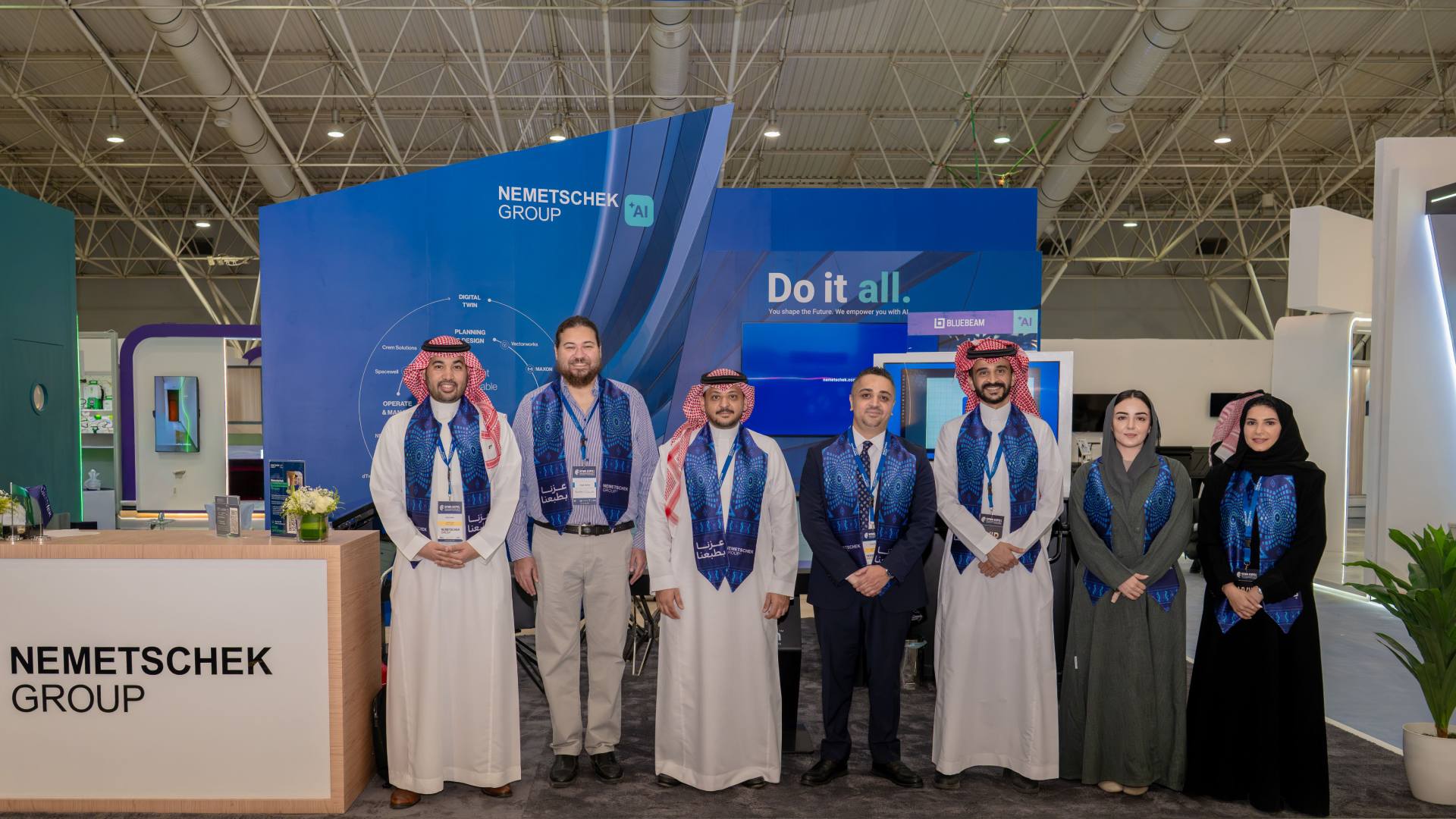
Nemetschek Arabia, part of the Nemetschek Group, one of the world’s leading software providers for the Architecture, Engineering, Construction and Operations (AEC/O) industry, is showcasing its vision for the future of facilities management at SFMA EXPO 2026, which is taking place at the Riyadh International Convention & Exhibition Center (RICEC).
Participating as a Golden Sponsor, Nemetschek Arabia is demonstrating how connected digital technologies can help organizations improve operational efficiency, enhance asset performance, and support more sustainable outcomes across the entire facility lifecycle. Visitors to Booth G02 at the event will have the opportunity to explore solutions from Bluebeam, Spacewell, GoCanvas, and Nemetschek dTwin, each designed to help facility owners and operators connect people, processes and data through integrated digital workflows.
“Facilities management is becoming increasingly strategic as organizations seek new ways to maximize asset performance, improve sustainability, and deliver better experiences for occupants and stakeholders,” said Eng. Muayad Simbawa, Managing Director of Nemetschek Arabia. “The future of the sector will be defined by connected ecosystems where people, data and technologies work together seamlessly. Through our participation at SFMA EXPO 2026, we are demonstrating how digital twins, smart workplace solutions, connected workflows and real-time operational intelligence can help organizations unlock greater value from their facilities while supporting the Kingdom’s Vision 2030 ambitions.”
Empowering organizations to build smarter facilities
At the exhibition, visitors can experience how Bluebeam enables seamless collaboration across project and operations teams, helping stakeholders work more efficiently with accurate and accessible information. Meanwhile, Spacewell empowers smarter workplace and facility management through data-driven insights and intelligent operations, while GoCanvas streamlines field processes through digital forms and real-time data capture. And Nemetschek dTwin showcases the power of digital twins in transforming facility operations through real-time asset visibility, predictive maintenance and performance optimization.
As part of its participation, Nemetschek Arabia experts will also contribute to the event’s thought leadership program. Muayad Simbawa will participate in a panel discussion titled “Enhancing Organizational Performance: Hybrid Work Models, Data Analytics, and Advanced Management Technologies,” exploring how organizations can leverage emerging technologies and data-driven insights to adapt to a rapidly evolving business landscape. In addition, Ahmad Hisham Khairat, Regional Presales Engineer, and Ahmad Al Zaben, Technical Consultant, will share their perspectives on the role of BIM, digital twins and integrated digital ecosystems in transforming facility operations and management.
Further reinforcing its commitment to advancing the facilities management sector, Nemetschek Arabia is building on its strategic collaboration with the Saudi Facility Management Association (SFMA) announced earlier this year. The partnership focuses on accelerating digital transformation, knowledge exchange, workforce development and the adoption of innovative technologies that support smarter and more sustainable facilities across the Kingdom.
SFMA EXPO 2026 brings together facility management leaders, technology providers and industry experts from across the region to explore the trends, innovations and strategies shaping the future of the sector. Visitors can learn more about Nemetschek Arabia’s solutions at Booth G02 throughout the event.
Tech News
Core42 and Technology Innovation Institute Sign Collaboration Agreement to Advance UAE-Developed Digital Sovereignty and Cybersecurity Innovation
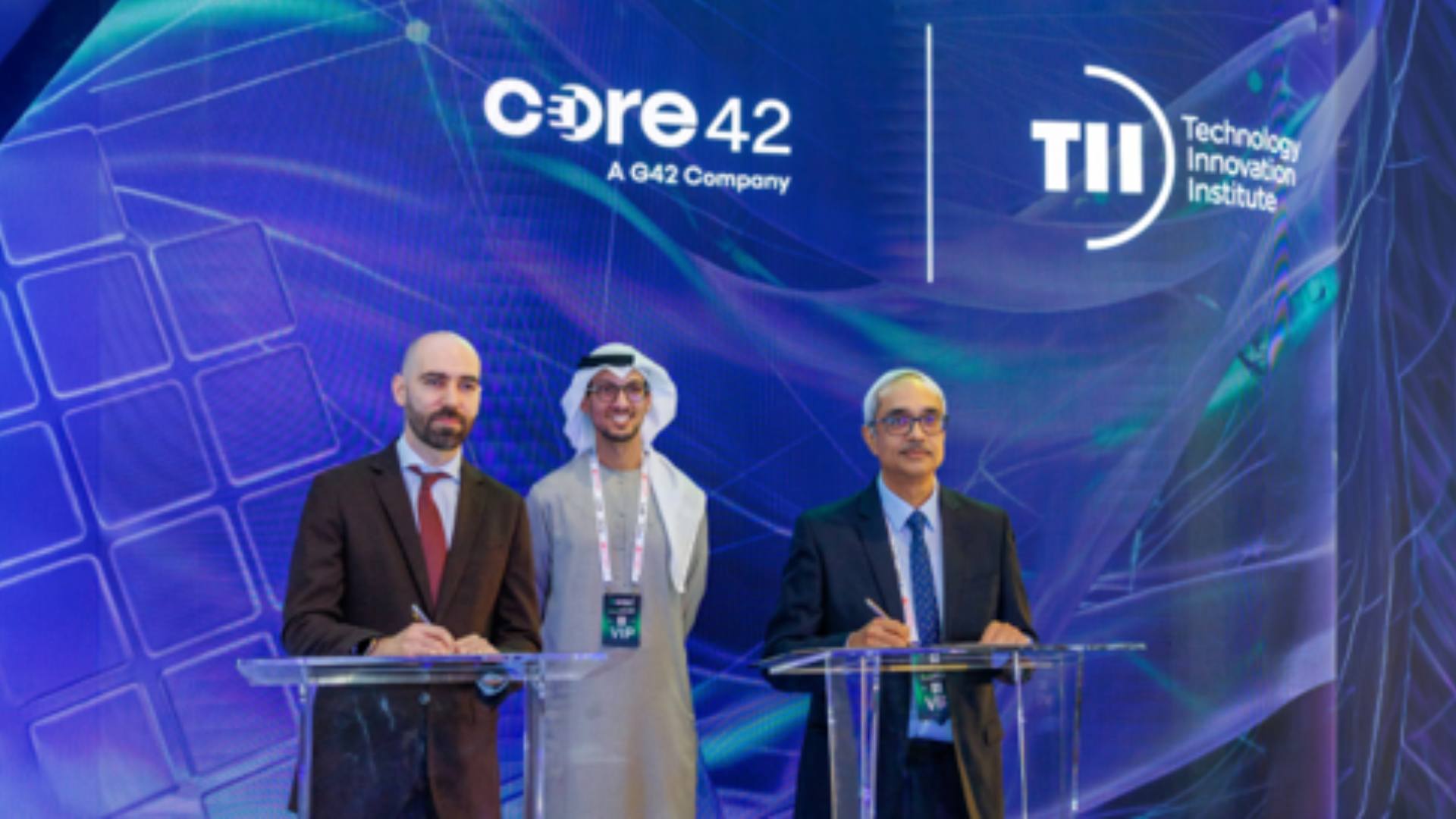
Core42, a G42 company specializing in AI infrastructure and sovereign-enabled cloud, today signed a strategic collaboration agreement with the Technology Innovation Institute (TII), the applied research arm of Abu Dhabi’s Advanced Technology Research Council (ATRC), to expand locally developed digital sovereignty and cybersecurity capabilities in the UAE. Signed at GISEC Global 2026, the agreement reflects a shared commitment to developing home-grown security capabilities and contributing to the UAE’s sovereign technology ecosystem.
The collaboration brings together Core42’s sovereign-enabled cloud and AI capabilities with TII’s cybersecurity research and technology development expertise to explore how UAE-developed security technologies can strengthen the protection, resilience and compliance of sovereign digital infrastructure and AI environments. As part of the agreement, Core42 and TII will collaborate on the co-development, evaluation, and deployment of security-enhancing technologies across Core42’s sovereign-enabled cloud and Compass, its generative and agentic AI platform. The scope includes hardware security modules, confidential computing, encrypted AI inferencing, secure key management and distribution, data protection mechanisms, encryption technologies and trusted computing capabilities.
The framework reflects a broader focus on developing critical technology capabilities within the UAE and creating pathways for home-grown innovation to address real-world cloud and AI sovereignty and security requirements. As organizations increasingly deploy sensitive data and AI workloads across cloud environments, protecting data, infrastructure, models and communications using cryptographic solutions is becoming an increasingly important component of sovereign technology architecture. The initiative also reinforces the UAE’s growing role as a center for advanced technology development, and Core42’s contribution to an ecosystem where sovereign infrastructure can increasingly be secured through technologies developed within the country.
Rajeev Nair, Senior Vice President, Special Projects, Core42, said: “Sovereignty means more than deciding where data and infrastructure reside; it is also about building the technology capabilities required to protect them from all angles. Working with TII gives us an opportunity to evaluate and advance UAE-developed sovereignty and cybersecurity technologies against the requirements of sovereign-enabled cloud and AI environments. By connecting local research and technology development with real-world platforms and use cases, we are helping build an ecosystem where the UAE is not simply adopting advanced technologies, but increasingly developing the capabilities that underpin them. This helps strengthen the country’s position as a global hub for trusted technology development.”
Dr. Victor Juan Mateu, Chief Researcher, Cryptography Research Center TII, said: “At TII, we are focused on translating advanced research into technologies that strengthen the UAE’s sovereign capabilities and address real-world security challenges. Our collaboration with Core42 creates an important pathway to evaluate and advance locally developed cybersecurity and trusted computing technologies within sovereign cloud and AI environments. By bringing together deep research expertise and real-world platforms, we can accelerate the journey from breakthrough innovation to practical deployment and contribute to a more secure and resilient technology ecosystem in the UAE.”


Al Bustan Centre & Residence concludes successful participation at Arabian Travel Market 2026

From 350+ Applications to One Champion: School of Cyber Defense Final Stage at GISEC GLOBAL 2026

Half a billion people live with arthritis: MEAF puts early action at the heart of World Arthritis Day 2026



-
News11 years ago
SENDQUICK (TALARIAX) INTRODUCES SQOOPE – THE BREAKTHROUGH IN MOBILE MESSAGING
-

 Trending11 months ago
OPPO A6 Pro 5G Review: Reliable Daily Driver
-

 Tech News2 years ago
Denodo Bolsters Executive Team by Hiring Christophe Culine as its Chief Revenue Officer
-
 VAR1 year ago
Microsoft Launches New Surface Copilot+ PCs for Business
-

 Automotive2 years ago
AGMC Launches the RIDDARA RD6 High Performance Fully Electric 4×4 Pickup
-
Tech Interviews3 years ago
Navigating the Cybersecurity Landscape in Hybrid Work Environments
-
 Tech News2 years ago
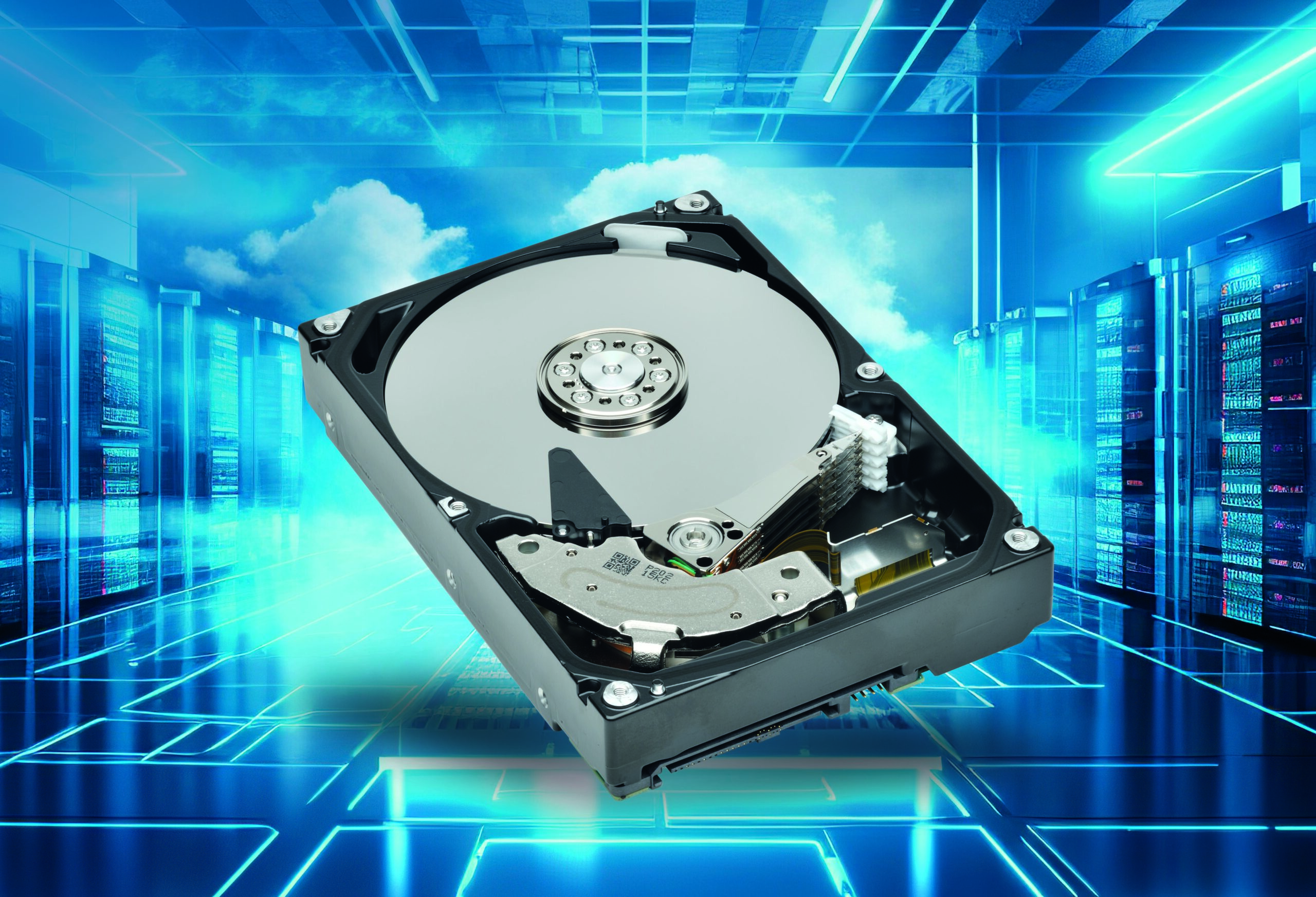
Toshiba Announces MG10-D Series of Enterprise HDDs with Capacities up to 10TB
-

 Tech News1 year ago
Nothing Launches flagship Nothing Phone (3) and Headphone (1) in theme with the Iconic Museum of the Future in Dubai