
 Have a question? +971 56 404 0503




Tech News
UAE and Saudi businesses cite skills gaps, governance challenges and resource shortages as factors that stall or halt AI projects


Qlik today launched research of 4,200 C-Suite executives and AI decision makers, revealing what is hindering AI progress globally and how to overcome these barriers.
A lack of AI skills, governance challenges, and insufficient resources are the main factors stalling successful AI deployment. Despite these challenges, Qlik’s research highlights optimism among AI leaders, with 70% of UAE and 77% of Saudi respondents confident in their countries’ ability to lead in AI skills within the next five years.
Despite believing in the power of AI, most businesses have projects that have been paused, cancelled, or stuck in planning
The UAE and Saudi Arabia are both at the forefront of embracing AI. Businesses in these Middle Eastern countries recognise AI’s strategic importance, with 93% of UAE and 95% of Saudi respondents identifying AI as essential or very important for achieving organisational success, compared to 87% globally.
In the Gulf markets, organisations leverage AI mostly for knowledge sharing, training and enablement, creating cost-saving efficiencies, optimising operations, and predictive forecasting.
Despite this recognition, many AI projects struggle to progress. For instance, in the UAE, about 84% of organisations have up to 50 AI projects stuck in the planning and scoping stage. While the figure is marginally higher in Saudi [85%], both countries are slightly below the global average [87%]. Meanwhile, about 16% of UAE and 15% of Saudi respondents revealed that they have over 51 AI projects that haven’t made it out of the planning and scoping stage — figures higher than the global average [11%].
Even if AI projects do get started, not all get completed. In fact, the majority of UAE [72%] and Saudi [64%] businesses reported they have up to 50 projects that have been paused or cancelled. These figures align with the global average [68%]. Meanwhile, 13% of UAE businesses and 14% of Saudi organisations stated they have paused or halted over 51 AI projects — higher than the 8% worldwide average.
Skills gaps, lack of resources and regulatory challenges are among key barriers
There are different factors that slow down or hinder AI projects in UAE- and Saudi Arabia-based businesses.
In the UAE, the main reasons AI projects are paused or cancelled include regulatory challenges [24%], lack of skills/resources to support the implementation and roll-out [24%], and budgetary challenges/constraints [21%]. Meanwhile, in Saudi Arabia, the top reasons include too unorganised/untrusted data for AI to work with [27%], lack of skills/resources to support the implementation and roll-out [25%], and not having enough data available for AI to work with [25%].
On a more general level, organisations in these countries face overarching constraints that prevent them from achieving their AI goals.
In the UAE, the most significant barriers include a lack of AI skills [31%], a lack of data skills [27%], and insufficient data and analytics capabilities and tools [25%]. In Saudi Arabia, the main challenges are a lack of ability to identify the problems to solve [31%], lack of data skills [30%], and insufficient resources, such as inadequate relevant staff [27%].
These issues align with challenges faced by various organisations around the world. Globally, a lack of AI skills [31%], insufficient resources [26%], and regulation and governance issues [24%] emerged as the top obstacles when it comes to hitting AI goals.
On building trust, educating users and the need for funding and upskilling
To overcome AI adoption hurdles, turning to ready-made AI solutions could be the key. The report states that these products serve as practical starting points. In Saudi Arabia, 81% of decision-makers agree that supplier-provided solutions enhance AI development. In the UAE, this figure is at 69%.
Building more trust in AI is also an essential component of the narrative. In Saudi Arabia [83%] and the UAE [82%], AI leaders recognise the need to build more trust among users. Additionally, education and training are also seen as vital. In the UAE, 78% of respondents agree on the need for more training for staff and customers to foster trust in AI. This sentiment is shared by 82% in Saudi Arabia.
To further support AI adoption, funding and upskilling initiatives are also imperative. In Saudi Arabia [82%] and the UAE [72%], decision-makers believe their government needs to provide more funding and training in AI. Industries must also take a proactive approach to nurturing AI talent, with the majority of the respondents in Saudi Arabia [87%] and the UAE [70%] echoing this sentiment.
Amid all these concerns, both the Middle Eastern powerhouses remain optimistic about their AI capabilities. In Saudi Arabia [77%] and the UAE [70%], most of the respondents believe their country has the potential to lead in AI skills within the next five years. These figures are slightly ahead of the global average of 66%.
“Business leaders know the value of AI, but they face a multitude of barriers that prevent them from moving from proof of concept to value creating deployment of the technology. The first step to creating an AI strategy is to identify a clear use case, with defined goals and measures of success, and use this to identify the skills, resources and data needed to support it at scale. In doing so you start to build trust and win management buy-in to help you succeed,” said James Fisher, Chief Strategy Officer at Qlik.











Tech News
UNGOVERNED AI AGENTS AND SOPHISTICATED DEEPFAKES POSE CRITICAL THREATS FOR THE UAE & SAUDI ARABIA ORGANISATIONS, NEW KNOWBE4 RESEARCH WARNS

KnowBe4, the global leader in digital workforce security, securing both AI agents and humans, today announced the launch of its new research report, “From Agentic Risk to Human Wins: Building a Culture of Security in the Era of Agentic AI.” The findings expose a dangerous reality for modern organisations in the United Arab Emirates and Saudi Arabia: autonomous AI tools are expanding the corporate attack surface faster than security teams can implement guardrails.

With agentic AI now widely embedded in day-to-day work, 84% of cybersecurity leaders in the UAE & Saudi Arabia report that AI agents are already taking actions within organisational workflows. However, a lack of governance is leaving organisations exposed; the report shows that around 1 in every 4 organisations (24%) report their use of AI is unapproved or ungoverned. This unmanaged “Shadow AI” effectively operates as an invisible layer of shadow employees handling sensitive organisational data without oversight.
Key Findings from the Report:
- 88% of employees in the UAE & Saudi Arabia say that deepfake voice and video content is now so realistic it is impossible to know what to trust and 52% openly admit they could be tricked by a deepfake scam at work.
- More than half (54%) of cybersecurity leaders in the UAE & Saudi Arabia report that mistakes during everyday work have had the greatest impact on their organisation’s cybersecurity in the past 12 months. Compounding this, 44% of employees acknowledge that time pressures and workplace distractions actively drive them to make critical security mistakes, even when they know the safe protocol.
- 36% of cybersecurity leaders in the UAE & Saudi Arabia identify AI-enabled attacks as a key driver of future human-related cybersecurity risks.
- 41% of employees reported that they commonly source their own agentic AI tools where options are unavailable or restrictive, leaving organisations vulnerable to cyberattacks. Concurrently, 52% of cybersecurity leaders report that the use of unsanctioned software and AI apps has actively impacted their security posture over the past 12 months.
- Although 76% of security leaders feel “very well prepared” to handle unexpected or emerging AI-driven threats over the next year, 84% of them confirmed that improvements are still needed to ensure AI tools and agents operate within organization’s security policies and approved risk limits.
The report shows that organisations making progress are those who prioritise cybersecurity as a culture over a mere function, seamlessly incorporating secure behaviours into daily work. These organisations are creating environments where employees feel safe reporting mistakes, with 82% of employees agreeing.
“Cybersecurity has entered a volatile phase where organisations are trying to secure a hybrid human and AI workforce that’s changing more quickly than security leaders can keep up,” said Dr. Martin Kraemer, CISO Advisor at KnowBe4. “Attackers are moving at machine speed, using attacks such as deepfakes to target employees and prompt injections to hijack AI agents. Leaving almost a quarter of your corporate AI usage ungoverned is a massive open invitation to threat actors.”
The “From Agentic Risk to Human Wins: Building a Culture of Security in the Era of Agentic AI” report concludes that achieving “Wins” requires organisations to design systems that guide behaviour, build supportive cultures, and shift from tracking failures to reinforcing positive actions, and extending a security-first mindset across both AI agents and humans.
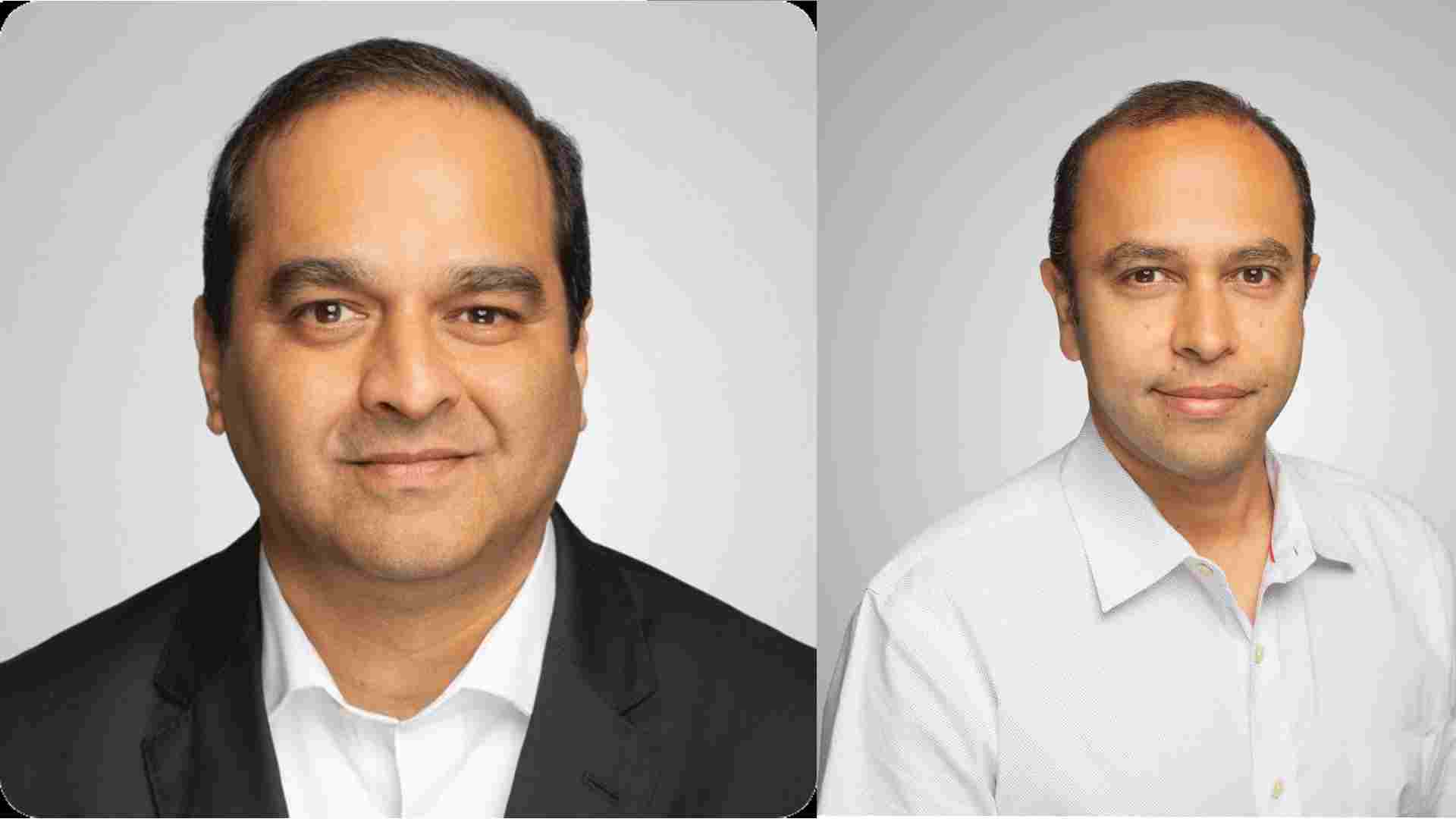
Cequence Security, the leader in application, API, and agentic AI protection, today announced general availability of Cequence Platform 9.0, an AI-native release that fundamentally changes how users interact with API security tools. Platform 9.0 ships with a built-in AI Assistant, an open Model Context Protocol (MCP) server that exposes every platform capability to an organization’s agents or automation workflows, a compliance-ready risk rules library mapped to 25 global regulatory frameworks, and a re-architected API security engine built to handle the largest enterprise API estates without performance degradation.
Agentic AI is transforming how enterprises interact with their customers, and internal IT teams are adopting AI agents faster than their security tools can keep up. Unlike vendors that add a simple chatbot to their existing product, Cequence took the opposite approach; the entire platform is AI-native and open, enabling customers to use Cequence’s built-in model or one of their choosing. With Platform 9.0, any practitioner can open a conversation and start asking the questions they actually care about, without knowing the interface, navigating menus, or understanding how the product works. The platform finds the answers. Teams with sophisticated AI workflows can use their own agents to directly drive these same capabilities through the open MCP architecture, without the need for custom integration.
Ameya Talwalkar, CEO and Co-Founder at Cequence, said: “Most vendors looked at the agentic era and added a chatbot. We looked at it and rebuilt the architecture. Cequence Platform 9.0 exposes the entire Cequence platform through an open MCP architecture so any agent can operate it directly, whether through our built-in AI Assistant, or a customer’s own agent. That is what AI-native actually means: the UI becomes optional. We are building for the way the agentic enterprise already works, while making sure a human approves every change along the way.”
AI-Native Platform with a Built-In AI Assistant
Cequence Platform 9.0 ships with a built-in AI Assistant that answers plain-language questions such as “What is my biggest risk right now?” with ranked, evidence-backed findings drawn from live platform data. Unlike most security chatbots that only deliver value in the hands of experienced practitioners, the Cequence AI Assistant arrives with skills built on years of application, API, and data protection work in high-traffic enterprise environments, able to guide practitioners of all skill levels from day one.
Agent capabilities in Platform 9.0 include:
- Drive valuable actions from simple conversations: use plain-English to easily and quickly drive results. Have the AI Assistant classify APIs, identify risks, draft rules, and create reports, all without navigating the UI.
- Open MCP server: any MCP-capable agent, SOAR platform, or automation workflow can interact with, configure, and pull insights from the platform through an open API contract, with no custom integration, incorporating API security into broader agentic workflows
- Human in the loop: read actions run freely; every proposed write shows the exact change and requires explicit human approval before anything happens
- Full transparency: every answer exposes the AI Assistant’s reasoning and the underlying tool calls; when it lacks a tool for a task, it says so rather than guessing
Shreyans Mehta, CTO and Co-Founder at Cequence, said: “Most security chatbots are only as useful as the person asking the questions, which means they fall flat in the hands of anyone who is not already an expert. We built the Platform 9.0 agent differently. It runs a full agentic loop, planning which tools answer the question, calling them, and synthesizing ranked, evidence-backed recommendations while showing you exactly how it got there. When it does not have the tool to do something, it tells you instead of guessing. That governance-first design is not an afterthought. It is the same conviction behind the Cequence AI Gateway, and it is what makes this safe to put in front of any practitioner from the start.”
Compliance-Ready Risk Rules and Compliance Packages
Compliance is the most common forcing function for an API security purchase, and the most common place programs stall. Platform 9.0 ships the rules, frameworks, and reports to make customers audit-ready immediately, with no professional services and no custom rule development required.
Compliance capabilities in Platform 9.0 include:
- 250+ pre-built risk rules: Mapped to 25 global compliance frameworks including OWASP API Security Top 10 (all versions), PCI DSS, GDPR, HIPAA, SOC 2, ISO 27001, NIST CSF, DORA, NIS2, LGPD, SAMA, MAS TRM, and additional regional frameworks across the Americas, EMEA, and APAC
- One-click audit-ready reports: each report builds from live data, maps findings to the framework’s specific controls, scores risk by control area, and provides remediation guidance for every gap; reports can be company or partner branded
- Observe mode: see how proposed rules perform for testing purposes without raising formal issues, allowing teams can add frameworks without a flood of unreviewed findings
- Test panel: validates any rule against sample request and response data before activation
Re-Architected API Security Engine Built for Enterprise Scale
Agentic AI is accelerating API endpoint growth faster than any prior technology wave. Platform 9.0 includes a complete rebuild of the engine that discovers, catalogs, and scores risk across an organization’s API estate, delivering higher performance at a smaller CPU footprint.
API security engine improvements in Platform 9.0 include:
- 50x increase in API endpoints supported: with sub-five-second page load times across every view regardless of endpoint count
- Reduced compute costs: dramatic CPU footprint improvements translate directly into lower infrastructure costs, especially for on-premises deployments
Tech News
Magna AI and Saudi Xerox Establish Strategic Framework to Advance Sovereign AI Infrastructure Across Saudi Arabia
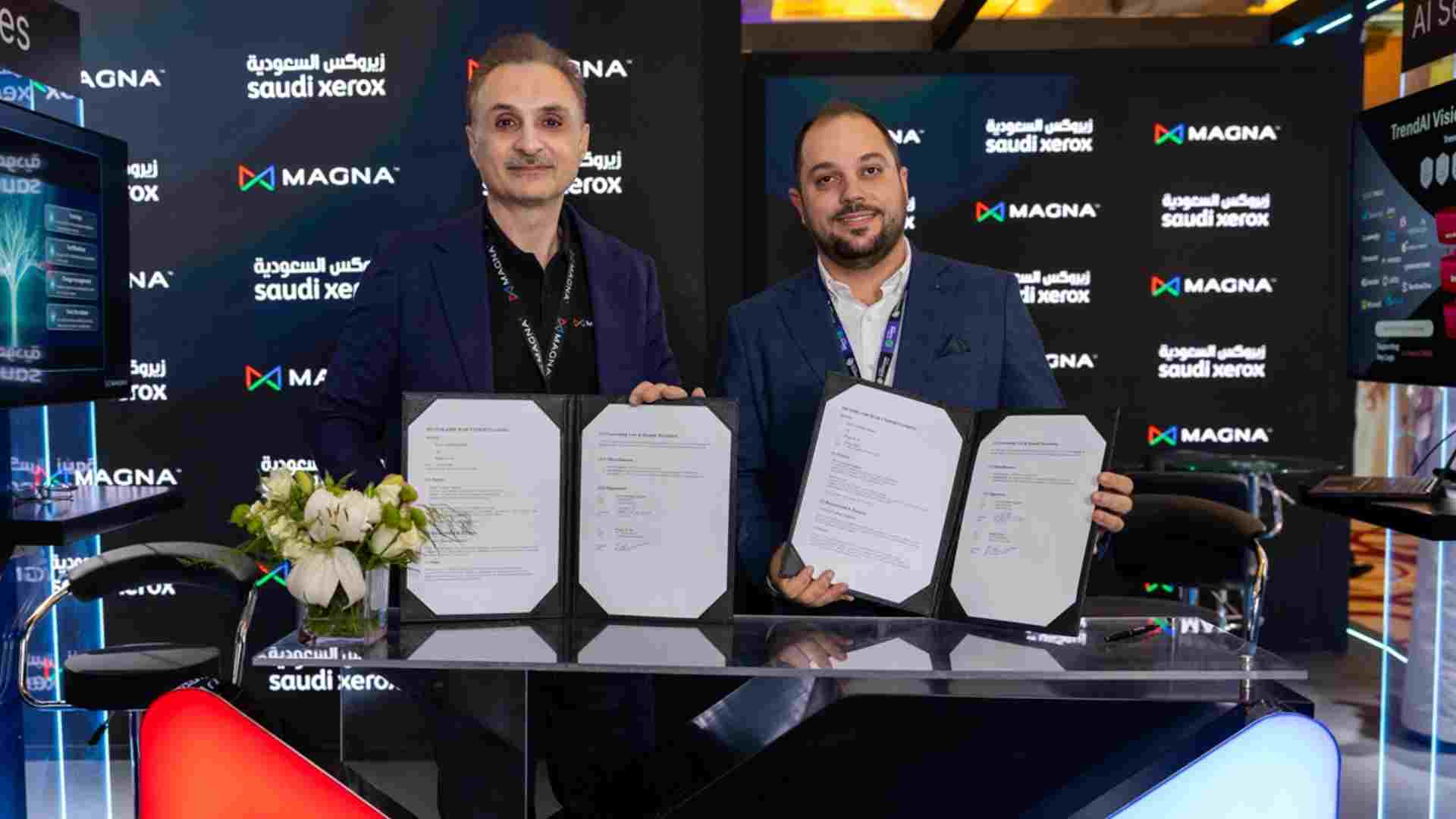
Magna AI, Inc., the global integrated‑value‑chain sovereign AI transformation leader established through a partnership between Trend Micro and Wistron Digital Technology Holding Company (WDH), powered by NVIDIA, today announced a strategic collaboration with Saudi Xerox, official representation of Xerox Trading Company in Saudi Arabia that is redefining the workplace experience by providing solutions to improve business processes, automation, and printing technology. The initiative was formalized during the Global AI Show 2026 in Riyadh by Dr. Moataz BinAli, Chief Executive Officer of Magna AI, and Mehmet Sezer, General Manager of Saudi Xerox.
The strategic framework will enable both companies to advance AI data centres, sovereign AI Factory capabilities, secure AI platforms and large-scale AI adoption for both government-led national initiatives and enterprise customers. The collaboration is aligned with Saudi Arabia’s digital transformation agenda and Vision 2030 objectives, with a focus on enabling secure, scalable, and locally relevant AI adoption across the public and private sectors.
The collaboration comes amid rapid expansion of the Kingdom’s AI infrastructure sector. Saudi Arabia’s AI data center market is forecast to grow from USD 0.63 billion in 2025 to USD 1.74 billion by 2030, representing a compound annual growth rate of over 22%, according to Mordor Intelligence. This growth is driven by Vision 2030 digital investment, government data-sovereignty mandates, and rising demand for locally hosted AI workloads.
“Saudi Arabia is building one of the most ambitious national AI agendas in the world, and that requires infrastructure with governance and security built in, shaped around the organization’s own requirements rather than a vendor’s defaults which creates the conditions for genuine long-term control,” said Dr. Moataz BinAli, Chief Executive Officer, Magna AI. “By combining Magna’s full value-chain AI Factory capabilities with Saudi Xerox deep on-ground presence in the Kingdom, we can help government and enterprise organizations move from AI ambition to AI at scale on infrastructure they own and control. This alliance also reflects our commitment to working with local partners to build the AI capacity, resilience, and ecosystem required to support long-term national transformation.”
Under the agreement, Magna AI will drive AI Factory architecture, platform development, AI security, and governance frameworks, while Saudi Xerox will support local infrastructure integration, security operations, compliance alignment and on-ground execution across the Kingdom.
The two companies intend to collaborate across several areas, including sovereign AI Factory development for large-scale model training, fine-tuning, inference, agentic AI operations, and data pipelines; secure AI operations aligned with Saudi data-residency and cybersecurity requirements; sector-specific AI applications for government and enterprise; and AI skills development and capacity building.
“Saudi Xerox is committed to supporting the Kingdom’s digital transformation through advanced IT, cloud, managed services, and cybersecurity capabilities,” said Mehmet Sezer, General Manager, Saudi Xerox. “This joint effort brings together Magna’s AI platform and security expertise with our established services and execution capabilities in Saudi Arabia, enabling national institutions and enterprises to adopt advanced AI with confidence and in line with local regulatory requirements. Our aim is to help organizations to adopt AI in a secure, compliant, and practical way that supports measurable business and national outcomes.”
Magna AI is the Title Sponsor of the Global AI Show 2026. Throughout the two-day event, Magna AI is showcasing is its sovereign AI infrastructure and enterprise AI platforms, as well as it’s security and industry-focused solutions. Magna AI leaders are also offering perspectives to organizations across industries looking to build production-ready AI that delivers measurable business outcomes.


THE AI REVOLUTION AND A FUTURE OF FAIRNESS

World Chocolate Day: Celebrating Chocolate Through Wellness, Balance and Meaningful Indulgence

THE REALITY OF AI DEPLOYMENT ACROSS THE WORKFORCE IN THE REGION


-
News11 years ago
SENDQUICK (TALARIAX) INTRODUCES SQOOPE – THE BREAKTHROUGH IN MOBILE MESSAGING
-

 Trending8 months ago
OPPO A6 Pro 5G Review: Reliable Daily Driver
-

 Tech News2 years ago
Denodo Bolsters Executive Team by Hiring Christophe Culine as its Chief Revenue Officer
-
 VAR1 year ago
Microsoft Launches New Surface Copilot+ PCs for Business
-

 Automotive2 years ago
AGMC Launches the RIDDARA RD6 High Performance Fully Electric 4×4 Pickup
-
Tech Interviews2 years ago
Navigating the Cybersecurity Landscape in Hybrid Work Environments
-

 Tech News12 months ago
Nothing Launches flagship Nothing Phone (3) and Headphone (1) in theme with the Iconic Museum of the Future in Dubai
-

 VAR2 years ago
Samsung Galaxy Z Fold6 vs Google Pixel 9 Pro Fold: Clash Of The Folding Phenoms