
 Have a question? +971 56 404 0503




Uncategorized
THE MANAGED FUTURE

By Editor

Dimension Data is a company that offers an extensive managed services portfolio includes several globally standardised managed services products in specific technology domains – including networks, data centres, security, visual communications, unified communications and collaboration and contact centres. Youssef Fawaz, Managing Director, Dimension Data Middle East discusses the company’s focus

Discuss portfolio of Managed services that Dimension Data provides globally and in the region?
Dimension Data’s support, managed, and IT outsourcing lines of services are closely interrelated. We use the same platforms, systems, processes and delivery teams to deliver all three service types.
Our lines of service portfolios include both standard (‘productised’) services and customised services. Dimension Data’s services portfolio is replicated globally, which is a unique offer for our clients spanning not just locally, but also globally. Dimension Data’s support, managed and IT outsourcing services portfolio includes IT Outsourcing spanning Transition and transformation, service aggregation & cross functional services across the network communications tower, the data centre tower, the end user compute tower, the contact centre tower & BPO.
Managed Services include IT service management, assessments and consulting, across enterprise networks, security infrastructure, Cisco unified communications, Microsoft Lync, Data Centre, Contact Centre and Custom services per client.
Support Services, include IT support, assessments and consulting for Uptime Maintenance, Uptime Support, Insite predictive support and Insite pre-emptive support. Dimension Data also includes multi vendor service management and contract aggregation on behalf of our clients.
What is the demand scenario for various Managed services that you provide regionally?
The demand varies from country to country. In response to the UAE, Dimension Data sees much demand for support services, that is, for the support of technology devices. The requirement for Managed Services, that is, for the management of process outcomes is still not in high demand locally. A focus on moving from a pure support contract to a managed services contract could add significant value to a clients’ business.
You offer standardized services in 6 domains while also giving the option for custom services. Discuss if customers regionally prefer the standard modules or whether they opt for custom ones?
Our experience in the local market is that clients are opting in for standard support services, mainly focused on SLA management and commitment, and not exploring the benefits attributed to custom services or managed services. Currently, the requirements most clients have are focused on support services for the support of technology devices. Most clients usually predefine this. Dimension Data is able to further extract benefits to the IT estate for our clients through custom services, or through offering our managed services portfolio.
What are the Managed services you provide for datacenters in this region? Does it cover both large and smaller sized datacenters?
Dimension Data focuses on small, medium and large data centres for our clients – as long as the benefit to the business is realized. Locally, Dimension Data includes the management of the physical data centre infrastructure as part of the managed services offered in the Data Centre Space. Dimension Data’s managed services within the data centre includes the management of infrastructure such as servers, messaging, print & file servers, storage management, legacy/mid range servers, identity management and SQL database services. Dimension Data also offers managed virtual infrastructure services to our clients. In addition to this, Dimension Data’s Managed Cloud Platform offers our client expertise in deploying fully managed cloud platforms including private, hybrid and public cloud services.
Are enterprise customers comfortable with the idea of outsourcing such services? Which verticals do you find most proactive in the region in terms of adopting such services?
There is a demand for these services across multiple verticals. By adopting these services our clients benefit by extracting benefits that include the exploitation of the data centre infrastructure – to the strategic advantage of their business, the realisation of the return on investment expected from a data centre technology environments, more efficient deployment of IT staff; access to the best skills in the market, providing a clear path to the cloud, a single point of contact, a proactive approach to service delivery, a consistent service delivery due to alignment of all services to the IT Instrastructure Library (ITIL) and flexible service levels that enable our clients to choose the service level that their budget and business requirements matches.
Are there customers regionally who you offer services across all the 6 domains that you focus on?
There are no current clients locally that procure services from Dimension Data across all the six domains. Many of our clients explore support service engagements with Dimension Data in the Enterprise network, security and unified communications space. As the market moves to the need for commercial outcomes and transformation, we expect to see more IT outsource engagement, spanning all domains, with regional client engagements.
Discuss any recent or expected announcements around Managed Services from Dimension Data?
Dimension Data announced that it will launch Enterprise Mobility-as-a-Service (EMaaS), signalling its intent to provide a suite of cloud-based end-user computing services on a global basis. EMaaS establishes the platform for the group’s future initiatives that will see Dimension Data announce increased functionality and feature sets that assist enterprise clients to deal with their rapidly changing end user computing requirements.
Dimension Data’s EMaaS offering is an integrated enterprise mobility management service that provides organisations with the ability to deliver comprehensive policy-based, device-independent, mobile device management, mobile expense management, integration to the enterprise and underpinned by true cloud principles of automation and consumption-based commercials.
The service, which utilises a cloud-based consumption model, enables organisations to rapidly scale deployments while easily managing the complex environment of mobile devices, data access and expense management. Due to the complex nature of mobility deployments, the EMaaS offering is complemented by Dimension Data’s Systems Integration and Professional Services competencies and addresses the full spectrum of an organisation’s enterprise mobility needs.

Minor Hotels, a leading global hotel owner and operator, has announced Avani Kota Kinabalu, a 352-key premium lifestyle hotel set to open in Q1 2027. Forming part of The Logg Luyang integrated development by KTI Landmark, the property will introduce the Avani brand to Sabah and expand Minor Hotels’ presence in Malaysia.
Avani Kota Kinabalu will cater to leisure and corporate demand in Kota Kinabalu, one of East Malaysia’s principal commercial centres and a key gateway to Borneo. Approximately 10 minutes from Kota Kinabalu International Airport, the hotel will provide access to the city’s business districts, residential neighbourhoods and visitor attractions.
The announcement supports Minor Hotels’ strategy of expanding its lifestyle portfolio in destinations with growing domestic, regional and international demand. Avani Kota Kinabalu will also strengthen the group’s presence in Malaysia, joining Anantara Desaru Coast Resort & Villas in Johor, as it continues to pursue development opportunities across Asia.
Developed by KTI Landmark, The Logg Luyang will bring together hospitality, commercial and lifestyle components within the established Luyang neighbourhood. Avani Kota Kinabalu will serve as the development’s hospitality anchor, offering accommodation, dining, wellness and event facilities for hotel guests and the local community.
“Kota Kinabalu is evolving rapidly as a regional business and tourism hub, creating strong demand for a hotel that can move easily between corporate, leisure and social use,” said Winston Gong, General Manager of Avani Kota Kinabalu. “Our focus will be on delivering an efficient, locally relevant guest experience while building a property with genuine appeal to the city’s residents.”
Designed by Shah Architect, with landscape architecture by SD2 and interiors by INdulge, Avani Kota Kinabalu will feature 352 rooms tailored to business trips, short breaks and longer stays.
Avani Kota Kinabalu will feature five dining and social venues for hotel guests and the local community. The all-day dining restaurant will serve Sabahan, Malaysian, Korean and international cuisine, with live cooking stations, local specialities and a signature Avani Sunday Lunch. A contemporary Chinese restaurant will focus on Sabah Hakka heritage and regional flavours, while the Lobby Lounge will transition from a daytime meeting space into an evening venue serving afternoon tea, as well as cocktails and whiskies.
The Pantry will offer handcrafted bakery items, desserts and premium coffee for dining in or takeaway. On the rooftop, SEEN Restaurant & Bar will bring the established rooftop dining and nightlife concept to Sabah through globally inspired cuisine, mixology, curated music and destination-led experiences.
The hotel will also include dedicated meeting and banquet facilities for conferences, weddings and social events. Leisure facilities will include an infinity pool and AvaniFit gym, with nearby Tun Fuad Stephens Park offering access to outdoor recreation.
Avani Kota Kinabalu will combine accommodation, rooftop dining, wellness and event facilities within a major integrated development, strengthening Minor Hotels’ lifestyle offering in Malaysia and supporting the group’s continued expansion across Asia.
Uncategorized
ServiceNow Expands Autonomous Security Vision with Unified AI-Powered Cyber Defense Platform

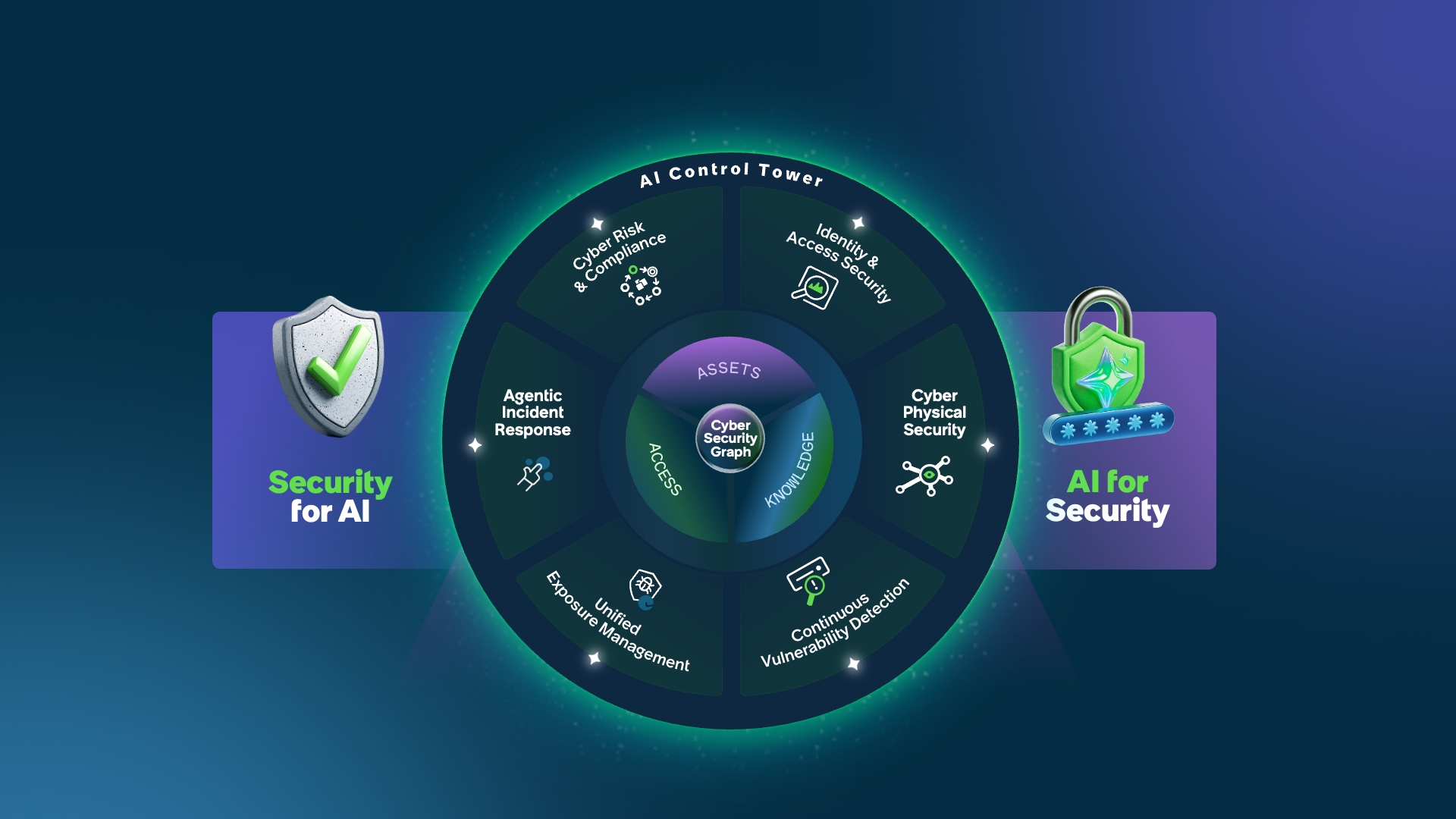
The company introduces six integrated security solutions designed to help enterprises detect, prevent and respond to cyber risks at machine speed.
As organisations continue to accelerate AI adoption, cybersecurity teams are facing a rapidly expanding attack surface driven by AI agents, machine identities, cloud environments and increasingly complex enterprise infrastructures. Addressing these challenges, ServiceNow has unveiled a major expansion of its Autonomous Security vision, introducing six unified security solutions that combine AI-powered automation, governance and risk management into a single platform.
The announcement strengthens ServiceNow’s position as one of the industry’s fastest-growing enterprise security providers, bringing together exposure management, vulnerability detection, identity security, cyber-physical protection, incident response and compliance under a unified operational framework.
Tackling AI-era security complexity
Modern enterprises often operate dozens of disconnected security tools across endpoints, networks, cloud environments and identities, creating fragmented visibility and slower response times. ServiceNow estimates that many organisations manage more than 70 individual security solutions, making it increasingly difficult for security teams to identify and prioritise risks efficiently.
With Autonomous Security, ServiceNow aims to replace this fragmented approach with a unified system capable of continuously monitoring assets, identities and AI agents while providing business context, governance and auditability from a single platform.
The company’s broader vision, known as Shift Zero, focuses on embedding security into every stage of enterprise operations, moving organisations away from reactive incident response towards continuous prevention.
Six security pillars
At the centre of the announcement are six integrated solution areas covering the modern enterprise attack surface.
Unified Exposure Management
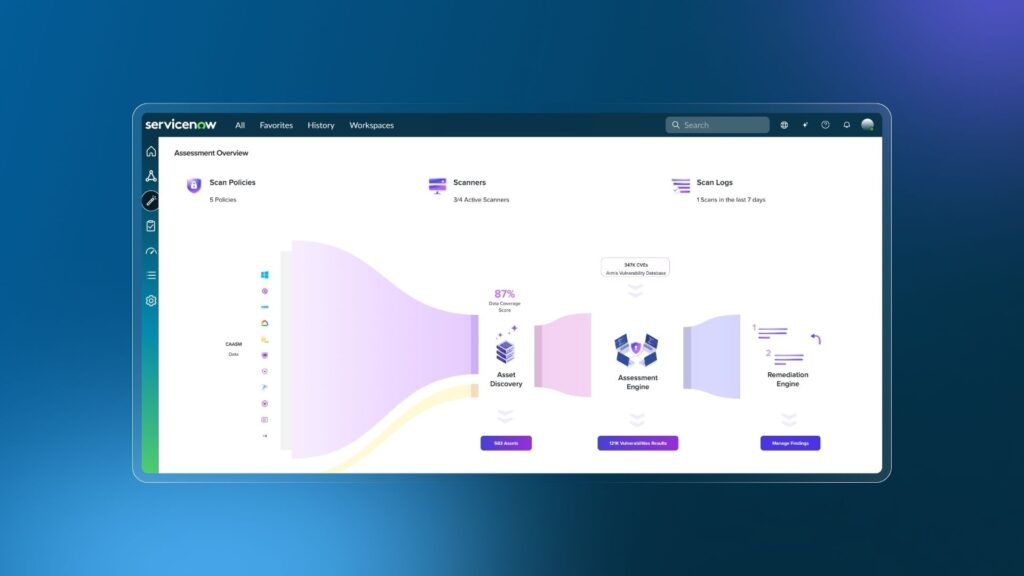
The platform consolidates vulnerability findings from multiple security tools into a single view, enriching them with threat intelligence and business context to help organisations prioritise remediation more effectively. A new Vulnerability Resolution AI Specialist is designed to automate triage and execute low-risk remediation tasks at enterprise scale.
Continuous Vulnerability Detection
ServiceNow is expanding visibility across applications, cloud environments and infrastructure with new capabilities that include application security, dynamic application security testing (DAST) and external attack surface management. Together, these tools aim to identify vulnerabilities before they can be exploited.
Cyber-Physical Security
Recognising the growing importance of operational technology (OT), IoT and connected medical devices, ServiceNow is introducing agentless discovery, continuous compliance monitoring and automated remediation workflows that minimise operational disruption while improving visibility across critical infrastructure.
Identity and Access Security
The company is also extending governance to non-human identities, including service accounts, cloud identities and AI agents. New capabilities enable organisations to manage permissions, automate key rotation and apply least-privilege principles consistently across both human and machine identities.
Agentic Incident Response
To help security operations centres respond faster, ServiceNow is introducing AI-driven incident response capabilities that automate investigation, threat enrichment, correlation and containment while escalating only high-risk decisions to human analysts.
Cyber Risk and Compliance
The final pillar focuses on continuous compliance rather than periodic audits. AI-powered monitoring continuously evaluates access rights, configuration changes and policy violations while generating compliance-ready reporting across major regulatory frameworks. The platform also introduces cryptographic asset management capabilities to support future migration towards quantum-resistant encryption standards.
AI Specialists automate security operations
Alongside the platform enhancements, ServiceNow introduced new AI Specialists capable of autonomously completing security workflows.
These specialised AI agents are designed to assist with vulnerability remediation, incident response, exposure management and continuous compliance monitoring, helping security teams automate repetitive tasks while maintaining governance and auditability.
The company believes these capabilities will allow enterprises to respond to threats at machine speed without sacrificing operational oversight.
Building a unified security ecosystem
ServiceNow’s latest security strategy is further strengthened through technologies integrated from Armis and Veza.
Armis contributes continuous visibility across connected devices and operational technology environments, while Veza enhances identity governance by mapping permissions across human users, machine identities and AI agents. Combined with ServiceNow’s AI Control Tower and orchestration capabilities, these technologies provide organisations with a centralised view of assets, identities and security operations.
Availability
Several new capabilities, including Agentic Exposure Management, Application Security, Dynamic Application Security Testing (DAST), External Attack Surface Management (EASM), Cyber Physical Security and AI Agent Access Security, are available immediately.
Additional features—including the Tier 2 SOC AI Specialist, Vulnerability Resolution AI Specialist, Continuous Control Monitoring and Cryptographic Asset Compliance—are expected to become available in December 2026.

Exclusive interview with Chef Peter Chaine, Executive Chef at The Club Abu Dhabi
You first arrived in Abu Dhabi in 1987, expecting what you described as a short chapter in your career, yet nearly four decades later, The Club remains an integral part of your journey. What has made this place so special that it continues to feel like home?
I took up an appointment in December 1987 to join The Club in the capacity of Sous Chef and moved on to the reins of Executive Chef in August 1990. I have received the full support of the Committee, Management, Staff and Members to achieve what it is today. The path was never easy, but with the thought “The Club is the second home to its Members,” always at the back of my mind, my team and I are challenged to deliver consistency at all times. I drive myself to take full responsibility for any food on a plate produced at The Club. Sourcing the highest quality ingredients that our Members can enjoy at the most competitive price is predominantly a reason for our success. The regular changes of outlet menus and special dishes or nights offered in various outlets and areas within the property make it a unique experience for the diners. The appreciation from our membership is seen by their decisions to avail themselves of these events. This success has seen our staff retention levels, in comparison to industry competitors, be the lowest.
Having witnessed Abu Dhabi’s remarkable transformation over nearly four decades, how have you seen The Club evolve while preserving the sense of community and belonging that has defined it for generations?
I have always felt that The Club forms a major part of the expatriate community due to the offerings in place. Hosting various events with local dishes for the wide repertoire of membership has driven us to always focus on “under promising and over delivering”.
Today’s diners seek more than exceptional food, they value authenticity, storytelling and memorable experiences. How has your culinary approach evolved to meet these changing expectations while remaining true to The Club’s heritage? And, you’ve witnessed Abu Dhabi transform from a quiet coastal city into a global destination. If food could tell the story of that journey, what would it say?
As much as I have seen Abu Dhabi grow in the past decades, I say the same of The Club, too. We are proud to think that we are a heritage site offering modern food of the highest standard within the industry in the region. The varying nationalities of membership have grown considerably and helped us to be more of a globally recognised organisation. Staples that have been Fish and Chips have now moved over to Chicken Tikka Masala, Thai Green Curry or a Beef Nashif.
The Port, hosting storage facilities, has been cleared and transformed into an International Cruise Terminal, while the rear end of The Club has facilitated the new 4- to 5-lane main highway.
Having mentored generations of chefs and helped establish the Emirates Culinary Guild, what responsibility do experienced culinary leaders have in nurturing the next generation of talent, and what qualities do you believe young chefs should cultivate to succeed in today’s industry?
I have earned my present position of Vice President in The Emirates Culinary Guild, as I was always interested in innovation and modernisation of dishes. I competed amongst some of the best and helped gain recognition for The Club within the fraternity of hospitality establishments in the UAE. Being there to offer assistance to colleagues when they collected many accolades for individuals and for the club is an achievement itself. We believe in nurturing the youth by way of offering regular on the job trainings where we can then look to maintain the standards while sustaining the level of enthusiasm for business growth.
Rapid Fire questions:
What does success mean to you today?
Success to me today is that we meet all expectations and deliver to the highest standards consistently.
A signature dish everyone should try at The Club?
My signature dish is none, as I expect the diners to be adventurous and place all trust in the hands of the chef’s creations and interpretation of a dish, and try all we have to offer.
A young chef every aspiring professional should learn from?
The industry I came into almost 4 decades ago has evolved; thus, we cannot expect the staff to work the long hours we worked, give up weekends or parties for work. However, the need to offer 8 honest and productive hours to the establishment should be the vision. The work and lifestyle balance is very important for the youth of tomorrow. They need to be aware that good mental health is vital for success in achieving a happy family. I would also like to see a future that brings a positive attitude as being most important. Whatever you do is never going to be enjoyed if you are not in that frame of mind. Training can be provided, but a positive attitude has to be instilled from the initial education.


BEYOND THE PRICE TAG

NEVER NOT SUEDE: PUMA MIDDLE EAST LETS THE SUEDE BLOOM

Inside ORLA: Beachfront Living, Composed by OMNIYAT



-
News11 years ago
SENDQUICK (TALARIAX) INTRODUCES SQOOPE – THE BREAKTHROUGH IN MOBILE MESSAGING
-

 Trending10 months ago
OPPO A6 Pro 5G Review: Reliable Daily Driver
-

 Tech News2 years ago
Denodo Bolsters Executive Team by Hiring Christophe Culine as its Chief Revenue Officer
-
 VAR1 year ago
Microsoft Launches New Surface Copilot+ PCs for Business
-

 Automotive2 years ago
AGMC Launches the RIDDARA RD6 High Performance Fully Electric 4×4 Pickup
-
Tech Interviews2 years ago
Navigating the Cybersecurity Landscape in Hybrid Work Environments
-

 Tech News1 year ago
Nothing Launches flagship Nothing Phone (3) and Headphone (1) in theme with the Iconic Museum of the Future in Dubai
-

 VAR2 years ago
Samsung Galaxy Z Fold6 vs Google Pixel 9 Pro Fold: Clash Of The Folding Phenoms