
 Have a question? +971 56 404 0503




Financial News
Ransomware is Indiscriminatory – Prepare for Everything to Fail

Ransomware attacks continue to grow in frequency. As well as being more common, ransomware is also getting more potent. As per Veeam’s 2023 Ransomware Trends Report, 21% of companies paid the ransom but could not recover their data. The threat landscape is as volatile as it has ever been. There are more attacks taking place. They are more diverse. And they can have grave consequences for the companies they affect.
On the other hand, rather than tremble with fear at the awesome power of the cyber-attacks waiting to be deployed against them, organizations must focus on what they can control – their defence. Protecting your business against cyber-attacks requires following some fundamental and consistent principles – no matter what is thrown at you.
The ransomware wild west
There is a lawless and brutal feeling about businesses’ current cyber landscape. It is difficult for governments to hold cyber criminals to account, and companies are often keen to minimize public attention towards an incident that has compromised them. This contributes to a situation where almost all the focus is on the victim (the business) rather than the criminal (the attacker).
Furthermore, ransomware – and most contemporary cybercrime – is almost indiscriminatory for those who suffer. The fact is that every business is a target. Yes, hacktivist organisations such as Anonymous use organised cyber-attacks to exercise social justice and call out businesses or governments they view as immoral, unlawful, or dangerous. But even the most philanthropic and virtuous companies can find themselves begging a cybercriminal gang to restore their data and systems while a hefty ransom is demanded.
You often see a comparison made between cyber-attacks and fishing. Hence, the term ‘phishing’ refers to using an email or text as bait to trick a victim into ‘biting’ – in this case, clicking on the link and unwittingly downloading malware onto their device. With ransomware especially, we are now seeing industrial-scale attacks being carried out, which are more analogous to trawler fishing. This isn’t one guy with a rod casting out to get a bite off one or two fish. It’s AI-infused algorithms programmed to target everyone and everything – playing a blind numbers game to catch whatever it can.
This indiscriminate nature is compounded by cyber-attacks being generally difficult to contain. For example, cyber warfare between nation-states threatens every organisation – not just those deemed to be in the firing line. We saw this with the NotPetya attack in 2017 – an attack on a specific utility company – which impacted multiple unrelated organisations through an entirely organic chaos spread. Attack types also continue to evolve. For example, the LokiLocker attack was one of the first reported ransomware strains to include a disk wiper functionality. This means organisations are not only held to ransom by having services suspended and threats of data extortion. Now, they are being threatened with losing vast swathes of data entirely if they do not pay up.
Consistent principles of defence
There is some good news for businesses. No matter how scalable, spreadable, or malicious an attack is, these various evolutions can be viewed as attackers simply using bigger guns and more of them. The fundamental principles of preparing your defences against even the most sophisticated and powerful ransomware stay relatively the same.
First, practice impeccable digital hygiene. All employees must be trained to identify suspicious content and be warned of the impact that malpractice using work devices can have. For all the might at the hands of cybercriminals, in many ways, their biggest weapons are unsuspecting employees who give them the keys to the back door of an enterprise network. Given the scattergun approach now adopted by many cyber-attacks, criminals are not necessarily targeting your organisation specifically. But you’ll become a victim if you prove to be an easy hit.
With that said, all businesses must prepare for their defences to fail – no matter how robust you might think they are. Concepts such as zero trust and deploying techniques such as two-factor authentication can be useful for restricting an attacker’s access to data by taking over one individual’s workstation. Ultimately, the best way to protect data is to ensure that it has been securely backed up and fully recoverable before an incident occurs. Follow the 3-2-1-1-0 backup rule, which states there should always be at least three copies of data on at least two different types of media, at least one off-site and one immutable or offline, with zero unverified backups or errors.
While the headlines and constant discussion around cybersecurity and ransomware can be daunting, it’s important to remember that the fundamental actions required to protect data remain the same. Data Protection and Ransomware Recovery strategies ensure businesses can protect all data from cyber-attacks, server outages, accidental loss, and deletion across physical, virtual, cloud, SaaS, and Kubernetes environments. Investing in a data protection strategy and taking advantage of a solution that enables continuous backup and Disaster Recovery (DR) can give businesses peace of mind that should the worst happen, they never need to pay the ransom.

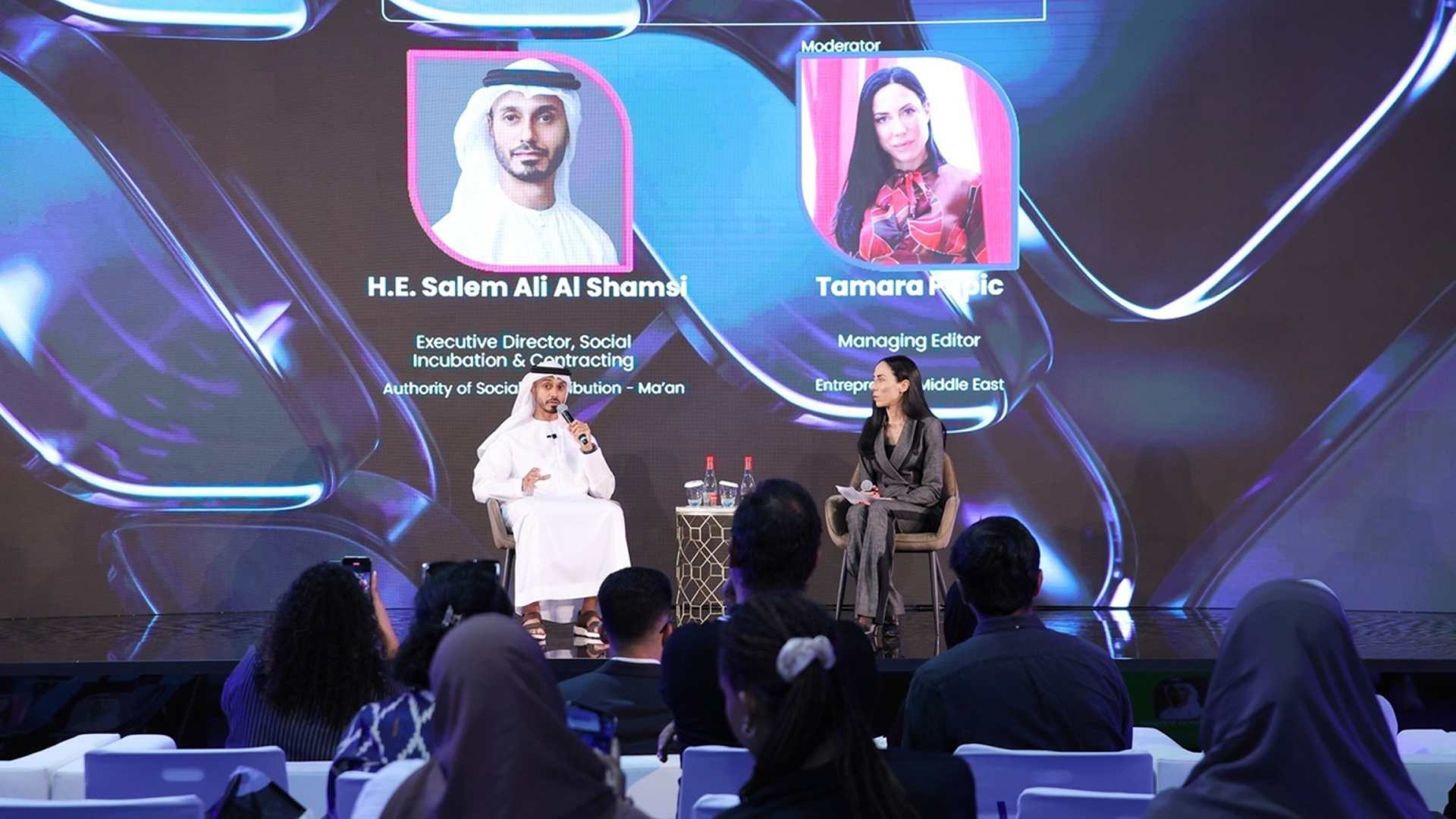
Athar+, Abu Dhabi’s first purpose-driven hub dedicated to accelerating social impact, operated by the Authority of Social Contribution – Ma’an, has launched the second edition of its HACK4IMPACT hackathon, bringing together changemakers to develop practical solutions that address key social priorities and contribute to positive social impact across Abu Dhabi.
Launched in line with the objectives of the UAE’s Year of Family, this edition of the hackathon focuses on addressing family-related challenges through innovative and community-driven approaches. Taking place from 16-18 June 2026 at Athar+, the three-day programme brings together aspiring entrepreneurs, innovators, professionals, and community members to develop solutions addressing three family-centred priorities: building stronger family foundations, enhancing financial wellbeing for parents, and supporting families caring for aging parents.
Guided through a structured innovation journey, participants will apply design thinking methodologies to explore challenges, validate ideas, develop prototype concepts, and present their solutions to a panel of judges.
High-potential concepts emerging from the hackathon have the opportunity to be considered for further support through Athar+’s incubation ecosystem, enabling participants to continue developing their solutions beyond the event. Through these challenge areas, the initiative aims to advance family wellbeing, strengthen social cohesion, and support the development of solutions that respond to the evolving needs of families in Abu Dhabi.
This initiative aims to strengthen practical innovation skills among participants while identifying high-potential ideas and scalable concepts capable of addressing key social priorities. It also encourages collaboration by bringing together individuals from diverse backgrounds and expertise. The hackathon provides an accessible entry point for youth and first-time innovators to contribute to solving community challenges through entrepreneurship and social innovation, inspiring them to play an active role in shaping impactful and practical solutions.
His Excellency Salem AlShamsi, Executive Director of Social Incubation and Contracting at Ma’an said: “HACK4IMPACT reflects Athar+’s commitment to empowering innovators and aspiring entrepreneurs to develop practical solutions that address real social priorities and enhance quality of life across our communities. By empowering future talent through Athar+, we are strengthening Abu Dhabi’s position as a regional hub for social entrepreneurship while advancing the Authority’s vision of fostering a culture of giving, participation, and measurable social progress.’’
Aligned with the objectives of the UAE’s Year of Family, the initiative also supports broader national efforts to strengthen family wellbeing, social resilience, and community cohesion through collaborative innovation and inclusive engagement.”
Through dedicated workspaces, expert mentorship, professional services, and tailored growth programmes offered by Athar+, participants will be supported in transforming ideas into prototype concepts while gaining access to opportunities within Abu Dhabi’s innovation and entrepreneurship ecosystem.
Financial
Standard Chartered Supports Pakistan’s First Panda Bond Issuance in Chinese Interbank Market


Pakistan has successfully completed its inaugural Panda bond issuance in China’s interbank bond market, raising RMB 1.75 billion through a three-year transaction that marks the country’s first direct entry into China’s capital markets.
Standard Chartered (China) Ltd. Co acted as the only foreign bank serving as joint lead underwriter and joint book runner for the transaction, supporting Pakistan in broadening its international financing channels while strengthening financial connectivity between regional capital markets.
The issuance received strong support from multilateral development institutions, including the Asian Infrastructure Investment Bank (AIIB) and the Asian Development Bank (ADB), which together guaranteed 95 per cent of the bond’s principal and interest payments. The structure helped attract significant demand from Chinese banks, securities houses, and international financial institutions.
The transaction was reportedly more than five times oversubscribed, allowing Pakistan to price the bond at 2.50 per cent, the tightest end of the indicated pricing range.
Salman Ansari, Global Head, Capital Markets, Standard Chartered, described the issuance as a strategically important transaction that expands Pakistan’s access to global liquidity pools while demonstrating the growing relevance of regional capital markets within the international funding landscape.
The transaction also reflects the broader evolution of the Renminbi within global financial markets, as China continues expanding the role of its currency beyond trade settlement into cross-border financing and sovereign funding structures.
Jerry Zhang, Global Head of Banks & Broker Dealers and Head of Coverage, Greater China and North Asia at Standard Chartered, said the transaction highlighted the bank’s role in connecting international issuers with China’s domestic capital markets while also reflecting the continued internationalisation of the Renminbi.
The Panda bond market has increasingly attracted a wider range of sovereign, supranational, and institutional issuers in recent years as regional economies explore diversified funding channels and deeper access to Chinese liquidity pools.
Financial
Standard Chartered appoints Michelle Swanepoel as Head of Financing and Securities Services Middle East and Africa


Standard Chartered today announced the appointment of Michelle Swanepoel as Head of Financing and Securities Services (FSS), Middle East and Africa. Based in Dubai, she will lead the business across the region effective 1 July 2026. Michelle succeeds Scott Dickinson, who will be retiring from the bank on 30 June after more than 40 years in financial services.
Michelle Swanepoel joined Standard Chartered in September 2017 as the Regional Head of Business Account Management for the Middle East and Africa and was appointed the Regional Head of Securities Services for Africa in May 2019. In September 2024, her role expanded to include Head of Markets for South Africa.
“Michelle has played a strong leadership role in the evolution of post‑trade servicing across Sub‑Saharan Africa, supporting capital market development, regulatory reform, enhanced investor access and market infrastructure, and is a recognised industry subject‑matter expert,” said Margaret Harwood-Jones, Global Head of FSS. “I have every confidence that Michelle will drive further momentum in the region, building on the solid foundation established by Scott.”
Scott Dickinson joined Standard Chartered in 2017 and he has led the Bank’s FSS franchise in MEA since 2019. During his tenure, he oversaw strong growth across the Middle East and Africa franchise, supported expansion into markets including Saudi Arabia and Egypt, and helped deliver the Bank’s first Digital Asset Custody capability in the Dubai International Financial Centre.

WHY PERSONALISATION IS THE NEW CURRENCY IN WEALTH MANAGEMENT
ZAHRA’S KITCHEN SHARES ITS GUIDE TO EASIER SUMMER EATING IN THE UAE
MOONWALK INTO JUNE



-
News11 years ago
SENDQUICK (TALARIAX) INTRODUCES SQOOPE – THE BREAKTHROUGH IN MOBILE MESSAGING
-

 Tech News2 years ago
Denodo Bolsters Executive Team by Hiring Christophe Culine as its Chief Revenue Officer
-

 Trending8 months ago
OPPO A6 Pro 5G Review: Reliable Daily Driver
-
 VAR1 year ago
Microsoft Launches New Surface Copilot+ PCs for Business
-
Tech Interviews2 years ago
Navigating the Cybersecurity Landscape in Hybrid Work Environments
-

 Automotive2 years ago
AGMC Launches the RIDDARA RD6 High Performance Fully Electric 4×4 Pickup
-

 Tech News11 months ago
Nothing Launches flagship Nothing Phone (3) and Headphone (1) in theme with the Iconic Museum of the Future in Dubai
-

 VAR2 years ago
Samsung Galaxy Z Fold6 vs Google Pixel 9 Pro Fold: Clash Of The Folding Phenoms