
 Have a question? +971 56 404 0503




Technology
Dahua Technology Middle East elevates regional presence after landmark joint venture with Saudi Arabia tech firm ALAT


Dahua Technology Middle East has announced its strategic collaboration – a new joint venture – with Saudi Arabia tech firm ALAT, further solidifying its commitment to the region’s development and growth in the tech space. The partnership comes on the heels of Dahua’s recent expansion in the region.
The collaboration represents a significant milestone for Dahua Technology as it embarks on manufacturing AIoT products tailored for smart cities and enterprises in Saudi Arabia after its recent expansion in the region, according to Gary Li, Vice President of Dahua MENA and GM of Dahua Saudi Arabia. Anticipating the roll-out of the first product by the end of 2024, the joint venture signals a long-term commitment to enhancing local infrastructure and fostering economic growth, which contributes to realizing the vision of Saudi Arabia 2030. “As a key regional player, we make decisions based on the goals our key markets have. This latest collaboartion of ours is purely driven by Saudi Arabia’s grand plans to make its economy diverse, encourage new ideas, and create a brighter future. The government’s focus on smart cities and big projects fits perfectly with what we believe in, and at Dahua, we see it as a great opportunity for us to showcase our expertise in smart video solutions as we work together to make a positive and meaningful as part of Saudi Arabia’s push towards a safer, smarter future, All of these objectives constitute key pillars of the Vision 2030 of the Kingdom of Saudi Arabia. ” said Li in an exclusive interview, highlighting why the kingdom is one of Dahua MENA’s most “important markets.
Dahua’s Saudi Arabia subsidiary will continue to operate independently, ensuring seamless service delivery to clients. The establishment of the joint venture will bolster manufacturing capabilities in the region without compromising daily operations or branding strategies.
The Kingdom of Saudi Arabia is the logistics gate to all GCC and the three continents
Initially, the focus will be on manufacturing CCTV project-based products, with plans to expand into distribution products and other categories in the future. While negotiations regarding brand usage are ongoing, Dahua will remain committed to prioritising its brand presence in the Saudi Arabian market.
“The sales model will remain unchanged, ensuring continuity for local distributors, system integrators, and end-users. Clients across the region including our exisiting ones here in KSA and all MENA region can expect enhanced access to cutting-edge AIoT solutions tailored to their specific needs,” added Li. The joint venture’s manufacturing facility will streamline local supply chains, accelerating product delivery for projects in Saudi Arabia and neighbouring countries in the GCC and wider region.
Both Dahua Technology and ALAT, a recently formed PIF company, will support with technology enablement, testing labs and demo centres, manufacturing technology products in the region as part of the new joint venture to produce and market solutions for safety and surveillance use that are applicable in Intelligent Cities, as well as Intelligent Buildings and Enterprise Applications.
ALAT and Dahua Technology will invest $200 million (Dh734 million) to reach their targets.
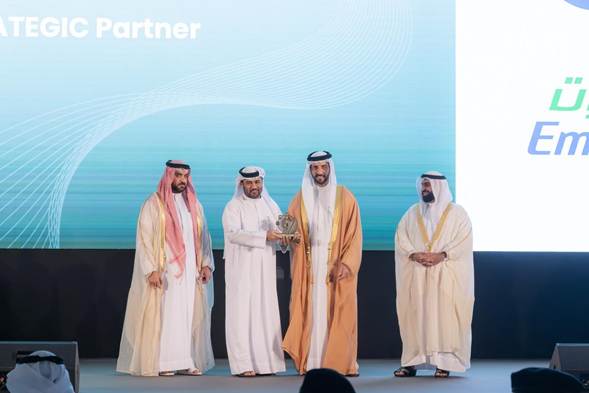
Emirates Petroleum Company PJSC (Emarat), a pioneer in the UAE’s oil and gas industry, is participating as Official Partner of HSE-Expo 2026, taking place on 1 and 2 April 2026 at Al Jawaher Reception and Convention Centre in Sharjah.
Organised by Sharjah National Oil Corporation and held under the patronage of His Highness Sheikh Sultan bin Ahmad Al Qasimi, Deputy Ruler of Sharjah, Chairman of the Petroleum Department and President of Sharjah National Oil Corporation, the event brings together industry leaders, specialists, researchers, and stakeholders to advance dialogue around health, safety and environmental priorities across the region.
Emarat’s participation reflects the company’s continued focus on strengthening workplace safety, supporting responsible environmental practices, and aligning its operations with recognised regional and international standards. It also reinforces the company’s view that health, safety, and environmental performance is integral to operational excellence, long term resilience and responsible growth across the energy value chain.
Burhan Al Hashemi, Chief Executive Officer of Emarat, said: “At Emarat, health, safety and environment is a leadership priority embedded across every level of the organization. It shapes how we operate, how we invest and how we build a culture of accountability and care. Across our fuel, aviation fuel, lubricants, LPG, and natural gas businesses, HSE is fundamental to operational discipline, business continuity and the trust our customers and partners place in us. Our participation in HSE Expo 2026 reflects our commitment to raising standards, supporting responsible industry practices, and contributing to a safer and more sustainable operating environment.”
Emarat applies health, safety, and environmental discipline across its operations as part of its broader commitment to operational excellence and responsible growth. From frontline safety practices and process discipline to environmental stewardship and continuous improvement, the company views HSE as a business imperative that supports resilience, strengthens trust, and underpins performance across its fuel, aviation fuel, lubricants, LPG and natural gas businesses.
Furthermore, HSE standards are central to every product category Emarat operates in, including LPG. As a provider of composite LPG cylinders, Emarat adheres to global HSE industry standards in this product category among all others, underscoring the company’s commitment to safety and environmental responsibility across all aspects of its business.
Ali AlAstad Alhammadi, Vice President, Health, Safety, Environment and Quality, Emarat, said: “HSE Expo provides an important platform for industry stakeholders to exchange practical insight, share best practice and strengthen collaboration around issues that are central to workforce safety and environmental stewardship. For Emarat, this is an opportunity to engage with the wider HSE community and support continued progress in standards, awareness, and performance across the sector. We are grateful to SNOC for organizing this important platform and we look forward to continued collaboration and future participation”
HSE Expo 2026 serves as an important regional platform for advancing dialogue on workplace safety, environmental responsibility, and industry best practice. By bringing together energy leaders, technical specialists, researchers and stakeholders, the event supports knowledge exchange around the standards and innovations shaping safer and more sustainable operations across the region.
Tech Interviews
STARKEY OMEGA AI – ONE OF THE MOST POWERFUL AND ADVANCED HEARING TECHNOLOGY TO EVER REACH MEA PATIENTS
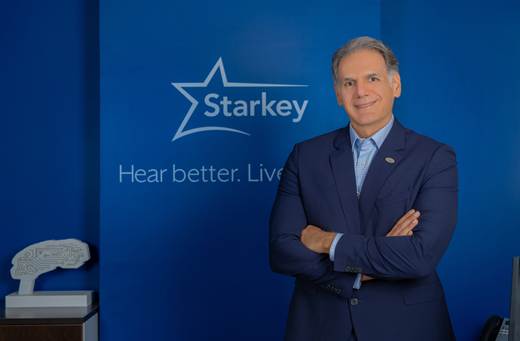
In this exclusive interview, Giscard Bechara, Director of Starkey Middle East & Africa, reveals how Omega AI, the company’s most advanced hearing technology to date, is set to transform the lives of patients across the region, from smarter connectivity and real-time AI support to breakthrough health monitoring features.
Giscard, Starkey has just unveiled Omega AI, a bold claim to call it ‘superhuman.’ For patients here in the Middle East and Africa, what does that word actually mean in everyday life?
“Superhuman” isn’t marketing language for us, In the MEA region, our patients navigate some of the world’s most complex listening environments: bustling souks, multi-language family gatherings & noisy cities . Omega AI is engineered to mimic the auditory system in these very settings. When DNN 360 delivers 28% better speech intelligibility in a noisy environment, your brain is receiving a signal that is cleaner and crisp than ever before. That, to me, is a superhuman advantage, and it is now available to anyone wearing a Starkey hearing aid.
Tell us about DNN 360, the deep neural network at the heart of Omega AI. How is it different from the AI that patients may have heard about in other hearing aids?
Most hearing aids apply AI to a single task, perhaps noise reduction or voice enhancement. DNN 360 is the world’s first deep neural network that powers both directionality and spatial awareness simultaneously. Think of it this way: when you are in a restaurant in Dubai or a busy market in Egypt, you do not just want to hear the person in front of you, you want to know where every sound is coming from, so your brain can make sense of the scene around you. Our brain naturally detects sounds and acoustic queues to understand the environment that we are facing. DNN 360 provides up to 8 dB signal-to-noise ratio improvement for spatial awareness. That is a meaningful, real-world difference. And crucially, we achieve all of this without sacrificing battery life and performance.
For many patients in the MEA region, connectivity is critical, streaming TV, phone calls across different networks, even video consultations with specialists abroad. How does Omega AI address this?
Connectivity is a lifeline. We have made two significant advances. First, streaming via the StarLink Edge TV Streamer now starts and reconnects automatically for the TV, no more fumbling with settings or missing the beginning of a show. Second, and this is an industry first, we have introduced TeleHear AI. This feature uses generative AI to help patients resolve common hearing issues in real time, directly from their smartphone, with 93% predictive accuracy. For a patient in a remote area or in a country where specialist hearing clinics are hours away, this means they can troubleshoot and optimise their hearing experience without having to travel. That is transformative access.
You mentioned TeleHear AI, a 93% predictive accuracy rate is remarkable. Can you walk us through what that looks like for a patient who, say, notices their hearing feels muffled after a long flight from Riyadh to Johannesburg?
Absolutely. That patient opens the My Starkey app, describes what they are experiencing, and TeleHear AI analyses the situation using generative AI. It might recommend a specific listening programme for their current environment. the issue can be resolved without any professional intervention needed at that moment. In a region where patients often travel vast distances and cross multiple time zones, that kind of intelligent self-sufficiency is worth a lot.
Durability is a significant concern in our climate, from the humidity of coastal cities like Abu Dhabi and Lagos to the dust of the Sahara. How has Starkey engineered Omega AI for these realities?
We took this very seriously. Omega AI features waterproofing that has been tested to last 10 times longer than our previous coatings under the most demanding conditions, moisture, sweat, dust, temperature extremes. The MEA region presents environments that can be punishing for delicate electronics. Whether a patient is in a humid coastal city, working outdoors in the Gulf heat, or living in a dry, dusty climate, Omega AI is built to perform reliably day after day. This is not lab performance, it is field-tested durability. A hearing aid that fails in difficult conditions is not a solution; Omega AI is engineered to be there when patients need it most.
There are also new LED indicator lights, something that might seem like a small detail, Can you explain why they are there?
The LEDs are a helpful guide. The green and red indicator lights on our RIC RT and mRIC R devices confirm power status and Bluetooth connection briefly, simple, practical, and reassuring for patients and caregivers. Those same LEDs now double as a find-my-hearing-aid tool, an absolute industry first. If a patient misplaces a device, common in multi-room homes, during prayer, or when grandchildren are visiting, they can trigger the LEDs remotely through the app to locate it. For our older patients in the MEA region, and for the family members who support them, this feature provides real peace of mind.
Starkey has positioned Omega AI as a ‘healthable’, going beyond hearing to monitor overall wellness. Why is this vision particularly relevant for MEA patients?
The MEA region carries a significant burden of non-communicable disease, cardiovascular conditions, respiratory illness, balance disorders. These are the very health areas where Omega AI’s new wellness features add value beyond hearing. The automatic respiratory rate monitor is an industry first: it works silently in the background, tracking breathing patterns without the patient having to do anything. This can provide early indicators of conditions that affect breathing. Balance Builder, accessed through the My Starkey app, delivers targeted at-home exercises for stability and coordination, relevant for older adults at risk of falls, a major health concern across our region. We are not asking patients to add another wearable device. They are already wearing their hearing aids. We are simply making those hours work harder for their health. Omega Ai also counts your daily steps activity and motivates you to move and be active.
Access to specialist audiological care is uneven across the MEA region. How does Omega AI help bridge that gap, and what role does your team play on the ground?
This is a question close to my heart. In countries where audiologists are concentrated in major cities, patients in rural or underserved areas have historically faced significant barriers. Omega AI addresses this on two levels. Technologically, TeleHear AI means that a patient does not need to visit a clinic every time they have a question about their hearing aids. The generative AI guides them through real-time troubleshooting. And when remote fine-tuning is needed, our TeleHear platform connects them with their professional remotely. On the ground, Starkey MEA is committed to expanding our network of trained hearing professionals, our authorised partner clinics, and our educational programmes across the region. The technology opens the door, our people make sure patients can walk through it.
We know hearing loss carries a social stigma in certain communities across the Middle East and Africa. How does the design philosophy of Omega AI address that reality?
Stigma is real, and we design with that awareness. Omega AI devices are engineered to be discreet, modern, and, for those who prefer invisibility, designed to be worn comfortably without drawing attention. At the same time, we believe the best answer to stigma is performance. When a patient discovers they can follow a conversation at a family gathering for the first time in years, when they can engage fully in a business meeting, the hearing aid stops being something they hide and becomes something they value. Omega AI’s performance is so compelling that patients want to wear it. That shift in attitude is the most powerful antidote to stigma we have.
Finally, Giscard, what is your message to patients across the Middle East and Africa who are sitting on the fence about hearing care, or who have dismissed it as something for ‘other people’?
Hearing loss is not a sign of ageing or weakness, it is a health condition that affects one in five people globally, and the MEA region is no exception. Leaving it untreated has consequences that go far beyond the ears: increased social isolation, cognitive decline, missed opportunities at work and at home. Omega AI represents the most advanced hearing technology ever created, it gives patients a superhuman advantage in every listening environment they encounter. My message is simple: do not wait. A hearing assessment is the first step. Hearing tests are cheap, fast and not painful. It can change your life and save you money if you address your hearing loss early. In case hearing technology is needed, Omega AI is proof that it can be powerful, intelligent, beautiful, and life-changing. Visit your audiologists. Your world deserves to be heard fully.
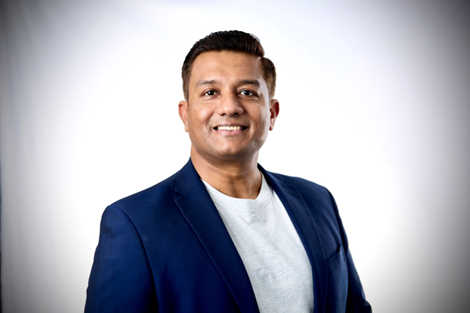
Alteryx Inc., a leading AI-ready data and analytics company, today announced the appointment of Sabya Sen as Vice President, IMEA & APAC, to lead its business across India, the Middle East, Africa, and Asia-Pacific (IMEA & APAC). In this role, Sen will focus on accelerating customer outcomes and scaling adoption of the Alteryx One platform across some of the world’s fastest-growing markets for AI and data innovation.
Sen brings deep regional expertise and a strong track record of execution to this role. Most recently, he served as Vice President, Head of UKI & Emerging Markets Europe at Alteryx, where he drove consistent growth, built high-performing teams, and strengthened customer relationships across global markets.
The appointment comes at a critical phase for AI adoption globally and across IMEA and APAC, where governments and enterprises are increasing investments in digital transformation. In the Middle East, national strategies like Saudi Arabia’s Vision 2030 and UAE’s We the UAE 2031 are accelerating innovation agendas. The region’s AI market is projected to reach $320 billion USD, while globally, 89% of leaders plan to maintain or increase AI budgets in 2026. Despite this momentum, many organizations remain in pilot phases, underscoring the need for scalable, governed analytics solutions that can support enterprise-wide AI adoption.
“It is my priority to continue delivering meaningful outcomes for our customers and community,” said Sabya Sen, Vice President, IMEA & APAC. “Across the Middle East, India, and Asia-Pacific, we are seeing unprecedented momentum driven by ambitious national transformation agendas. These efforts are accelerating economic diversification, advancing digital innovation, and firmly positioning these regions as global hubs for data and AI-led growth.”
Prior to joining Alteryx, Sen spent 11 years at Salesforce in a variety of leadership roles, supporting customers across the insurance, financial services, and healthcare industries, where he helped organizations leverage data and technology to transform their operations. In his new role, Sen will focus on helping organizations move beyond experimentation to enterprise-scale AI adoption by delivering trusted, AI-ready data and analytics through the Alteryx One platform.
“Over the past few years, Sabya has had a tremendous impact on Alteryx and has demonstrated a remarkable level of focus, discipline, and strong commercial execution,” said Jason Janicke, Senior Vice President, EMEA & APJ at Alteryx. “He has delivered results, built a strong team culture, and consistently raised the bar. We can’t wait to see the impact that Sabya has in this next role.”

THE INFORMATION PARADOX IN MODERN MARKETS: WHY MORE DATA DEMANDS BETTER JUDGEMENT
RIVA BEACH CLUB WELCOMES FAMILIES FOR A FUN-FILLED EASTER BY THE BEACH
EMARAT SUPPORTS HSE EXPO UNDERSCORING HEALTH, SAFETY AND ENVIRONMENTAL LEADERSHIP



-
News10 years ago
SENDQUICK (TALARIAX) INTRODUCES SQOOPE – THE BREAKTHROUGH IN MOBILE MESSAGING
-

 Tech News2 years ago
Denodo Bolsters Executive Team by Hiring Christophe Culine as its Chief Revenue Officer
-
 VAR12 months ago
Microsoft Launches New Surface Copilot+ PCs for Business
-

 Trending5 months ago
OPPO A6 Pro 5G Review: Reliable Daily Driver
-

 Tech Interviews2 years ago
Navigating the Cybersecurity Landscape in Hybrid Work Environments
-

 Tech News9 months ago
Nothing Launches flagship Nothing Phone (3) and Headphone (1) in theme with the Iconic Museum of the Future in Dubai
-

 Automotive2 years ago
AGMC Launches the RIDDARA RD6 High Performance Fully Electric 4×4 Pickup
-

 VAR2 years ago
Samsung Galaxy Z Fold6 vs Google Pixel 9 Pro Fold: Clash Of The Folding Phenoms