Foldables belong to a niche category of the flagship smartphone segment. These cutting-edge, dual-screened gadgets are reserved for the ones willing to spend considerably more than what a regular (still expensive) flagship like the iPhone 15 Pro Max or Samsung Galaxy S24 Ultra costs. The Samsung Galaxy Z Fold6 and Google Pixel 9 Pro Fold are two of the latest and greatest entrants into this elite arena. They are the most advanced embodiments of the foldable smartphone tech, flaunting thinner bodies, larger screens, and sturdier, more efficient hinges. So then, which of these state-of-the-art, futuristic pieces of consumer tech is the best? Moreover, which one would suit your needs the best? Find out in this in-depth Samsung Galaxy Z Fold6 vs Google Pixel 9 Pro Fold comparison.
Samsung Galaxy Z Fold6 — The Trailblazer Of Foldable Smartphones
Ever since its inception, the Samsung Fold series has played a pivotal role in popularizing foldable smartphones. The Galaxy Z Fold6 is the latest heir of this innovative bloodline. The Fold6 sports a squared-off design compared to the more rounded-off aesthetics of its immediate predecessor. Upgrades underneath its skin are incremental and there isn’t much to be super-excited about, except for the new AI features. However, Samsung has strengthened the dual rail hinge of the Fold6 with a more rigid folding edge, which they claim is better at distributing the shock of external impacts. While we see that smartphone hardware is generally evolving at a slower pace, it is actually satisfying to know that Samsung putting in significant effort to make their foldables more durable. While the Fold6 shares all other technological aspects with regular smartphones, including performance and cameras, enhancing and upgrading the foldable components, seems like the right move. On top of that, the more squarish design doesn’t just deliver sleeker aesthetics but also provides a better in-hand feel, thus enhancing the user experience.
Keeping the tech aspects apart, from a user perspective, the Fold6 is the most polished iteration of the Fold series, not simply because it’s the latest but because of the re-proportioning of the design. The cover screen is now slightly wider, and less like a TV remote, and the weight has come down by around 14 grams compared to the Fold5. Another groundbreaking upgrade is on the ingress protection front. While the previous Fold models were limited to only water resistance, the Fold6 offers IP48 dust and water resistance. In simple words, the 4 in the rating ensures that no particles larger than 1 mm can enter the device. As it happens every year, the chipset has been upgraded to the latest in the market. Powering the Fold6 is the best of Android chipsets, the Snapdragon 8 Gen 3. Other than these significant upgrades, the Fold6 mostly matches its predecessor’s hardware components including camera hardware, battery size, and charging speeds.
Google Pixel 9 Pro Fold: The Vanilla Foldable Experience
Software experience is the paramount strong point of any Pixel phone. However, that isn’t only how the first Pixel Fold amazed us. Google’s first foldable was a well-proportionate device in terms of screen real estate. However, these user advantages were overshadowed by some of the disadvantages of the design itself. The Pixel Fold was too bulky to deliver the goodness of the proportionate screen during prolonged usage. On top of that, the original Pixel Fold didn’t open or fold flat, which further took away from the user experience, when compared to the more refined competitor of the time — the Samsung Galaxy Z Fold5. However, for a first-generation foldable, it can undeniably be said that the Pixel Fold was a superlative product.
Recently, Google introduced the successor to the original Fold, along with the Pixel 9 series. Now called the Google Pixel 9 Pro Fold, a name that aligns better with the current flagship lineup, the new folding smartphone is seemingly leaps and bounds ahead of its predecessor. For starters, the new phone is taller and slimmer, while the fluid-friction hinge has been upgraded for increased durability and delivering a satisfying snap when the phone is opened. Both the displays are now larger, delivering a more immersive user experience. The cover screen has grown from a 5.8-inch unit with a peak brightness of 1,550 nits in the previous FOld to a 6.3-inch unit with a peak brightness of 2,700 nits. The larger inner screen of the Pixel Fold measured 7.6 inches diagonally (1,450 nits peak brightness) which is now upgraded to a massive 8-inch unit (2,700 nits peak) in the Pixel 9 Pro Fold.
The Pixel 9 Pro Fold has also gained a superior ultra-wide lens which now features a larger sensor, offering 127 degrees of truly “ultra-wide” coverage. Furthermore, both the front cameras (cover screen and inner screen) have been upgraded to the same 10 mp shooter. On the battery front, it is surprisingly a downgrade from the 4,821 mAh unit of the original Pixel Fold to a 4,650 mAh cell in the 9 Pro Fold. However, as Google is a smartphone company focused primarily on software experience and optimization, we’ll have to test the phone out extensively to determine whether the downsizing has inversely affected the battery life or ended up boosting it. These are the groundbreaking upgrades Google has bestowed upon the Pixel 9 Pro Fold, resulting in an all-encompassing redesign of their foldable. For a second-generation foldable, the Pixel 9 Pro is now up to the mark and capable of competing with the mighty Samsung. However, there is one major drawback, which we will address in the comparison.
Samsung Galaxy Z Fold6 vs Google Pixel 9 Pro Fold: So Then, Which Foldable Triumphs Over The Other?
It’s time for the battle now and firstly, let’s discuss similarities and keep them apart. Both the Samsung Galaxy Z Fold6 and Pixel 9 Pro Fold run Android 14 out of the box and are promised seven major updates. Both feature crisp and bright OLED displays inside out, although of different sizes and specs. Also, both the phones are equipped with three rear cameras each and a total of two front cameras, one on the cover screen and one inside. Now for the differences, I’ll lay them out sector by sector.
The Samsung Galaxy Z Fold6 Is The More Powerful One
Processing power is one of the central factors when it comes to the performance of any smart device or computer, including smartphones. The Samsung Galaxy Z Fold6 is powered by the latest and greatest processor from Qualcomm — the Snapdragon 8 Gen 3. The Pixel 9 Pro Fold on the other hand is invigorated by Google’s in-house Tensor G4 chipset. While both of these powerhouses are built on the 4 nm architecture, the Snapdragon 8 Gen 1 is far superior to the Tensor G4 in terms of sheer processing power and gaming performance.
According to tests conducted by NanoReview, the Snapdragon 8 Gen 3 performs 76% better in floating-point computation and shows up to 55% higher AnTuTu 10 benchmark scores. The 8 Gen 3 also supports 20% higher memory bandwidth (77 against 64 GB/s) and runs on a 6% higher CPU clock speed (3300 Vs 3100 MHz). On paper, the only pro in favor of the Google Tensor G4 over the Snapdragon is its higher GPU frequency (~22%). However, when tested out by NanoReview, the GeekBench compute score of the Adreno 750 GPU in the 8 Gen 3 completely obliterates the Mali-G715 of the Tensor G4. The Adreno 750 scored 14,269, which is around 148% higher than the 5,758 score of the Mali-G715.
This means that regardless of whether it is single-core, multicore, or GPU performance, the 8 Gen 3 is miles ahead of the Tensor G4. We hope the Tensor series to evolve into a more capable and potent chipset as its next iteration, the Tensor G5, is reportedly being built on TSMC’s 3 nm process. But as of now, it is no match to the mighty, Snap-py, Dragon.
The Pixel 9 Pro Fold Takes The Cake For The Software Experience
Google offers arguably the best Android user experience because the OS itself is made by Google in the first place. Hence, the vanilla Android experience provided by Google phones remains unmatched and unaffected by competitors. It is just so pleasantly designed, with the right amount of simplicity and vibrancy. There is absolutely zero bloatware, and it is exceptional to use in both screens of the Pixel 9 Pro Fold. And then there are the clever features Google has reserved for their own phones. These features such as Live Caption, Pixel Studio, Pixel Screenshots Circle To Search, and Now Playing, all contribute to delivering a superior user experience.
Although the latest Galaxy devices including the Fold6 come integrated with AI features, Google is simply better in terms of overall software experience. On top of all that, the latest range of Pixel phones, also offer a bunch of cool new Camera software trickery. The most prominent one is the “Add Me” feature which allows the photographer to be in the photo by combining two consecutive images together. The results of this AI feature are too good to be true, and it is just one example of the Pixel’s impressive software prowess.
Samsung Galaxy Z Fold6 vs Google Pixel 9 Pro Fold: Other Significant Hardware Differences
Apart from the processor, there are some other major hardware changes differentiating these foldables from each other. They are as follows –
Size, Convenience, And Protection: The Lighter One vs The Thinner One
The Samsung Galaxy Flip6 weighs in at 239 g whereas the Pixel 9 Pro Fold is heavier at 257 g. To put that into perspective, the iPhone 15 Pro Max weighs 221 grams, and the S24 Ultra 232 grams. So in comparison, the Flip6 is only marginally heavier, while the Pixel is considerably more hefty, which might affect day-to-day usability. On top of that, the Flip6 offers IP48 dust and water resistance, while the Pixel is limited to IPX4 water resistance. However, the Pixel is thinner and wider, both when folded and unfolded. The Pixel 9 Pro Fold has a thickness of only 10.5 mm when folded, against the 12.1 mm thickness of the Fold6.
Screens: The Pixel Offers More
The cover screens of both these phones measure 6.3 inches, with negligible differences in resolution and pixel density. However, the Pixel 9 Pro Fold has a wider aspect ratio and looks more regular against the longer structure of the Flip6. Similarly, the inner screen of the Pixel 9 Pro Fold is larger, measuring 8 inches diagonally, against the 7.6 inches provided in the Flip6. Both the inner and outer screens of the Pixel also boast a 100 nits higher peak brightness rating of 2700 nits.
Storage: Faster, Larger Storage Options vs Extra RAM
The Samsung Galaxy Z Fold6 offers up to 1 TB of fast UFS 4.0 storage, while the Pixel 9 Pro Fold is capped at 512 GB, that too, slower UFS 3.1. Conversely, the 9 Pro Fold offers up to 16 gigs of RAM, whereas the Flip6 is limited to 12.
Camera: 8K Video Recording vs Better Front Cameras
On the optics front, the Pixel 9 Pro Fold, as mentioned earlier, offers a wider ultra-wide lens — 127-degree coverage against 123 in the Fold6. The Fold6 retaliates by offering 8K video recording when the Pixel is limited to 4K. When it comes to front cameras, the Pixel 9 Pro Fold dominates by offering the same 10 MP camera with autofocus on both its screens. The Samsung, while incorporating a 10 MP camera onto the inner screen, is limited to a 4MP sensor in the cover screen, both of them without autofocus functionality.
Battery: Larger Battery vs Faster Charging
Keeping the Galaxy Fold6 alive is a 4,400 mAh battery pack that supports wired fast charging of up to 25 watts and wireless up to 15 watts. It further offers reverse wireless charging functionality, rated up to 4.5 watts. The Pixel 9 Pro Fold features a larger 4,650 mAh battery pack. However, its wired fast charging wattage hasn’t been revealed by Google yet, but we know that the wireless charging speed is rated at a mere 7.5 watts. Google just mentions “hours of power in minutes of charge with Google 45W USB-C Charger”, although multiple sources mention that the wired charging speed is capped at 21 watts.
Samsung Galaxy Z Fold6 vs Google Pixel 9 Pro Fold: Crowning the Foldable Champion
We have analyzed the specs and features of these two foldables in-depth and we conclude that we would prefer both of these devices; just for different usage styles. It might seem like the usual diplomatic answer, but hear me out. The Samsung Galaxy Z Fold6 is a more performance-oriented device, offering phenomenal processing power compared to the Pixel. The Google Pixel 9 Pro Fold, on the other hand, dominates on the software front with its clever tricks that are not just gimmicks but legitimately usable in daily life. Hence, you will have to make a choice based on your needs, preferences, and aesthetic taste. To help make your decision easier, here’s a simplified list of differentiating factors that set these two impressive foldable phones apart.
Samsung Galaxy Fold 6
Google Pixel 9 Pro Fold
Lighter
Thinner And Wider
Stronger Processor
Vanilla Android Experience
Dust Resistance / Ingress Protection
Larger, higher resolution screens with slightly higher brightness
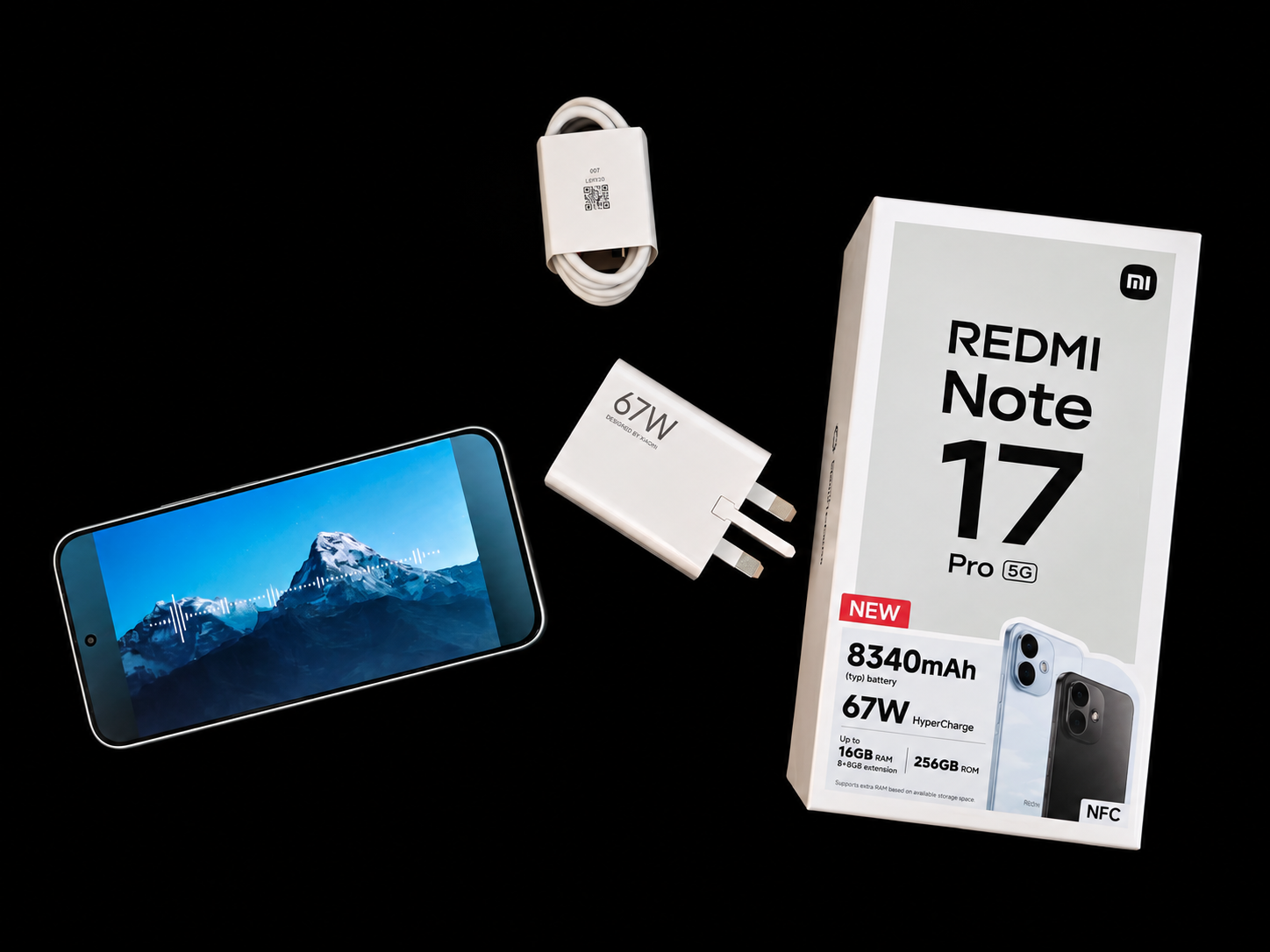
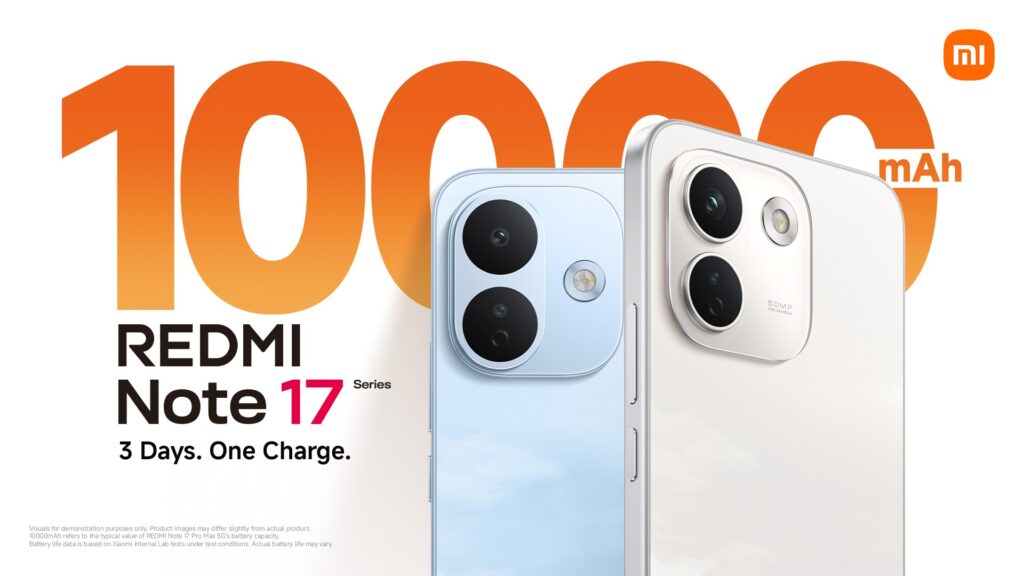
Xiaomi’s latest REDMI puts an 8,340mAh battery at the centre of its proposition, but its first surprise is how little that capacity dictates the overall design.
There is no shortage of smartphones competing on camera specifications, AI features and processing performance. With the REDMI Note 17 Pro 5G, however, one number immediately demands attention: 8,340mAh.
SRIJITH KN
This is also my first proper experience with a Xiaomi smartphone, which means I’m approaching the Note 17 Pro 5G without years of familiarity with REDMI or HyperOS.
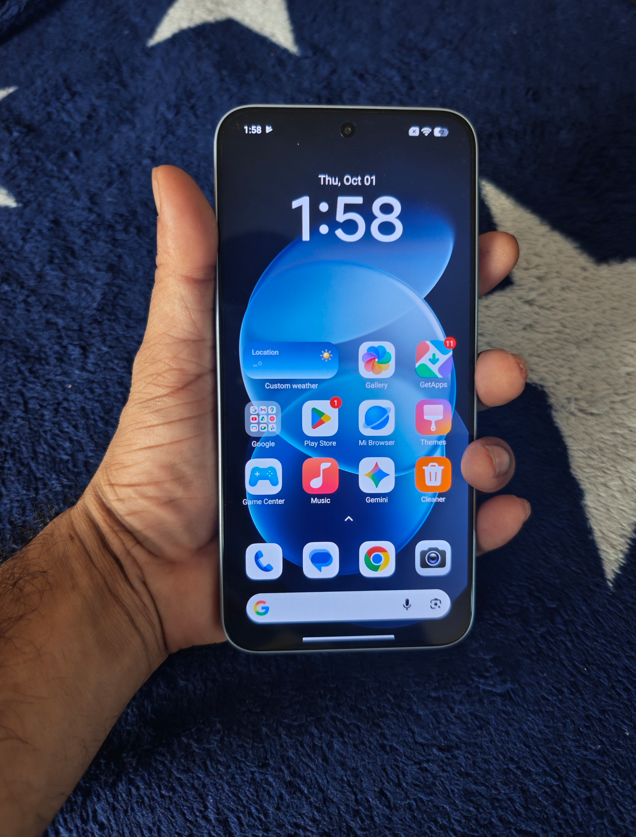
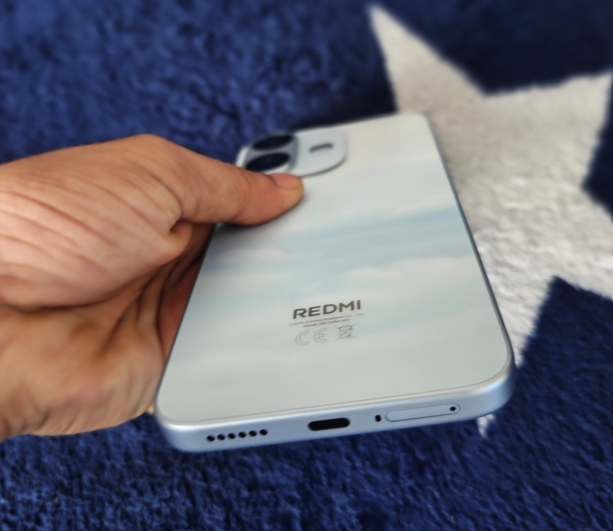
My first instinct was therefore to put it alongside something I know very well: my Nothing Phone (3). The comparison is surprisingly revealing. Both devices occupy similar territory in terms of overall thickness, with the REDMI appearing marginally slimmer from certain angles, while the Nothing feels slightly heavier in the hand. Considering the 8,340mAh battery inside the REDMI, that’s an impressive piece of packaging.
An 8,000mAh-plus battery still sounds like something that should require an obvious compromise in size and weight. And Phone is paired with 67W HyperCharge, which is a very welcome sight.
In the short time I’ve spent with the Note 17 Pro 5G, that compromise isn’t immediately apparent.
More than its battery
The design helps. Flat sides give the device a contemporary appearance, while the Sky Blue finish of our review unit is understated rather than attention-seeking. The rear camera module is also relatively restrained. It’s unquestionably a large smartphone, but it doesn’t feel like a specialist endurance device built around its battery.
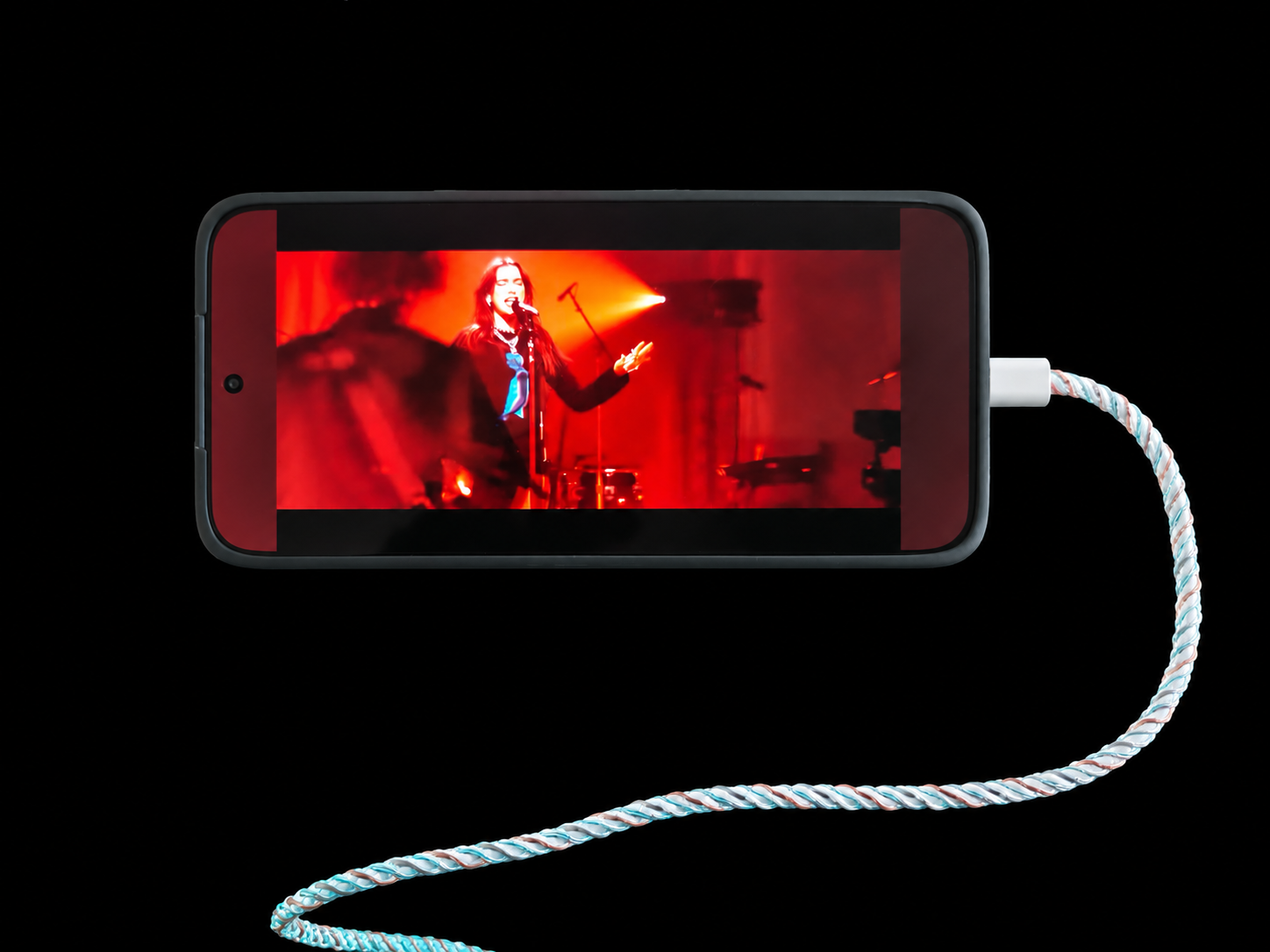
The display reinforces that impression. Initial video streaming has produced punchy colours and an enjoyable viewing experience, although outdoor visibility and extended media consumption will require further testing.
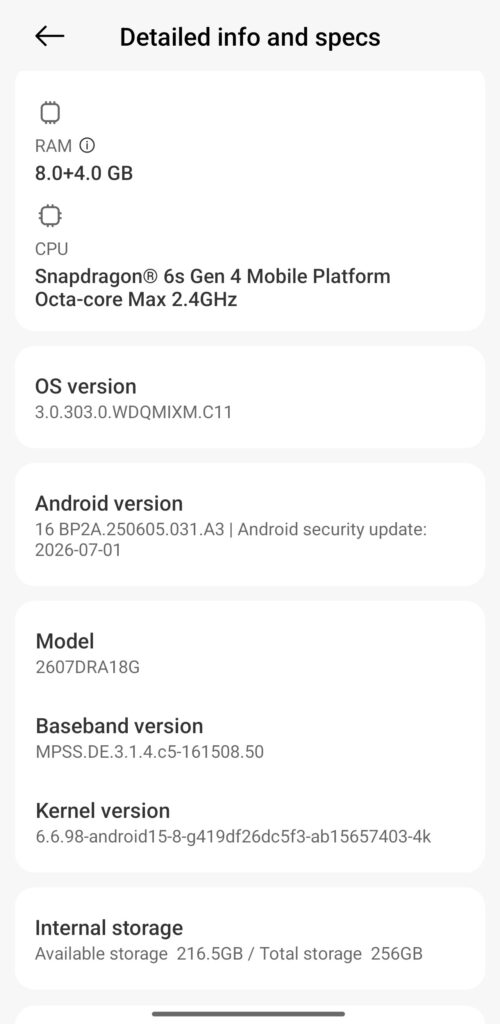
Inside, the Note 17 Pro 5G combines the Snapdragon 6s Gen 4 with 8GB of RAM on our review unit, which isn’t actually that impressive, supplemented by 4GB of memory extension. There is 256GB of internal storage.
During initial setup, browsing, app switching, video streaming and camera use, performance has felt fluid. Those observations remain just that, however — initial impressions rather than conclusions about sustained performance.
The speakers sound decent too, although the tuning seems to favour the treble slightly more than the bass. Vocals and higher frequencies come through clearly, but I’d have liked a little more low-end weight.
A first encounter with HyperOS
HyperOS is equally new territory for me.
Coming to the platform without established MIUI or HyperOS habits makes the experience interesting. Navigation has been straightforward and the software has so far stayed out of the way.
It hasn’t immediately won me over, but neither has it presented anything significant enough to put me off. Longer use will be needed before reaching conclusions about the software experience.
The same restraint applies to the cameras. I’ve begun taking photographs with the phone, but a small collection of daylight images isn’t enough to judge camera consistency. The next few days should provide a better mixture of subjects and lighting conditions.
8,340mAh meets the real world
Battery endurance is naturally the bigger question.
The software is already presenting some ambitious remaining-use estimates, but figures generated during the first hours of a newly configured smartphone don’t tell us much about real-world endurance.
A more useful test happens next.
I’m travelling to India, which means the REDMI will face exactly the sort of mixed workload that makes a large battery relevant: airport use, photography, navigation, messaging, mobile connectivity, streaming and extended periods away from a charger.
Perhaps the most important first impression, then, isn’t how large the battery is. It’s how successfully Xiaomi has prevented that battery from dominating the experience of using the device.
Cameras
The REDMI Note 17 Pro 5G keeps its camera hardware relatively straightforward. At the rear is a 50MP main camera with an f/1.8 aperture, 5P lens and optical image stabilisation (OIS), accompanied by an 8MP ultra-wide camera with an f/2.2 aperture. Up front, Xiaomi uses a 16MP selfie camera with an f/2.4 aperture.
There is a decent selection of shooting modes, including HDR, Portrait, Ultra HD, Panorama, Pro mode and Live Moment, while an Underwater mode is also supported, with availability through an OTA update. Xiaomi also offers Dual Video, allowing the front and rear cameras to record simultaneously.
Video specifications are more modest: both the rear and front cameras top out at 1080p at 30fps, rather than offering 4K recording. For my first impressions, however, I’m more interested in seeing how that 50MP OIS camera handles everyday photography, particularly during my upcoming travel.
Price completes the proposition
The REDMI Note 17 Pro 5G is priced at AED 1,499 for the 8GB + 256GB configuration, rising to AED 1,749 for 8GB + 512GB. It will be offered in Sky Blue, Satin Orange, Purple and Black.
At AED 1,499, an 8,340mAh battery certainly gives Xiaomi an obvious headline specification. The more important question is whether the display, cameras, performance and software combine to make the Note 17 Pro 5G more than simply a phone with a very large battery.
That’s something only more time with the device will answer.
For now, though, Xiaomi’s first achievement is surprisingly simple: 8,340mAh doesn’t feel like 8,340mAh.
Lenovo recently expanded its vision for Personal AI with its latest consumer portfolio of laptops, desktops, and smarter experiences. Together, the distinctive IdeaPad Vibe series and IdeaCentre AIO desktops give consumers a broader range of devices designed to reflect different lifestyles and everyday needs.
“The expectations people have for their PCs are changing,” said Jun Ouyang, Senior Vice President & General Manager, Consumer Segment, Lenovo Intelligent Devices Group. “Consumers want technology that fits into their lives, whether they prioritize performance, entertainment, or a device that suits their individual style. Our latest Idea portfolio brings together AI-powered experiences, distinctive design, and greater choice without the premium price.”
Smarter AI Experiences with Lenovo Qira
Among the AI-powered experiences available across select configurations of the new Idea portfolio is Lenovo Qira1, Lenovo’s personal AI experience, designed to deliver more seamless, contextual assistance across supported PCs, mobile devices, tablets, and wearables.
Lenovo Qira features Workato-powered connections such as email, calendar, and collaboration services, helping users find relevant information and move from intent to action through natural-language requests with less app switching. This capability creates a more connected experience across the devices, applications, and services people use throughout the day.
AI PCs Built for Self-Expression – The IdeaPad Vibe
Today’s laptops do more than support productivity. They’re also an extension of personal style. Lenovo’s new IdeaPad Vibe series gives everyday consumers, including students and families the opportunity to showcase their personality through bold colors, thoughtful design, and intelligent experiences that don’t compromise performance.
Powered by Snapdragon® X processors and Copilot+ PC capabilities, IdeaPad Vibe delivers fast, responsive performance and smooth everyday multitasking for a new generation of AI PC experiences. Available in both 14” and 15” configurations, IdeaPad Vibe combines all-day battery life2 and lightweight portability in a metal chassis starting at 1.3kg, making it easy to carry throughout the day. Developed in consultation with Pantone Institute, users can find the color that resonates with them, with seven fresh color options to choose from:
Dreamy Violet – a muted violet shade layered with inviting depth that inspires serenity, bringing a sense of comfort wherever it goes.
Spicy Gold – a rich golden yellow that blends warmth and energy, creating a confident, welcoming feeling.
Zen Green – a nature inspired green hue that evokes a sense of balance, harmony, and encourages a slower pace.
Chill Blue – an icy blue with a crisp modern vibe that stimulates refreshing clarity and an effortless fresh start energy.
Radiant Coral – warm and uplifting with an optimistic orange boost that brings friendliness and positivity wherever it goes.
Moody Blue – expressing credibility and confidence, a deep blue hue conveying refined elegance.
Lowkey Grey – a timeless grey projecting strength, stability, and understated sophistication.
Elemental by design, these colors are inspired by the world we live in with individuality in mind. Lenovo and Pantone Institute drew inspiration from colors people encounter every day and shades that capture how they aspire, learn, create, and live. To further extend personalization options, customizable keycaps will be available to add an extra touch of color (available for purchase and swapping).3
“Color is the most personal design decision people make when choosing a device,” said Brian Leonard, VP of Design Innovation for Intelligent Devices Group at Lenovo. “Now available in seven expressive new colors, IdeaPad Vibe gives people the ability to choose technology that showcases a piece of their personality while delivering the AI experiences and performance they expect daily.”
IdeaPad Vibe wasn’t created for one type of user. It was designed to adapt to different lifestyles, creative ambitions, and personal preferences. Whether someone values mobility, immersive visuals, or a device that represents their style, the IdeaPad Vibe series offers consumers the freedom to make the experience of using the laptop their own.
Select models offer up to 24GB4 of memory, delivering exceptional battery life, responsive performance, and powerful on-device AI capabilities. AI-enhanced productivity features include real-time translation, intelligent video conferencing effects, faster content creation, and enhanced privacy, all while maintaining a cool, quiet, and energy-efficient operation.
OLED configurations available in Lowkey Grey and Moody Blue deliver richer colors, deeper contrast, and up to 100% DCI-P3 color coverage, where supported5. IPS display options provide smooth 120Hz visuals where available6 and up to 100% sRGB coverage for daily viewing.
Upgradable dual SSD slots, multiple USB Type-A and Type-C® ports, HDMI®, MicroSD® card reader, audio jack, and TÜV Low Blue Light Certification provide the connectivity, expandability, and visual comfort expected from a modern AI laptop.
IdeaPad Vibe is also available with up to AMD Ryzen™ AI 400 Series processors, offering additional configuration flexibility such as dual-slot memory upgradeability up to 32GB4, and SSD expansion up to 1 TB4. Configurations are available with either a full metal build or metal plus polymer two tone ripple on the bottom cover, with optional 50Whr or 65Whr batteries7. Windows Hello Support is available across the lineup (Qualcomm and AMD).
From vibrant colors choices and personalized options to AI-powered productivity and all-day portability, IdeaPad Vibe proves that consumers no longer have to choose between performance and personality. It is an AI PC that is ready to perform and designed to stand out, no matter what a person’s vibe is.
Additional configurations powered by Intel® processors will be available at a later date.
An AIO Desktop for Everyday Life—The IdeaCentre AIO i
From busy mornings to family movie nights and late-night studying, the new IdeaCentre AIO i intelligently adjusts throughout the day to support consumers’ changing needs.
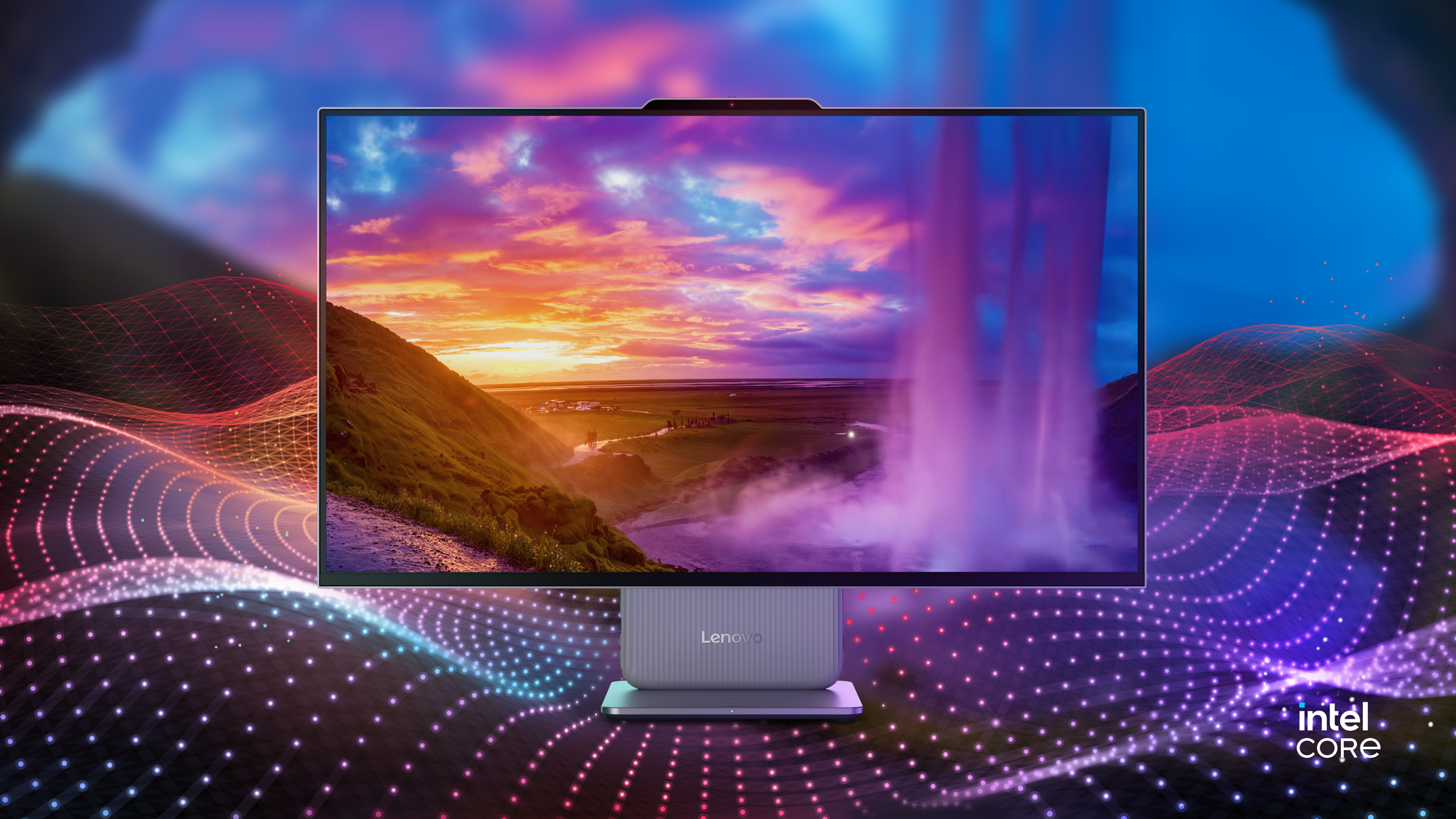
Built on Intel® Core™ Series 3 processors with up to 40 platform TOPS of AI performance, the latest generation combines a slimmer design, intelligent AI experiences, and thoughtful ergonomics to create a workspace that feels more comfortable, responsive, and personal.
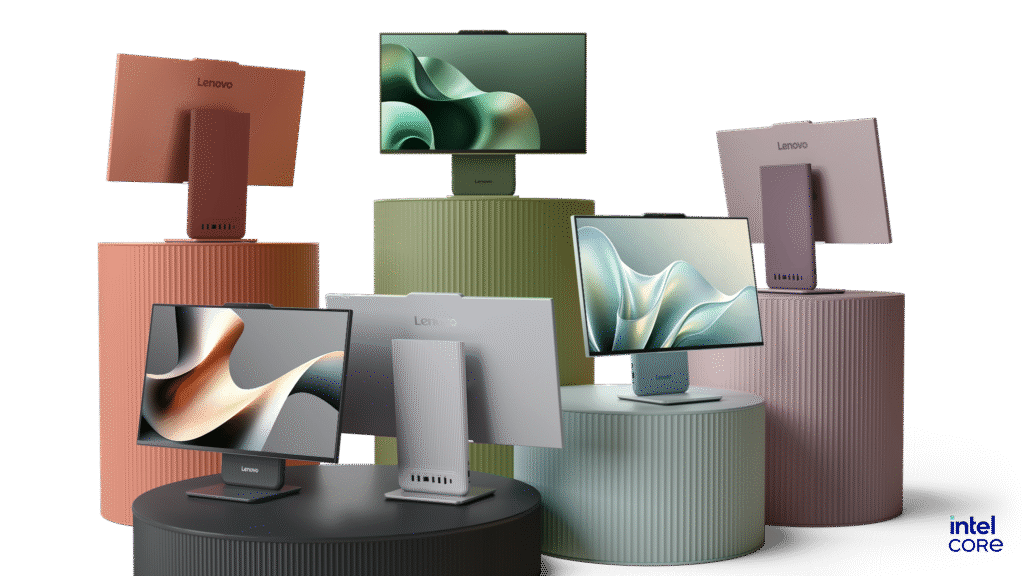
Available for the first time in multiple colors, including Dreamy Violet, Radiant Coral, Zen Green, Chill Blue, Luna Grey, and Cloud Grey, the IdeaCentre AIO i extends Lenovo’s vision of more personalized technology beyond the laptop. Its color options draw from research conducted in consultation with Pantone Color Institute, while the color-matched Lenovo Essential Wireless Combo Gen 3 Keyboard & Mouse completes the setup8 with a cohesive workspace aesthetic.
The redesigned middle-box-free architecture removes the bulky computing section traditionally found behind the display, creating a cleaner, more streamlined all-in-one appearance. 23.8” and 27” full HD display options feature up to a 120Hz refresh rate6, 350 nits peak brightness, support for up to 32G LPDDR5x memory9, and dual SSD slots.
At the center of the experience is the Lenovo AI Turbo Engine, an intelligent hub that brings together performance optimization, multimedia enhancements, and AI-powered Adaptive Lighting10. One of the IdeaCentre AIO i’s signature innovations, Adaptive Lighting introduces Boot-up, Default, and Music Lighting modes, creating a more engaging desktop experience while enabling users to personalize lighting effects and colors10.
The All-in-One desktop also features an ergonomic stand with30mm of vertical height adjustment up and down and a -5° to 15° tilt range, making it easy to find a comfortable viewing position whether joining a virtual meeting, helping children with homework, sharing family photos, or enjoying content with family and friends. E-book mode helps reduce blue light and eye strain for a more comfortable reading experience, while audio by Harman® delivers rich, dynamic sound for work and entertainment.
For clearer, more natural collaboration, the IdeaCentre AIO i is available with an optional up to 5MP IR camera that combines hardware and software enhancements to improve video calls. A physical camera shutter provides added privacy when the camera isn’t in use. Six USB ports with up to USB 3.0 support, an HDMI-in and HDMI-out combo port, a conveniently positioned headphone and microphone combo jack, optional wireless charging, and an optional touch display provide the flexibility to connect and work the way users prefer.
From supporting productivity to entertainment and family life, IdeaCentre AIO i delivers smart performance in a design built around the needs of modern households.
Lenovo’s latest consumer portfolio empowers people to choose technology that works the way they do. By combining intelligent innovation with thoughtful design and meaningful personalization, Lenovo continues to create devices that are inspired by the people who use them.
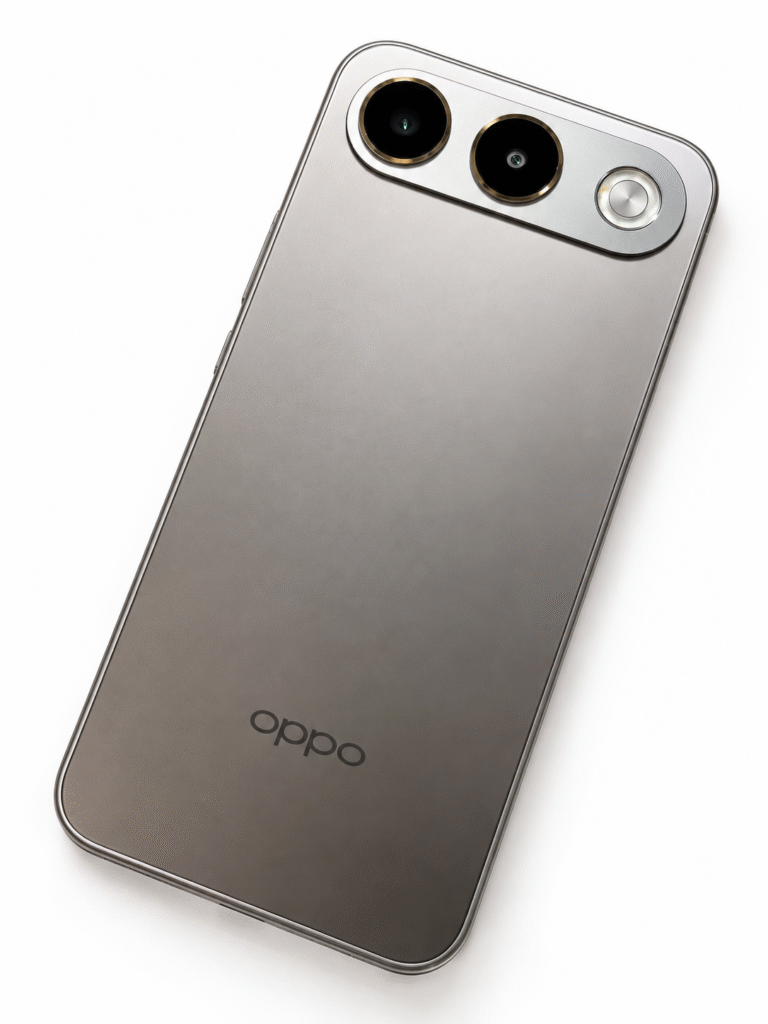
OPPO A7 Pro 5G puts longevity at the centre of the smartphone experience!
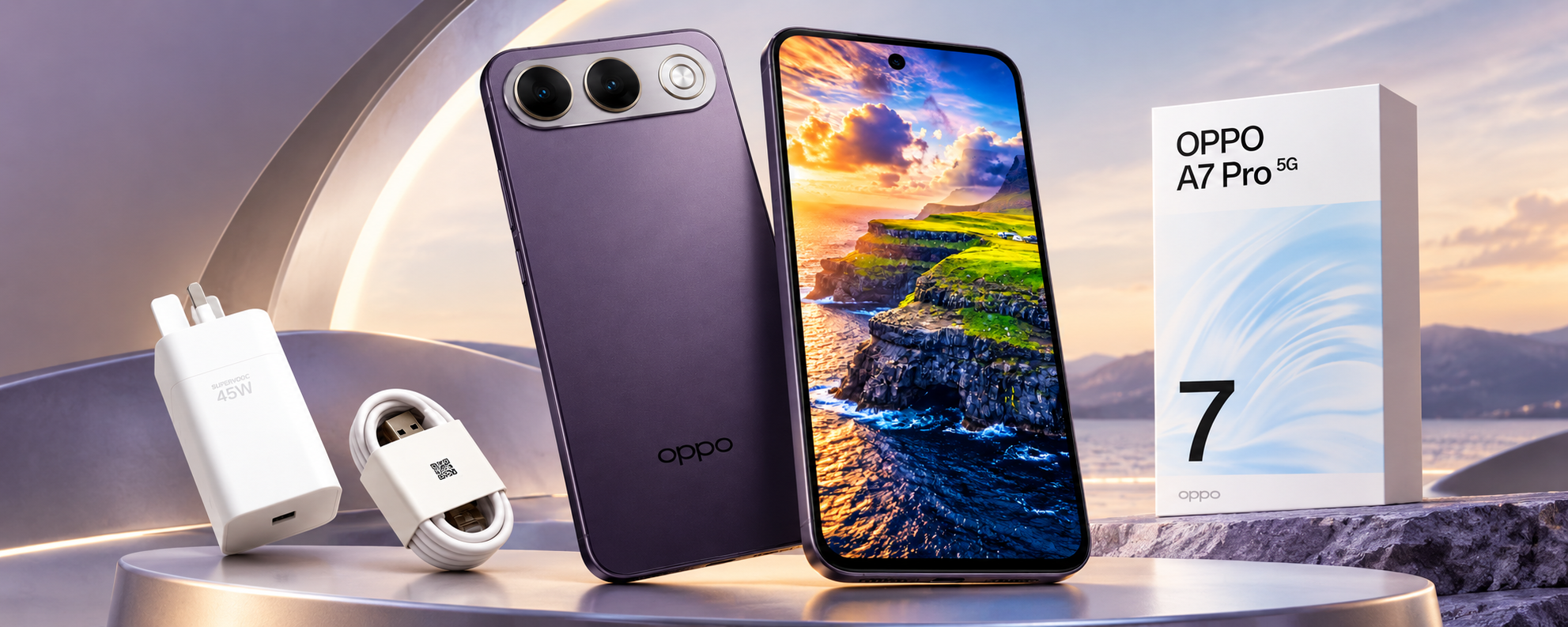
With an 8,000mAh battery, dual 50MP cameras, IP69K protection and a five-year smoothness promise, OPPO’s latest A Series smartphone makes a strong case for devices designed around longer-term ownership.
Smartphone launches have traditionally revolved around faster processors, increasingly sophisticated cameras and, more recently, AI. With the A7 Pro 5G, OPPO is putting another consideration firmly into the conversation: how well a smartphone can hold up over time.
At the centre of that proposition is an enormous 8,000mAh battery. Large-capacity batteries are becoming increasingly common, but what is interesting about the A7 Pro 5G is how little the battery dictates the physical character of the phone.
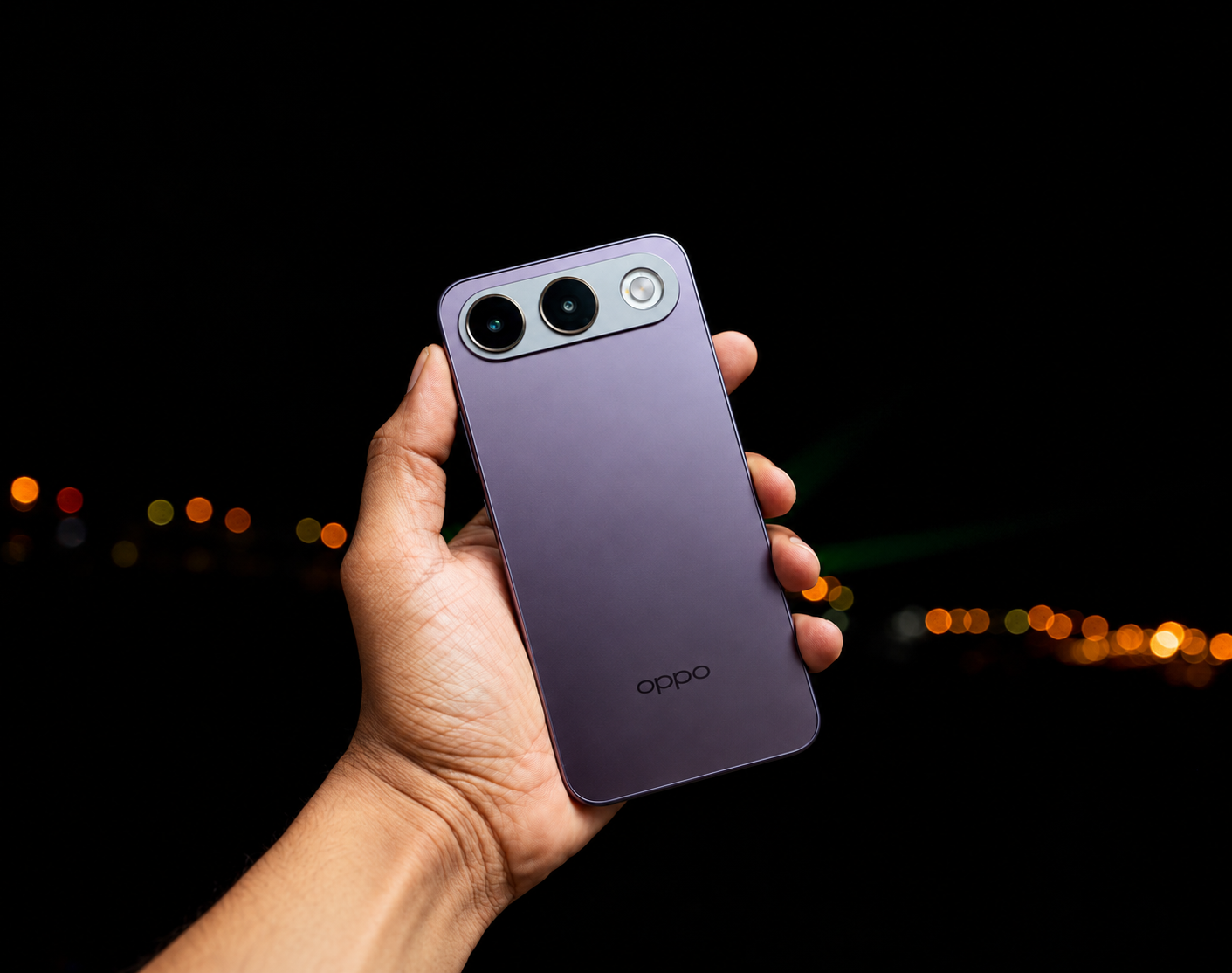
Despite the capacity, the device does not immediately look or feel like a rugged smartphone. The Shine Titanium review unit has an understated finish, while the alternative Surfing Blue introduces a more distinctive Dynamic 3D Wave Texture.
That relatively conventional appearance hides some serious durability credentials.
Built for longer ownership
The A7 Pro 5G carries IP69K dust and water resistance alongside military-grade shock resistance. Rainstorm Touch is designed to keep the display responsive even when used in heavy rain.
The longevity argument extends to the battery itself. OPPO says it can retain more than 80% of its rated capacity after 2,000 complete charging cycles, underpinning the company’s six-year battery durability proposition.
This matters because battery degradation remains one of the most noticeable compromises as smartphones age. Increasing capacity solves part of that equation; maintaining useful capacity several years into ownership potentially solves another.
Reverse wired charging also allows the A7 Pro 5G to supply power to another connected device, adding some practical value to that substantial battery reserve.
Selfies get the 50MP treatment
OPPO has also placed considerable emphasis on the front-facing camera.
The 50MP Ultra-Wide AI Zoom Selfie Camera offers a 100-degree field of view and can automatically move between 1x and 0.6x framing when additional people enter the shot.
It is a useful approach for group photographs, travel and increasingly video-led social content, where a wider front camera can make considerably more sense than simply increasing resolution. Ultra-steady video has also been included to improve handheld recording.
At the rear is another 50MP camera, using a larger 1/2-inch sensor that OPPO says captures 70% more light than its predecessor.
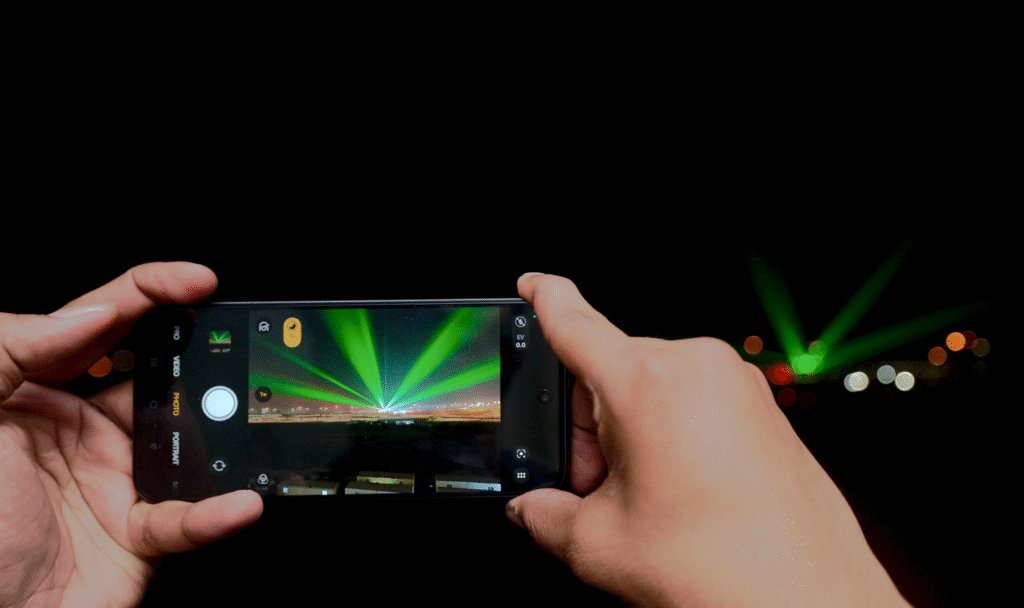
AI Portrait Glow, AI Popout and AI Remix Collage bring the increasingly familiar layer of computational editing into the camera experience, allowing users to manipulate images without moving immediately to third-party applications.
Five years of smoothness?
Underneath, the A7 Pro 5G is powered by the MediaTek Dimensity 6360 MAX, accompanied by OPPO’s NetworkBoost Chip S1 and AI LinkBoost 4.0.
A 4,300mm² Glacier VC Vapor Chamber handles cooling, while software-based resource and memory management is designed to maintain responsiveness as workloads increase.
Perhaps more interesting than outright performance figures is OPPO’s 5-Year Smoothness Protection. The company says the device has passed its five-year smoothness testing, reflecting a wider attempt to position performance around consistency rather than simply launch-day speed.
Naturally, five-year performance cannot be established during a conventional review period, but the emphasis itself is notable. Smartphone replacement cycles are lengthening, making sustained performance, battery health and software optimisation increasingly relevant purchasing considerations.
AMOLED keeps the experience contemporary
The front houses a 6.57-inch FHD+ AMOLED display with a 120Hz refresh rate, up to 1,400 nits of brightness and a 92.8% screen-to-body ratio.
The combination provides the fluid scrolling and vibrant presentation expected from a contemporary AMOLED smartphone, while complementing a device otherwise heavily focused on practical considerations.
Warranty coverage also extends across the GCC, Pakistan, India and Bangladesh, potentially useful for users who regularly travel between these markets.
The 8,000mAh battery will inevitably attract most of the initial attention, but the A7 Pro 5G becomes more interesting when viewed as a complete package. OPPO is combining battery capacity with physical durability, thermal management, connectivity enhancements and longer-term performance optimisation. At the same time, it has avoided turning the device into something that visually resembles a specialist rugged phone.
BY: SRIJITH KN
A different definition of smartphone performance that may ultimately be the A7 Pro 5G’s more relevant proposition. Rather than asking how much faster a smartphone can become every year, OPPO is increasingly asking another question: how much longer can it remain useful?

 Have a question? +971 56 404 0503























 Trending11 months ago
 Tech News2 years ago

 Automotive2 years ago
 Tech News1 year ago
 Hospitality2 years ago
 VAR10 months ago