
 Have a question? +971 56 404 0503




Home Integrator
NATUZZI ITALIA @ Milano Design Week 2025


Rooted in Harmony – Amama by Andrea Steidl
Natuzzi Italia presents at the Milan Design Week 2025 its new collection “Rooted in Harmony”, marking another step in the brand’s evolutionary journey. Starting from its roots—the symbolic identity and concept of the collection—through its values and DNA, the collection embodies a deep connection to the brand’s origins.
Rooted in Harmony is an invitation, visually represented by the symbol of the “root” to be presented during the week, to go back to the roots and find the essence of the brand: a constant search for beauty in its timeless forms. The root symbolizes the history of the brand and its deep connection to Puglia, where it all began 66 years ago.
The brand presents itself at this major event more mature in terms of style and merchandising strategy. The new 2025 collection reaffirms Natuzzi Italia’s position as a lifestyle and interior design brand. The showroom on Via Durini will provide the backdrop for the new chapter of The Circle of Harmony—Rooted in Harmony, the stylistic exploration project that began in 2020 with the aim of creating a physical and virtual community where artists, architects, and designers design and imagine the stylistic evolution of Natuzzi Italia, with its heritage as the cornerstone of this journey.

The new collection marks the return of successful collaborations with Andrea Steidl, Karim Rashid, Marcantonio, and Mauro Lipparini. Furthermore, thanks to the talent of the Natuzzi design center, a new project for the Comfortness collection will be presented, introducing innovative products designed for an evolved vision of comfort, a fundamental element of the brand’s DNA—one that extends to wellness, going beyond mere physical sensation toward the balance of body and mind. The collection will also be enriched with new proposals for tables, rugs, and lamps.
After the success of the Mirai project, designed by Andrea Steidl for Natuzzi Italia in 2024, which won prestigious design awards such as the European Product Design Award, Good Design Award, Elle Deco China – Best of 2024, and Archiproducts Design Award, Steidl is back with Amama. This is a modular sofa designed to redefine the concept of conviviality and versatility, offering island configurations with bifacial options for a modern and unusual living experience. Hence, the evocative palindromic name, Amama.

“I reflected not only on the formal value of the project but also on its use.” Said Andrea Steidl. “Through the dialogue between something soft and comfortable and contrasting solid and architectural elements, I imagined a space where you could read a book or have a drink comfortably seated, in a convivial moment. A solution that strengthens the characteristics of a 360-degree home, an open living space that develops in multiple directions, offering its inhabitants a freer and more versatile experience.”
From the analysis of architecture and ways of living comes a new approach to design, where armrests and backrests transform into multifunctional elements: support surfaces, shelves, tables, or containers. The idea is to expand space with cantilevered structures, creating a fluid dialogue between the softness of the seat and the solidity of a piece of furniture in perfect continuity. It is a balance between contrast and harmony, where aesthetics and functionality merge.
A dynamic project, then, where multiple elements of different consistencies and materials coexist in a play of superimpositions and geometries, opening up to multidirectionality and multifunctionality, combining the sense of comfort with the freedom of composition and use. A new approach to living that blends aesthetics, flexibility, and functionality, extending to living and dining elements of the same collection.

Amama is also a project designed for the Contract sector, on which Natuzzi Italia is focusing with extraordinary determination. A significant example is the recent launch of the Natuzzi Harmony Residences in Dubai, a 10,000 square meter complex with 50 units spread over 9 floors, where the brand took care of every aspect of architectural and creative design, from interiors to exteriors. This is an important milestone in Natuzzi’s journey, where it fully expressed its vision of lifestyle and harmonious living—a concept that will also be showcased at the flagship store in Milan on Via Durini during Milan Design Week.











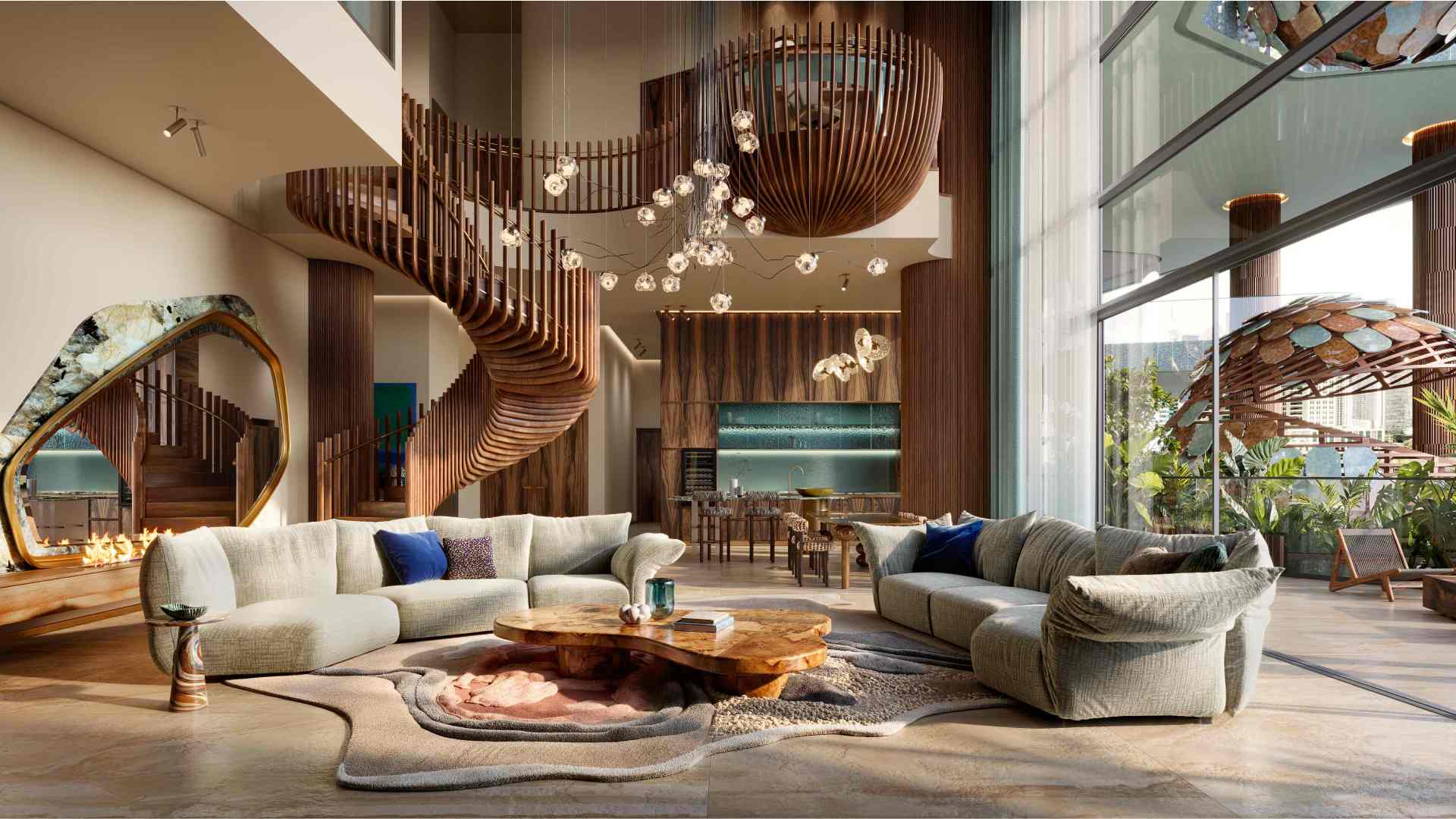
R.Evolution, the European real estate developer, is expanding EYWA from a collection of flagship developments into a global longevity-led regenerative real estate brand.
Following the launch of EYWA Tree of Life and EYWA Way of Water in Dubai, and of EYWA Bac de Roda and EYWA 22 Palms in Barcelona, the company is establishing EYWA as a platform that can be applied across residential, commercial, and future hospitality developments in multiple international markets.
“The global luxury real estate market is evolving. Buyers are no longer interested only in architecture, square footage, and location. They are increasingly looking for homes that support healthier, longer, and more fulfilling lives,” says Igor Karpikov, Chief Commercial Officer at R.Evolution, “Wellness real estate is one of the fastest-growing sectors of the global wellness economy and is forecast to reach $1.8 trillion by 2030. Our Dubai developments demonstrate how the EYWA philosophy translates into exceptional real estate, aligning with the emirate’s focus on quality of life, sustainability, and wellbeing.”
Homes as Wellbeing Ecosystems. Research suggests that genetics account for around 50% of the factors influencing lifespan. The remaining half is shaped by environment and lifestyle. Since people spend around 90% of their time indoors, the buildings they live in play a significant role in supporting health and wellbeing.
Inspired by the vision of R.Evolution founder Alex Zagrebelny, EYWA – short for Energy, Youthfulness, Wellbeing, and Ancient Knowledge – introduces the concept of regenerative real estate – an approach that views buildings as living ecosystems. It combines thoughtful spatial design, modern technology, natural elements, and ancestral wisdom to support everyday living and health.
Building a Broader Longevity Ecosystem. As EYWA continues to expand, R.Evolution is developing strategic collaborations with leading players across the wellness and longevity ecosystem. These collaborations span health and longevity programming, nature-focused initiatives, educational programs, next-generation sustainable technologies, and premium lifestyle offerings.
Together, these partnerships extend the EYWA experience beyond the physical building, creating a broader ecosystem centered on wellbeing that supports residents in their daily lives.
The Next Chapter. EYWA’s expansion into hospitality in some of the world’s most sought-after destinations marks the next phase of the brand’s evolution, with additional initiatives in the longevity and wellbeing space also in progress.
R.Evolution will share details of new projects, partnerships, and locations as they reach the appropriate stage of development.
The GCC’s combination of extreme heat, humidity, frequent transitions between outdoor heat and air-conditioned environments, dust exposure, and prolonged sunscreen and makeup use creates a unique set of skincare challenges. With acne and pimple concerns already affecting more than 65% of the GCC population, these seasonal conditions have renewed interest in one time-tested ingredient: Neem.
The Science Behind a Timeless Ingredient
For generations, Himalaya Wellness Company has harnessed the power of Neem through its expertise in herbal science, developing skincare solutions trusted by consumers across generations. Today, the brand continues to build on that legacy by combining its herbal heritage with modern formulation science to create gentle and effective skincare tailored to the evolving needs of consumers across the Middle East.
The enduring appeal of Neem lies in its proven skincare benefits. Widely recognised for its antibacterial and anti-inflammatory properties, Neem is supported by a growing body of scientific research, with dermatologists continuing to highlight its effectiveness in skincare. Its popularity also extends beyond the laboratory, with Neem continuing to be embraced by beauty enthusiasts, influencers, and celebrities as a trusted ingredient for maintaining balanced, healthy-looking, pimple-free skin.
Inside Himalaya’s Global Research Centre
That approach was recently on display at Himalaya’s exclusive ‘Powered by Nature, Perfected by Science’ Experience, hosted at its Global Research Centre in Dubai Science Park, which measures 55,000 square feet. The gathering invited several of GCC’s digital beauty creators and storytellers into the brand’s formulation labs, where they explored the science behind Neem skincare through molecular experiments and learned about the research and testing behind Himalaya’s formulations. The facility brings together more than 50 scientists, formulators, and researchers from 12 nationalities who study regional skin needs and develop product innovation solutions suited to Middle Eastern climates.
“The Middle East continues to be a strategically important market, with consumers seeking solutions that are tailored to their specific skin needs and supported by scientific research,” said Sajeev Kaura, Business Director (CPD), Himalaya METAP region. “Through our work in the UAE and the GCC region, we continue to invest in understanding regional requirements and developing skincare solutions that bring together herbal expertise, innovation, and efficacy.”
Consumers across the GCC are increasingly seeking natural skincare products that combine herbal ingredients with proven scientific performance. This reflects a shift toward formulations that are effective, gentle on the skin, and suitable for everyday use in hot, humid climates. Neem, one of Himalaya’s most recognised ingredients, sits at the centre of that shift. Through extensive research and advanced authentication methods, the brand continues to refine the ingredient’s potential and ensure consistency and quality across every formulation.
“Developing effective skincare solutions requires a deep understanding of the specific concerns consumers face in different environments, ingredients and formulation science,” added Abhishek Ashat, Marketing Head (CPD), Himalaya MENA region. “Our research approach combines herbal expertise with advanced scientific methods to create formulations that deliver targeted benefits while supporting the skin’s natural balance. Initiatives like the ‘Powered by Nature, Perfected by Science’ Experience allow us to share the science behind our formulations and bring consumers closer to the research that shapes our products.”
A Complete ‘Pimple Cycle’ Regime Tailored to GCC Skin Needs
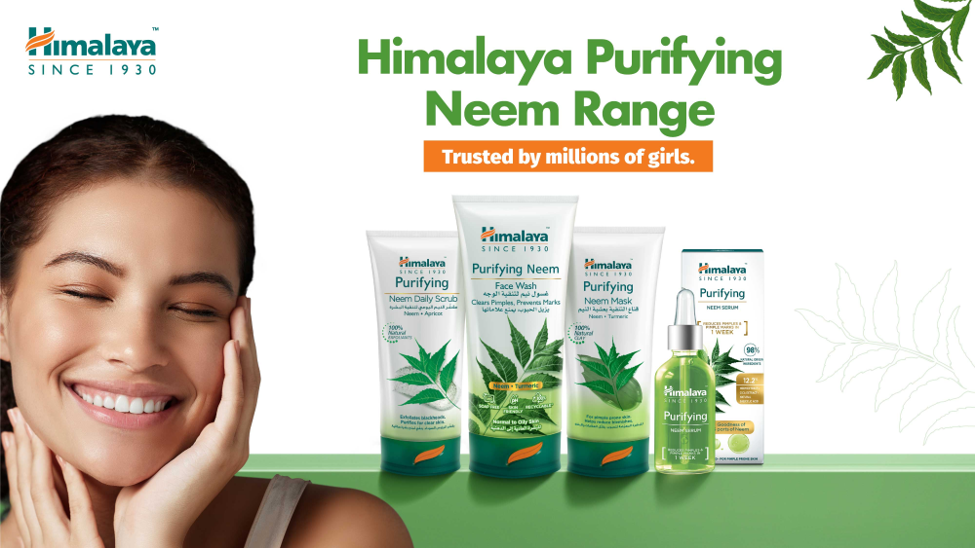
That research has been translated into Himalaya’s Purifying Neem range, a complete routine designed to address blemish concerns in high humidity climates.
Himalaya Purifying Neem Face Wash is trusted by millions of girls worldwide as the best solution for pimples and makes Himalaya the No.1 Face Wash brand in GCC. It is a soap-free, pH-friendly cleanser designed to help clear pimples and prevent pimple marks, and it remains one of Himalaya’s most recognised products across the GCC. The Purifying Neem Scrub and the clay infused Purifying Neem Mask support regular routines by helping remove environmental impurities and maintain clearer looking skin. For more targeted care, the Purifying Neem Serum was recently developed by Himalaya’s Dubai Science Park R&D team. It is a perfect blend of natural ingredients and scientific actives, combining 10% pure Neem extract with 2% Natural Salicylic Acid and CICA. Himalaya Purifying Neem Serum is suitable for day and night use, and is clinically proven to reduce pimples and blemishes within one week, while helping maintain healthier looking, more radiant skin.
A Commitment Beyond Skincare
Beyond clinical performance, the modern GCC beauty consumer is also asking where ingredients come from. Himalaya addresses that directly through its commitment to regenerative sourcing. Over 98% of the herbal ingredients used across its product ranges are harvested from renewable plant parts, with plans to reach 100% by 2030 to support biodiversity preservation. Through initiatives like Project Sampoorna, the brand also works directly with local farming communities, providing structured capacity building and agricultural support. This approach helps preserve organic soil health while tying every product back to a broader commitment to responsible sourcing. To ensure quality, safety and consistency, they apply stringent authentication methods, including DNA barcode testing, to verify herbal identity at the molecular level.
As beauty consumers across the region become more informed about ingredients, climate impact, and skin health, the future of skincare is shifting toward solutions designed around real environments and real needs. For the Middle East climate, that increasingly starts with neem.
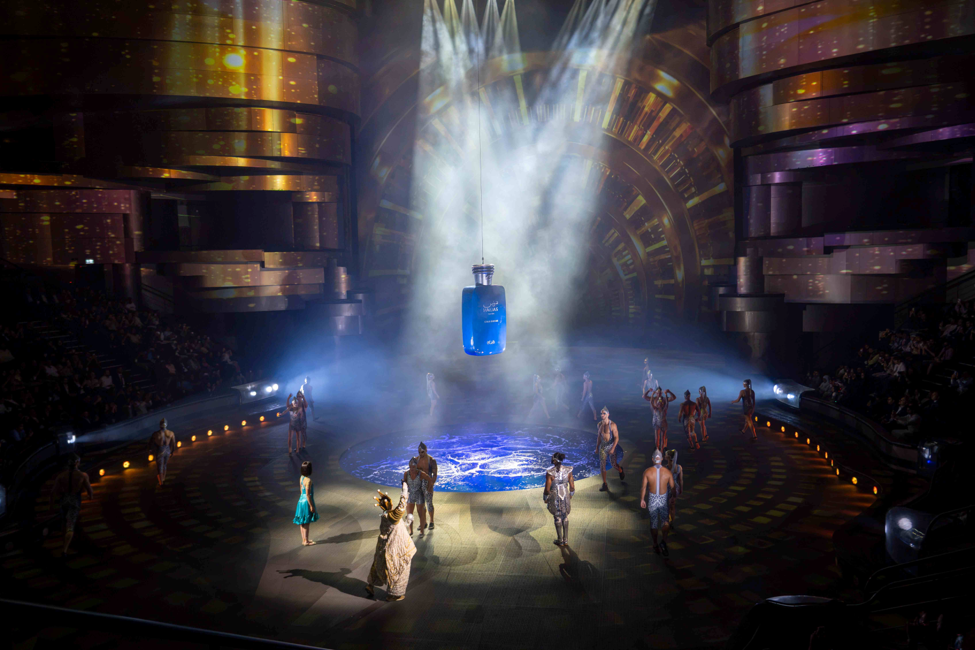
UAE-born fragrance house Rasasi has unveiled Hawas Gold Digger, the latest addition to its globally recognised Hawas collection, at an exclusive launch event held at La Perle Dubai on 14 August 2026.
Hawas Gold Digger builds on the distinctive energy of the Hawas collection while introducing a warmer, richer and more expressive olfactive direction. The amber woody aromatic composition opens with pear, lavender, bergamot and mint, develops into a heart of cinnamon and sage, and settles into a base of vanilla, amber, patchouli and cedarwood.
Created with a new generation of fragrance consumers in mind, Hawas Gold Digger draws inspiration from ambition, desire and personal success — celebrating individuals who define achievement on their own terms. Its bold character offers a new interpretation of the Hawas identity while retaining the confidence and contemporary appeal associated with the franchise.
“The GCC has become one of the world’s most dynamic fragrance markets, with consumers becoming increasingly sophisticated and willing to invest in premium fragrances that offer quality, individuality and character. With Hawas Gold Digger, we wanted to offer a distinctive interpretation of modern luxury, bringing together the artistry of fine perfumery with a contemporary, design-led approach. It is a fragrance created for those who value authenticity and self-expression,” said Ismail Anis, Vice Chairman & Managing Director, Rasasi.
The launch represents a new chapter for the Hawas franchise, one of Rasasi’s most recognised fragrance lines internationally. Set against the distinctive backdrop of La Perle Dubai, the unveiling brought together international fragrance creators, influencers, media personalities and cultural voices for an evening centred around contemporary fragrance, entertainment and self-expression.
Among the guests was Indian actor and filmmaker Riteish Deshmukh, whose presence brought together the worlds of fragrance and entertainment. A prominent figure in India’s entertainment landscape, Deshmukh joined an international guest list reflecting the diverse audiences Rasasi continues to engage across markets.
With Dubai at its centre, the event also reflected Rasasi’s evolution from a homegrown fragrance house established in 1979 into an international fragrance business. Founded in Dubai, Rasasi remains deeply connected to the UAE and the region’s rich fragrance culture while continuing to create contemporary scents for consumers across generations and international markets. Rasasi’s 1979 Dubai founding is also reflected in the company’s current official history.
Hawas Gold Digger embodies that evolution, building on the international recognition of Hawas while introducing a warmer, richer, and more expressive character for a new generation of fragrance consumers.
“Launching Hawas Gold Digger in Dubai alongside international voices reflects both where we come from and where we are going. Hawas has developed a strong connection with fragrance consumers around the world, and Gold Digger allows us to build on that momentum while introducing a new expression of the Hawas identity to a generation that increasingly uses fragrance as an extension of personality and individual style,” added Ismail Anis.
Hawas Gold Digger is now available through Rasasi’s official sales channels and selected fragrance retailers across international markets.


The Many Moods of the Maldivian Escape

The Sweetest Way to End the Summer Holidays

Kids Play, Parents Stay: Sundays at The Guild Just Got Better



-
News11 years ago
SENDQUICK (TALARIAX) INTRODUCES SQOOPE – THE BREAKTHROUGH IN MOBILE MESSAGING
-

 Trending10 months ago
OPPO A6 Pro 5G Review: Reliable Daily Driver
-

 Tech News2 years ago
Denodo Bolsters Executive Team by Hiring Christophe Culine as its Chief Revenue Officer
-
 VAR1 year ago
Microsoft Launches New Surface Copilot+ PCs for Business
-

 Automotive2 years ago
AGMC Launches the RIDDARA RD6 High Performance Fully Electric 4×4 Pickup
-
Tech Interviews2 years ago
Navigating the Cybersecurity Landscape in Hybrid Work Environments
-

 Tech News1 year ago
Nothing Launches flagship Nothing Phone (3) and Headphone (1) in theme with the Iconic Museum of the Future in Dubai
-

 VAR2 years ago
Samsung Galaxy Z Fold6 vs Google Pixel 9 Pro Fold: Clash Of The Folding Phenoms