
 Have a question? +971 56 404 0503




Financial
Argentem Creek Partners Expands Middle East Mandate with Appointment of Dilip Massand, Taps Beatriz Franco as Global COO


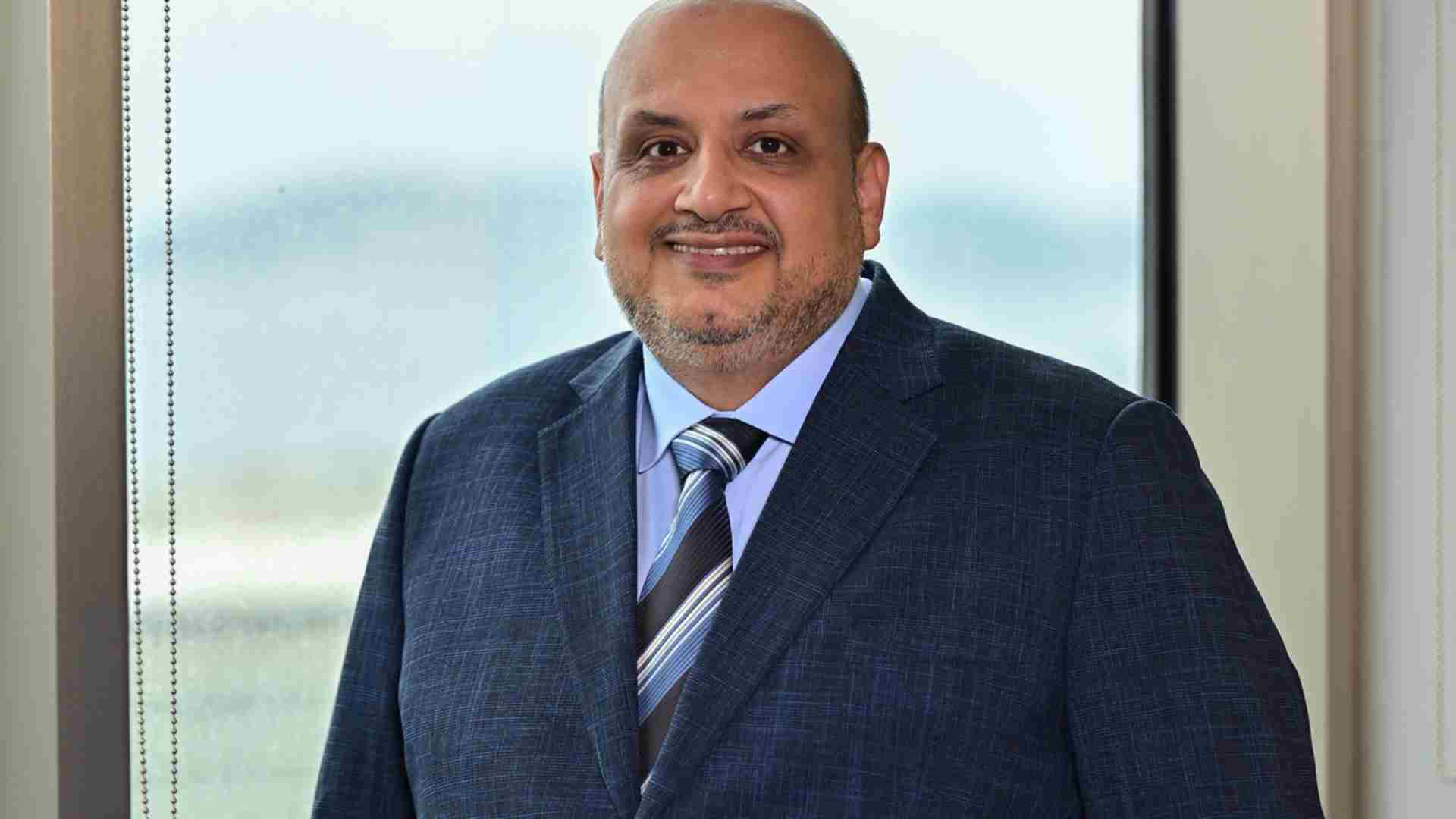
Argentem Creek Partners announces recently the appointment of Dilip N. Massand as Head of Global Strategic Partnerships and Co-Head of Middle East, reinforcing the firm’s growth trend in the ME region following the award of a strategic license from the Financial Services Authority of ADGM in 2024 and the establishment of its MENA and Asia headquarters in Abu Dhabi.
The appointment marks a significant step in Argentem’s expansion strategy in the Middle East and deepens its footprint in the region. Based in Abu Dhabi, Dilip will co-lead together with Jeroen Westrik, the firm’s regional expansion and will drive global strategic partnerships, including co-investments, joint ventures, and new platform development.
With over three decades of experience across the Middle East, South Asia, and the U.S., Dilip brings a deep understanding of multi-jurisdictional deal structuring and asset recovery. He previously served as co-founder and CEO of Phoenix Advisors Ltd., a legal finance firm based in ADGM, and earlier as Managing Director of SAS Asset Recovery, a special situations platform sponsored by a U.S. credit manager. He also advises Alvarez & Marsal and sits on advisory boards including New York Law School’s Alternative Dispute Resolution Center and Education for Employment.
“Dilip’s appointment reflects our conviction in the region’s long-term investment opportunity,” said Maarten Terlouw, President & Co-Chief Investment Officer at Argentem Creek. “His cross-border experience, institutional relationships, and entrepreneurial track record will be critical to growing our business from Abu Dhabi while also aligning Argentem with global capital partners.”
The announcement comes amid a broader strategic expansion for Argentem Creek globally. The firm also announced the appointment of Beatriz Franco as Chief Operating Officer, based in New York.
Beatriz joins with nearly 30 years of international experience spanning banking, law, venture capital, and entrepreneurship. She spent nine years at JPMorgan in Private Credit and Structured Products, practiced law across New York, Silicon Valley, and Brazil, and most recently served as CEO of an agtech startup and founder of a boutique venture capital fund. She holds an MBA in Finance, a Master’s in Law, and is admitted to the New York, California, and Brazilian Bar.
As COO, Beatriz will report to the firm’s leadership and oversee legal, operations, and enterprise support functions. She will serve on multiple internal committees and play a key role in supporting Argentem’s global growth agenda.
Daniel Chapman, CEO of Argentem Creek, commented: “As we scale our global platform, these two appointments reflect our commitment to regional execution and institutional-grade operational excellence. Dilip’s leadership in the Middle East and Beatriz’s multidisciplinary expertise in law, finance, and venture will play a critical role in scaling our activities and supporting Argentem’s ambitious strategic growth agenda”












Financial
UAE Ranks First Globally in Citizen Satisfaction with Government Digital Services at 89%, BCG Survey Finds

The UAE ranks first globally in citizen satisfaction with government digital services, with 89% of respondents rating them highly, according to Boston Consulting Group’s (BCG) sixth annual edition of its 2026 Digital Government Citizen Survey Report, which was launched on the first day of AI Everything Abu Dhabi, titled “After a Decade of Digital Gains, AI Is Reshaping Citizens’ Expectations in the GCC[SM1] [GU2] .” The finding underscores the strength of the UAE’s digital government experience and provides a strong foundation for the next phase of AI-enabled public services.
The survey, conducted across 44 countries, also highlights the depth of the UAE’s digital engagement, with the country ranking first globally in government digital service usage at 53%. More than three-quarters (76%) of UAE respondents say their latest online government transaction delivered a better experience than their typical private-sector interaction, reinforcing the strength of the country’s digital government ecosystem.
This strong digital foundation is increasingly extending into AI adoption, where 82% of UAE respondents reported using AI weekly. High levels of usage are accompanied by relatively positive attitudes toward AI in government, with 53% of UAE respondents believing its benefits outweigh the risks, compared with 49% across the GCC and 36% globally. At the same time, greater exposure to AI is bringing a broader set of considerations into focus for citizens. While GCC citizens remain more optimistic about AI in government than their global peers, overall optimism has declined by 21% since 2024.
This evolution points toward a more hybrid model of service delivery. GCC citizens increasingly favor AI for simpler services while retaining human involvement for more complex interactions, which assures a shift that reflects greater awareness of both the opportunities and considerations associated with AI. At the same time, only around 4% of GCC respondents prefer human-only services with no AI support, compared with almost one in ten globally.
“The UAE’s strong digital government experience reflects years of investment in making public services more accessible, seamless, and responsive to citizens’ needs,” said Rami Mourtada, Partner & Director, Digital Transformation, BCG. “As AI becomes more embedded in public services, governments have an opportunity to build on this foundation with more AI-enabled experiences and process re-engineering to continue focusing on quality and convenience. This next phase will be about deploying AI where it creates clear value, while maintaining human expertise for more complex citizen needs.”
GCC Citizens Embrace the Next Generation of AI-Enabled Services
The BCG report also reveals strong appetite among GCC citizens for the next generation of AI-enabled government services. The region is the most AI-receptive globally, with 79% of citizens open to AI-centered government interactions, compared with 66% globally. Notably, three of the four most strongly supported AI applications in government are agentic use cases, signaling a healthy launchpad for governments to explore services that can move beyond providing information to supporting or completing actions on citizens’ behalf.
This openness is already evident across practical applications: 82% are comfortable with AI providing 24/7 access to information and services; 81% with AI supporting government customer-service agents; 79% with AI detecting fraud and automatically following up; and 78% with AI identifying services citizens qualify for and taking action on their behalf. [SM3] [GU4] Yet citizens are not calling for AI alone. Preference for “AI for simple services, people for complex ones” has risen nine percentage points to 50% over the past two years, reinforcing a hybrid model that combines AI-enabled speed and availability with human judgment for more complex or higher-stakes interactions.
This opportunity builds on a strong track record in digital government service quality. In 2026, the GCC remained the only surveyed region where a majority of citizens rated government digital services above those of the private sector, at 72%. However, private-sector experiences are gaining ground: the net share of GCC respondents rating government services above private-sector services declined from 75% in 2024 to 69% in 2026. The shift creates both a learning opportunity and an impetus for governments to continue innovating as citizen expectations evolve.
As governments move toward more advanced AI-enabled services, citizen AI literacy will be equally important. GCC respondents with expert-level AI proficiency are around four times more likely than those without AI experience to believe that the benefits of AI in government outweigh the risks. At the same time, greater familiarity with AI is sharpening citizens’ expectations around how it is deployed. Job loss (33%) and accuracy (28%) now rank as the leading concerns, underscoring the importance of pairing AI literacy with safeguards that are visible and relevant to citizens.
“The GCC has a strong opportunity to translate its digital leadership into the next generation of AI-enabled government services,” said Dr. Lars Littig, Managing Director & Senior Partner, BCG. “As citizens become more familiar with AI, building literacy and trust will be critical to sustained adoption. The opportunity is to move forward with AI in ways that reflect how citizens want to engage, expanding automation and agentic capabilities where they create value, while retaining human judgment and embedding responsible safeguards where they matter most.”
Six Priorities for the Next Generation of Digital Government
To build on the region’s digital progress and maximize the potential of AI in government services, BCG’s report outlines six priorities for GCC governments:
- Rethink core services with AI, redesigning them end to end rather than layering AI onto existing processes.
- Learn from private-sector innovation as digital experiences improve and citizen expectations evolve.
- Embed responsible AI through governance, testing, and safeguards that strengthen citizen trust.
- Build the hybrid model citizens want, using AI for simpler interactions while retaining human expertise for complex or high-stakes needs.
- Expand agentic AI services beyond information toward services that can support complete journeys and act on citizens’ behalf.
- Advance AI literacy to build citizen understanding, confidence, and informed adoption.
Together, these priorities can help GCC governments build on a decade of digital progress and translate citizens’ openness to AI into the next generation of public services. By combining strong digital foundations with responsible AI adoption and continued access to human expertise, the region is well positioned to deliver services that are more proactive, personalized, and responsive to citizens’ evolving needs — while sustaining the trust that will be critical to long-term adoption
To access the full BCG Digital Government Citizen Survey2026, visit the link here.
Responses attributed to Amr Kandel, GCC Country Manager and Product Director, Fimple
How is the shift towards cloud-native core banking changing the way financial institutions in the GCC approach technology modernisation?
The biggest change is that banks are moving away from the idea that modernisation has to mean replacing everything at once.
In the GCC, we’re seeing more interest in a progressive approach, introducing new products, capabilities or customer journeys while continuing to use existing systems where they still make sense. Cloud-native and composable architecture makes that much more practical.
Unlike systems that are simply moved from on-premises infrastructure into the cloud, cloud-native architectures are designed so that capabilities can be deployed, updated and scaled more independently. This allows institutions to upgrade selected areas without having to tie every change to a large transformation programme.
GCC institutions also have to consider regulatory requirements, data governance and local market needs. It is not simply about moving systems to the cloud. Banks need to decide where data and capabilities should sit, how they are governed and how the overall environment remains resilient.
What are some of the key technology limitations of legacy core banking systems that GCC banks are looking to overcome today?
There are a few challenges that come up quite consistently.
The first is speed. Many legacy platforms were designed around batch processing, so getting a current view of the customer or making decisions in real time can be difficult.
The second is fragmented data. Customer information and banking capabilities can sit across different systems for deposits, lending, payments, cards and other services. That creates complexity and makes it harder to deliver a consistent customer experience.
The third is product agility. With heavily customised and hard-coded systems, launching a new product or changing an existing one can take months.
And finally, there is integration. When every new fintech, payment provider or ecosystem partner requires another point-to-point integration, the technology environment becomes harder to manage.
For GCC institutions, the challenge is not simply to replace an old system. It is to reduce dependencies and create a more flexible foundation that makes integration, localisation and regulatory change much easier to manage.
Fimple takes an API-first approach to core banking. How does this architecture help financial institutions integrate emerging technologies and third-party services more efficiently?
In an API-first architecture, integration is part of the platform from day one rather than something added afterwards.
At Fimple, core banking capabilities such as accounts and deposits, lending, payments and limits can be accessed through APIs. That makes it much easier for financial institutions to connect channels, fintech partners, wallets, payment providers and other services.
These services are designed to be accessible and reusable. Instead of building a completely different integration every time a new partner comes in, institutions can use the same underlying architecture and governance model.
This approach is particularly relevant in the GCC because every market has its own ecosystem and local requirements. Banks need the flexibility to connect to local payment infrastructures, regulatory services and fintechs without rebuilding their core every time.
As banks increasingly adopt AI and automation, what role does a modern core banking platform play in enabling these technologies at scale?
AI is moving from something that sits around the bank to becoming part of how it operates.
Today, many institutions already use AI for functions like customer assistants, fraud detection, document processing or analytics. However, scaling AI requires a strong foundation underneath it.
AI needs access to accurate and timely data, clearly defined business rules and secure ways to interact with banking capabilities, with the right controls and human oversight.
At Fimple, we see the next step as agentic AI interacting with banking capabilities through secure APIs and controlled workflows. An AI agent could, for example, support an onboarding process, assist with servicing, or work within a lending or payment process while the bank still controls what the agent is allowed to do.
The goal is not simply to make a core banking platform AI-enabled. The real opportunity is to build a platform that is AI-ready by design.
How important is interoperability in the GCC financial ecosystem, particularly as banks, fintechs and digital financial platforms become increasingly connected?
Banks, fintechs, wallets, payment providers and digital platforms across the GCC are becoming more connected, and customers expect their experiences to work together.
For financial institutions, that means the ability to work securely with partners is becoming a business capability, not just an IT requirement.
There is also an important GCC dimension here. The GCC may be viewed as one market from a broader economic perspective, but each country has its own regulatory environment, payment infrastructure and requirements. Institutions need a common foundation that can still accommodate those differences.
This is where composable, API-led architecture can help. Institutions can connect capabilities, launch new propositions and adapt to local requirements without redesigning the entire banking platform each time.
Ultimately, interoperability gives financial institutions the flexibility to participate in the wider ecosystem rather than trying to build everything themselves.

Businesses buying or selling companies in the UAE are finding that the transaction itself, rather than their existing operations, brings them within the global minimum tax. That is the central finding of the latest ‘Deals Decoded’ publication from Dhruva, a Ryan LLC affiliate, on how the rules influence what a business is worth, how a deal is structured and when it should complete.
The global minimum tax, known internationally as Pillar Two, was agreed by more than 140 countries and jurisdictions through the Organisation for Economic Co-operation and Development. It requires the largest international groups to pay at least 15% tax on profits earned in every country where they operate, with any shortfall, known as a top-up tax, becoming payable. The UAE adopted it through Cabinet Decision No. 142 of 2024, effective for financial years beginning on or after 1 January 2025, and collects the shortfall on UAE profits locally rather than ceding it abroad.
The rules apply only to groups with worldwide revenue of at least EUR 750 million, approximately USD 860 million, in two of the previous four years. Many UAE businesses have concluded this places them safely outside. Dhruva identifies four points at which a transaction changes that assessment.
The first is scale. When two groups combine, their revenues are assessed together. A buyer with EUR 500 million of revenue acquiring a business with EUR 300 million enters the regime on completion, though neither neared the threshold alone.
“The threshold test is where most boards are caught out,” said Nimish Goel, Leader, Middle East Dhruva, A Ryan LLC Affiliate. “Two mid-sized businesses, each outside the regime, combine and find themselves inside it from day one. This is routinely delegated to the finance function when it belongs with those setting the price. Established at screening stage, the analysis costs little. Discovered after signing, it is hard to reverse.”
The second is timing. The tax is calculated annually on a country-wide basis and does not divide when ownership transfers, so a business being sold stays within the seller’s figures until legal completion, whenever the buyer assumes commercial risk. Completing on the first day of a financial year removes the problem.
The third is visibility. A group’s UAE companies are assessed together rather than individually, so a target cannot be evaluated in isolation.
“A business has no tax position of its own while it remains inside a seller’s group,” said Bhakti Thakker, Partner, Mergers and Acquisitions and International Tax at Dhruva, A Ryan LLC Affiliate. “The rate is an average across every company the seller holds in that country, so the buyer is pricing something it cannot fully see. Companies in the same country may also be required to settle one another’s liability, which a warranty does not address. The contract needs a defined section on who prepares the calculation, who bears the cost, and how it settles once figures are final.”
The fourth is the acquisition premium. Where a buyer pays more than the accounting value of a business, part of that cost is ordinarily written off over time, reducing taxable profit. The global minimum tax rules largely disregard those write-offs, leaving taxable profit higher than expected.
Two further developments narrow the margin. The allowance groups receive for genuine operations in a country, based on employment costs and physical assets, reduces annually by design, from 9.6% and 7.6% respectively in 2025 to 9.4% and 7.4% in 2026, and 5% each by 2033. A transitional simplification sparing some groups the full calculation ends for financial years beginning on or after 1 January 2027.
Ownership structure is decisive for sovereign wealth funds and private equity investors. Government bodies fall outside the rules, but that status does not extend to the companies they hold, and where investments sit beneath a holding company that is not a government body, the whole group is in scope.
Dhruva recommends four steps ahead of any transaction. Buyers should test the combined revenue threshold when a target is first identified, not during contract negotiation, and model the tax as a cash cost in financial projections, allowing for the reducing allowance. Sellers should prepare tax records for inspection in advance, since a position that cannot be evidenced invites a price reduction. Both should review insurance cover, which frequently excludes a risk already identified during due diligence. “Businesses that address this early are negotiating from a position of information. Those that do not are negotiating on assumption,” concluded Bhakti.


UAE Ranks First Globally in Citizen Satisfaction with Government Digital Services at 89%, BCG Survey Finds

The Financial Sector Facing Its Black Swan: How AI Agents Are Redefining the Industry

100 UAE Students Recognised for Mathematics Achievements at Cuemath Parent Summit in Dubai



-
News11 years ago
SENDQUICK (TALARIAX) INTRODUCES SQOOPE – THE BREAKTHROUGH IN MOBILE MESSAGING
-

 Trending11 months ago
OPPO A6 Pro 5G Review: Reliable Daily Driver
-

 Tech News2 years ago
Denodo Bolsters Executive Team by Hiring Christophe Culine as its Chief Revenue Officer
-
 VAR1 year ago
Microsoft Launches New Surface Copilot+ PCs for Business
-

 Automotive2 years ago
AGMC Launches the RIDDARA RD6 High Performance Fully Electric 4×4 Pickup
-
 Tech News2 years ago
Toshiba Announces MG10-D Series of Enterprise HDDs with Capacities up to 10TB
-
Tech Interviews3 years ago
Navigating the Cybersecurity Landscape in Hybrid Work Environments
-

 Tech News1 year ago
Nothing Launches flagship Nothing Phone (3) and Headphone (1) in theme with the Iconic Museum of the Future in Dubai