
 Have a question? +971 56 404 0503




Home Feature
HOW TO DESIGN FOR THE NIGHT ECONOMY


By Hisham El Assaad, Founder of OSUS Properties
Cities have been engineered for the sun. Workdays convene at 9, errands end by 8, and residential streets dim to silence by 11. That’s the situation in most cities around the globe. Yet the economic life of a modern metropolis does not fade with daylight. The night economy, spanning entertainment, after-hours logistics, healthcare, hospitality, mobility, and a vast shift-based workforce, now determines where value concentrates and how real estate must evolve.
Time as a zoning variable
Traditional master plans separate uses by function. Night-ready districts separate and orchestrate uses by hour. A warehouse can be a training and community facility by day, then flip to micro-fulfillment after dark. Residential buildings serving nurses, hospitality teams, pilots, and warehouse crews should include ‘reverse amenities’. This includes circadian lighting presets, blackout shades, acoustic floors, cold-storage lockers for off-hour deliveries, and nap pods in shared lounges. Retail and F&B clusters need performance-grade acoustics, safe pedestrian flows, and curbside ‘flex lanes’ that transform from café seating in the evening to freight access windows at 2 a.m. When we design for temporal adjacencies, conflicts decline and productivity rises.
Make logistics omnipresent but invisible
Night is the heartbeat of e-commerce and just-in-time supply. Real estate that wins the night integrates micro-fulfillment centers under podiums, dark stores in secondary frontages, and EV charging in subgrade decks. Sound-dampened loading bays, rubberized ramps, and sensor-based dock scheduling reduce noise and congestion. Street edges should host QR-coded pickup zones that revert to parking or micromobility docks by day. The goal is elegant frictionlessness where goods move, riders transfer, and residents sleep, simultaneously.
A test of trust and experience
After dark, perception drives behavior. Lighting must shift from merely bright to legible. It should be uniform, glare-free, and coordinated with wayfinding and CCTV sightlines. Mixed-use promenades benefit from layered activity, late-opening bookstores beside dessert bars, wellness studios, and compact performance stages, so footfall never collapses into pockets of emptiness. Transit nodes need 24/7 restrooms, vending, secure waiting areas, and live service information. When people feel invited to linger, they spend. When workers feel respected, they stay.
How to make it work?
To operationalize this, I advocate a pragmatic 5D framework for night-ready districts. First comes demand. Map footfall and order density by hour, not day. The midnight–4 a.m. window often contains high-value micro-peaks that justify targeted F&B, wellness, and logistics capacity. Second, dwell. Design for safe lingering, including continuous sightlines, seating ‘in company’ not isolation, and late-night services (pharmacies, clinics, transit help desks). Third comes delivery. Engineer curb and vertical circulation for after-hours freight, with quiet materials, timed access, and basement micro-hubs to keep streets serene. Fourth is diversity, where you should bear in mind to mix uses so no single category dominates. Residential, hospitality, education, and culture should overlap to sustain a living pattern every hour. And last, data. Districts should be instrumented with sensors for noise, light, air quality, and footfall; feed this into rolling operations plans that adjust cleaning, security, staffing, and routing by hour.
What it means for developers and investors
For investors and developers, the economics are compelling. Night extends asset utilization from a single shift to a 24-hour yield model. A logistics-light podium can improve retail sales conversion. A hospitality cluster co-located with medical and aviation housing reduces vacancy risk, and a residential asset tailored for shift workers commands loyalty and length of stay. Crucially, night design mitigates externalities, including noise, traffic, and light pollution, before they become regulatory barriers or community flashpoints.
City leaders must provide incentive overlays for late-opening anchors, performance-based noise and lighting standards, and expedited approvals for mixed-use projects that include subgrade logistics. They should also provide transit service commitments that align with workforce rosters. Safety is policy, but it is also design, eyes-on-the-street programming, active frontages, and predictable maintenance cycles.
Dubai and the wider Gulf have a natural edge. They are a service-centric economy, with global travel cycles, and a culture of operational excellence. Our opportunity is to codify night into the blueprint, so every master plan, every tower, every district is evaluated for its 2 a.m. performance as rigorously as its 2 p.m. peak.
By Niki Tæstensen, Design Director ECCO
At ECCO, our philosophy has always been simple: design shoes that work with the body, not against it. From our earliest days, we have understood that the way a shoe interacts with the foot can make the difference between movement that feels effortless and movement that feels constrained. It’s a principle that has guided our innovations for decades and is at the heart of our BIOM® technology.
The story of BIOM® begins in 2009, when we undertook an unprecedented study of human movement. Scanning the feet of 2,500 athletes, we set out to understand the biomechanics of natural motion in meticulous detail. The result was revolutionary: a shoe designed to support the body’s natural stride, offering stability, flexibility and comfort in perfect balance. Inspired by barefoot running, BIOM® shoes were built to align with how the body moves and to complement, rather than fight, your foot’s own mechanics.


This philosophy has been at the core of ECCO’s identity from its inception. Every pair of BIOM® shoes is a commitment to human-centred design, ensuring that wearers experience optimal fit and feel from the very first step. And now, we are proud to take that philosophy to the next level with the ECCO BIOM® 720 collection.
The BIOM® 720 represents more than an incremental improvement, it is a response to modern lifestyles, where our days are more fluid than ever. We live in a hybrid world, seamlessly moving from commuting and travelling to working, exercising and running errands, often all in the same day. Shoes must be versatile enough to support all of these activities, without sacrificing comfort or style. With the BIOM® 720, every element is engineered with this reality in mind.
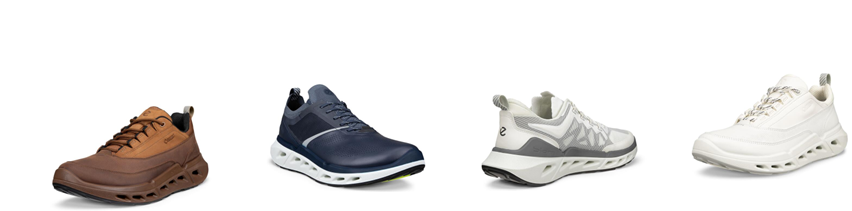
A cornerstone of this new collection is ECCO ENCORE TECHNOLOGY, a continuation of the legacy BIOM® began. ECCO ENCORE TECHNOLOGY amplifies the benefits of biomechanical design, providing cushioning, flexibility and energy return that make movement feel effortless. Outsole vents, a detail we first introduced in 2011, enhance breathability, improve shock absorption, and help return energy to your stride. The result is a shoe that doesn’t just carry you through the day, it actively supports your movement – keeping your feet energised and comfortable, no matter how long your day lasts.
The spring/summer 2026 BIOM® 720 collection comprises two distinct styles, each designed to meet specific real-world needs:


ECCO BIOM® 720 GTX – the versatile waterproof all-rounder. Combining BIOM® and ECCO ENCORE TECHNOLOGY with GORE-TEX SURROUND® construction, this shoe delivers durable, waterproof protection from every angle, while maintaining the breathability essential for year-round comfort. Whether you’re navigating rainy commutes or venturing outdoors, the 720 GTX ensures your feet stay dry, supported, and comfortable.
ECCO BIOM® 720 BREATHRU – an everyday summer trainer. Lightweight, breathable, and engineered with moisture-wicking BREATHRU mesh, this shoe allows air to circulate freely while maintaining the same support and stability as its waterproof counterpart. Ideal for warmer weather, it offers the perfect combination of ventilation and all-day comfort for everyday activities.
Both styles embody a simple but crucial truth: a shoe must support the body in real life, not just in theory. By designing for movement, cushioning impact, and promoting natural biomechanics, the BIOM® 720 collection addresses the needs of the modern wearer. Whether you’re travelling for work, enjoying a weekend hike, or simply walking across town, these shoes are engineered to respond to the natural rhythm of your body.

Comfort, however, is more than a technical metric, it’s a quality-of-life issue. In today’s fast-paced, hybrid lifestyles, where the boundaries between work, leisure, and movement blur, footwear must keep up without compromise. We have seen how discomfort can impact energy, posture and wellbeing. The ECCO BIOM® 720 is our answer. It is a shoe that encourages movement, protects the body and delivers comfort that lasts from the first step of the day to the last. Innovation is also about responsibility.
At ECCO, we have always managed every aspect of the value chain, from leather and shoe production to retail, ensuring our products meet the highest standards of quality. Our commitment to comfort is inseparable from our commitment to care. By creating durable, long-lasting shoes that people want to wear every day, we promote responsible consumption.
In essence, the BIOM® 720 is more than a shoe. It is the next evolution of our ongoing exploration of human movement, rooted in biomechanics, informed by technology and inspired by real-world lifestyles. It honours our legacy of designing shoes that respect the natural mechanics of the body while adapting to the demands of modern life.
As we continue to innovate, our focus remains clear: to create footwear that enhances human movement and supports the wellbeing of every wearer. With the ECCO BIOM® 720 collection, we are proud to offer shoes that do exactly that, delivering next-level comfort, performance and style, wherever life takes you.
By Mohamed Salah Seguen, CEO, Access Consult | Group CEO, Excellence Consortium

Across the GCC, the definition of project success has fundamentally shifted. Clients no longer evaluate performance solely through architectural expression or engineering precision. They assess speed to market, approval certainty, execution readiness, sustainability alignment, and cost predictability. In markets shaped by the Dubai 2040 Urban Master Plan, Saudi Arabia’s Vision 2030, and nationwide smart city initiatives, complexity has increased while tolerance for inefficiency has declined. In this environment, multidisciplinary collaboration has moved from a best practice to a structural necessity.
For decades, construction projects followed a fragmented sequence. Architects developed concepts, engineers refined systems, contractors priced and executed, and supervision teams monitored progress. Each discipline operated within its own perimeter, often leading to misalignment, redesign, delays, and disputes. The region’s current growth trajectory no longer supports that model. What is emerging instead is a connected delivery system built on integrated project delivery principles, where architecture, engineering, project management, and construction consultancy operate within one coordinated framework from inception to handover.
From silos to integrated delivery systems
This shift represents more than organizational restructuring. It reflects a transition from siloed thinking to a project-first mentality. Multidisciplinary teams are formed at the earliest stage, aligning objectives around collective project outcomes rather than individual scope boundaries. Early contractor involvement enhances constructability during design development, allowing concurrent workflows instead of sequential ones. Owners participate more actively in decision-making, reducing bottlenecks that traditionally stall progress. Risk and reward structures increasingly encourage collaboration rather than adversarial positioning.
Technology has enabled this transformation, but does not replace governance. Building Information Modeling is rapidly becoming standard practice, with industry forecasts indicating that by 2026, nearly 65% of projects will rely on BIM as their primary coordination environment. However, BIM alone does not guarantee integration. It must operate within structured digital design management platforms that enforce version control, approval workflows, and real-time coordination protocols. When properly governed, this environment becomes a single source of truth that connects all disciplines and reduces duplication.
Measurable impact through digital integration
The measurable impact of digital integration is increasingly evident. Projects delivered through structured multidisciplinary coordination frequently achieve 20% to 50% reductions in design development and authority approval lead times. Construction timelines improve by 20% to 30% when coordination cycles are shortened and decision pathways are clarified. These gains are not the result of faster drafting. They stem from removing systemic friction between disciplines.
Digital twin technology is further strengthening this ecosystem. During construction, a digital twin synchronizes on-site activities with virtual models, allowing early clash detection, live progress tracking, and predictive risk analysis. When integrated with drone mapping, RFID material tracking, and automated dashboards, deviations from schedule or specification become visible immediately. Global studies on Industry 4.0 technologies show reductions of up to 30% in labour productivity losses and measurable declines in downtime when digital twins are embedded into operations. In the UAE, where the construction market is projected to approach $96 billion by 2030, such efficiencies are no longer optional. They define competitive positioning.
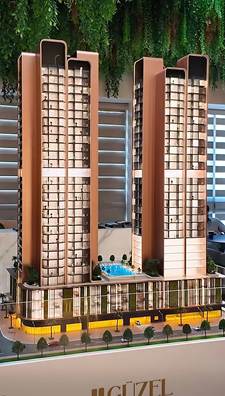
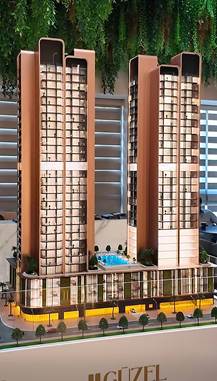
An example of this approach is Guzel Towers in Jumeirah Village Triangle. The project involved complex high-rise residential coordination, mixed-use podium integration, and strict authority compliance within compressed timelines. Through BIM-led collaboration and unified technical governance, design issues were resolved earlier, façade intent remained intact, and construction sequencing aligned closely with execution on site, enabling faster delivery with stronger certainty.
Trends Shaping Architecture, Consultancy, and Delivery
Approval Readiness: Authorities expect submissions that demonstrate coordinated systems, code compliance, and execution feasibility from the outset. Projects that treat regulatory approval as a parallel strategic track rather than a final checkpoint secure faster clearance and stronger stakeholder confidence. Execution-aware design has therefore become a competitive differentiator. Drawings are no longer judged solely by aesthetic merit but by their constructability, clarity, and alignment with site realities.
BIM maturity and digital governance have become baseline expectations. Developers and government entities increasingly require structured reporting environments, data transparency, and auditable workflows. Automated quality assurance templates now allow site managers to generate standardized reports instantly, enabling all stakeholders to review progress and identify emerging issues. This level of transparency improves accountability and shortens corrective action cycles.
Accelerated time-to-market remains a central pressure across regional real estate development. With 390,000 residential units projected across the UAE between 2026 and 2030, delivery models must scale without proportionally increasing risk exposure. Integrated team structures support parallel processing, modular construction strategies, and industrialized fabrication methods that compress schedules while preserving quality.
Developers and government entities increasingly require structured reporting environments, data transparency, and auditable workflows. Automated quality assurance templates now allow site managers to generate standardized reports instantly, enabling all stakeholders to review progress and identify emerging issues. This level of transparency improves accountability and shortens corrective action cycles.
The evolving role of the consultant
Rather than operating solely as designers or supervisors, consultancies increasingly function as orchestrators of complex ecosystems. They align architecture, engineering, regulatory pathways, digital governance, and execution strategy within one managed framework. This orchestrator model enhances proactive risk mitigation, identifying potential geotechnical, supply chain, or compliance challenges before they escalate into financial or schedule impacts.
In today’s high-velocity environment, multidisciplinary collaboration is the operational backbone of resilient project delivery. When architecture, engineering, digital coordination, and construction consultancy operate as a unified system, projects achieve faster approvals, clearer accountability, and stronger execution outcomes. That alignment defines the consultancy model of the future and ensures that regional development ambitions are delivered with both speed and certainty.
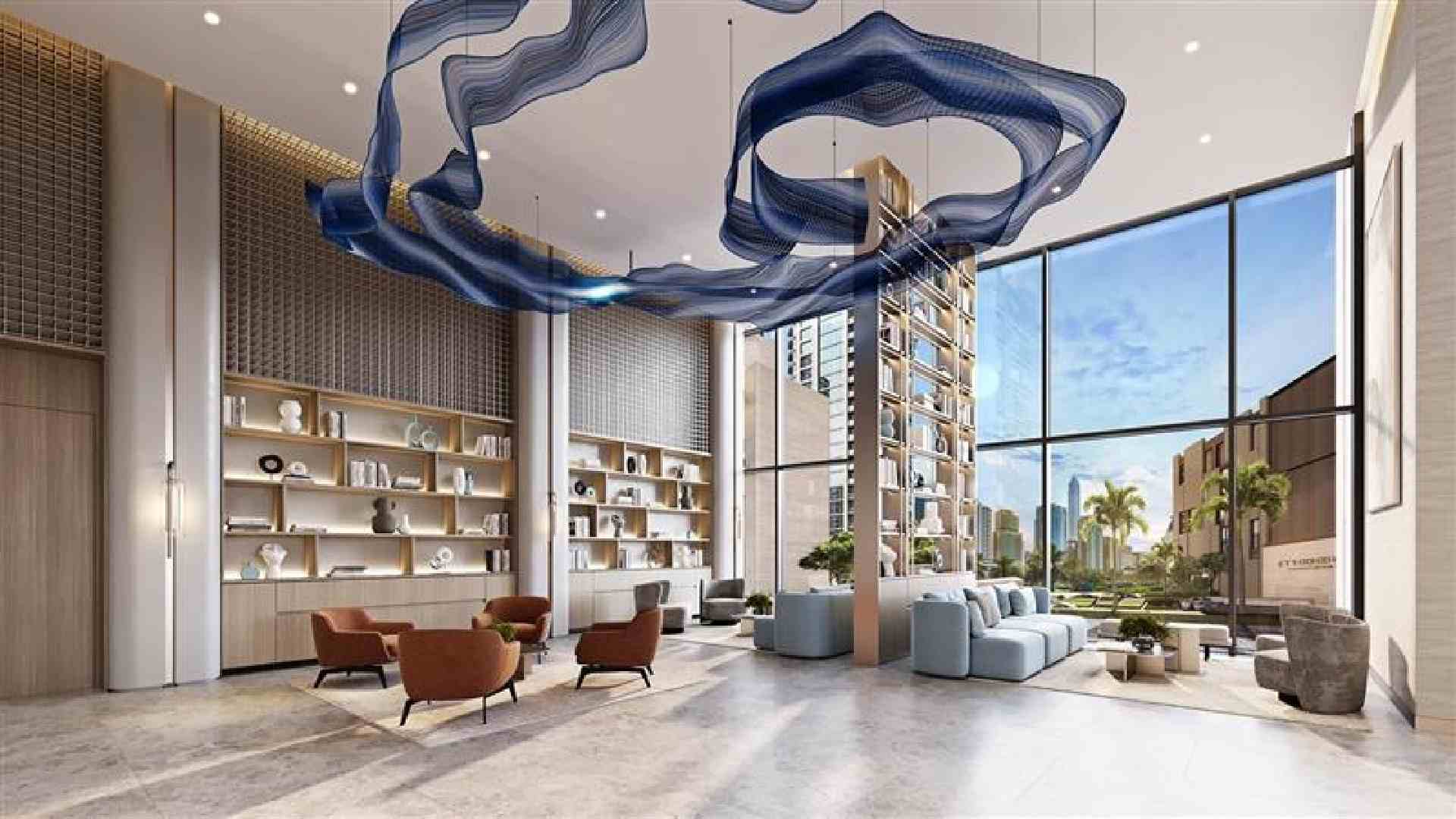
Across the region, interior design and architecture are entering a more deliberate, value-driven phase. Rapid urban expansion continues, but the focus has shifted from visual impact alone to how spaces perform, age, and support modern lifestyles.
Studies show that the global home décor and interior market is projected to grow from $747.75 billion in 2024 to $1.09 trillion by 2032, driven largely by demand from fast-growing urban regions such as the Middle East.
Within the GCC, government-led development, Vision 2030 programmes, and large-scale mixed-use projects are reshaping how residential, hospitality, and commercial interiors are being conceived. Based on Opāal Interiors’s research, regional market analysis, and on-ground project experience across residential, commercial, and mixed-use developments, 2026 will be defined by a new generation of interiors—refined, functional, and deeply intentional.
According to the research, six interior design trends are shaping the region in 2026.
1. Material-led design is replacing decorative excess
Opaal research found a decisive shift away from surface-level ornamentation toward interiors defined by material quality, craftsmanship, and longevity. Natural stones, engineered wood, textured metals, and bespoke joinery are increasingly favoured over trend-driven finishes.
Premium developments across the GCC are prioritising “timeless material palettes” to protect long-term asset value and reduce refurbishment cycles. Design is becoming quieter, but execution is more exacting, placing greater emphasis on detailing, proportions, and material transitions.
2. Sustainability is now embedded into interior specifications
Sustainability has moved beyond architectural shells and into interior fit-outs. Developers and asset owners are increasingly prioritising long-lasting, timeless, and durable material selections, alongside locally sourced products that help reduce carbon impact over the project lifecycle.
The UAE alone ranks among the top global markets for green-certified buildings, with over 800 LEED-certified projects. Regulatory pressure and ESG reporting requirements are accelerating this shift across the GCC. As a result, interior design decisions are now evaluated through both environmental and lifecycle performance lenses.
3. Residential interiors are becoming hospitality-inspired
As branded residences, serviced apartments, and lifestyle-led communities grow across Saudi Arabia and the UAE, residential interiors are borrowing heavily from hospitality design language.
Branded residences in the Middle East are expected to grow by more than 60% by 2030, driving demand for hotel-grade finishes, elevated material palettes, and refined spatial planning within private homes. Research also shows that end-users increasingly expect residential interiors to deliver the same sense of arrival, comfort, and material richness traditionally associated with high-end hotels.
4. Design clarity is becoming central to large-scale developments
With compressed project timelines and increasing construction complexity, developers are placing greater value on strong design leadership and structured oversight throughout project delivery. Clear design development, coordination, and quality control have become essential to minimising risk, avoiding rework, and maintaining consistency from concept through completion.
This approach is particularly critical in large-scale mixed-use and hospitality projects, where alignment between architecture, interiors, and building systems directly influences performance, cost predictability, and overall project success.
5. Commercial spaces are designed for adaptability, not permanence
Office and retail interiors across the GCC are being reimagined as flexible environments that can evolve with changing tenant needs. Modular layouts, reconfigurable partitions, and durable finishes are now prioritised over fixed design schemes.
The UAE flexible office space market size is projected to reach $1.81 billion by 2030, influencing how commercial interiors are planned and delivered. With this increase, adaptability is now a core design requirement, not a secondary consideration.
6. Design value is measured by longevity, not trend relevance
Perhaps the most defining trend of 2026 is a recalibration of how “good design” is measured. Rather than visual novelty, clients are assessing interiors based on durability, maintenance efficiency, and how well spaces age over time.
Long-term asset optimisation is becoming a priority across real estate and hospitality investments in the GCC. For interior specialists, this places renewed importance on precision, material intelligence, and execution quality, areas where experience and process matter as much as creative vision.
As the GCC’s built environment matures, interior design and architecture are becoming less about visual impact alone and more about performance, resilience, and long-term value. Opaal’s research underscores a clear direction for 2026: spaces that are thoughtfully designed, meticulously executed, and built to endure.


Eid Weekend Getaway: We Got You Covered with Xiaomi’s Latest!
MIDDLE EAST CONFLICT DRIVING A SURGE IN SCAMS, DEEPFAKES, AND GOVERNMENT IMPERSONATION
WHY SECURITY MUST EVOLVE FOR THE HYBRID HUMAN-AI WORKFORCE



-
News10 years ago
SENDQUICK (TALARIAX) INTRODUCES SQOOPE – THE BREAKTHROUGH IN MOBILE MESSAGING
-

 Tech News2 years ago
Denodo Bolsters Executive Team by Hiring Christophe Culine as its Chief Revenue Officer
-
 VAR11 months ago
Microsoft Launches New Surface Copilot+ PCs for Business
-

 Tech Interviews2 years ago
Navigating the Cybersecurity Landscape in Hybrid Work Environments
-

 Tech News8 months ago
Nothing Launches flagship Nothing Phone (3) and Headphone (1) in theme with the Iconic Museum of the Future in Dubai
-

 Automotive1 year ago
AGMC Launches the RIDDARA RD6 High Performance Fully Electric 4×4 Pickup
-

 VAR2 years ago
Samsung Galaxy Z Fold6 vs Google Pixel 9 Pro Fold: Clash Of The Folding Phenoms
-

 Tech News2 years ago
Brighton College Abu Dhabi and Brighton College Al Ain Donate 954 IT Devices in Support of ‘Donate Your Own Device’ Campaign