
 Have a question? +971 56 404 0503




Technology
FROM PILOTS TO POWER INFRASTRUCTURE: HOW THE GCC IS ENGINEERING THE NEXT PHASE OF AI

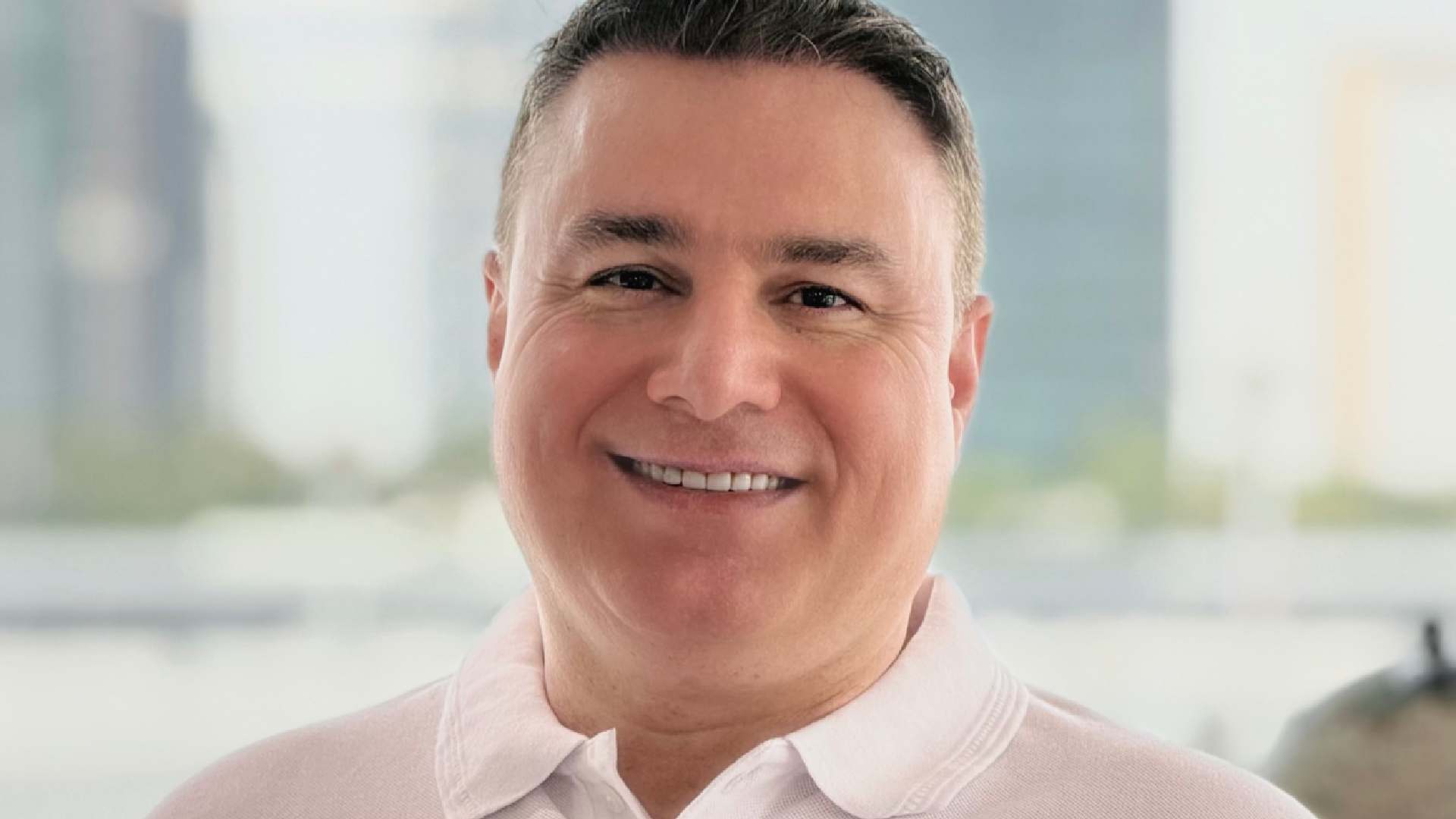
By Farid Yousefi, Founder & CEO, Finder Group Ai
Artificial intelligence in the Gulf Cooperation Council (GCC) is entering a decisive new chapter. What began as experimentation, ie, isolated pilots, proof-of-concept chatbots, and innovation lab demos, is rapidly evolving into something far more consequential. In 2026, AI will no longer sit at the periphery of digital transformation strategies. Instead, it will operate as a foundational layer of economic, industrial, and civic infrastructure, embedded into how energy systems run, how governments serve citizens, and how capital flows through the region.
This shift reflects a broader reality: the GCC is no longer merely adopting global AI trends, but actively shaping its own AI paradigm, one that is grounded in sovereign control of data and compute, tuned to Arabic language and local context, and aligned with national visions that prioritize scale, speed, and long-term resilience. The region’s ambition is not incremental improvement, it is to redefine how intelligence itself is designed, governed, and deployed at national scale.
The Maturation of Generative and Agentic AI
By 2026, the most significant leap in AI capability across the GCC will come from the maturation of generative AI and “agentic” AI systems. These technologies move beyond passive analytics or conversational interfaces. Agentic AI can reason, plan, and take actions across complex workflows, effectively acting as a digital operator rather than a static tool.
Crucially for the region, large language models fine-tuned for Arabic dialects and Gulf-specific context are rapidly improving. This has profound implications. Customer-facing AI systems are becoming genuinely fluent, capable of understanding nuance across Modern Standard Arabic, Gulf dialects, and bilingual Arabic-English interactions. Banks can now deploy AI-driven fraud detection and customer support in Arabic without sacrificing accuracy or trust. Governments can offer multilingual virtual assistants that guide citizens through services with clarity and cultural sensitivity.
Beyond language, real-time predictive analytics is reaching operational maturity. In energy and utilities, AI models are being trained to detect early warning signs of equipment failure on oil rigs, pipelines, and power grids. The economic impact is significant: preventing a single unplanned outage can save millions of dollars while improving safety and environmental outcomes.
In logistics and smart cities, multimodal AI, systems that simultaneously process images, sensor data, and text, is transforming operations. Ports are using AI to automate customs paperwork and optimize cargo routing. Cities like Dubai and Riyadh are deploying AI to dynamically manage traffic congestion, monitor infrastructure health, and improve public safety. These capabilities signal a clear transition: AI is no longer an experimental back-office function, but front-line infrastructure, intelligence delivered as a utility.
Redesigning Government and National Infrastructure Around AI
This technological maturation is reshaping how GCC governments think about digital services and national-scale infrastructure. Traditional e-government portals, static, form-based, and siloed, are giving way to AI-powered concierge models. Instead of navigating multiple platforms, citizens increasingly interact with a single intelligent agent.
Imagine a system that can visually review submitted documents, understand a request in natural language, and execute transactions across multiple departments in one seamless interaction. This is not a distant vision. Across the GCC, ministries are already using generative AI to automate administrative tasks, summarize regulations, and simulate policy outcomes. These early deployments foreshadow a future where agent-based systems anticipate needs and act proactively.
Mega-projects and smart city initiatives are embedding AI from inception rather than retrofitting it later. With dense networks of IoT sensors feeding real-time data, cities such as NEOM, Riyadh, and Dubai are building AI “control layers” that continuously monitor traffic, energy consumption, water usage, and security. Agent-based systems can then coordinate responses, rerouting vehicles, balancing power loads, or flagging anomalies, without waiting for human intervention.
The result is self-optimizing infrastructure. Humans remain responsible for strategy, ethics, and oversight, while AI executes decisions at machine speed. This represents a fundamental shift in governance and urban management: designing for intelligence at scale rather than manual supervision.
Sovereign Compute: The Backbone of GCC AI Ambitions
None of this transformation is possible without a parallel revolution in AI infrastructure. The GCC’s aspiration to become a global AI hub hinges on sovereign compute capacity – control over the data centers, chips, and energy that power advanced AI models.
Over the past two years alone, sovereign wealth funds across the region have mobilized more than $100 billion toward AI infrastructure. This scale of investment is unprecedented, outpacing even Europe. Landmark initiatives such as Abu Dhabi’s Stargate project, a multi-gigawatt data center campus designed to host and train large AI models on local data, and Saudi Arabia’s plans for up to 6 gigawatts of AI data centers under its HUMAIN initiative exemplify this ambition.
The region enjoys a structural advantage in this race: energy. Power costs in the Gulf are less than half those in many European markets, providing a natural edge in the energy-intensive process of training large models. At the same time, operators are innovating to address environmental and climatic challenges. Advanced cooling technologies, including liquid immersion cooling, are being deployed to operate efficiently in summer temperatures exceeding 45°C. Renewable energy integration is also increasing, aligning AI growth with sustainability goals.
Equally important is sovereign control over hardware. GCC nations are investing in local chip design programs and forging strategic partnerships to secure access to cutting-edge AI processors. In an era of global supply-chain uncertainty, this control over compute is becoming as strategically important as control over oil reserves once was. The region is effectively converting its natural advantages of capital and energy into a durable compute advantage for the AI age.
Where ROI Is Materializing First
From an investment standpoint, the strongest returns in the GCC are emerging where AI delivers direct, measurable impact. Predictive maintenance in energy and utilities is a prime example. AI systems that prevent equipment failures or optimize drilling operations offer immediate cost savings and operational resilience. Unsurprisingly, pilots in oil and gas—such as AI models analyzing drilling plans—are rapidly scaling into production environments.
In financial services, AI-driven fraud detection, risk scoring, and KYC automation are moving from experimentation to enterprise-wide deployment. Banks across the region have demonstrated that these systems reduce losses, improve compliance, and significantly speed up customer onboarding. Customer service automation is also reaching maturity. Telecom operators, airlines, and government agencies that once piloted Arabic-language chatbots are now preparing to replace tier-one support entirely with AI agents, improving availability while lowering costs.
Logistics represents another high-ROI frontier. Gulf ports and free zones are scaling AI solutions that automate documentation, optimize cargo flows, and reduce bottlenecks. Successful trials have shown faster throughput and improved competitiveness—critical advantages for economies positioning themselves as global trade hubs.
The common thread is pragmatism. Investors and enterprises are increasingly prioritizing AI that solves real problems and delivers returns per dollar invested. The era of AI experimentation without clear outcomes is giving way to disciplined scaling of proven use cases.
Regulation as an Accelerator, Not a Constraint
As AI adoption accelerates, governance has become a central pillar of the GCC’s strategy. National AI frameworks in the UAE, Saudi Arabia, and Qatar are establishing trust-first guardrails focused on transparency, accountability, and human oversight. These policies are not designed to slow innovation, but to ensure it scales safely.
Saudi Arabia’s guidelines, for example, mandate human oversight for public-sector AI and require transparency measures such as watermarking AI-generated content. Qatar’s central bank has introduced governance rules requiring audits and human review for high-stakes algorithms. These frameworks inevitably influence data flows, encouraging sensitive information to remain within national borders.
While this localization may initially limit free cross-border data movement, it is simultaneously fueling massive investment in regional cloud and data center infrastructure. Over time, regulatory alignment across the GCC, particularly around shared principles of fairness, accountability, and transparency, will enable AI solutions certified in one country to scale regionally. Clear rules reduce uncertainty, giving enterprises and investors confidence to deploy AI at scale.
The Hidden Risks of Autonomous AI
Despite the momentum, risks remain, and some are underestimated. One of the most significant is overconfidence in AI accuracy. Even advanced models can hallucinate or fail, particularly when dealing with local dialects or sparse data. In high-stakes sectors such as security, healthcare, or law enforcement, such errors can have serious consequences. Human oversight is therefore not optional, regardless of how autonomous a system becomes.
Operational fragility is another concern. Many organizations overlook infrastructure dependencies, such as reliance on imported GPUs or insufficient cooling and backup power for data centers. In the Gulf’s climate, these vulnerabilities can quickly become systemic risks. Cybersecurity also takes on new dimensions as AI systems gain autonomy, expanding the attack surface for malicious actors. A compromised AI traffic system or a convincing deepfake could undermine public trust overnight.
Finally, reputational and regulatory backlash remains a risk if AI is misused or deployed without adequate safeguards. A single incident involving biased decision-making or a privacy breach could slow adoption across entire sectors. Rigorous testing, transparency, and fail-safes, the unglamorous aspects of AI, are essential for sustainable progress.
Who Will Lead the GCC AI Race?
By 2026, leadership in the GCC AI landscape will be shaped by a combination of talent, data, sovereign strategy, and investment appetite. The UAE and Saudi Arabia are poised to lead, each leveraging distinct strengths. The UAE’s early-mover advantage, world-class institutions such as MBZUAI, and deep integration of AI into daily life have positioned it as a global reference point for adoption. Saudi Arabia, meanwhile, brings unmatched scale, capital, and data assets particularly in energy, making it the region’s AI infrastructure powerhouse.
Other GCC nations will lead in targeted ways. Qatar is emerging as a center for ethical AI and safe deployment, Bahrain as a pioneer in cloud-first government integration, and Oman as a steady builder of digital infrastructure and local talent pipelines. Across industries, government services will continue to drive adoption, while energy and finance lead commercially.
From Oil Wells to “Intel Wells”
Ultimately, the GCC’s AI journey is about more than technology, it’s about redefining economic value creation. The region is moving from oil wells to “intel wells,” treating data and insight as the new strategic resource. At Finder Group AI, our mission is to connect the region’s abundant capital with its brightest innovators responsibly, transparently, and at scale.
By 2026, the global conversation will shift from AI hype to AI habitat. The Gulf will not just be adopting AI, but exporting a new standard, one that balances cutting-edge innovation with trust, governance, and purpose. The rise of the GCC as an AI hub will create opportunities far beyond its borders, shaping the next phase of the global AI economy on the region’s own terms.
-Ends-
About the Author:
Farid Yousefi is a serial entrepreneur and innovator leading the development of Finder Group Ai, an AI-powered venture builder ecosystem based in Dubai. With a strong background in strategy, business development, and technology adoption, his focus is on helping ideas transform into scalable businesses through AI-driven solutions.
His work spans across building and mentoring startups, forging partnerships, and guiding ventures from ideation to growth. He is passionate about creating impact through technology, developing sustainable ecosystems, and supporting founders on their journey through in-depth technical and industry knowledge and expertise and access to a global network of venture capitalists and angel investors to attract investment, and through partnerships at the highest level within government to aid integration and scale rapidly within local territories.
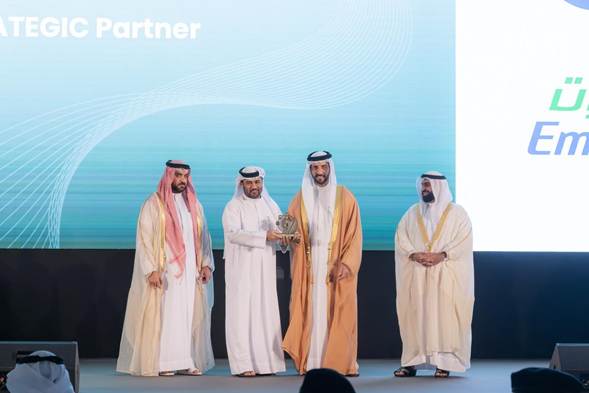
Emirates Petroleum Company PJSC (Emarat), a pioneer in the UAE’s oil and gas industry, is participating as Official Partner of HSE-Expo 2026, taking place on 1 and 2 April 2026 at Al Jawaher Reception and Convention Centre in Sharjah.
Organised by Sharjah National Oil Corporation and held under the patronage of His Highness Sheikh Sultan bin Ahmad Al Qasimi, Deputy Ruler of Sharjah, Chairman of the Petroleum Department and President of Sharjah National Oil Corporation, the event brings together industry leaders, specialists, researchers, and stakeholders to advance dialogue around health, safety and environmental priorities across the region.
Emarat’s participation reflects the company’s continued focus on strengthening workplace safety, supporting responsible environmental practices, and aligning its operations with recognised regional and international standards. It also reinforces the company’s view that health, safety, and environmental performance is integral to operational excellence, long term resilience and responsible growth across the energy value chain.
Burhan Al Hashemi, Chief Executive Officer of Emarat, said: “At Emarat, health, safety and environment is a leadership priority embedded across every level of the organization. It shapes how we operate, how we invest and how we build a culture of accountability and care. Across our fuel, aviation fuel, lubricants, LPG, and natural gas businesses, HSE is fundamental to operational discipline, business continuity and the trust our customers and partners place in us. Our participation in HSE Expo 2026 reflects our commitment to raising standards, supporting responsible industry practices, and contributing to a safer and more sustainable operating environment.”
Emarat applies health, safety, and environmental discipline across its operations as part of its broader commitment to operational excellence and responsible growth. From frontline safety practices and process discipline to environmental stewardship and continuous improvement, the company views HSE as a business imperative that supports resilience, strengthens trust, and underpins performance across its fuel, aviation fuel, lubricants, LPG and natural gas businesses.
Furthermore, HSE standards are central to every product category Emarat operates in, including LPG. As a provider of composite LPG cylinders, Emarat adheres to global HSE industry standards in this product category among all others, underscoring the company’s commitment to safety and environmental responsibility across all aspects of its business.
Ali AlAstad Alhammadi, Vice President, Health, Safety, Environment and Quality, Emarat, said: “HSE Expo provides an important platform for industry stakeholders to exchange practical insight, share best practice and strengthen collaboration around issues that are central to workforce safety and environmental stewardship. For Emarat, this is an opportunity to engage with the wider HSE community and support continued progress in standards, awareness, and performance across the sector. We are grateful to SNOC for organizing this important platform and we look forward to continued collaboration and future participation”
HSE Expo 2026 serves as an important regional platform for advancing dialogue on workplace safety, environmental responsibility, and industry best practice. By bringing together energy leaders, technical specialists, researchers and stakeholders, the event supports knowledge exchange around the standards and innovations shaping safer and more sustainable operations across the region.
Tech Interviews
STARKEY OMEGA AI – ONE OF THE MOST POWERFUL AND ADVANCED HEARING TECHNOLOGY TO EVER REACH MEA PATIENTS

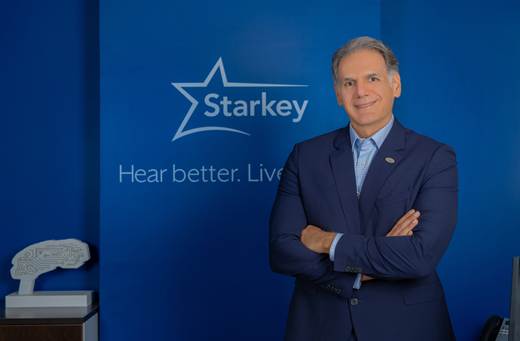
In this exclusive interview, Giscard Bechara, Director of Starkey Middle East & Africa, reveals how Omega AI, the company’s most advanced hearing technology to date, is set to transform the lives of patients across the region, from smarter connectivity and real-time AI support to breakthrough health monitoring features.
Giscard, Starkey has just unveiled Omega AI, a bold claim to call it ‘superhuman.’ For patients here in the Middle East and Africa, what does that word actually mean in everyday life?
“Superhuman” isn’t marketing language for us, In the MEA region, our patients navigate some of the world’s most complex listening environments: bustling souks, multi-language family gatherings & noisy cities . Omega AI is engineered to mimic the auditory system in these very settings. When DNN 360 delivers 28% better speech intelligibility in a noisy environment, your brain is receiving a signal that is cleaner and crisp than ever before. That, to me, is a superhuman advantage, and it is now available to anyone wearing a Starkey hearing aid.
Tell us about DNN 360, the deep neural network at the heart of Omega AI. How is it different from the AI that patients may have heard about in other hearing aids?
Most hearing aids apply AI to a single task, perhaps noise reduction or voice enhancement. DNN 360 is the world’s first deep neural network that powers both directionality and spatial awareness simultaneously. Think of it this way: when you are in a restaurant in Dubai or a busy market in Egypt, you do not just want to hear the person in front of you, you want to know where every sound is coming from, so your brain can make sense of the scene around you. Our brain naturally detects sounds and acoustic queues to understand the environment that we are facing. DNN 360 provides up to 8 dB signal-to-noise ratio improvement for spatial awareness. That is a meaningful, real-world difference. And crucially, we achieve all of this without sacrificing battery life and performance.
For many patients in the MEA region, connectivity is critical, streaming TV, phone calls across different networks, even video consultations with specialists abroad. How does Omega AI address this?
Connectivity is a lifeline. We have made two significant advances. First, streaming via the StarLink Edge TV Streamer now starts and reconnects automatically for the TV, no more fumbling with settings or missing the beginning of a show. Second, and this is an industry first, we have introduced TeleHear AI. This feature uses generative AI to help patients resolve common hearing issues in real time, directly from their smartphone, with 93% predictive accuracy. For a patient in a remote area or in a country where specialist hearing clinics are hours away, this means they can troubleshoot and optimise their hearing experience without having to travel. That is transformative access.
You mentioned TeleHear AI, a 93% predictive accuracy rate is remarkable. Can you walk us through what that looks like for a patient who, say, notices their hearing feels muffled after a long flight from Riyadh to Johannesburg?
Absolutely. That patient opens the My Starkey app, describes what they are experiencing, and TeleHear AI analyses the situation using generative AI. It might recommend a specific listening programme for their current environment. the issue can be resolved without any professional intervention needed at that moment. In a region where patients often travel vast distances and cross multiple time zones, that kind of intelligent self-sufficiency is worth a lot.
Durability is a significant concern in our climate, from the humidity of coastal cities like Abu Dhabi and Lagos to the dust of the Sahara. How has Starkey engineered Omega AI for these realities?
We took this very seriously. Omega AI features waterproofing that has been tested to last 10 times longer than our previous coatings under the most demanding conditions, moisture, sweat, dust, temperature extremes. The MEA region presents environments that can be punishing for delicate electronics. Whether a patient is in a humid coastal city, working outdoors in the Gulf heat, or living in a dry, dusty climate, Omega AI is built to perform reliably day after day. This is not lab performance, it is field-tested durability. A hearing aid that fails in difficult conditions is not a solution; Omega AI is engineered to be there when patients need it most.
There are also new LED indicator lights, something that might seem like a small detail, Can you explain why they are there?
The LEDs are a helpful guide. The green and red indicator lights on our RIC RT and mRIC R devices confirm power status and Bluetooth connection briefly, simple, practical, and reassuring for patients and caregivers. Those same LEDs now double as a find-my-hearing-aid tool, an absolute industry first. If a patient misplaces a device, common in multi-room homes, during prayer, or when grandchildren are visiting, they can trigger the LEDs remotely through the app to locate it. For our older patients in the MEA region, and for the family members who support them, this feature provides real peace of mind.
Starkey has positioned Omega AI as a ‘healthable’, going beyond hearing to monitor overall wellness. Why is this vision particularly relevant for MEA patients?
The MEA region carries a significant burden of non-communicable disease, cardiovascular conditions, respiratory illness, balance disorders. These are the very health areas where Omega AI’s new wellness features add value beyond hearing. The automatic respiratory rate monitor is an industry first: it works silently in the background, tracking breathing patterns without the patient having to do anything. This can provide early indicators of conditions that affect breathing. Balance Builder, accessed through the My Starkey app, delivers targeted at-home exercises for stability and coordination, relevant for older adults at risk of falls, a major health concern across our region. We are not asking patients to add another wearable device. They are already wearing their hearing aids. We are simply making those hours work harder for their health. Omega Ai also counts your daily steps activity and motivates you to move and be active.
Access to specialist audiological care is uneven across the MEA region. How does Omega AI help bridge that gap, and what role does your team play on the ground?
This is a question close to my heart. In countries where audiologists are concentrated in major cities, patients in rural or underserved areas have historically faced significant barriers. Omega AI addresses this on two levels. Technologically, TeleHear AI means that a patient does not need to visit a clinic every time they have a question about their hearing aids. The generative AI guides them through real-time troubleshooting. And when remote fine-tuning is needed, our TeleHear platform connects them with their professional remotely. On the ground, Starkey MEA is committed to expanding our network of trained hearing professionals, our authorised partner clinics, and our educational programmes across the region. The technology opens the door, our people make sure patients can walk through it.
We know hearing loss carries a social stigma in certain communities across the Middle East and Africa. How does the design philosophy of Omega AI address that reality?
Stigma is real, and we design with that awareness. Omega AI devices are engineered to be discreet, modern, and, for those who prefer invisibility, designed to be worn comfortably without drawing attention. At the same time, we believe the best answer to stigma is performance. When a patient discovers they can follow a conversation at a family gathering for the first time in years, when they can engage fully in a business meeting, the hearing aid stops being something they hide and becomes something they value. Omega AI’s performance is so compelling that patients want to wear it. That shift in attitude is the most powerful antidote to stigma we have.
Finally, Giscard, what is your message to patients across the Middle East and Africa who are sitting on the fence about hearing care, or who have dismissed it as something for ‘other people’?
Hearing loss is not a sign of ageing or weakness, it is a health condition that affects one in five people globally, and the MEA region is no exception. Leaving it untreated has consequences that go far beyond the ears: increased social isolation, cognitive decline, missed opportunities at work and at home. Omega AI represents the most advanced hearing technology ever created, it gives patients a superhuman advantage in every listening environment they encounter. My message is simple: do not wait. A hearing assessment is the first step. Hearing tests are cheap, fast and not painful. It can change your life and save you money if you address your hearing loss early. In case hearing technology is needed, Omega AI is proof that it can be powerful, intelligent, beautiful, and life-changing. Visit your audiologists. Your world deserves to be heard fully.
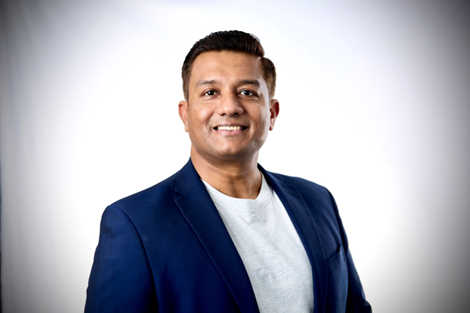
Alteryx Inc., a leading AI-ready data and analytics company, today announced the appointment of Sabya Sen as Vice President, IMEA & APAC, to lead its business across India, the Middle East, Africa, and Asia-Pacific (IMEA & APAC). In this role, Sen will focus on accelerating customer outcomes and scaling adoption of the Alteryx One platform across some of the world’s fastest-growing markets for AI and data innovation.
Sen brings deep regional expertise and a strong track record of execution to this role. Most recently, he served as Vice President, Head of UKI & Emerging Markets Europe at Alteryx, where he drove consistent growth, built high-performing teams, and strengthened customer relationships across global markets.
The appointment comes at a critical phase for AI adoption globally and across IMEA and APAC, where governments and enterprises are increasing investments in digital transformation. In the Middle East, national strategies like Saudi Arabia’s Vision 2030 and UAE’s We the UAE 2031 are accelerating innovation agendas. The region’s AI market is projected to reach $320 billion USD, while globally, 89% of leaders plan to maintain or increase AI budgets in 2026. Despite this momentum, many organizations remain in pilot phases, underscoring the need for scalable, governed analytics solutions that can support enterprise-wide AI adoption.
“It is my priority to continue delivering meaningful outcomes for our customers and community,” said Sabya Sen, Vice President, IMEA & APAC. “Across the Middle East, India, and Asia-Pacific, we are seeing unprecedented momentum driven by ambitious national transformation agendas. These efforts are accelerating economic diversification, advancing digital innovation, and firmly positioning these regions as global hubs for data and AI-led growth.”
Prior to joining Alteryx, Sen spent 11 years at Salesforce in a variety of leadership roles, supporting customers across the insurance, financial services, and healthcare industries, where he helped organizations leverage data and technology to transform their operations. In his new role, Sen will focus on helping organizations move beyond experimentation to enterprise-scale AI adoption by delivering trusted, AI-ready data and analytics through the Alteryx One platform.
“Over the past few years, Sabya has had a tremendous impact on Alteryx and has demonstrated a remarkable level of focus, discipline, and strong commercial execution,” said Jason Janicke, Senior Vice President, EMEA & APJ at Alteryx. “He has delivered results, built a strong team culture, and consistently raised the bar. We can’t wait to see the impact that Sabya has in this next role.”

EMARAT SUPPORTS HSE EXPO UNDERSCORING HEALTH, SAFETY AND ENVIRONMENTAL LEADERSHIP
STARKEY OMEGA AI – ONE OF THE MOST POWERFUL AND ADVANCED HEARING TECHNOLOGY TO EVER REACH MEA PATIENTS
DIGITIZATION-LED DISRUPTION SET TO RESHAPE GCC AUTO COMMERCE ECOSYSTEM



-
News10 years ago
SENDQUICK (TALARIAX) INTRODUCES SQOOPE – THE BREAKTHROUGH IN MOBILE MESSAGING
-

 Tech News2 years ago
Denodo Bolsters Executive Team by Hiring Christophe Culine as its Chief Revenue Officer
-
 VAR12 months ago
Microsoft Launches New Surface Copilot+ PCs for Business
-

 Tech Interviews2 years ago
Navigating the Cybersecurity Landscape in Hybrid Work Environments
-

 Trending5 months ago
OPPO A6 Pro 5G Review: Reliable Daily Driver
-

 Tech News9 months ago
Nothing Launches flagship Nothing Phone (3) and Headphone (1) in theme with the Iconic Museum of the Future in Dubai
-

 Automotive1 year ago
AGMC Launches the RIDDARA RD6 High Performance Fully Electric 4×4 Pickup
-

 VAR2 years ago
Samsung Galaxy Z Fold6 vs Google Pixel 9 Pro Fold: Clash Of The Folding Phenoms