
 Have a question? +971 56 404 0503




Home Integrator
BISR REDEFINES EDUCATIONAL SPACE DESIGN THROUGH STRATEGIC VISION WITH KIDZINK

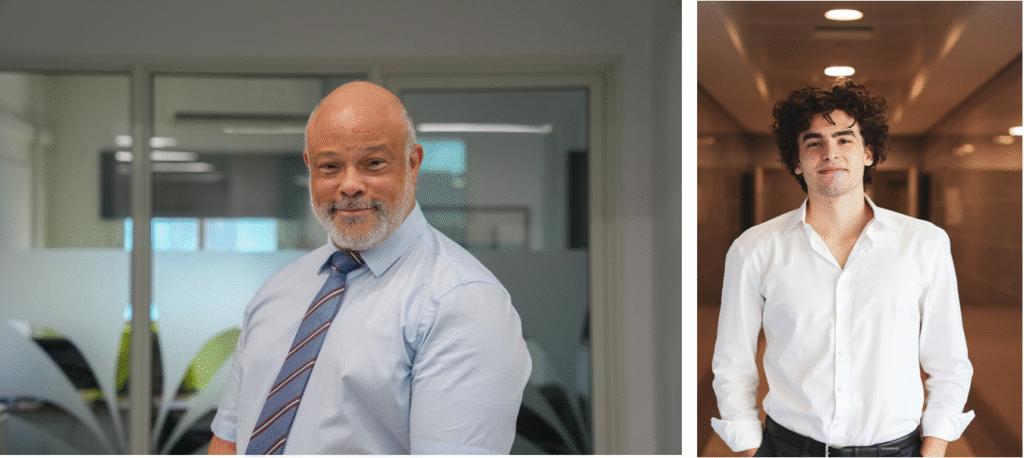
Exclusive interview with Wayne Orr, Interim COO & Project Director Al Waha, BISR & Riccardo Borghesi, Market Manager KSA, Kidzink
Interview with Wayne Orr:
As Interim COO and Project Director, how do you define your role in shaping design outcomes across complex environments like educational campuses?
I joined BISR as Project Director for the Al Waha campus, later became Interim COO, and now serve as Interim Group CEO. That sequence matters because it changes your perspective.
As Project Director, the design was largely set. My job was to ensure it was delivered properly, adapted where evolving needs required it, and tightened where safety or operational risks emerged. That meant challenging contractors, questioning details that did not work in practice, and making sure what we opened was safe, compliant and ready for daily use.
As Interim COO, the focus shifted to opening the school smoothly. Even with a brand new campus, the real test is whether it works. Traffic flow. Student movement. Staff circulation. Supervision. Safeguarding. Peak time pressure. If those fail, the architecture is irrelevant.
Now, at Group level, I look across Al Waha, Al Hamra and DQ and ensure decisions make sense strategically as well as operationally.
If something looks good but creates friction or cost pressure later, it was the wrong call. On a project of this scale, you also learn. The key is recognising issues early and applying those lessons across the estate.
What are the core principles that guide design decisions at BISR projects, especially in terms of spatial flow, flexibility, and future adaptability?
Four principles guide us.
First, flow. A school must feel calm and logical. Students need to move safely. Staff need clear sightlines. Emergency routes must work without confusion. In a through school serving ages 4 to 16, zoning is critical. Younger children need protection and scale. Older students need independence. You cannot design for one group and ignore the other.
Second, flexibility. Educational priorities shift. Numbers change. Teaching models evolve. At Al Waha we built adaptable classrooms and shared spaces. At Al Hamra, which is over 40 years old, flexibility is often about reworking layouts or improving furniture rather than rebuilding.
Flexibility is not free. Every adaptable feature costs money. We invest where it protects long term value and avoid over engineering for theoretical scenarios.
Third, climate reality. In Riyadh, heat and dust shape how a campus functions. If classrooms overheat or glare is uncontrolled, learning suffers. Shading, cooling performance and durable materials are practical decisions, not aesthetic ones.
Fourth, financial discipline. Funds are finite. Whether improving a legacy campus or delivering a new one, we prioritise changes that improve experience and longevity rather than cosmetic upgrades.
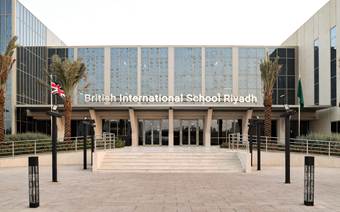
The British International School Riyadh (BISR) Al Waha campus is noted for design that nurtures curiosity and creativity. What design elements were crucial in achieving that user experience?
At Al Waha, we focused on three things.
First, visibility. You can see learning happening. Glass between spaces, open commons areas and clear sightlines encourage collaboration and make supervision easier.
Second, variety. We did not just build rows of classrooms. There are breakout spaces, specialist labs, performance areas and shaded outdoor zones. Different students learn in different ways, particularly across a 4 to 16 age range. The building needed to support that range.
Third, making sure it works in this climate. If a space is uncomfortable, students disengage. We focused on effective shading, cooling and lighting. Even sports lighting was designed to meet recognised Class B standards so it performs properly without glare.
Curiosity is far more likely in an environment that is safe, comfortable and well run.
In your experience, how does a place like Al Waha campus balance aesthetic aspirations with functional requirements unique to educational settings?
You balance it through discipline.
Schools are hard working buildings. Finishes must last. Circulation must allow supervision. Specialist facilities must meet regulatory standards. Safeguarding cannot be compromised by design ambition.
At Al Waha, aesthetic decisions were tested against maintenance, operational reality and climate conditions. Distinctive features such as the air supported sports dome required formal approvals, inspection records and clear warranty coverage.
A building can look impressive, but if it creates long term cost or operational headaches, it is not a success.
In educational design, how do you address flexibility, so spaces can evolve with pedagogical innovation?
Change is constant. That is the starting point.
Teaching methods evolve. Technology advances. Student numbers fluctuate. Buildings need to absorb that change without repeated major capital spend.
At Al Waha, flexibility was built into layout and services capacity. At DQ, which is mid life, we focus on reconfiguration rather than rebuild. At Al Hamra, improvements are targeted and proportionate.
Designing for ages 4 to 16 adds complexity. Early Years spaces must feel secure and appropriately scaled. Secondary students need independence and facilities that feel credible. Zoning and transition areas matter.
Flexibility is about sensible investment, not endlessly transformable space. Good design in a school is ultimately about creating spaces that are safe, workable, financially sustainable and capable of adapting over time.
Interview with Riccardo Borghesi:
As Market Manager for Saudi Arabia, how do you define your role within the design ecosystem, are you a strategist, a cultural translator, or a curator of design experience?
We built Kidzink and Koda around a shared mission: to make schools better. Creativity, collaboration and innovation underpin everything we do. Saudi Arabia’s clear national vision and deep investment in education provide a powerful platform for a mission-driven company like ours to create lasting impact, not only for clients, but for children and communities for generations to come.
Within that context, my role as Market Manager for KSA spans strategist, cultural translator and curator of design experience.
Strategically, I bridge commercial realities with long-term educational ambition — ensuring that vision is grounded in structured, deliverable frameworks that create sustainable value. Education in the Kingdom is evolving rapidly, and aligning design strategy with pedagogical outcomes and operational performance is critical.
Culturally, we work to ensure that as the Kingdom modernises, schools retain a strong sense of identity, place and shared values. Every project must thoughtfully balance global best practice with local context.
From a design experience perspective, we translate educational vision into tangible spatial environments, embedding values physically into the learning experience rather than leaving them as abstract statements.
Pedagogy remains central to this work. Last year, Kidzink unveiled The Enriched Environment Model™, a science-backed framework developed through years of research in pedagogy, neuroarchitecture and environmental psychology. The Model provides a structured approach to designing environments aligned with how students learn, feel and thrive.
Ultimately, my role is about integration, aligning vision, strategy and experience so that each educational environment is pedagogically meaningful, commercially sound and built for long-term impact.
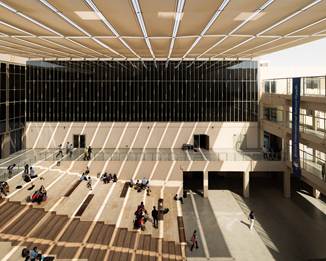
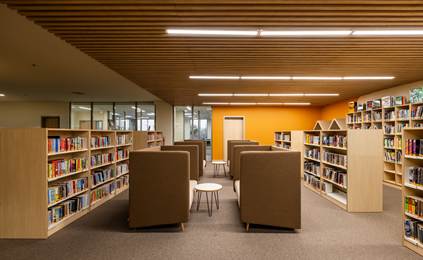
In leading Kidzink’s footprint in Saudi Arabia, how do you maintain a design-first mindset while adapting to fast-evolving regional expectations?
Design strategy is our anchor. At Kidzink, designing for longevity means designing for change.
A design-first mindset is not about rigidity, it is about adaptability. In Saudi Arabia’s fast-evolving market, design is less about fixed solutions and more about creating frameworks that anticipate shifting expectations and evolving educational models.
Each school is a unique ecosystem shaped by stakeholders, operational realities and long-term ambitions. Our role is to develop structured yet flexible strategies that align educational vision with spatial performance and commercial viability.
Whether delivering purpose-built campuses such as BISR Al Waha or elevating legacy environments through thoughtful interventions, the objective remains consistent. We create learning environments that are responsive, future-ready and grounded in pedagogical outcomes..
True sustainability extends beyond materials or efficiency. It means designing spaces that remain relevant and capable of serving generations of learners.
What role does local culture and context play in translating Kidzink’s global vision into meaningful spaces across Saudi Arabia?
At Kidzink, we design schools for children, young people and their communities. Culture is central to that process. Every project begins with fundamental questions. Who are we designing for? What values define the community? What is its history and future ambition?
Saudi Arabia presents a uniquely dynamic context. While Vision 2030 is accelerating modernization and positioning the Kingdom as a global hub, cultural identity remains deeply valued. Education becomes one of the most meaningful platforms where progress and heritage coexist.
Culture shapes how comfort, privacy, hierarchy and social interaction are understood. These behavioural nuances influence how students gather, communicate and experience space. Designing meaningful environments requires sensitivity to those patterns.
Our role is to ensure that global best practice is thoughtfully adapted to local context so each learning environment feels authentic, relevant and grounded in its community. Global vision provides structure. Local culture gives it meaning.
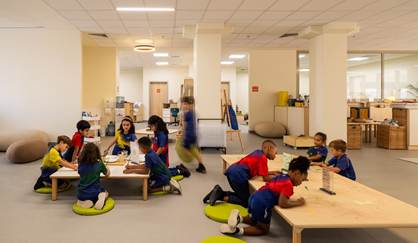
One of the standout projects you’ve been associated with is the Aldenham Prep Riyadh transformation, what design philosophy guided your involvement from briefing to execution?
The philosophy centred on repositioning rather than rebuilding. The structural fabric remained intact, so the transformation focused on reshaping experience, identity and perception within the existing shell.
Interior environments became the primary design tool. Spatial planning, materiality, light, flow and FF&E were carefully orchestrated to elevate quality and clarity without altering the footprint. The objective was premiumisation through atmosphere, improving how the school feels, functions and communicates its values.
Constraints were treated as creative drivers. Existing grids, proportions and circulation patterns informed precise interventions that unlocked the building’s potential. Functionality was central, particularly daily operations, movement, supervision and flexibility.
Cultural calibration was equally important. A British school identity was expressed through detailing and material language, thoughtfully balanced with Saudi expectations around privacy and community.
The project demonstrates that meaningful transformation does not always require new construction. It requires strategic reframing of space and experience.
Can you walk us through how design thinking impacts the way children, educators, and parents interact in a space? What design decisions make that difference?
Design thinking shapes how people feel, behave and connect within a space. In schools, that influence is significant because children, educators and parents experience the same environment differently.
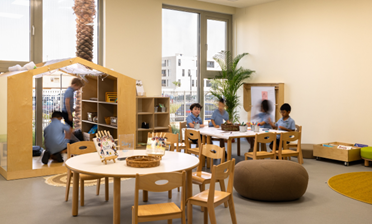
For children, space influences confidence, curiosity and behaviour. Natural light, spatial clarity, movement and sensory comfort support focus, engagement and social interaction. When environments offer flexibility and choice, students develop independence and ownership of learning.
For educators, design affects performance and wellbeing. Clear sightlines, adaptable classrooms, considered acoustics and intuitive circulation reduce friction and cognitive load, allowing teachers to focus on teaching rather than navigating constraints.
For parents, the physical environment becomes the first expression of a school’s ethos. Arrival experience and shared spaces communicate care, safety and educational intent.
Projects such as BISR Al Waha exemplify this approach, where design strategy aligns with educational vision, student experience and community identity from the outset.
Well-designed spaces don’t just accommodate learning, they quietly shape behaviour, relationships and belonging.
In your opinion, what is the biggest misconception about interior design for institutional or educational environments?
One of the biggest misconceptions is that interior design in schools is primarily aesthetic.
In reality, educational environments demand a level of rigour comparable to sectors such as healthcare. Schools are high-performance human spaces where spatial decisions directly influence wellbeing, stress, cognitive function and behaviour. Yet they are often approached with less technical scrutiny, despite being environments centred on human development.
Educational interiors shape attention, emotional regulation and social interaction in ways that are frequently underestimated. For many children, school is the first environment outside the home where identity, independence and confidence are formed.
Another misconception is viewing schools as static. Pedagogy evolves constantly, requiring spaces that are adaptable and capable of remaining relevant over time.
When designed well, learning environments act as behavioural frameworks. They guide movement, collaboration and focus, often invisibly. The impact of educational design is far more profound than it first appears.
By Twinkle Aswani, editorial division, Integrator Media
Every time global headlines turn uncertain, the same question quietly returns to the real estate conversation, will the market slow down?
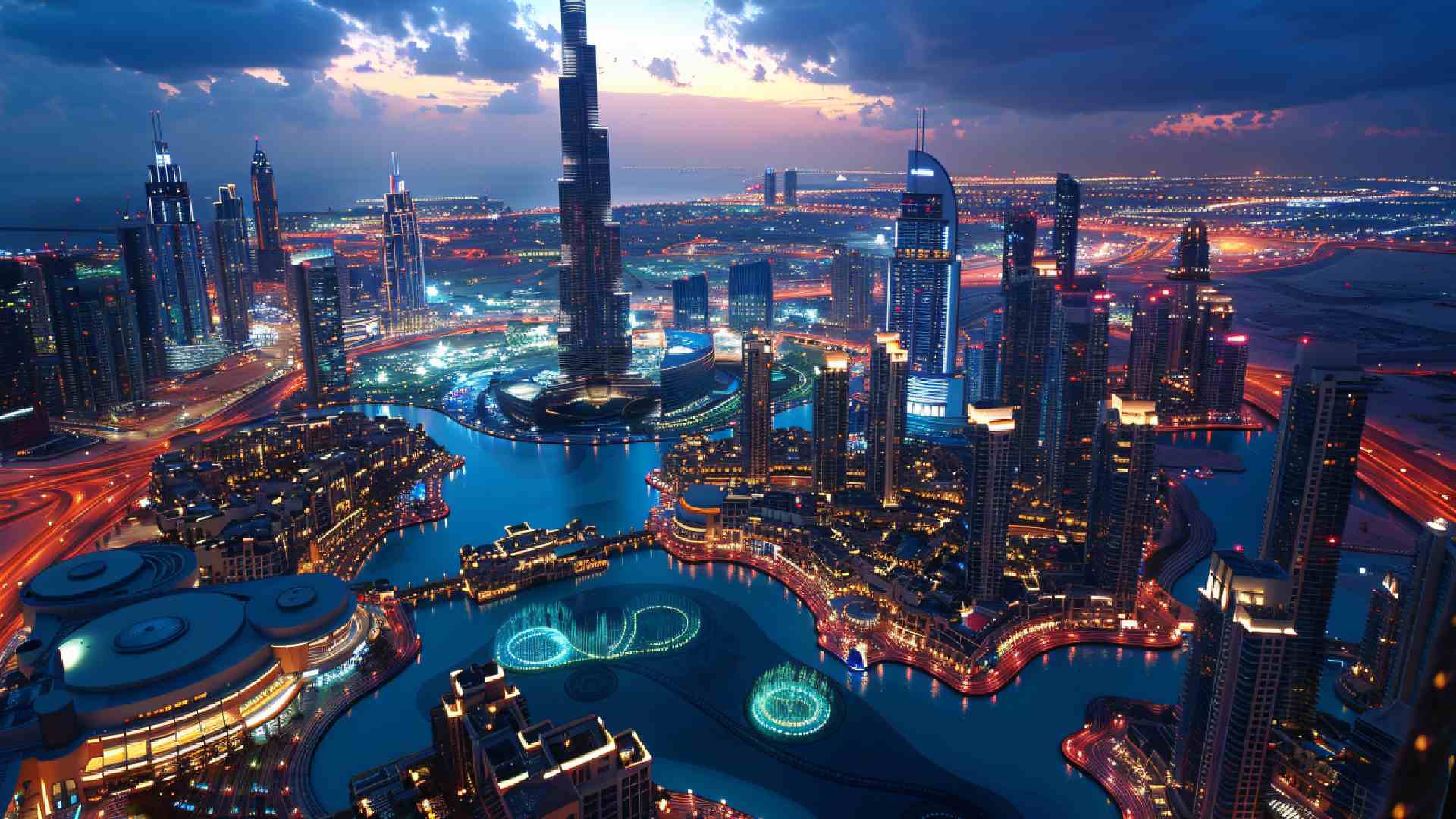
In many parts of the world, the answer is often yes. Investor sentiment can shift quickly, projects pause, and transactions begin to reflect caution. Yet the UAE, has consistently demonstrated that its property market behaves differently. What we are seeing today is not a market reacting to short-term events, but one operating on a longer, more confident trajectory.
The numbers alone tell an important story. Dubai recorded more than 270,000 real estate transactions worth AED917 billion in 2025, marking its strongest year on record. But beyond the headline figures lies something more significant — a market built on structural confidence rather than speculative momentum.
“The UAE real estate market is staying resilient because it is built on strong fundamentals, clear regulation, and long-term confidence rather than short-term sentiment,” explains Ibrahim Imam, Co-CEO of PlanRadar. “In Dubai alone, the market recorded more than 270,000 transactions worth AED917 billion in 2025, its strongest performance to date, which shows the depth of investor confidence entering this period.”
Those fundamentals are hard to overlook. The UAE has spent years building a real estate ecosystem that prioritises transparency, investor protection, and strategic urban planning. It’s a framework that allows the market to continue moving forward even when external factors shift.
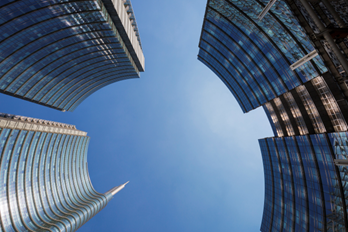
Another reason the sector remains steady is the way developments are planned. Unlike speculative markets that rely heavily on rapid cycles, major projects in the UAE are typically structured years in advance, both financially and operationally.
“Dubai’s real estate market continues to demonstrate resilience, supported by strong economic stability, investor-friendly regulations, and long-term development planning,” says Michael Belton, CEO of MERED. “Most large-scale projects are financed and scheduled years in advance, allowing construction and delivery timelines to proceed regardless of short-term regional developments. The emirate also benefits from a highly international investor base, which helps diversify demand across different geographies and economic cycles. While some investors may temporarily adopt a wait-and-see approach, particularly during seasonal travel periods, long-term confidence in Dubai remains strong. Design-led developments with strong investment horizons continue to attract globally diversified buyers focused on stability and long-term value.”
This long-term outlook has created a development environment where momentum rarely depends on immediate sentiment. Even when some investors adopt a temporary wait-and-see approach, often influenced by travel seasons or global headlines, the broader market remains active.
Equally important is the diversity of buyers entering the UAE market. Investors today come from a wide range of international markets, which naturally spreads demand across different economic cycles. That global mix has helped the sector maintain stability in moments where other property markets might experience sharper fluctuations.
At the same time, the conversation around real estate in the UAE is no longer limited to transactions and investment returns. Increasingly, it is also about the evolution of design, sustainability, and how people want to live in rapidly growing cities.
“The UAE’s architecture and design sector remains resilient and continues to prosper,” notes Nataliia Melnyk, Founder of NKEY Architects. “Ongoing projects across the country reflect the industry’s stability and commitment to innovation.”
Architects are increasingly integrating sustainable materials, smart technologies, and more thoughtful spatial planning into developments across the region. Melnyk points out that this momentum is reflected in the firm’s own growth, with more than 200 projects currently underway in the UAE as part of a global portfolio of over 500.
For many international firms, Dubai has become more than just a market — it has become a strategic base for long-term regional expansion.
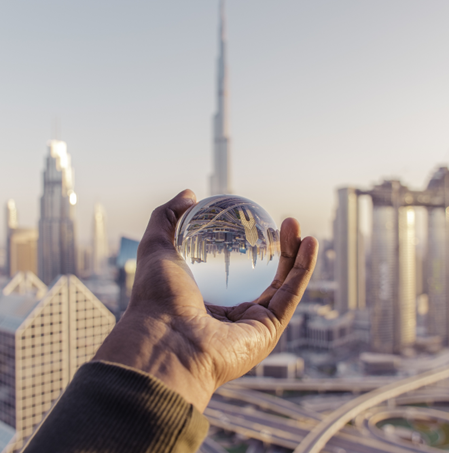
All of this points to a larger shift in how the UAE real estate sector is evolving. The market is no longer defined by cycles of rapid booms and corrections. Instead, it is gradually maturing into a globally integrated property ecosystem shaped by infrastructure investment, population growth, and a steady pipeline of design-led developments.
Resilience, here, is not just about weathering uncertainty. It is about continuing to build and rise above it. From progressive policy frameworks to sustained infrastructure investment and strong investor confidence, the country has cultivated a stability that reassures markets and encourages long-term commitment.
And perhaps that is why the UAE’s property sector continues to stand apart during moments when other markets hesitate. The foundations supporting it – strong regulation, global investors, and a clear long-term vision were designed precisely for times like these.
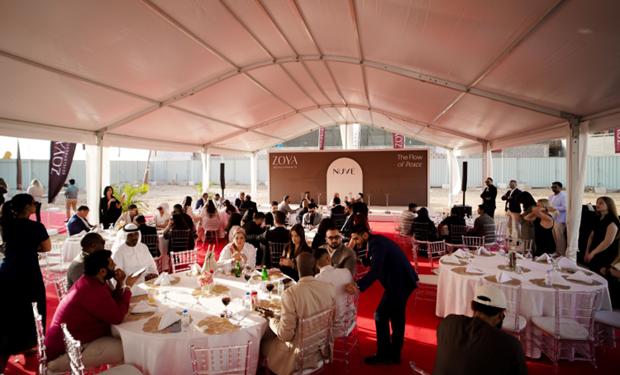
Zoya Developments has announced the launch of Nuvé by Zoya, a new mid-rise residential development in Dubai Land Residence Complex, valued at AED 202,000,000. The project introduces 232 fully furnished residences within Dubai Land Residence Complex, one of the city’s established and fast-evolving residential hubs.
With a handover scheduled for Q2 2028, the development features units comprising 169 studios ranging from 414 to 519 sq ft, 51 one-bedroom residences ranging from 770 to 899 sq ft, and 12 two-bedroom residences at 1,177 sq ft. Prices start from AED 695,000, with a structured 50/50 payment plan and monthly instalments from 1 percent, positioning the project competitively within its segment.
Commenting on the launch, Shoaib Khann, CEO of Zoya Developments said, “Nuvé reflects our continued commitment to creating thoughtfully designed communities that respond to the evolving needs of Dubai’s residents and investors. We see strong demand for well-located, design-led developments that offer both lifestyle quality and long-term value. Through Nuvé, we are delivering fully furnished homes with efficient layouts, integrated smart systems, and a comprehensive amenity offering, supported by a disciplined payment structure that enhances accessibility and investment appeal.”
With over 14 years of experience in the UAE real estate sector, Zoya Developments has delivered more than 100,000 units and committed over AED 2 billion in investment toward shaping modern communities. The launch of Nuvé aligns with the company’s long-term expansion strategy in Dubai, focusing on delivering contemporary, design-driven developments that combine functionality, transparency, and sustainable value creation.
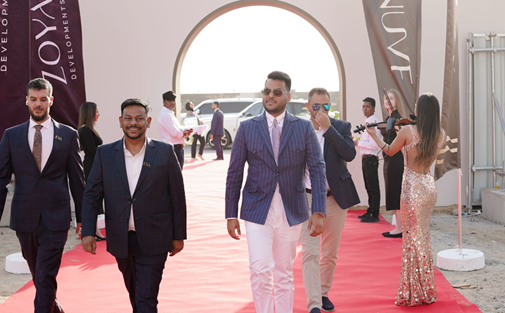
Strategically located in Dubai Land Residence Complex, Nuvé benefits from direct connectivity to major highways linking Downtown Dubai, Business Bay, and both international airports. The surrounding community is supported by established schools, healthcare facilities, retail centers, and leisure destinations, reinforcing the area’s appeal for long-term residents and rental demand. As Dubai Land Residence Complex continues to mature as a residential destination, Nuvé is positioned to capture demand from professionals, young families, and investors seeking accessible price points within a connected urban environment.
Architecturally, Nuvé presents a contemporary mid-rise profile defined by balanced geometry and soft lines that contribute to a distinctive yet understated identity within the community. All residences are delivered fully furnished and incorporate integrated smart home systems, enhancing operational convenience and rental readiness from handover. Interiors are designed with neutral palettes, natural finishes, and floor-to-ceiling glazing to optimize natural light and spatial efficiency, aligning with evolving buyer preferences for turnkey living solutions.
The development includes a comprehensive amenity offer aimed at strengthening long-term asset value and resident retention. Facilities include an infinity pool, plunge pool, jacuzzi, landscaped gardens, reflexology path, indoor and outdoor gyms, yoga area, rooftop seating zones, cabanas, fire pit terrace, barbecue areas, children’s play area, and a sightseeing deck. The integration of wellness-driven and social spaces reflects broader market demand for lifestyle-integrated residential developments that support both livability and rental competitiveness.
Attributed by Nataliia Melnyk, Founder of NKEY Architects
Homes today carry far greater responsibility than they did even a decade ago. The modern residence must support productivity, restoration, creativity, and social life within a single environment. Hybrid work models, constant digital connectivity, and a stronger focus on personal wellbeing have reshaped how people live inside their homes and what they expect from residential architecture. Clients want homes that actively support their lifestyle rather than simply accommodate it. A well-designed environment influences attention span, emotional balance, and even decision-making. Homes that lack structure often create subtle tension and distraction, while thoughtfully organised environments help people concentrate, relax, and move through daily routines with greater clarity.

This shift supports the broader global architecture services market, which is projected to exceed $605 billion by 2033. Designing such environments requires a deeper understanding of how spatial planning, materials, lighting, acoustics, and technology interact to shape everyday experience.
When these elements are carefully integrated, the home evolves from a collection of rooms into a lifestyle ecosystem that supports how people work, rest, and connect.
Designing for Human Experience
Home architecture shapes daily lives in subtle but powerful ways. Traditional spatial philosophies such as Feng Shui have long recognised the emotional influence of the built environment. Through elements such as sound, light, texture, and atmosphere, home spaces influence how people perceive and respond to their surroundings.
Residential space also functions as a behavioural environment. When spatial hierarchy, visual depth, and circulation are carefully considered, the environment naturally guides how people move, focus, and interact within the home. Poorly structured interiors often create cognitive noise, while clear spatial organisation allows the mind to settle and engage more deliberately with everyday activities.
Homes host several activities at once, and each function requires different spatial qualities. Acoustic planning allows them to coexist within a cohesive home. A workspace may sit close to a family living area, used for conversation or entertainment. Materials that absorb sound, such as textured wall finishes, acoustic panels, upholstered furniture, and layered fabrics, help reduce noise transfer. Without proper acoustic control, persistent background noise can increase stress levels and make it harder to focus, according to the World Health Organization.
Lighting also shapes how a home shapes the home experience. Natural daylight regulates circadian rhythms, which influence sleep quality, mood, and productivity. Generous windows, skylights, and reflective surfaces allow daylight to reach deeper into interior spaces. Artificial lighting should support these patterns, with adjustable systems shifting from cooler tones during working hours to warmer ambient light in the evening.
Clear axes, balanced proportions, and defined centres of gravity create a sense of orientation and stability within the interior. When a space offers visual direction and spatial order, it becomes easier for occupants to feel physically grounded in their surroundings. Higher ceilings tend to encourage expansive thinking and creativity, while lower, more intimate spaces support concentration and detail-oriented tasks.
Materials and textures also shape how comfortable a home feels. Natural materials such as wood, stone, clay, and linen create spaces that feel grounded and tactile. Their subtle variation adds visual depth that many synthetic finishes lack while strengthening the connection between indoor environments and nature.
Thoughtfully composed colour palettes help the rhythm of life in each zone, especially in luxury projects. Cooler contrasts can stimulate alertness and support focus in workspaces, while deeper, warmer tones often create a sense of comfort, optimism and psychological security in shared spaces.
Spaces for Everyday Living
Many residential projects now approach the home as a lifestyle ecosystem where architecture supports multiple aspects of daily life. As global interest in health continues to grow, the wellness economy is projected to reach $8.5 trillion by 2027. In residential design, this translates into spaces such as meditation rooms, home gyms, spa-style bathrooms, and quiet reading areas. Natural ventilation, calming colour palettes, and visual connections to greenery further enhance these environments.
Spatial zoning can also influence household relationships. When homes provide areas for both shared activity and individual retreat, they reduce friction that can arise from constant proximity. Clearly defined personal territories and well-organised communal spaces support healthier interaction and allow different members of the household to maintain their own routines. Acoustic separation, ergonomic layouts, and visual calmness help support this.
When layouts are overly complex or visually disorienting, occupants often experience subtle stress responses such as irritation or avoidance of certain areas. Logical spatial organisation helps reduce this cognitive strain by allowing residents to move through the home effortlessly.
Open kitchens, entertainment rooms, and outdoor terraces provide spaces for interaction and relaxation. Outdoor living areas are particularly valuable because they extend the home’s usable space while strengthening the connection to nature. Gardens, shaded patios, and terraces offer informal settings for gathering and social activity.
When wellness, work, and leisure zones are thoughtfully integrated, the home becomes a dynamic environment that adapts to different rhythms throughout the day.
Adaptive Home Technology
Smart home automation is also shaping how interiors respond to everyday life. Lighting, temperature, and ventilation can now adjust automatically throughout the day, creating comfortable environments without constant manual control.
These systems can connect to AI assistants that act as a central interface for the home. With a simple voice command, residents can dim lights, adjust the home climate, or activate evening settings across multiple rooms. Over time, many systems learn household routines and preferences, with lighting, music, and temperature adapting automatically to daily patterns. When integrated thoughtfully, the technology remains discreet. Instead of dominating the space, automation works quietly in the background, helping the home feel more intuitive, responsive, and comfortable to live in.
Four Ways to Create a Calm, Functional Home
Research shows that homes with thoughtful spatial balance support personal discipline and long-term goals. When environments reinforce productive habits and healthy rest, they become anchors for personal development.
Daylight should be allowed to move freely through the interior, which can be achieved through generous glazing, skylights, and surfaces that reflect light deeper into the space. Interiors also benefit from clear circulation and visual order, where furniture and layout allow people to move through the space easily. Surfaces with natural character, such as timber, stone, or woven textiles, introduce warmth and sensory richness, making spaces feel more inviting. It is also helpful to establish subtle boundaries between areas dedicated to focused work and those intended for rest or social interaction. Even modest spatial cues can help the home shift smoothly between different moments of daily life.
The modern home has evolved into an environment that supports many dimensions of daily life. For architects, the challenge is to design homes that function as complete ecosystems. When architecture engages both functionality and the human senses, the home becomes a place that actively enhances the way people live.


WHY THE UAE REAL ESTATE MARKET REMAINS RESILIENT
BKRY PARTNERS WITH BROOKI BAKEHOUSE FOR EXCLUSIVE LIMITED-EDITION CROOKIE
THE BILTMORE VILLAS DUBAI INTRODUCES EXCLUSIVE PRIVATE VILLA STAYCATIONS THIS EID



-
News10 years ago
SENDQUICK (TALARIAX) INTRODUCES SQOOPE – THE BREAKTHROUGH IN MOBILE MESSAGING
-

 Tech News2 years ago
Denodo Bolsters Executive Team by Hiring Christophe Culine as its Chief Revenue Officer
-
 VAR11 months ago
Microsoft Launches New Surface Copilot+ PCs for Business
-

 Tech Interviews2 years ago
Navigating the Cybersecurity Landscape in Hybrid Work Environments
-

 Tech News8 months ago
Nothing Launches flagship Nothing Phone (3) and Headphone (1) in theme with the Iconic Museum of the Future in Dubai
-

 Automotive1 year ago
AGMC Launches the RIDDARA RD6 High Performance Fully Electric 4×4 Pickup
-

 VAR2 years ago
Samsung Galaxy Z Fold6 vs Google Pixel 9 Pro Fold: Clash Of The Folding Phenoms
-

 Tech News2 years ago
Brighton College Abu Dhabi and Brighton College Al Ain Donate 954 IT Devices in Support of ‘Donate Your Own Device’ Campaign