
 Have a question? +971 56 404 0503




Home Integrator
A FRESH PERSPECTIVE ON RESIDENTIAL DESIGN


Exclusive interview with Noor Al Muhaideb, founding partner, Opaal interiors.
Noor, you’ve been designing since your AUSD days and now lead Opaal Interiors, what was the pivotal moment when design switched from passion to purpose in your life?
Design has been an enduring passion from an early age, where I found myself drawn to patterns, spaces, and materials. This soon became a professional purpose during my formative years at the American University of Sharjah (AUSD) and subsequently throughout my tenure at Emaar Properties. At AUSD, I refined my technical skills, deepened my understanding of spatial planning, and cultivated a disciplined approach to design. This foundation allowed me to transform instinctive creativity into a structured, impactful practice.
Earlier in my career, I witnessed firsthand how interiors influence lifestyle, wellbeing, and daily experience, far beyond aesthetic considerations. Leading complex residential and hospitality projects revealed the profound effect of thoughtful planning and detailing on occupants’ quality of life. Today, I always look forward to creating environments that are emotionally resonant, where every detail contributes to a meaningful, lived experience.
As founding partner and a lead creative designer, how do you balance executive leadership with creative direction?
At Opaal, leadership and creativity are inseparable yet distinct. My role requires overseeing the strategic growth of the firm including, client engagement, project delivery and operational excellence, while simultaneously shaping the creative vision of every project.
Creativity is the core of our work, which is why nurturing talent is a priority. We encourage young designers to contribute ideas boldly, experiment within project parameters, and take ownership of their work. By fostering this sense of responsibility and creative autonomy, we maintain innovation at the core of our practice while ensuring that every project meets Opaal’s high standards of quality and refinement.
From a business perspective, launching Opaal in a competitive market demanded patience and deliberate strategy. Building a credible client base and reputation took time, particularly when established firms dominated the landscape. By emphasizing meticulous planning and team work, we gradually established trust and credibility.
Adapting to this approach is important for the industry and it is slowly aligning in this direction. For instance, in 2025, over 65 per cent of mid-sized GCC design firms reported collaborative leadership models to balance operational efficiency with creative excellence.
In our industry, this focus ensures that our company remains both a strategically robust business and a leading creative force in the region’s interiors sector.
Opaal emphasizes spaces that feel personal and emotionally grounded. How do you translate a client’s inner world into physical form without losing authenticity?
At Opaal, translating a client’s inner world begins with deep engagement and collaboration. We invest time in understanding their lifestyle and emotional priorities, refining ideas together from concept through execution. Every decision we make, whether it is layout and lighting or materials and textures, it is guided by their identity, ensuring that the space feels authentic and personal. Through this, we create interiors that are functional and refined as well as emotionally resonant, supporting wellbeing and leaving a lasting impression.
As Juan Montoya notes, “A room should never allow the eye to settle in one place. It should smile at you and create fantasy.” This mindset allows our work to remain timeless and meaningful.
Can you walk us through a design decision you made recently, maybe a material, custom joinery piece, or lighting solution, and why it was pivotal to the space’s narrative.
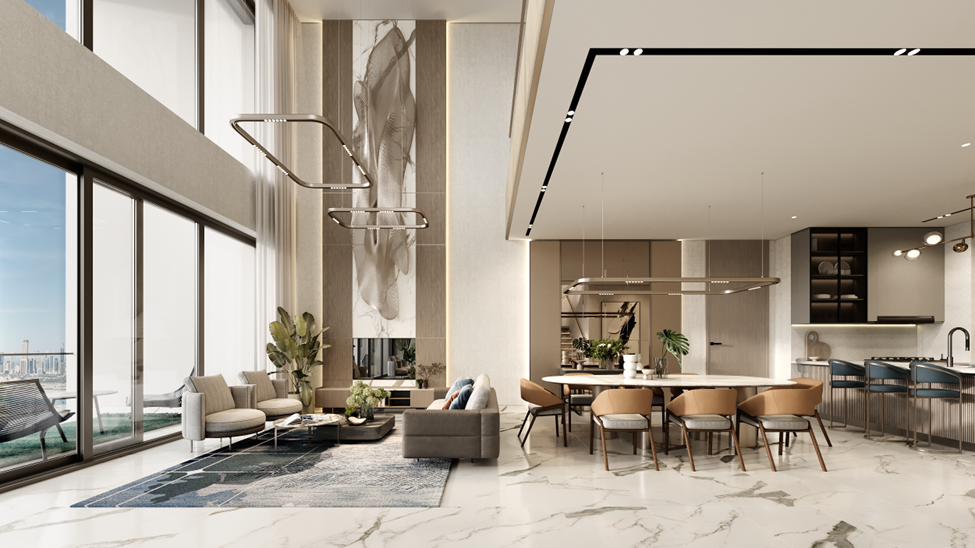
At the MANSORY Residences, we reinterpreted the precision of automotive craftsmanship within a refined residential setting. A custom chaise-like sofa, with a contoured profile inspired by grand tourer seating, anchors the living space with sculptural presence and everyday comfort. The surrounding joinery layers charcoal and graphite tones with cognac leather inlays and brushed metal detailing, balancing strength with warmth. Concealed coves and integrated lighting introduce a soft, ambient glow reminiscent of a luxury dashboard. The result is a composed, immersive environment where bold design is thoughtfully softened for daily living.
How do you balance aesthetic boldness with comfort and emotional resonance, especially in private residential spaces?
Residential design is uniquely distinctive and requires particular care because we are shaping spaces where people live, and rest. For me, bold design is always in service of the people who inhabit a space. Every material, texture, and detail is considered should be more than a visual impact and should focus on how it affects mood and daily life. We firmly believe that a striking feature is only meaningful if it makes the space feel welcoming and emotionally supportive.
We start by understanding how people interact, and experience their homes, then integrate statement elements with restrained palettes, tactile finishes, and bespoke detailing. The goal is to ensure that every home feels personal, which is bold yet restorative.
In an age of fast aesthetic trends, how do you resist momentary visual noise and maintain integrity in your designs?
Maintaining design integrity begins with a clear vision and a deep understanding of each project’s context. We ensure that every decision aligns with the story and purpose of the space, rather than short-lived trends. Moreover, we treat design as a living dialogue between people and their environment.
For example, in the MANSORY Residences by Amaal, Opaal focused on automotive-inspired luxury elements that deliver a consistent, sensory-rich experience throughout the space. The interiors combine bespoke materials, precise detailing, and a thoughtful layout that elevates the concept without resorting to superficial visual effects.
This approach is reinforced by wider industry behaviour where more than 55 per cent of interior designers report that minimalistic and purposeful design is increasingly popular among clients, reflecting a preference for authenticity and longevity over short‑lived trend cycles.
Your recent partnerships, like with MANSORY Residences by Amaal, blend iconic brand identities, how do you approach co-design with global lifestyle brands?
Collaborating with global lifestyle brands requires respecting the brand’s identity while translating it into a tangible, human-centered environment. For MANSORY Residences, our approach began with understanding the brand’s automotive-inspired luxury ethos and the expectations of its residents. We then translated those values into the interiors through bespoke materials, tailored detailing, and spatial planning that reflects both the brand and the lived experience of occupants. We are working closely with the brand, the developer, and other stakeholders to ensure that we meet their standards while keeping our timeless elegance and design elements.
An aerial image of the 42-acre Battersea Power Station masterplan with 16 acres of the brownfield site to develop (left) – Credit High Level Photography. A CGI of the next chapter of Battersea Power Station, delivering up to 3.2 million sq ft of mixed-use development. Buildings are indicative only and subject to design detail and Reserve Matters applications (right) – credit Studio Egret West.
Battersea Power Station has submitted a planning application to evolve the development’s masterplan for the remaining 16 acres of the 42-acre riverside neighbourhood, setting out an ambitious vision for the next chapter of one of Central London’s last large-scale brownfield sites.
Proposing up to 3.2 million sq ft of residential, commercial and leisure space across 16 acres, the future phases of Battersea Power Station will nearly double the scale of development already delivered across the thriving riverside neighbourhood.
Renowned master planner, urban designer and landscape architect, Studio Egret West, has refreshed the original masterplan by Rafael Viñoly, which is over 15 years old, to respond to major changes in urban living, working and how people spend their leisure time. It also reflects feedback received through public consultation and stakeholder engagement which took place throughout the summer.
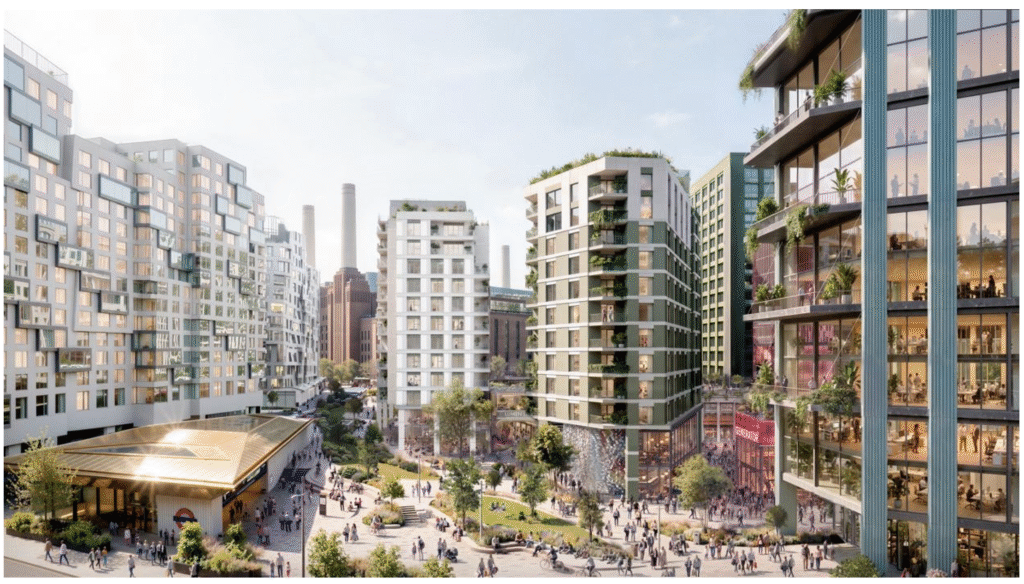
A CGI of the view from Battersea Park Road towards the Grade II* listed Power Station. Buildings are indicative only and subject to design detail and Reserve Matters applications (right) – credit Studio Egret West.
Recognising the diverse needs of people living within a city and building on the success of the first half of the riverside neighbourhood, the future phases will continue to follow a mixed-use approach. Commercial spaces of varying sizes and designs will support a broad range of businesses, alongside new homes, cultural and leisure venues, furthering Battersea Power Station’s vision of creating a vibrant and inclusive place for all.
Studio Egret West’s new proposals adapt Viñoly’s original masterplan by dividing each of the remaining phases into clusters of smaller buildings, helping the neighbourhood to feel more open and connected with the wider area. The plans also introduce a finer network of streets, laneways, courtyards and passages, which will give people a greater choice about how they move through the neighbourhood.
New sightlines through the future buildings will create stronger visual connections to the Power Station, helping the local community engage with the restored landmark while ensuring it remains the dominant architectural feature of the riverside neighbourhood.
The emerging landscaping proposals help to stitch Battersea Power Station together with the wider Nine Elms area, by including a ‘green handshake’ across Nine Elms Lane connecting
directly to Nine Elms Park. A planting strategy has also been developed with biodiversity and a changing climate in mind, featuring a varied mix of resilient species and references to Battersea’s history, including lavender.
A ‘Third Generator’ is a core part of the emerging vision. Inspired by the Power Station’s history of generating one-fifth of London’s electricity. The ambition is to create a dynamic venue that brings together a diverse mix of uses and experiences spanning the arts, music, fashion, food, education, sport and the wider creative industries.
Phase 5A, within the future phases, has already received detailed planning permission and will deliver 200 new council homes in partnership with Wandsworth Council. The remaining phases will be subject to design detail and Reserved Matters applications.
Tan Sri Shahril Ridza Ridzuan, Chairman of Battersea Project Holding Company, said: “The submission of our revised masterplan for the remaining 16-acres of Battersea Power Station is a critical step forward in realising the vision for this vibrant mixed-use neighbourhood. Projects of this scale and ambition take decades to bring to fruition, during which time cities naturally evolve and advance, and it’s our duty as custodians of a major undeveloped part of the city to take account of these adjustments.
When we embarked on this project in 2012, we understood the scale of the challenge ahead, from restoring a derelict Grade II* listed landmark to investing in major public infrastructure to support the mixed-use eco-system. Our steadfastness and relentless commitment to delivery remains as strong today as it was 14 years ago, and this is reflected in our ambitious revised masterplan for the remaining phases.”
James Saunders, CEO of Battersea Power Station Development Company, said:
“The last decade has seen events like Covid-19 and digital integration into everyday life blur the boundaries between work, living and leisure time, all fundamentally changing how we interact with cities. Responding to this, our refreshed masterplan seeks to place community and connection at the core of Battersea Power Station.
From green spaces, to expanding London’s cultural scene, championing business innovation, creating new homes and delivering thousands of new jobs, our proposals for the next chapter of Battersea Power Station will build upon our existing successes and create a future-proofed neighbourhood that London can be proud of.”
David West, Founding Director at Studio Egret West, said:
“The revised masterplan builds on the success of the first half of the Battersea Power Station story, creating opportunities for more homes, workplaces, retail and leisure including a new hybrid cultural venue. The future phases will be more permeable, inclusive and intriguing, with an expanded network of playful, artistic and biodiverse public spaces. The refreshed vision is also deliberately flexible, leaving room for serendipity, while remaining responsive and resilient to what we’ve learned from the journey so far. It’s about commerce, culture, community and curiosity working in harmony.”
Battersea Power Station has become a global blueprint for regeneration, transforming the former coal-fired Power Station and surrounding brownfield site into a thriving mixed-use neighbourhood home to over 3,000 residents, 8,000 workers and welcoming millions of visitors each year.
Major public infrastructure has firmly established Battersea Power Station’s position in Central London, including the Northern Line Extension which opened five years ago. This improved connectivity has helped support the delivery of more than 2,200 homes, c. 800,000 sq ft offices and over 170 British and international brands now open across the riverside neighbourhood.
Culture and community are equally central to the neighbourhood’s success. A growing programme of large-scale events, including last weekend’s celebrASIA festival, demonstrates Battersea Power Station’s role not only as a place to live and work, but as a destination that brings people together.
Progress is already being made on the next phases of development with construction beginning earlier this month on Prospect Place South, two new buildings designed by Gehry Partners. The buildings are part of Frank Gehry’s first and only UK residential development, and will provide approximately 300 homes, 65,000 sq ft of commercial space and a 15,000 sq ft community hub, while completing the pedestrianised high street, Electric Boulevard.
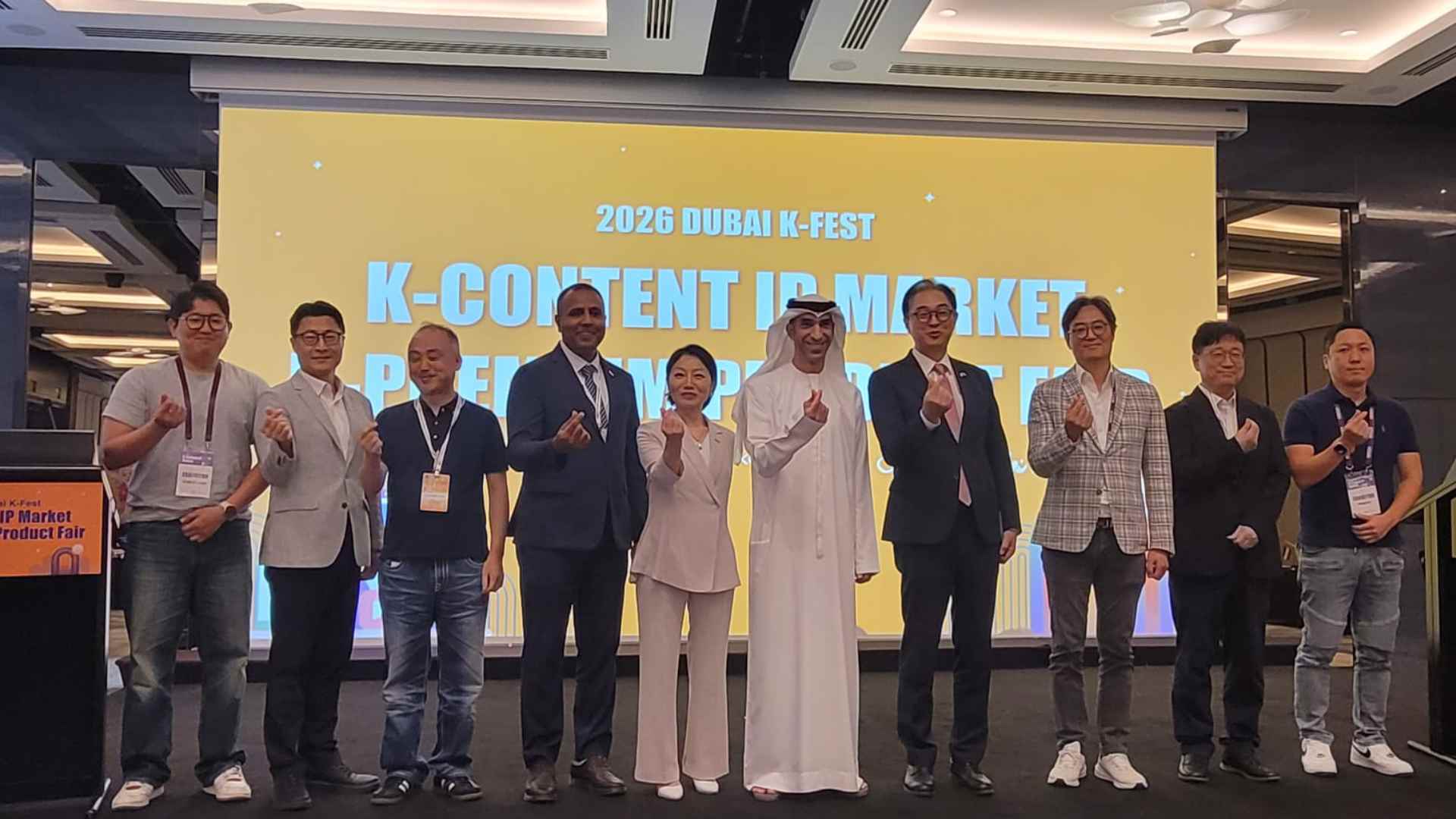
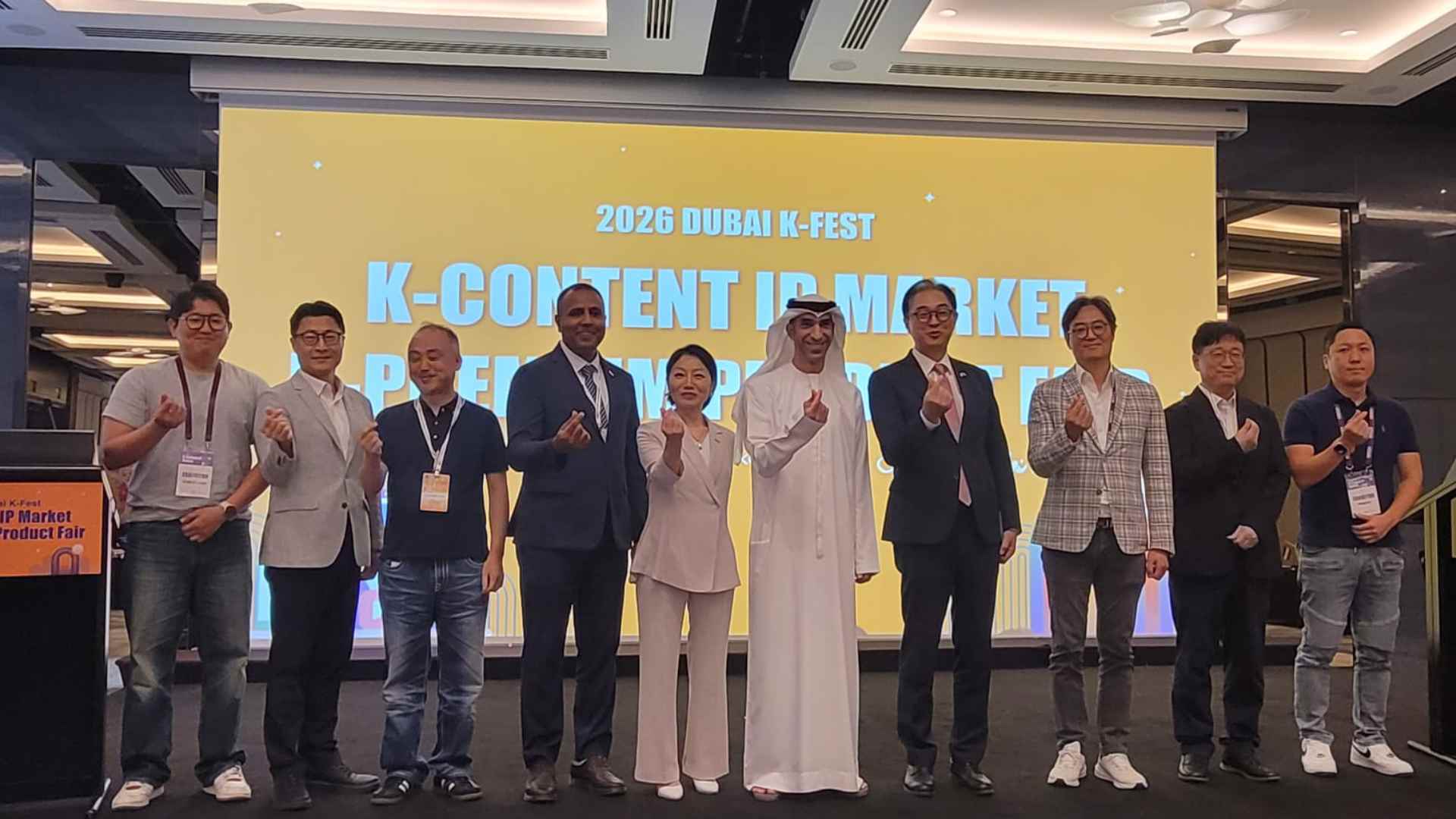
COEX, President, Jo Sang Hyeon has launched the first ‘2026 K-Premium Products Fair in Dubai’, taking place from September 29 to October 1 at InterContinental Dubai Festival City in Dubai, to support promising Korean SMEs in entering the Middle Eastern market and expanding their export channels.
H.E. Dr. Thani Bin Ahmed Al Zeyoudi, Minister of Foreign Trade for the United Arab Emirates, graced the occasion with his presence and delivered the keynote address. Lee Won-ik, Ambassador of the Republic of Korea to the United Arab Emirates and Mr. Jonghoon Han, Director of COEX, were also present at the event. Jo Sang Hyeon, President of COEX, said, “This event, the first COEX is presenting in Dubai, is meaningful as both an initiative to support Korean SMEs entering the Middle East and a starting point for expanding COEX’s overseas business into the region. We aim to support promising Korean SMEs by facilitating direct consultation with local buyers and enabling them to assess consumer responses so that they can practically evaluate their potential to enter the Middle Eastern market. Going forward, we will continue to expand export channels for Korean companies across the GCC and throughout the Middle East by leveraging our global exhibition and buyer networks.’’
This is the first event being organized by COEX in Dubai and marks its first exhibition in the Middle East as COEX expands its overseas business operations following Vietnam and Indonesia. It connects Korean consumer-goods companies with buyers from the six Gulf Cooperation Council (GCC) countries—Saudi Arabia, the UAE, Qatar, Kuwait, Bahrain, and Oman—and connect the companies with local market local market validation and sales opportunities.
A total of 50 promising Korean consumer-goods companies have participated across categories including beauty and fashion, living and interior, food and beverages, and other consumer products. A key feature of the event is its one-on-one export consultation program, connecting participating companies with distributors and purchasing representatives from major retail networks across the GCC markets, including the UAE, Saudi Arabia, and Qatar.
COEX has leveraged its global buyer network and local agents to identify and match potential buyers in advance according to each participating company’s product portfolio and export needs. COEX is also providing consultation and export support aimed at helping participating companies enter local distribution networks.
Alongside the export consultations, the event features an offline local showcase and an online sales programme designed to introduce participating brands to the local market. Before and after the event, participating companies’ products are being showcased to local consumers at major retail facilities in Dubai.
Following the event, COEX will support cross-border trade (CBT) online sales for approximately two months, allowing participating companies to assess consumer interest and market potential.
COEX plans to use its first Dubai event as a stepping stone to expand into the Middle Eastern market, leveraging its experience and networks in consumer-good exhibitions and export-support in Vietnam and Indonesia to strengthen its presence across the GCC and the wider Middle East and North Africa (MENA) region.
EVENT OVERVIEW
Event Name: ‘2026 K-Premium Products Fair in Dubai’
Date: September 29 (Tue) – October 1 (Thu), 2026
Venue: InterContinental Dubai Festival City, Dubai, UAE
Main Product Categories: Promising consumer goods, including beauty and fashion, living and interior, food and beverages
Programs: One-on-one export consultations, offline showcase, online sales linkage, VIP networking, visits to local retail facilities
Artificial intelligence is moving beyond chatbots and content generation. Dubai-based technology company Hash Include is unveiling Scarlett, a new business platform designed to let an AI assistant work directly with live company data, prepare operational tasks and support day-to-day business processes while keeping sensitive decisions firmly under human control.
Rather than functioning as another AI tool layered on top of existing software, Scarlett brings sales, purchasing, stock, manufacturing, finance, projects, people and documents into one connected system, giving businesses a single-view of their operations.
The platform has been developed by Anas Abdul Latheef, Founder and technology expert at Hash Include, drawing on the company’s experience building and integrating operational systems since 2014 across government, transport, logistics, postal, healthcare and industrial environments, including platforms operating at national scale.
From answering questions to doing the work
Scarlett’s built in assistant is designed to work with a company’s live business data. Users can ask questions in plain language, identify issues requiring attention and prepare routine tasks within the permissions assigned to them.
The assistant can surface overdue invoices or low stock, prepare work for authorised users and create an outbound payment batch for review. But it cannot bypass user permissions, credit limits, minimum margins or required approvals. Payments, credit notes, deletions and permission changes require human confirmation.
That distinction is central to the platform. AI can prepare the work, but people remain responsible for high-risk decisions.
For payments, Scarlett can prepare a batch and flag potential issues such as duplicate invoices or changed bank details. An authorised human checker must then review and release the payment.
AI without being locked to one AI company
Another feature of Scarlett is its approach to the AI model itself.
The platform is designed so businesses can choose which AI model powers the assistant and change that model later without changing their underlying business system, records or workflows. The product documentation identifies options including Claude, Gemini, OpenAI and Llama, as well as other open weight models.
For organisations with stricter data requirements, the assistant can also run on controlled infrastructure using an open weight model. Businesses can also operate Scarlett without an AI assistant if they choose.
Built around the way businesses actually work
Scarlett is designed to be configured around individual business processes rather than forcing companies into a rigid workflow.
Fields, documents, numbering, approval stages, permissions and terminology can be configured around the organisation. Where an industry requires functionality beyond the platform’s standard capabilities, Hash Include says it can be developed as a dedicated module within the system rather than leaving the process dependent on spreadsheets or disconnected tools.
The platform can support different industry requirements, including construction, manufacturing, trading, field services, professional services and retail.
Keeping sensitive business data under control
Scarlett is designed as a single tenant system, meaning each company’s dedicated system, database, encryption keys and backups are separated from those of other customers.
The platform documentation also describes deployment in the jurisdiction required by the customer, including in country UAE deployment, alongside nightly backups, scheduled restore testing and time limited, logged administrative access. Customer records are not used to train an AI model.
For businesses already relying on legacy systems, Scarlett is designed to connect rather than necessarily replace them. The platform supports REST APIs, webhooks, scheduled data transfers, email capture and single sign on, allowing existing applications, payment systems, storefronts, logistics platforms and other services to remain part of the technology stack.
A gradual shift rather than a complete system overhaul
Hash Include’s rollout model is designed to introduce Scarlett progressively. The company’s documentation describes an initial phase for creating the customer’s dedicated instance and loading existing data, followed by configuration of business processes, permissions and approvals.
The first operational area typically goes live around the second week, with purchasing, stock, invoicing, accounts and projects introduced progressively thereafter.
Anas Abdul Latheef, Founder of Hash Include, said:
“Businesses don’t need another AI tool sitting beside the systems they already use. They need technology that understands how the business actually operates and can help move that work forward. Scarlett is built around that idea, connecting the business first, putting AI inside the workflow, and making sure automation remains subject to the company’s own permissions, processes and people.”


Global minimum tax is reshaping how companies are bought and sold in the UAE: Report

CABSAT and SATExpo 2026 head to new Expo City Dubai home with expanded focus on content, Mediatech & Pro AV and the commercial space economy
BATTERSEA POWER STATION WRITES NEXT CHAPTER OF 42-ACRE REGENERATION



-
News11 years ago
SENDQUICK (TALARIAX) INTRODUCES SQOOPE – THE BREAKTHROUGH IN MOBILE MESSAGING
-

 Trending11 months ago
OPPO A6 Pro 5G Review: Reliable Daily Driver
-

 Tech News2 years ago
Denodo Bolsters Executive Team by Hiring Christophe Culine as its Chief Revenue Officer
-
 VAR1 year ago
Microsoft Launches New Surface Copilot+ PCs for Business
-

 Automotive2 years ago
AGMC Launches the RIDDARA RD6 High Performance Fully Electric 4×4 Pickup
-
Tech Interviews3 years ago
Navigating the Cybersecurity Landscape in Hybrid Work Environments
-
 Tech News2 years ago
Toshiba Announces MG10-D Series of Enterprise HDDs with Capacities up to 10TB
-

 Tech News1 year ago
Nothing Launches flagship Nothing Phone (3) and Headphone (1) in theme with the Iconic Museum of the Future in Dubai