
 Have a question? +971 56 404 0503




Automotive
DIGITIZATION-LED DISRUPTION SET TO RESHAPE GCC AUTO COMMERCE ECOSYSTEM

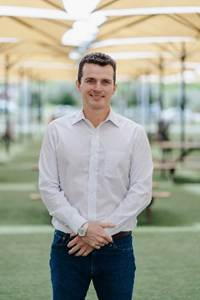

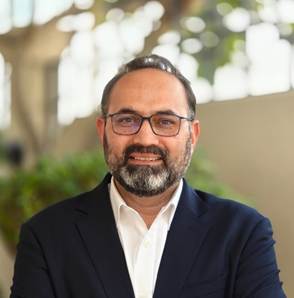
Autotech Ventures is expanding into the Gulf Cooperation Council (GCC) by establishing a presence in the United Arab Emirates (UAE). This move by the global venture capital firm focused exclusively on ground transport innovation is aimed at pursuing opportunities in the use of disruptive technologies that will further improve the region’s auto commerce ecosystem. To support this, Autotech Ventures has appointed Saud Abbasi as Regional Advisor and Rabih Haydar as Director of Partnerships EMEA (Europe, Middle East and Africa).
“The GCC is rapidly becoming one of the most dynamic automotive markets in the world,” said Quin Garcia, Autotech Ventures co-founder and managing director. “We expect sweeping digitization of the GCC’s auto commerce ecosystem over the coming decade.”
Founded in 2015, Autotech Ventures manages nearly $600 million globally and invests from pre-Seed through Series B in startups transforming ground transportation. The firm has backed more than 60 companies across auto commerce, autonomous systems, electrification, connectivity, fintech, supply chain and logistics and AI. Its portfolio includes Lyft (NASDAQ: LYFT), indie Semiconductor (NASDAQ: INDI), SpotHero (acquired by Uber) and Outdoorsy, along with early-stage companies, including Bumper, Fixico, GenLogs, Plug and Yendo.
Strategic Expansion
New competition from Chinese automakers and shifting government policies are forcing GCC corporations to rethink how they move vehicles, electrify fleets and manage distribution and aftersales. Autotech’s focus in the GCC spans AI-driven dealership operations, mobility fintech, connected fleet systems and aftermarket modernization.
Autotech Ventures will back early-stage founders building solutions to digitize GCC auto commerce, from franchise dealer groups and used car platforms to fleet operators, vehicle finance providers and aftermarket service centers.
Regional Presence
Saud Abbasi has been appointed regional advisor, guiding Autotech Ventures as it enters the new market. He brings a broad spectrum of experience across the automotive value chain, spanning captive finance, product marketing, sales and distribution leadership and multi-brand dealership management.
“The Gulf has capital and the ambition to redefine how mobility ecosystems are built,” Abbasi said. “This is a market where distribution models, electrification timelines and cross-border trade are evolving in parallel. Autotech’s disciplined investment approach can help channel that momentum into scalable, global companies.”
Rabih Haydar will lead Autotech’s on-the-ground engagement across the GCC, working with founders, corporates, VCs, sovereign investors and family offices. He will focus on sourcing investments, supporting portfolio market entry and helping GCC corporations discover and engage with startups driving the next wave of innovation.
Haydar brings over a decade of experience across mobility, automotive technology and financial services, and strong relationships across regional dealer groups and fleet operators. He previously held senior roles at CDK Global and Incadea, where he worked closely with automotive retailers on digital transformation initiatives. He also contributed to the early growth and expansion of Invygo across the UAE, KSA and Qatar.
Both CDK Global and Invygo have played key roles in the digital transformation of the region’s mobility sector. Through a first-of-its-kind subscription app in the region, Invygo has revolutionized how people can access car subscription and ownership without the hassle of paperwork. On the other hand, CDK Global’s world-class dealership software solutions have helped facilitate operational efficiencies among some of the region’s key automotive dealers.
“The GCC isn’t an emerging market anymore,” Haydar said. “Capital is flowing, operators are under real pressure to modernize, and now is the time for intense technology innovation. I’ve spent my career inside these businesses and know where the opportunities lie. Autotech’s platform gives regional founders access to global capital and proven playbooks, while giving GCC corporations a direct line to the startups reshaping the industry.”
“What’s happening in the GCC isn’t a cycle, it’s a reset,” Garcia said. “We’re here at the right time, with the right partners and intend to build something lasting. Saud and Rabih have spent decades inside the GCC, giving us a real advantage.”
Autotech’s model centers on connecting entrepreneurs, corporate operators and institutional investors to accelerate commercialization and scale. The firm works closely with its limited partners and portfolio companies, providing sector expertise and access to global markets.
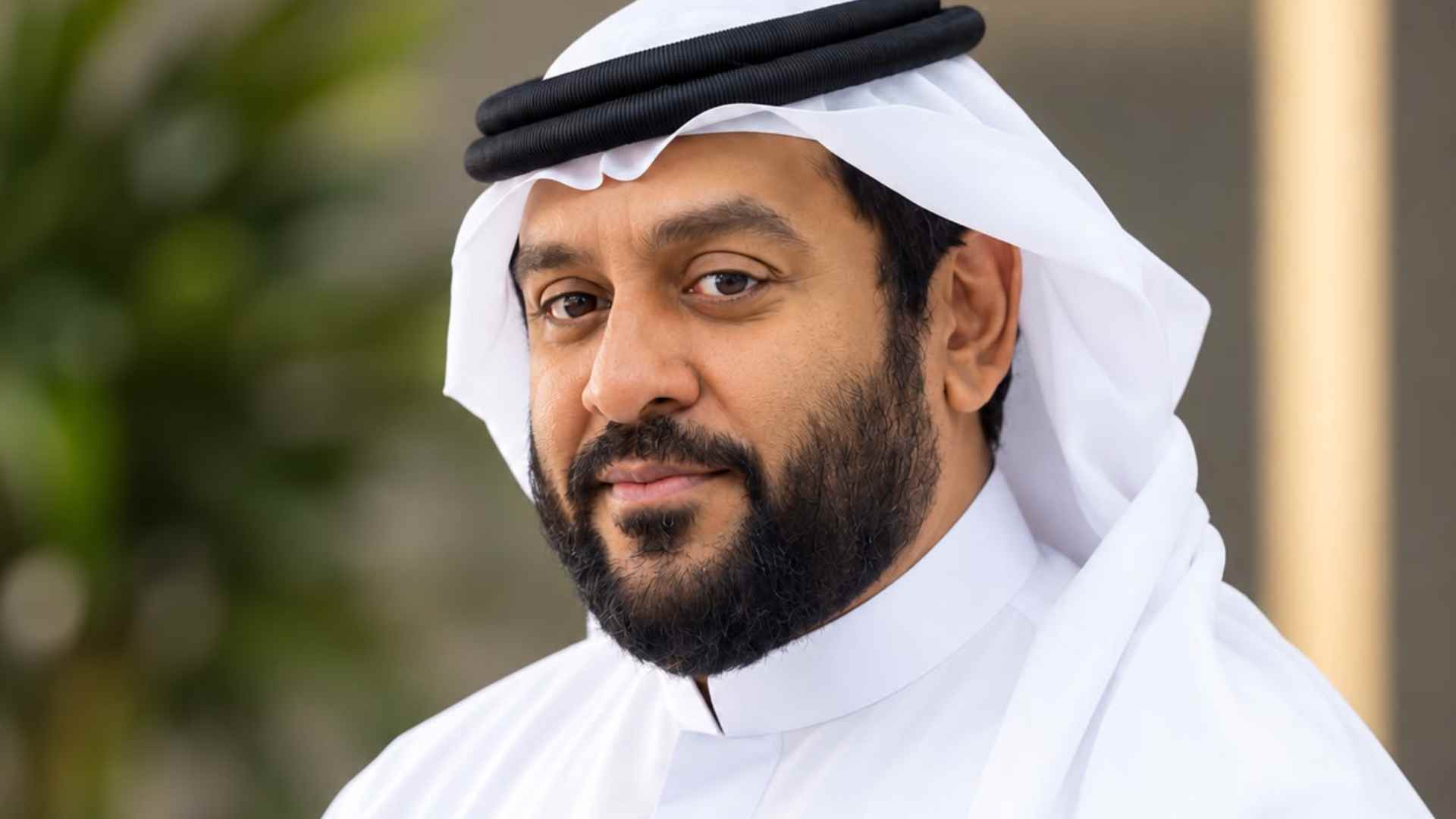
Exclusive Interview With Nasser Saeed Ahmed Nasser Lootah Founder & Chairman, N S Lootah Group
How are new consumer preferences in the UAE and the GCC’s established premium motorcycle market influencing N S Lootah Motors’ brand positioning strategies?
“Customers in the UAE and across the GCC are extremely well informed. They travel, they know international brands, and they compare technology, performance, design and service before making a decision.
For us, premium cannot simply mean expensive. There has to be something genuinely distinctive behind the product — whether that is the engineering, technology, design or the overall ownership experience.
That is one of the reasons SOUO interested us. The S2000 brings something genuinely different to the market, including the world’s first production Flat-8 motorcycle engine. But specifications alone are not enough. Our responsibility is to introduce the brand properly, build confidence around it and provide the level of service and support that customers in this market expect.”
Are there plans for N S Lootah Motors to diversify into commercial mobility solutions, or will the company remain focused on premium, lifestyle and luxury segments?
“At this stage, our focus is on building N S Lootah Motors around distinctive automotive and mobility opportunities where we believe we can bring something meaningful to the UAE market. We are open-minded about the future. If we see an opportunity in commercial mobility or another segment that has strong potential and fits our capabilities, we will certainly consider it.
But expansion must have a purpose. We don’t want to enter a category simply because it is growing. There must be a strong product, a clear market opportunity and a business where we believe N S Lootah Motors can genuinely add value. If we see an opportunity in commercial or another area of mobility that makes sense, and where we believe we can genuinely add value, we will consider it. But we don’t want to enter categories simply for the sake of expansion.”
What specific factors will decide if a new brand or mobility business becomes part of N S Lootah Motors for its automobile offerings?
“The first thing is always the product. It has to offer quality, strong engineering and a clear reason for the customer to choose it. Then we look very carefully at the company behind the product. We want partners who are serious about the UAE, who understand that building a brand takes time, and who are prepared to invest in the market together with us. After-sales support is equally important. We look at spare parts, technical training, warranty, product development, marketing support and the future product pipeline.
Ultimately, we ask ourselves whether this is something we can build into a sustainable long-term business. We are not interested in simply adding brands to our portfolio. We want partnerships that we believe can grow with us.”
What evaluation standards and market strategies should the team follow when selecting and discussing exclusive UAE distribution rights for upcoming OEM partners?
“Exclusivity by itself is not enough. What matters is what we can build with that exclusivity. Before taking on an OEM, we need to understand the product, the customer, the size of the opportunity and where the brand can realistically sit in the UAE market. We also need to understand what the manufacturer expects from us and what level of support they are prepared to provide.
I want the team to look beyond initial sales numbers. Product quality, pricing, spare-parts availability, warranty, technical training, marketing support and the future product pipeline are all important.
Most importantly, there has to be trust. A distributor and an OEM should operate as partners. If we are investing our name, our people and our resources into developing a brand in the UAE, we need a partner who shares the same long-term commitment.”
Currently, N S Lootah Motors has a special flagship showroom in Dubai that handles sales, test drives and brand interaction. What is the brand’s plan for expanding its retail presence in other MEA regions?
“Dubai is our starting point, and our priority is to establish the business properly here first. The showroom gives customers the opportunity to see the motorcycles, experience the brand and take a test ride. Just as importantly, it gives us direct contact with customers and allows us to understand what the market really wants.
From there, expansion should follow genuine demand. Our ambition is regional, but we want that growth to be disciplined. We would rather establish one market properly and then move into the next with the right partner, infrastructure and customer support in place.”
Are there any differences between the expectations of the brand you represent and the realities of selling motorcycles in the UAE market?
“Of course. Every international brand enters a market with certain expectations, but every market has its own character. The UAE customer expects a very high standard — not only from the product, but from the entire experience. Customers expect quick responses, knowledgeable salespeople, reliable after-sales service and easy access to spare parts.
Motorcycles are also very community-driven here. Riding groups, events, weekend rides and relationships between riders are an important part of the market. Our role as the local distributor is to understand both sides. We help the manufacturer understand the UAE customer, while making sure the brand is communicated and represented properly in the local market. That bridge is where a strong distributor really adds value.”
How do you balance portfolio expansion with the need to develop sufficient expertise, infrastructure and after-sales capabilities for each business you take on?
“Growth is important, but uncontrolled growth can damage a business. Every automotive brand we take on requires investment in people, technical knowledge, spare parts, diagnostics, training and after-sales support. You cannot simply sign a new brand and expect the business to develop by itself. That is why we are focused on building capability alongside the portfolio. As we grow, our infrastructure and our people have to grow with us.
For me, the customer experience is the real measure. When somebody buys a premium motorcycle from N S Lootah Motors, they are trusting us not only with the sale but with the entire ownership journey. I would rather grow at a pace where we can maintain that standard than expand quickly and compromise the experience.”
What are the most difficult decisions you must make as a new automotive venture — where to invest, what to prioritise, how fast to grow the operation, or how to respond to market signals?
“I think one of the most difficult decisions is knowing when to move quickly and when to be patient. In automotive, you can invest very quickly — in facilities, inventory, people, marketing and expansion. But every investment has to follow a clear strategy. At the same time, the market moves quickly, so you cannot be too cautious. You have to listen to the customer, listen to your team, understand the numbers and stay close to what is happening in the market.
We are still building N S Lootah Motors, and our objective is not to become the biggest automotive company overnight. We want to build a strong, respected business with the right foundations — one that customers and international partners can trust and that will remain relevant for many years.
We are not trying to become the biggest automotive company overnight. We are trying to build a business that will still be relevant many years from now.”
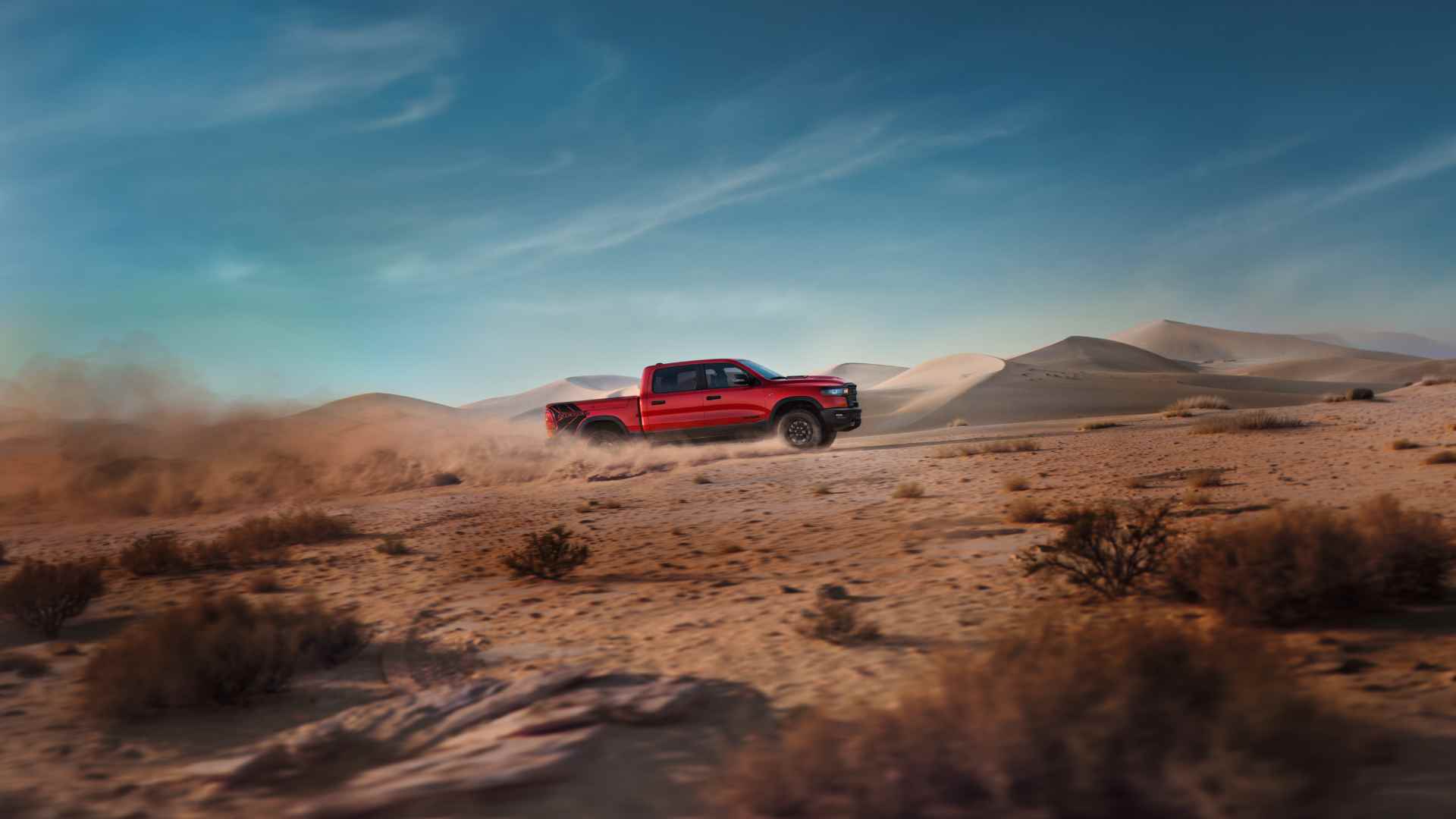
Al-Futtaim, the official distributor of RAM Trucks in the UAE, has announced the return of the legendary V8 5.7-litre HEMI® to the RAM 1500 line-up, reaffirming the brand’s commitment to delivering the capability, performance and unmistakable character that have defined RAM for generations.
The iconic V8 is now available across the RAM Rebel, Limited and Limited Night Edition, paired with eTorque technology for enhanced efficiency and everyday drivability.
More than the return of an engine, the announcement celebrates the people who have helped shape the RAM story. Under the campaign message, “We Heard You,” the brand recognises and celebrates the passion, loyalty and feedback of the RAM community in the UAE, whose voices have always played a role in the evolution of RAM trucks.
“RAM has always been built alongside the people who drive these legendary trucks every day,” said Carlos Montenegro, Managing Director – Al-Futtaim Trading Enterprises. “Our UAE owners are part of the RAM family. They inspire us, challenge us, and help shape the future of the brand. The return of the legendary HEMI V8 is a celebration of this trusted relationship and of everything that makes RAM, RAM.”
Renowned for its unmistakable rumble, effortless performance and impressive capability, the legendary HEMI V8 remains one of the most celebrated powertrains in the automotive world. Returning with eTorque mild-hybrid technology, it combines the character drivers know and love with confident performance whether towing, exploring off-road or tackling everyday journeys.
Customers can choose the HEMI V8 across three distinct RAM 1500 trims, each tailored to a different lifestyle.
The RAM 1500 Rebel is built for adventure, pairing the V8 with performance-tuned suspension, an electronic locking rear differential, skid plates, all-terrain tyres and a sport performance hood to deliver confidence on and off the beaten track. Inside, drivers benefit from a 14.4-inch Uconnect® touchscreen, 19-speaker Harman Kardon® premium audio system and dual-pane panoramic sunroof.
Designed for a perfect blend of luxury, performance and capability, the RAM 1500 Limited combines on-road refinement with interior comfort, with premium leather seating for five and real wood accents, as well as the 14.4-inch Uconnect® touchscreen, Harman Kardon® audio system and dual-pane panoramic sunroof. The 1500 Limited Night Edition adds model-exclusive details such as the 22-inch black aluminium wheels and black exterior trim accents.
Automotive
Anticipating the Automotive Aftermarket: Preparing the GCC Aftermarket for a Software-Led Future

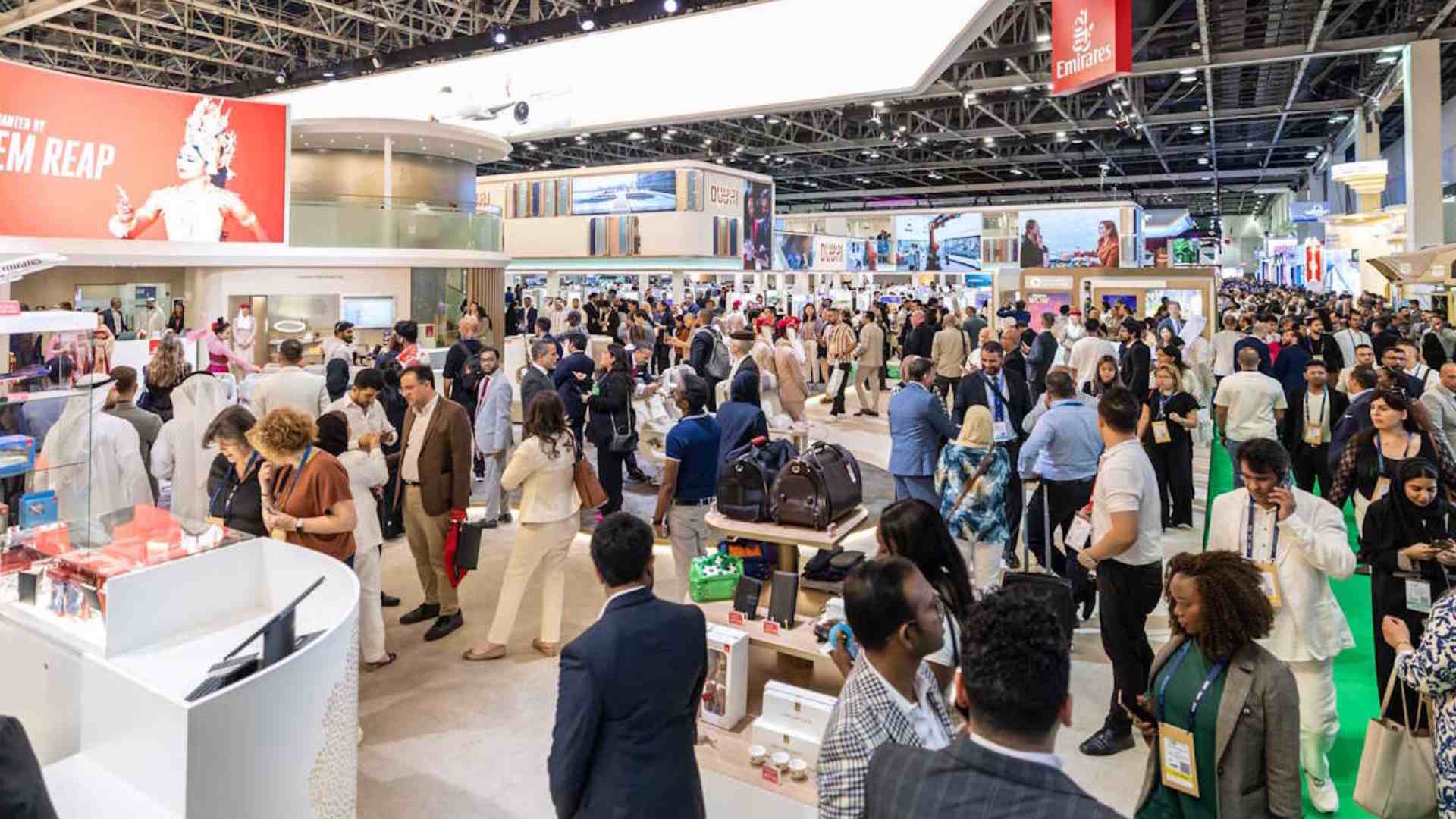
The GCC aftermarket is preparing to support a more diverse vehicle mix as electrification, connected systems and software-led technologies develop at different speeds across regional markets.
In this exclusive, Tommy Le, Show Manager of Automechanika Dubai, explains how aftermarket businesses can remain relevant as vehicle technologies and customer expectations change, why workshop and workforce readiness must advance together, and how industry platforms can support long-term collaboration across the region.
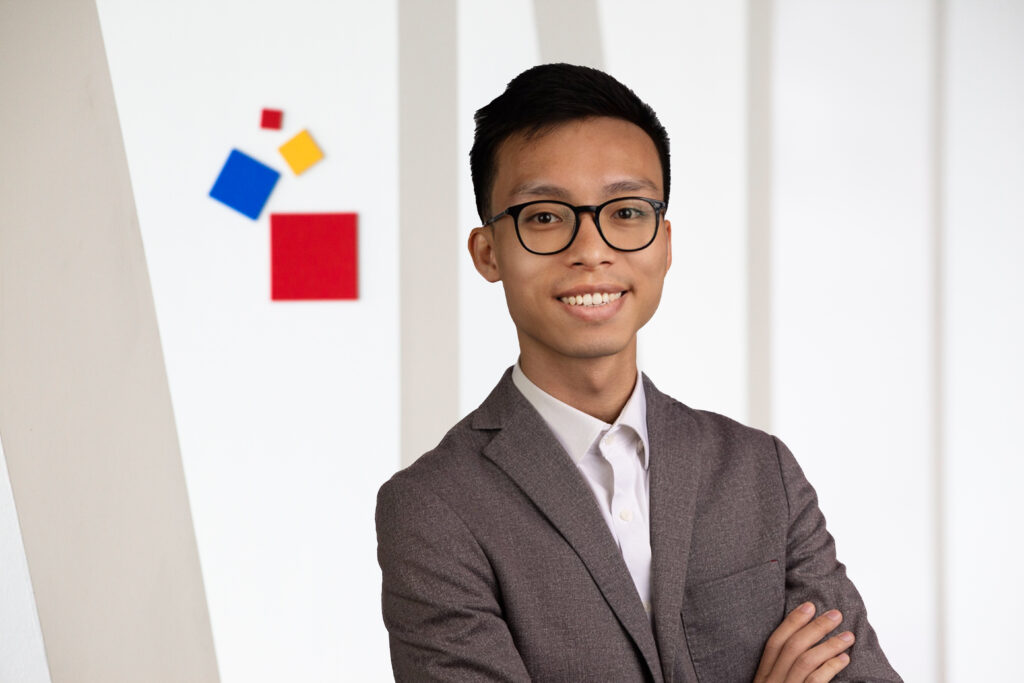
From your conversations with manufacturers, distributors and industry associations, what is the most significant transformation currently reshaping the regional aftermarket?
From our conversations with manufacturers, distributors and industry associations, the most significant change is the diversification of demand. It is not happening uniformly across the GCC, but businesses increasingly need to support conventional vehicles alongside hybrids, EVs, connected systems and a growing mix of brands. Dubai offers one indication of the direction: according to the Dubai Electricity and Water Authority, registered EVs increased from 37,486 at the end of 2024 to 47,944 at the end of 2025, a rise of nearly 28%. Each technology and brand brings different parts, software, diagnostics and servicing needs. Companies therefore need stronger market intelligence, flexible supply chains and closer collaboration. The businesses that remain relevant will respond quickly without compromising quality, safety or trust.
How are electrification, connected vehicles, advanced diagnostics and software-led technologies changing the requirements of aftermarket businesses?
They are changing both what businesses sell and the capabilities they require. A repair may now involve electronic diagnosis, sensor calibration, battery and thermal-system assessment, or access to vehicle-specific technical information. The complexity is already visible: a study by the Insurance Institute for Highway Safety found that about half of owners whose crash-avoidance systems were calibrated following vehicle damage reported continuing problems after the repair. That reinforces the need for correct tools, current procedures and trained technicians. Looking ahead, software-led servicing and predictive maintenance could create faster and more transparent customer experiences, but only where workshops have authorised data access, compatible systems and appropriate diagnostic infrastructure. Internationally, software governance is becoming more formalised through measures such as United Nations Economic Commission for Europe Regulation No. 156 on software updates and software update management systems. The opportunity is significant, but capability cannot be assumed to be universal.
As the vehicle mix becomes more diverse, how must parts supply chains and service networks support conventional, hybrid and electric vehicles simultaneously?
Conventional vehicles will remain central to the regional fleet even as hybrid and electric adoption grows at different rates. According to the Dubai Electricity and Water Authority, the number of registered EVs in Dubai increased by nearly 28% during 2025, showing why the aftermarket must prepare for several technology cycles at once. Distributors need visibility of vehicle populations and demand to balance availability against excess stock, backed by traceable sourcing. Service networks must decide which capabilities belong in every workshop and which can sit in specialist centres. Horizontal collaboration could let independent businesses share high-cost diagnostic or calibration resources, technical knowledge and regional support without duplicating investment.
Where are the most urgent workshop-readiness gaps, and what roles should manufacturers, training institutions and industry platforms play in closing them?
Skills are the most urgent gap because equipment creates value only when people can use it safely and accurately. Workshops need technicians who understand high-voltage systems, advanced diagnostics, software-led repair and ADAS calibration, supported by current technical data, safe working areas and clear procedures. The consequences of incomplete capability are tangible: according to the Insurance Institute for Highway Safety, around half of respondents whose crash-avoidance systems were calibrated after vehicle damage reported continuing issues. The US National Highway Traffic Safety Administration also advises that high-voltage work requires vehicle-specific guidance and properly trained personnel. Manufacturers can provide recognised training pathways, vocational institutions can build foundations, and industry platforms can connect them. We also need to show young people that the aftermarket now combines engineering, data and software, offering credible technology-led careers rather than only traditional mechanical roles.
How has your commercial experience shaped your strategy, and what is your long-term ambition for Automechanika Dubai as it moves to Dubai Exhibition Centre in November 2026?
Working across commercial and exhibitor roles has shown me that different parts of the industry experience change in very practical ways. Manufacturers may focus on market access, distributors on dependable supply, and workshops on tools, training and technical support. My role is to find where those needs meet and build useful connections. The move to Dubai Exhibition Centre opens a new phase for the show, with opportunities to improve the visitor experience, connectivity and the way knowledge is shared. I want Automechanika Dubai, taking place from 10–12 November 2026, to develop as a year-round industry platform where businesses exchange insight, understand emerging technologies and form partnerships. It must remain a commercial marketplace while helping the aftermarket anticipate change rather than react to it.
Note:Historical 2025 figures: Automechanika Dubai welcomed visitors from 161 countries and exhibitors from 63 countries at its 2025 edition. Following 22 editions at Dubai World Trade Centre, the exhibition will take place at Dubai Exhibition Centre (DEC) for the first time in 2026. These figures describe the 2025 edition and are not projections for 2026.

OPPO A7 Pro 5G First Impressions: Big Battery, Wider Selfies and a Focus on Longevity

Global minimum tax is reshaping how companies are bought and sold in the UAE: Report

CABSAT and SATExpo 2026 head to new Expo City Dubai home with expanded focus on content, Mediatech & Pro AV and the commercial space economy



-
News11 years ago
SENDQUICK (TALARIAX) INTRODUCES SQOOPE – THE BREAKTHROUGH IN MOBILE MESSAGING
-

 Trending11 months ago
OPPO A6 Pro 5G Review: Reliable Daily Driver
-

 Tech News2 years ago
Denodo Bolsters Executive Team by Hiring Christophe Culine as its Chief Revenue Officer
-
 VAR1 year ago
Microsoft Launches New Surface Copilot+ PCs for Business
-

 Automotive2 years ago
AGMC Launches the RIDDARA RD6 High Performance Fully Electric 4×4 Pickup
-
Tech Interviews3 years ago
Navigating the Cybersecurity Landscape in Hybrid Work Environments
-
 Tech News2 years ago
Toshiba Announces MG10-D Series of Enterprise HDDs with Capacities up to 10TB
-

 Tech News1 year ago
Nothing Launches flagship Nothing Phone (3) and Headphone (1) in theme with the Iconic Museum of the Future in Dubai