
 Have a question? +971 56 404 0503




Tech News
STRATEGY 2030: BOSCH PLAYS TO ITS INNOVATIVE STRENGTHS


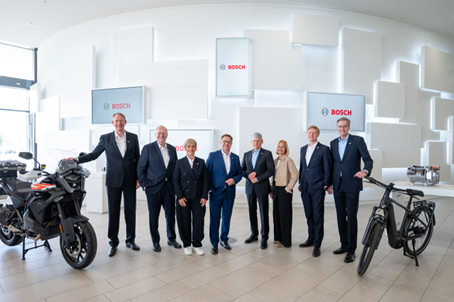
Stuttgart and Bamberg, Germany – In the face of geopolitical tensions and trade barriers, the Bosch Group intends to exploit the growth prospects in its global markets with full innovative strength in the 2026 business year. The necessary upfront investments in areas of future importance are set to remain at the high level of previous years. In 2025 alone, Bosch devoted some 12 billion euros to investments in research and development and to capital expenditure. The supplier of technology and services is planning sales growth of 2–5 percent and an EBIT margin from operations of 4–6 percent for 2026. Referring to the presentation of the company’s annual figures, Stefan Hartung, chairman of the board of management of Robert Bosch GmbH, said: “As a global technology leader, we are committed to shaping the trends of automation, digitalization, electrification, and artificial intelligence, as this also paves the way for profitable growth in our business. An important prerequisite for this are the cost-cutting effects of the structural measures we have already initiated and innovations in all business areas.” When it comes to innovative strength, Bosch is one of the strongest industrial companies in the world and one of the most prolific patent applicants in Europe. Bosch registered around 6,300 patents in 2025 and was once again the leader in Germany. Despite considerable challenges, Bosch was able to achieve sales revenue of 91.0 billion euros in the 2025 business year, slightly up on the previous year (2024: 90.3 billion euros). After adjusting for exchange-rate effects, this was equivalent to 4.1 percent growth. At 2 percent, the EBIT margin from operations was below the previous year’s figure (2024: 3.5 percent). Necessary structural and personnel adjustments to increase future viability had a considerable negative impact on result in the form of provisions of 2.7 billion euros.
Strategy 2030: innovation and differentiation to boost growth To achieve successful business development in an adverse global economic environment, the company must keep its costs at a competitive level. With the conclusion of talks with employee representatives on the necessary job cuts at all affected Mobility locations in Germany, Bosch is improving its future competitive position in the face of increasing price pressure. “The negotiations weren’t easy, but both sides demonstrated a marked sense of responsibility,” Hartung said. “We are now implementing the agreed measures as quickly and consistently as necessary, but also in as socially acceptable a manner as possible.” In the automotive industry, China is currently setting the standard for price levels. Hartung therefore sees the expansion of innovation leadership as a key success factor for expanding business, particularly in the automotive market, and implementing the company’s Strategy 2030, which foresees Bosch being one of the three leading suppliers in its key markets. Trade barriers and different user expectations are currently both a challenge and an opportunity for regionally adapted solutions. “In international competition, it’s not just about costs, but above all about differentiating ourselves,” Hartung said, referring to Bosch’s global footprint, which he sees as a competitive advantage. “We can adapt our offerings and supply chains to regional conditions and at the same time deliver global-level quality.”
Business outlook 2026: generate financing for areas of future importance Bosch believes that the weak economic development of 2025 will continue in the current business year. High levels of uncertainty, primarily due to geopolitical developments with the as yet unpredictable effects of the war in the Middle East, are likely to continue to affect inflation and global economic output. Moreover, price and competitive pressure remains high. Nonetheless, in the first three months of the year, Bosch was able to keep its sales more or less at the previous year’s level; after adjusting for exchange-rate effects, revenue was some 5 percent higher. Bosch expects the global economy to achieve only moderate growth, at the level of recent years. “The foundation for profitable growth is our competitiveness – which is why we’re working hard to increase it further,” said Markus Forschner, member of the board of management and chief financial officer of Robert Bosch GmbH. “This strengthens our resilience in the face of upcoming challenges and at the same time boosts our investment capacity for the future.” In light of strategic opportunities and as a financial precaution, Bosch is expanding its scope accordingly: to ensure it will be able to issue financial instruments such as bonds more flexibly during the year, the company will for the first time publish interim consolidated financial statements and an interim group management report for the first half of the current business year. On this point, Forschner said: “This improves our ability to access the capital markets, even though we already have a strong capacity to finance our business from our own resources.”
Sensor technology as an innovation field: automation and robotics secure sales
Bosch is driving forward numerous innovations in microelectronics and sensor technology and expects its consistent focus on technology that is “Invented for life” to provide considerable growth impetus. Experts suggest that the global market for sensors could be worth more than 440 billion U.S. dollars by 2031. Bosch stands to benefit from growth in the potential applications: the company’s sensors are playing an increasingly important role in robotics. The BMI5 sensor platform, for example, creates artificial environments extremely realistically and helps robots find their way around even under difficult conditions. With this, its most powerful sensor solution to date, Bosch considers itself well positioned for a rapidly growing segment. In the field of automated driving, inertial sensors are regarded as a key component of the future and offer additional sales potential. They enable cars to maintain full awareness of their whereabouts even when camera or GPS signals aren’t available. “These sensors work for an automated car in much the same way as the sense of balance does in the human inner ear,” Hartung said. According to analysts, the market for intelligent sensors in automotive applications is set to almost double to more than 80 billion U.S. dollars by the middle of the next decade.
Innovations in the field of mobility: algorithms and powertrains boost growth
Bosch expects the market for automotive software to be worth around 200 billion euros by 2030. As a result, Bosch chairman Hartung sees great growth opportunities in software-defined mobility. “Bosch is at the forefront in this area and is now literally bringing AI into the driver’s field of vision,” Hartung said. The new Bosch AI Extension Platform is an AI-capable high-performance computer that, in conjunction with an interior sensing solution, turns driving into a highly personalized experience. “The vehicle recognizes who’s at the wheel and detects whether there are any other passengers on board, then adjusts everything: from the exterior mirrors and vehicle handling to optimized airbag deployment in the event of an accident.” Product innovations in intelligent driver assistance solutions are also generating new business across all regions of the world:
together with sensor technologies and central vehicle computers, Bosch secured orders worth 10 billion euros in 2025. “Of course, the cars of the future will need not only algorithms but also powertrains,” Hartung said with regard to the growing business with electromobility. “This year alone, we will deliver more than 7 million solutions and components for electric driving.” Just a few weeks ago, Bosch announced a joint venture with Tata AutoComp Systems in India. Starting in the middle of the year, it will focus on the development, manufacturing, and sale of electric axles and motors in the Indian market.
Innovations in the field of consumer goods and services: AI is driving business forward
AI is providing significant growth opportunities in the services and product business as well. For example, a new oven model with an AI-based voice function is securing new sales potential for the BSH Hausgeräte division. No external loudspeakers or additional apps are required. Overall, the worldwide business with home appliances in the luxury and premium segment is expected to continue to grow, particularly in North America. Market experts estimate that global sales of home appliances will reach around 5 billion units by 2030. The use of AI is also driving product innovations in the Power Tools division. Since the start of the year, the first 30 tools in the Expert product line have been on the market and setting new standards for professional power tools. These include a new wall scanner that locates objects in different types of wall and uses Bosch radar technology in combination with AI object detection for the first time. Bosch’s services business is also benefiting from AI: The Bosch Global Service Solutions division also expects double-digit average sales growth by 2030 thanks to AIbased applications. Its service portfolio includes solutions for digital mobility services such as eCall and breakdown assistance as well as offerings for fleet operators and logistics providers.
The 2025 business year: stable financial strength, liquidity, and R&D ratio
Bosch achieved a positive free cash flow of some 300 million euros in 2025
(2024: some 900 million euros). The R&D ratio stood at 8.7 percent of sales
(2024: 8.6 percent). Expenditure on research and development amounted to 7.9 billion euros. “Even in difficult times, Bosch is prepared to make substantial upfront investments,” Forschner said. “Capital expenditure remained at a high level.” Bosch made considerable upfront investments in areas such as electromobility, semiconductors, and state-of-the-art braking control systems. At 41.6 percent, the equity ratio also remained high (2024: 44.3 percent). The Bosch Group continues to be financially solid, even though liquidity as per the consolidated statement of cash flows fell to 7.4 billion euros (2024: 8.2 billion euros).
The 2025 business year: development by business sector
Sales development in the business sectors was held back both by the subdued economy in focus markets and by negative currency effects. The Mobility business sector recorded an increase in sales revenue of 0.1 percent to reach 55.8 billion euros. After adjusting for exchange-rate effects, this was equivalent to
2.9 percent growth. The EBIT margin from operations came to 1.8 percent (2024:
3.8 percent). In the Industrial Technology business sector, sales rose by 0.1 percent to 6.5 billion euros. Adjusted for exchange rate effects, the increase was 2.4 percent. The main reason for this was the downward trend on the North
American market. The EBIT margin increased to 3.5 percent (2024: 1.2 percent). In the Consumer Goods business sector, sales revenue fell by 1.9 percent year on year to 19.9 billion euros. Adjusted for exchange-rate effects, however, sales increased by 4.1 percent. The consumer goods business suffered in particular from a lack of impetus from the construction industry in China and the U.S. The EBIT margin from operations was 3.0 percent (2024: 3.5 percent). The Energy and Building Technology business sector generated sales of 8.5 billion euros. This is an increase of 13.0 percent, or an exchange rate-adjusted 15.6 percent. The EBIT margin from operations was 0.5 percent (2024: 4.9 percent). This was heavily influenced by one-off costs from acquisitions and sales activities.
The 2025 business year: development by region
While sales revenue in Europe declined slightly, Bosch recorded slight increases in the other regions of the world. In Europe, sales revenue fell by 0.6 percent year on year to 44.2 billion euros – but grew by 1.5 percent after adjusting for exchange-rate effects. In the Americas, sales revenue increased by 3.8 percent to 18.5 billion euros, or by 9.3 percent after adjusting for exchange-rate effects. In Asia Pacific, sales increased by 0.7 percent to 28.3 billion euros. Adjusted for exchange-rate effects, the growth rate amounted to a significant 5.0 percent.
The 2025 business year: development of headcount
At the end of 2025, worldwide headcount in the Bosch Group stood at 412,774 associates (2024: 417,859), a reduction of around 1 percent (5,085 associates). This had the greatest impact on the Mobility business sector and regionally on Germany.
Tech News
CABSAT and SATExpo 2026 head to new Expo City Dubai home with expanded focus on content, Mediatech & Pro AV and the commercial space economy


CABSAT and SATExpo will take place from 5–7 October 2026 at their new home, Dubai Exhibition Centre (DEC), Expo City Dubai, bringing together international leaders across media, content, broadcast, Pro AV, satellite communications and space technology.
Now in its 33rd edition and held in strategic partnership with Dubai Studio City, CABSAT 2026 arrives as the region’s unified sourcing platform for media technology, content creation, broadcast and professional audiovisual (Pro AV) solutions. Co-located SATExpo, now in its second edition and held in strategic partnership with the UAE Space Agency, will connect the international satellite, space and advanced-connectivity ecosystem across infrastructure, connectivity and emerging commercial applications.
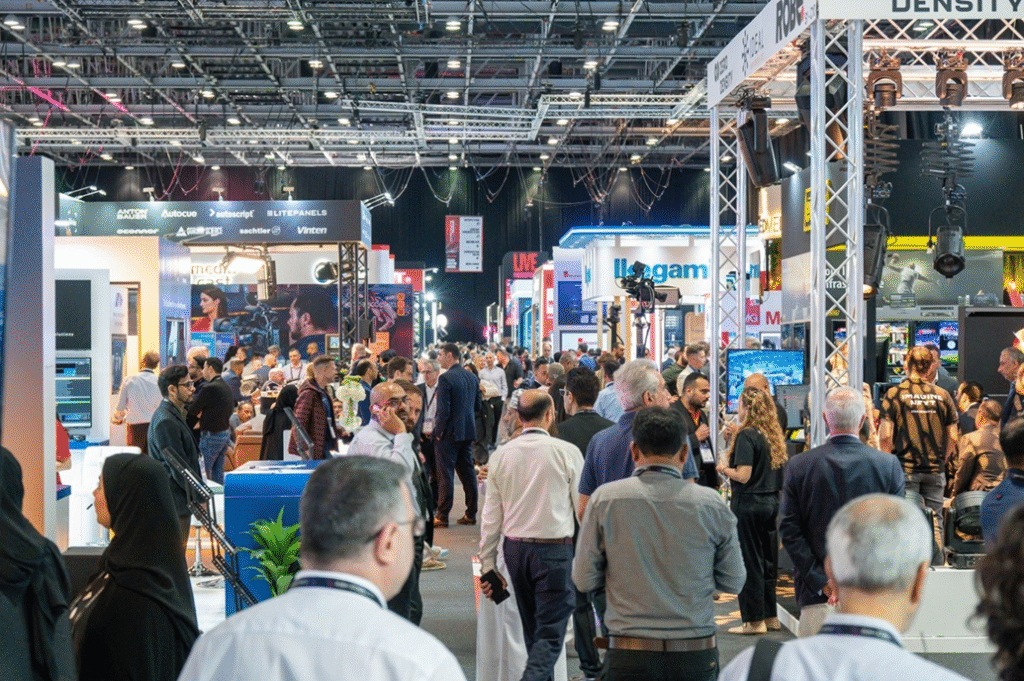
CABSAT 2026 is expected to welcome more than 18,800 visitors, 450+ exhibiting companies and 700+ brands from over 120 countries, alongside more than 150 speakers and 50+ hours of industry content. Confirmed international exhibitors include Grass Valley, Ross Video, Evertz, Imagine Communications, Haivision, LiveU, NAGRAVISION and Qvest, spanning broadcast, production, content and media technology.
SATExpo 2026 is expected to bring together more than 8,000 visitors, 150+ exhibitors from over 70 countries and 80+ expert speakers. Participating companies include Eutelsat, SES, Telesat, APSTAR, Space Norway and ST Engineering iDirect.
Rajendra Salgaonkar, Head of Sales, Exhibitions, inD, said: “The media, entertainment and space industries are evolving at remarkable speed, creating new opportunities across technology, content and connectivity. CABSAT and SATExpo have evolved alongside these industries, bringing together the people, technologies and ideas shaping what comes next. With CABSAT now bringing together media technology, content creation, broadcast and Pro AV, and SATExpo connecting the satellite and space value chain, our new home at Expo City Dubai provides an exciting setting for international business, knowledge exchange and collaboration.”
Contentverse explores the forces reshaping media and content
At the heart of CABSAT’s knowledge programme, Contentverse Director’s Cut, the evolution of Content Congress, will bring together international and regional media leaders to examine how artificial intelligence, new storytelling formats, changing audience behaviour and emerging commercial models are reshaping content creation, distribution and monetisation.
The programme will feature international and regional industry leaders including Amith Jain of JioStar, Moon Baz of Meta, Assad Ghanem of Viu and Ellie Habib of OSN+ contributing perspectives across creator-led content, vertical storytelling, production, technology and evolving audience behaviours.
The programme comes as the MENA media and entertainment market continues to expand. The sector is projected to reach USD 18 billion by 2028, with digital platforms expected to account for 74 per cent of the market, while the UAE and Saudi Arabia are projected to represent 66 per cent of the regional media and entertainment share. Globally, the industry is expected to reach approximately USD 4.2 trillion by 2030.
From content development to production in action
Beyond the conference programme, CABSAT 2026 will create further opportunities for industry collaboration, industry access and recognition. Co-Production Salon in partnership with H-consult will facilitate curated meetings between content creators, producers and investors, connecting creative projects with potential production partners, financing opportunities and international collaboration. The Dubai Studio City Sound Stage Tour will offer a behind-the-scenes look at Dubai’s production infrastructure and capabilities, while the BroadcastPro Manufacturer Awards 2026 will recognize technologies and solutions advancing the broadcast and media-production industry.
Exhibitor perspective
Across the exhibition floor, CABSAT will also showcase how technology providers are responding to changing production requirements, as broadcasters and media organisations increasingly move towards more flexible, software-defined and IP-based workflows. Exhibitors will demonstrate solutions spanning production, broadcast engineering, cloud and IP workflows, reflecting the wider transformation taking place across the media technology ecosystem.
Klaus-Joerg Jasper, Sales Director Middle East, Lawo, stated: “CABSAT remains one of the most important meeting points for broadcasters, media organisations, and technology innovators across the Middle East. At this year’s show, we are demonstrating how open, software-based and IP-native technologies are helping media companies transition from fixed infrastructures to more flexible, service-oriented production models.”
SATExpo connects the future of satellite and space
Held under the theme ‘Connecting the future’, SATExpo 2026 will bring together the international satellite, space and advanced-connectivity ecosystem. Covering the complete value chain from satellite manufacturing and launch services to ground systems, connectivity, downstream applications and space-data analytics, the event will connect governments, satellite operators, technology providers, investors and emerging space businesses.
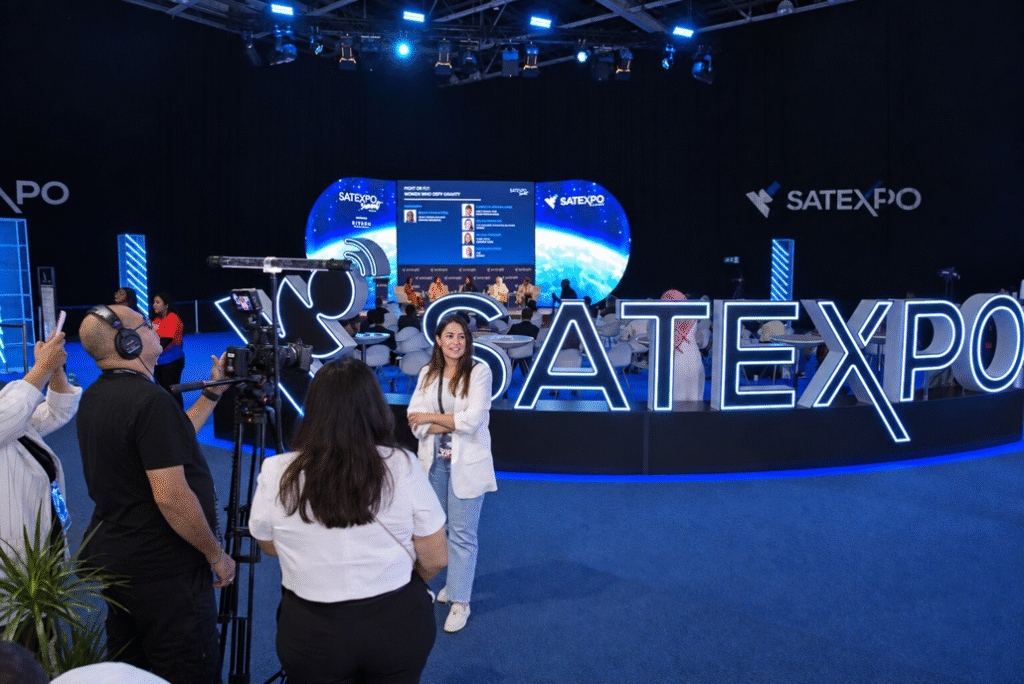
The SATExpo Summit, themed ‘From Space Race to International Collaboration in Orbits – A Future for All’, will examine three areas shaping the sector: orbital safety, liability and sustainability governance; future in-space infrastructure and services from GEO to LEO; and human spaceflight and space exploration.
Alongside the Summit, the Satellite Innovation Showcase, Startups and Space-Tech Demonstrations will highlight emerging technologies and practical applications. The Matchmaking Programme will facilitate curated meetings between satellite operators, solution providers, investors and government stakeholders, creating opportunities for commercial discussions and international partnerships.
Together at their new Expo City Dubai home, CABSAT and SATExpo 2026 will provide distinct but complementary platforms for the content, mediatech, broadcast, Pro AV, satellite and space technology communities, creating opportunities for technology discovery, international collaboration and business exchange.
Tech News
UiPath Launches UiPath Cartographer, Helping Enterprises Turn Scattered Process Knowledge into an Actionable View of How Their Business Runs

UiPath, Inc. (NYSE: PATH), a leader in business orchestration and automation, today announced the launch of UiPath Cartographer, a new product for building the Map of Work, a living, governed view of how an enterprise process actually runs. Combined with coding agents, orchestration, and continuous improvement, UiPath Cartographer replaces the interviews, slide decks, and outdated documents used to capture the operational knowledge that drives successful automation and AI projects.
Enterprises have spent years mapping their data, creating a structured knowledge base of every customer, invoice, claim, and contract. Yet very few have mapped the operational knowledge that guides the work itself. The rules a process follows, the exceptions employees quietly handle, and what happens when something goes wrong. All of this lives in the heads of the employees and in the disconnected collection of documents, spreadsheets, and threads accessed and shared at every step and for every exception – knowledge that must be retraced, repeatedly. Every new automation or AI initiative has to rebuild that understanding, but without the critical enterprise context, the Map of Work, showing how that knowledge is used.
UiPath Cartographer is how that Map of Work gets built. It gives business analysts the ability to replace the weeks of interviews and handwritten documents generated when trying to improve a process with a guided conversation. By synthesizing context (documents, steps, rules, and exceptions) that usually lives in various systems and formats, UiPath Cartographer builds an implementable Map of Work of that process aligned to business goals, identifying opportunities for re-engineering and supporting the continuous capture of live feedback over time. It’s the authoritative, customer-owned source of truth, defined by the customer, of how business runs, with a named owner who approves every change.
From the Map comes the design documents teams still need, and the working automations themselves, so nothing drifts out of sync. And as people make judgment calls while the work runs, those decisions are captured and offered back as proposed changes, which the Map’s owner approves or rejects. Nothing changes on its own. Each process cycle makes the next one faster, because the objects and rules already captured carry forward. And because UiPath Cartographer runs on the UiPath Platform™, Cartographer inherits the same identity, security, and governance as the rest of the platform already uses.
Using UiPath Cartographer, enterprise have everything they need to start the building of agents, workflows, and automations to improve the process on the UiPath Platform using:
- Prebuilt Maps – Based on UiPath’s experience in helping customers with its portfolio of UiPath Solutions for some of the most common and business-critical industry- and function-specific processes (such as loan origination, healthcare claims review, source-to-pay, and others), these maps arrive drawn and configured.
- Process Atlas – A curated library of deep maps of complex processes across industries, grounded in domain knowledge and built from authoritative sources. It contains the whole shape of the process, with case plans, KPIs and benchmarks, standard policies, and rules.
- Build your own – For those organizations with very specific and highly-governed processes, UiPath Cartographer captures what is native and proprietary, then gives the blueprint to build from.
Once built, those agents and automations can be orchestrated using UiPath Maestro™, with built-in governance and observability for that workflow. Lastly, the Decision Ledger records and maintains what was decided and why throughout the process, feeding those curated decisions back into the Map of Work as operating knowledge or new rules, creating a continuous improvement loop that leaves the Map better than the last.
“For years, businesses have digitized their data without ever capturing the enterprise context of how that data is actually put to work,” said Daniel Dines, Founder and CEO of UiPath. “Map of Work is how we translate that gap into something concrete. A process map tells you how work is designed to run. UiPath Cartographer is the key to uncovering the operational knowledge of how that work actually runs, with every exception and every judgment call included. It’s the first product built to capture both and keep them in sync.”
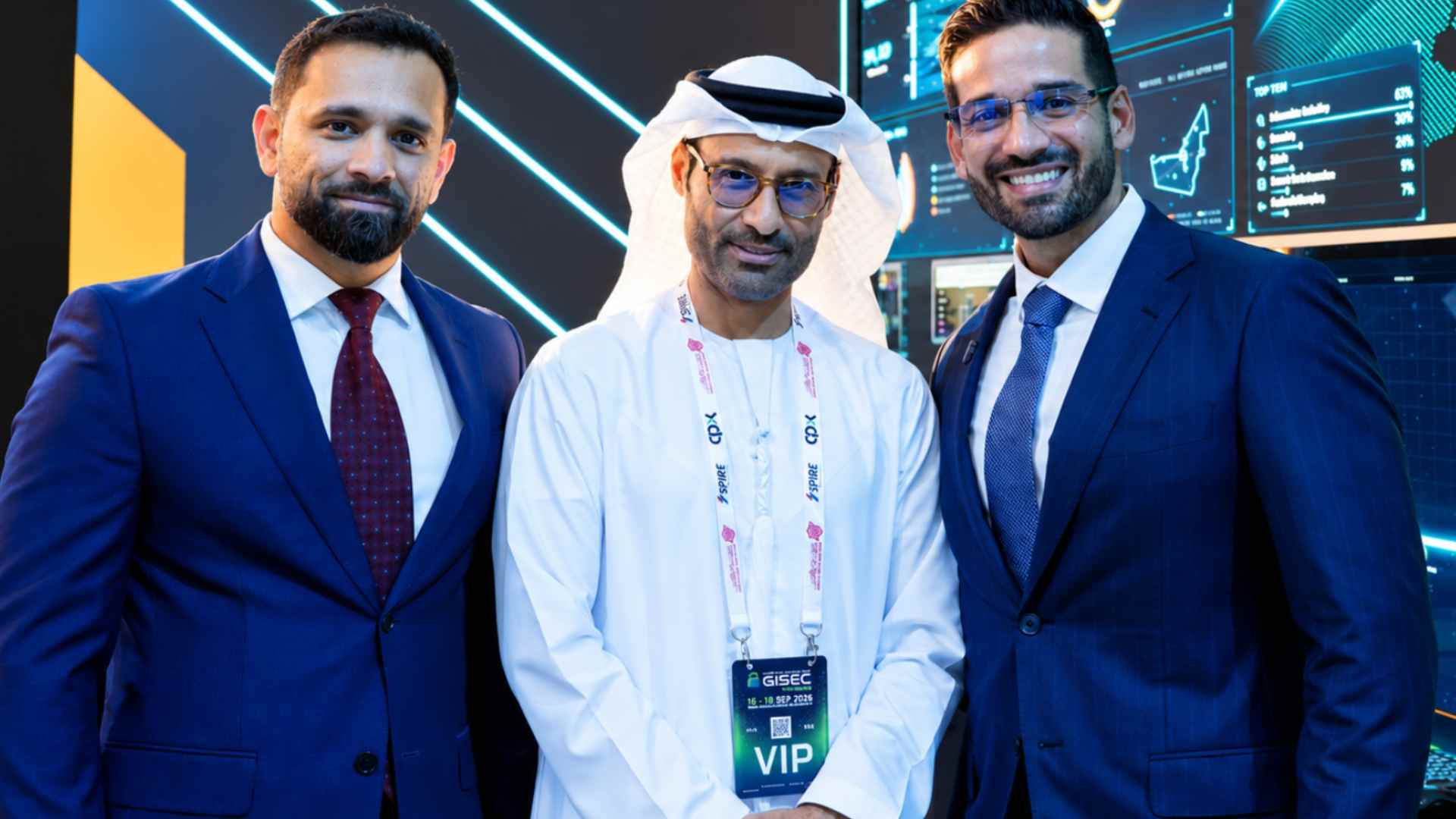
SCC Middle East has appointed Shams Hasan as Vice President of Sales as the company expands its UAE-based team and accelerates its growth plans across the Middle East.
Hasan will lead the company’s commercial development across the region, with responsibility for expanding SCC ME’s customer base and strengthening its engagement with government, critical industries and large enterprise.
He joins SCC from VAST Data, where he most recently led sales and strategy across the Middle East, Türkiye and Africa and was part of the regional leadership team that built the business from the ground up.
Prior to VAST Data, Hasan held senior roles with Dell Technologies in the UK and across the Middle East, Türkiye and Africa. During his time with Dell, he also fronted the company’s Realizing 2030 research in the region.
His appointment comes as SCC ME builds its regional operation around growing customer demand in areas including AI, cybersecurity, cloud, data and mission-critical infrastructure. The company is investing in the people and capabilities needed to support its next phase of regional growth, as organisations look for partners that can bring together technology, expertise and delivery capability rather than simply provide another technology solution.
Daniel Valle, CEO, SCC Middle East, said:
“The timing of this appointment is important for us. We are building the business quickly, but we also want to build it properly and around people who genuinely understand this market.
“Shams understands it extremely well. More importantly, he knows the people and organisations shaping it. He brings relationships, credibility and experience in areas that are becoming increasingly important to our customers, particularly as AI moves from experimentation into real operational environments.
“Our opportunity is to put the customer at the heart of that technology conversation and help turn ambition into measurable progress. Shams will play a very important role in helping us do that.”
Hasan’s appointment also brings significant AI infrastructure experience into SCC ME at a time when organisations across the Gulf are looking more closely at the infrastructure, data, security and sovereignty requirements behind AI adoption.
Over recent years, he has worked alongside organisations across the region as they have moved from exploring the potential of AI to addressing the practical challenges of putting it into production.
The appointment also comes ahead of AI Everything Abu Dhabi, where Hasan will join Valle and the SCC ME team alongside VAST Data, meeting customers, partners and prospects and discussing the practical requirements behind secure and sovereign AI implementation.
Hasan said:
“What drew me to SCC is a combination that is genuinely quite rare. There is more than 50 years of experience behind the business, but it remains independent and family owned. That matters because we are not tied to one technology or one answer. We can start with what the customer is actually trying to achieve and then bring together the right technology, partners and expertise to get them there.
“I’ve spent a large part of my career working with customers and partners across this region, and relationships here are built over time. SCC understands that. It is a business that measures relationships in years and decades rather than quarters, and that long-term mindset resonates strongly in this market.
“My focus is straightforward: get in front of the right organisations, deliver sales growth and turn the opportunity we see across the region into long-term customer relationships.”
Hasan holds a BSc in Electrical Engineering from the University of Texas at Austin. He also holds an MBA from Columbia Business School, where he received Dean’s Honors, and an MBA from London Business School, where he graduated with Distinction.
SCC’s investment in its Middle East operation forms part of the privately owned technology group’s longer-term international growth strategy.
Founded more than 50 years ago, SCC has remained under family ownership while growing into one of Europe’s largest independent technology solutions and services organisations. Its ownership structure has allowed the business to take a long-term approach to investment, customer relationships and the markets in which it operates.
James Rigby, Executive Chairman, SCC, said:
“Being a family-owned business shapes the way we think about growth. We have been building SCC for more than 50 years and that naturally gives you a different perspective. You invest in people, you build relationships and you think about where the business needs to be in five, ten and twenty years, not simply the next quarter.
“That is the approach we are taking in the Middle East. We are here to build something meaningful and sustainable, based on the same values and customer-first philosophy that have earned SCC trust over many years.
“Shams has spent much of his career building businesses and relationships in technology markets and I think that builder’s mindset makes him a very good fit for what Daniel and the team are creating in the region.”
SCC ME’s regional strategy is centred on putting customers at the heart of technology, helping them turn ambition into progress that strengthens organisations, advances national capability and creates lasting value for people and society.


OPPO A7 Pro 5G First Impressions: Big Battery, Wider Selfies and a Focus on Longevity

Global minimum tax is reshaping how companies are bought and sold in the UAE: Report

CABSAT and SATExpo 2026 head to new Expo City Dubai home with expanded focus on content, Mediatech & Pro AV and the commercial space economy



-
News11 years ago
SENDQUICK (TALARIAX) INTRODUCES SQOOPE – THE BREAKTHROUGH IN MOBILE MESSAGING
-

 Trending11 months ago
OPPO A6 Pro 5G Review: Reliable Daily Driver
-

 Tech News2 years ago
Denodo Bolsters Executive Team by Hiring Christophe Culine as its Chief Revenue Officer
-
 VAR1 year ago
Microsoft Launches New Surface Copilot+ PCs for Business
-

 Automotive2 years ago
AGMC Launches the RIDDARA RD6 High Performance Fully Electric 4×4 Pickup
-
Tech Interviews3 years ago
Navigating the Cybersecurity Landscape in Hybrid Work Environments
-
 Tech News2 years ago
Toshiba Announces MG10-D Series of Enterprise HDDs with Capacities up to 10TB
-

 Tech News1 year ago
Nothing Launches flagship Nothing Phone (3) and Headphone (1) in theme with the Iconic Museum of the Future in Dubai