
 Have a question? +971 56 404 0503





Hospitality
GAME ON: HOW GLOBAL SPORTS EVENTS RESHAPE CITIES, INVESTMENT & TOURISM


Saudi Arabia’s emergence as a global sporting destination is reshaping far more than its events calendar. As the Kingdom prepares to host a growing portfolio of international tournaments, from Formula 1 and international football to golf, boxing and e-sports, sport is increasingly recognised as a powerful driver of tourism demand, investment attraction and long-term destination positioning.
As David Thomson, Senior Vice President – Development, The First Group Hospitality, puts it: “Mega-events can put a city on the map. When managed well, they reposition a city in the minds of investors and travellers.”
Four leading hospitality executives share their perspectives ahead of the Future Hospitality Summit – FHS Saudi Arabia, taking place from 22-24 June at Mandarin Oriental Al Faisaliah, Riyadh.
Reputation before revenue
The leaders agreed that the reputational dividend far outweighs the short-term financial return. For Muin Serhan, CEO, Amsa Hospitality: “The greatest impact of global events lies in reputation. While revenue is temporary, reputation compounds over time. When executed well, a global event signals capability, safety, and cultural openness, factors closely watched by investors when they enter a market.”
Victor Abou Ghanem, CEO, Story Hospitality, frames the opportunity in similarly expansive terms: “For destinations, a mega-event is the most expensive advertising campaign you will ever run, and the only one the entire world covers for free. If you treat the event as a short-term P&L exercise, you probably won’t justify the cost. If you see it as a 10–20-year brand-building moment, the logic changes completely.”
Wael Al Sharif, Area General Manager, The Torch Hospitality, underlines the scale of the opportunity for Saudi Arabia specifically: “Brand-building dramatically outweighs immediate revenue. For Saudi Arabia preparing for Riyadh Expo 2030 and FIFA 2034, these platforms accelerate Vision 2030’s tourism diversification objectives by decades, creating irreversible perception shifts.”
Planning for the long game
The leaders agreed that engagement must begin well before the cameras turn on. As Wael Al Sharif puts it: “Engagement must begin at the master planning phase. Early collaboration with urban developers and event organisers ensures hospitality infrastructure aligns with legacy goals, avoiding siloed development and maximising post-event utility.”
Victor Abou Ghanem is direct about the consequences of arriving late: “By the time logos are unveiled and tickets go on sale, many of the big decisions – venue locations, infrastructure routes, and zoning – are already locked in. For hotel and real-estate players, the ideal is to be at the table when masterplans are drawn, and transport lines are being discussed.”
Building smart, staying relevant
On supply and long-term value, the leaders were united: build for the normal year, not the peak. David Thomson frames it simply: “Capacity decisions need to be based on long-term commercial viability, not short-term demand peaks. Good design, flexible use of space, and selecting the right locations are essential for built assets to remain relevant well after the event concludes.” Muin Serhan reinforces the point: “Operators should prioritise conversion-ready assets, mixed-use developments, and properties adaptable to evolving demand patterns after the event.” Victor Abou Ghanem shares his rule of thumb: “Owners should treat the event as a bonus, not the baseline.”
The commercial prize, the leaders agreed, lies beyond the RevPAR spike. “Short-term rate premiums are welcome, but they are not the main prize,” says Muin Serhan. “If the experience converts first-time visitors into repeat guests, the commercial impact continues long after the event.” Wael Al Sharif points to Saudi Arabia’s own mega-projects as evidence of where the broader value lands: “In KSA, projects like Qiddiya and Diriyah demonstrate [the mixed-use value] perfectly.”
Legacy over hype
The answer, the leaders agreed, comes down to one word: legacy. For Victor Abou Ghanem, “cities that win in the long run design the event as one chapter in a larger urban story. They invest in transport that locals actually use, venues that can be downsized or repurposed, and tourism strategies that run for decades.” David Thomson applies a commercial lens: “Cities that think beyond the event itself align supply with realistic post-event demand and phase development responsibly. When expansion merely aims to satisfy short-term hype, oversupply and margin pressure usually follow.” Muin Serhan adds that the human dimension matters as much as the physical: “Consistency is what ultimately turns first-time visitors into loyal guests.”
Turning two weeks into two decades
The executives were asked to distil the opportunity into a single sentence.
Muin Serhan: “Align infrastructure, hospitality supply, and place-making with a long-term economic strategy so that the global attention generated over two weeks becomes the foundation for two decades of tourism growth.”
Victor Abou Ghanem: “You turn a two-week event into a 20-year opportunity by treating it not as a party, but as a starting point for re-imagining how people live, move, stay and invest in your city long after the final whistle.”
David Thomson: “Turning a two-week event into a 20-year opportunity requires developing hotels, retail, entertainment, and other assets that will continue attracting visitors long after the final game.”
Wael Al Sharif: “By treating mega-events as transformation accelerators rather than standalone spectacles — embedding infrastructure into permanent mixed-use ecosystems, leveraging global attention for perception repositioning, and designing for adaptable post-event utility — destinations convert temporary gatherings into enduring competitive advantages that compound across decades.”
Hospitality
Qatar Airways Unveils Onboard Signature Music Created in Partnership with Award-Winning Composer Hans Zimmer


Qatar Airways today unveiled its new onboard signature music, created in partnership with world-renowned composer Hans Zimmer.
Inspired by Qatar and its culture, Qatar Airways’ new onboard music brings a distinctive sound identity to the passenger experience through its collaboration with the iconic composition of Hans Zimmer. The music is also featured on the ‘Burgundy Symphony’ album, a bespoke five-track album that encapsulates the airline’s wider sound identity and signature sound elements.
The collaboration brings together Zimmer’s acclaimed cinematic storytelling and Qatar Airways’ commitment to delivering memorable experiences, creating a recognisable sound that reflects the emotions, moments and memories that define travel.
The launch was celebrated at Hans Zimmer’s highly-anticipated concert in Doha on 6 November, where audiences were given an exclusive first look at the story behind the collaboration through a specially created film on the creative process and inspiration behind Burgundy Symphony, alongside a preview of the music. Qatar Airways passengers can experience the new composition onboard from today.
The Burgundy Symphony album captures the rhythm of travel through five original tracks, each reflecting a different stage of the journey:
Dawn opens the collection with a sense of anticipation and possibility experienced when stepping beyond the daily routine and discovering new horizons.
Dusk reflects the tranquillity of flight as daylight fades and travellers are carried above the clouds beneath a sky illuminated by stars.
The Orchard introduces a restorative pause, inspired by moments of calm and reflection amidst the pace of everyday life. The inspiration for the composition is drawn from the sense of escape offered by the ORCHARD – one of Hamad International Airport’s most distinctive passenger experiences.
Homecoming reflects the quiet gift of returning home and the small but lasting ways travel enriches life. The track encapsulates the adventure continues beyond touchdown, with memories of places and skies keeping moments of wonder alive long after the journey ends.
An Ode to Qatar, concludes the album with a tribute to the nation’s rich heritage and forward-looking vision. The piece brings together a sense of history, culture, and ambition, reflecting a country where tradition and progress exist in harmony.
Following the unveiling, Burgundy Symphony is now available on the Qatar Airways YouTube channel, inviting audiences around the world to experience Hans Zimmer’s original compositions inspired by the journey of travel and the spirit of Qatar Airways.
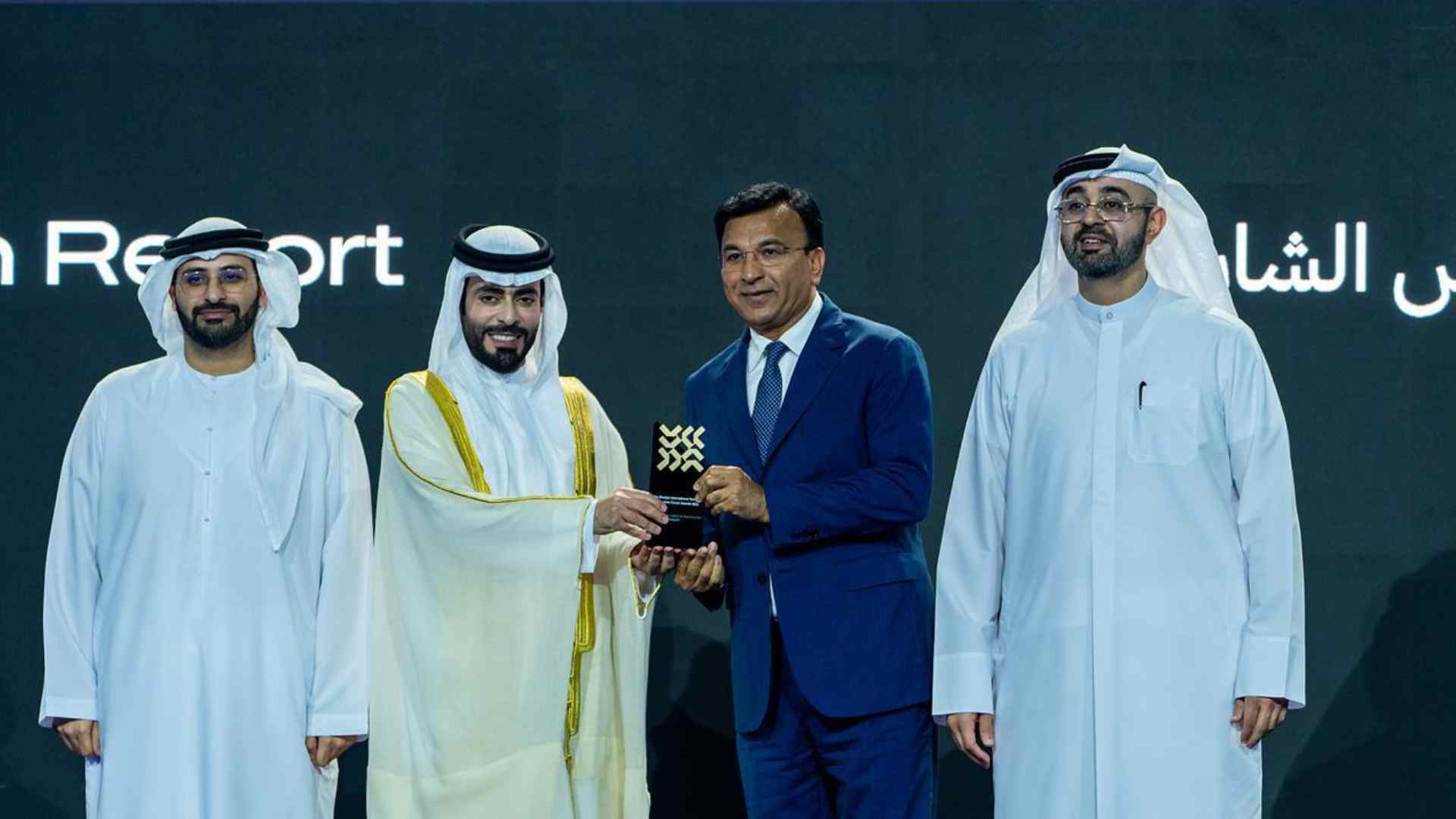
Coral Beach Resort Sharjah has won the Sustain Sharjah award for Hotel Properties at the Sharjah International Travel and Tourism Forum 2026, organised by the Sharjah Commerce and Tourism Development Authority (SCTDA). This marks the resort’s second consecutive recognition under the initiative.
The accolade acknowledges the property’s progress at Level 2 of the programme’s Explorers journey, structured around four core pillars: Guest, Experience, Local, and Story. Across each pillar, the resort has prioritised measurable, practical measures that engage guests, support the surrounding community, and ensure transparent sustainability reporting.
Central to this achievement are three primary operational initiatives:
- Onsite water bottling plant: Replaces single-use plastics with reusable glass bottles, eliminating approximately 300,672 plastic bottles annually.
- Winnow AI food-waste system: Weighs and monitors kitchen waste in real time, enabling culinary teams to curb excess directly at source.
- Onsite biodigester: Installed in 2026, making the property the first hotel in Sharjah to process organic waste entirely on site.
Commenting on the achievement, Iftikhar Hamdani, Area General Manager of Coral Beach Resort Sharjah, said: “Securing the Sustain Sharjah award for the second consecutive year is an honour for our entire team. Initiatives such as our water bottling plant, AI-driven waste monitoring, and onsite biodigester reflect our daily operational commitment—one shared with our guests, partners, and the local community. We thank the Sharjah Commerce and Tourism Development Authority for this recognition and for their steady leadership in advancing sustainable tourism across the emirate.”
Coral Beach Resort Sharjah is a signatory to the Glasgow Declaration on Climate Action in Tourism and continues to align its operations with broader international climate targets.
Hospitality
Qatar Airways Connects Doha to Caracas, Venezuela, and Bogotá, Colombia with First Flight
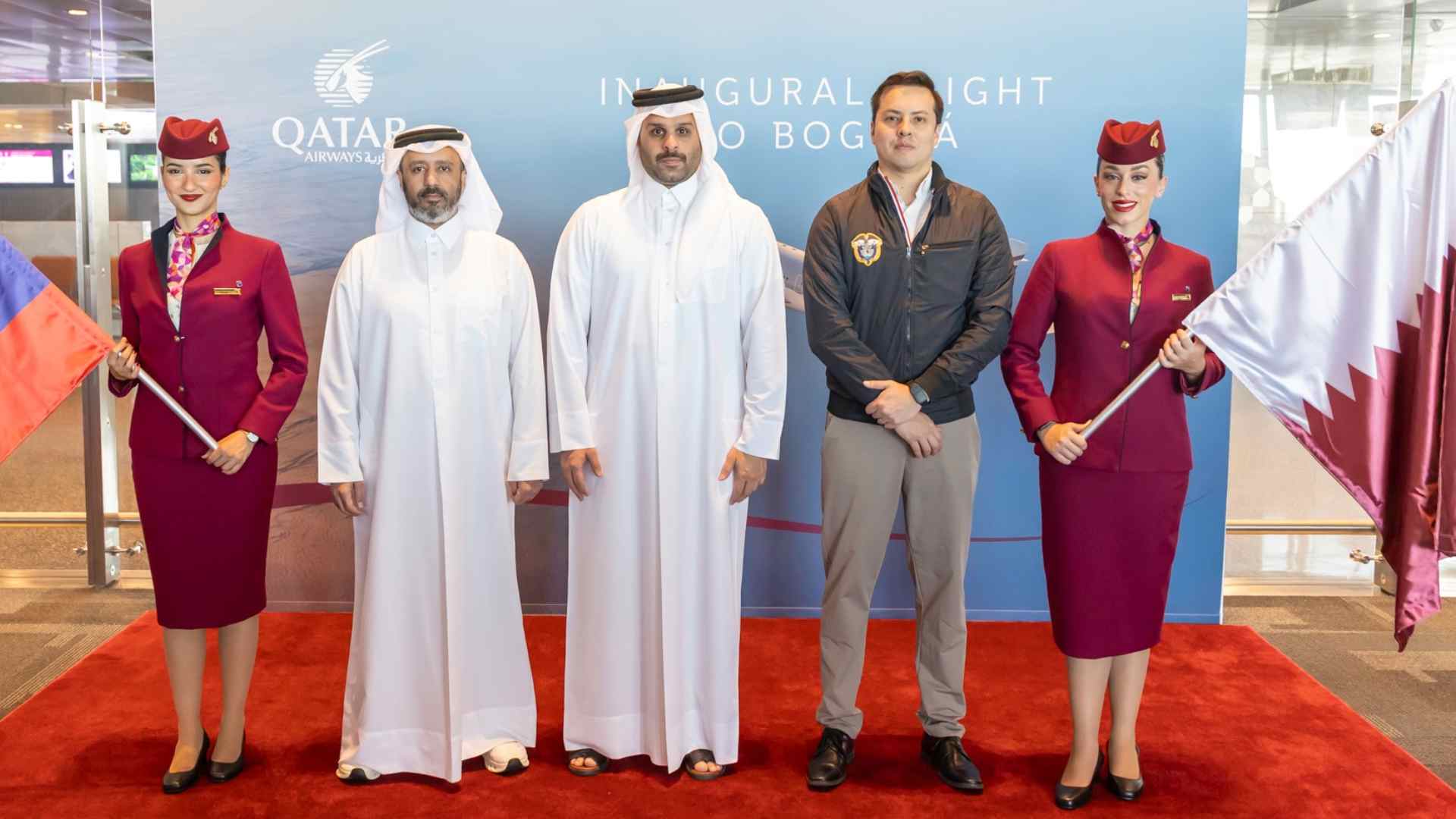
Qatar Airways has inaugurated its new twice-weekly service connecting Doha with Caracas and Bogotá. The service represents a significant milestone for the airline, as Qatar Airways becomes the first Gulf carrier to serve Venezuela, and the first airline to operate nonstop services from the Middle East to both Bogotá and Caracas. The new route underscores the airline’s commitment to strengthening global connectivity for the region and is operated on Boeing 777-200LR aircraft.
Qatar Airways flights to Caracas (CCS) and Bogotá (BOG)
Qatar Airways’ flight schedule has been designed to provide smooth onward connections through Hamad International Airport to key markets including Australia, China, Japan, Lebanon, South Korea, and the United Arab Emirates. This offers passengers greater flexibility and seamless transfer options across Qatar Airways’ global network of over 170 destinations.
Departing every Wednesday and Sunday:
Doha (DOH) to Bogotá (BOG) – Flight QR783: Departure 07:35; Arrival 16:25
Bogotá (BOG) to Caracas (CCS) – Flight QR783: Departure 17:55; Arrival 21:00
Caracas (CCS) to Doha (DOH) – Flight QR783: Departure 23:30; Arrival 20:35
The addition of Caracas and Bogotá marks the 16th and 17th destinations in the Americas served by Qatar Airways. The airline began serving South America in 2010 with its inaugural flight to Brazil’s São Paulo.
The airline has recently expanded its partnership with LATAM to include LATAM Airlines Colombia, offering travellers greater access to the region. Qatar Airways will place its code on LATAM-operated flights between Bogotá and key domestic destinations including Cartagena, Armenia, Barranquilla, Bucaramanga, Cali, Cúcuta, Ibagué, Leticia, Medellín, Montería, Neiva, Pereira, Pasto, Riohacha, San Andrés Island, Santa Marta, and Yopal.
Qatar Airways continues to strengthen global connectivity, serving more than 170 destinations this winter. Bookings can be made at qatarairways.com or through the airline’s mobile app.


Qatar Airways Unveils Onboard Signature Music Created in Partnership with Award-Winning Composer Hans Zimmer

Laura Hammett Expands to the Middle East with New Studio in Dubai
RAF ABU DHABI ADDS STARZPLAY AS DISTRIBUTION PARTNER ACROSS MENA



-

 Trending1 year ago
OPPO A6 Pro 5G Review: Reliable Daily Driver
-

 Tech News2 years ago
Denodo Bolsters Executive Team by Hiring Christophe Culine as its Chief Revenue Officer
-
 VAR2 years ago
Microsoft Launches New Surface Copilot+ PCs for Business
-

 Automotive2 years ago
AGMC Launches the RIDDARA RD6 High Performance Fully Electric 4×4 Pickup
-

 VAR11 months ago
Huawei Nova 14 Pro Review: Where Camera Excellence Meets Ecosystem Evolution
-
Tech Interviews3 years ago
Navigating the Cybersecurity Landscape in Hybrid Work Environments
-

 Hospitality2 years ago
Gulfood 2025 30th Edition Kicks Off Today, Setting New Benchmarks in F&B Growth and Innovation
-

 Tech News1 year ago
Nothing Launches flagship Nothing Phone (3) and Headphone (1) in theme with the Iconic Museum of the Future in Dubai