
 Have a question? +971 56 404 0503




Tech Features
Sustainable AI Practices Driving Ethical and Green Tech

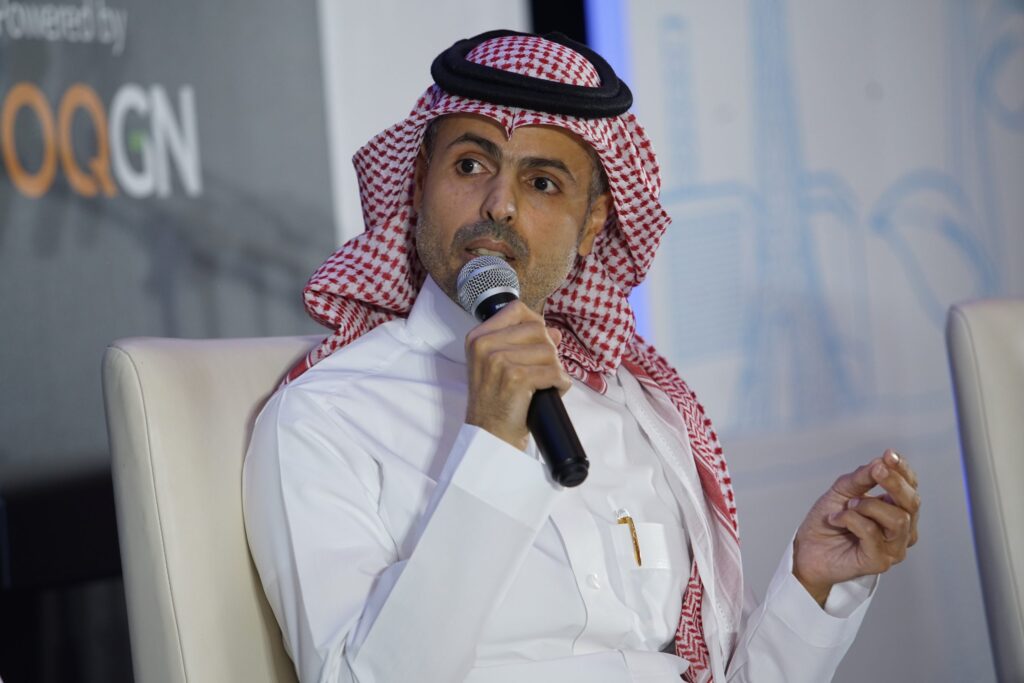
By Mansour Al Ajmi, CEO of X-Shift
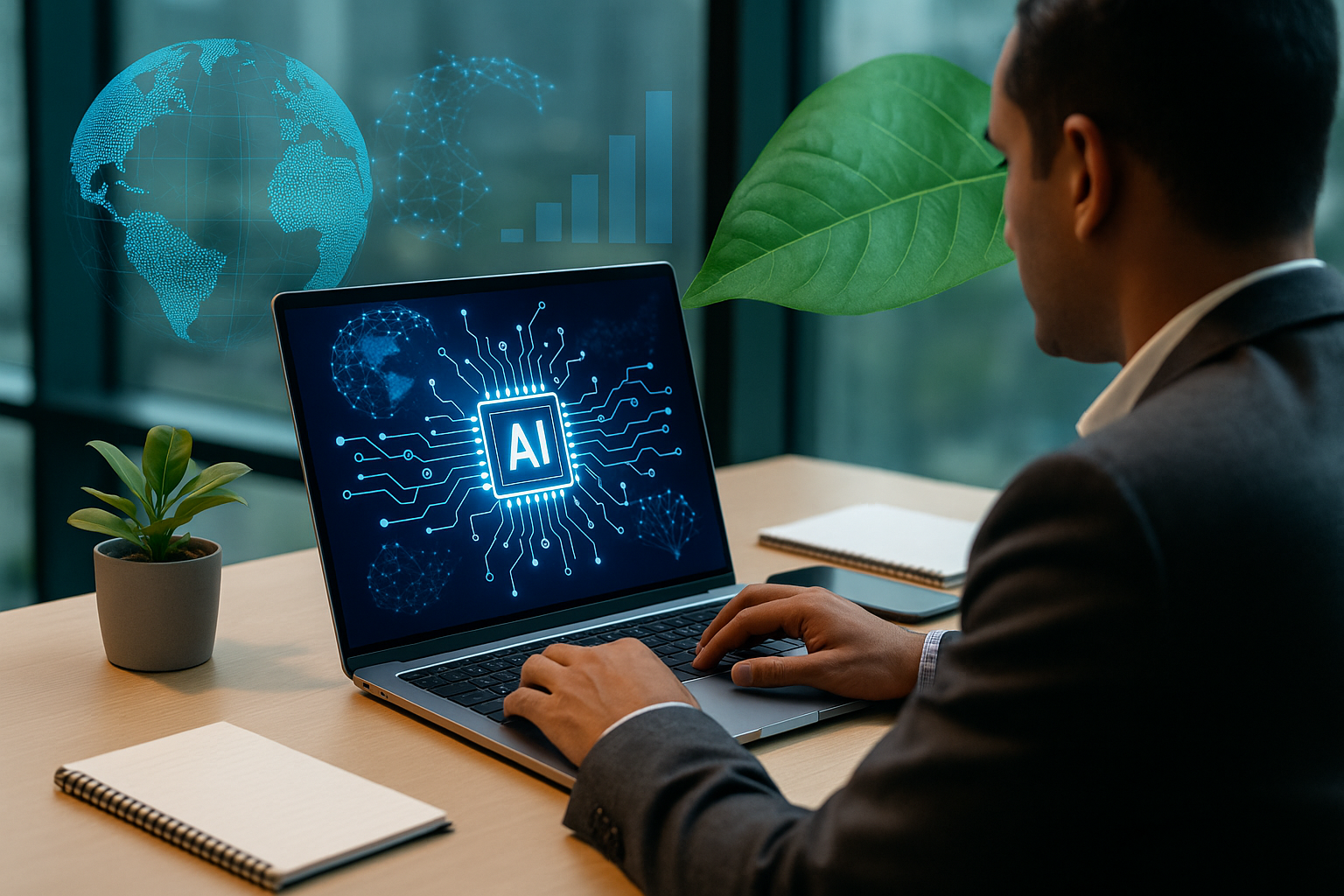
Sustainable AI practices are no longer optional—they are essential for shaping technology that benefits both people and the planet. As artificial intelligence transforms industries from healthcare to transportation, the challenge is to ensure its growth is ethical, environmentally responsible, and socially inclusive. This means addressing not only energy efficiency and carbon reduction but also governance, fairness, and long-term societal impacts.
Why Sustainable AI Practices Go Beyond the Environment?
AI is now deeply embedded in investment strategies, medical diagnostics, media platforms, and public infrastructure. While reducing energy usage is vital, true sustainability also requires ethical governance and the elimination of bias.
For example, biased training datasets can unintentionally reinforce social inequality. Studies, such as those from the MIT Media Lab, have shown that some AI systems perform poorly with diverse populations, highlighting the risk of discrimination. Addressing this means conducting regular algorithmic audits, enforcing transparency, and ensuring diverse representation in AI development teams.
The Environmental Impact of AI
Training advanced AI models consumes enormous computational resources. The process can generate carbon emissions equivalent to hundreds of long-haul flights. To counter this, tech leaders are investing in renewable energy and designing energy-efficient processors and cooling systems.
However, sustainable AI practices should become the default, not the exception. From sourcing materials responsibly to rethinking hardware infrastructure, the focus must be on green innovation by design.
Embedding Sustainability at the Strategic Core
Sustainable AI practices work best when integrated into an organization’s core strategy. Aligning AI solutions with the UN’s Sustainable Development Goals (SDGs) can directly support climate action, reduce inequalities, and promote responsible consumption.
In the Middle East, initiatives like Saudi Arabia’s Vision 2030 and the UAE Strategy for Artificial Intelligence demonstrate how sustainability and AI can align with national priorities. These strategies not only meet ethical standards but also deliver competitive advantages, building consumer trust and fostering innovation.
Governance for Responsible AI
Strong governance is key to ensuring sustainable AI practices are upheld. Regulatory frameworks, such as the European Union’s AI Act, guide transparency, accountability, and fairness.
Governance should enable innovation while preventing harm. Public-private partnerships, global cooperation, and industry alliances are critical to creating ethical, scalable, and resilient AI ecosystems.
Preparing the Workforce for the AI Era
McKinsey estimates that AI adoption could displace up to 800 million jobs by 2030. Sustainable AI practices must include reskilling and upskilling initiatives to ensure inclusive economic growth.
By investing in training programs, organizations can help employees transition to new roles in AI-related fields. This proactive approach strengthens workforce agility and supports long-term resilience.
Leadership’s Role in Driving Sustainable AI Practices
AI can significantly advance sustainability goals, from optimizing supply chains to reducing environmental waste. Companies like Unilever are already using AI to achieve greener operations, proving its real-world potential.
Yet leadership commitment is essential. Executives must set measurable goals, model ethical behavior, and integrate sustainability into company culture. This ensures that sustainability is not a side project but a core business value.
The Shared Responsibility for a Sustainable AI Future
Creating a sustainable AI future requires collaboration between individuals, corporations, and governments. Citizens should stay informed and question how AI affects them. Companies must embed sustainability into their AI strategies, while governments need to establish policies that encourage responsible innovation.
By acting now, we can ensure AI evolves as a force for good—advancing technology without sacrificing ethics, equity, or environmental stewardship.
Check out our previous post on WHX Tech 2025 to Drive Global Digital Health Transformation












Tech Features
Role of Digital Citizenship in Countering Misinformation and Protecting Social Cohesion in UAE
Dr. Soumaya Abdellatif, Head of Sociology Department, Associate Professor, College of Humanities and Sciences, Ajman University
The greatest challenge of our time is not merely that people believe false information. It is that the very boundary between truth and opinion, fact and emotion, credibility and visibility, has become increasingly vague.
This shift signals a transformation in symbolic authority itself. Trust has not simply declined – it has been displaced. Traditional institutions no longer monopolize credibility, while digital platforms have multiplied voices without necessarily strengthening legitimacy.
In societies such as the UAE – built on coexistence, institutional trust, and the delicate management of cultural diversity, this challenge carries particular strategic weight. This is where digital citizenship ceases to be an educational slogan and becomes a matter of national importance.
Beyond Media Literacy
At its core, digital citizenship is a contemporary form of civic responsibility. It deals with how individuals participate in the digital public sphere, how they interpret information, and how they contribute – consciously or unconsciously, to the production of collective trust.
(1)As Manuel Castells once stated, power in network societies increasingly operates through control over communication flows. The question is no longer simply who speaks, but whose voice becomes visible, amplified, and believed.
Trust as Social Infrastructure
In the UAE, misinformation is not merely a media concern – it is also a matter of social architecture. The country’s model of stability rests on institutional credibility, intercultural coexistence, and high levels of public trust.
This explains why the UAE has invested heavily, not only in digital transformation, but also in institutional clarity and communication governance. (2) Federal Decree-Law No. 34 of 2021 on combating rumours and cybercrime reflects an important principle: digital stability is inseparable from social stability. The objective is not merely punitive regulation, but the protection of public confidence itself.
Youth, Families and the Transformation of Authority
Young people are not passive consumers of information; they are producers of narratives, identity, legitimacy, and influence. They shape public conversations long before institutions respond to them.
In previous generations, legitimacy flowed vertically: from institutions, schools, family structures, and recognised expertise. Today, authority is increasingly negotiated horizontally- through peers, influencers, networks, and algorithmic visibility.
In addition, families act as the first school of civic trust. Long before formal media literacy programs, individuals learn how to relate to truth, disagreement, and legitimacy inside the home.
Why Social Sciences Matter
The response to misinformation cannot be reduced to fact-checking mechanisms or technical media literacy alone. What is required is a deeper intellectual infrastructure – one that social sciences are uniquely positioned to provide.
Sociology, communication studies, political science, and anthropology do not merely teach individuals how to verify information; they teach them how power operates, how legitimacy is constructed, how public opinion is shaped, and how collective trust is sustained or eroded.
A National Priority
The UAE has positioned itself as a global leader in artificial intelligence, digital governance, and future-oriented policy. This ambition is both necessary and admirable.
In this scenario, digital citizenship is not a secondary educational concern. It is part of national security, social sustainability, and the long-term legitimacy of institutions.
The UAE is not only managing digital transformation; it is helping to define what responsible digital modernity should look like.
Because in the end, the future of social cohesion will not be decided by technology itself, but by who is trusted to interpret reality in the digital age.

Enterprise AI has entered a new phase. The conversation is no longer centred on whether organisations should invest in artificial intelligence, but on how they can transform that investment into measurable business value.
By: Mohammed Hilili – General Manager, Lenovo Gulf

Across the GCC, enterprises are moving beyond experimentation. Pilot projects are giving way to enterprise-wide deployments as organisations seek to integrate AI into customer experiences, business operations, software development, cybersecurity and decision-making. Yet despite growing investment, many AI initiatives continue to struggle to deliver the outcomes leadership teams expect.
In my experience, the reason is rarely the technology itself. More often, organisations begin with the wrong conversation.
Too many AI discussions start with infrastructure specifications, GPU availability or the latest foundation models. These are undoubtedly important decisions, but they are not the first ones organisations should make.
The first question is much simpler.
What business problem are we trying to solve?
Without a clear answer, AI initiatives often remain isolated demonstrations of technical capability rather than platforms capable of delivering sustainable business value.
From AI Pilots to Enterprise Platforms
Across industries, organisations have spent the past two years experimenting with generative AI. Many have successfully launched departmental pilots that demonstrate what AI can achieve within a controlled environment. The greater challenge now lies in scaling those experiments across the enterprise.
That transition requires far more than additional computing power. It demands clear governance, high-quality data, well-defined business objectives and an architecture capable of supporting continuous growth. Successful AI adoption is increasingly becoming an organisational transformation exercise rather than simply another technology deployment.
Business Strategy Before Infrastructure
I recently worked with a leading regional financial institution looking to strengthen its research and development capabilities through AI. The ambition was clear, but many practical questions remained unanswered.
How much computing capacity would the organisation require? Which GPU architecture would support both current and future workloads? How could the environment remain scalable as AI adoption expanded across the business?
These may appear to be technology questions. In reality, they are strategic business decisions with long-term operational consequences.
Instead of beginning with hardware selection, we started by understanding the organisation’s objectives. Together with the leadership team, we assessed AI readiness, identified priority business outcomes and defined what success would look like before discussing infrastructure.
Only after establishing that foundation did we determine the appropriate compute resources, architectural approach and deployment model required to support long-term growth.
The result was not simply a successful implementation but an AI platform capable of evolving alongside the organisation’s ambitions.
AI Readiness Extends Beyond Technology
Many organisations still view AI readiness primarily through the lens of infrastructure. In reality, readiness begins much earlier.
Leadership alignment, data quality, governance frameworks, cybersecurity, skills development and measurable business outcomes all influence whether an AI initiative succeeds or stalls. Infrastructure remains essential, but it should support strategy rather than define it.
The organisations achieving the strongest results are those treating AI as a long-term business capability rather than a series of disconnected technology projects.
Building for a Hybrid AI Future
Enterprise AI environments are also becoming increasingly hybrid. Certain workloads will remain on-premises to address latency, compliance or data sovereignty requirements, while others will leverage the scalability of public cloud environments.
This makes architectural flexibility increasingly important. Organisations need infrastructure strategies capable of supporting multiple deployment models while allowing AI workloads to evolve alongside changing business priorities.
Selecting technology is therefore no longer simply about purchasing hardware. It is about building an adaptable foundation capable of supporting continuous innovation over many years.
The GCC Opportunity
The GCC is uniquely positioned to accelerate enterprise AI adoption. Governments across the region continue investing heavily in digital transformation, sovereign AI capabilities and next-generation cloud infrastructure while strengthening regulatory frameworks around data governance and cybersecurity.
These investments provide organisations with an increasingly mature environment in which to deploy AI at scale. However, long-term success will depend less on access to technology than on the ability to align AI investments with clear operational priorities and measurable business outcomes.
As AI becomes embedded within core enterprise operations, leadership decisions made today will determine competitive advantage for years to come.
Why Clarity Still Comes Before Compute
Technology will continue evolving at remarkable speed. New AI models, specialised processors and deployment approaches will continue reshaping the enterprise landscape.
What will remain constant is the importance of making the right decisions before investing.
At Lenovo, this philosophy shapes how we work with customers. We believe AI is not simply a product to deploy, but an organisational capability that develops over time. By combining advisory expertise with infrastructure, lifecycle services and long-term planning, organisations can reduce uncertainty, optimise investment and build AI platforms that continue creating value as business needs evolve.
The organisations that lead in the AI era will not necessarily be those with the largest AI budgets or the most powerful infrastructure. They will be those that begin with business clarity, build the right foundations and scale with purpose.
Because in enterprise AI, infrastructure enables transformation—but clarity makes it possible.

BY: Owais Mohammed, Regional Lead & Sales Director at WD for the Middle East, Africa, Turkey, and the Indian Subcontinent
The UAE’s ambition to become a global AI powerhouse is well established. Government investment is flowing, infrastructure is scaling, and organisations across every sector are accelerating their AI programs. But beneath the strategic announcements and the technology deployments, a fundamental question goes unanswered: is the data storage infrastructure underpinning all this built for what comes next?
For many organisations, the honest answer is: not yet. Storage is rarely the first conversation in an AI strategy discussion. It tends to be treated as a commodity decision made late in the planning cycle, long after the headline architecture choices like GPUs/CPUs have been made. That approach made sense in simpler times, but not in today’s data-driven AI economy.
The scale of what is coming
To understand why, organisations need to understand the sheer data volume that is coming their way. Global data creation is forecast to rise to 718.5 Zettabytes (ZB) through 2030 (IDC source: Market Forecast: IDC Global DataSphere Forecast, 2026-2030, June 2026, Doc #US53425426), more than tripling in five years.
AI is both a driver and a consumer of this growth. Every model trained, every inference run, every data pipeline operating continuously across a distributed architecture is generating and demanding access to data at a scale that earlier generations of infrastructure were not designed to support.
Businesses that will absorb this growth successfully are not those with the fastest individual components. They are those with architectures designed to handle volume, variety, and velocity simultaneously, at a cost that remains economically sustainable as scale increases. That is the storage strategy challenge that needs to be addressed upfront and not as an afterthought.
Why a single technology cannot solve it
A common mistake is to frame the storage decision as a technology choice: SSDs versus HDDs, flash versus spinning disk, performance versus capacity. The world’s most sophisticated storage operators, including hyperscalers and major cloud service providers, have already moved past this framing. They do not choose one technology. They deploy multiple of them, in a tiered architecture that places data on the medium best suited to its requirements.
The logic is straightforward. SSDs deliver the high IOPS and low latency that real-time, performance-critical applications demand. HDDs provide the massive capacity and cost efficiency required for the vast middle tier of active and warm data, and currently continue to represent approximately 63% of worldwide installed storage capacity through 2030. Tape generally handles archival, regulatory, and compliance workloads where retrieval times of hours or days are acceptable, representing just under 8% of worldwide installed cloud storage capacity in 2025.
These are not competing technologies. They are complementary ones, each serving a distinct purpose within a coherent architecture. The question is how each is deployed where it delivers the greatest value.
Making tiered architectures work in practice
Knowing that tiered storage is the right model and implementing it effectively are two different things. At the scale hyperscalers operate, where storage volumes are measured in hundreds of exabytes, manual allocation of data across tiers is neither practical nor efficient. Nor can all data live on cost prohibitive flash. The mechanism that makes tiered architecture manageable is software-defined storage (SDS), which pools resources centrally and provisions capacity dynamically based on demand. Rather than pre-allocating fixed capacity to individual applications, SDS responds to where data needs to be, improving overall utilisation and reducing waste.
Together, tiered architecture and SDS provide the flexibility and economic efficiency that hyperscale environments depend on. But this model is not the exclusive preserve of the world’s largest operators. For emerging infrastructure providers, including Neoclouds that are expanding rapidly across the region, the same principles apply. Architecture decisions made today will determine whether future growth is economically sustainable or structurally constrained. The window to get this right is earlier than many organisations assume.
Innovation at the storage level
Architectural thinking also changes how storage technology itself must evolve. An organisation that understands its workloads, plans for data growth, and builds tiered infrastructure will eventually reach the limits of what current storage innovations can deliver. That is why, manufacturers like WD are approaching HDDs not only as a mature, reliable product but as a technology with significant headroom remaining to help increase capacity, lower power and cost effectively scale AI data. They are advancing recording technologies, exploring novel materials, and embedding intelligence at the drive level. The aim is not incremental improvement. It is expanding the boundary of what high-capacity storage can deliver for the architectures customers are building today and the workloads they will run tomorrow.
The leadership dimension
The organisations that navigate the AI era most effectively will not be those that simply procure the latest hardware. It will be those that understand the architectural decisions that determine long-term performance, cost and scale, ask better questions earlier in the planning process, and treat storage infrastructure strategy as a source of competitive advantage rather than a procurement exercise.
Storage sits at the foundation of every AI workload, every data pipeline, and every digital service an organisation delivers. Getting the architecture right is not a technical detail. It is a leadership decision. And in a market moving as quickly as the UAE’s, it is one that deserves to be made with the same rigour and strategic intent as any other.

Join the Roni Revolution at Pizza Di Rocco This September
Standard Chartered becomes first Global Systemically Important Bank (G-SIB) to launch Institutional Bitcoin and Ether spot trading in the UAE
greytHR expands agentic AI-powered HR execution across Middle East region with greytHR NAVOS



-
News11 years ago
SENDQUICK (TALARIAX) INTRODUCES SQOOPE – THE BREAKTHROUGH IN MOBILE MESSAGING
-

 Trending10 months ago
OPPO A6 Pro 5G Review: Reliable Daily Driver
-

 Tech News2 years ago
Denodo Bolsters Executive Team by Hiring Christophe Culine as its Chief Revenue Officer
-
 VAR1 year ago
Microsoft Launches New Surface Copilot+ PCs for Business
-

 Automotive2 years ago
AGMC Launches the RIDDARA RD6 High Performance Fully Electric 4×4 Pickup
-
Tech Interviews2 years ago
Navigating the Cybersecurity Landscape in Hybrid Work Environments
-

 Tech News1 year ago
Nothing Launches flagship Nothing Phone (3) and Headphone (1) in theme with the Iconic Museum of the Future in Dubai
-

 VAR2 years ago
Samsung Galaxy Z Fold6 vs Google Pixel 9 Pro Fold: Clash Of The Folding Phenoms