
 Have a question? +971 56 404 0503




Tech News
Cyber economics and the risk to critical infrastructure


By Heidi Crebo-Rediker, Senior Fellow for Geoeconomics, Council on Foreign Relations

(She is also a speaker at the Global Cybersecurity Forum Annual Meeting 2025.)
In debates on economic security, cyber economics is too often overlooked. Many still frame cyber threats as company-level problems, where firms worry about ransomware, retailers fear stolen data, and banks focus on hacked payment systems. However, the more consequential danger is collective: cyberattacks on critical infrastructure with the power to unleash cascading disruptions across entire economies. This systemic risk remains under-appreciated, even as attacks grow in scope, sophistication, and geopolitical consequence.
From corporate risk to macroeconomic shock
The greatest danger lies not in a single server, but in the complex systems that underpin modern commerce. Electricity grids, water utilities, transportation networks, ports, airports, and undersea cables carry the weight of global connectivity. While automation and software increase efficiency, they also multiply vulnerabilities.
A prolonged disruption to any one of these systems can paralyze thousands of businesses. Multiple disruptions at once could be catastrophic. The 2021 winter storm in Texas, though caused by weather rather than malware, is a sobering example. The blackout cost up to $130 billion and crippled supply chains, health services, and agriculture. Imagine a hostile actor triggering similar failures via cyberattack, deliberately timed for maximum damage. The result would not only devastate individual entities but also generate a macroeconomic shock—akin to a natural disaster colliding with a financial crisis.
The growing threat landscape
State-backed hackers and criminal groups are already probing these vulnerabilities. The Colonial Pipeline ransomware attack in 2021 exposed how fragile logistics networks can be, while the more recent Volt Typhoon campaign embedded malware inside U.S. critical infrastructure. Unlike espionage, such intrusions appear designed to disrupt the civilian economy at scale, undermining both national resilience and military readiness.
The threat is also global. Attacks on undersea cables—vital arteries of the digital economy—are no longer hypothetical. With artificial intelligence accelerating offensive capabilities, adversaries can now identify weaknesses faster and automate attacks at scale. As a result, the risk curve is steepening, placing both advanced and developing economies in danger.
The field of cyber economics
Traditional economics treats cyber risk as a minor externality to be covered by insurance. In contrast, cyber economics reframes these risks as systemic. The more integrated and digitized an economy becomes, the more vulnerable it is to disruption. Elevating cyber threats from technical concerns to macroeconomic risks sharpens the case for sustained investment in resilience.
Without realistic, economy-wide accounting of costs, both governments and markets will continue to underinvest in defense and the skilled workforce required. Initiatives such as the Global Cybersecurity Forum–World Economic Forum Center for Cyber Economics, particularly when joined by institutions like the IMF, World Bank, and OECD, represent important first steps.
Who polices, who pays?
The governance dilemma complicates the picture. In the United States, most critical infrastructure is privately owned, meaning investment decisions often follow commercial incentives rather than national resilience. Large utilities may field advanced defenses, while smaller authorities lack the means to keep pace. Even the best-prepared firms cannot realistically deter state-backed attackers without government coordination and international collaboration.
Meanwhile, state-led economies often mandate cybersecurity standards and assume direct responsibility for protecting infrastructure. Liberal democracies, however, struggle to enforce baselines or require immediate reporting. Legal restrictions and fragmented oversight create uneven defenses, leaving the broader economy exposed to “weakest link” failures. The unresolved question of who ultimately pays—federal taxpayers, private firms, or local governments—further delays progress.
The allied dimension
Because cyber threats transcend borders, national strategies alone are insufficient. Attacks on shared assets such as undersea cables, power grids, or data networks ripple across continents. Therefore, allies must elevate cyber resilience as a shared economic security priority. Intelligence sharing, collaborative monitoring, and joint investment in defensive infrastructure can help close gaps that no single nation can address on its own.
A call to action
What is needed now is a paradigm shift. Policymakers, investors, and regulators must recognize that cyber threats to critical infrastructure represent potential macroeconomic shocks, not isolated corporate challenges. The rise of cyber economics highlights that in an interconnected world, cyber defense is economic defense. Ignoring this reality risks overlooking one of the defining macroeconomic threats of our time.
Read our previous post, H-1B visa fee hike rattles tech and global markets










Tech News
TALLY SOLUTIONS OPENS NOMINATIONS FOR THE 6TH EDITION OF TALLY MSME HONOURS, CELEBRATING INSPIRING ENTREPRENEURS


Tally Solutions, a leading international technology provider of business management software, has announced the launch of the sixth edition of its flagship annual initiative, Tally MSME Honours. With an aim to recognize and celebrate emerging entrepreneurs, the initiative builds on the momentum of five successful years and continues to champion the future of the UAE’s MSME ecosystem by spotlighting innovation, resilience, and meaningful impact.
Over the last five editions, Tally MSME Honours has received more than 70,000 nominations globally, with over 20% of entries from women-led ventures, making it one of the biggest global platforms to celebrate MSMEs. This year, Tally expects 20,000 nominations across categories. The honours will also bring forth MSME success stories from across India, Africa, Bangladesh, and Nepal, in addition to the Middle East. The entries can be submitted by interested businesses or people who know such businesses via this link.
As part of this year’s edition, participants can submit video entries, ensuring representation from different emirates across the UAE. To further strengthen the evaluation process, Tally is also deploying an AI-led shortlisting framework that will help validate and assess entries more comprehensively by analyzing publicly available business information, ensuring deserving businesses receive due recognition for their impact and growth.
Speaking about the initiative, Vikas Panchal, General Manager – MENA, Tally Solutions, said, “MSME Honours is not just an award platform; it is a celebration of the resilience, ambition, and entrepreneurial spirit that drives small businesses forward every day. Across the UAE and the wider MENA region, we continue to witness inspiring MSMEs building innovative businesses, creating employment, and contributing meaningfully to economic growth. This becomes even more relevant as the UAE continues to place strong focus on strengthening its SME ecosystem as a key pillar of the country’s long-term economic vision. Through MSME Honours, we aim to spotlight these stories of determination and impact, while encouraging more entrepreneurs to share and celebrate their journeys.”
With a strong focus on enabling long-term growth and visibility, Tally MSME Honours extends beyond recognition to create a platform that continuously supports entrepreneurial journeys. Over the years, past winners have become part of a growing network of business leaders and changemakers, gaining opportunities to participate in industry discussions, ecosystem forums, and business-led conversations. These engagements help entrepreneurs showcase their journeys, build meaningful collaborations, exchange insights, and further strengthen their impact within the broader MSME ecosystem.
Tally MSME Honours 2026 will feature the following award categories:
- Business Maestro: Established businesses that have mastered the art of thriving and sustaining success.
- Wonder Woman: Outstanding women-led businesses making a remarkable impact.
- NewGen Icon: A new generation of business owners innovating and paving the way for exponential growth.
- Tech Transformer: Businesses leveraging new technology to drive efficiency and scale.
- E-preneur Icon: Purpose-driven businesses contributing meaningfully to society and the environment
The entries will be judged by an esteemed panel comprising experts from the field of technology, the MSME domain, and the media.
Tech News
BELKIN’S LILYPAD IPAD CASE TURNS THE FAMILY IPAD INTO A FUN, FRIENDLY SIDEKICK INSPIRED BY DISNEY AND PIXAR’S “TOY STORY 5”

Belkin, a global leader in consumer electronics for over 40 years, today announced a real-world special edition iPad case inspired by Lilypad, the high-tech frog-shaped smart tablet character from Disney and Pixar’s “Toy Story 5,” in theaters June 18.
Designed to transform an iPad into a fun character companion, the Lilypad iPad Case blends protection with subtle character-inspired features, turning tablet use into an imaginative, playful experience connected to the world of “Toy Story 5.”
“Lilypad represents a modern take on how kids interact with technology,” said Steve Malony, CEO of Belkin. “With this collaboration, we wanted to create an accessory that captures the character’s personality while still delivering the quality, durability, protection, and thoughtful design families expect from Belkin.”
Turning an iPad into Lilypad
Designed, for families and Disney collectors, the Lilypad iPad Case combines durable EVA foam construction with character-inspired details like a built-in carry handle and foldable kickstand, allowing users to comfortably hold, carry, and use their device for watching, drawing, or learning on the go.
Key features include:
- Official Lilypad Character Design – Inspired by Lilypad from Disney and Pixar’s “Toy Story 5,” the case gives iPad (10th and 11th generation) expressive eye details and a character-inspired design.
- Kid-Proof Protection – Durable EVA foam construction helps absorb bumps and drops during everyday play.
- Soft, Grippy Edges – Easy for small hands to hold securely, helping reduce slips and accidental drops.
- Built-In Carry Handle – Integrated handle provides easy portability, designed to keep up with everyday use.
- Built-In Kickstand – Foldable kickstand supports hands-free viewing for drawing, watching, or playing.
- Exclusive Digital Wallpapers – Each case includes a QR code to download complimentary Lilypad-themed wallpapers for home and lock screens, making the iPad feel even more like the character.
- Safe & Parent-Approved Materials – Made with non-toxic materials and wipe-clean surfaces for easy maintenance.
Tech News
VERTIV EXPANDS LIQUID COOLING PORTFOLIO IN EMEA TO ACCELERATE AI‑READY DATA CENTER DEPLOYMENTS
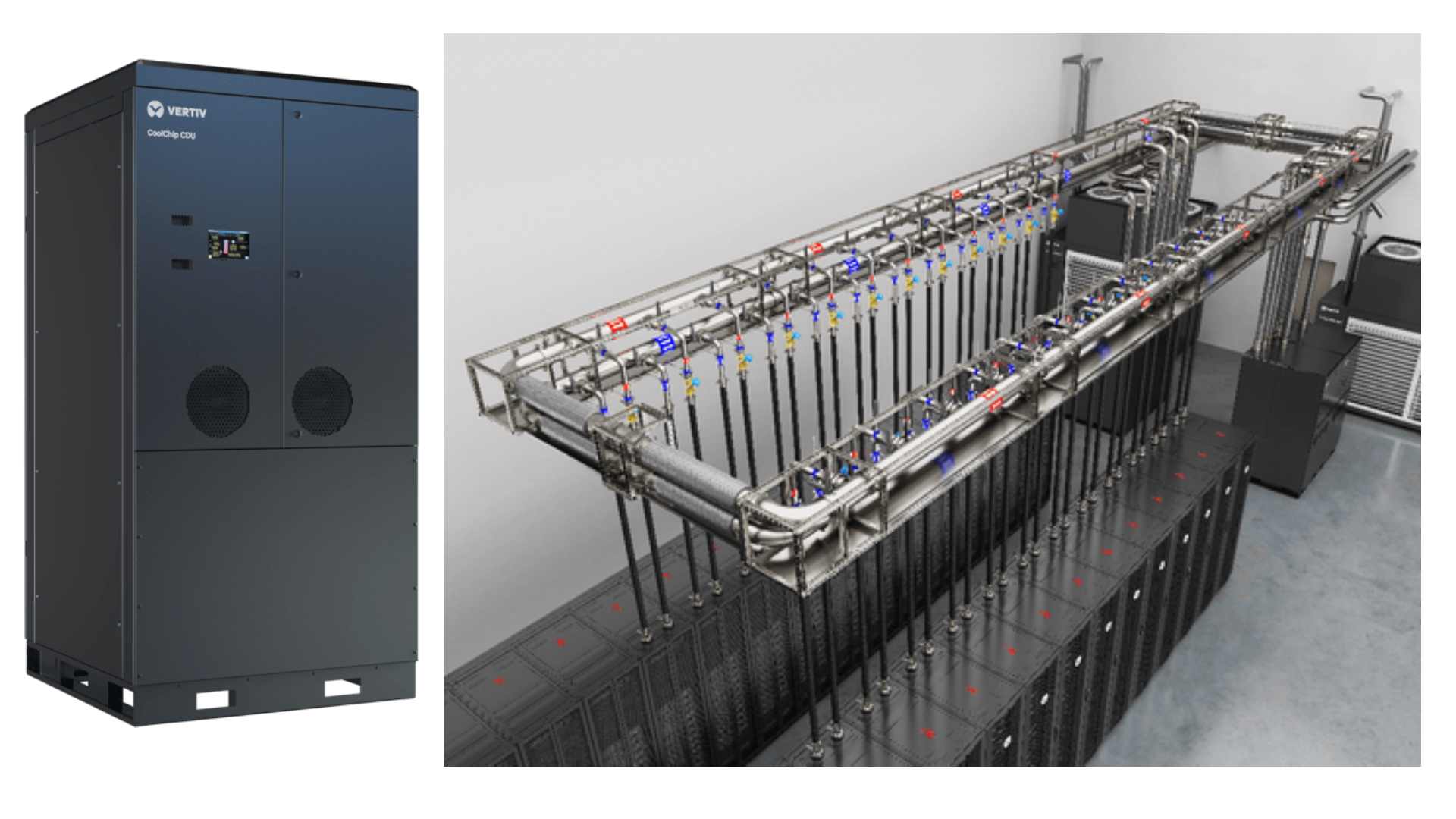
Vertiv (NYSE: VRT), a global leader in critical digital infrastructure, today announced the expansion of its end-to-end thermal chain with the availability of the Vertiv™ CoolChip CDU 2300 and Vertiv™ CoolChip Fluid Network Row Manifolds in Europe, Middle East and Africa (EMEA). These liquid cooling technologies support the growing demands of AI and high-density, next-generation compute to help customers deploy high-density infrastructure faster and operate more efficiently.
The Vertiv CoolChip family is a core building block of the Vertiv thermal chain, an end-to-end portfolio including direct-to-chip cooling, immersion cooling, rear-door heat exchangers, coolant distribution, heat rejection, intelligent controls, and lifecycle services into a single, cohesive thermal management system.
The newly announced solutions will be on display at Datacloud Global Congress in Cannes (June 1–4), where Vertiv will participate as a Patron Sponsor and showcase its latest technologies at booth n. 123.
“The rapid growth of AI workloads is driving a fundamental shift in how data centers are designed, cooled, powered and operated,” said Paul Ryan, president for EMEA at Vertiv. “At Datacloud Global Congress, we’re showing how Vertiv is expanding its end‑to‑end portfolio, combining high-density power solutions, liquid cooling, heat rejection, intelligent controls, and lifecycle services, to help customers deploy AI-ready infrastructure faster and operate more efficiently over time.”
As a critical link in the Vertiv™ thermal chain, the Vertiv CoolChip CDU 2300 is a liquid-to-liquid coolant distribution unit delivering 2.3 MW of cooling capacity in a compact footprint, offering one of the highest capacity-to-footprint ratios available in the market. Its smaller cabinet supports flexible placement, including in‑row or in adjacent mechanical areas, helping operators reduce floor space requirements and the number of CDUs needed in large‑scale, high‑density deployments.
Vertiv™ CoolChip CDU systems span from 100 kW to 2.3 MW and support direct‑to‑chip liquid cooling as well as rear‑door heat exchangers. The integrated Vertiv™ CoolChip CDU controller allows temperature and flow to adapt to workload demands, while features such as redundancy, unit‑to‑unit communication, and remote monitoring help enhance system availability and simplify operations. This controller-level intelligence enables the CDU to operate in coordination with other elements of the thermal chain, enabling consistent thermal performance across the entire infrastructure.
Complementing the CDU within the thermal chain architecture, the new Vertiv™ CoolChip Fluid Network Row Manifolds provide the physical connectivity layer between coolant distribution units, server-level cooling hardware, and heat rejection systems. Each manifold assembly is flushed, passivated, pressure-tested, and sealed to deliver superior cleanliness, corrosion resistance, and leak-free performance. The configurable design provides full system compatibility across direct-to-chip cooling, immersion cooling, and rear-door heat exchangers while simplifying coolant routing. It also enables fast deployment for new builds or retrofits, helping operators scale liquid-cooling infrastructure in weeks rather than months.
Vertiv complements its portfolio with Vertiv™ Liquid Cooling Services, covering design support, installation, and ongoing maintenance. This lifecycle approach is designed to help customers maximize efficiency, maintain system availability, and support consistent performance as liquid cooling becomes an integral part of modern data center operations.
Vertiv experts will be available throughout Datacloud Global Congress at booth #123 to discuss Vertiv’s end‑to‑end portfolio of power, cooling, and converged infrastructure solutions designed to support high‑density, AI‑ready data centers. Explore insights and resources at Vertiv.com/AI.

WHY PERSONALISATION IS THE NEW CURRENCY IN WEALTH MANAGEMENT
ZAHRA’S KITCHEN SHARES ITS GUIDE TO EASIER SUMMER EATING IN THE UAE
MOONWALK INTO JUNE



-
News11 years ago
SENDQUICK (TALARIAX) INTRODUCES SQOOPE – THE BREAKTHROUGH IN MOBILE MESSAGING
-

 Tech News2 years ago
Denodo Bolsters Executive Team by Hiring Christophe Culine as its Chief Revenue Officer
-

 Trending8 months ago
OPPO A6 Pro 5G Review: Reliable Daily Driver
-
 VAR1 year ago
Microsoft Launches New Surface Copilot+ PCs for Business
-
Tech Interviews2 years ago
Navigating the Cybersecurity Landscape in Hybrid Work Environments
-

 Automotive2 years ago
AGMC Launches the RIDDARA RD6 High Performance Fully Electric 4×4 Pickup
-

 Tech News11 months ago
Nothing Launches flagship Nothing Phone (3) and Headphone (1) in theme with the Iconic Museum of the Future in Dubai
-

 VAR2 years ago
Samsung Galaxy Z Fold6 vs Google Pixel 9 Pro Fold: Clash Of The Folding Phenoms