
 Have a question? +971 56 404 0503




Financial News
Unifonic to present omnichannel customer engagement technology and newly acquired conversational AI at LEAP 2023

Unifonic is set to participate at LEAP 2023 in Riyadh, Saudi Arabia. At the second edition of the global tech event, which will be launched under the theme ‘Into New Worlds,’ Unifonic will present its cutting-edge communication technology, redefining how brands connect with their customers. The conference will be held from February 6 to 9, 2023, at the Riyadh Front Exhibition and Convention Center.
Ahmed Hamdan, CEO and Co-Founder of Unifonic, stated: “Digital transformation is disrupting every industry. And for the most, it’s led by customers’ growing expectations for seamless digital journeys. We believe conversational technology will form the backbone for digital commerce, marketing, and support. In line with this, Unifonic is set to showcase the evolution of its customer engagement platform to a melting pot of tech innovators and leading experts from around the world at Leap 2023. We are proud to demonstrate how our technology can deliver seamless end-to-end omnichannel digital customer experiences and showcase our new AI capabilities. Through this platform, Unifonic aims to empower organizations with advanced communication tools that promise exceptional experiences for customers.”
“Moreover, it also offers an ideal setting to underscore the advancements we have achieved from our acquisition of Sestek, an AI-driven conversational automation company’. Ahmed Hamdan, added.
This year’s LEAP conference, featuring more than 700 speakers from 50 countries and 900 local and international companies, will significantly advance KSA’s economy through numerous partnerships, agreements, and investments. Unifonic is also excited to spotlight UnifonicX, an investment of SAR 100 million that focuses on Acceleration and Venture Building, among other initiatives. The accelerator program is targeting rising SaaS startups. This initiative program aligns with and supports the Saudi Vision 2030 of accelerating digital transformation initiatives for public and private enterprises in the Middle East, as well as meeting Saudi Arabia’s goal to invest in high-growth, high-impact technology startups in the country.










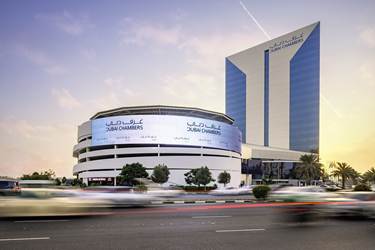
Qashio, the leading spend management platform headquartered in Dubai, has announced the launch of “Qashio For You”, a targeted initiative designed to support small and medium-sized enterprises (SMEs) across Dubai. The programme is being rolled out in collaboration with Dubai Chambers, reinforcing a shared commitment to strengthening the emirate’s business ecosystem during a period of economic pressure.
Running until the end of June 2026, the initiative will provide more than AED 10 million worth of financial relief and welcome bonuses to support Dubai-based businesses.
The launch comes at a time when SMEs continue to play a critical role in Dubai’s economy, accounting for over 95% of all companies in the UAE and contributing significantly to employment and GDP.
Positioned as a community-first initiative, “Qashio For You” acknowledges the operational and financial pressures facing SMEs and aims to provide practical, immediate relief. Being a Dubai born and Headquartered business have always and will continue to trust and believe in Dubai, Qashio have never outsourced their functions or software development to cheaper hubs in other countries but rather always built in the place we call home.
Through the programme, eligible businesses will receive benefits while accessing Qashio’s platform with no set-up fees, deferred payments as needed, easing short-term cash flow pressures. Depending on their selected plan, businesses may also receive up to 75,000 Qashio points that can be converted to Skywards Miles through Emirates, or Jumeirah ONE points further supporting the local economy.
SME’s can also choose to redeem their Qashio points for uncapped cashbacks without any delays that further supports immediate cashflow needs. These rewards and financial benefits are complemented by a series of educational webinars designed to help SMEs strengthen financial resilience, improve cost control, and navigate the current market conditions with greater confidence.
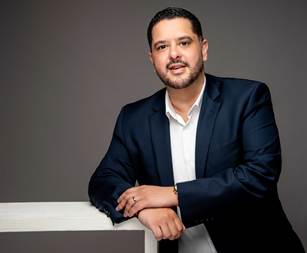
Armin Moradi, Founder and CEO of Qashio, said, “In challenging market conditions, access to liquidity, control, and tangible rewards while managing cashback can make a measurable difference to how businesses operate and come out on the otherside of this resiliently and stronger. ‘Qashio For You’ is a reflection of our commitment to the Dubai business community — not just as a service provider, but as a partner invested in their long-term success. By combining financial tools with meaningful incentives, we are aiming to deliver immediate and practical value.”
Beyond financial incentives, Qashio is also building a dedicated community channel to engage participating businesses through ongoing education, events, and knowledge-sharing. This includes a structured programme of webinars and resources aimed at helping SMEs navigate financial planning, cost optimisation, and growth strategies.
As Dubai continues to position itself as a global hub for entrepreneurship and innovation, initiatives such as “Qashio For You” underscore the importance of ecosystem-driven support where government entities, private sector players, and global partners collaborate to deliver tangible outcomes for businesses on the ground.
The UAE Ministry of Finance has issued Ministerial Decision No. 24 of 2026, setting out the detailed implementation rules for the country’s first-ever Research and Development (R&D) Tax Credit regime under the Corporate Tax framework. Effective for Tax Periods commencing on or after 1 January 2026, the decision establishes a progressive, tiered credit structure with rates of 15%, 35% and 50%, linked to both the level of qualifying R&D expenditure and the number of R&D staff employed. The maximum qualifying expenditure is capped at AED 5 million per entity or Tax Group per year.
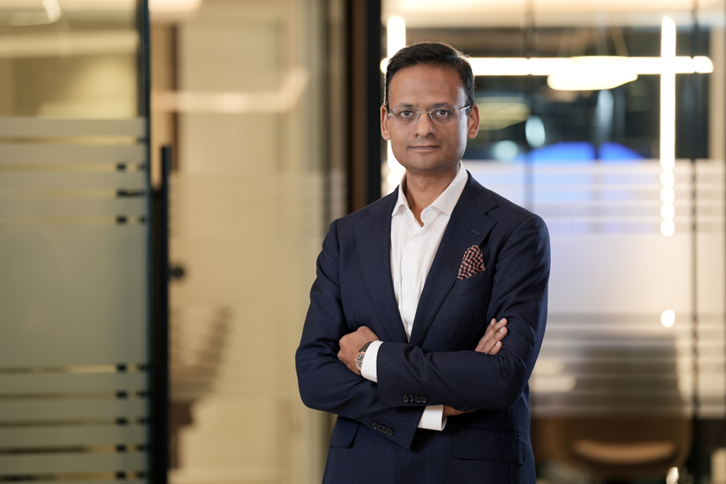
“The R&D Tax Credit is a landmark development, but it is not a simple year-end adjustment. The dual-threshold design means this is as much a workforce planning exercise as a tax planning one. Businesses need to understand that pre-approval from the Council is mandatory before any credit can be claimed – this is a precondition, not an administrative formality. Companies that begin mapping their R&D activities against the Frascati Manual criteria, quantifying qualifying expenditure and building their documentation framework now will be in the strongest position when it comes time to file,” said Nimish Goel, Leader Middle East, Dhruva, Ryan LLC Affiliate.
The move represents one of the clearest signals yet that the UAE intends its tax framework to actively incentivise innovation, influence capital allocation and support the country’s long-term economic diversification going well beyond revenue collection and international alignment. For businesses operating in manufacturing, technology, engineering, healthcare, food and beverage, agriculture, and other innovation-led sectors, the key consideration is whether internal systems are equipped to capture the benefit.
The credit operates on a dual-threshold basis that is unlike most international R&D incentive regimes. To access each tier, a business must satisfy both a minimum qualifying expenditure level and a minimum average R&D headcount. The first AED 1 million of qualifying spend attracts a 15% credit, requiring at least two R&D staff. The portion between AED 1 to 2 million qualifies at 35%, requiring at least six staff. Spend between AED 2 to 5 million qualifies at 50%, requiring at least fourteen staff. If the headcount threshold is not met, the credit rate drops to the highest tier where both conditions are satisfied, creating material cliff-edge effects that make workforce planning an integral part of tax planning for the first time in the UAE.
Qualifying R&D activities must meet five criteria drawn from the OECD Frascati Manual; they must be novel, creative, uncertain in outcome, systematic, and transferable or reproducible. Activities in social sciences, humanities and the arts are excluded, and only R&D conducted within the UAE qualifies. Qualifying expenditure falls into three categories: staff costs (which receive a 30% overhead uplift), consumable costs, and subcontracting fees paid to UAE-based contractors. Intra-group transactions are consistently excluded from qualifying expenditure, a design choice that will require groups with centralised R&D functions to review their cost allocation and transfer pricing arrangements carefully.
The decision also introduces a mandatory pre-approval process administered by the Council, ongoing compliance reporting obligations, and a seven-year record-keeping requirement for technical documentation covering R&D objectives, methodologies, experiments and findings. These requirements signal that the UAE authorities expect robust, contemporaneous evidence of qualifying activities, not retrospective assembly at the time of filing.
Commenting on the development, Justin Arnesen, Principal, Practice Leader, Europe & Asia Pacific Innovation Funding, Ryan, said, “Ryan’s global experience in R&D tax credits shows that the difference between a policy announcement and a commercial outcome lies in the rigour of eligibility analysis, documentation and claims management. We have helped UK businesses receive over AED 2.5 billion in innovation funding through R&D Tax credits. These outcomes were driven by disciplined processes, not just the existence of a credit. This initiative not only aligns with global best practices but also sends a clear signal to multinational organisations and emerging enterprises that the UAE is serious about fostering a knowledge and innovation-based economy.”
Implications for Multinational Groups under Pillar Two
For multinational groups within the scope of the UAE’s Domestic Minimum Top-up Tax (DMTT), the R&D Tax Credit adds an important layer to Effective Tax Rate (ETR) modelling. Because the credit is non-refundable, it is likely to be treated as a reduction of covered taxes under the Global Anti-Base Erosion (GloBE) rules rather than as a Qualified Refundable Tax Credit, a distinction that can lower the jurisdictional ETR rather than improve it. For groups operating at or near the 15% minimum rate, this means the credit could paradoxically increase Top-up Tax exposure even as it reduces Corporate Tax liability.
However, the decision provides a mechanism for unutilised credits to offset top-up tax directly through the Domestic Group structure, which partially mitigates this effect. Multinationals should model the net impact across both Corporate Tax and top-up tax before claiming, and factor in the five-year claw-back provision that applies if the entity’s status changes – including becoming a qualifying free zone person or redomiciling outside the UAE.
For businesses with cross-border operations, the commercial value of the R&D Tax Credit extends beyond the direct tax saving. The credit’s treatment in the group’s wider international tax profile, including its classification under tax treaties, its interaction with Pillar Two ETR calculations, and its impact on transfer pricing for cost contribution arrangements will require integrated advisory across multiple disciplines. Groups conducting joint R&D through cost contribution arrangements should note that only the arm’s length share of contributions attributable to UAE-based R&D qualifies, adding a transfer pricing dimension to credit planning. The Ministerial Decision applies to Tax Periods and Fiscal Years commencing on or after 1st January 2026.
“The UAE has built a thoughtful, well-structured framework with clear international lineage – the Frascati Manual criteria, the tiered incentive design, the Pillar Two integration. Early investment in activity mapping, expenditure tracking and documentation is likely to determine the extent to which businesses can access and sustain benefits under the regime,” concluded Nimish.

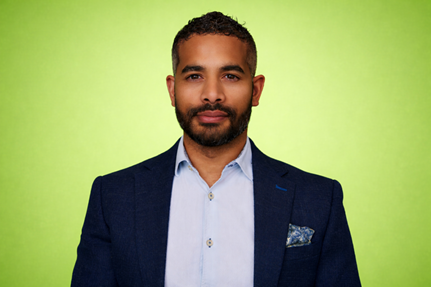
Bitcoin edged higher last week, gaining 11%, yet it continues to struggle to convincingly break through the $74,000 resistance level, according to Simon Peters, crypto analyst at eToro.
US bitcoin spot ETFs recorded $763 million in net inflows over the past week, helping to push prices higher. Strategy, the largest bitcoin treasury company by total holdings, also disclosed another significant purchase of 17,994 bitcoin for approximately $1.28 billion.
Looking ahead, the Federal Reserve meeting this week could prove pivotal in determining whether bitcoin breaks above the $74,000 level or experiences a correction. While markets had previously anticipated a dovish pivot, a sudden spike in oil prices due to the ongoing conflict in the Middle East may prompt the Fed to reconsider its outlook.
“The consensus is for the Fed to hold rates on Wednesday, but if Chairman Powell signals in his press conference that the central bank is prepared to raise rates should oil prices remain elevated or continue rising, this could trigger a sell-off in cryptoasset prices,” said Peters.
The meeting will also see the release of the Federal Reserve’s latest “dot plot”, offering insights into where each Federal Open Market Committee participant believes interest rates should be by the end of the year, next year and over the longer term.
AI tokens surge amid Nvidia comments
Among the biggest movers in the crypto market over the past week were AI-related tokens TAO and FET, both rising 47% as investors rotated into the sector following bullish remarks about artificial intelligence by Nvidia CEO Jensen Huang.
Ahead of Nvidia’s GTC AI conference this week, Huang described AI as “essential infrastructure”, stating that every company and nation will build and use it.
These comments have renewed interest in on-chain, decentralised AI networks, pushing tokens such as TAO and FET higher.
Mastercard launches crypto partner program
Mastercard has launched its Mastercard Crypto Partner Program, a new global initiative bringing together more than 85 companies across the crypto ecosystem, including exchanges, stablecoin issuers and blockchain development teams.
The program aims to foster dialogue and collaboration as the crypto sector continues to mature. Participants will work with Mastercard teams to combine the speed and programmability of blockchain technology with Mastercard’s merchant network spanning more than 210 countries.
The initiative builds on Mastercard’s existing digital asset activities, including its Start Path blockchain track, Engage platform and Crypto Card program.
Bitcoin reaches 20 million supply milestone
Bitcoin reached a historic milestone last week when the 20 millionth bitcoin was mined, marking the issuance of more than 95% of the cryptocurrency’s total capped supply of 21 million coins.
The milestone was reached on 10 March at block height 931200, 17 years after the network first launched. Due to Bitcoin’s halving schedule, the remaining one million coins are expected to take approximately another 114 years to be mined, with the final bitcoin projected to enter circulation around the year 2140.
Crossing the 20 million milestone again highlights Bitcoin’s scarcity dynamics. With demand continuing to outpace the new supply issued daily by miners and many holders unwilling to sell at current prices, the market could be positioned for a significant move higher over the coming months and years.

ALTERYX EXPANDS REGIONAL LEADERSHIP WITH SABYA SEN TO LEAD IMEA & APAC
QASHIO LAUNCHES SME SUPPORT INITIATIVE WITH DUBAI CHAMBERS
HOP INTO EASTER AT MCGETTIGAN’S WITH FAMILY ROASTS, EGG HUNTS AND CLASSIC SUNDAY FAVOURITES



-
News10 years ago
SENDQUICK (TALARIAX) INTRODUCES SQOOPE – THE BREAKTHROUGH IN MOBILE MESSAGING
-

 Tech News2 years ago
Denodo Bolsters Executive Team by Hiring Christophe Culine as its Chief Revenue Officer
-
 VAR12 months ago
Microsoft Launches New Surface Copilot+ PCs for Business
-

 Tech Interviews2 years ago
Navigating the Cybersecurity Landscape in Hybrid Work Environments
-

 Trending5 months ago
OPPO A6 Pro 5G Review: Reliable Daily Driver
-

 Tech News9 months ago
Nothing Launches flagship Nothing Phone (3) and Headphone (1) in theme with the Iconic Museum of the Future in Dubai
-

 Automotive1 year ago
AGMC Launches the RIDDARA RD6 High Performance Fully Electric 4×4 Pickup
-

 VAR2 years ago
Samsung Galaxy Z Fold6 vs Google Pixel 9 Pro Fold: Clash Of The Folding Phenoms