
 Have a question? +971 56 404 0503




Tech News
How to Protect Your Enterprise VPN from DDoS Attacks


By Emad Fahmy, Director of Systems Engineering at NETSCOUT
In the Middle East, where digital transformation is accelerating and enterprises are increasingly reliant on remote work, safeguarding your enterprise VPN from Distributed Denial-of-Service (DDoS) attacks is more crucial than ever. As businesses expand their digital footprint, the threat landscape is evolving, and VPNs are often a prime target for malicious actors seeking to disrupt operations.
Unlike consumer VPNs, which primarily focus on privacy and masking IP addresses, enterprise VPNs are designed to facilitate secure, authenticated access to critical corporate resources. This secure, encrypted tunnel is essential for protecting sensitive information exchanged between remote employees and the enterprise network. Without it, productivity and operational efficiency could be severely impacted.
Recent statistics highlight the urgency of the threat. The second half of 2023 alone saw over 7 million DDoS attacks targeting major enterprises and service providers globally. The Middle East is not immune to this trend, with businesses here facing increasing cyber threats that could disrupt their operations and impact their bottom line.
Identifying Vulnerabilities in Your Enterprise VPN
Enterprise VPNs can be susceptible to various vulnerabilities. Weak or reused credentials are a significant risk, as they can be exploited by attackers to gain unauthorized access. Additionally, the VPN’s configuration plays a critical role in its security posture. For example, over-permissioning, or granting the VPN excessive access to the network, can result in extensive damage if a breach occurs.
Conducting a thorough security audit is vital for uncovering these vulnerabilities. By assessing current VPN security, businesses can implement additional safeguards to bolster their defenses. Addressing potential weaknesses in VPN setups and ensuring that the correct protection is in place against both volumetric and state-exhaustion DDoS attacks can help maintain the network integrity and availability.
Proactive Measures to Secure VPNs Against DDoS Attacks
To shield VPNs from DDoS attacks, a multi-layered approach is essential. While robust firewalls are a fundamental component of network security, they alone are often insufficient against sophisticated DDoS threats. A dedicated DDoS protection solution is crucial, offering stateless defences that can prevent state-exhaustion attacks from overwhelming your network.
In addition to firewalls, implementing intrusion detection systems (IDS) and intrusion prevention systems (IPS) can help identify and thwart potential threats. However, these systems can be easily overwhelmed by DDoS attacks, which can disrupt VPN availability and, consequently, business productivity.
For comprehensive protection, businesses should consider investing in a tailored DDoS mitigation solution. This should include both on-premises and cloud-based defenses, providing the ability to detect, mitigate, and neutralize DDoS attacks of varying scales. Such solutions can ensure maximum uptime, safeguard business operations, and minimize revenue losses associated with productivity disruptions.
As the digital landscape evolves, businesses in the Middle East must stay vigilant and proactive in safeguarding their enterprise VPNs. By adopting the right strategies and technologies, they can strengthen their resilience against DDoS attacks, ensuring their networks remain secure and operational.










Tech News
VERTIV EXPANDS THERMAL PORTFOLIO WITH NEW WALL-MOUNT COOLING SYSTEM FOR EDGE AND SMALL DATA ROOMS IN EMEA

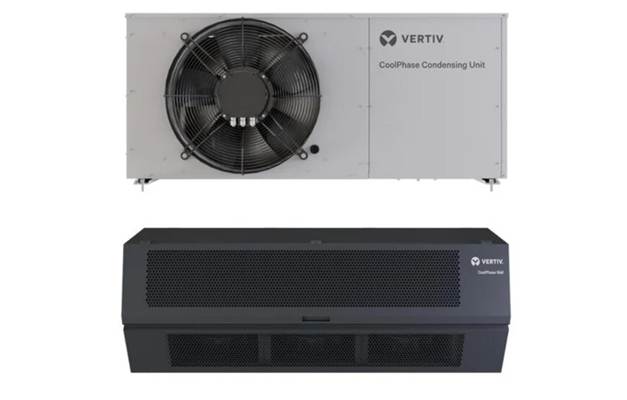
Vertiv (NYSE: VRT), a global leader in critical digital infrastructure, today announced the launch of the Vertiv™ CoolPhase Wall, a space-saving, wall-mount cooling system designed for small IT spaces and edge environments. The system is designed for the needs of IT equipment, removing heat and enabling continuous operation while taking up zero floor space. Vertiv CoolPhase Wall is available now across Europe, Middle East and Africa (EMEA).
As distributed computing becomes more critical to business operations, compact IT environments need high-quality thermal control designed for sensitive electronic systems. However, many are still using comfort cooling systems designed for human comfort rather than addressing the high sensible heat ratio (SHR) and higher airflow requirements of IT equipment. Vertiv CoolPhase Wall addresses this gap with a purpose-built system that provides the required SHR along with integrated monitoring and control capabilities to protect equipment and enable24/7 operational continuity.
Built for installation flexibility, the Vertiv CoolPhase Wall features a split system with an indoor wall-mounted cooling unit. The system delivers up to 60% greater airflow than standard comfort cooling systems and leverages variable-speed compressors and variable speed fans to modulate to meet heat load demand and improve energy efficiency to enable operational cost reductions.
Designed to handle thermal loads up to 11 kW, the Vertiv CoolPhase Wall is engineered to operate reliably in outdoor ambient temperatures ranging from -35 to 48℃. The system features the Vertiv™ Liebert® iCOM™ operational control, which enables local configuration and supervision of key operating parameters. For extended visibility and remote access, the Vertiv CoolPhase Wall includes onboard remote communication capability to provide real-time alerts and operational status through a secure web interface.
The Vertiv™ CoolPhase Wall utilizes R-32 refrigerant, a low-global warming potential (GWP) alternative that reduces environmental impact while maintaining thermal performance. This positions Vertiv ahead of evolving regulatory requirements, including the European Union’s F-Gas regulations that restrict the use of high-GWP refrigerants. While many comfort cooling systems are still transitioning to lower-GWP options, Vertiv is applying these standards to IT-focused cooling, giving organizations confidence that their deployments are aligned with future environmental expectations.
“As IT continues to expand into areas that were not originally intended for high-density electronics, the demand for adaptable and energy-efficient cooling solutions is increasing across EMEA,” said Sam Bainborough, vice president, EMEA thermal business at Vertiv. “The Vertiv CoolPhase Wall is engineered to support continuous operations, enabling customers to maintain reliable, efficient thermal performance in small IT rooms and edge sites year-round.”
Vertiv CoolPhase Wall expands the company’s comprehensive thermal management portfolio, which includes precision cooling system for edge deployments, enterprise data centers, and high-density AI environments, ranging from room-based cooling to direct-to-chip liquid cooling and rear door exchangers.
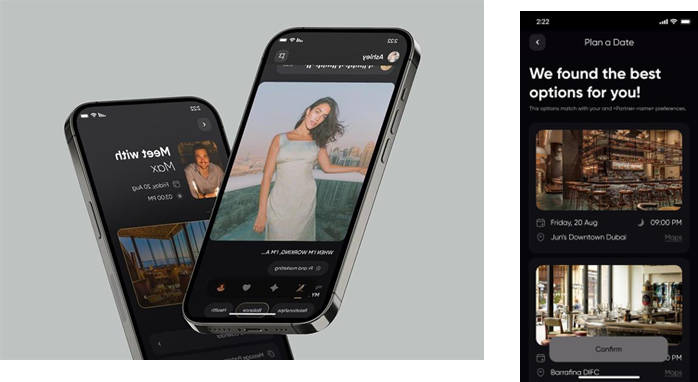
MAXION, a UAE-based platform empowering social connections, has reported 399% year-on-year growth in its user base in 2025 following the introduction of an AI-powered infrastructure designed to prioritise real-world interaction. The growth reflects strong adoption of the platform’s technology-driven approach to facilitating meaningful relationships. Over the same period, the company reached a 406% increase in annual recurring revenue.
MAXION operates as a hybrid SaaS and marketplace platform built on an AI-powered system that processes behavioural, scheduling, and conversion data across the full lifecycle of an interaction. The system analyses availability alignment, time to meeting, attendance confirmation, repeat meeting patterns, and structured feedback following in-person meetings, helping members move from introduction to real-world conversation more efficiently. To support the continued development of these capabilities, MAXION has secured $900,000 in early-stage funding, which has been allocated toward AI integration, infrastructure development, senior product hires, and operational expansion.
The UAE’s international population provides a strong environment for MAXION’s growth, with Dubai alone home to a rapidly expanding base of ultra-high-net-worth individuals (UHNWIs). At the same time, the UAE online relationship services market is anticipated to grow by more than 9.21% by 2031, highlighting sustained demand for platforms that help individuals form meaningful connections in fast-moving urban environments.
To date, more than 40,000 individuals have applied to join MAXION, with approximately 7,000 active members accepted into the curated community. Through a selective onboarding process, the platform maintains a gender balance close to 50:50, compared with traditional platforms where participation averages approximately 70:30 male to female. The community primarily consists of high-performing professionals aged 25 to 45 working across finance, consulting, technology, entrepreneurship, and senior corporate leadership roles.
Christiana Maxion, Founder and CEO of MAXION, said: “Our long-term vision is to restore real-world connection in a fast-moving world. Technology should help people meet sooner rather than spend months behind a screen. We use data to make it easier for people to meet at the right time, allowing members to focus on getting to know each other rather than spending weeks in digital conversation. MAXION is designed to move people from introduction to real conversation quickly, where interactions feel more natural, and intentions become clearer. Over time, we want to build a platform that supports strong partnerships and lasting communities.”
In the past six months alone, MAXION has facilitated more than 2,000 in-person meetings between members. The platform measures success by the relationships formed between members, with users typically returning every three months and continuing to engage with the app over periods of up to two years. MAXION has also established strategic partnerships with brands to reduce logistical friction surrounding real-world meetings and create a smoother experience for members.
Adoption is currently concentrated in Dubai, with growing traction in Abu Dhabi. The company plans to deepen its presence across the UAE while preparing for expansion into international professional hubs such as Singapore, London, and New York, where dense expatriate populations and fast-paced professional environments create similar demand for intentional connection.
Over time, MAXION aims to support members beyond the first stage of connection by creating value for couples as their relationships develop. The long-term vision is to help build urban communities where meaningful relationships remain central to modern professional life.

Yango Tech, B2B technology solutions provider by Yango Group, launches a new business practice focused on developing and deploying autonomous industrial AI agents. These AI agents are designed to execute real operational tasks across customer service, analytics, compliance, and decision-making, serving industries such as fintech, medtech, e-commerce, logistics, smart cities, and the public sector. Yango Tech offers both ready-to-deploy solutions and a customizable platform for building AI agents tailored to the specific needs of each business. This new business direction addresses the rapidly growing demand across the Middle East for scalable AI systems that deliver measurable business impact, as the region accelerates toward a projected $320 billion AI economy by 2030.
AI Agents connect directly to enterprise applications and data sources, including CRM, HR and finance systems, allowing AI to act like digital employees with memory, execution capabilities and built-in security. For governments and enterprises building digital workforces and smart cities, Yango Tech deploys AI employees across customer support, sales, recruitment and debt recovery, delivering 95% first-contact resolution, faster hiring and up to $100K in monthly operational savings. Its Smart City stack enables digital twins, emergency navigation, mobility optimization and real-time urban analytics, helping municipalities accelerate decision-making, improve traffic flow, and reduce energy and operational costs through AI-powered city modelling and dispatch optimization.
In the medical world, Yango Tech reduces physician admin workloads through appointment transcription, smart search across electronic medical records, imaging analysis and AI and BI command centres. The solutions automate documentation, surface unified patient data in seconds, improve diagnostic accuracy and enable clinicians to treat more patients. In financial services, AI functions support front-, middle- and back-office transformation through AI-powered chatbots, smart search, credit scoring, anti-fraud analytics and workflow automation.
Commenting on the launch, Vladimir Razuvaev, Chief Executive at Yango Tech, said: “Enterprises today are under pressure to turn AI into practical outcomes. Our AI Agents were built to help organizations deploy autonomous digital employees that integrate securely into existing systems and deliver measurable productivity gains. With around 84% of GCC organisations adopting AI, the opportunity now lies in execution. Our vision is to help healthcare providers, banks, private firms and cities scale AI responsibly while strengthening performance, transparency and service quality.”
The launch reinforces Yango Tech’s alignment with the UAE’s national innovation agenda and broader regional ambitions for AI-led economic growth, smart infrastructure and digital government. By enabling sovereign deployments, local data control and enterprise-grade security, the platform supports the UAE’s vision for future-ready public services and knowledge-driven economies while helping organizations move faster from strategy to implementation.

DUBAI INVESTMENTS BREAKS GROUND ON LANDMARK AL VISTA MIXED‑USE DEVELOPMENT IN MEYDAN, COMMENCES MAIN CONSTRUCTION WORKS
THE IMPACT OF AI IN THE F&B INDUSTRY: LEADING RESTAURANT TECH COMPANY HELPS RESTAURANTS STAY AHEAD WITH ITS AI-POWERED TOOLS
AL HAMRA MALL SETS NEW BENCHMARK FOR ECO-CONSCIOUS RETAIL IN RAS AL KHAIMAH

-
News10 years ago
SENDQUICK (TALARIAX) INTRODUCES SQOOPE – THE BREAKTHROUGH IN MOBILE MESSAGING
-

 Tech News2 years ago
Denodo Bolsters Executive Team by Hiring Christophe Culine as its Chief Revenue Officer
-
 VAR12 months ago
Microsoft Launches New Surface Copilot+ PCs for Business
-

 Tech Interviews2 years ago
Navigating the Cybersecurity Landscape in Hybrid Work Environments
-

 Trending5 months ago
OPPO A6 Pro 5G Review: Reliable Daily Driver
-

 Tech News9 months ago
Nothing Launches flagship Nothing Phone (3) and Headphone (1) in theme with the Iconic Museum of the Future in Dubai
-

 Automotive1 year ago
AGMC Launches the RIDDARA RD6 High Performance Fully Electric 4×4 Pickup
-

 VAR2 years ago
Samsung Galaxy Z Fold6 vs Google Pixel 9 Pro Fold: Clash Of The Folding Phenoms