
 Have a question? +971 56 404 0503




Hospitality
MENA Hospitality Market Value Set to Top US$487 Billion by 2032 Amid Unprecedented Tourism Expansion

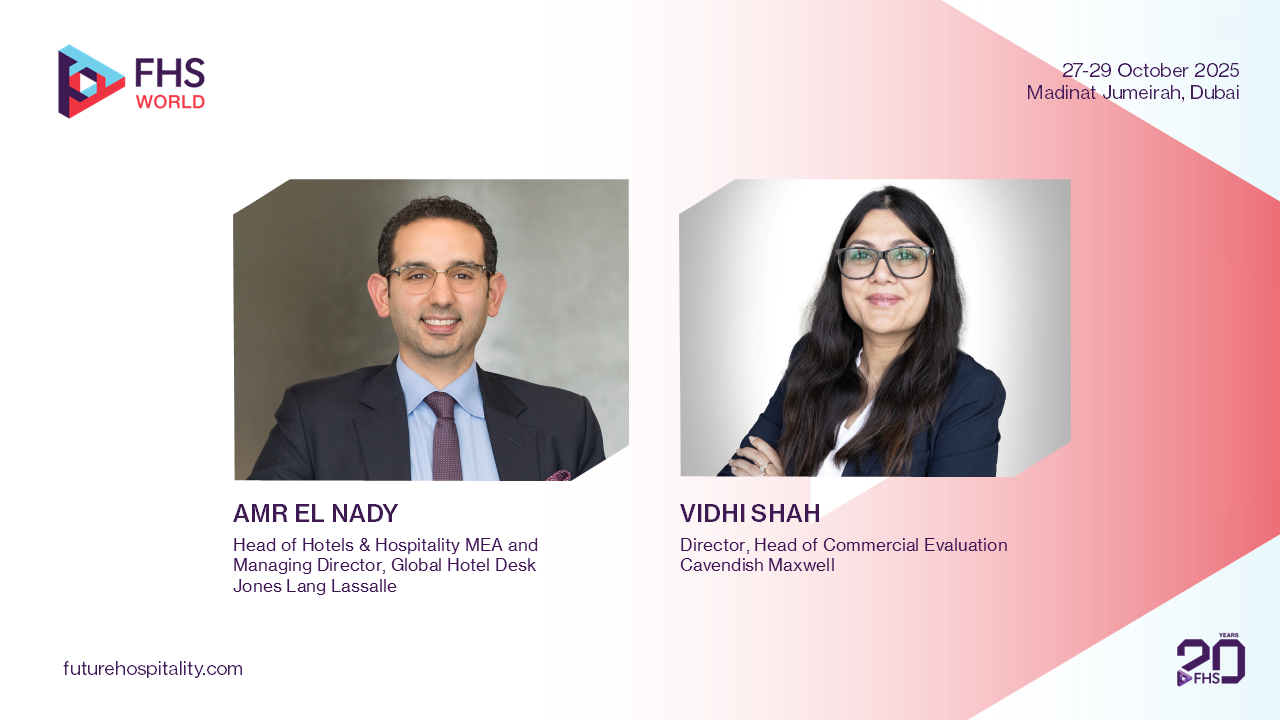
The value of MENA’s hospitality market is set to grow from US$310 billion in 2025 to more than US$487 billion by 2032, according to data released ahead of the Future Hospitality Summit – FHS World, Madinat Jumeirah Dubai, 27-29 October.
The travel and tourism sector is projected to contribute US$367 billion to the Middle East economy and support 7.7 million jobs this year, says the World Travel and Tourism Council. International visitor spending is expected to reach nearly US$194 billion, up nearly a quarter from 2019, pre-pandemic levels, with domestic spending forecast to hit US$113 billion.
As of Q2 2025, the Middle East’s hotel construction pipeline reached an all-time high of 650 projects with 161,574 rooms. At the end of June, 337 projects, with almost 86,500 rooms, were under construction, with 147 projects due to start by Q2 2026.
Saudi Arabia tops the Middle Eastern hotel construction chart, with more than 92,000 rooms across 342 projects. Next is Egypt with 127 projects and a record-high room count of over 28,000, followed by the UAE with 100 projects (25,470 rooms); Oman with 27 projects (4,709 keys) and Qatar with 16 projects (nearly 3,500 rooms).
The unprecedented hospitality, tourism and infrastructure expansion reinforces the region’s position as a global magnet for investment, say experts.
Amr El Nady, Head of Hotels & Hospitality MEA and Managing Director, Global Hotel Desk at Jones Lang Lasalle, said: “Saudi Arabia is targeting 150 million tourist arrivals annually by 2030, while Egypt aims for 30 million international visitors by 2028. Both nations are seeking to significantly increase tourism’s contribution to their GDP, with KSA targeting 10% and Egypt 15%. This strategic focus is driving substantial hospitality investment, with mega-projects like NEOM, The Red Sea Project, and AlUla in KSA, alongside Egypt’s New Administrative Capital, Ras Al Hekma, South Med and Red Sea developments.
“The surge in development creates opportunities for both major international hotel operators and boutique brands to diversify their portfolios by introducing new concepts ranging from ultra-luxury desert resorts to culturally immersive heritage properties. The diversification strategy allows operators to cater to evolving traveller preferences while supporting the countries’ objectives of transforming their economies through sustainable tourism growth and positioning themselves as premier global destinations.”
JLL added that liquidity in the hotel investment landscape remains remarkably robust, underpinned by resilient hotel trading performance and increasing tourist arrivals. Performance data shows year on year growth in terms occupancy and ADR metrics, reflecting the sector’s operational strength and market confidence.
Amr El Nady added: “This strong performance has significantly enhanced appetite from regional and international investors – from high-net-worth individuals to institutional players – all seeking high-yielding, income-generating hotel assets and mixed-use developments, particularly across the UAE market. The region’s investment appeal continues to attract diverse capital sources drawn to its strategic positioning and growth potential.
“Last year, JLL forecasted US$1.2 billion in Dubai hotel transactions, and current market activity indicates we are on track to exceed this milestone, further demonstrating sustained investor confidence.”
In the UAE, Dubai’s hospitality sector – which has around 10,000 new rooms on the way between now and 2027 – continues to deliver an outstanding performance, according to the hospitality division at leading real estate advisory group and property consultant, Cavendish Maxwell.
“Occupancy levels rose to 81% in H1 2025, an increase of 2.5% year-on-year,” said Vidhi Shah, Director, Head of Commercial Valuation at Cavendish Maxwell. “Meanwhile ADR across Dubai’s hotels and resorts reached US$159, up 4.7%. With its hospitality sector continuing to lead the way in setting new benchmarks in safety, inclusivity and connectivity, Dubai remains a premium, global destination for leisure and business travellers, in turn opening up a plethora of new investment opportunities.”
Oman is also increasingly becoming a hot spot for hospitality investment, with tourism expected to contribute 5% to GDP by 2030 and 10% by 2040 – and overtake transport and logistics to become the country’s second most important industry after hydrocarbons.
Oman is set to boost hotel room inventory by 25% by 2030, with 9,600 new keys on the way in the next five years, and 2,600 by the end of 2025, recent insight from Cavendish Maxwell shows. In H1 this year, more than 1.1 million guests checked in to 3-5 hotels, where revenues rose more than 18% to US$367 million. The strong performance led to almost 5% growth in hospitality employment, with 10,800 people now working in the industry.
The Middle East’s continued growth in tourism and hospitality is being further boosted by various government campaigns and initiatives across the region to encourage investment, international visits and business set up.
In KSA, upcoming global events like Expo 2030 and the FIFA World Cup 2034 are boosting already strong demand for real estate, including project in the hospitality sector. In addition, from January 2026, foreigners will be able to purchase real estate assets in designated zones – a landmark development set to further deepen investor appetite.
Investment and real estate is a key track at FHS World, with more than 30 presentations, panel debates, workshops and one-to-one conversations covering everything from smart capital to sustainability and investment, cross border strategies to building global partnerships, investing in mixed-use projects and much more. Visit futurehospitality.com/world/agenda for subjects and speakers across the three-day programme.









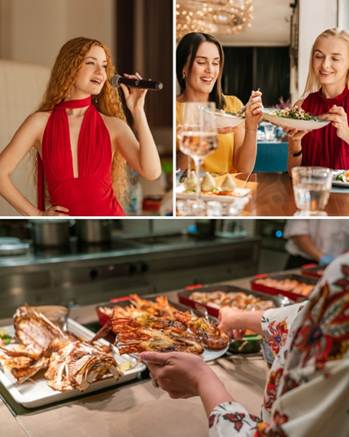
Step into the weekend with a vibrant Mediterranean-inspired brunch at Timo Restaurant, where great food meets live entertainment in a relaxed, family-friendly setting. This exclusive brunch experience showcases a curated selection of traditional Mediterranean dishes, with flavours spanning Syria, Lebanon, Greece, Italy, France, Spain, and Morocco, celebrating the region’s rich culinary and viticultural heritage.
Expertly crafted by renowned chef Chadi Saloum, the menu is designed to elevate the dining experience, positioning Timo as a destination for authentic and sophisticated Mediterranean gastronomy. Guests can indulge in a vibrant selection of high-quality Mediterranean dishes, brought to life through interactive live cooking stations featuring freshly prepared specialties and chef-led culinary experiences. A dedicated kids’ menu ensures younger guests are well catered for, complemented by wholesome, fresh produce and a wide range of engaging activities. Vegan and vegetarian options are also thoughtfully incorporated, offering something for every guest to enjoy.
From hot Mediterranean favourites to flame-grilled creations prepared using a Josper oven and BBQ stations, every element is thoughtfully curated to deliver both flavour and theatre. Paired with free-flow beverages, live music, and dedicated kids’ activities, this brunch offers the perfect setting for families and friends to unwind and connect over a lively weekend experience.
Offer Details
Date: Every Saturday | Time: 1 pm to 4 pm | Price: Soft package: AED 125 per person | Bubbles package: AED 225 per person Activities: Live entertainment and dedicated kids activities
Location: Timo Restaurant, Al Jaddaf Rotana Suite Hotel | For reservations, please call 04 596 2222 or visit the hotel website.

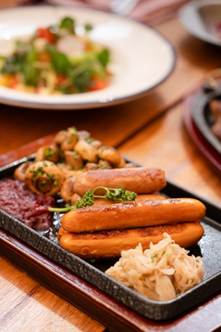
Sundays just got a whole lot more fun at Bruno’s Biergarten, where the lively outdoor venue at Mövenpick Hotel Jumeirah Beach brings its signature energy to a Bavarian-style brunch designed for families, friends, and even furry companions. With its relaxed, pet-friendly setting and vibrant atmosphere, it’s the perfect way to round off the weekend.
At the heart of the experience is a generous sharing-style menu paired with live grill stations, perfect for laid-back afternoons and group dining. Guests can tuck into hearty Bavarian favourites, from schnitzels and rotisserie chicken fresh from the carving station to platters of sausages and baked mushrooms, all served alongside warm pretzels, garden salad, and traditional Bavarian potato salad.
The live grill keeps things interactive with freshly prepared bratwurst, German-style beef steak, and corn on the cob, while the overall experience is designed to be as social as it is satisfying.
Little ones are in for plenty of excitement too, with Bruno making special appearances throughout the afternoon, alongside a dedicated kids’ buffet featuring hot dogs, popcorn, and cotton candy. A cookie-decorating station led by the chefs and an adjacent outdoor play area ensure there’s never a dull moment.
Even four-legged guests are part of the experience, with a dedicated pet-friendly approach and a special menu available, making this a truly inclusive Sunday outing. (Kindly c onfirm)
Whether you’re gathering the family, catching up with friends, or simply looking for a relaxed and lively weekend plan, Bruno’s Bavarian Brunch delivers the perfect mix of comfort food, entertainment, and good times.
Date: Every Sunday | Time: 1 pm to 4 pm | Price: Soft Package: AED 149 | House Package: AED 269 | Kids (6–12 years): AED 75. Kids under 6 years of age dine for free.
Enjoy the flavours of Bavaria with 3X ALL Accor Reward points and an exclusive 20% off for Accor Live Limitless members.. All prices are subject to applicable terms and conditions. (Kindly confirm)
Hospitality
MARRIOTT HOTEL AL JADDAF PRESENTS NEW SEASONAL HAPPENINGS ACROSS STAYS, DINING AND CATERING
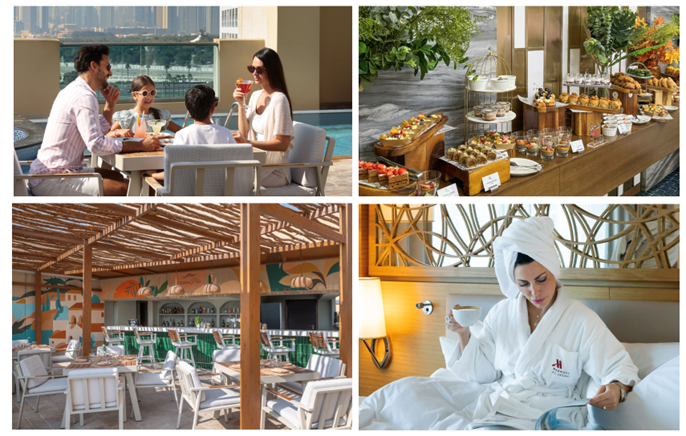
Marriott Hotel Al Jaddaf introduces a collection of seasonal happenings, bringing together staycation offers, workspace retreats, casual dining moments and bespoke outside catering services. Set at the crossroads of old and new Dubai, the hotel offers a well-connected base with a series of experiences designed for families, friends and residents looking to break from routine and make the most of their time in the city.
THE ULTIMATE WORKSPACE RETREAT
What: The Ultimate Workspace Retreat is a staycation designed for those seeking a seamless balance between productivity and relaxation, where a well-appointed workspace meets the ease of a hotel escape. Guests can enjoy a deluxe room or suite, daily breakfast, unlimited coffee throughout the day, and access to business centre facilities, alongside thoughtful additions such as two hours of meeting room access per day, complimentary laundry and evening drinks.
When: Valid for a limited time, subject to availability
Time: Check-in from 12:00pm and check-out until 4:00pm, subject to availability
Where: Marriott Hotel Al Jaddaf
Price: Rates start from AED 299 per night (advanced reservations are required), inclusive of daily breakfast, 25% off food and drinks, unlimited coffee, two hours of meeting room access per day, complimentary drinks from 6:00pm to 8:00pm and 40% off spa treatments
Subject to availability and advance booking. Blackout dates and restrictions may apply. Taxes are additional.
EXCLUSIVE STAYCATION OFFER FOR UAE RESIDENTS OFFER
What: A staycation designed for UAE residents, offering a comfortable stay with added value across dining. Guests can enjoy well-appointed accommodation and exclusive savings on food and beverage experiences.
THE ART OF DOING NOTHING
What: A daily poolside experience designed for slow moments and easy afternoons, where guests can take a break from the pace of the city and unwind at their own rhythm. Set on the pool deck of Marriott Hotel Al Jaddaf, the offering invites guests to enjoy a relaxed day by the pool, with fully redeemable credit to be enjoyed across food and beverages.
DINING HAPPENINGS ACROSS THE HOTEL
SUN & SIP AT TERRAMAR
What: A daytime poolside experience at TerraMar, featuring refreshing drinks, light bites and stunning views overlooking the iconic Burj Khalifa. Ideal for easy afternoons, it offers a laid-back option to unwind by the pool.
TARDEOMAR AT TERRAMAR
What: An evening poolside offering with wine and snacks, set in a laid-back setting as the day winds down. Designed as an easy, accessible option, it brings together relaxed views, simple bites and great value for a casual evening out.
COMBO CELEBRATION AT BNB SPORTS BAR
What: A range of food and drink combinations designed for easy, casual dining throughout the day. With options like pasta and wine, brew and wings, or brew and burger, the offering brings together well-priced favourites in a relaxed sports bar setting, ideal for catch-ups at any time.
KICKOFF HOUR AT BNB SPORTS BAR
What: A daily offer tailored for Al Jaddaf residents, featuring drinks from AED 35 alongside 25% off selected food items. Set in a relaxed sports bar setting, it offers an easy and well-priced option for casual catch-ups throughout the day.
OUTSIDE CATERING SERVICES
What: A bespoke outside catering service bringing five-star hospitality to venues across Dubai, with tailored menus and well-executed event experiences. From intimate gatherings to large-scale corporate functions, the team delivers customised setups influenced by Dubai’s diverse culinary landscape. Supported by experienced culinary and service professionals, each event is delivered with consistency and attention to detail.

SAVOUR MEDITERRANEAN FLAVOURS AT TIMO GOURMED SATURDAY BRUNCH
SUNDAYS DONE RIGHT WITH A BAVARIAN BRUNCH AT BRUNO’S BIERGARTEN

Nothing Phone (4a) Pro Review: Mid-Range Pricing, Flagship Ambitions

-
News10 years ago
SENDQUICK (TALARIAX) INTRODUCES SQOOPE – THE BREAKTHROUGH IN MOBILE MESSAGING
-

 Tech News2 years ago
Denodo Bolsters Executive Team by Hiring Christophe Culine as its Chief Revenue Officer
-
 VAR12 months ago
Microsoft Launches New Surface Copilot+ PCs for Business
-

 Trending5 months ago
OPPO A6 Pro 5G Review: Reliable Daily Driver
-

 Tech Interviews2 years ago
Navigating the Cybersecurity Landscape in Hybrid Work Environments
-

 Tech News9 months ago
Nothing Launches flagship Nothing Phone (3) and Headphone (1) in theme with the Iconic Museum of the Future in Dubai
-

 Automotive2 years ago
AGMC Launches the RIDDARA RD6 High Performance Fully Electric 4×4 Pickup
-

 VAR2 years ago
Samsung Galaxy Z Fold6 vs Google Pixel 9 Pro Fold: Clash Of The Folding Phenoms