
 Have a question? +971 56 404 0503




Tech Features
STAY SAFE, UAE: BE AWARE OF THE NEXT GENERATION OF FRAUD


Attributed by Yazen Rahmeh, cybersecurity expert at SearchInform
Human Weakness at the Core
Fraud in the UAE is no longer just about hacking computers; it’s about hacking people. Recent research shows that the average victim loses more than $2,000, and over half of UAE residents face at least one scam attempt every month. That’s not a rare event anymore. In contrast, it’s everyday reality.
Why does this happen? Because fraudsters know how to play on human psychology. Nearly eight out of ten people admit they’ll click on a link if it promises something positive: “You’re a winner,” “Claim your free gift.” That moment of excitement or curiosity is exactly what criminals are counting on.
Scams aren’t just about tricking your brain. They target your feelings, such as joy, fear, and urgency, pushing you into quick decisions you’d never normally make.
When AI Becomes an Accomplice
Artificial intelligence was meant to help us work faster and smarter. But today, it’s also helping criminals become more convincing.
Three out of four people in the UAE believe they can tell the difference between real and AI-made content. The truth? In tests, only 37% could actually spot the fakes—especially when distracted or stressed.
Fraudsters use AI to:
- Clone familiar voices—colleagues, clients, even relatives.
- Generate deepfake videos and photos that look shockingly real.
- Write emails that sound personal and professional.
- Automate scams, sending thousands of targeted messages in seconds.
Gone are the days of clumsy, badly written scam emails. Today’s fraud is polished, realistic—and dangerously persuasive.
Real-World Cases That Hit Close to Home
This isn’t theory. It’s already happening here.
In 2020, a manager at an Emirati bank received what seemed like a routine call from a trusted client, the director of a company he knew personally. They had met several times before, so the voice on the line carried weight. The director explained that urgent transactions were needed to complete an acquisition and reassured the manager that all details were in a follow-up email. The paperwork matched, the voice was convincing, and everything felt legitimate. But it was a trap. The director’s voice had been cloned, the emails fabricated, and the funds vanished once the transfers went through.
A similar story emerged in 2024, this time involving Sunil Bharti Mittal, founder and chairman of Bharti Enterprises, when criminals almost defrauded his company in Dubai. One of his senior finance executives received a call that sounded exactly like his boss. “Sunil” requested a significant money transfer, complete with urgency. The scam could have succeeded—but it didn’t. The executive paused, remembering that his chairman never discussed such matters over the phone. That quick judgment stopped the fraud in its tracks.
Do you want to know more about security incidents threatening your company and how to safeguard against them? We have prepared an illustrated paper with practical advice on how to secure a company’s sensitive data. You can download it for free here.
Think about that for a second. Today, it comes disguised as real voices, convincing video calls, and professional-looking messages. And while deepfakes and voice cloning make the headlines, the most common weapon criminals still rely on, especially here in the UAE, is phishing.
Phishing in the Emirates: A Growing Menace
Phishing is still the most common scam in the UAE. In just the first three months of 2025, phishing attempts surpassed all of 2024. Fraud, phishing, and spoofing now account for more than half of all cyber incidents here.
Criminals adapt quickly to local life. They impersonate:
- Dubai Police, sending fake fines or investigation notices.
- Banks, claiming accounts are blocked or under review.
- Government agencies, offering grants or prizes.
- Charities during Ramadan, exploiting generosity at its peak.
With AI in the mix, these attacks have become sharper. More than 80% of phishing emails worldwide now show signs of AI involvement. They don’t just look real—they get more clicks. Twice as many, in fact, compared to traditional phishing emails.
How the UAE is Fighting Back
The good news? Authorities are not standing still.
- The UAE Cyber Security Council, working with Etisalat and the Global Anti-Scam Alliance, launched staysafe.csc.gov.ae, a tool for checking suspicious websites.
- Dubai Police regularly issue warnings and run public awareness campaigns.
- Emirates NBD, alongside Dubai Police, leads safe banking initiatives to protect customers.
The system is working to fight back, but it’s only as strong as the people it protects.
Five Steps Every UAE Resident Should Follow
Protecting yourself doesn’t need to be complicated. Experts suggest:
- Don’t click on suspicious links or attachments—no matter how urgent they seem.
- Ignore offers that sound too good to be true. If someone promises easy money, free prizes, or gifts, it’s almost certainly a trick.
- Never share your passwords or personal details online. Fraudsters can use even small pieces of information to steal identities or access accounts.
- Verify phone calls by hanging up and contacting the organization directly through official numbers.
- Use multi-factor authentication on all important accounts.
And here’s the most important part: report scams. Whether to Dubai Police or your bank, reporting protects not only you but also the wider community.
So, the next time your phone rings, an email offers unexpected rewards, or a video call feels a little “off”—stop. Take a breath. Verify first.
Tech Features
THE CONVERGENCE OF CRISIS: HOW OVERLAPPING RISKS ARE REDEFINING WORKFORCE MOBILITY IN THE MIDDLE EAST


By Gillan McNay, Security Director Assistance – Middle East, International SOS
In today’s Middle East operating environment, mobility risk no longer arrives in isolation. Organisations are increasingly navigating multiple, overlapping disruptions that converge to affect how, when, and whether their people can move. Geopolitical tension, aviation restrictions, cyber exposure, misinformation, and workforce anxiety are no longer separate risk categories – they interact, amplify one another, and challenge traditional mobility assumptions.
This convergence is redefining what “safe movement” looks like for organisations with employees traveling, deployed, or working abroad across the region.
From Single Events to Layered Disruption
Historically, mobility planning focused on discrete scenarios, weather events, isolated security incidents, or airline strikes. Today, organisations are far more likely to face layered disruption, where one event triggers a cascade of secondary impacts.
A regional security escalation may coincide with airspace closures. Airspace closures may lead to congestion at land borders. Border congestion increases stress for travelers, which in turn heightens reliance on digital communication channels, precisely when misinformation and cyber activity surge. Each layer compounds the next.
International SOS’ Risk Outlook 2026 highlights this shift clearly: risk is now systemic and interdependent, not episodic. For mobility teams, this means plans designed for one‑dimensional threats will be insufficient.
Mobility Is Now a Strategic Exposure
Movement of people has become a strategic risk vector rather than a logistical one. When employees cannot travel as planned, the impact extends beyond delayed meetings or project timelines. It affects:
- Business continuity
- Leadership visibility
- Employee confidence and wellbeing
- Regulatory and duty‑of‑care obligations
In the Middle East, this is especially pronounced due to the region’s role as a global aviation hub and its highly international workforce. When airspace is disrupted in one country, the effects ripple across neighbouring states almost immediately.
As a result, organisations must treat mobility decisions with the same scrutiny as other strategic risks, cybersecurity, financial exposure, or supply‑chain dependency.
The New Reality: Mobility Under Uncertainty
In recent months, we have seen how quickly mobility conditions can change. Routes that were viable in the morning may be restricted by evening. Neighbouring jurisdictions may adjust entry requirements or limit transit with little notice. Information may circulate rapidly on social media before it can be verified.
The most resilient organisations recognise that movement decisions must be conditions‑based, not schedule‑based. Rather than asking “Can we move people today?”, leaders need to ask:
- What conditions would make movement unsafe tomorrow?
- What alternatives exist if a primary route closes?
- Are we prepared to shift from air to land, or to stabilise in place?
This approach requires planning optionality into every mobility decision.
Overlapping Risks Demand Integrated Decision‑Making
The convergence of crisis exposes one of the most common organisational gaps: mobility decisions are often segmented across functions. Security looks at threat levels, HR considers employee impact, travel teams focus on bookings, and IT monitors communications. In a converging‑risk environment, this fragmentation increases risk.
Mobility decisions must be informed by integrated intelligence, security assessments, aviation updates, border conditions, medical considerations and workforce sentiment. When these views are aligned into a single operating picture, organisations can act faster and with greater confidence.
This integrated approach is increasingly reflected in board‑level discussions, as highlighted in the Risk Outlook 2026, where executive oversight of crisis preparedness and workforce risk continues to rise.
The Human Layer Cannot Be Separated From Mobility
Overlapping crises do not only disrupt routes; they disrupt people. Uncertainty around travel amplifies stress, particularly for expatriates with families, employees traveling alone, or teams operating far from home support networks.
From an assistance perspective, we see that anxiety itself becomes a risk multiplier. Tired, stressed travelers are more likely to make poor decisions, rushing to airports prematurely, acting on unverified information, or attempting unsafe routing alternatives.
Mobility strategies must therefore incorporate psychological safety alongside physical safety. Clear guidance, predictable communication, and reassurance that decisions are being reviewed continuously make a material difference to outcomes.
Why “Move” Is Not Always the Right Answer
One of the most important shifts organisations are making is recognising that relocation or evacuation is not always the safest or most effective response. In converging‑risk scenarios, moving people can expose them to new uncertainties if the destination environment changes.
Stability, supported by shelter‑in‑place guidance, supply planning, and continuous monitoring, can be the safest posture while conditions clarify. Mobility planning should define three distinct postures:
- Stay and stabilise
- Relocate to a regional safe haven
- Evacuate out of the region
Each posture requires different triggers, communications, and support mechanisms. Treating them interchangeably increases risk.
Information Discipline Is a Mobility Imperative
Overlapping crises generate noise. For organisations managing mobility, information discipline becomes critical. Decisions based on rumours, unverified social media posts, or outdated aviation updates can lead to unnecessary movement, or unsafe delay.
Effective organisations establish clear information pathways:
- Who validates updates
- Which sources are trusted
- How frequently conditions are reviewed
- When decisions are escalated
This discipline supports faster pivots when conditions change and reduces the emotional load on traveling employees.
Building Adaptive Mobility for the Future
The convergence of crisis in the Middle East is not a temporary phenomenon. Geopolitical volatility, climate stress, digital disruption, and workforce expectations will continue to intersect. Mobility strategies must evolve accordingly.
Resilient organisations are already adapting by:
- Embedding workforce visibility into core systems
- Designing mobility plans with multiple fail‑safe options
- Training leaders to make people‑first decisions under pressure
- Aligning crisis planning with broader enterprise risk management
As the Risk Outlook 2026 underscores, preparedness is no longer about predicting the next event, it’s about building the capacity to adapt when events collide.
A Redefined Measure of Readiness
In this new operating reality, mobility readiness is not measured by the ability to move people quickly, but by the ability to make calm, informed, and proportionate decisions as risks converge.
Organisations that understand this will be better positioned to protect their people, maintain operational stability, and navigate periods of regional tension with confidence rather than urgency. The convergence of crisis is challenging, but with the right structures, discipline, and integration, it is manageable.
Tech Features
SUPPORTING EMPLOYEES ABROAD OR RELOCATING AMID REGIONAL TENSIONS: A STRATEGIC ADVISORY FOR ORGANISATIONS

By Gillan McNay, Security Director Assistance – Middle East, International SOS
Periods of regional tension place organisations under intense pressure to protect their people while sustaining operations. For UAE‑based companies with employees working from abroad, traveling frequently, or facing potential relocation, uncertainty can escalate quickly. Routes change, borders tighten, information moves faster than it can be verified, and employees look to their organisation for clarity and reassurance. In this environment, support must be strategic, deliberate, and people‑first.
Shift From Reaction to Preparedness
The most resilient organisations are those that move beyond reacting to events and instead operate with a preparedness mindset. This starts with acknowledging that uncertainty is not an exception but a condition organisations must continuously manage. Strategy, therefore, should anticipate disruption and define how the organisation will respond before decisions are forced by urgency.
Preparedness does not mean planning for every possible outcome. It means establishing decision frameworks that allow leaders to act confidently as conditions evolve, whether that results in continued remote work, relocation to a safe haven, or shelter‑in‑place with enhanced support.
Establish Workforce Visibility as a Strategic Capability
Supporting employees abroad begins with accurate, real‑time visibility. Leaders must know where their people are, their travel status, and whether they are working remotely, stationed overseas, or in transit with dependents. Visibility should extend beyond employees to include contractors and accompanying family members where duty‑of‑care obligations apply.
This visibility is strategic because it underpins all subsequent decisions. Without it, organisations risk delayed responses, fragmented communication, and uneven support. With it, they can act proportionately, supporting those most exposed while avoiding unnecessary disruption for others.
Differentiate Between Relocation, Evacuation, and Stability
One of the most common strategic mistakes during regional tensions is treating all movement decisions as evacuations. In reality, organisations need three clearly defined postures:
- Stability: Supporting employees to remain where they are with guidance, wellbeing checks, and secure working arrangements.
- Relocation: Moving employees to a safer location, often within the region, as a preventive measure.
- Evacuation: Executing time‑bound movement out of an area due to elevated risk.
Clear definitions allow leaders to choose the least disruptive option that still protects people. Often, relocation or stability with structured support is safer and more sustainable than rapid evacuation.
Prepare Employees Before Movement Is Required
Relocation becomes significantly smoother when employees are prepared before they are asked to move. Strategy should include guidance on documentation readiness, passport validity, visa requirements for neighbouring countries, preferred relocation countries and expectations around timelines and flexibility.
Employees working abroad need to understand not only what may happen, but how decisions will be made. When organisations explain decision triggers, what would prompt relocation, what would not, employees feel informed rather than anxious. This transparency builds trust and reduces panic-driven movement.
Integrate the Human Dimension into Planning
Strategic support must address the human impact of uncertainty. Employees working from abroad or facing relocation are often balancing professional obligations with family concerns, schooling, medical needs, and other emotional strains. Ignoring these factors weakens any relocation or stability strategy.
Effective organisations integrate wellbeing considerations into operational plans. This includes access to medical advice, continuity of prescriptions, support for family travel, and regular wellbeing check‑ins. Leaders should be attuned to signs of fatigue or anxiety and equip managers with guidance to support teams compassionately and consistently.
Communicate With Discipline and Predictability
In uncertain times, communication is as important as movement planning. Strategy should define how, when, and by whom information is shared. Centralised, fact‑based updates delivered at a predictable cadence reduce speculation and rumor.
Employees should know where official updates will come from and which sources to trust. Communications do not need to be frequent to be effective; they need to be consistent, clear, and grounded in verified information. Saying “there is no update yet” is often more reassuring than silence.
Support Employees Who Must Remain Abroad
Not all employees can or should relocate. Many will continue working from abroad in environments affected by regional tension. Supporting these employees strategically means ensuring they have guidance on local conditions, access to support services, and clearly defined expectations around work, availability, and safety.
Stability should be treated as an active posture, not inaction. Regular check‑ins, updated guidance, and contingency planning signal to employees that their situation is being managed deliberately, not overlooked.
Plan for Relocation as a Managed Process
When relocation is required and viable, it should be executed as a controlled, end‑to‑end process. This includes manifesting all individuals, front‑loading documentation checks, coordinating transport and accommodation, and communicating each step of the journey.
Strategically, leaders must also consider what comes after relocation: access to work, schooling for children, healthcare, and communication continuity. Relocation is not just movement; it is a temporary operating model that must be sustainable.
Learn, Adapt, and Strengthen
Each period of disruption provides insight into what worked and what did not. Strategic organisations capture these lessons and feed them back into planning. This may involve refining decision thresholds, improving data accuracy, or strengthening manager training.
Preparedness evolves as operating environments change, and organisations that invest in continuous improvement are better positioned to protect both their people and their business.
A Strategy Built on Trust and Clarity
Ultimately, supporting employees abroad or relocating amid regional tensions is a test of organisational maturity. Clear visibility, disciplined planning, transparent communication, and genuine care form the foundation of resilience. When organisations operate from these principles, employees feel supported rather than vulnerable, and leaders can make decisions with confidence rather than urgency.
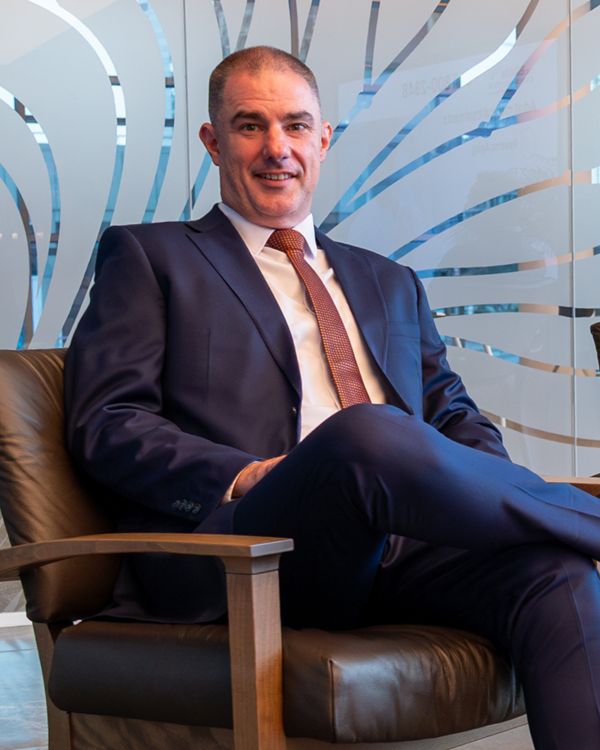
By Dr. Craig Cook, CEO, The Brain & Performance Centre, A DP World Company
Healthcare is entering one of the most transformative periods in its history. Artificial intelligence is accelerating diagnostics, enhancing imaging, and enabling more personalised treatment pathways than ever before. These advancements are no longer theoretical, they are already shaping how care is delivered across leading medical systems.
However, as the industry moves forward at pace, there is a risk of focusing too heavily on what technology can do, and not enough on what individuals actually need.
At its core, healthcare is not a technical transaction. It is a human experience. Within that experience, trust, communication and empathy are not optional, they are fundamental.
Strong human interaction between clinicians and clients remains one of the most important factors in delivering safe and effective care. Technology can identify patterns, process data and support decision-making, but it cannot replace the reassurance an individual feels when they are heard, understood and taken seriously. That interaction often determines whether someone follows through with treatment, shares critical information, or seeks support early rather than late.
From a safety perspective, this is critical. Individuals who feel comfortable with their clinician are far more likely to communicate openly about symptoms, concerns and uncertainties. They ask more questions, clarify instructions, and engage more actively in their own care. This level of engagement reduces the likelihood of miscommunication, improves adherence to treatment plans, and ultimately leads to better outcomes.
In contrast, when the human element is diminished, even the most advanced systems can fall short. An individual may receive accurate data but still leave uncertain about what it means. They may hesitate to disclose something important, or disengage entirely. No algorithm can compensate for that gap.
This is why meaningful communication must remain at the centre of healthcare delivery. It is not simply about explaining a diagnosis. It is about creating an environment where individuals feel safe to speak, where their concerns are acknowledged, and where complex information is translated into something clear and actionable.
As artificial intelligence continues to evolve, the role of the clinician will not diminish, it will become more important. Technology should reduce administrative burden, enhance precision, and create time. That time should be reinvested into the client relationship through greater clarity, deeper understanding and more considered care.
At The Brain & Performance Centre, A DP World Company, this balance is central to how we approach care. Advanced technologies play a critical role in our assessments and programmes, but they are always applied within a human-led framework. Every programme is personalised, every interaction is intentional, and every client journey is built on understanding the individual, not just the data.
The future of healthcare will undoubtedly be shaped by innovation. But its success will not be defined by how advanced the technology becomes. It will be defined by whether we use that technology to strengthen, rather than replace, the human connection at the centre of care. Because ultimately, the most powerful tool in healthcare is not artificial intelligence. It is trust.

EMARAT SUPPORTS HSE EXPO UNDERSCORING HEALTH, SAFETY AND ENVIRONMENTAL LEADERSHIP
STARKEY OMEGA AI – ONE OF THE MOST POWERFUL AND ADVANCED HEARING TECHNOLOGY TO EVER REACH MEA PATIENTS
DIGITIZATION-LED DISRUPTION SET TO RESHAPE GCC AUTO COMMERCE ECOSYSTEM



-
News10 years ago
SENDQUICK (TALARIAX) INTRODUCES SQOOPE – THE BREAKTHROUGH IN MOBILE MESSAGING
-

 Tech News2 years ago
Denodo Bolsters Executive Team by Hiring Christophe Culine as its Chief Revenue Officer
-
 VAR12 months ago
Microsoft Launches New Surface Copilot+ PCs for Business
-

 Tech Interviews2 years ago
Navigating the Cybersecurity Landscape in Hybrid Work Environments
-

 Trending5 months ago
OPPO A6 Pro 5G Review: Reliable Daily Driver
-

 Tech News9 months ago
Nothing Launches flagship Nothing Phone (3) and Headphone (1) in theme with the Iconic Museum of the Future in Dubai
-

 Automotive1 year ago
AGMC Launches the RIDDARA RD6 High Performance Fully Electric 4×4 Pickup
-

 VAR2 years ago
Samsung Galaxy Z Fold6 vs Google Pixel 9 Pro Fold: Clash Of The Folding Phenoms