
 Have a question? +971 56 404 0503




Technology
Invixium Launches a Smartphone App to Enhance Biometric Security System


Invixium, a manufacturer of touchless biometrics, is broadening its offerings through IXM Mobile, a smartphone app with features designed for healthy access. The mobile app provides end-users with features to enhance their biometric security system for staff and visitors. Designed for use with TITAN, IXM Mobile offers five licensed features: remote face enrollment, digital card or QR code as contactless credentials, a custom attestation questionnaire, and vital signs screening.
An official release stated, “With face enrollment via IXM Mobile, employees will no longer need to enroll for face recognition on-site, significantly speeding up the process of staff or contractor enrollment. Remote face enrollment enables IXM Mobile to generate a biometric template using Invixium’s face enrollment algorithm for use with TITAN. The app will then securely transfer each individual’s biometric template to IXM WEB, Invixium’s enterprise-grade software. The administrator can then assign the template to specific doors or devices for access control or workforce management.”
Invixium It designs and manufactures modern biometric solutions and claims to provide businesses with a unified end-to-end solution for access control, workforce management and health screening at entrances.
Key features:
- Remote face enrollment
- Light and dark themes and responsive user interface
- Generates a biometric template
- User-friendly
Tech News
Submer to Address the Infrastructure Challenges Behind Sovereign AI at DCD Connect | MENA 2026


Submer, a full-stack AI and HPC data centre infrastructure provider, will join industry leaders at DCD Connect | MENA 2026, taking place October 26–27 at Grand Hyatt Dubai, to discuss the infrastructure strategies needed to advance sovereign AI across the region.
As governments and organisations across the Middle East accelerate their sovereign AI and cloud strategies, the challenge extends beyond keeping data within national borders. They must also build the high-performance computing infrastructure needed to support increasingly complex AI workloads while meeting regulatory requirements, scaling efficiently and maintaining commercial viability.
Submer will contribute to this discussion through its participation in the panel debate “Building Sovereign AI: Enabling Innovation Through Scalable Compute,” on October 26, from 2:30 p.m. to 3:15 p.m. The session will explore the infrastructure requirements of sovereign cloud environments, the trade-offs between fully localised and hybrid infrastructure models, and how the region can develop a sovereign-ready compute backbone without compromising flexibility, performance or return on investment.
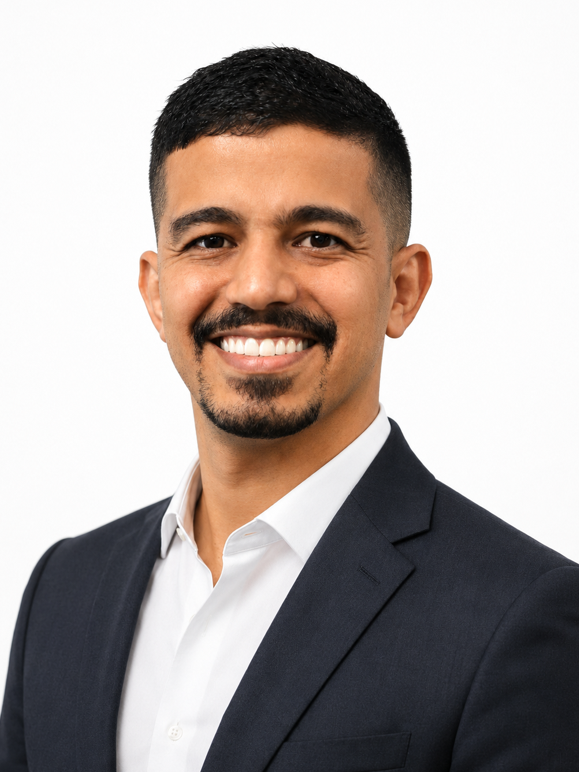
Bahaa Al Janabi, Technical and Solution Lead for Middle East, Turkey and Africa at Submer, will join fellow industry experts to examine how infrastructure decisions can shape the region’s ability to turn its AI ambitions into scalable, commercially viable deployments.
“Sovereign AI is not simply about where data resides. It is about having the infrastructure to run advanced AI workloads at scale while meeting national requirements and making the economics work. The choices organisations make today will shape their ability to innovate, scale and compete. We look forward to discussing how the right infrastructure strategies can help turn the region’s sovereign AI ambitions into reality,” said Bahaa Al Janabi.
Submer representatives will also be available throughout the event to meet with customers, partners and industry stakeholders and discuss the evolving AI infrastructure landscape across the Middle East, Africa and Turkey.

Kayvan Karim, Programme Director of MSc Software Engineering, School of Mathematical and Computer Sciences, Heriot-Watt University Dubai
For the past few years, the AI infrastructure race has largely been measured in scale: more GPUs, larger data centres and greater power capacity. That expansion is continuing, but the economics are beginning to change. Competitive advantage may increasingly depend not only on securing additional power, but on extracting more useful AI work from the power already available. Part of the reason is a change like AI demand. We are moving from relatively simple prompt-and-response systems towards agents that can reason across multiple steps, call tools, inspect results, revise plans and continue working autonomously. Anthropic’s latest Economic Index notes that Claude usage is increasingly shifting towards long-running agentic tasks and that more computationally intensive conversations tend to be associated with higher-value outputs.
This transition could have significant implications for infrastructure demand. A chatbot might generate one answer to one prompt. An agent performing a software-development, research or business task may invoke a model dozens of times, maintain a large context, call external tools and generate many intermediate reasoning steps before producing an outcome. Demand may therefore grow in two ways: more people using AI and more inference, model calls, and tokens processed for each task. Major AI laboratories are already working on this efficiency problem. OpenAI says one of its primary inference objectives is to serve more tokens from the same hardware, using techniques including scheduling, caching, kernel optimisation and improved model implementation. It also describes GPT-5.6 as being trained to accomplish more work per token. Google DeepMind is pursuing a similar direction: its Gemini 3.6 Flash was designed for scaled agentic workloads and uses fewer output tokens than its predecessor on several evaluations. In contrast, its recent agentic video system reduced token consumption by up to 88% for that workload.
Other approaches address efficiency at the model architecture level. DeepSeek-V3, for example, uses a Mixture-of-Experts design with 671 billion total parameters but activates 37 billion per token, so only part of the network is used for each computation. Meta has similarly worked on inference efficiency through grouped-query attention and more efficient tokenisation; the Llama 3 tokeniser was reported to require up to 15% fewer tokens than Llama 2 for equivalent text. Taken together, these approaches show that model capability is increasingly being developed alongside the cost of delivering it.
Model-level efficiency, however, is unlikely to remove the infrastructure constraint on its own. Global data-centre electricity consumption was approximately 415 TWh in 2024, according to the International Energy Agency, and its base case projects this to reach around 945 TWh by 2030. AI is expected to drive most of that growth. Efficiency is therefore improving while aggregate demand continues to rise. One reason is the Jevons, or rebound, effect: efficiency improvements reduce the resources required for each unit of work, but lower costs can also encourage greater overall use. If agents become much cheaper to operate, organisations may respond by deploying more of them, running them for longer, or applying them to tasks that were previously uneconomic. Efficiency can reduce the compute required for an individual task while still increasing total demand.
That increased demand meets infrastructure that cannot expand as quickly. Models and software can improve quickly, but grids, substations, transformers and power-generation infrastructure usually have much longer development cycles. The IEA notes that while a data centre can sometimes be developed within two or three years, the broader energy infrastructure required to support it often involves longer planning and construction periods. Where grid capacity is constrained, each available megawatt becomes a more valuable production resource. The amount of power available remains important, but so does the amount of useful computation that can be produced within that power envelope.
That changes how we should understand capacity. Improvements in accelerator performance, model architecture, workload scheduling, caching, utilisation and inference software can increase computational output without increasing a site’s electrical connection. OpenAI’s recently reported Jalapeño inference hardware illustrates the direction of travel: the company says the chip can deliver more AI work per unit of power while increasing throughput and reducing latency. Efficiency can therefore act as a form of virtual capacity. If two operators each control 100 MW, but one can consistently deliver substantially more useful AI work within that power envelope, their nominal capacity may be identical while their productive capacity is not.
The same constraint applies to physical space and cooling. AI systems are concentrating more computational power into individual racks, increasing both power density and heat output. Packing more accelerators into the same building only creates useful capacity if the electrical and thermal infrastructure can support them. This is one reason liquid cooling is moving from a specialist technology towards a more central part of AI data-centre design. Microsoft, for example, has introduced a closed-loop chip-level cooling architecture that it says eliminates evaporative water consumption for cooling and could avoid more than 125 million litres of water annually per data centre. The example also shows why power, cooling, water use and rack density cannot be treated independently.
The same shift creates a measurement problem. Power Usage Effectiveness, or PUE, has been valuable for showing how much facility energy is required beyond the electricity IT equipment consumes. It does not, however, measure whether that IT equipment is producing useful work efficiently. Uptime Institute’s 2025 survey placed average PUE at around 1.54 and noted that the headline industry figure had changed little for six years. Uptime has consequently argued for productivity measures that relate computational work to energy consumption. For AI inference, tokens per kilowatt-hour might offer one operational measure. Still, even that is incomplete: an efficient model that solves a task in 1,000 tokens may be more valuable than one generating 10,000. A more useful long-term measure may therefore be useful AI work per unit of energy, water and infrastructure.
Capacity will remain essential. The AI industry will continue to build larger data centres, secure new power supplies and deploy large quantities of computing hardware. As agentic systems create more persistent inference demand and physical resources become harder to expand, however, efficiency may increasingly determine the productive value of that capacity. Operators that can support more useful computation within the same power, cooling, water, and space constraints can accommodate more workloads without waiting for equivalent growth in physical infrastructure.
For AI infrastructure, installed megawatts will remain a headline measure. The more consequential measure may increasingly be how much useful AI work those megawatts can support.
Tech News
Thermax showcases advanced desalination and water recovery technologies to strengthen UAE’s industrial water security at WETEX 2026
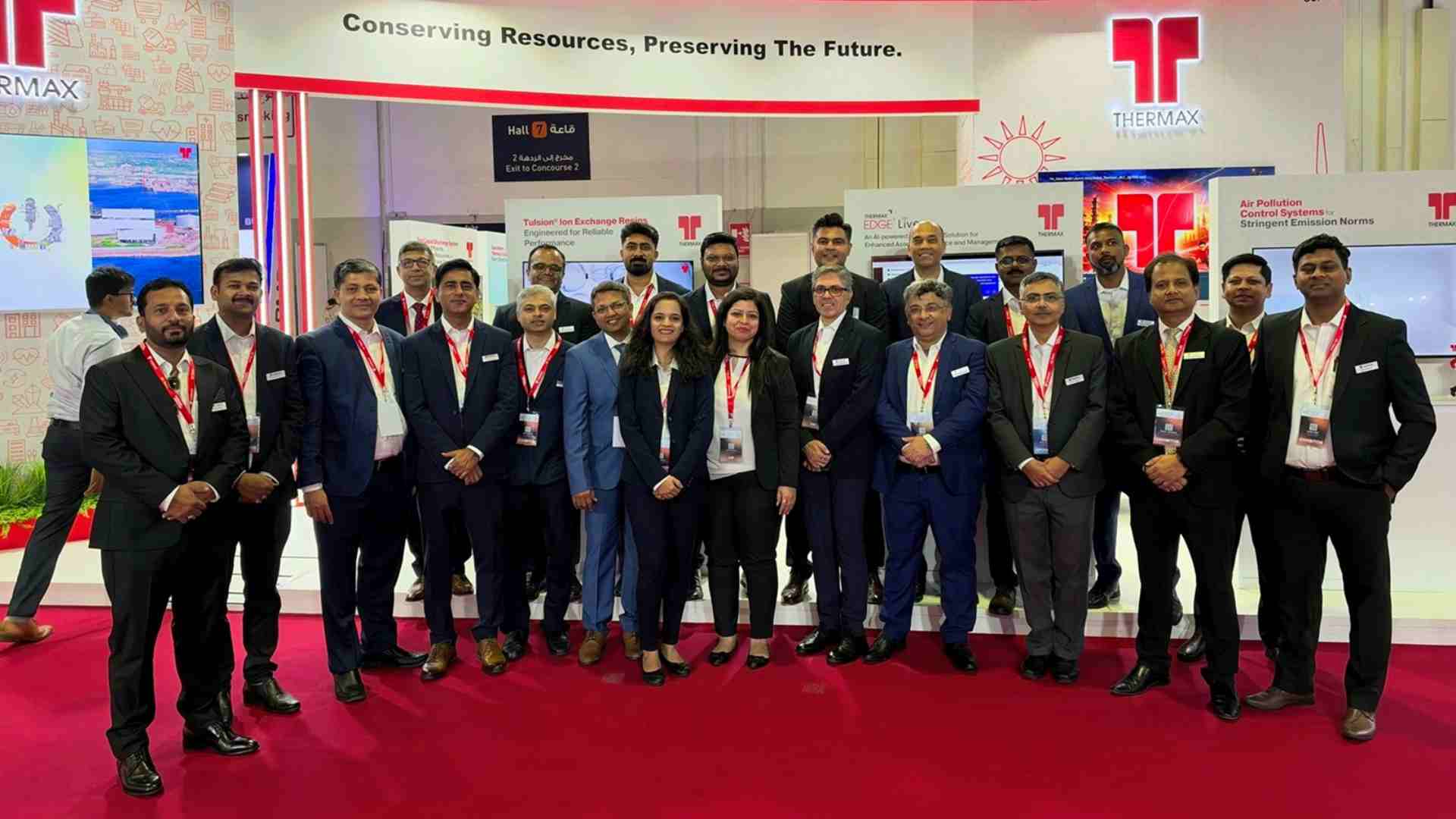
Thermax Limited showcased its advanced seawater desalination and industrial water recovery technologies at the Water, Energy, Technology and Environment Exhibition 2026 (WETEX), held from October 20 to 22 at Dubai World Trade Centre. Through its digital showcase, the company highlighted solutions designed to help industries secure reliable water supplies, improve resource efficiency and reduce environmental impact.
Thermax’s participation came as Dubai continues to strengthen its desalination infrastructure to meet growing water requirements. According to Dubai Electricity and Water Authority (DEWA) Financial Annual Report, desalinated water production increased by 5.51 per cent year-on-year in the first quarter of 2026, reaching a record 37.57 billion imperial gallons. By June 2026, Dubai’s installed desalination capacity had reached 555 million imperial gallons per day, with seawater reverse osmosis accounting for 23 per cent of the total. These developments highlight the growing importance of efficient and reliable water infrastructure in supporting the UAE’s evolving water requirements.
At the event, Thermax highlighted its desalination solutions that help industries meet their water needs while easing pressure on freshwater resources. The systems use energy-efficient membrane technology to remove salts from seawater and produce water suitable for industrial use, with designs tailored to each customer’s water quality and operating requirements.
Through its digital showcase, Thermax also highlighted portable and containerised desalination systems that bring key equipment together in compact units. This reduces installation work on site, supports faster deployment and allows treatment capacity to grow with demand.
Ashish Bhandari, Managing Director & CEO, Thermax Limited, said: “Water security shapes where industries invest and how competitively they operate. Businesses need dependable supply at a cost they can sustain. That means planning water and energy together, with investment decisions guided by performance throughout a plant’s life.”
Beyond desalination, Thermax also showcased Advanced Reverse Osmosis (RO) technology that recovers additional usable water from the concentrated stream left after treatment. By concentrating the remaining brine, the technology reduces the load on downstream evaporation systems and supports more efficient industrial wastewater management. When combined with suitable additional treatment and crystallisation processes, it can also support salt recovery, creating opportunities to recover valuable resources from wastewater and promote circular water management.
Thermax also showcased industrial water treatment, wastewater recycling and zero liquid discharge (ZLD) solutions that help industries treat and reuse wastewater for suitable applications while reducing freshwater dependence. Complementing these solutions, Thermax’s EDGE Live digital platform supports plant performance through real-time monitoring, AI-driven analytics and predictive diagnostics, helping industrial operators identify potential issues early, optimise maintenance and improve operational reliability.
These solutions align with the objectives of the UAE Water Security Strategy 2036, which targets 95 per cent reuse of treated water by 2036. Through its regional office in Dubai, Thermax is focused on exploring various opportunities across the UAE’s industrial desalination, water treatment and wastewater recycling sectors, particularly within water-intensive industries such as oil and gas, chemicals, metals, food and beverages, and pharmaceuticals.
Thermax has been active across the Middle East and North Africa region since 1993, with more than 1,000 installations across its regional energy and environment portfolio, serving over 30 industries.


Submer to Address the Infrastructure Challenges Behind Sovereign AI at DCD Connect | MENA 2026
Terrace Dining, Oktoberfest, and Beach Days Return to InterContinental Abu Dhabi This October

THE STORIES BEHIND THE MATERIALS SHAPING UAE INTERIORS



-

 Trending12 months ago
OPPO A6 Pro 5G Review: Reliable Daily Driver
-

 Tech News2 years ago
Denodo Bolsters Executive Team by Hiring Christophe Culine as its Chief Revenue Officer
-
 VAR2 years ago
Microsoft Launches New Surface Copilot+ PCs for Business
-

 Automotive2 years ago
AGMC Launches the RIDDARA RD6 High Performance Fully Electric 4×4 Pickup
-
Tech Interviews3 years ago
Navigating the Cybersecurity Landscape in Hybrid Work Environments
-

 Hospitality2 years ago
Gulfood 2025 30th Edition Kicks Off Today, Setting New Benchmarks in F&B Growth and Innovation
-

 VAR11 months ago
Huawei Nova 14 Pro Review: Where Camera Excellence Meets Ecosystem Evolution
-

 Tech News1 year ago
Nothing Launches flagship Nothing Phone (3) and Headphone (1) in theme with the Iconic Museum of the Future in Dubai