
 Have a question? +971 56 404 0503




Tech Interviews
Driving differentiation

Gita Ghaemmaghami, Regional Marketing Communications Manager & Head of PR at Sony Mobile Communications MEA discusses trends and strategy for the company in the region
Is the market demand for feature rich smartphones growing in the region?
The Middle East is a region which has exhibited and continues to exhibit strong growth and the fundamentals of its economy indicate that its potential will remain buoyant.
The region has young and tech savvy consumers who are brand conscious, seeking premium products. UAE specifically is an important market as it is a hub and trendsetter for the rest of the region.
The region has always been very important for Sony Mobile and we look forward to continued growth with the help of our distribution and retail partnerships in Middle East and Africa.
What is the company’s outlook on demand vis-a-vis challenges also related to the stiff competition from other top brands?
We will continue to differentiate our products by leveraging Sony assets such as our leading camera technologies, and we will also continue to innovate technologies, applications, and user experiences that deliver new value to customers.
In addition, with Sony’s unique spirit of innovation, we will pursue new business opportunities wherever possible to bring forth new products and services that enrich users’ lives through the new means of communication they make possible. Enhancing relationship with operators, distributors and retailers in market is one of our priorities to provide best experiences for our consumers.
Discuss the brand’s focus on the premium segment vis-a-vis the mid-range or the entry segment phones market?
Each segment plays a role in meeting the demands of the market and bringing alternatives to consumers, our strategy is to focus on Premium and mid segments. Our premium range of smartphones, the Xperia X Series and Xperia Z5 series are very popular for its sleek design and its premium look and top of the range performance. We have also introduced a mid-range smartphone, Xperia XA/ XA Ultra, which offers consumers great features of the Xperia Z5 and Xperia X series at an economical price range.
What have been recent launches by Xperia in the premium segment and are the current flagship models for the company in the region?
Xperia X has been launched in the GCC starting June, we have also announced Xperia X and Xperia XA Ultra at the mid segment which are expected to be available in the region in July/August.
What are the standout features in some of your current and new top end models?
The Xperia X features Sony’s unique camera technology, Predictive Hybrid Autofocus, which allows you to track an object, and then cleverly predicts its movement to give clear, blur-free shots. So, even if one can’t predict where the shot is headed, the smartphone can. Also it incorporates Sony’s smart battery management to deliver up to two days battery life[i]. Not only will it keep the phone running far longer after one charge, but the Xperia X will deliver up to two times battery lifespan where most smartphone batteries quickly decline in strength, using its ground-breaking Qnovo Adaptive charging which maintains battery health while charging.
With Xperia XA consumers can enjoy a curved glass display that seamlessly meets its rounded frame; Xperia XA is as pleasing to the eye, as it is to the hand. It features a distinctive and beautifully integrated edge-to-edge display that stretches over the full width of the phone, to make full use of the 5” display.
How is the X range different from the Z series of phones in terms of range and market positioning? Also discuss positioning of the other series?
The X series is a brand new concept under the new brand vision which sets it apart from our previous range of not only the Xperia Z series, but also our entry and mid-range series line-ups. With the direction and vision focusing on enriching people’s lives through new intelligent communication, it was only fitting the latest range was differentiated by a new series name.
How is Sony addressing VR technologies in phones? Do you see VR as a factor that can help improve demand for new phones?
There is no doubt that VR has became a new trend in current technologies however I would not be able to comment on utilizing VR in our smartphones for time being.
How frequently does the company refresh flagship models?
We do look at the consumers & market demand and we continue to provide consumers with latest innovation and technology.
What are expected new launches before the year ends?
We would not be able to confirm the future possibilities of our product line-up; we have entered a new chapter of our Xperia brand by launching new Xperia X series at MWC.










Cover Story
Hisense doubles down on localisation, supply chains, and smart living in the Middle East


As the Middle East accelerates its push toward becoming a digital economy, global consumer electronics brands are being forced to rethink their role beyond simply selling devices. For Hisense, that shift is already underway.
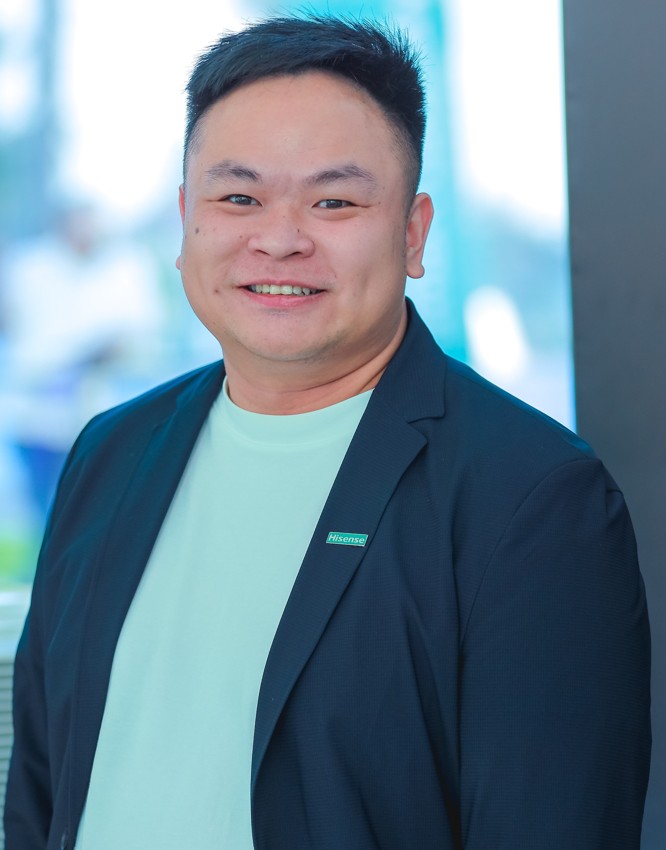
From building connected living ecosystems to strengthening regional manufacturing and R&D, the company is positioning itself not just as a technology provider, but as a long-term partner in the region’s transformation.
In this conversation, Jason Ou, President of Hisense Middle East, Africa and India, outlines how localisation, supply chain investments, and a sharper focus on consumer relevance are shaping the company’s next phase of growth in the region—and why the Middle East is emerging as more than just a consumption market.
The region is increasingly positioning itself as a hub for digital economies. How can consumer electronics brands contribute to this broader transformation beyond simply selling devices?
Consumer electronics brands today play a much bigger role than just providing devices. Our real impact comes from shaping how people live in an increasingly digital world. At Hisense, we focus on anticipating consumer shifts and building our innovation around the needs of modern, connected lifestyles. It’s not only about technology, but about how that technology integrates seamlessly into everyday life.
We see this clearly through connected living. A TV today is no longer just a screen, it becomes part of a wider ecosystem, connecting with appliances, enabling intuitive control, and helping consumers manage comfort, energy, and daily routines more efficiently. At the same time, localization is key. Through regional R&D, partnerships, and a stronger presence on the ground, we ensure our innovation is relevant to local lifestyles and market realities. Ultimately, our role is to translate innovation into meaningful, practical value, supporting the region’s digital transformation in a way that is tangible for both consumers and communities.
Technology companies often struggle between being engineering-led and market-led. How does Hisense maintain that balance internally?
For us, it is not a question of choosing between engineering-led or market-led. The strongest companies are built on both, working hand in hand. At Hisense, we combine strong engineering capabilities with a deep understanding of consumer needs and local markets. Our innovation is driven by technology, but always shaped by how people actually live, interact, and use our products. We focus on one simple principle: every innovation must translate into a better user experience. That is where engineering excellence meets real market relevance, allowing us to stay both forward-looking and grounded in consumer value.
You have led Hisense’s expansion in the Middle East through a period of rapid technological change. What leadership principles have helped you balance global innovation with local market realities in this region?
The starting point has always been staying true to Hisense’s vision and values. That gives us a clear direction, especially during periods of rapid change. The second element is people and partnerships. Building the right team on the ground, and working with the right partners, has been essential to understanding the region and executing effectively across markets.
Third is localization with discipline. While we benefit from strong global innovation, success in this region comes from adapting that innovation to local lifestyles, climate, and consumer expectations in a consistent and structured way. And finally, long-term commitment. We have approached the Middle East as a strategic growth market, continuing to invest in technology, operations, and relationships. That long-term view allows us to balance global ambition with local relevance and build sustainable growth over time.
As most global supply chains and manufacturing ecosystems for consumer electronics remain concentrated outside the Middle East, what role do you see the region playing in the future production and innovation landscape of this industry?
I believe the region will play a much bigger role over time, especially as a center for localization, strategic manufacturing, regional distribution, and application-led innovation. We are already seeing that evolve. Hisense has been strengthening its regional manufacturing footprint, including operations in Algeria and Egypt, alongside localized R&D in Dubai. Our recent export milestone from Algeria into Egypt and Tunisia shows that the region is not only a consumption market, but increasingly part of a broader industrial and supply-chain ecosystem.
Going forward, I see the Middle East and wider MENA region becoming more important in three areas: as a faster response hub for regional supply and customization; as a testing ground for technologies suited to local environmental and lifestyle conditions; and as a bridge between global innovation and emerging-market demand. The opportunity is not just to manufacture more, but to shape products and solutions that are more relevant to this part of the world.
If we fast forward ten years, what will the concept of “home entertainment” look like compared to today?
We are currently witnessing a significant wave of innovation, particularly driven by AI capabilities. I believe this will continue to evolve, becoming smarter, more intuitive, and more seamlessly integrated into everyday life. Home entertainment will not only improve in terms of quality, with better visuals, sound, and performance, but it will also become more personalized and adaptive to each user.
At the same time, we will see more robotic and automated technologies becoming part of the home, supporting everyday tasks and enhancing convenience, creating a more connected and intelligent living environment. Ultimately, the experience will shift from simply watching content to enjoying a smarter, more immersive, and fully integrated home experience.
Finally, if you had to describe the next chapter of Hisense in the Middle East in one word, what would it be and why?
Reliable. We aim to become the most reliable brand in the region, in line with our longterm vision. This means continuously strengthening our position across technology development and market penetration, while keeping consumer needs at the center of everything we do. At the same time, we will further invest in localized solutions to ensure our innovation remains relevant, practical, and impactful for the region.
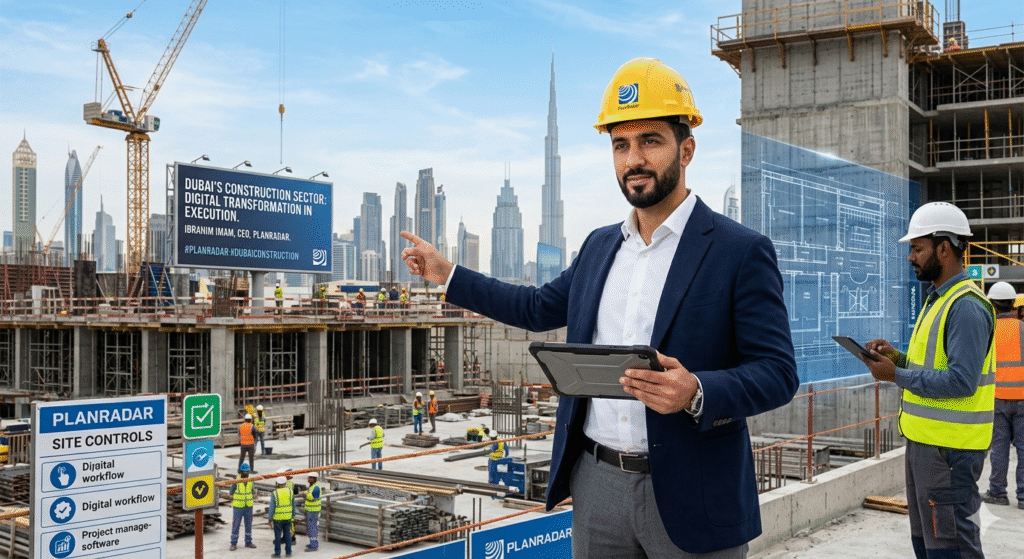
Dubai’s construction pipeline is moving at a pace that demands absolute execution discipline. We sit down with Ibrahim Imam, CEO and Co-founder of PlanRadar, to discuss how real-time tracking, digital templates, and AI are eliminating site ambiguity and setting a new benchmark for project delivery certainty in the region.
Dubai’s construction sector continues to grow despite evolving regional dynamics. From your perspective, how is digital transformation reshaping project execution and operational efficiency across construction sites in the region?
Dubai’s construction and real estate pipeline continues to move at pace, and that pace puts a spotlight on execution discipline. In practice, many performance issues don’t start as major failures—they start small: an unclear detail in the plans, an inspection requested too late, a change implemented before approval, or a delivery accepted without proper checks. These gaps often surface later as rework, delays, audit findings, or disputes—when time and cost impacts are already locked in.
Digital transformation is reshaping execution in two very practical ways: speed of decisions and quality of evidence. When inspections, approvals, and corrective actions are managed through consistent workflows—linked to the right location and supported by photos, markups, or test results—teams stop relying on individual habits and start relying on a system. That is why the Construction Site Templates Playbook frames templates as operational control points, not paperwork. When these controls are digitised and embedded into daily routines, operational efficiency improves because coordination becomes faster and issues are closed with verified evidence.
Platforms like PlanRadar are enabling teams to digitise on-site workflows. What role does real-time tracking of inspections, tasks, and approvals play in improving transparency and accountability across project teams?
Real-time tracking changes daily site management from “What do we think happened?” to “What can we verify right now?” That shift is a major driver of transparency and accountability.
First, it makes ownership and deadlines explicit. When an inspection request, an RFI response, a non-conformance closure action, or an approval task is assigned to a named person or role with a due date, follow-up becomes structured. Leadership can see what is overdue without chasing updates across emails and messaging threads.
Second, it links records to the right location and supporting evidence.Construction is location-based. A record without a clear location (area/level/grid) and objective evidence can create ambiguity and slow decisions. Real-time workflows make it easier to capture evidence at the point of work—photos, markups, documents, test results—and link it directly to the site location and the relevant record.
Finally, it strengthens audit readiness and handover quality. Time-stamped, traceable records reduce reliance on reconstructed evidence during audits, handover, or dispute resolution. In regulated environments and high-value developments, this traceability increasingly matters.
Developers today are under pressure to deliver projects on time while maintaining quality standards. How are digital tools helping teams maintain delivery certainty despite increasing project complexity?
Developers today are under pressure to deliver projects on time while maintaining quality standards. Digital tools are helping teams maintain delivery certainty despite increasing project complexity by making issues visible earlier, improving coordination, and creating clearer control across execution.
Many delays begin as small blockers such as missing approvals, late materials, access constraints, sequencing clashes, or outstanding clarifications. If these constraints live only in meeting notes, they are easy to lose. Digital tools such as look-ahead planning and constraint logs make blockers visible, assigned, and tracked until closure so that intervention happens earlier.
A structured Change Order / Variation workflow also helps bring control to project changes. It captures what is changing and why, which areas and plans/specifications are impacted, the time and cost impact, the approval authority, and the final decision. Digitally, this creates a clear history from request to review to approval to implementation, reducing confusion and protecting commercial position.
Late approvals, incomplete documentation, and weak delivery checks often become downstream defects and replacement delays. Digitising material approvals and delivery inspection records helps ensure only compliant materials enter the works, and issues are identified before they affect installation.
Rework remains one of the biggest threats in construction. Structured QA/QC inspection checklists, defect and snag tracking with verified closure, and commissioning readiness checks help reduce late-stage quality surprises. Instead of quality becoming a handover fire drill, it becomes part of daily execution.
Construction has traditionally been slow to adopt new technologies. As a technology leader working closely with developers and contractors across the region, how do you see leadership mindsets evolving when it comes to embracing digital transformation on construction sites?
Construction has traditionally been slow to adopt new technologies. As a technology leader working closely with developers and contractors across the region, we see leadership mindsets becoming more practical and more execution-focused. The shift is from “Which tool should we buy?” to “What discipline do we need to enforce on site?”
Historically, adoption has been slowed by the fear of slowing site teams down, the difficulty of aligning subcontractors, and the belief that projects are too unique to standardise. What is changing now is the recognition that inconsistent execution controls create higher costs than standardisation, especially when leaders are managing multiple projects with tighter governance and higher scrutiny.
Projects can no longer depend on a few experienced people to hold everything together. Leadership increasingly wants consistent execution across teams and subcontractors, even when site resources change. As a result, there is growing demand for processes that are repeatable, with clear ownership, structured approvals, evidence captured at the point of work, and verified closure.
It is therefore becoming less about “going digital” and more about enforcing reliable workflows. Adoption succeeds when workflows are simple, mobile-friendly, and aligned with daily routines. If tools add effort without clear value, teams will bypass them. That is why template design, including triggers, required fields, and evidence capture, matters as much as the platform itself.
Looking ahead, how do you see technologies like AI, predictive analytics, and automation further transforming construction project management?
Looking ahead, technologies such as AI, predictive analytics, and automation are likely to have the biggest impact when they reduce manual follow-up and help teams act earlier. Their value, however, depends on having structured, consistent project data, which is another reason execution discipline and standardised templates are so foundational. This is becoming even more relevant in the UAE, where the national UAE Strategy for Artificial Intelligence 2031 is aimed at boosting government performance and embedding AI across priority sectors, while Dubai’s Economic Agenda D33 seeks to raise productivity by 50% through digital transformation and innovation.
If inspections, defects, non-conformances, constraints, and approvals are recorded consistently, analytics can identify patterns such as recurring defects by trade, bottlenecks in approval cycles, or increasing safety observations in specific zones. These predictive insights allow teams to intervene earlier, before delays or rework begin to escalate.
Automation can further improve project management by routing approvals to the right roles, escalating overdue inspections, generating reports from structured records, and triggering corrective actions based on inspection outcomes. This reduces administrative overhead and improves consistency without asking teams to do more.
The ability to quickly find the right record when it is needed is a common challenge. AI can help teams locate RFIs, approvals, and inspection records for a specific location, summarise change history, and highlight what is open versus closed. This supports faster decision-making and reduces ambiguity across stakeholders.
The key point is that AI accelerates teams that already have disciplined workflows and reliable data. Without that foundation, its value remains limited.
In this sense, digital transformation is reshaping construction execution in Dubai by strengthening clear approvals, verified inspections, controlled change, and traceable records linked to objective evidence. The Construction Site Templates Playbook was developed to help teams standardise these control points and apply them consistently, so projects can reduce ambiguity, improve compliance confidence, and deliver with greater predictability across construction and real estate portfolios.

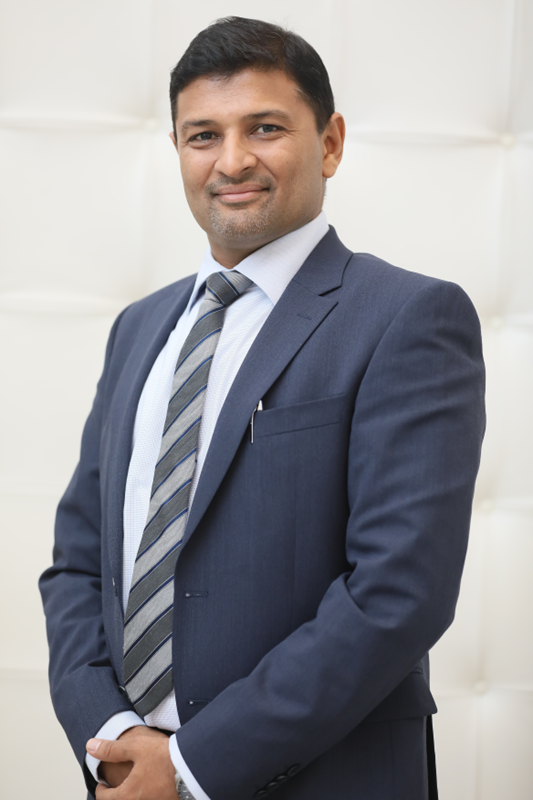
Exclusive interview with Vikas Panchal, General Manager – MENA, Tally Solutions
As a regional leader, how do you balance global product innovation with local market realities?
At Tally, we see innovation as something that must quietly add value to everyday business operations. While global advancements like AI are shaping the future, our focus remains on making them relevant and usable for SMEs. For most businesses, what matters is simplicity, reliability, and ease of adoption, not complexity. That is why we approach innovation with a strong local lens, ensuring that what we build aligns with the way businesses actually work. By combining global capabilities with practical usability, we aim to deliver technology that is not only forward-looking but also immediately meaningful for the SMEs we serve.
In your perspective, how are UAE SMEs moving beyond traditional bookkeeping to AI-driven financial intelligence?
Across the UAE, SMEs are increasingly moving beyond viewing accounting as just record-keeping. There is a growing expectation that financial systems should offer a more complete picture of the business, from receivables and payables to inventory, cash flow, and operational movement. That shift is important because business owners today need more than data; they need clarity. As markets become more dynamic and competitive, financial intelligence is becoming essential to better decision-making, stronger control, and more confident growth. The role of technology is evolving accordingly, from simply capturing transactions to helping businesses understand patterns, act faster, and plan with greater confidence. That is where the real transformation is happening. Compliance has moved from a backend requirement to a strategic priority.
How is Tally helping businesses transition from reactive compliance to proactive financial visibility?
Compliance today is no longer a backend activity, it has become central to how businesses operate and grow. The shift we are seeing is from reacting to regulations to building systems that are always aligned and ready. At Tally, our approach has been to embed compliance into everyday workflows so that businesses don’t have to treat it as a separate task. When compliance is built into the system, it naturally improves financial visibility, bringing greater clarity on transactions, cash flows, and reporting. Alongside this, we continue to work closely with chartered accountants and the professional community to strengthen awareness and preparedness across the ecosystem.
Our intent is simple, to give businesses confidence that compliance is taken care of, while enabling them to focus on running and growing their business with better control and insight. How would you describe Tally Solutions’ growth journey in the Middle East region?
Our journey in the Middle East has been shaped by listening closely to the needs of the market and evolving alongside the businesses we serve. What began as a trusted accounting solution has steadily grown into a broader business management platform for over 75,000 MSMEs across the region.
A big part of this journey has been localisation, understanding that businesses in markets like the UAE and Saudi Arabia need solutions that reflect local regulations, language preferences, and operational realities. Whether it has been adapting to VAT, e-invoicing, or broader compliance shifts, our focus has remained on making that transition simpler for SMEs.
Equally important has been the ecosystem around them. By working closely with partners, accountants, bookkeepers, and advisors, we have been able to support not just software adoption, but stronger business readiness. That trust and relevance are what continue to define our growth in the region.
The latest TallyPrime updates emphasize automation, banking integration, and compliance readiness. Which innovations are delivering the most measurable impact for customers?
What we are seeing from the latest TallyPrime updates is a clear shift from effort to efficiency. The impact is less about any one feature, and more about how everyday tasks become faster, more accurate, and easier to manage.
For instance, improvements in areas like bank reconciliation are significantly reducing the time and manual effort involved in matching transactions. Similarly, capabilities like Smart Find are helping users access information instantly across companies, even with limited inputs, something that directly improves productivity. The introduction of the updated UAE currency symbol also reflects our continued focus on localisation and compliance readiness.
At a broader level, features like the Customised Owner Dashboard are helping business owners move from tracking data to actually understanding their business. The real impact lies in giving users clarity, saving time, and enabling more confident decision-making in their day-to-day operations.
How will UAE tax changes in 2026 redefine SME accounting practices in the long run?
The tax changes expected in the UAE in 2026 will go beyond compliance—they will fundamentally reshape how SMEs approach accounting and financial management. As frameworks like e-invoicing come into effect, businesses will move towards more structured, real-time, and standardised financial processes. This will bring greater discipline, transparency, and consistency into everyday operations.
For SMEs, this means a shift from periodic compliance to continuous readiness, where systems are always aligned with regulatory requirements. At Tally, our focus has been to make this transition simpler by embedding compliance into the product experience. Having supported similar transitions in markets like India and Saudi Arabia, we understand that the right balance of simplicity, localisation, and regulatory alignment is critical. As the UAE moves toward interoperable frameworks, our effort is to ensure businesses are not just compliant, but well-prepared for a more connected and digitally enabled financial ecosystem.

NAB 2026: RØDE UNVEILS WORLD-LEADING MICROPHONE TECHNOLOGY, NEXT-GEN PRODUCTS AND FUTURE-FORWARD SOFTWARE

Hisense doubles down on localisation, supply chains, and smart living in the Middle East
INSIDE MODERN HOSPITALITY LEADERSHIP AT EDGE RIYADH AL RABIE, ROTANA



-
News10 years ago
SENDQUICK (TALARIAX) INTRODUCES SQOOPE – THE BREAKTHROUGH IN MOBILE MESSAGING
-

 Tech News2 years ago
Denodo Bolsters Executive Team by Hiring Christophe Culine as its Chief Revenue Officer
-
 VAR1 year ago
Microsoft Launches New Surface Copilot+ PCs for Business
-

 Trending6 months ago
OPPO A6 Pro 5G Review: Reliable Daily Driver
-

 Tech Interviews2 years ago
Navigating the Cybersecurity Landscape in Hybrid Work Environments
-

 Tech News9 months ago
Nothing Launches flagship Nothing Phone (3) and Headphone (1) in theme with the Iconic Museum of the Future in Dubai
-

 Automotive2 years ago
AGMC Launches the RIDDARA RD6 High Performance Fully Electric 4×4 Pickup
-

 VAR2 years ago
Samsung Galaxy Z Fold6 vs Google Pixel 9 Pro Fold: Clash Of The Folding Phenoms