
 Have a question? +971 56 404 0503




Tech Features
AI-Powered Greenhouses for Sustainable Luxury Floriculture


By Hamlet Sandoyan, CEO, Rose Art LLC
Advanced technology dramatically transforms sustainable floriculture significantly when growing roses in solar greenhouses. We envision a future where floral art serves as a bridge between sustainability and innovation. At Rose Art Flowers, we aim to redefine traditional floristry by incorporating eco-friendly practices into every aspect of our creative process—from carefully selecting premium imported roses to using sustainable materials and techniques in our installations. We believe that floral art will increasingly be celebrated for its visual and sensory impact and as a responsible, eco-conscious choice that enriches cultural events and everyday life in Dubai and beyond.
As the owner of Rose Art LLC, I have much experience and am always willing to share my expertise. Further, here’s how key innovations contribute to efficiency, cost reduction, and improved product quality.
Artificial intelligence – controlled climate control
Artificial intelligence analyzes data from sensors (temperature, humidity, CO2 level) and automatically adjusts the microclimate parameters.
– Energy optimization: reduces the load on heating, ventilation, and lighting systems, using energy as efficiently as possible.
– Rose enhancement: maintains stable growing conditions, prevents plant strain, and improves color, size, and fragrance of flowers.
Automated irrigation and water resources management
Modern systems use soil moisture sensors, weather stations, and machine learning algorithms to dispense water accurately.
– Reducing water consumption: supply only the right amount of water, preventing evaporation and leaks.
– Optimum plant nutrition: integration with drip irrigation and fertigation (fertilization) systems increases nutrient uptake.
Precision Agriculture
Using drones, satellite imagery, and AI data analysis can monitor plant health and prevent disease.
– Reduced use of pesticides and fertilizers: treating only problem areas reduces chemical exposure.
– Increased yield and quality: timely identification of stress factors helps to grow more resilient and healthier roses.
Solar energy as a source of sustainable greenhouse economy
Modern greenhouses are equipped with solar panels that provide an autonomous power supply.
– Energy efficiency: reducing dependence on fossil fuels and operating costs.
– Environmental sustainability: reducing the carbon footprint of flower production.
From my experience, the combination of AI, automation, and renewable energy makes rose production more cost-effective and environmentally friendly. These technologies reduce costs, save resources, and improve flower quality, which is especially important in a changing climate and the growing demand for sustainable products.
At the same time, it’s essential to understand how integrating hospitality trends such as luxury floral arrangements, personalized arrangements, and smart ordering systems are changing the floral industry in Dubai’s high-end market. In Dubai’s high-end market, the floral industry is transforming due to current hospitality trends. Luxury hotels, restaurants, and VIP spaces demand exclusive solutions, and integrating new technologies and personalized services is changing the game’s rules.
Luxury floral arrangements as a branding element
Luxury hotels (Burj Al Arab, Atlantis The Royal, Bulgari Resort) make floral installations part of their identity.
– Emphasizing luxury: large-scale floral compositions create a wow effect, raising the institution’s status.
– The trend for “Instagram-able” areas: unique floral decorations encourage guests to take photos and share content on social media, which boosts marketing.
Personalized arrangements and VIP treatment
The high demands of customers in Dubai require customized solutions.
– Individual selection of flowers: rare varieties (for example, black or blue roses), non-standard forms of bouquets, and exclusive packages.
– Floristry for private events: luxury florists develop unique weddings, parties, and royal reception compositions.
Intelligent ordering and delivery systems
Florist boutiques and online platforms utilize AI solutions and digital technologies.
– Concierge subscription service: regular deliveries of fresh bouquets to hotels, residences, and business spaces.
– AI assistants for flower selection: online platforms analyze customer preferences and offer personalized arrangements.
– Drones and premium delivery: express delivery within 30 minutes thanks to advanced logistics solutions.
And from my point of view, the conclusion to the above is this: The Dubai floral market is shifting towards ultra-premium and technological solutions. Exclusive floral installations are becoming part of the luxury style, while personalization and digitalization are increasing the level of service, making the floral industry an important part of luxury hospitality.











The Middle East’s consumer technology market is in the middle of a remarkable run.
Smartphone shipments across the region grew 13 percent in 2025, marking a third consecutive year of growth. Ramadan alone now accounts for 15 percent of annual technology and durables sales across MENA. By any measure, the opportunity is significant.
But headline growth can hide an uncomfortable truth. The way consumers in this region evaluate and choose a technology brand has fundamentally changed. Brands still running the old playbook, buying reach from celebrity and mega influencers, measuring success in gross impressions, and treating the GCC as a single audience, are leaving both conversion and credibility on the table.
Mariam Abouzeid
PR & Influencer Marketing Manager, MEA, Nothing Technology
Having managed PR ecosystems generating billions of impressions across the UAE, Saudi Arabia, and beyond, I have seen this shift unfold in real time.
The data is clear. The market has moved. Many marketing strategies have not.
In today’s GCC market, attention is easy. Credibility is rare.
Beyond the Bigger-is-Better Logic
For most of the last decade, the dominant logic in technology marketing across the region was simple. Bigger reach meant better results. Secure the highest-reach influencers, maximize impressions, and sales will follow.
That logic made sense when social media behaved like a broadcast channel. Today it does not.
The UAE and Saudi Arabia are now among the most digitally saturated markets in the world. Social media penetration in the UAE has reached 111 percent of the population, while Saudi Arabia counts 34.1 million social media identities for a population of 34.7 million.
In markets this connected, audiences are no longer passive viewers. They are sophisticated, fast-moving, and deeply skeptical of content that does not feel earned.
Reach alone is no longer influence.
The Power of the Micro-Influencer By the Numbers
The consequences for influencer marketing are measurable. Macro influencers typically achieve engagement rates of around 1.7 percent. Nano influencers, those with between 1,000 and 10,000 followers, consistently deliver engagement rates of 6 to 8 percent in the UAE market.
When cost per engagement is considered, micro-influencer campaigns cost roughly $0.20 per interaction compared with $0.33 for macro campaigns. More importantly, they routinely deliver 5 to 8 times the return on investment, compared with the 3 to 5 times range typical of macro campaigns. The conclusion is simple.
Reach creates visibility. Trust creates action.
The Shift from Search to Social Feed
To understand why community-driven marketing works, it is important to understand how the modern GCC consumer actually makes a purchase decision.
It rarely begins with a search engine. It begins in the feed.
Nearly half of UAE users, 48.1 percent, and 60 percent of Saudi users now use social networks as their primary tool for researching brands and products. Before a consumer clicks add to cart, they have already passed through a quiet community validation process. They have watched unboxing videos from creators they follow and seen devices appear in the rhythm of everyday life.
Celebrity endorsements signal aspiration. Micro creators signal authenticity.
In consumer electronics, authenticity wins.
The Tiered Ecosystem: A Multi-Dimensional Strategy
The most effective technology marketing campaigns in the region now operate through a deliberate multi-tier structure.
Macro influencers are used sparingly to create cultural moments and announce major launches. Mid-tier creators establish niche authority and technical credibility. Micro-influencers carry the critical work of storytelling and product validation. The final layer, the nano tier, drives conversion through peer trust and cultural familiarity.
This distinction matters.
When consumers see a mega-influencer holding a new smartphone, they recognize an advertisement. When they see someone from their own community using the same device in everyday life, they recognize a recommendation.
That difference shapes behavior.
The GCC creator economy has grown 74 percent over the last two years and now includes more than 263,000 active influencers. Technology has become the fastest-growing vertical within that ecosystem. The pool of credible creators available to brands has never been deeper.
The Regional Calendar Geography Is Not a Strategy
One factor global marketing teams often underestimate is cultural timing.
The GCC is not simply a geography. It operates like a calendar.
Consumer spending in the UAE, Saudi Arabia, and Egypt increases by more than 53 percent during Ramadan. Campaigns that might perform modestly in a typical month can deliver outsized impact when creative work reflects the values and rituals of the season.
That kind of resonance can only be achieved by collaborating with creators who understand the culture from the inside.
Moving From Output to Outcomes
There is an uncomfortable truth at the center of the influencer marketing industry in this region.
Many brands are still measuring the wrong things.
Total impressions and cost per mile remain dominant metrics because they are easy to present in reports. But the shift required is from output metrics to outcome metrics.
The questions that matter are different.
What was the depth of engagement?
How many saves and shares did the content generate?
How much earned advocacy emerged from creators who chose to talk about the product because they genuinely valued it?
Organic enthusiasm cannot be purchased. It can only be earned.
The GCC influencer marketing market is valued at $315.5 million in 2025 and is projected to reach $771.6 million by 2032.
The brands that will lead the next phase of this market will not simply be those with the largest budgets. They will be the brands that understand how their consumers actually make decisions, build disciplined influencer ecosystems, and measure the signals that truly drive behavior.
The Middle East tech consumer is one of the most digitally engaged and brand-aware audiences in the world. They expect strategies that reflect that sophistication.
Tech Features
THE STRATEGIC PARADOX: HOW FRONTIER TECHNOLOGIES BOTH CREATE AND SOLVE GEOPOLITICAL RISK
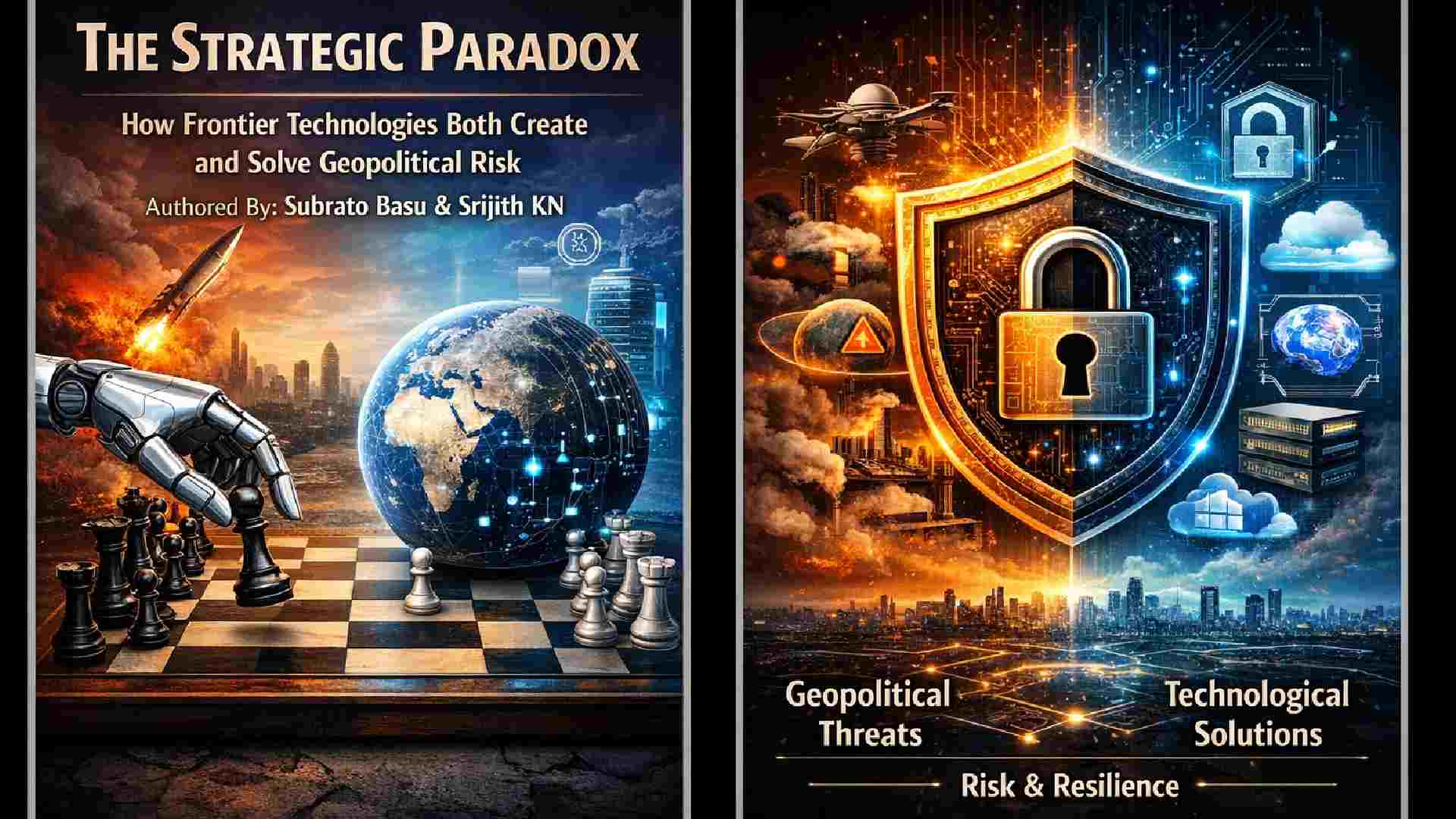
EDITORIAL NOTE: This article is a jointly commissioned work of original analysis, co-authored by Subrato Basu and Srijith KN, and published by Integrator Media as part of its Technology Leadership Series. It does not constitute legal, regulatory, investment, or security advice, and does not represent the official policy position of Integrator Media, Oxford50, or The Executive Board beyond the views expressed herein. No specific government, organisation, or individual is alleged to have engaged in any unlawful activity. Published March 2026.
If geopolitical volatility has become a structural input into enterprise technology strategy, the next question for boards and technology leaders is unavoidable: how should organisations respond?
The answer lies in a paradox that receives far less attention than it deserves. The frontier technologies most exposed to geopolitical disruption, artificial intelligence, sovereign cloud infrastructure, quantum-resilient cryptography, and agentic automation, are simultaneously the most powerful tools available for building organisational resilience against that disruption. Leaders who focus exclusively on the exposure side of this equation miss the more strategically consequential point.
Consider artificial intelligence. AI deployments built on infrastructure subject to extended regulatory jurisdiction carry real compliance exposure, as described above. Yet AI is also the most powerful accelerant available for threat detection, compliance monitoring, scenario modelling, and operational automation, precisely the capabilities that strengthen an organisation’s ability to absorb and recover from geopolitical shocks. The organisations that will navigate this environment most effectively are not those that slow AI adoption in response to geopolitical uncertainty. They are those that architect their AI infrastructure with data sovereignty and workload portability as foundational design requirements from the outset, converting a potential liability into a structural advantage.
Sovereign cloud infrastructure, whether delivered through major hyperscaler in-country residency programmes or through emerging local and regional alternatives — provides a meaningful and structurally durable buffer against vendor-level geopolitical exposure. Organisations that made this architectural decision early, as a matter of governance principle rather than in response to a specific threat event, are today in a materially stronger position than those who deferred it.
Quantum-resilient cryptography is perhaps the most time-sensitive imperative in this landscape. Advisories from government security agencies across multiple jurisdictions indicate that adversarial state actors are running long-horizon data collection programmes, systematically harvesting encrypted data today for potential decryption as quantum computing capabilities mature. For financial services enterprises, critical infrastructure operators, and government-adjacent organisations, beginning a structured transition to post-quantum cryptographic standards is a present-day governance obligation. The window to act before exposure becomes irreversible is finite.
Agentic AI and intelligent automation reduce structural dependence on specialist talent pools that may be disrupted by geopolitically driven mobility constraints. Investment in operational automation is, simultaneously, investment in organisational resilience against workforce uncertainty.
What Well-Governed Organisations Are Doing Differently
We are deliberately wary of presenting action checklists as a substitute for genuine governance change. Checklists become compliance theatre, items filed, boxes ticked, actual posture unchanged. What follows is a description of what genuinely well-governed organisations are doing differently, drawn from patterns visible in board governance practice and publicly available reporting.
They Have Made Geopolitical Risk Structural, Not Episodic
The most consequential governance shift is a reclassification, not a new process. Well-governed organisations treat geopolitical technology risk as a standing monitored variable, with an owner, a defined monitoring cadence, and a clear escalation threshold, rather than a topic that receives board attention only when a crisis forces it onto the agenda.
In practice: the CIO and CISO present a jointly owned, geopolitically aware technology resilience posture to the board at least twice annually, with scenarios explicitly modelled and stress-tested. Geopolitical technology risk appears in the enterprise risk register as a named, measured, and actively managed exposure.
They Have Mapped Their Exposure Before Needing the Map
A geopolitical technology risk assessment that maps the organisation’s most critical technology dependencies against regulatory jurisdiction exposure, relevant cyber threat vectors, and supply chain concentration risk is not a trivial exercise. But the organisations that have completed it, and kept it current through changing conditions, hold a decisive governance advantage. They know where they are exposed. They have already made architectural decisions that reduce that exposure. They are not discovering their vulnerabilities now they are least able to address them.
They Have Built Infrastructure for Portability and Sovereignty
The infrastructure decisions that matter most in a geopolitically volatile environment are not made under crisis conditions. They are made two or three years before a crisis, when there is no immediate operational pressure to make them. Migrating sensitive and mission-critical workloads to locally hosted or sovereign cloud infrastructure, dual-qualifying strategic hardware suppliers across non-concentrated supply lines and implementing zero-trust security architecture are decisions that appear cautious or unnecessary in stable conditions. They appear prescient when conditions change. The organisations in the strongest position today are those that made these decisions as a matter of strategic principle, not reactive necessity.
They Have Tested Their Continuity Assumptions Against Realistic Scenarios
Business continuity plans that have never been tested against simultaneous, compounding geopolitical stress scenarios, vendor service disruption, connectivity constraints, talent mobility restrictions, and elevated cyber incident risk converging rather than arriving sequentially, are not fit for purpose in the current environment. The organisations we consider genuinely well-prepared have run structured tabletop exercises against these compound scenarios, found their gaps in controlled conditions, and closed them before an actual event demanded it.
| BOARD READINESS: SIX QUESTIONS TO ASK THIS WEEK Can your organisation operate critical systems for 72 hours without dependency on infrastructure subject to potential extended-jurisdiction service suspension?Do you maintain offline backups of all critical data with regularly tested, documented, and rehearsed recovery procedures?Is your incident response retainer pre-authorised, contractually current, and explicitly scoped to include geopolitically-motivated threat scenarios?Have you documented manual fallback procedures for all AI-dependent and automated workflows?Is your supply chain inventory and vendor flexibility sufficient to sustain operations through a procurement constraint window of 60–90 days?Are your key technology vendors contractually required to provide advance notice before material service changes — and have you rehearsed your internal response to receiving such notice? |
A Final Word: Preparedness Is the New Competitive Advantage
There is an argument we consistently find under-made in this space, because it tends to be buried beneath the risk and compliance framing that dominates most discussions of geopolitical technology governance. We want to make it plainly.
Organisations that embed geopolitical technology risk into their governance frameworks, that build sovereign infrastructure, harden their security posture, develop resilient local talent pipelines, and rehearse continuity scenarios against compound stress events, are not simply managing downside exposure. They are building a form of operational resilience and institutional credibility that becomes a genuine, durable competitive advantage at precisely the moments when the advantage is most valuable. When conditions deteriorate, prepared organisations keep operating. They hold the trust of customers and regulators. They are positioned to capture ground from competitors who were not ready.
The structural forces generating geopolitical volatility across the global technology landscape, the intensification of great-power competition, the normalisation of technology restrictions and counter-measures as instruments of statecraft, and the sustained deployment of cyber capabilities as tools of strategic leverage, are not resolving on any near-term horizon. For enterprises operating in or near the fault lines these forces create, a ‘wait and see’ governance posture is not a neutral position. It is a choice to carry exposure that is available to be reduced.
What this moment calls for is a board and CXO community willing to apply to geopolitical technology risk the same intellectual discipline, analytical rigour, and governance seriousness it applies to financial risk: modelling it explicitly, monitoring it continuously, stress-testing it regularly, and managing it actively rather than observing it passively. The organisations that do this work now will not merely survive the next escalation cycle. They will emerge from it operationally stronger, commercially more resilient, and holding the trust and confidence that defines long-term enterprise value.
Technology leadership has always required navigating a world more complex than the tools designed to govern it. The nature of that complexity has simply changed. The discipline required to meet it has not.
| In a fractured world, operational resilience is not a risk management outcome. It is a competitive strategy. The organisations that understand this distinction will define the next generation of technology leadership. |
| SUBRATO BASU CEO, Oxford50 | Global Managing Partner, The Executive Board Subrato Basu advises boards and senior technology leaders across industries on governance, risk, and enterprise strategy. He brings a practitioner perspective shaped by engagements across the Asia-Pacific region and beyond, with particular focus on technology governance, go-to-market strategy, and organisational resilience in complex operating environments. | SRIJITH KN Senior Editor, Integrator Media Srijith KN is Senior Editor at Integrator Media, covering enterprise technology, cybersecurity, and digital transformation across the Middle East and Asia. He brings an editorial perspective drawn from tracking technology leadership decisions across markets in periods of rapid change, and a sustained focus on how organisations translate strategic risk into governance action. |

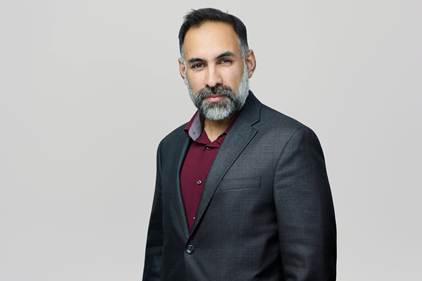
By Javvad Malik, Lead CISO Advisor at KnowBe4
There is a specific moment in every security professional’s career when they realise the traditional rulebook hasn’t just been ignored—it’s been torn to pieces. Mine arrived last week while watching a colleague engage in a debate with an AI agent over expense policy, while simultaneously being phished by what was almost certainly another AI posing as IT support.
For decades, the cybersecurity industry has clung to a comfortable, binary premise: humans work inside the walls, threats exist outside, and our job is to keep the two apart. It was a tidy worldview that made for excellent spreadsheets, even if we knew it was fiction.
Then, AI walked into the office without knocking. It’s a reboot of the classic 2010 iPad launch, where executives demanded connection to the corporate network, heralding the age of “Bring Your Own Disaster”.
The Multi-Species Workforce
The most uncomfortable truth facing modern organizations is that they no longer employ just humans.
Your current headcount includes Peter from Accounts Payable, his three AI assistants (two sanctioned, one very much ‘shadow’), a recruitment algorithm, and whatever experimental automation Marketing has hooked up to Slack to bypass a slow internal process.
They are all making decisions. And they are all sharing data.
When Peter’s AI hallucinates a rogue clause into a vendor agreement, or a chatbot leaks PII because a prompt-engineer asked nicely, where does the buck stop? Traditional security loves clean lines—User vs. Admin, Internal vs. External. But we are now operating in a world that has gone full analogue. We have created a workforce that is part human and part silicon, yet the risk remains entirely ours to manage.
The Futility of Punitive Security
Historically, we have managed security like a digital Alcatraz. If a user clicks a phishing link, we chastise them. If they use unapproved software, we discipline them.
But punishing people for being human is like shouting at water for being wet. It provides a few seconds of emotional release for the security team, but it doesn’t change the outcome. You cannot discipline your way to a secure culture, and you certainly cannot punish an AI agent into making safer choices.
So, what happens when your workforce is 60% human, 40% AI, and rising?
Navigating the Shadow AI Explosion
Shadow AI isn’t born from malice; it’s born from friction. Employees use unsanctioned tools because the approved versions are often slow, restrictive, and designed by people who think ‘user-friendly’ as a type of malware.
If your IT ticket for an AI request won’t be resolved until Q3 2027 but the free version of ChatGPT is open in a browser tab right now, the choice for a busy employee is a foregone conclusion.
To manage this hybrid reality, we need to view the workforce as a single, unified, complex adaptive system. Here is the framework for securing the blur:
- Govern the Decision, Not the Entity: We need governance frameworks that apply to the action, regardless of whether the actor is carbon-based or cloud-hosted. If a human isn’t allowed to export customer data to a personal drive, their AI assistant shouldn’t be able to either.
- Design for Invisible Perimeters: Assume you will never have 100% visibility again. Security must shift toward real-time behavioral monitoring and anomaly detection that tracks patterns across both human and machine activity.
- Build Intuitive Culture, Not Just Compliance: You teach a child to cross the road by explaining traffic lights, not by screaming at them every time a car passes. The same applies here. You cannot train culture into an AI model, but you can design systems where humans and AI operate within a framework that makes security intuitive.
- Treat Shadow AI as a Signal: If half your workforce is using unsanctioned AI, that isn’t a compliance failure—it’s a sign your current tools are failing your people.
The question is no longer if your workforce will become a hybrid of human and machine. It already is.
The real question is whether our security models will evolve to meet this reality, or if we will keep building expensive walls around a perimeter that vanished years ago. The workplace has changed; our job is to design security that works with human nature, rather than against it.


A FRESH PERSPECTIVE ON RESIDENTIAL DESIGN
LANDLORD PERSPECTIVE: BUILDING CERTAINTY IN THE ERA OF MONTHLY RENT

Why Tech Brands Need to Rethink Influencer Strategy in the Middle East

-
News10 years ago
SENDQUICK (TALARIAX) INTRODUCES SQOOPE – THE BREAKTHROUGH IN MOBILE MESSAGING
-

 Tech News2 years ago
Denodo Bolsters Executive Team by Hiring Christophe Culine as its Chief Revenue Officer
-
 VAR11 months ago
Microsoft Launches New Surface Copilot+ PCs for Business
-

 Tech Interviews2 years ago
Navigating the Cybersecurity Landscape in Hybrid Work Environments
-

 Tech News8 months ago
Nothing Launches flagship Nothing Phone (3) and Headphone (1) in theme with the Iconic Museum of the Future in Dubai
-

 Automotive1 year ago
AGMC Launches the RIDDARA RD6 High Performance Fully Electric 4×4 Pickup
-

 Trending5 months ago
OPPO A6 Pro 5G Review: Reliable Daily Driver
-

 VAR2 years ago
Samsung Galaxy Z Fold6 vs Google Pixel 9 Pro Fold: Clash Of The Folding Phenoms